
City Guide · Punjab, Pakistan
Lahore, Pakistan: Mughal Grandeur, Walled-City Bazaars, and the Friendliest Food Capital in South Asia
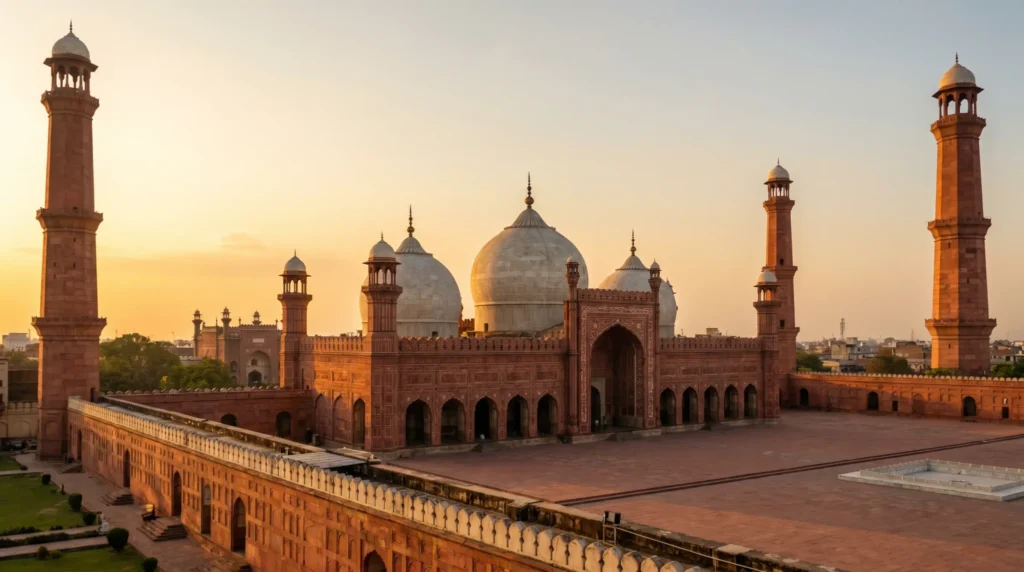
I have walked into the Walled City of Lahore at dawn more times than I can count, and the city still ambushes me every single time — the call to prayer rolling off the Badshahi Mosque, the smell of paratha frying in ghee, a chai-wallah waving me over before I have said a word. We tell first-timers the same thing every trip: this is a city of roughly 13 million people in the district, Pakistan’s second-largest after Karachi , and it wears its 1,000-year history more openly than almost anywhere in the region — a 16th-century Mughal fort, a 17th-century mosque that holds 100,000 worshippers, and a labyrinth of bazaars that has been trading since the emperors ruled here. My favourite Lahore ritual is a pre-dawn plate of siri paye in Gawalmandi before the heat lands, then a rickshaw to the Fort while the light is still soft. Treat this guide as the brief I would hand my own family the night before they landed at Allama Iqbal International — the food streets, the Mughal monument tier, the new Orange Line metro, the Wagah border ceremony, and the practical realities of the e-visa and the summer heat .

Table of Contents
Why Lahore?
Lahore is the rare city that is simultaneously a living Mughal capital, a Punjabi cultural heartland, and one of the great food towns of the subcontinent — and it hands you all three within a single afternoon in the Walled City. The district holds roughly 13 million people, making Lahore Pakistan’s second-largest city after Karachi and the capital of Punjab, the country’s most populous province . Lahoris will tell you, only half-joking, that anyone who has not seen Lahore has not been born — Jinne Lahore nai vekhya, o jamya nai — and after a few days here you start to understand the swagger.
The city reads as a series of productive contrasts. The Lahore Fort and the Shalimar Gardens — both inscribed together as a single UNESCO World Heritage Site in 1981 — sit a short ride apart, Mughal power and Mughal pleasure-garden in one breath . Across from the Fort, the red-sandstone Badshahi Mosque of 1673 faces the gilded Sikh Gurdwara of Maharaja Ranjit Singh’s era, and a few lanes away the British laid out the wide colonial avenues of the Mall and the Gothic-Mughal hybrid of the old university. It is a Muslim-majority city threaded with Hindu, Sikh, and colonial history, where a 17th-century caravanserai now opens onto a 21st-century driverless metro.
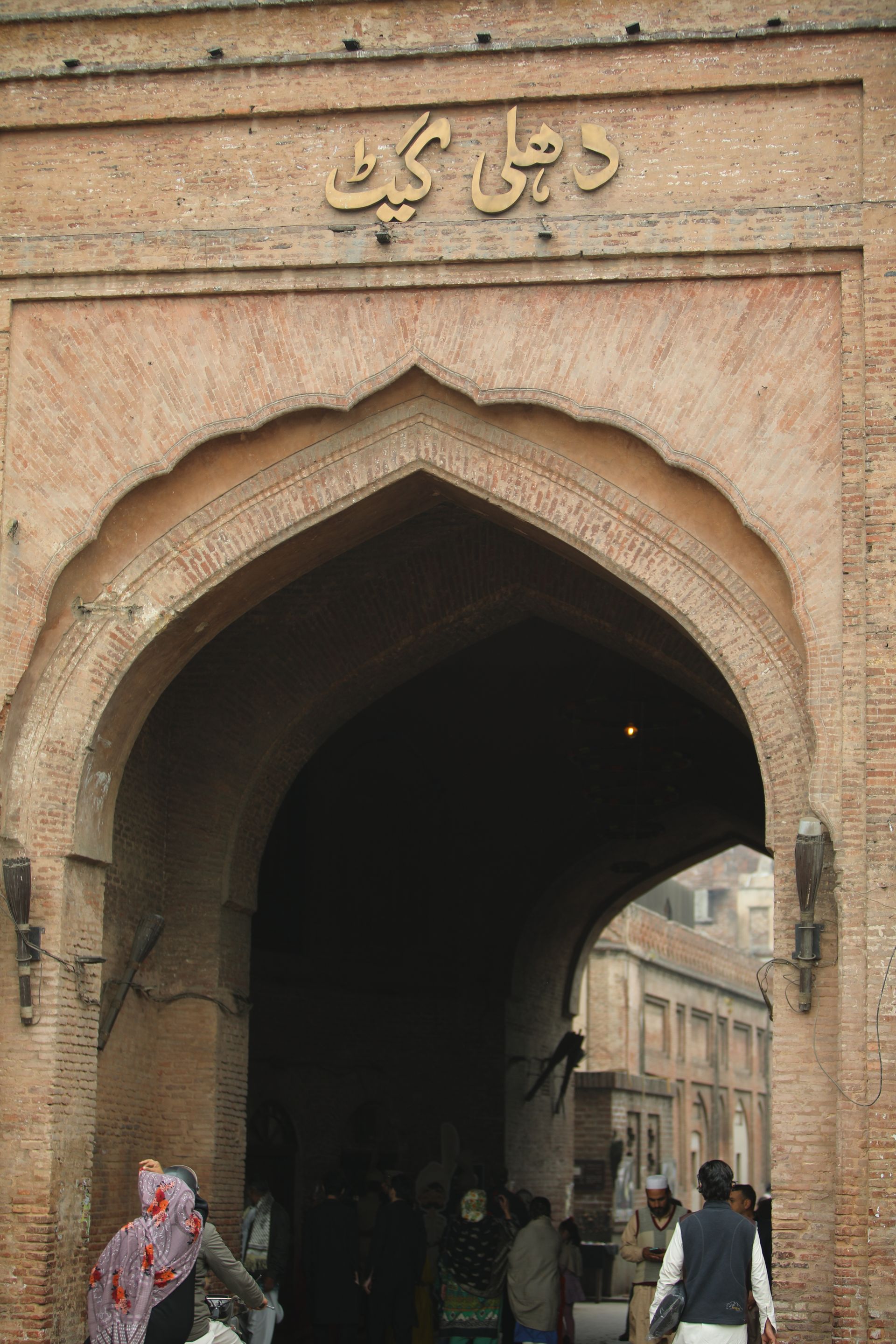
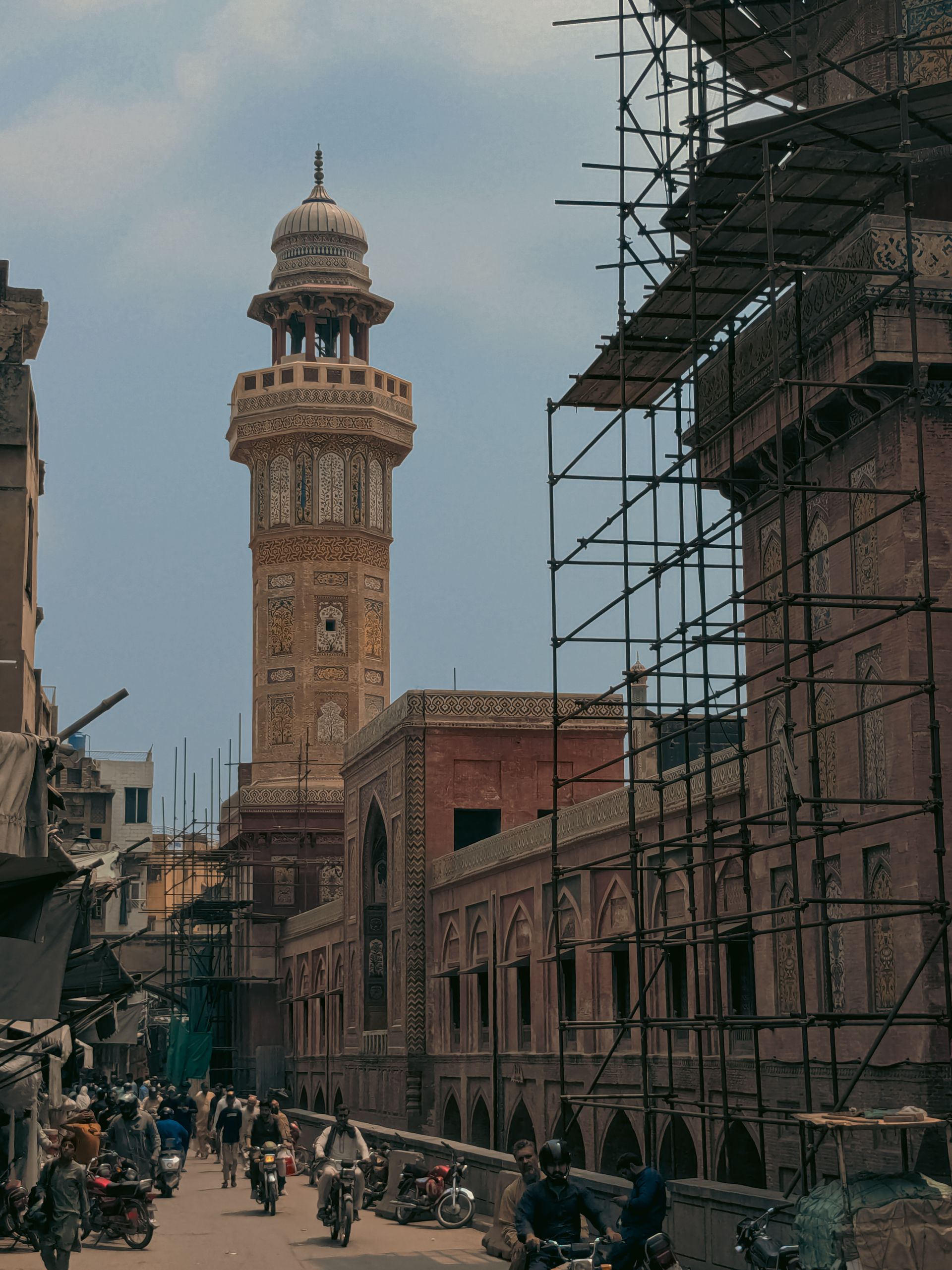
What makes it all cohere is the Walled City — the dense old town inside the thirteen historic gates, painstakingly restored over the past fifteen years by the Walled City of Lahore Authority . This is the photogenic, walkable, food-soaked spine of any first visit: the Wazir Khan Mosque with its dazzling tilework, the Delhi Gate bazaar, the rooftop restaurants looking onto the Badshahi domes. The single best argument for Lahore over its flashier regional rivals is value plus warmth: a feast of nihari and naan costs a couple of dollars, and the city’s hospitality is so reflexive that travellers routinely leave with phone numbers, dinner invitations, and a list of relatives to call in the next town.
This guide covers the neighborhoods you will actually walk — the Walled City, the Mall and the colonial core, Gulberg, Model Town, the Cantonment — plus the food streets worth queueing for, the Mughal-monument tier, the day trips out to Wagah and beyond, and the practical realities of the e-visa, the summer heat, and getting around on the new Orange Line.
Neighborhoods: Finding Your Lahore
📍 Lahore Map: Every Place in This Guide
Lahore sprawls outward from the Walled City in loosely defined districts, each with its own character — and increasingly its own Orange Line metro station. The historic core (the Walled City, the Mall, Anarkali) is where most first-time visitors spend their daylight hours and where the headline sights cluster within walking or short-rickshaw distance of each other. The newer southern and eastern districts (Gulberg, Model Town, the Cantonment, Defence/DHA) are where the city’s middle class actually lives, eats, and shops, and where the best modern hotels and restaurants sit. Picking your base comes down to whether you want to wake up inside the history or inside the comfort.
The most useful mental map for a first visit treats the city as three bands. The innermost — the Walled City and the colonial Mall — is the dense, photogenic, walkable heart you came to see, but it is also chaotic, hot, and short on Western-standard hotels, so most travellers visit it by day and sleep elsewhere. The middle band gathers the leafy planned suburbs — Gulberg, Model Town, Garden Town — where tree-lined streets, cafés, and mid-range hotels make a comfortable base a short drive from the sights. The outer band — the Cantonment, Defence (DHA), and the new housing societies sprawling toward the motorway — is where Lahore’s upscale dining, malls, and five-star hotels concentrate, calmer and greener but further from the old city. Pick your base by what you want your evenings to feel like: immersed in history (a Walled City heritage guesthouse), convenient and lively (Gulberg), or quiet and upmarket (DHA or the Cantonment).
One detail shapes everything about getting around: the Orange Line, Pakistan’s first urban metro, runs across the city on a single elevated-and-underground spine, threading the western housing belts through the old city’s edge to the eastern suburbs. Wherever you base yourself, knowing the nearest Orange Line station is the difference between a smooth, air-conditioned hop to the Walled City and a slow crawl through some of South Asia’s most committed traffic. The other constant is the rickshaw-and-ride-hailing layer: Careem and Uber blanket the whole city, cheap and reliable, and the auto-rickshaw remains the only sensible way to thread the last stretch into the bazaar lanes too narrow for a car. Read the districts below less as fixed addresses than as moods — Lahore’s edges blur, neighbourhoods bleed into one another, and the same street can be a wholesale spice market by morning and a rooftop dinner scene by night.
The Walled City (Androon Shehr)
The thousand-year-old heart of Lahore, ringed by the remnants of its thirteen historic gates and packed with bazaars, havelis, mosques, and shrines. This is the photogenic spine of the city and the single must-walk district — by day a riot of wholesale trade and street food, by night a string of rooftop restaurants framing the floodlit Badshahi domes. The Walled City of Lahore Authority has spent fifteen years restoring its monuments and laying out a signed heritage trail from Delhi Gate to the Fort . You will not sleep here in luxury — a handful of restored heritage guesthouses aside — but you will eat, photograph, and lose yourself in it for at least a full day, ideally with a guide to read the layers.
- Lahore Fort and the Badshahi Mosque at the northern edge
- Wazir Khan Mosque and its restored Shahi Hammam (royal baths)
- The Delhi Gate to Fort heritage trail and the Fort Road food street
- The Sunehri (Golden) Mosque and the spice and textile bazaars
What makes the Walled City unforgettable is the density of layered life: a single lane can carry you past a Mughal-era mosque, a Sikh-period haveli, a British post box, and a stall frying the same jalebi recipe three generations deep. The restored Fort Road Food Street, strung with carved wooden balconies looking straight onto the floodlit Badshahi Mosque, is the city’s most photogenic dinner spot and the easiest gentle introduction for nervous first-timers. Go early in the day for the bazaars and the monuments while it is cool and quiet, then return after dark for the rooftops; the contrast between the two is the whole point of the place.
Best for: first-time visitors, history walkers, food and photography. Access: Orange Line to Lakshmi Chowk or Bhati Chowk; rickshaw the last stretch.
The Mall (Mall Road) & the Colonial Core
The wide, tree-lined avenue the British laid out as the spine of their Lahore — and still the city’s civic heart, lined with Gothic-Mughal landmarks. This is where you come for the colonial-and-museum tier: the Lahore Museum, the old university, the High Court, and the bronze cannon Zamzama (Kipling’s “Kim’s Gun”) on its plinth. It is a district to walk and visit rather than sleep in, ideally in the cooler morning hours, and it joins neatly onto Anarkali bazaar to the north. The Mall captures the layer of Lahore’s story between the Mughals and independence, and a slow stroll past its facades is the best free history lesson in the city.
- Lahore Museum — the subcontinent’s finest colonial-era collection
- The University of the Punjab old campus and Government College
- Anarkali Bazaar — one of South Asia’s oldest surviving markets
- Zamzama Gun (“Kim’s Gun”) opposite the museum
Best for: history buffs, museum-goers, architecture walkers. Access: Orange Line to Anarkali or GPO Chowk.
Gulberg
The buzzing commercial-and-residential heart of modern Lahore, a few kilometres south of the old city. Gulberg is where the city’s middle class shops, eats, and gathers — the MM Alam Road restaurant strip, the Liberty Market bazaar, and a cluster of mid-range and boutique hotels make it the most convenient all-round base for a first-timer who wants comfort within easy reach of the sights. It trades the history of the Walled City for tree-lined streets, reliable air-conditioning, and a dense, walkable run of cafés, bakeries, and shops. This is where returning visitors tend to stay: close enough to the monuments for a quick morning run in, lively enough in the evening to eat and wander without planning, and far enough from the old-city chaos to sleep well.
- MM Alam Road — Lahore’s premier restaurant and café strip
- Liberty Market and Hafeez Centre for shopping and electronics
- Mid-range and boutique hotels in easy reach of the sights
- Packages Mall and Emporium Mall nearby for wet-weather days
Gulberg is also the easiest district to read for a newcomer: its grid of named blocks and well-lit main roads makes self-guided wandering low-stress, and the concentration of cafés means you are never far from a clean restroom, decent coffee, and reliable wifi to plan the next move. Evenings here are sociable rather than touristy — families out for ice cream, students clustered over chai, couples queuing for the latest dessert place — and the people-watching is some of the best in the city. If you only have one base in Lahore and want to balance comfort with proximity, this is the safe, sensible choice.
Best for: first-timers wanting comfort, foodies, shoppers. Access: central, well-served by Careem/Uber and city buses.
Model Town & Garden Town
One of South Asia’s earliest planned garden suburbs, laid out in the 1920s in concentric circular blocks around a central park. Model Town and the adjoining Garden Town are leafy, calm, and residential, popular with families and longer-stay visitors for their quiet streets, parks, and good-value guesthouses. There is little to “see” here in the monument sense, but the green, ordered layout is a striking contrast to the old city and a pleasant base for travellers who want to slow down. The neighbourhood is well connected by the Orange Line, which puts the Walled City within a 25-minute ride.
- The circular garden layout and Model Town Park
- Quiet guesthouses and serviced apartments
- Orange Line stations linking to the old city
- Local bakeries and family restaurants
Best for: families, longer stays, a calmer residential base. Access: Orange Line, Model Town stations.
The Cantonment
The military-administrative district east of the centre, a legacy of the British army’s encampment, today a green, low-density, orderly part of the city with wide roads and colonial bungalows. The Cantonment holds some of Lahore’s calmest, most secure hotels and the closest comfortable bases to the Wagah border road. It is quiet to the point of sleepy after dark, with little street life, but for travellers who prioritise security and greenery over buzz it is an appealing choice, and it sits on the route out to the Wagah ceremony.
- Colonial-era bungalows and parade grounds
- Calm, secure upscale hotels
- The road out to the Wagah border
- The Cantonment railway and the airport approach
Best for: security-minded travellers, greenery, Wagah-bound itineraries. Access: by car/Careem; less central than Gulberg.
Defence (DHA)
The sprawling upscale Defence Housing Authority development on the city’s southeastern edge — wide boulevards, gated phases, malls, and the highest concentration of fine-dining restaurants and five-star comfort in Lahore. DHA is where the city’s affluent live and where many of its newest hotels, cafés, and shopping complexes sit. It is calm, green, and modern, but a fair drive from the Walled City, so it suits travellers who want resort-style comfort and do not mind commuting in to the sights. The dining scene here is the city’s most international, from sushi to steakhouses.
- Y-Block and other commercial markets for dining and shopping
- Packages and Emporium malls within reach
- The city’s most international restaurant scene
- Modern hotels and serviced apartments
For travellers who value predictability — international hotel brands, valet parking, familiar coffee chains, and restaurants that would not feel out of place in Dubai — DHA delivers the most polished version of Lahore, at the cost of distance and a slightly anonymous feel. It is an excellent base for families with young children or for business travellers who want to decompress in comfort, and the malls double as cool, safe refuges on the hottest summer afternoons. Just budget for the commute: the Walled City is a genuine cross-town journey from here, best timed to avoid the worst of the rush.
Best for: upscale travellers, modern dining, families wanting space. Access: by car/Careem; furthest from the old city.
Iqbal Town & the Outer Ring
The dense, fast-growing western and southern residential belts — Allama Iqbal Town, Johar Town, Wapda Town, and the new societies stretching toward the motorway and the airport. These are where most ordinary Lahoris live, with bustling local markets, university campuses, and good-value lodging, though little in the way of headline sights. For travellers they matter mostly as the budget-and-practical fringe — cheaper rooms, the Emporium and Packages malls of Johar Town, and the Orange Line’s western terminus at Ali Town that links the whole belt to the old city.
- Johar Town malls and university campuses
- Allama Iqbal Town’s local markets
- Orange Line western terminus at Ali Town
- Good-value lodging away from the centre
Best for: budget travellers, longer stays, the local-life curious. Access: Orange Line, Ali Town and Thokar Niaz Baig stations.
The Food

Lahore is, by broad consensus across the subcontinent, the food capital of Pakistan — a city where eating is the central social ritual and where the richest Mughal and Punjabi cooking traditions have been refined for centuries. The result is a street-food culture so dense that a single Walled City lane can serve siri paye, nihari, fried fish, and kulfi from four adjacent stalls, all for a handful of dollars. Street food runs roughly Rs 200–700 per dish and a sit-down casual meal Rs 800–2,000 per person, which makes Lahore one of the cheapest world-class eating cities anywhere .
What sets Lahore apart from its regional rivals is the depth of its breakfast-and-late-night culture. A Lahori’s idea of a great meal might be a pre-dawn plate of slow-cooked siri paye (head and trotters), a mid-morning halwa puri, an evening karahi sizzling in its wok, and a midnight kulfi from a cart — and crucially, the city stays up to feed all of it. The old-town food streets fry through the night; the rooftop restaurants serve dinner with the Badshahi Mosque floodlit behind you; the dhaba (roadside eatery) culture means you are never far from a charpoy, a clay oven, and a pot of something rich. To eat well in Lahore you do not need reservations or a budget — you need an appetite, a tolerance for plastic chairs and open kitchens, and a willingness to follow the crowd.
A practical word on where to eat: the three great hunting grounds are the historic food streets (the Fort Road and Gawalmandi food streets above all), the old-town breakfast spots near the gates, and the modern restaurant strips of Gulberg and MM Alam Road for a more comfortable sit-down. Hygiene is generally good at busy stalls with high turnover, but stick to bottled water, freshly cooked hot food, and fruit you peel yourself; the richness of Lahori cooking can be a shock to an unaccustomed stomach, so ease in.
It helps to understand the rhythm of the Lahori eating day, because it is unlike the Western one. The big breakfast — siri paye, halwa puri, or a plate of nihari — is a destination meal in its own right, often the most cherished of the day, and the old-city breakfast houses are at their best and busiest between roughly seven and ten in the morning. Lunch is comparatively light. Then the city slows through the heat of the afternoon and comes alive again at dusk, when the food streets fire up, the karahi woks start sizzling, and dinner stretches long and late. The famously huge portions are built for sharing, and ordering several dishes for the whole table to graze across — rather than a plate each — is both the local custom and the smart way to taste widely.
Hospitality is woven through all of it. Lahoris are intensely proud of their food and quick to adopt a visiting eater — do not be surprised if a stranger at the next table insists you try a bite of their nihari, or if a stall owner waves away your money the first time. Accept the warmth graciously, and lean on local knowledge: hotel staff, your Careem driver, and the queue itself are far better guides than any printed list. The single best rule for eating well here is also the simplest — go where the crowd is, where the turnover is fast and the pot is fresh, and order what everyone around you is already eating.
Mughlai & Punjabi Classics
The backbone of Lahori cooking is rich, slow, and meat-forward. Nihari — a slow-cooked beef or mutton stew traditionally eaten at breakfast — is the city’s signature dish, ladled over the heat from a pot that has simmered overnight and finished with ginger, green chilli, and a squeeze of lemon . Alongside it sit the great Punjabi staples: karahi (chicken or mutton seared in a wok with tomato, ginger, and green chilli), haleem (a thick wheat-and-meat porridge), and the celebratory mountain of meat that is a charga or a leg roast. Tandoori naan and roghni naan come straight from the clay oven to soak it all up.
- Phajja Siri Paye (near Taxali Gate) — Lahore’s most famous early-morning siri paye, an institution of old-city breakfast (~Rs 600, ~US$2.10)
- Gawalmandi Food Street — siri paye, nihari, fried fish, and chargha across a strip of historic eateries (~Rs 800, ~US$2.85)
- Butt Karahi (Lakshmi Chowk) — the city’s most-cited mutton and chicken karahi (~Rs 1,800, ~US$6.40)
Beyond the headline spots, the best Mughlai and Punjabi food in Lahore is rarely on a “best of” list at all — it is the unnamed dhaba whose karahi-master has worked the same wok for thirty years. Trust the crowd, trust the turnover, and order what the table next to you is eating. For a single perfect introduction, sit down at a Gawalmandi eatery at 8am, order a plate of siri paye with hot naan and a sweet lassi, and watch the old city wake up around you; it is the most authentic hour you can spend in Lahore.
Breakfast & Street Snacks
Lahore takes breakfast more seriously than almost any city in South Asia. The classic spread is halwa puri — a sweet semolina halwa, fried puffed bread, and a spiced chickpea-and-potato curry — eaten en masse on a Sunday morning. Beyond it, the street-snack canon runs deep: chana chaat (spiced chickpeas), gol gappay (crisp puris filled with tangy water), dahi bhalla (lentil dumplings in yoghurt), samosas and pakoras by the dozen, and the freshly squeezed sugarcane juice that vendors press at carts all over the old city. Pair any of it with a glass of thick, sweet or salty lassi.
- Halwa puri — the great Lahori Sunday breakfast, best at an old-town nashta house (~Rs 300, ~US$1.05)
- Sugarcane juice (ganne ka ras) — pressed fresh at carts across the Walled City (~Rs 100, ~US$0.35)
- Chana chaat & gol gappay — tangy street snacks sold from roadside stalls (~Rs 200, ~US$0.70)
For the full street-snack experience, walk a busy bazaar lane in the late afternoon when the carts fire up — the sugarcane press, the samosa fryer, the gol-gappay man with his pot of tamarind water — and graze your way along. It costs almost nothing and it is how Lahoris actually eat between meals.
Sweets & Kulfi
Lahore’s sweet tooth is legendary. The mithai (sweet) shops of the old city and the Mall pile glass cases with barfi, gulab jamun, jalebi fried fresh and dunked in syrup, and the dense milk-fudge of khoya. In the heat, the move is kulfi — a dense, slow-frozen milk ice-cream studded with pistachio and cardamom, sold from carts and dedicated kulfi houses — or a falooda, the rose-and-vermicelli milk dessert. No Lahori meal really ends until something sweet has appeared.
Sweets here are as much about occasion as flavour: a box of mithai is the standard gift for a visit, a wedding, or a piece of good news, and the busiest old-city sweet shops do a roaring trade in elaborately tied boxes alongside their counter sales. For a visitor, the easiest way in is to point at two or three pieces from the case and eat them on the spot with a cup of doodh patti — strong, milky, sugary tea — which is the universal Lahori companion to anything sweet. In winter, look out for seasonal specialities like gajar ka halwa, a slow-cooked carrot pudding rich with ghee, milk, and nuts, served warm against the morning chill.
Beyond Nihari and Karahi
The deeper you go, the more the city’s food map opens up. These are the dishes locals send first-timers to find once they have eaten the headliners.
- Fried fish (Lahori machhli) — gram-flour-battered river fish, a winter speciality of the old-city stalls (~Rs 1,200/kg, ~US$4.30)
- Chargha — a whole marinated, steamed-then-fried spiced chicken (~Rs 1,600, ~US$5.70)
- Haleem — slow-cooked wheat, lentils, and meat, ladled with fried onion and lemon (~Rs 400, ~US$1.40)
- Falooda & kulfi — rose-syrup vermicelli milk dessert and pistachio milk-ice (~Rs 350, ~US$1.25)
- Lassi — thick sweet or salty yoghurt drink, served in a tall steel tumbler (~Rs 200, ~US$0.70)
- Tandoori naan & roghni naan — clay-oven breads, the foundation of every meal (~Rs 40, ~US$0.15)
The honest truth about eating in Lahore is that the deeper you wander from the guidebook names, the better it gets. Every neighbourhood has its own legendary stall — a nihari pot that sells out by 9am, a kulfi cart with a queue down the lane, a karahi master whose wok has scented the same corner for decades. Ask your hotel staff or a Careem driver where they actually eat, and you will be pointed somewhere that never makes a list.
A few practical notes to eat happily here. Most Lahori food is halal by default; vegetarians are less well served than in India but can live on the daal, chana, sabzi, and bread that anchor every menu, plus the city’s deep bench of snacks and sweets. Spice levels are high but negotiable — ask for it milder and the kitchen will oblige. Eat your biggest meals when the stalls are busiest (breakfast and after sunset), carry small notes since most stalls are cash-only, and pace yourself: Lahori portions are generous and the cooking is rich.
Food Experiences You Can’t Miss
If you only do three food things in Lahore, make them these — each is as much an experience as a meal.
- A pre-dawn siri paye and naan breakfast in Gawalmandi as the old city wakes
- A rooftop dinner on Fort Road food street with the floodlit Badshahi Mosque filling the view
- A late-afternoon street-snack crawl through a Walled City bazaar — sugarcane juice, gol gappay, samosas, jalebi
- A winter plate of Lahori fried fish from an old-city stall, dusted with chaat masala
- A kulfi or falooda from a dedicated dessert house to close a hot day
Cultural Sights

Lahore’s cultural sights cluster into three easy strands: the Mughal icons (the Fort, the Badshahi Mosque, the Shalimar Gardens, the Wazir Khan Mosque), the colonial-and-museum core along the Mall, and the modern national landmark of Minar-e-Pakistan. A first-timer can cover the headliners in two well-planned days, ideally pairing a cool-morning Walled City walk with an afternoon at the Shalimar Gardens. Most religious sites are free; the Fort and the Shalimar Gardens charge a modest admission, higher for foreign visitors.
Lahore Fort (Shahi Qila)
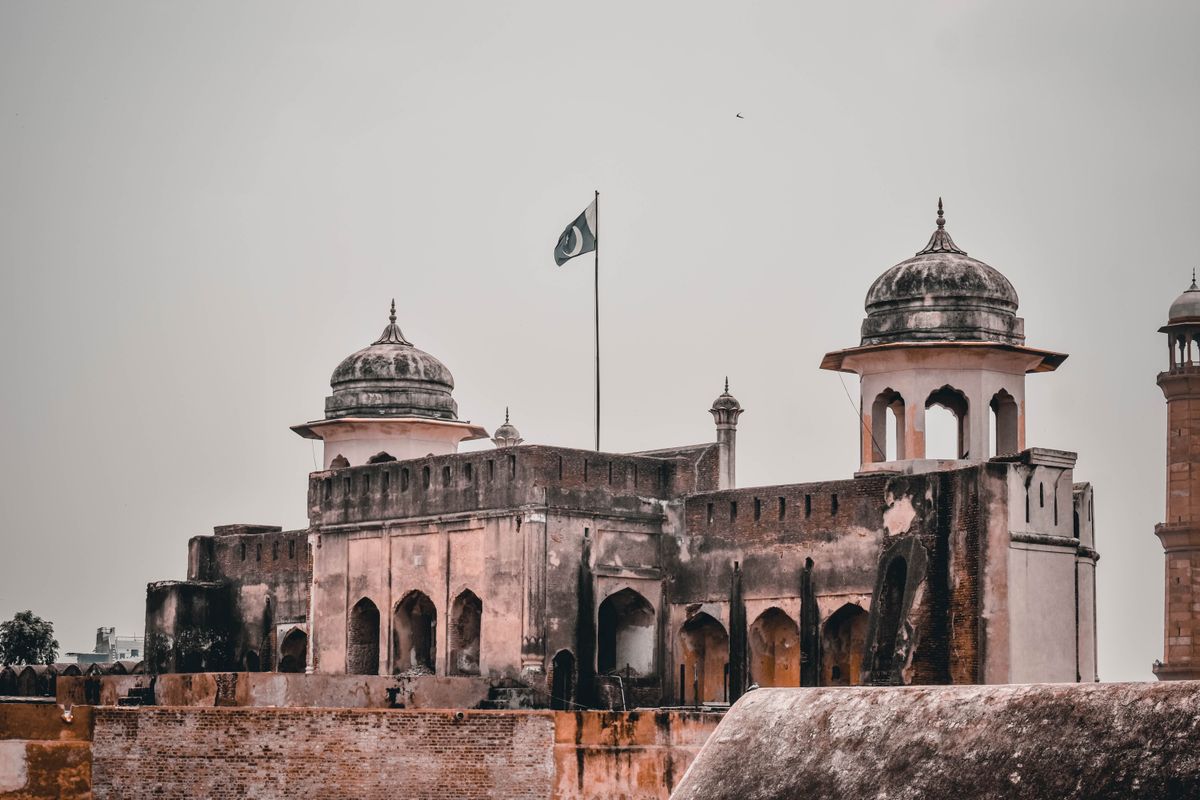
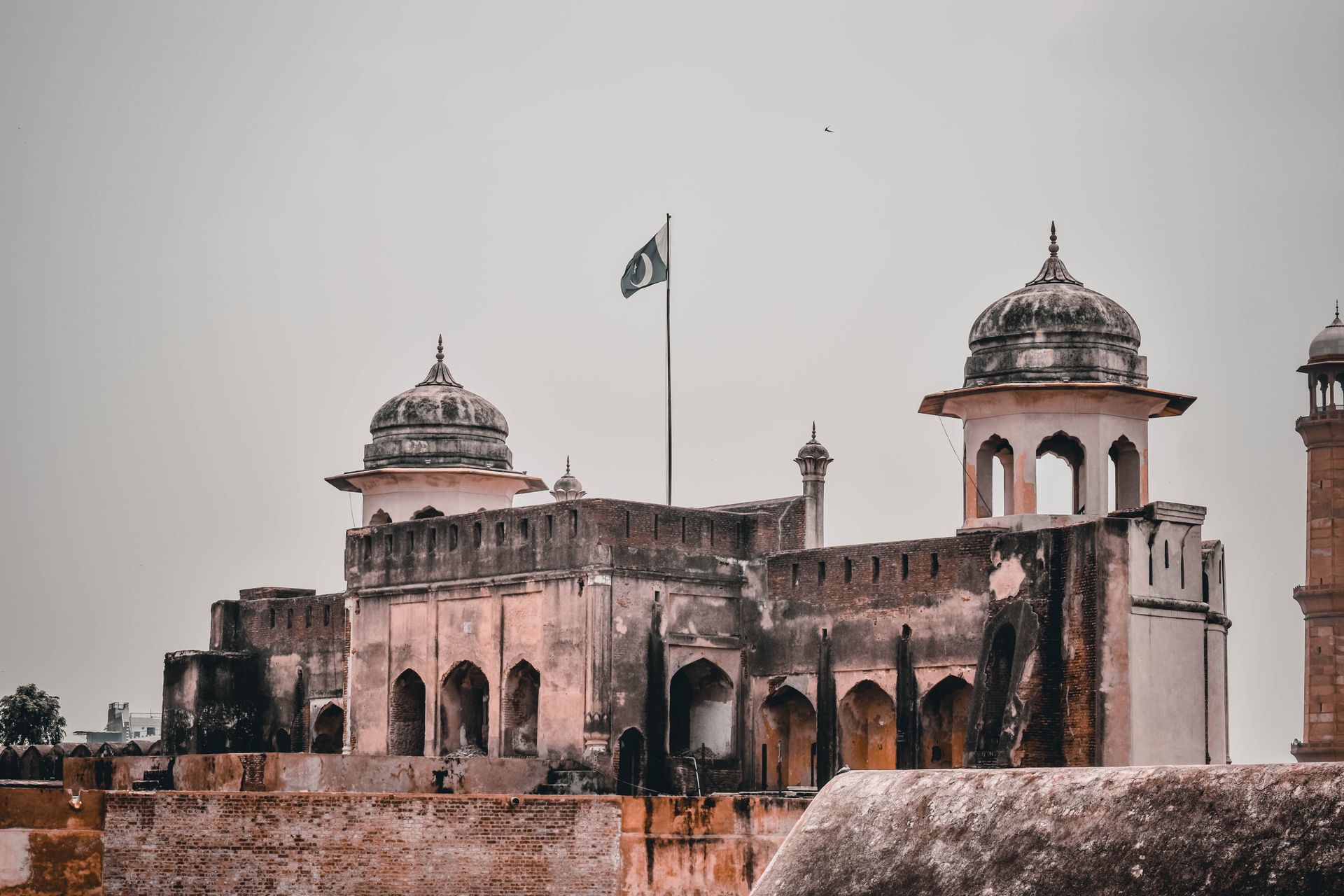
The city’s defining monument — a vast walled citadel of more than 20 hectares at the northern edge of the Walled City, rebuilt and expanded by successive Mughal emperors from the late 16th century onward and inscribed by UNESCO in 1981 together with the Shalimar Gardens . Within its walls sit the dazzling Sheesh Mahal (Palace of Mirrors), the marble Naulakha Pavilion, the Diwan-e-Aam and Diwan-e-Khas audience halls, and the great Picture Wall of glazed tile mosaic. Admission is modest for locals and a few hundred rupees for foreigners. Allow at least two hours, and go in the cooler morning. Best paired with the Badshahi Mosque directly opposite across the Hazuri Bagh.
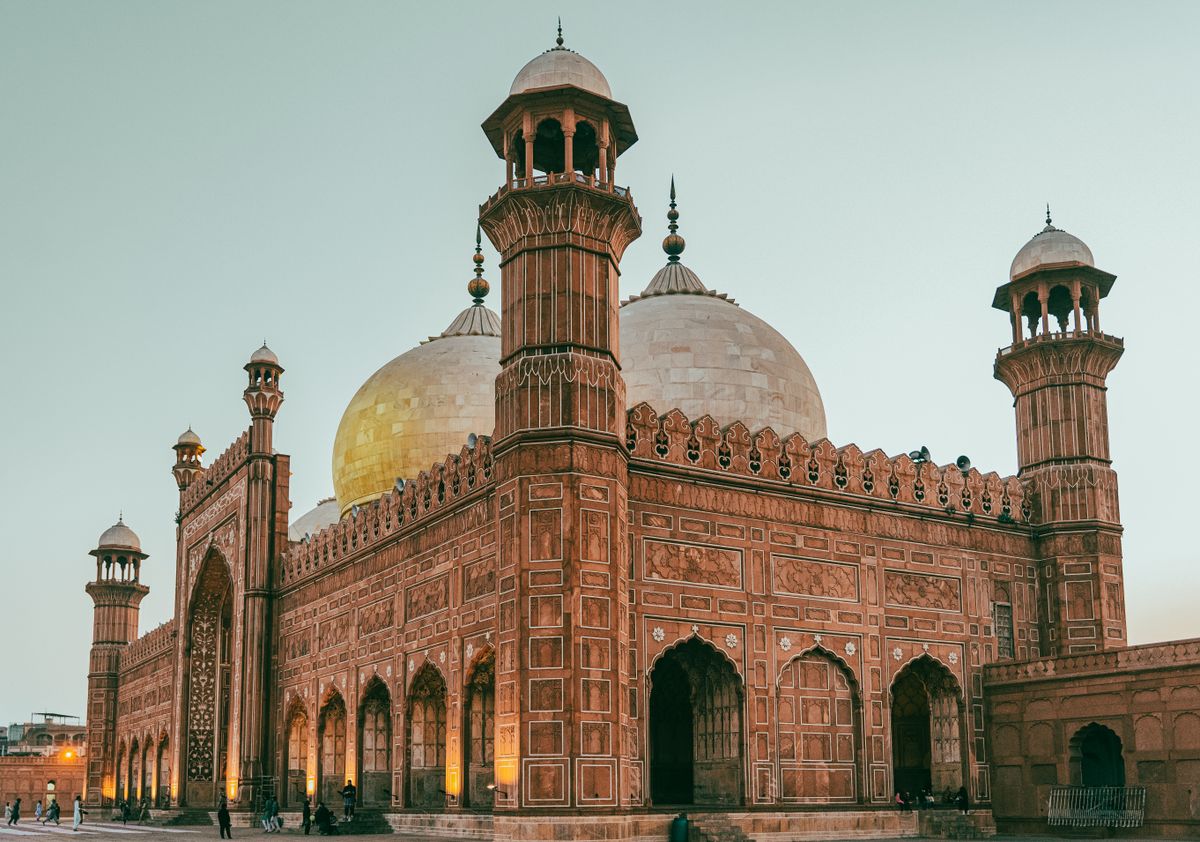
Badshahi Mosque
The red-sandstone imperial mosque commissioned by Emperor Aurangzeb and completed in 1673 — one of the largest mosques in the world, its courtyard capable of holding around 100,000 worshippers . Three marble domes crown the prayer hall, framed by four towering minarets, and the whole composition faces the Lahore Fort across the Hazuri Bagh in one of the great architectural set-pieces of South Asia. Free to enter outside prayer times; cover shoulders and knees, remove shoes, and women should bring a headscarf. Best at sunset, when the sandstone glows and the call to prayer rolls across the old city. Allow an hour, more if you climb a minaret for the rooftop view.
Wazir Khan Mosque
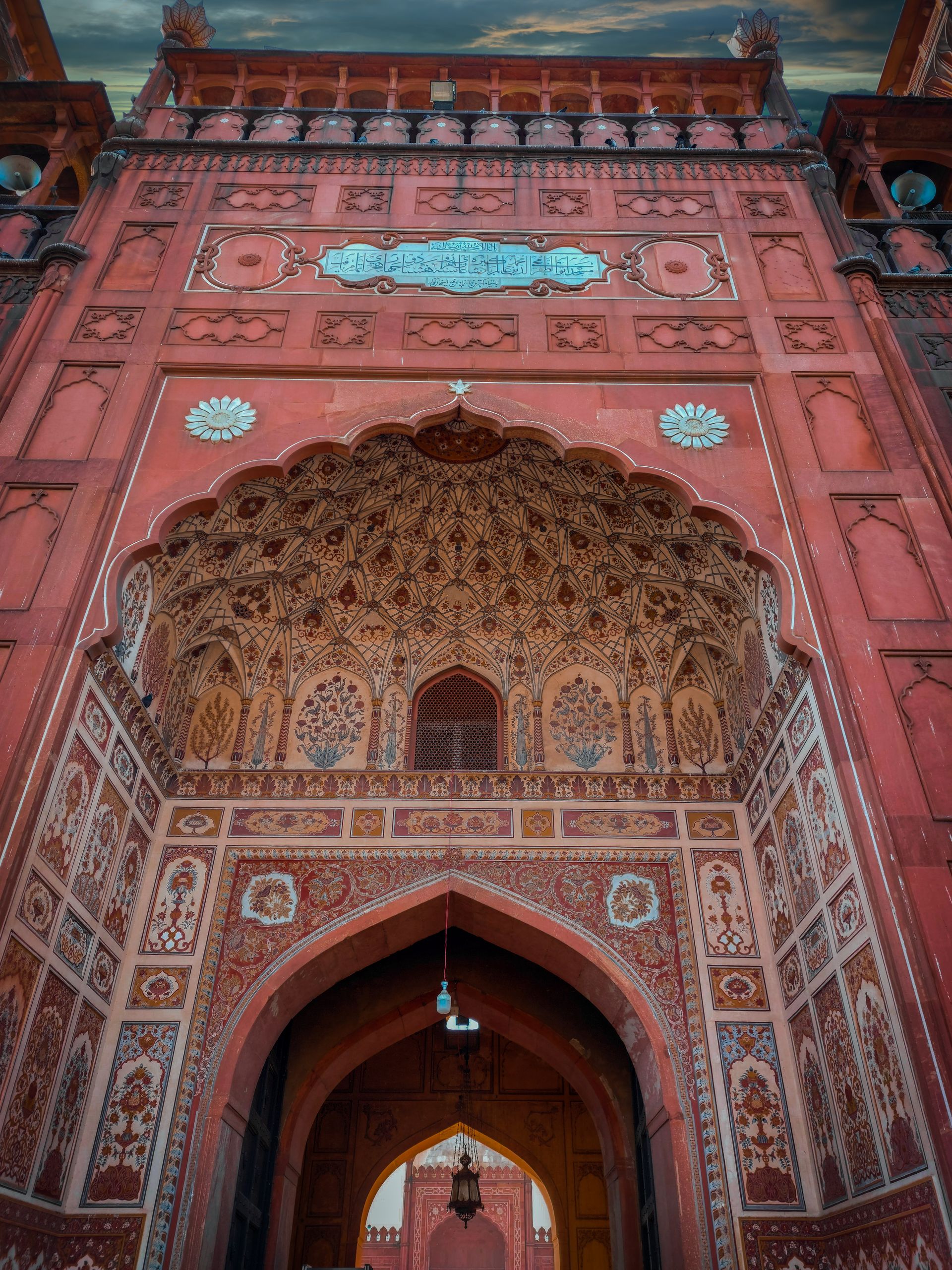
Hidden in the bazaars near Delhi Gate, this 17th-century mosque — built between roughly 1634 and 1641 under Shah Jahan — is considered the most ornately decorated of all Mughal mosques, every surface alive with intricate kashi-kari faience tilework and elaborate frescoes . Recently restored by the Walled City of Lahore Authority, it is the jewel of the heritage trail. Free to enter outside prayer times; modest dress and shoes off. Best in the morning light through the courtyard arches; pair it with the adjacent Shahi Hammam royal baths.
Shalimar Gardens
A 17th-century Mughal pleasure garden laid out in 1641 under Shah Jahan on the Persian char-bagh paradise plan — three descending terraces of fountains, water channels, marble pavilions, and symmetrical planting, inscribed by UNESCO alongside the Fort in 1981 . Some 7 km east of the old city, it is the city’s great green set-piece and a cool retreat from the bazaars. Modest admission, higher for foreigners. Best in the late afternoon when the fountains run and the light softens; allow an hour to walk the terraces.
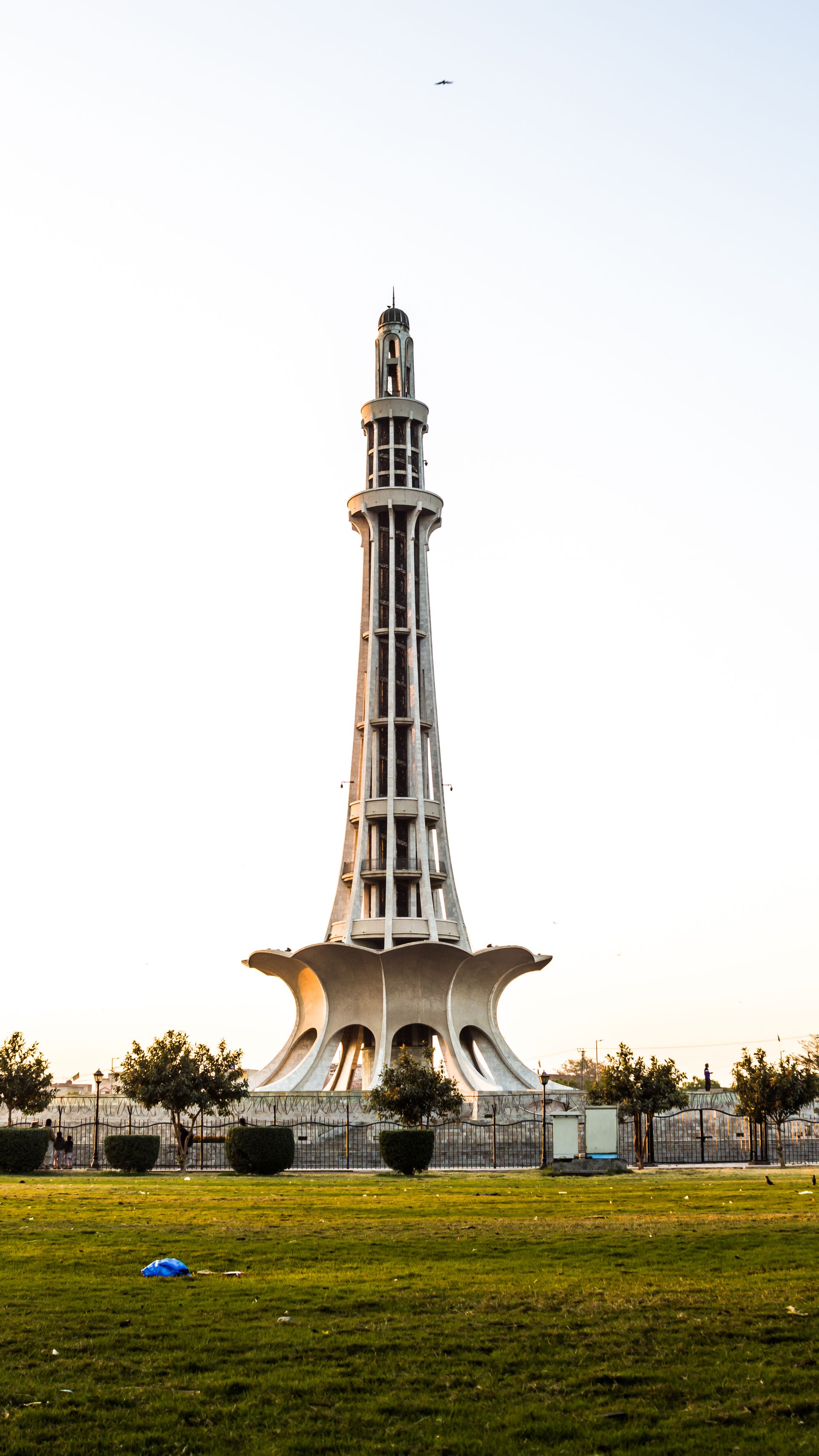
Minar-e-Pakistan & Iqbal Park
The 70-metre national tower that marks the spot where the 1940 Lahore Resolution called for a separate Muslim state, set in the landscaped Greater Iqbal Park beside the Walled City . The minaret blends Mughal and modern motifs and offers a view over the old city from its viewing platform. Free to enter the park; modest charge to climb. Best in the early evening when families gather and the tower is lit. A short stop, easily combined with a Walled City visit.
Lahore Museum
The finest museum in Pakistan, founded in 1865 and housed in a Mughal-Gothic landmark on the Mall, with a celebrated collection of Gandhara Buddhist sculpture — including the famous Fasting Buddha — alongside Mughal miniatures, manuscripts, and Sikh-era relics . The bronze Zamzama cannon (Kipling’s “Kim’s Gun”) stands on its plinth just outside. Modest admission, higher for foreigners. Allow ninety minutes; a cool, indoor antidote to a hot afternoon.
Lahore (Bagh-e-Jinnah) & the Gurdwara
Two further stops round out the heritage tier: the Bagh-e-Jinnah (Lawrence Gardens), a vast Victorian-era botanical garden and library near the Mall that is the city’s favourite green lung; and the Gurdwara Dera Sahib beside the Fort, marking the spot of Guru Arjan Dev’s martyrdom and a major Sikh pilgrimage site, its gilded dome a striking counterpoint to the Badshahi domes nearby. Both are free; the Gurdwara welcomes respectful visitors with heads covered. Together they show the layered Mughal, Sikh, and colonial faiths and powers that shaped Lahore.
A practical note on visiting these sights well: the heat and the crowds reward an early start, so anchor each day around a cool-morning monument visit and save the indoor museum or a shaded garden for the punishing midday hours. Almost all of the religious sites are free but expect to remove your shoes and dress modestly — long trousers or skirt, covered shoulders, and a scarf for women entering mosques and the Gurdwara. The ticketed sites (the Fort, the Shalimar Gardens, the museum) charge a higher rate for foreign visitors, but it remains modest by international standards, and hiring a knowledgeable guide at the Fort or along the Walled City heritage trail transforms a handsome ruin into a legible story of empires rising and falling. Photography is welcome almost everywhere; a tripod or drone is not, so leave those at the hotel.
Entertainment
Lahore’s evenings run on a different engine from most cities its size: this is a culturally conservative, alcohol-free city where the entertainment is food, festivals, music, and the floodlit monuments rather than bars and clubs. The best nights here mix a rooftop dinner facing the Badshahi domes, a Sufi-music gathering at a shrine, a stroll through a buzzing bazaar, and a late kulfi from a cart. What Lahore lacks in nightlife it more than makes up for in sheer street life, and the city stays up late — the food streets and markets run well past midnight.
Sufi Music & the Shrine Scene
Lahore’s most distinctive night out is the Thursday-night dhamaal — the ecstatic Sufi drumming and dance at shrines such as that of Baba Shah Jamal, where qawwali and the famous dhol drumming draw a mixed crowd late into the night. It is free, intense, and unforgettable, though best visited with a local guide who can read the etiquette and the crowd. The city’s qawwali tradition — devotional Sufi song — is among the richest in South Asia.
Food Streets After Dark
The Fort Road and Gawalmandi food streets are the city’s true nightlife — rooftop restaurants and ground-floor stalls that serve until late, the Fort Road tables framing the floodlit Badshahi Mosque. Expect to spend Rs 1,500–3,000 a head for a full rooftop dinner with the view. Reserve a rooftop table facing the mosque, especially at weekends, and go hungry; the food streets are as much a spectacle as a meal.
Cafés & Modern Dining
Modern Lahore’s social life happens in the cafés and restaurants of Gulberg’s MM Alam Road and the markets of DHA — a dense, lively scene of coffee houses, dessert parlours, and international restaurants that fills up late into the evening. Typical cost Rs 1,000–2,500 a head. This is where younger Lahoris gather, and where a traveller wanting a relaxed, air-conditioned evening will feel most at home. The dessert-and-coffee culture in particular runs late, with parlours busy past midnight.
Theatre, Cinema & the Arts
Lahore is Pakistan’s cultural and artistic capital, home to the Alhamra Arts Council on the Mall, which stages theatre, music, and dance, and to the National College of Arts, the country’s foremost art school. The city’s cinemas screen both Pakistani and international films (tickets from around Rs 800). The annual Lahore Literary Festival and various music and arts events animate the calendar. Check the Alhamra programme for a performance during your stay.
Bazaars as a Night Out
The most authentically local evening is simply a bazaar walk. Anarkali, Liberty Market, and the Walled City lanes stay lively and lit well into the night, selling everything from fabric and jewellery to street food and sweets. Effectively free to wander; budget a few hundred rupees to graze and a little more if you bargain for a shalwar kameez or a pair of khussa slippers. Bargaining is expected at the bazaars — start low and settle around two-thirds of the opening ask.
Cricket & Spectator Sport
Lahore is the spiritual home of Pakistani cricket, and catching a match at the Gaddafi Stadium — especially a Pakistan Super League (PSL) night game under lights — is one of the most electric experiences the city offers. Tickets are cheap by global standards (from around Rs 1,000) and the atmosphere is extraordinary. Even outside match days, the city’s cricket-mad street games are a window into local life.
The thread running through all of Lahore’s evenings is that they are best enjoyed sociably and on foot, woven into the life of the street rather than walled off in a venue. The city comes alive after sunset precisely because the daytime heat lifts, and Lahoris pour out into the food streets, the parks, and the bazaars to eat, talk, and people-watch late into the night. For a visitor, the single best evening strategy is to combine two or three of these threads — a rooftop dinner with a monument view, a wander through a lit bazaar, a kulfi to finish — rather than searching for a nightlife scene that, in the Western sense, simply does not exist here. Dress modestly, keep an eye on your belongings in the crush, and lean into the warmth of a city that treats every evening meal as an occasion.
Day Trips

One of Lahore’s quieter advantages is how much sits within a day’s reach of it. As the capital of Punjab and a hub of the country’s road and rail corridors, Lahore puts a flag-lowering border spectacle, Mughal tomb complexes, and the Sikh heartland all within a few hours’ drive. The closest trips (Wagah, Jahangir’s Tomb) are easy half-days; the further ones (Sheikhupura, Nankana Sahib) are full-day commitments better done with a hired car or driver. If you have one spare half-day, spend it at the Wagah border ceremony; if you have a full day, add the Mughal tombs across the river.
Wagah Border Ceremony (45 minutes by car)
The single most popular excursion from Lahore — the daily flag-lowering “Beating Retreat” ceremony at the only road crossing between Pakistan and India, 24 km east of the city . Soldiers in fan-tailed turbans high-kick and bellow across the gates in a theatrical, crowd-roaring spectacle as the flags come down at sunset. Free to attend (foreigners often get priority seating); the ceremony starts around 4:15pm in winter and 5:15pm in summer and runs about 45 minutes . Arrive 60–90 minutes early for a seat, bring your passport, and leave large bags behind — security is tight. The competing chants and high-kicking drill across the gates draw a roaring, flag-waving crowd on both sides, and the spectacle of national pageantry is unlike anything else in the region; the drive back into the city as the avenues light up makes a fitting close to a Lahore day.
Jahangir’s Tomb & Shahdara (30–40 minutes by car)
Across the Ravi River in Shahdara stands the magnificent tomb of the Mughal Emperor Jahangir, set in a walled char-bagh garden , alongside the tombs of his empress Nur Jahan and the courtier Asif Khan — a serene complex of red sandstone, marble inlay, and tile mosaic that sees a fraction of the Fort’s crowds. Modest admission. A peaceful half-day of Mughal funerary architecture and gardens, easily combined with a stop at the nearby Kamran’s Baradari pavilion on the river. The drive out crosses the historic Ravi, and the gardens are at their best in the soft light of the late afternoon, when the day-trippers have thinned and the long water channels mirror the gateways.
Sheikhupura & Hiran Minar (1 hour by car)
About 40 km northwest , the Hiran Minar is a strange and lovely Mughal monument — a tower and lakeside pavilion that Jahangir built in memory of a beloved pet antelope, set on a square water tank reached by a causeway. It is quiet, photogenic, and gloriously offbeat, a complete change of pace from the city. Best as a half-day by hired car; pair it with the Sheikhupura Fort if time allows. Because it draws so few foreign visitors, you often have the causeway and the central pavilion almost to yourself — a rare thing at a Mughal site this striking, and a favourite of photographers chasing reflections at dawn.
Nankana Sahib (1.5 hours by car)
The birthplace of Guru Nanak, founder of Sikhism, about 80 km southwest of Lahore — one of the holiest sites in the Sikh faith and a major pilgrimage destination, centred on the Gurdwara Janam Asthan. The town fills with pilgrims for Guru Nanak’s birth anniversary. A full-day trip that pairs naturally with Lahore’s own Sikh heritage; respectful visitors are welcome with heads covered. Pakistan has invested heavily in its Sikh-pilgrimage sites in recent years, and the gurdwara complex is well kept and welcoming; go on an ordinary day for calm, or during the birth-anniversary festival for an extraordinary, crowd-filled spectacle of devotion.
Faisalabad or the Salt Range (2.5+ hours)
For travellers with more time, the industrial city of Faisalabad (the “Manchester of Pakistan”) and, further afield, the dramatic Salt Range with the Khewra Salt Mine — the world’s second-largest — make ambitious full-day or overnight excursions on the motorway network. These stretch the definition of a day trip and are better as overnight add-ons, but they show the Punjab beyond Lahore. The M-2 and M-3 motorways make the driving fast and comfortable.
Seasonal Guide
Lahore has a hot semi-arid climate with sharply defined seasons — a foggy, cool winter; a brief, pleasant spring; a brutal, dusty summer; and a humid monsoon — and the practical takeaway is simple: come between late October and mid-March, when the weather is cool and dry, and avoid the May–June heat and the July–August monsoon if you can . The labels below follow the Northern-Hemisphere convention; pack for whatever month you choose, because the swing from winter fog to summer heat is dramatic.
Spring (March – May)
A short, lovely window in March and early April, with comfortable daytime temperatures, blooming gardens, and the colourful kite-flying spirit of Basant in the air (though the festival itself is restricted on safety grounds) . By late April the heat builds fast and dust storms become common. March is one of the best months to visit — warm days, cool evenings, and the Shalimar Gardens at their greenest. Book ahead around any public holidays, when domestic travel spikes.
Summer (June – August)
The hardest season: June is the hottest month, with average highs often exceeding 40°C and frequent heat waves . From July the monsoon arrives, bringing heavy, humid rains and evening thunderstorms — July is the wettest month, with around 200 mm of rain and the risk of urban flooding in the old city. Sightseeing is genuinely punishing in this window; if you must come, plan indoor and early-morning activity and hydrate constantly.
Autumn (September – November)
The monsoon fades through September into a dry, warm autumn. By late October the heat has broken and the weather turns reliably pleasant, with warm days and cool nights — the start of the best travel window. October and November are excellent months to visit, with comfortable temperatures and clear skies before the winter fog sets in. The city’s calendar of festivals and weddings picks up through autumn.
Winter (December – February)
Cool and dry, with daytime highs around 18–22°C and chilly nights that can dip near 5°C, plus a characteristic dense morning fog (and smog) that can disrupt flights and the motorway . This is peak travel season for good reason: the sightseeing is comfortable, the food streets are at their best with winter specialities like fried fish, and the gardens are pleasant. Pack a warm layer for the mornings and evenings, and build in flexibility for fog delays in December and January.
The short version, if you take nothing else from this: aim for the cool, dry window that runs from late autumn through early spring, with the months on either side of the new year offering the most reliable sightseeing weather. Outside that window the heat and then the monsoon make daytime exploring genuinely hard, so anyone tied to a summer trip should build their plans around early mornings, indoor refuges, and constant hydration. Whatever month you pick, pack layers — the swing between Lahore’s foggy winter mornings and its searing summer afternoons is one of the widest of any major South Asian city.
Getting Around

Getting around Lahore has been transformed in the last decade by the new metro and the arrival of ride-hailing apps, and it reshapes how you should plan your days: use Careem or Uber for door-to-door comfort, ride the Orange Line and Metrobus for the main corridors, and save rickshaws for the short hops into the old-city lanes where cars cannot easily go. You will not need to rent a car, and the combination of cheap ride-hailing and clean mass transit means you rarely have to haggle a fare.
Orange Line Metro Train
Pakistan’s first metro — a 27.1 km automated line with 26 stations running across the city from Ali Town in the southwest to Dera Gujran in the northeast, opened in October 2020 and carrying hundreds of thousands of riders a day . Fares are a flat, very cheap Rs 40 per journey, paid by token or card, and the trains are air-conditioned, modern, and clean. The line passes close to the old city (Lakshmi and Bhati Chowk stations) and links Anarkali, the Mall, and the residential belts, making it the best way to cross the city in heat or traffic.
Metrobus & Speedo Buses
The Lahore Metrobus runs a dedicated-lane bus rapid-transit corridor north–south through the city, complemented by the Speedo feeder-bus network that fans out to the suburbs — all operated by the Punjab Mass Transit Authority on a cheap, card-based fare . Together with the Orange Line they cover the main arteries; for everything off the corridors, ride-hailing fills the gaps. The system is clean and orderly, with separate sections for women.
Ride-Hailing (Careem & Uber) & Rickshaws
Careem (the dominant local app) and Uber are the default for door-to-door trips and almost always cheaper and less hassle than haggling with a taxi or rickshaw; download Careem before arrival. Auto-rickshaws are everywhere and ideal for short hops into the old-city lanes, but agree a fare or insist on the meter before you set off. For a full day of sightseeing, hiring a car with driver through your hotel or Careem is inexpensive and saves you the heat and the negotiation.
Airport Access (Allama Iqbal International)
Allama Iqbal International Airport sits about 15 km southeast of the centre . The simplest link is a Careem or Uber to your hotel — around Rs 800–1,500 depending on distance and traffic, 30–45 minutes . Pre-paid airport taxis and hotel pickups are also available. There is no direct rail link to the terminal, so ride-hailing is the practical choice.
- Careem / Uber to the centre — 30–45 min, ~Rs 800–1,500 (~US$3–5)
- Pre-paid airport taxi / hotel pickup — 30–45 min, fixed fare
Walking & Navigation
The Walled City is best explored on foot — its lanes are too narrow for cars — but the wider city is defeated by heat, traffic, and incomplete pavements, so plan to combine short walks with ride-hailing and metro hops. Google Maps gives reliable routing and the Careem app handles fares; download an offline map of the old city, where signal and signage can be patchy. A local guide is well worth it for the Walled City, both for the history and for navigating the maze.
The smartest overall strategy is to treat the metro and the ride-hailing apps as complementary tools rather than rivals. Use the Orange Line or the Metrobus to cover the long, congested cross-city corridors quickly and cheaply, then switch to a Careem or a rickshaw for the final stretch to a door or a gate. This keeps you out of both the worst traffic and the worst heat, and it spares you the fare haggling that wears down many first-time visitors. Build your days around an early start, keep small notes handy for rickshaws and tokens, and you will find Lahore far easier to move through than its reputation for chaos suggests.
Budget Breakdown: Making Your Rupee Count
Lahore is one of the best-value major cities in the world for travellers, and understanding where the value sits is the key to a good trip. Food and transit are astonishingly cheap — you can eat three excellent street meals and ride the metro all day for a couple of dollars — while accommodation spans from bargain guesthouses to a handful of pricey five-stars. That structure means a backpacker and a comfort traveller can eat the exact same world-class nihari; the difference between budget and luxury in Lahore is almost entirely about where you sleep, not the quality of what you eat. Note that the rupee has been volatile, so treat dollar conversions as approximate and check the rate before you travel .
| Tier | Daily | Sleep | Eat | Transport | Activities | Extras |
|---|---|---|---|---|---|---|
| Budget | Rs 6,000–10,000 | Rs 2,500–5,000 guesthouse | Rs 1,500–2,500 street food | Rs 400 metro/rickshaw | Rs 500–1,500 | Rs 1,000 |
| Mid-Range | Rs 18,000–35,000 | Rs 10,000–20,000 hotel | Rs 4,000–8,000 | Rs 2,000 Careem | Rs 2,000–4,000 | Rs 2,000 |
| Luxury | Rs 60,000+ | Rs 35,000+ 5-star | Rs 12,000+ | Rs 6,000 car+driver | Rs 8,000+ | Rs 5,000+ |
Where Your Money Goes
Lahore is one of the cheapest major cities in the world for food and transit, with a wide spread on accommodation. The biggest swing is your hotel: a clean guesthouse runs a few thousand rupees, a comfortable mid-range hotel ten to twenty thousand, and a five-star tower upward of thirty-five thousand, while the food you eat in between can be identical at every level. A budget traveller eating street food and riding the metro can live well on Rs 8,000 a day; the jump to mid-range buys air-conditioned comfort and a private car rather than dramatically better food. Currency is the Pakistani rupee; ATMs in Gulberg, DHA, and the malls are reliable, but carry cash for the old city, where cards are rarely accepted, and notify your bank to avoid a card block .
Money-Saving Tips
- Eat where locals eat — street stalls and food streets deliver world-class food for a dollar or two, while hotel restaurants charge many times as much for less character
- Ride the Orange Line metro (flat Rs 40) and Metrobus for the main corridors; use Careem only for door-to-door comfort and the old-city gaps
- Most religious sites — the Badshahi and Wazir Khan mosques, the Gurdwara — are free; budget your paid-admission money for the Fort and the Shalimar Gardens
- The Wagah border ceremony and Minar-e-Pakistan park are free, and among the city’s best experiences
- Hire a car with driver for a full sightseeing day rather than per-trip taxis — it is cheap and saves the heat and haggling
- Buy a local SIM (Jazz, Zong, or Telenor) at the airport for cheap, fast data rather than roaming — registration needs your passport
A realistic first-timer’s mid-range budget — a comfortable Gulberg hotel, a mix of street food and sit-down restaurants, Careem rides plus the metro, and a couple of paid sights — lands around Rs 20,000–30,000 a day for one person, less per head as a couple sharing a room. Strip out the hotel by staying in a guesthouse and eating street food and you can do Lahore well for Rs 8,000 a day; add a five-star and a private car and you climb past Rs 60,000 just as fast. Wherever you sit on that scale, the food stays brilliant and the transit stays cheap.
Practical Tips
Language
Punjabi is the mother tongue of most Lahoris, but Urdu — the national language — is universally understood and is the city’s lingua franca, and English is widely used in business, signage, and by educated Lahoris, making the city reasonably navigable for an English speaker . A few words of Urdu (shukriya for thank you, kitne ka for how much) are warmly received and genuinely useful at the bazaars and stalls. In the old city you will rely more on gestures and goodwill, both of which Lahoris supply generously.
Cash vs. Cards
Lahore is still a cash-first city. Cards and mobile wallets work at malls, mid-range and upscale restaurants, and hotels in Gulberg and DHA, but the old city, street stalls, food streets, rickshaws, and small shops are firmly cash-only. Carry plenty of small rupee notes for street food and transport, and keep larger notes for hotels. ATMs are plentiful in the modern districts; withdraw there rather than relying on the old city, and tell your bank you are travelling.
Safety
Lahore is generally one of the safer big cities in Pakistan for travellers, with warm, welcoming locals; the main day-to-day risks are petty theft in crowded bazaars, chaotic traffic, and the heat. Check your government’s current travel advisory before you go, as guidance on Pakistan changes, and register with your embassy if advised . In practice, keep valuables out of sight in crowds, use Careem rather than walking unfamiliar areas after dark, dress modestly to avoid unwanted attention, and be cautious near sensitive sites and political gatherings. Solo female travellers should take extra care, dress conservatively, and consider a local guide for the old city; many report warm welcomes alongside the usual urban caution.
What to Wear
Dress modestly and conservatively — this is a culturally traditional, Muslim-majority city. Men are comfortable in trousers and shirts; women should cover shoulders, chest, and knees, and a light scarf is useful for mosques and shrines (and welcome anywhere). Loose cotton or a locally bought shalwar kameez is ideal for the heat and helps you blend in. For mosques and the Gurdwara, cover your head and remove your shoes.
Cultural Etiquette
Lahoris are famously hospitable, and a little courtesy goes a long way: use your right hand for eating and passing items, accept offers of tea graciously, remove shoes before entering homes and religious sites, and dress modestly. During Ramadan, be discreet about eating, drinking, or smoking in public during daylight hours out of respect for those fasting. Ask before photographing people, especially women. Public displays of affection are best avoided. A warm demeanour, a willingness to share a cup of chai, and respect at religious sites will open doors everywhere; Lahoris are forgiving of honest mistakes by visitors and quick to help.
Connectivity
Buy a local prepaid SIM (Jazz, Zong, or Telenor) on arrival at the airport for cheap, fast 4G data — registration is done at the counter with your passport and takes a few minutes. Free Wi-Fi is common in hotels, cafés, and malls, though less reliable in the old city. Coverage in the central city is good; reliable data matters here because Careem, Google Maps, and offline city maps all assume you are online. A VPN can be useful, as some services are intermittently restricted.
Health & Medications
No vaccines are required for entry from most Western countries, but check the CDC’s standard recommendations — including hepatitis A and typhoid for most travellers — and take care with food and water . Drink only sealed bottled water, eat freshly cooked hot food, and ease into the rich local cuisine. Lahore has good private hospitals in the modern districts; pharmacies are well-stocked and widespread. Bring any prescription medication you need, with a copy of the prescription.
Luggage & Storage
Most hotels will hold bags for free on your departure day, and the airport has limited left-luggage facilities. For a Walled City day, travel light — the lanes are crowded and the heat is real — and leave valuables in your hotel safe.
Frequently Asked Questions
How many days do I need in Lahore?
Three to four full days is the honest sweet spot for a first visit — enough for a full Walled City day (Fort, Badshahi and Wazir Khan mosques, food streets), a colonial-Mall-and-museum day, the Shalimar Gardens, and a Wagah border evening, with time left for Gulberg’s cafés or a day trip to the Mughal tombs. Two days is a rushed taste of the headline monuments; five lets you slow down, add Nankana Sahib or Hiran Minar, and eat your way more deeply through the food streets. Most travellers who give Lahore the full four days leave wishing they had booked longer.
Is Lahore good for solo travellers?
Yes, with sensible precautions — Lahoris are extraordinarily hospitable and solo travellers routinely report being welcomed, fed, and helped. English is widely understood, Careem makes getting around easy and safe, and guesthouses cluster in the old city and Gulberg. The main considerations are the usual urban caution in crowds, dressing modestly, and checking your government’s travel advisory before you go. Solo female travellers should dress conservatively, take extra care after dark, and consider a local guide for the Walled City; many have rewarding trips, but the city is more conservative than most regional capitals.
Do I need the Orange Line metro card for transit?
Not strictly — you can buy single-journey tokens at any Orange Line station for the flat Rs 40 fare — but a stored-value card saves queuing if you plan to use the metro and Metrobus often. For most visitors the simplest approach is to ride the Orange Line on tokens for the main cross-city corridors and use Careem or Uber for everything else, since ride-hailing is cheap and reaches the old-city gates and the modern districts the metro does not.
What about the language barrier?
Manageable. Urdu is universally understood and English is widely used in hotels, restaurants, and signage in the modern districts, so most travellers cope easily there. In the old city and at street stalls you will meet Punjabi- and Urdu-first speakers, but pointing at what looks good, a smile, and a few words of Urdu (shukriya, kitne ka) bridge any gap — and Lahoris are quick to help. Learning a little Urdu is a warmly received nice touch rather than a necessity in the tourist-facing parts of the city.
When is the best time to visit Lahore?
Late October to mid-March, comfortably. The weather is cool and dry, sightseeing is pleasant, and the food streets are at their best with winter specialities like fried fish. The flip side is dense morning fog in December and January, which can delay flights and the motorway, so build in flexibility. Avoid May and June, when highs routinely top 40°C, and July and August, when the monsoon brings heavy humid rain and the risk of flooding in the old city. March and late October–November are the sweet spots.
Can I use credit cards everywhere?
No — Lahore is still very much a cash city. Cards and mobile wallets work at malls, hotels, and mid-range and upscale restaurants in Gulberg and DHA, but the old city, street stalls, food streets, rickshaws, and small shops are cash-only. Carry plenty of small rupee notes for street food and transport, keep larger notes for hotels, and withdraw from ATMs in the modern districts. Notify your bank you are travelling to avoid a card block on your first withdrawal.
Is Lahore safe to visit right now?
Lahore is generally one of the more settled and welcoming big cities in Pakistan, and many travellers visit without incident, charmed by the hospitality and the history. That said, travel advisories for Pakistan change and vary by region, so check your own government’s current guidance before booking, register with your embassy if advised, and stay alert to local news during your stay. In practice, keep valuables out of sight in crowds, use Careem after dark, dress modestly, avoid political gatherings, and consider a trusted local guide for the old city — sensible precautions that let the city’s warmth shine through.
What should I wear and how should I dress?
Modest, loose, lightweight clothing is the right call for both comfort and respect in this conservative city. Men are fine in trousers and a shirt; shorts are uncommon and best avoided outside hotel grounds. Women should cover shoulders, chest, and knees, favour loose cuts, and carry a scarf at all times — it is required for entering mosques and the Gurdwara and useful for the sun and dust besides. The local shalwar kameez is breathable, cheap to buy in the bazaars, and instantly puts locals at ease, so many travellers pick one up early in the trip. At all religious sites you will remove your shoes, so slip-on footwear saves a lot of fuss.
What are the local customs I should know?
Lahoris are famously warm and will often go out of their way to help, feed, or guide a visitor; accept hospitality graciously, as refusing outright can cause offence. Use your right hand for eating and passing things, ask before photographing people (especially women), and dress and behave conservatively around shrines and mosques. Friday midday prayers and the holy month of Ramadan reshape the daily rhythm — many eateries close during daylight fasting hours in Ramadan, then burst to life after sunset. A few words of Urdu and a readiness to share a meal will open more doors here than anywhere else in the region.
Ready to Experience Lahore?
Lahore rewards slow mornings as much as packed itineraries — a pre-dawn plate of siri paye in Gawalmandi, a soft-light walk through the Fort, a rooftop dinner with the Badshahi domes floodlit before you, and the roar of the Wagah crowd at sunset. Lean on the city’s famous hospitality, eat at every food street you pass, and give it the four days it deserves. For the broader Pakistani context — the mountains of the north, Karachi’s coast, and the route that ties them together — read the Pakistan Travel Guide.
Explore More City Guides
- Delhi City Guide — sibling Mughal-capital across the border, the other great Indo-Islamic city
- Dubai City Guide — sibling regional hub and the most common gateway flight into Lahore
- Bangkok City Guide — sibling Asian street-food capital and frequent connecting stop
- Pakistan Country Guide
- All City Guides
Alex the Travel Guru
Alex has spent the better part of two decades turning a battered notebook and a tolerance for overnight buses into the FFU city guide archive. Lahore is the city whose hospitality undid him first — he has eaten siri paye before dawn in Gawalmandi, been pulled in for tea by a shopkeeper near Delhi Gate, climbed a Badshahi minaret for the rooftop view, and stood in the roaring crowd at Wagah as the flags came down. He writes these guides to answer the questions he needed answered the first time: what to book, what to skip, where locals actually eat, and how a city this warm and this storied still flies under so many travellers’ radar.
More city guides you might like
Plan your trip to Lahore
The booking tools we use ourselves. FFU may earn a commission at no extra cost to you.
Plan & book your trip to Lahore
Booking through these searches supports our guides at no extra cost to you.