
City Guide · Bolivian Altiplano
La Paz, Bolivia: The World’s Highest Seat of Government, Where Cable Cars Cross the Sky
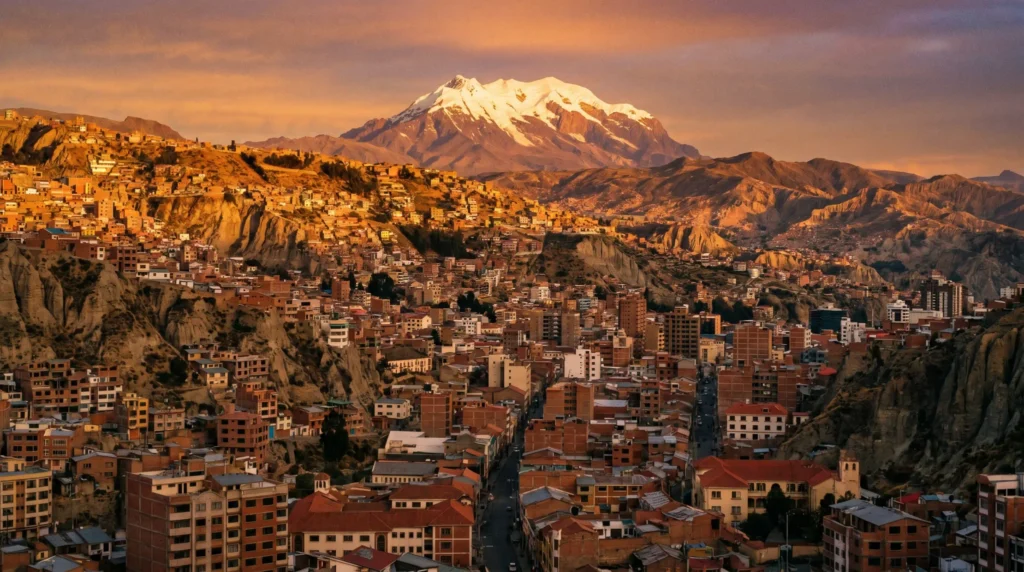
The first thing La Paz does is take your breath away — literally. I stepped out of El Alto airport, the highest international airport on Earth at 4,061 metres, and felt the thin air the moment I lifted my bag . Then the road tips over the rim of the Altiplano and the whole bowl of the city falls away beneath you, a sea of brick houses spilling down a canyon toward the snow cone of Illimani. We tell first-timers that La Paz is unlike any city they have visited: the de facto capital and seat of government of Bolivia sits at about 3,640 metres above sea level, and roughly 755,000 people live inside the city proper, with close to two million across the metro bowl that climbs up to El Alto on the plateau . My standard La Paz morning is an api and a pastel at a market stall, then a glass-cabin ride up the Mi Teleférico cable-car network to watch the city tilt below. Treat this guide as the brief I would hand my own family the day before they flew in — the Witches’ Market, the gilded San Francisco basilica, a cable-car loop at sunset, and the practical realities of altitude and the current safety picture .
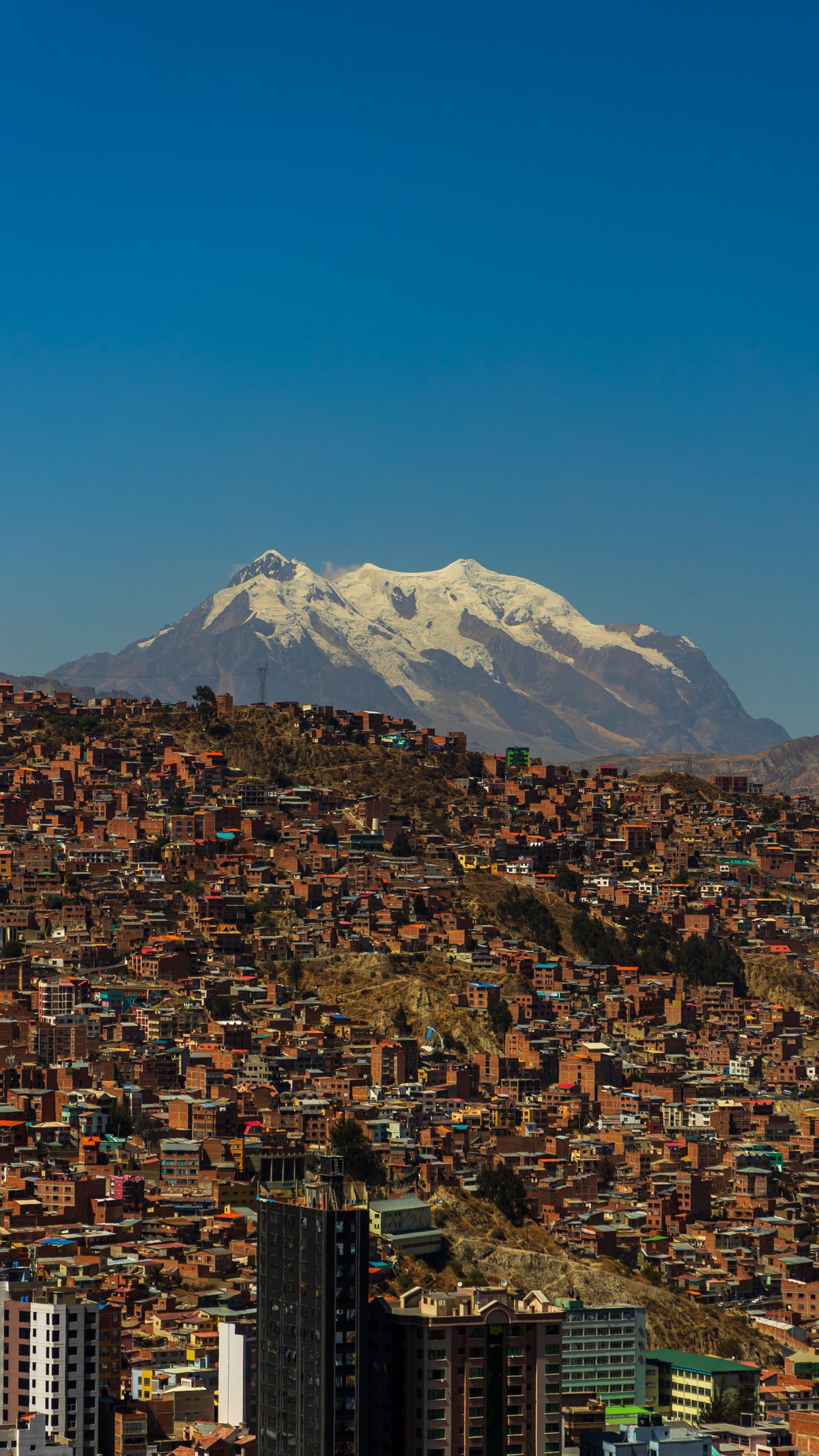
Table of Contents
Why La Paz?
La Paz is the highest seat of government on the planet. Officially Nuestra Señora de La Paz — “Our Lady of Peace” — the city is the administrative capital and seat of government of Bolivia (the constitutional capital, Sucre, keeps the judiciary), and it sprawls across a vast canyon on the edge of the Altiplano at around 3,640 metres above sea level . About 755,000 people live inside the municipality, and close to two million fill the wider basin once you count the twin city of El Alto on the plateau rim above. There is nowhere else quite like it: a metropolis poured into a hole in the high plains, watched over by the perpetual snow of the 6,438-metre Illimani.

The city reads as a study in altitude and contrast. Geography sorts people almost upside-down from most cities: the higher you climb the canyon walls, the thinner the air and, historically, the poorer the neighbourhood, while the wealthier southern valleys (the Zona Sur) sit lower and warmer. The historic core gathers around Plaza Murillo, where the Government Palace and the National Congress face each other, and the steep colonial lanes of Calle Jaén preserve some of the best-kept Spanish colonial buildings in the city . Down those slopes tumble the markets — including the famous Mercado de las Brujas, the Witches’ Market, where Aymara cholitas sell herbs, amulets and dried llama foetuses for traditional Andean offerings.
La Paz’s most modern marvel is overhead. The Mi Teleférico aerial cable-car network — the longest and highest urban cable-car system in the world — now runs ten colour-coded lines across some 30 kilometres of cable, stitching the canyon city to El Alto and gliding silently above the gridlocked streets . Riding it is both the best transit deal and the best sightseeing in the city. Add the indigenous-modernist cholet mansions of El Alto, a thriving Aymara cultural revival, and a food scene that runs from market salteñas to one of South America’s most celebrated fine-dining rooms, and La Paz repays the effort of the altitude many times over.
This guide covers the neighbourhoods you will actually base yourself in, the salteñas and anticuchos and pique macho worth seeking out, the headline sights (San Francisco, Plaza Murillo, the Witches’ Market, Valle de la Luna), the day trips Paceños themselves take — Tiwanaku, Lake Titicaca, the infamous Death Road — and the very real practicalities of acute altitude and Bolivia’s volatile politics. One honest note up front: as of May 2026, the UK FCDO advises against all but essential travel to the department of La Paz, including the city, because of strikes, road blockades and protests near government buildings . Check the latest advice before you commit.
One orientation point worth fixing early: in La Paz, altitude is everything. Almost nothing here happens at a comfortable elevation, and your first 24 to 48 hours will feel slow — that is normal and it passes. The city is also genuinely steep, so you will lean on the cable cars and taxis far more than your feet. Front-load gentle, low-effort sights on day one, sip coca tea, and save the climbs and the day trips for once you have acclimatised. For the wider Bolivian context, this guide pairs with our Bolivia Travel Guide and the sibling Cusco, Lima and Santiago city guides.
Getting There
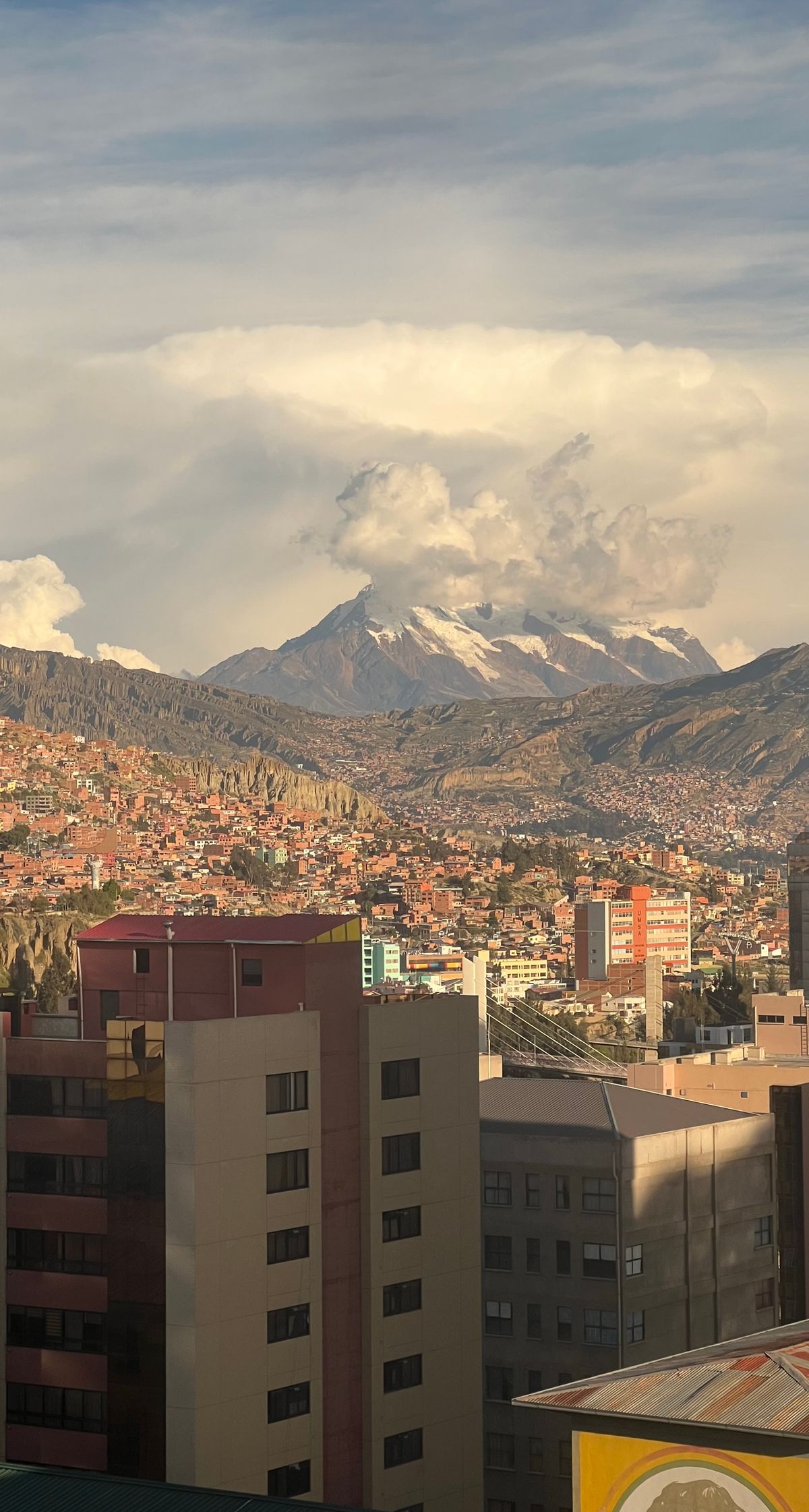
El Alto International Airport (LPB) sits on the plateau about 13 kilometres west of the city centre and, at 4,061 metres above sea level, is the highest international airport in the world — arriving passengers feel the thin air the moment they step off the plane . It handles domestic flights on Boliviana de Aviación (BoA) and others plus regional links to Lima, Santiago, Bogotá and São Paulo. Note that because of the altitude, much long-haul international traffic to Bolivia actually routes through lower-lying Viru Viru airport in Santa Cruz, so you may connect domestically.
From the airport, the cheapest transfer is the Mi Teleférico cable car: the system’s stations on the El Alto rim link down into the city, and a short taxi or minibús ride connects the terminal to the nearest line. A taxi straight from the airport down into central La Paz takes roughly 30–45 minutes and costs around Bs 70–120 (about USD $10–17); always agree the fare first or use a radio-taxi or app .
Overland, long-distance buses connect La Paz with Copacabana, Uyuni, Cochabamba, Sucre and across the borders into Peru and Chile, arriving at the main bus terminal near the centre. Bus is the cheapest option but be aware that road blockades during periods of political unrest can suspend routes at short notice — check current conditions before booking .
Getting Around
La Paz is steep, high and chaotic at street level, so the smartest move is to go up. The Mi Teleférico cable-car network is the unifying glory of the city’s transit: a modern, silent, cheap aerial metro that floats over the traffic and doubles as the best sightseeing in town . At street level a dense web of minibuses and shared trufis, plus regular taxis, fill in the gaps. Walking is rewarding but punishing — remember you are doing it above 3,600 metres, where every climb costs more breath than it would at home.
Mi Teleférico (the Cable-Car Network)
The Mi Teleférico opened its first line — the Red Line — on 30 May 2014, and has since grown into the longest and highest urban cable-car network in the world, with ten colour-coded lines (Red, Yellow, Green, Blue, Orange, White, Sky Blue, Purple, Brown and Silver) covering roughly 30 kilometres of cable . The state operator runs the system about 17 hours a day, and a single ride costs just Bs 3 (around USD $0.40), with a discounted Bs 2 transfer between connecting lines. Cabins arrive every few seconds, so there is rarely a wait. The Yellow Line, climbing from the Sopocachi side up toward El Alto, gives arguably the finest views over the city and out to Illimani; the Red Line links central La Paz to El Alto’s market district.
Minibuses, Trufis and the PumaKatari Bus
The street network is run by a swarm of privately owned minibuses and shared-taxi trufis that follow fixed routes called out by a fare-collector hanging from the door — cheap (a few bolivianos) and authentic, if bewildering to a newcomer. The municipal PumaKatari buses are a more orderly, fixed-stop alternative on the main corridors. Neither is essential for most visitors, who can do almost everything by cable car plus the occasional taxi.
Fares, Tickets and Passes
There is no single integrated travel card across all modes. Cable-car tickets are bought at station entry points immediately before travel — no advance booking exists or is needed — and minibuses and trufis are paid in cash to the conductor. Carry a pocketful of small bolivianos and coins: drivers rarely have change for large notes, and the whole street-transit economy runs on small cash .
Airport Access
- Taxi El Alto airport (LPB) to central La Paz — about 30–45 minutes, roughly Bs 70–120 (USD $10–17)
- Minibús to the El Alto cable-car stations, then Mi Teleférico down into the city — longest but cheapest, a few bolivianos
Taxis and Rideshare
Use only radio-taxis booked by phone or app, or those arranged by your hotel; the FCDO and other governments warn against hailing unmarked street taxis in Bolivia because of “express kidnapping” robberies . Reputable radio-taxi companies and ride apps operate in the city. Agree or confirm the fare before you set off, carry small notes, and avoid sharing a taxi with strangers.
Navigation Tips
La Paz’s topography defeats a flat map quickly — routes that look short on screen may involve a punishing climb. The single most useful trick is to think in cable-car lines and stations, which are colour-coded and easy to follow. Google Maps handles the city’s geometry and the cable-car network reasonably well. Above all, factor the altitude into every plan: what looks like a ten-minute uphill walk can leave a newcomer winded.
Neighbourhoods: Where to Base Yourself
📍 La Paz Map: Every Place in This Guide
La Paz changes character — and altitude — street by street, and choosing the right area shapes the whole trip. The city is sorted vertically: the historic centre and the markets cluster in the middle, the bohemian Sopocachi sits just below, and the wealthier, lower, warmer Zona Sur spreads across the southern valleys. Above it all, on the plateau rim, is the vast indigenous city of El Alto. Below are the areas most first-time visitors actually consider, with an honest read on who each suits.


The Historic Centre and Casco Viejo
The colonial core around Plaza Murillo and the Calle Jaén museum lane is where most first-timers stay: the basilica, the Witches’ Market, the government buildings and the best concentration of budget and mid-range hotels are all within walking distance. It is convenient and atmospheric, though noisy and busy. Stay here for everything on your doorstep; be mindful that it is also the area most affected by protests and blockades near the government buildings.
Sopocachi
Just below and south of the centre, Sopocachi is one of the city’s oldest residential neighbourhoods and its bohemian heart — leafier, calmer, and lined with the best restaurants, cafes and bars in La Paz . It is a short cable-car or taxi hop to the centre and a noticeably more relaxed base for an evening crowd. A strong choice if you want good food and a residential feel over postcard proximity.
Zona Sur (Calacoto and San Miguel)
The southern valleys — Calacoto, San Miguel and the wider Zona Sur — sit several hundred metres lower than the centre, which means warmer air and easier breathing, and they hold the city’s most affluent districts, malls and upscale dining. It is the comfortable, modern, slightly soulless option, well connected by cable car, and the easiest place to acclimatise thanks to the lower altitude. Good for families and longer stays.
El Alto
On the plateau rim at over 4,000 metres, El Alto is technically a separate, younger and larger city — a sprawling indigenous metropolis famous for its enormous Thursday and Sunday markets, its flamboyant cholet mansions and its raw energy. Few tourists sleep here, but a daytime visit by cable car is one of the great La Paz experiences. Treat it as a day trip rather than a base.
Food and Drink: Salteñas, Street Grills and Andean Fine Dining
La Paz eats hearty, high-altitude food built for the cold and the climbs — slow stews, fried-and-stuffed snacks, grilled skewers and warming corn drinks. The city runs the full range from a market stall to one of South America’s most acclaimed restaurants, and the best value is almost always found where the locals eat: the covered markets and the lanes of Sopocachi.

What to Order
- Salteña — Bolivia’s beloved morning pastry: a baked, juicy empanada of beef or chicken with potato, egg, olives and a sweet-spicy gravy, eaten mid-morning.
- Anticucho — grilled beef-heart skewers from street braziers at night, served with potato and a fiery peanut llajwa.
- Pique macho — a mountain of chopped beef, sausage, fries, egg and peppers, the city’s great late-night sharing plate.
- Chairo and api — a hearty Altiplano soup, and a hot purple-corn drink usually paired with a fried pastel for breakfast.
- Humintas — sweet steamed corn cakes wrapped in husks, sold warm from market stalls.
Where to Eat
For markets, the Mercado Lanza in the centre is the classic spot to graze across many stalls, and the Mercado Rodríguez is rawer and more local. Sopocachi holds the best concentration of sit-down restaurants and bars. At the top end, Gustu — founded by Claus Meyer, co-founder of Copenhagen’s Noma — is Bolivia’s most influential restaurant and a pioneer of modern Andean cuisine built entirely on Bolivian ingredients . Book Gustu well ahead; the markets need no reservation at all.
Timing and Etiquette
Salteñas are a strictly mid-morning snack — vendors sell out by lunch. Lunch is the main meal, and the cheap, filling almuerzo set menu is the best-value plate in the city. Anticucho braziers fire up after dark. Tipping is modest — rounding up or leaving 10% in a restaurant is plenty — and at altitude it is wise to eat lighter than you would at home for the first day or two.
Cultural Sights: The Unmissable Few (and More)
La Paz’s headline sights cluster in and just below the colonial centre, most within a short, if breathless, walk of Plaza Murillo — the basilica, the market lanes, the museum street of Calle Jaén and the government core. Add a cable-car ride and the lunar badlands on the city’s edge and you have two full days of sightseeing without ever needing a long transfer.

The Witches’ Market (Mercado de las Brujas)
Up the steep lanes above San Francisco, the Mercado de las Brujas is the city’s most famous and most photographed market, where Aymara yatiri healers sell medicinal herbs, amulets, soapstone charms and the dried llama foetuses traditionally buried under new buildings as an offering to Pachamama, the earth mother . It is a working market of living Andean belief, not a tourist set-piece — browse respectfully and ask before photographing the vendors.
San Francisco Basilica
The Basilica of San Francisco, on the plaza of the same name, was built from 1743 and is the city’s great colonial church — a mestizo-baroque facade carved with Andean motifs over a stone interior, with a museum and rooftop terrace giving fine views over the old town . The plaza in front is the city’s social hub and a frequent gathering point for marches and demonstrations.
Plaza Murillo and Calle Jaén
Plaza Murillo is the political heart of Bolivia, ringed by the Government Palace (the Palacio Quemado), the National Congress and the cathedral . A few blocks away, the narrow colonial Calle Jaén preserves the best-kept Spanish colonial houses in the city and packs several small museums into one short, picturesque lane — an easy, low-altitude-effort morning. Be aware the plaza is the focal point for protests; check the day’s news before visiting.
Valle de la Luna
On the southern edge of the city, the Valle de la Luna (“Valley of the Moon”) is a small, otherworldly badland of eroded clay pinnacles, reachable in under half an hour from the Zona Sur and walkable on marked trails. It is an easy, lower-altitude half-day that pairs well with a cable-car ride south. Go in the morning before the afternoon clouds build.
Nightlife, Markets and Cholita Wrestling
La Paz’s after-dark scene is younger and stranger than its altitude suggests, anchored by Sopocachi’s bars, the city’s peñas of live Andean music, and one gloriously unique spectacle — cholita wrestling up in El Alto. Between the markets, the music and the lucha libre, the city stays up later than its thin air implies.

Sopocachi Bars and Peñas
Sopocachi is the heart of the city’s nightlife, with a dense run of bars, craft-beer taps and live-music venues that fill after 10pm with a young, local crowd. For traditional Andean folk music, look for a peña — an intimate venue with charango and panpipe sets, often paired with dinner. The altitude makes alcohol hit harder and faster, so pace yourself, especially in your first days.
Cholita Wrestling in El Alto
The city’s most famous spectacle is cholita wrestling: indigenous Aymara women in full traditional dress — bowler hats, layered pollera skirts — performing theatrical lucha-libre matches in El Alto, usually on Sunday afternoons. It is part sport, part pantomime, part cultural reclamation, and a genuinely joyous evening. Most visitors go on an organised tour, which handles the transport up to El Alto and back.
El Alto Markets and the Cable Car at Night
The vast El Alto markets — especially the Thursday and Sunday feria 16 de Julio — are an experience in themselves, a sprawling sea of stalls selling everything imaginable. Riding the Mi Teleférico back down into the city at dusk, with the canyon filling with light below, is one of the great free shows in La Paz .
Day Trips From La Paz
La Paz is the natural base for some of South America’s most extraordinary day trips — an ancient pre-Inca capital, the sacred lake of the Andes, and the world’s most infamous cycling descent. Save these for once you have acclimatised; all involve either more altitude or a long road journey, and the high-altitude ones are no fun on a queasy first day.

Tiwanaku (about 1.5 hours by road)
The pre-Columbian archaeological site of Tiwanaku, roughly 70 kilometres west of the city, was the spiritual and political capital of a powerful Andean empire that peaked between AD 500 and 900, and has been a UNESCO World Heritage Site since 2000 . Its Gate of the Sun, sunken temple and monoliths make it Bolivia’s most important ancient site — an easy half- or full-day with a guide.
Lake Titicaca and Copacabana (about 3.5 hours by road)
The shores of Lake Titicaca, the highest navigable lake in the world, are reached via the pilgrimage town of Copacabana, from where boats run to the Isla del Sol, the legendary birthplace of the Inca sun god. It is doable as a very long day but far better as an overnight; the lake light and the sacred island reward the slower pace.
The Death Road (Yungas Road, a full day)
The North Yungas Road — long branded “the world’s most dangerous road” — drops thousands of metres from the high Altiplano into the humid Yungas, and is now ridden almost exclusively by mountain-bikers on guided descents. Go only with a reputable operator with good bikes and guides, and treat the safety record seriously.
When to Visit: A Season-by-Season Guide
La Paz sits on the high Altiplano, so its climate is governed less by hot-and-cold seasons than by wet-and-dry ones. Days can be mild and intensely sunny year-round, but nights are always cold, and the rains transform the city’s mobility. Here is how the year actually feels on the ground.
Autumn / Dry Season Start (March–May)
As the wet season fades through March and April, the skies clear and the city dries out — this is the start of the prime window. Days are mild and sunny, nights cold, the mountain views sharpen, and the crowds have not yet peaked. May in particular offers reliable clear weather and easier travel before the high season.
Winter / Peak Dry Season (June–August)
The Southern Hemisphere winter is, counter-intuitively, the best time to visit: bone-dry, brilliantly clear days, the sharpest Illimani views of the year, and dependable roads for day trips. The trade-off is genuinely cold nights, often below freezing, and the busiest, priciest months. Pack serious warm layers for after dark.
Spring / Dry Season End (September–November)
September and October stay dry, sunny and a touch warmer than midwinter — a lovely, quieter window before the rains return. From November the afternoon storms begin to build. Early spring is one of the best times to visit; late spring starts to bring the first wet-season disruption.
Summer / Wet Season (December–February)
The Altiplano summer is the rainy season: warmer but with frequent heavy afternoon downpours that flood streets, snarl traffic and can wash out day-trip roads. Cloud often hides the mountains for days at a time. It is the cheapest, quietest season, and mornings can still be clear, but pack waterproofs and build in flexibility for transport delays.
Budget Breakdown: What La Paz Actually Costs
La Paz is one of the best-value capital cities in South America — far cheaper than Lima, Santiago or Buenos Aires for food, lodging and transport. The figures below are per-person daily estimates excluding flights, in US dollars, based on 2025–2026 prices.
Backpacker (USD $25–40/day)
A hostel dorm bed runs $7–14; market almuerzo lunches and street food keep eating to $5–10; the cable cars cost cents a ride and the historic core is free to walk. Budget one or two paid sights and you stay comfortably under $40.
Mid-Range (USD $55–95/day)
A comfortable three-star hotel or central apartment is $35–65 for a double; add $20–35 for restaurant meals, a few dollars for taxis and cable cars, and the odd museum or guided tour. This is the typical comfortable-tourist band.
Luxury (USD $180+/day)
A top hotel such as the Atix in the Zona Sur runs $150–280+, a tasting menu at Gustu adds $60–110, and private guides and day trips push the day well past $180. Even at the top end, La Paz costs a fraction of a comparable Western city.
Key Fixed Costs
- Single Mi Teleférico cable-car ride — Bs 3 (about USD $0.40)
- Cable-car transfer between lines — Bs 2
- Taxi from El Alto airport to the centre — about Bs 70–120 (USD $10–17)
- Salteña or market almuerzo — a few US dollars
- Guided Tiwanaku or Death Road day trip — from roughly USD $30–90
Practical Tips, Altitude and Safety
La Paz asks more of a visitor than most cities — not because it is unwelcoming, but because of two unavoidable realities: the extreme altitude and Bolivia’s volatile politics. A handful of sensible habits makes the difference between a smooth trip and a miserable or risky one. None of this should put you off; it is simply the homework this particular city demands.
Altitude (the most important thing)
At about 3,640 metres, La Paz is high enough that most newcomers feel altitude sickness — headache, breathlessness, nausea — for the first day or two . Arrive with nothing strenuous planned, drink far more water than feels natural, eat lightly, avoid alcohol at first, and lean on the local remedies of coca tea and rest. Anyone with heart or lung conditions should consult a doctor before travelling, and the prescription drug acetazolamide can help — ask your doctor before you go.
Money and Payments
Bolivia uses the boliviano (Bs); cash is king, and many small businesses, markets, taxis and street vendors take cash only, so carry plenty of small notes and coins. Cards work in better hotels, restaurants and malls. ATMs are common in the centre and Zona Sur but can run dry during unrest — withdraw a buffer when you can.
Safety, Scams and Civil Unrest
As of May 2026 the UK FCDO advises against all but essential travel to the department of La Paz, including the city, citing strikes, road blockades and protests near government buildings that can turn violent and escalate quickly . The US State Department rates Bolivia overall Level 2, “exercise increased caution” . Beyond the politics, the everyday risks are petty theft, “express kidnapping” via unofficial taxis, and fake-police scams — use only radio or app taxis, keep valuables hidden, and never hand documents to anyone in the street.
Frequently Asked Questions
How many days do you need in La Paz?
Three full days is the sweet spot: one gentle acclimatising day for the central sights, one for the cable cars and the Valle de la Luna, and one for a day trip to Tiwanaku or Lake Titicaca. Build in a slack day if you can — altitude and the risk of strikes both reward a flexible plan. Two days covers the city at a rush; four or more lets you add an overnight at Titicaca.
Is La Paz safe for solo travellers?
It can be, with care, but check the current advice first — as of May 2026 the UK FCDO advises against all but essential travel to the city because of unrest. Beyond the politics, the main everyday risks are petty theft and unofficial-taxi scams, so use only radio or app taxis, avoid demonstrations, keep valuables hidden and stay alert in crowded markets. Many solo travellers visit happily, but it demands more situational awareness than a typical European city.
How does the Mi Teleférico cable-car network work for visitors?
Brilliantly, and it is the single best thing about getting around. The network runs ten colour-coded lines over about 30 kilometres of cable, a single ride costs just Bs 3, and tickets are bought at the station right before you travel — no passes or advance booking needed. It floats over the traffic, doubles as the best sightseeing in the city, and is the easiest way to move while you acclimatise.
What about the language barrier?
Spanish is the main language, alongside widely spoken Aymara and Quechua, and English is limited outside hotels and tour agencies. A little Spanish goes a long way, and a translation app covers the gaps. Numbers and prices are the most useful phrases to learn for markets and taxis.
What is the best time of year to visit La Paz?
The dry season from May to September is best: brilliantly clear, sunny days, the sharpest mountain views and reliable roads for day trips, though nights are cold and it is the busiest season. The November–March wet season brings heavy afternoon rains, traffic chaos and clouded-over mountains, but lower prices and thinner crowds.
Can I use credit cards everywhere?
No — La Paz is a cash economy. Markets, street food, taxis and smaller shops are cash-only in bolivianos, and only better hotels, restaurants and malls reliably take cards. Carry plenty of small notes and coins, especially for the cable cars and minibuses, and withdraw a buffer when ATMs are working, as they can run dry during unrest.
How do I cope with the altitude in La Paz?
Take it slowly. At 3,640 metres most people feel headachy and breathless for a day or two, so plan nothing strenuous on arrival, drink lots of water, eat lightly, skip alcohol at first, and rest. Coca tea is the local remedy, and the drug acetazolamide can help — ask your doctor before you travel, especially if you have any heart or lung condition .
Was This Guide Helpful?
We update our La Paz guide as prices, transit and the safety picture change. Let us know if it helped — your feedback shapes the next revision.
Ready to Experience La Paz? Take It Slowly
La Paz rewards a patient traveller. Its setting is the most dramatic of any city in South America — the canyon, the cable cars, the snow line of Illimani — but the city asks you to slow down for the altitude and to keep an eye on the news for the politics. Acclimatise gently, ride the Teleférico, eat at the markets, and the city opens up. For the wider picture, see our Bolivia travel guide, and pair La Paz with Cusco, Lima and Santiago for a complete Andean trip.
Explore More City Guides
La Paz is one stop in our growing library of Andean and South American city guides. Keep planning with these companion pages:
More city guides you might like

Plan your trip to La Paz
The booking tools we use ourselves. FFU may earn a commission at no extra cost to you.
Plan & book your trip to La Paz
Booking through these searches supports our guides at no extra cost to you.