
City Guide · Banat, Western Romania
Timișoara, Romania: Little Vienna, the Spark of a Revolution, and Europe’s First City of Electric Light
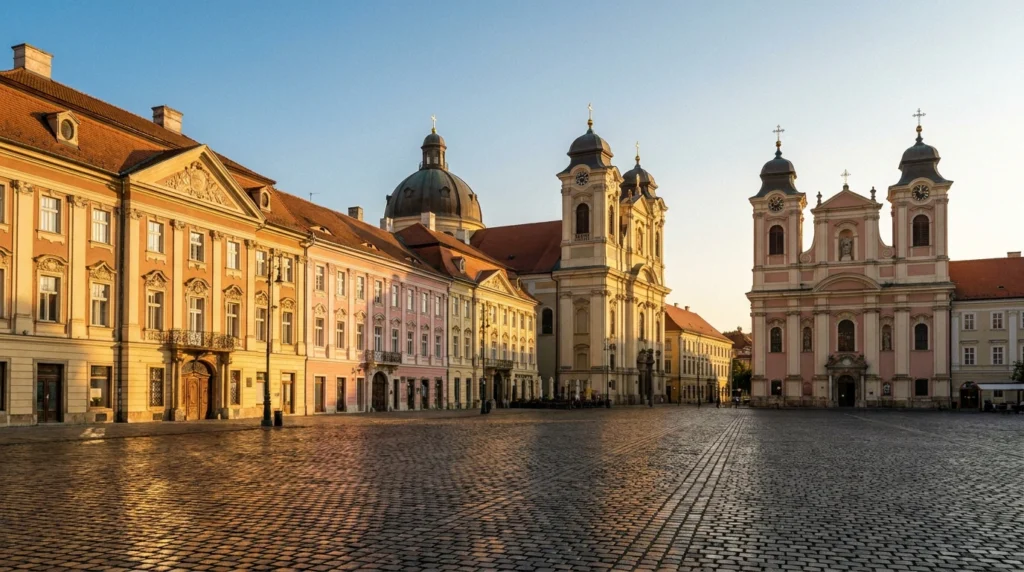
I came to Timișoara expecting a footnote and left convinced it is one of Central Europe’s most underrated city breaks. We tend to fly travellers into Bucharest and bus them up to Transylvania, skipping the Banat entirely — and that is a mistake, because this is the city where the 1989 revolution that toppled Ceaușescu actually began, the first place in continental Europe lit by electric street lamps back in 1884, and a 2023 European Capital of Culture that finally restored its pastel Habsburg squares . My standard Timișoara morning is a long coffee on Piața Victoriei facing the soaring Orthodox cathedral, then a slow loop through baroque Piața Unirii before the terraces fill. Treat this guide as the brief I would hand my own family the night before they flew in to Traian Vuia airport — the three great squares, a Bega canal boat, the Memorial of the Revolution, and where to eat between them .
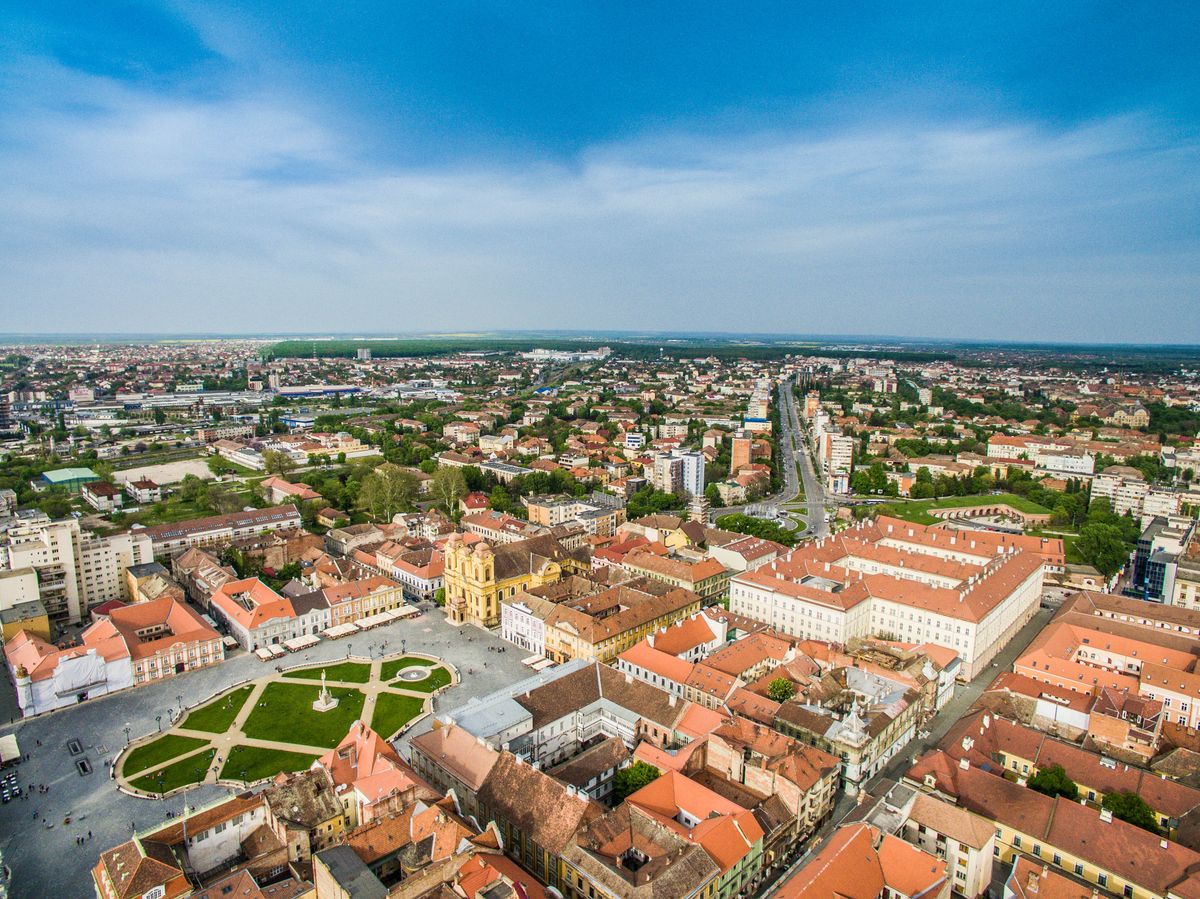
Table of Contents
Why Timișoara?
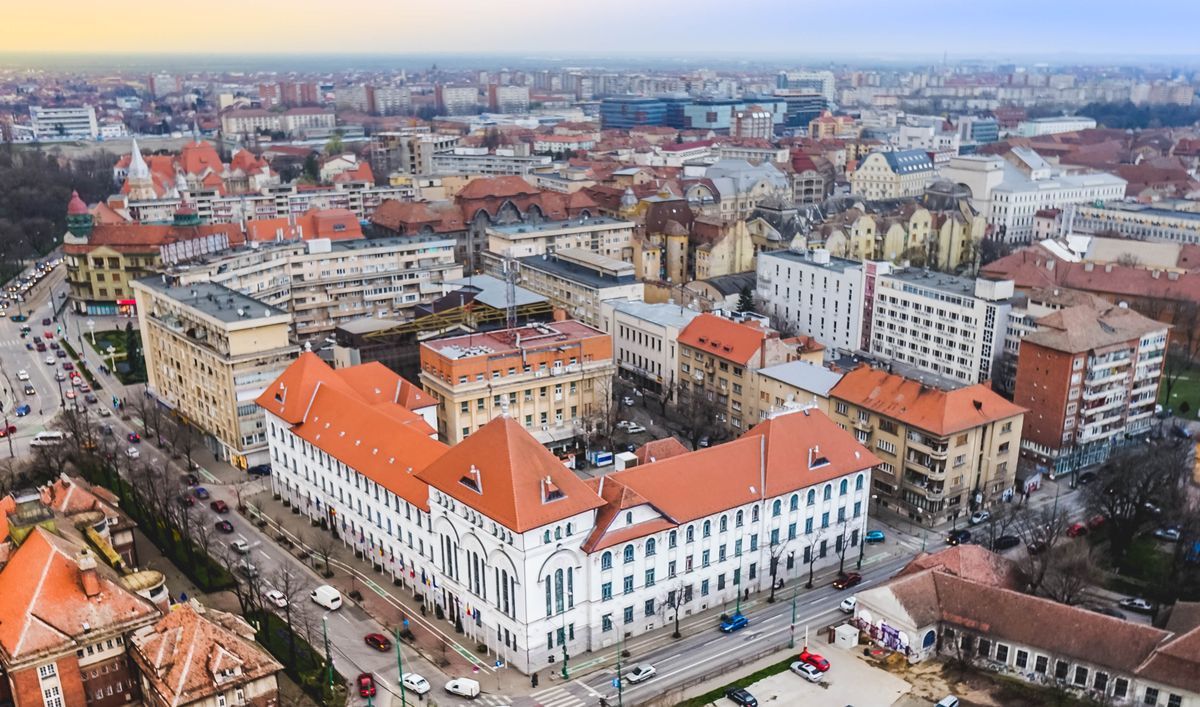
Timișoara is the capital of the Banat — the flat, fertile plain of western Romania that for centuries belonged more to Vienna and Budapest than to Bucharest — and it wears that mixed inheritance on every facade. It is Romania’s third-largest city, with roughly 250,000 residents inside the municipality at the 2021 census and about 430,000 across the wider metropolitan area, the dominant urban centre of the country’s west . First recorded in 1212 and sitting on the slow green Bega Canal, it spent the 18th and 19th centuries as a Habsburg garrison town, and the result is a centre of pastel baroque palaces and broad squares that earned it the nickname “Little Vienna” .
The city reads as a stack of firsts and turning points. In 1884 it became the first city in continental Europe to install electric street lighting, switching on 731 lamps powered by a local hydro plant . A century later, in December 1989, the protests that began here around the defence of a dissident pastor lit the fuse of the Romanian Revolution that ended the Ceaușescu regime — the reason Timișoara still calls itself the country’s “first free city”. And in 2023 it held the title of European Capital of Culture, an honour that funded a sweeping restoration of its squares, museums and theatres .
What makes it unusually rewarding to walk is the multicultural grain. Timișoara has historically been home to more than 20 ethnic groups — Romanian, Hungarian, German and Serbian above all — and that shows in a Roman Catholic cathedral, an Orthodox metropolitan cathedral, a Serbian Orthodox church and a great synagogue all within a few minutes of one another . The State Theatre famously stages plays in Romanian, German and Hungarian under one roof. For a city of this size, the cultural depth is remarkable, and almost none of it is crowded.
This guide covers the neighbourhoods you will walk, the Banat food worth seeking out, the cathedral-and-square sights, the day trips locals take at weekends, and the practical realities of a Schengen Romania. Time it well and Timișoara delivers a graceful, low-cost city break with the polish of Vienna and the prices of Romania.
Neighborhoods: Where to Base Yourself
📍 Timișoara Map: Every Place in This Guide
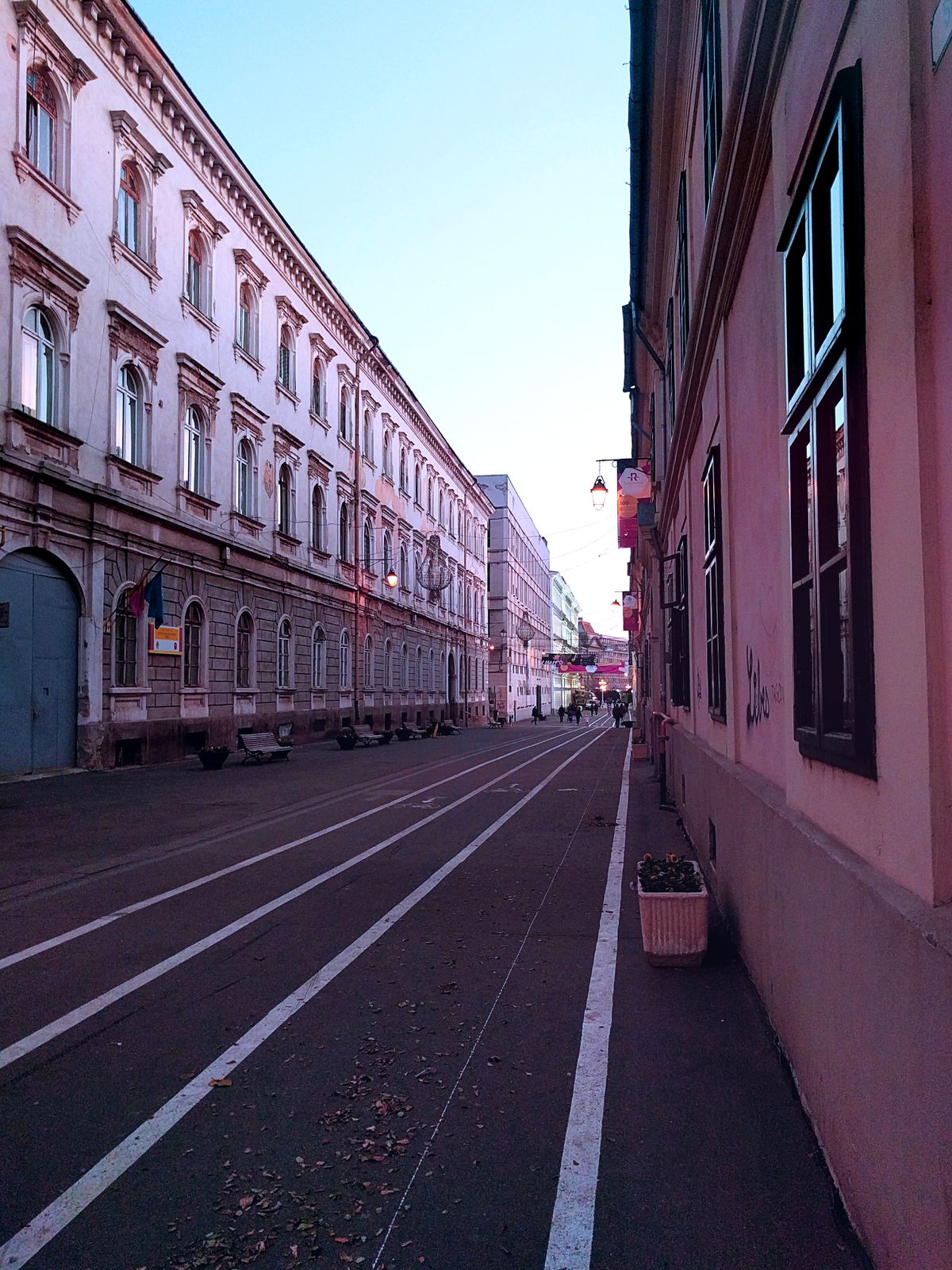
Timișoara’s character changes square by square, and choosing the right area shapes the whole trip. The historic core is compact and flat — you can walk between the three main squares in ten minutes — but each quarter has its own rhythm, price point and crowd. Below are the neighbourhoods most first-time visitors actually consider, with an honest read on who each suits. The good news is that there are no genuinely awkward bases here: the centre is so small that even the “outer” districts are a flat fifteen-minute walk or a couple of tram stops from Piața Victoriei, so the choice is really one of atmosphere and budget rather than convenience.
A useful mental map: the Bega Canal curls through the city, with the old fortress town of Cetate as the tourist heart. Fabric lies east across the water, Iosefin south-west toward the trains, and Elisabetin south toward the parks and the university.


Cetate (the Fortress / Old Town)
Cetate is the historic walled core and the postcard Timișoara — all three great squares, the cathedrals, the castle and the best of the restored baroque sit inside it. It is the obvious base on a first visit: everything is on your doorstep and the lanes are flat and walkable. It is also the most touristed and slightly pricier, and the square-side terraces run late, so light sleepers should ask for a courtyard room. The accommodation here skews toward boutique hotels in restored townhouses and a handful of grand old-school properties on the boulevards, with prices that still undercut comparable rooms in Bucharest or Cluj. Wake early and the squares are yours; by mid-morning the cafe tables fill and the city’s gentle bustle begins.
- Piața Victoriei and the Orthodox cathedral
- Piața Unirii and Piața Libertății
- Huniade Castle and the Bega quays
Best for: first-timers who want everything within a ten-minute walk. Access: central; most trams and the airport E4 bus stop at Bastion or the nearby boulevards.
Fabric
East across the Bega, Fabric was the old industrial and craftsmen’s district — its name comes from the German for “factory” — and it carries some of the city’s most atmospheric, faded-grand architecture along with a strong Serbian and Hungarian heritage. It is quieter and cheaper than Cetate, increasingly dotted with cafes, galleries and studios, and a short walk or tram ride from the centre. This is the district to choose if you like your cities lived-in rather than polished: ornate but weathered facades, a working synagogue, antique shops and a slow gentrification that has yet to push prices up. Stay here and you swap the square-side buzz for a residential quiet and an easy sense of the real, multi-ethnic Timișoara.
- Piața Traian, Fabric’s own square
- The Synagogue in Fabric
- Independent cafes and antique shops
Best for: travellers who want a residential, characterful base with room to breathe. Access: a 15-minute walk or a couple of tram stops from Piața Unirii.
Iosefin
South-west of the centre toward the North railway station, Iosefin is a handsome, leafy 19th-century quarter with its own market hall, grand apartment buildings and a slower local pace. It is well-priced, close to the trains, and an easy walk along the Bega into the old town — a good pick if you arrive by rail or want a quieter neighbourhood feel. The architecture here is some of the city’s prettiest away from the squares: ornate eclectic and secession-style apartment blocks line the streets, and the daily market is a genuine local affair rather than a tourist set-piece. Cafes and small restaurants have multiplied in recent years, giving Iosefin a relaxed, residential charm that suits travellers who want to feel like temporary locals.
- Iosefin market hall
- The Millennium Church
- Bega-side walking paths
Best for: rail arrivals and value-seekers who like a local neighbourhood. Access: walking distance to Timișoara Nord station; trams along the main boulevards.
Elisabetin and the University Quarter
South of the centre, Elisabetin is the green, residential, student-flavoured side of the city — tree-lined streets, the rose garden parks along the Bega, and a younger crowd around the West University. Prices are gentle, the cafes are good, and it is a flat fifteen-minute walk or a quick tram into the squares. The villa-lined streets and the riverside parks make it the most relaxed base of the four, ideal if you value morning runs along the Bega and leafy quiet over square-side nightlife. The student presence keeps the cafes lively and cheap, and the rose gardens that gave the city its “City of Roses” nickname are right on the doorstep.
- The Bega-side rose parks
- West University campus cafes
- Elisabetin’s villa-lined streets
Best for: a calm, green, budget-friendly base near the parks. Access: trams and a flat walk to Piața Victoriei.
Which Area Should You Pick?
For a first short visit, base yourself in Cetate — the convenience of having all three squares on your doorstep is worth the small premium and the late-night terrace noise. If you are staying longer, want better value, or simply prefer a residential feel, Iosefin and Elisabetin both deliver leafy calm within an easy walk, while Fabric rewards travellers who want character and quiet over polish. Rail arrivals lean naturally to Iosefin; park-lovers and younger visitors to Elisabetin; and anyone whose priority is simply walking everywhere should not overthink it and book in the fortress core.
The Food: Banat Flavours and a Habsburg Sweet Tooth
Timișoara’s food is the Banat at the table — Romanian at its base but seasoned by centuries of Hungarian, German, Serbian and Jewish neighbours. Expect hearty stews and grilled meats, paprika and smoked sausage, central-European pastries, and a strong cafe culture that the city has had since its Habsburg days. It is unfussy, generous and, by Western European standards, remarkably cheap. What sets the city apart from the rest of Romania is that mixed inheritance: a single menu might run from Romanian sarmale to Hungarian goulash to Serbian grilled meats, and the bakeries sell strudel and chimney cake alongside the local cozonac. Add the new-wave kitchens and specialty roasters that the 2023 capital-of-culture year helped spawn, and you have a food scene that is far more interesting than its modest prices suggest.

Banat Classics
The regional staples are filling and meat-forward. Look for gulaș (the Hungarian-rooted goulash), smoked Banat sausages, schnitzel-style șnițel, and the national favourites that everyone makes here too — sarmale (cabbage rolls), mici (grilled minced-meat rolls) and creamy papanași for dessert. The Banat plain is fertile farmland, so vegetables, dairy and pork are excellent and seasonal; in autumn the markets fill with peppers, plums and the makings of zacuscă, the smoky vegetable spread that every household bottles. Portions are large and prices low, so order one fewer dish than you think you need.
- Sarmale cu mămăligă — cabbage rolls with polenta, the comfort plate (around RON 35–50)
- Mici with mustard — grilled minced-meat rolls, the classic beer snack (around RON 5–8 each)
- Gulaș — paprika beef stew, the Banat’s Hungarian inheritance (around RON 35–55)
Cafes, Pastry and the Sweet Tooth
The Habsburg legacy is sweetest in the cafes. Timișoara takes its coffee and cake seriously, from grand old-town coffee houses to new third-wave roasters around the squares. Try the Banat and Hungarian pastries — kürtőskalács chimney cake, strudels, and the ubiquitous papanași. Coffee culture here predates the third-wave boom by a couple of centuries: the city’s cafes were once social institutions on the Viennese model, and several grand old rooms survive. The newer roasters cluster around Piața Victoriei and Piața Unirii, serving filter and flat whites at a fraction of Western prices, and most double as relaxed all-day spots to work or watch the squares.
- Papanași — fried doughnuts with sour cream and jam (around RON 25–35)
- Kürtőskalács — spit-roasted chimney cake from street stalls (around RON 15–25)
- Specialty coffee — flat white or filter at a square-side roaster (around RON 12–18)
Beyond Sarmale and Mici
The multicultural larder runs deep, and the new-wave kitchens around Piața Unirii and Fabric are reinventing it. Seek out Serbian-influenced grills, Hungarian lángos, and the seasonal produce of the Banat plain.
- Lángos — deep-fried dough with cheese and sour cream, market-stall comfort (around RON 12–20)
- Ciorbă de burtă — sour tripe soup, a Romanian classic (around RON 25–35)
- Grilled river fish — from the Bega and the Banat ponds (around RON 45–70)
- Local Recaș wine — a glass from the nearby vineyards (around RON 15–30)
Food Experiences You Can’t Miss
- A long coffee-and-cake morning at a Piața Victoriei terrace, watching the cathedral catch the light
- Grazing the Iosefin or Mehala market halls for sausages, cheeses and Banat produce
- A tasting trip out to the Recaș vineyards, 25 km east, one of Romania’s biggest wineries
Cultural Sights: The Three Squares and Beyond
Timișoara’s sights cluster tightly inside the old fortress town, and most of the headline ones sit within a ten-minute walk of one another between the three great squares. Add the castle, the Bega quays and the revolution memorials and you have a comfortable two full days of sightseeing without ever needing a tram . The 2023 European Capital of Culture year poured restoration money into almost all of them, so the squares, museum facades and theatres are in the best condition they have been in for generations — freshly cleaned baroque stone, repaved pedestrian zones and reopened collections. The pleasure here is less about ticking off blockbuster museums than about walking a beautifully restored historic city where the layers of empire, faith and revolution are all visible within a few hundred metres.
Piața Victoriei (Victory / Opera Square)
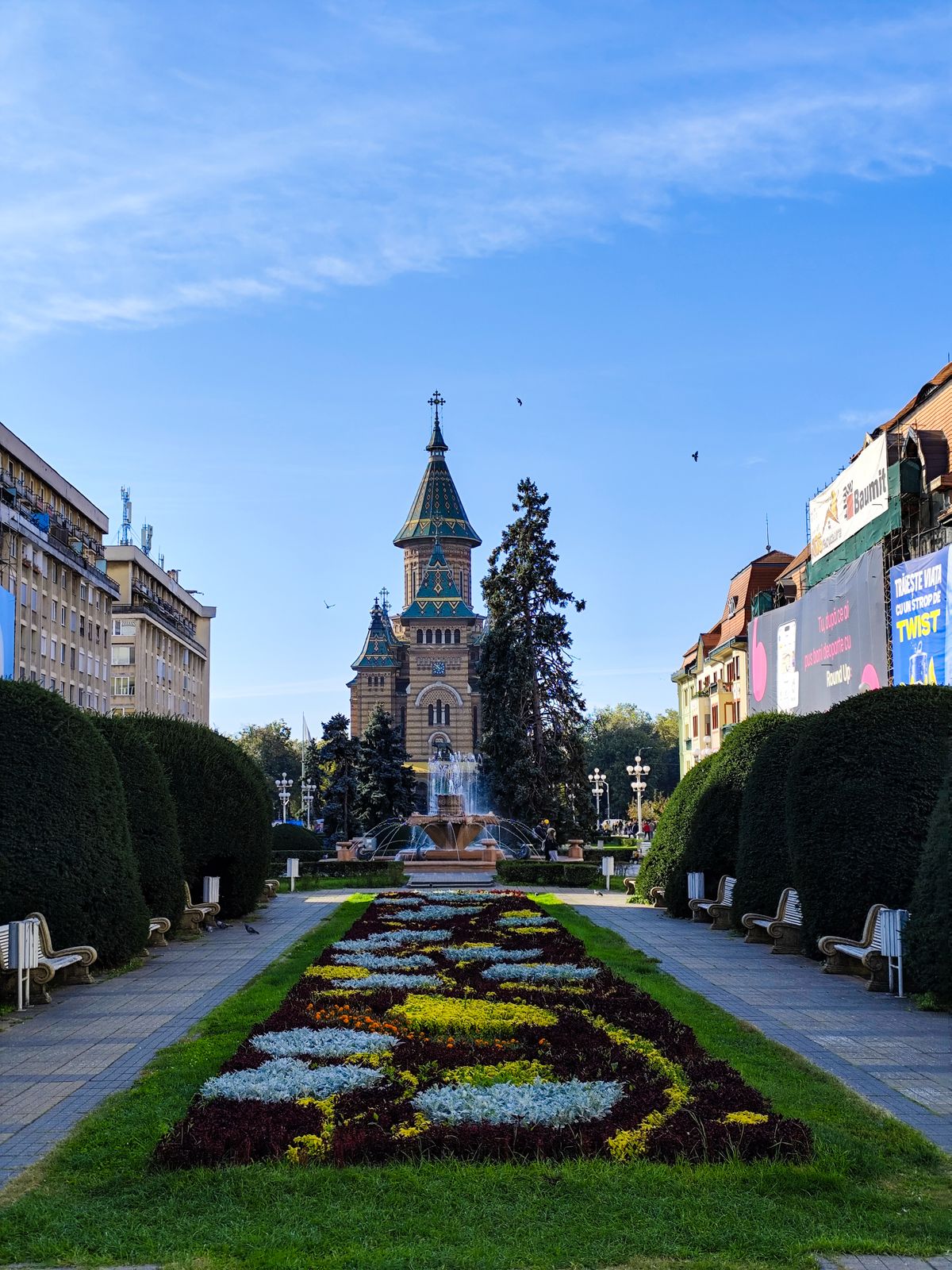
The long pedestrian rectangle of Piața Victoriei is the city’s living room, framed by the National Theatre and Opera at its north end and the towering Orthodox cathedral at the south. It was here, on the balcony of the Opera, that protesters declared Timișoara a free city in December 1989 — the square is sometimes called Opera Square for that reason . Free to wander; the terraces and fountains run its full length.
The Orthodox Metropolitan Cathedral
Built between 1936 and 1946 in a striking Romanian-Byzantine style with a Moldavian-inspired tiled roof, the cathedral’s eleven towers rise to about 90 metres, making it one of the tallest churches in Romania . Entry is free; step inside for the gilded iconostasis and the crypt memorial to those killed in the 1989 revolution. Best photographed from the far end of Piața Victoriei.
Piața Unirii (Union Square)
The oldest and most beautiful of the three squares, baroque Piața Unirii is ringed by pastel 18th-century palaces and faces off between the Roman Catholic St George’s Cathedral (the Dome, 1736–1774) and the Serbian Orthodox Cathedral across the cobbles — a single square holding two faiths and the Habsburg plague column between them . Free to wander; busiest and prettiest in the evening light.
Piața Libertății (Liberty Square)
The smallest and most central of the trio, Liberty Square sits between the other two and holds the old town hall and the military casino. It is the link in the chain — a five-minute stroll connects all three squares in sequence, the classic first-day walk. Historically this was the city’s military and administrative heart, and its more austere, parade-ground feel makes a nice contrast with the showy baroque of Unirii and the grand civic theatre of Victoriei. Pause here to appreciate how compact the old fortress town really is: three of Europe’s prettiest squares within a few minutes’ walk of one another, each with a completely different character.
Huniade Castle
The oldest building in the city, Huniade Castle was raised in the 14th–15th centuries on Angevin foundations and rebuilt by John Hunyadi around 1443; it now houses the National Museum of Banat . Admission is modest (around RON 15–20); check current hours, as it reopened after a long restoration around the 2023 capital-of-culture year.
The Memorial and Museum of the Revolution
For the December 1989 story, the Memorial of the Revolution and its small but moving museum document how the protests around pastor László Tőkés escalated into the uprising that ended Communist rule in Romania . Admission is small; allow an hour, and pair it with the cathedral crypt for the full weight of the events.
The Bega Canal and the Synagogues
The Bega, canalised between 1728 and 1760, loops the centre with tree-lined quays and is best seen from one of the small electric tour boats that ply it in season . The river was once a working waterway linking Timișoara to the Danube; today its green banks are the city’s linear park, lined with walking and cycling paths, rowing clubs and the rose gardens. A boat ride is the most relaxed way to read the city, sliding past the Water Palace, the bridges and the backs of the old quarters. Nearby, the Fabric and Cetate synagogues stand as monuments to the city’s once-large Jewish community — another layer of Timișoara’s interwoven faiths, alongside the Orthodox, Catholic and Serbian cathedrals all within the same small centre.
Entertainment: Theatre, Terraces and Festivals
Timișoara’s nightlife is younger and looser than its grand squares suggest — this is a university city with a big student population — and its cultural calendar punches far above its size, a legacy reinforced by the 2023 capital-of-culture year. Between the square terraces, the riverside bars and the multilingual theatres, the city stays up far later than its sightseeing hours imply.
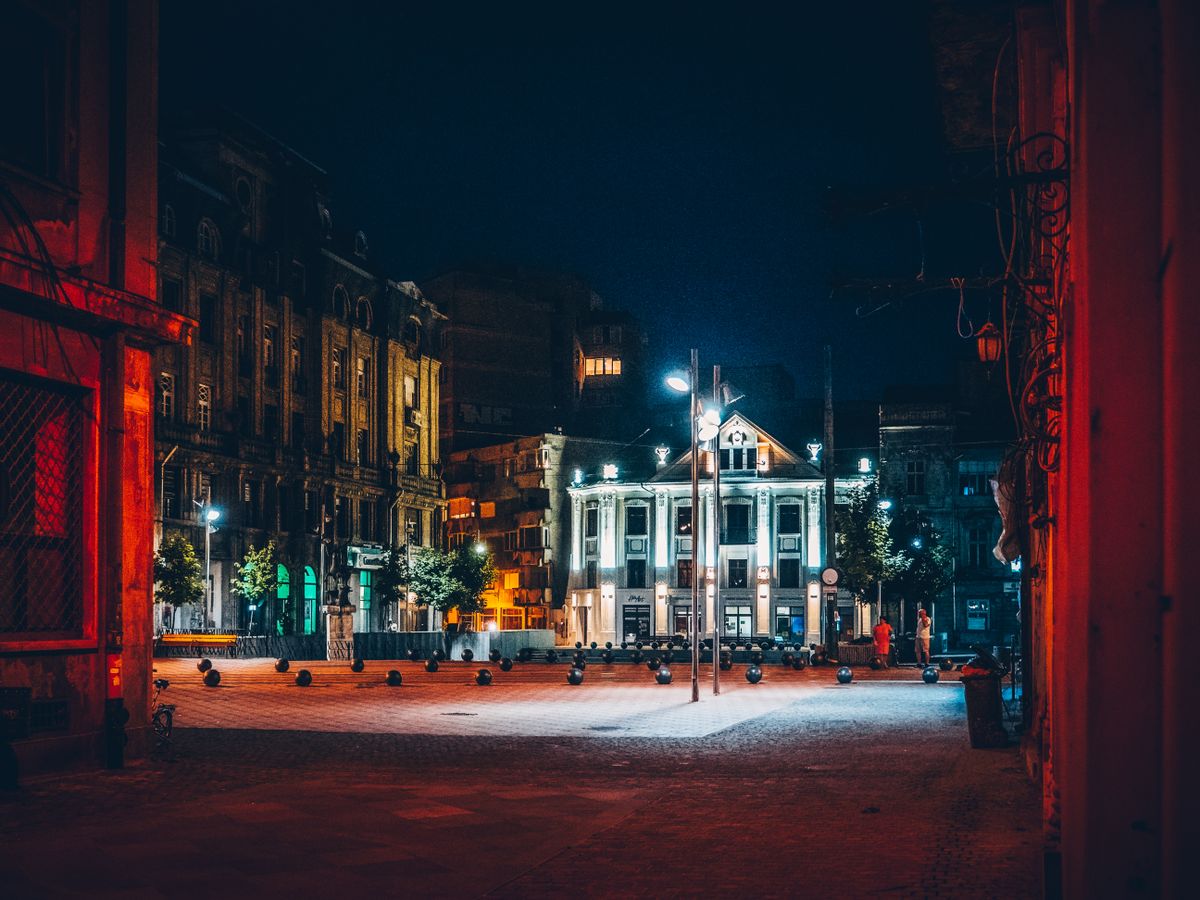
The Squares After Dark
The simplest entertainment is the evening corso — the slow stroll between the three squares as the facades are floodlit and the terraces fill. Piața Victoriei and Piața Unirii are wall-to-wall cafes and bars; a drink costs a fraction of a Western European city. Typical cost: a beer RON 12–18, a cocktail RON 25–40. No booking needed; just wander and pick a terrace.
Theatre and Opera
The National Theatre and Opera complex on Piața Victoriei is unusual in Europe: it houses Romanian, German and Hungarian state theatre companies under one roof, a direct reflection of the city’s mixed population . Tickets are inexpensive by Western standards (often RON 30–80); book online or at the box office, especially for opera and the German-language productions.
Live Music and Student Bars
The lanes around Piața Unirii and the student quarter near the West University fill after midnight with small bars, craft-beer spots and live-music venues. Typical cost: entry to most bars is free, drinks as above. It is an easy, walkable scene — the whole centre is bar-dense and safe to roam on foot, and because the student population is large, the energy is youthful and unpretentious rather than glossy. Summer pushes everything outdoors onto the squares and the Bega-side terraces; in winter it retreats into snug cellar bars and the old coffee houses.
Festivals
The capital-of-culture year left a busy events calendar behind it: light festivals, the JazzTM festival, classical seasons and street arts run through spring and summer, with the December revolution anniversary marked solemnly each year . Typical cost: many events are free; ticketed festivals vary. Check the Discover Timișoara calendar before you travel.
Day Trips From Timișoara
Timișoara sits in the far west of Romania, closer to Belgrade and Budapest than to Bucharest, which makes it an unusual base — the best day trips mix Banat wine country, neighbouring Romanian cities and easy hops across two international borders. If you have more than two days, give one to a trip out; the contrast sharpens your sense of what makes Timișoara distinct. This corner of the country is genuinely a crossroads: within a couple of hours by road you can be in Serbia or Hungary, sampling the same Banat landscape under three different flags. Closer to home, the flat plain makes for fast, easy driving, and the rail links to the other Banat towns are frequent and cheap.
Recaș Wine Country (40 minutes by car)
About 25 km east of the city, Recaș is home to one of Romania’s largest and most awarded wineries, with cellar tours and tastings amid the Banat vineyards . A half-day tasting trip is the single easiest and most rewarding escape; book a tour or drive out, and pair it with a long vineyard lunch.
Arad (1 hour by train)
Romania’s nearest sister city to the north, Arad has its own handsome Habsburg centre, a vast 18th-century citadel and a relaxed riverside feel along the Mureș. Frequent trains make it an easy half-day, and it pairs naturally with Timișoara as the Banat’s twin cultural hub. Wander its grand main boulevard, see the star-shaped Vauban fortress from the river, and you have a low-key but rewarding counterpoint to Timișoara’s squares — the same Central European bones, a fraction of the visitors.
Belgrade, Serbia (2.5–3 hours by car)
Timișoara is one of the closest Romanian cities to the Serbian capital, and the border crossing is straightforward. A long day or an overnight to Belgrade adds a completely different country — Balkan rather than Habsburg — to a Banat trip . Check your visa and insurance, as you leave the EU.
Szeged, Hungary (1.5 hours by car)
Just across the Hungarian border, Szeged is an elegant university city of art-nouveau squares and thermal baths, an easy and very different day out . As with Serbia you cross an international frontier, though within the EU and Schengen the crossing is now seamless.
Bazias and the Danube Gorges (2 hours by car)
South toward the Serbian border, the Danube narrows into the dramatic Iron Gates gorges, where the river squeezes between cliffs and the giant rock sculpture of Decebalus looms over the water . It is a longer day but a spectacular one for landscape lovers.
Seasonal Guide
Timișoara sits on the warm, flat Banat plain, giving it one of the mildest climates in Romania — hot continental summers and cold but not brutal winters. Because it is a year-round city break rather than a beach or ski destination, there is no truly bad time to visit, only trade-offs between heat, crowds, price and light. Here is how the year actually feels on the ground, and what each season is best for.
Spring (March – May)
A lovely season as the plain warms: April and May bring mild high-teens to low-20s°C days, blossom in the rose parks, and the cafe terraces reopening. Crowds are thin and prices low, and the long light makes the squares glow in the evening — arguably the ideal window before the summer heat. Pack layers for cool mornings and the odd shower, but expect plenty of bright, walkable days. This is the season for the rose gardens that gave the city its nickname and for lingering over coffee outdoors without the summer crowds.
Summer (June – August)
Hot and lively — highs regularly hit the low-to-mid 30s°C on the Banat plain, with warm evenings perfect for the corso and the festival season in full swing. July and August are the busiest and brightest months; seek shade at midday and save sightseeing for mornings and the cooler evenings.
Autumn (September – November)
September is a quiet gem — warm, dry and far less crowded than summer, with the Recaș grape harvest and golden light on the squares. October stays pleasant, but November turns grey and damp as the plain’s fog sets in. Early autumn is one of the best times to visit.
Winter (December – February)
Cold, often grey and sometimes foggy, with highs around freezing and the occasional snow. The trade-off is the lowest prices, the thinnest crowds, the solemn December revolution anniversary and atmospheric Christmas markets on the squares. Pack warm layers and lean into the cosy coffee-house culture. The fog that settles over the Banat plain can be atmospheric or simply grey, so build in flexible indoor time at the museums and cathedrals, and treat the long evenings in the old coffee houses as part of the experience rather than a fallback.
The verdict: for most visitors, late spring and early autumn are the sweet spots — warm, dry, affordable and uncrowded. Choose summer for the festival buzz and the longest, liveliest evenings, and winter only if rock-bottom prices, Christmas markets and the revolution anniversary appeal more than reliable weather.
Getting Around
Timișoara’s historic centre is small and flat, so most of a visit happens on foot — you can walk between all three squares in ten minutes. For the longer hops to the stations, the airport or out to the Iulius Town mall district, the city has a clean, cheap public transport network of trams, trolleybuses and buses run by STPT, plus taxis and rideshare . The single most useful thing to know is that you will spend the vast majority of your time walking: the fortress core is genuinely tiny, and transit is something you reach for only at the edges of a visit. That keeps costs and stress low and means you can arrive without a plan and still get around easily.
Trams, Trolleybuses and Buses
STPT runs nine tram lines, eight trolleybus lines and over thirty bus routes covering the whole city and the metropolitan communes . A single 60-minute ticket costs about RON 5 and can be bought with a contactless bank card or by app right on board, or as a paper ticket from STPT kiosks (validate on boarding) . The trams are the workhorse for crossing the city, though you will rarely need them inside the compact centre.
Day Passes and Tickets
If you plan more than three or four rides, a one-day pass at about RON 18 from an STPT kiosk or app is the easy move; it covers trams, trolleybuses and buses across the network . Most short-stay visitors, though, spend their days in the walkable old town and use transit mainly for the airport and the stations.
IC Cards and Prepaid Transit
There is no single closed-loop smartcard like London’s Oyster; instead, contactless bank-card tap-on and the STPT app double as your prepaid ticket, with paper tickets as a backup. Tap or validate every time you board, as inspectors do check and fines apply for an unvalidated ride. The contactless system is the easiest for visitors — tap your card or phone on the reader as you board and the fare is deducted automatically, with no need to register or top up in advance. If you prefer paper, STPT kiosks near the main stops sell single tickets and day passes, and the staffed booths can answer route questions in basic English.
Airport Access
- Express bus E4 from the centre (Bastion) to Traian Vuia airport (TSR), about 12 km northeast — roughly 30–40 minutes, around RON 4–5
- Taxi from the airport to the centre — about 20–25 minutes, roughly RON 50–70 by day
Taxis and Rideshare
Licensed Timișoara taxis are cheap and metered; a cross-centre ride runs RON 15–25, and the flag-fall is low by European standards. Bolt operates widely in the city and is usually the simplest option, with reliable app pricing and card payment. Use taxis or Bolt for the airport runs and any late-night return from the outer districts.
Navigation Tips
Apps: Google Maps and Moovit both cover STPT’s network well, with live tram and bus times. The city is easy to read — navigate by the three squares and the Bega canal, all close together, and you will rarely get properly lost. Timișoara is one of Romania’s flattest cities, so cycling is genuinely pleasant; bike-share and rental are available, and the Bega-side paths are a joy for a longer ride out to the parks. For arrivals, note that the main rail gateway is Timișoara Nord, a short taxi or tram from the centre, while the airport sits 12 km out and is best reached by the E4 bus or a cheap taxi.
Budget Breakdown: Making Your Lei Count
Timișoara is one of the best-value city breaks in the European Union, noticeably cheaper than Bucharest and a fraction of Western European prices for food, drink and lodging. The figures below are per-person daily estimates excluding flights, in Romanian lei (RON), based on 2025–2026 prices . As a rough guide, RON 5 is around one euro, so even the comfort tier here costs less than a mid-range day in most Western European cities. The single biggest lever on your budget is accommodation: the gap between a hostel dorm and a smart boutique double is wider than the gap in everything else combined, while food, transport and sights stay cheap across the board.
| Tier | Daily | Sleep | Eat | Transport | Activities | Extras |
|---|---|---|---|---|---|---|
| Budget | RON 200–320 | RON 70–130 (hostel/dorm) | RON 60–90 | RON 18 (day pass) | RON 30–50 | RON 30 |
| Mid-Range | RON 450–750 | RON 250–400 (3-star double) | RON 150–230 | RON 40 (taxi + transit) | RON 60–120 | RON 60 |
| Luxury | RON 1,400+ | RON 700–1,200 (top hotel) | RON 350–550 | RON 150 (private/taxi) | RON 250+ | RON 150+ |
Where Your Money Goes
Lodging and dining are the standout bargains — a comfortable central double runs well under RON 400, and a full restaurant meal with wine rarely tops RON 120 per person. Most of the headline sights, including all three squares and the cathedrals, are free, so your activity budget mostly covers the castle museum, the Museum of the Revolution and a Bega boat or a Recaș tasting. Transport is almost an afterthought at RON 5 a ride, and because the centre is walkable you may not buy a single ticket for days. The result is that a mid-range traveller can eat, sleep and sightsee comfortably for what a single restaurant dinner might cost in Paris or London, and a budget traveller can have a genuinely good trip on very little.
Where the numbers can creep up is the obvious tourist traps — the picture-menu terraces on the main squares, airport taxis taken without an app, and imported wines and spirits in the smarter bars. Avoid those and Timișoara stays remarkably cheap. A useful rule of thumb: spend on a good central room and the experiences (a boat, a tasting, a theatre ticket), and save on everything else, because the everyday cost of living here does the saving for you.
Money-Saving Tips
The easiest savings come from doing what locals do: eat your main meal at lunch, drink the excellent local Recaș wine rather than imports, and treat the free squares and cathedrals as the heart of your sightseeing. A little planning around set menus and walkable days keeps even a comfortable trip firmly in mid-range territory.
- Walk the centre — the three squares and most sights are free and within ten minutes of each other
- Eat the lunchtime meniul zilei (daily set menu) for a fraction of dinner prices
- Use contactless tap-on at RON 5 a ride or a RON 18 day pass instead of taxis inside the centre
- Book a central room early — the best-value boutique doubles in Cetate go fast in peak season
- Use bank ATMs and decline currency conversion to dodge unnecessary fees
Practical Tips
Timișoara is a safe, easy and relaxed city for visitors, but a handful of practical habits make the difference between a smooth trip and an avoidable headache. None of this is alarming — it is the ordinary common sense of any popular European destination, and the city is more forgiving than most. The essentials come down to a few points: Romania uses the leu rather than the euro, the country is now in Schengen, English will get you a long way, and the centre is small and safe enough to explore on foot at almost any hour.
Language
The language is Romanian, a Romance language closer to Italian than to its Slavic neighbours. Thanks to the city’s history you will still hear Hungarian, German and Serbian among older residents, and English is common with younger people and in tourist-facing places. A few words of Romanian — bună ziua (hello), mulțumesc (thank you) — are warmly received.
Cash vs. Cards
Romania uses the leu (RON), not the euro, despite being in the EU. Cards are accepted almost everywhere, including contactless on transit, but markets, small kiosks and some older cafes still prefer cash for low-value orders, so carry RON 50–100 in small notes. ATMs are plentiful; decline the machine’s offer to convert to your home currency (dynamic currency conversion) for a better rate, and use bank-branded ATMs rather than the standalone “Euronet” machines, which charge steep fees. Exchange offices (casa de schimb) in the centre give fair rates with no commission — check the board before handing over cash.
Safety
Violent crime is rare and Timișoara is considered very safe for visitors; the realistic risk is petty pickpocketing in crowds and the occasional overcharging taxi. Use a metered taxi or Bolt and keep an eye on your bag in busy markets. Both the UK and US governments rate Romania a low-risk destination overall .
What to Wear
Dress for the season — light and breathable for the hot Banat summers, warm layers and a waterproof for the grey, foggy winters. Churches expect modest dress (shoulders and knees covered), and the cobbled lanes reward comfortable walking shoes. The city is stylish but relaxed; smart-casual covers any restaurant or theatre.
Cultural Etiquette
Romanians are warm and hospitable; a handshake and eye contact are standard greetings. Tipping is appreciated but modest — rounding up or 10% in restaurants is plenty. Respect the solemnity of the revolution memorials and the cathedral crypt. The multicultural pride of the Banat is real, so showing interest in the city’s mixed heritage goes down well.
Connectivity
Romania has some of the fastest and cheapest mobile internet in Europe, and free Wi-Fi is widespread in cafes and hotels. EU roaming applies for EU SIMs; others can buy a cheap local prepaid SIM (Orange, Vodafone, Digi) at the airport or in town with a passport, often for a few lei with generous data. An eSIM bought before you travel is the simplest option for non-EU visitors. Coverage across the city and on day trips is excellent, so navigation, ride-hailing and contactless transit all work seamlessly.
Health & Medications
Tap water is safe to drink across the city. EU visitors should carry an EHIC/GHIC card; everyone else should have travel insurance. Pharmacies (farmacie) are widespread and competent for minor ailments, and the city has good hospitals. Bring any prescription medication in its original packaging.
Luggage & Storage
The compact centre means most hotels are a short walk or taxi from the stations, and Timișoara Nord railway station and the airport offer luggage facilities. For a few hours between check-out and a late flight, central left-luggage and app-based locker services are available around the squares, so you can spend a final morning sightseeing unencumbered before heading out to the airport.
Frequently Asked Questions
How many days do I need in Timișoara?
Two full days is the sweet spot: one for the three squares, the Orthodox cathedral and the Memorial of the Revolution; one for Huniade Castle, a Bega canal boat and the Fabric district, with time for a long terrace lunch. Add a third day if you want a Recaș wine tasting or a trip to Arad or across the border.
Is Timișoara good for solo travellers?
Yes — it is compact, flat, very safe and walkable, with a big student population and an easy cafe culture that makes it relaxed to explore alone. English is common with younger people, the squares are lively and well-lit in the evening, and prices are low enough that solo dining and a few paid sights barely dent a budget.
Do I need a transit pass, or can I walk?
You can walk almost everything — the three squares and the main sights are all within a ten-minute stroll. A single RON 5 contactless ticket or a RON 18 day pass covers the trams and buses you might want for the airport, the train stations or the Iulius Town mall, but most visitors barely use transit inside the centre.
What about the language barrier?
It is minimal in practice. Romanian is the language, but English is widely spoken by younger people and in tourist-facing places, and the city’s history means you will also hear Hungarian and German. A few polite words of Romanian go a long way, and menus and signs in the centre are often multilingual.
When is the best time to visit Timișoara?
Late spring (May–June) and early autumn (September) are ideal — warm, dry, full terraces and thin crowds. Summer is hot and lively with the festival season; winter is cold, grey and sometimes foggy but cheapest, with Christmas markets and the solemn December revolution anniversary. Avoid damp, foggy November if you can.
Can I use credit cards everywhere?
Almost everywhere, including contactless on public transport. Romania uses the leu (RON), not the euro, and cards are accepted in shops, restaurants and taxis, but it is worth carrying RON 50–100 in small notes for markets, kiosks and the occasional cash-only cafe. Decline ATM currency conversion for a better rate.
Why is Timișoara historically important?
Two reasons stand out. It was the first city in continental Europe with electric street lighting, switched on in 1884, and it was the spark of the December 1989 revolution that ended Communist rule in Romania — the protests began here, and the city declared itself the country’s “first free city”. That history is woven through the squares, the cathedral crypt and the Memorial of the Revolution, which together make a visit as much about modern European history as about pretty architecture.
How do I get to Timișoara?
Most visitors fly into Traian Vuia airport (TSR), about 12 km from the centre and a base for budget carriers serving cities across Western and Central Europe; the E4 bus or a cheap taxi brings you in. Trains connect Timișoara to the rest of Romania, though the haul from Bucharest is long (best done overnight or in segments); Arad and the Hungarian and Serbian borders are far closer. Driving is straightforward across the flat Banat plain.
Is Timișoara worth visiting over Cluj or Sibiu?
It is a different flavour rather than a better or worse one. Timișoara offers the grandest set of restored Habsburg squares, the deepest revolution history and the most multicultural feel, at lower prices and with fewer crowds than the Transylvanian cities. Many travellers pair it with Sibiu, Cluj-Napoca or Bucharest on a wider Romanian loop rather than choosing between them — see our companion guides below.
Was This Guide Helpful?
We update our Timișoara guide as prices, transit and opening hours change. Let us know if it helped — your feedback shapes the next revision.
Ready to Experience Timișoara? Walk the Squares Slowly
Timișoara rewards a slow traveller. Its sights are graceful rather than grand — three restored Habsburg squares, a soaring cathedral, the weight of 1989 — but the city’s real magic is in the in-between: a long coffee on a sunlit terrace, a Bega boat at dusk, the floodlit corso between the squares, the strudel and the cheap good wine. Plan the headline sights, then leave room to linger. For the wider picture, see our Romania travel guide, and pair Timișoara with Cluj-Napoca, Sibiu and the capital, Bucharest, for a complete Romanian trip.
Explore More City Guides
Timișoara is one stop in our growing library of Romanian and Central European city guides. Keep planning with these companion pages:
Where to Stay
Timișoara hotels guide — where to base yourself across Cetate, Fabric, Iosefin and Elisabetin.
Alex the Travel Guru
This guide was researched and written by Alex the Travel Guru, Facts From Upstairs’ Central & Eastern Europe correspondent. Alex has spent more than a decade travelling and writing across Romania and the Balkans, returning to Timișoara in every season to keep prices, transit details and opening hours current. Every figure here is traced to an official tourism board, transit authority, statistics office or UNESCO listing — see the sources panel below.
More city guides you might like
Plan your trip to Timișoara
The booking tools we use ourselves. FFU may earn a commission at no extra cost to you.
Plan & book your trip to Timișoara
Booking through these searches supports our guides at no extra cost to you.