
City Guide · Wales
Cardiff, Wales: A Castle in the City Centre, a Roofed Stadium That Roars, and a Reborn Waterfront
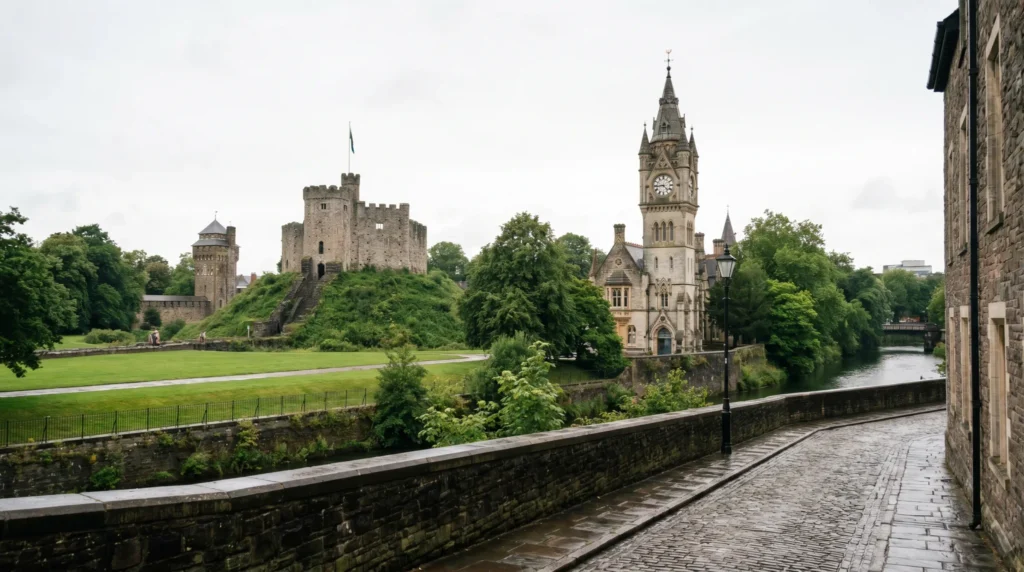
I have walked into Cardiff a dozen ways — off the train at Cardiff Central, down from the castle through the Victorian arcades, along the barrage into Cardiff Bay — and every time I am struck by how compact the good stuff is. We tell first-time visitors that Cardiff is the smallest of Britain’s big capitals: around 384,000 people in the city, the capital of Wales only since 1955, yet it packs a medieval-and-Roman castle into its dead centre, a 73,931-seat stadium with a retractable roof a five-minute walk away, and a regenerated dockland waterfront a short ride south . My favourite Cardiff ritual is a Saturday rugby international: the city centre becomes one continuous, good-natured crowd, and the noise inside the Principality Stadium with the roof shut is something you feel in your chest. Treat this guide as the brief I would hand my own family the night before they boarded the train from London Paddington — the castle and the Doctor Who–era waterfront, the cawl and Welsh cakes, the arcade coffee and the day trips into the valleys and along the coast, and everything in between .

Table of Contents
Why Cardiff?
Cardiff is the rare capital that has only been a capital for a single human lifetime: it was proclaimed the capital of Wales in 1955, the last major British capital to be designated, despite a castle whose site has been continuously occupied for roughly two thousand years . The city proper holds about 384,000 residents, which makes it comfortably the largest city in Wales and the eleventh-largest in the United Kingdom, yet it remains small enough that you can walk from the castle in the centre to the waterfront of Cardiff Bay in well under an hour . It sits where the rivers Taff, Ely and Rhymney reach the Severn Estuary, the geography that turned a small medieval town into the greatest coal-exporting port on earth a century ago.
The city reads as a stack of productive contradictions. It is a young capital wrapped around an ancient core — the Romans built a fort here in the first century AD, the Normans raised a motte-and-bailey inside the Roman walls in the 1080s, and the Victorian Marquesses of Bute turned the castle into a riot of Gothic Revival fantasy in the nineteenth century . Yet daily life happens at the scale of the Edwardian shopping arcade, the cafe, and the pre-match pub. Coal made the place: at its 1913 peak Cardiff exported more coal than any port in the world, and the wealth built the white Portland-stone civic centre of Cathays Park, often called one of the finest in Britain. When the coal trade collapsed, the docks rotted — until a 1990s barrage scheme dammed the bay into a freshwater lake and rebuilt the whole waterfront around the Wales Millennium Centre and the Senedd, the Welsh Parliament.
The density of contrast per square kilometre is unusual even by British-city standards. Within a twenty-minute walk you can stand inside a Roman wall, climb a Norman keep, cross a Victorian arcade, and look up at a 73,931-seat stadium with a roof that closes in twenty minutes . The Principality Stadium is genuinely in the city centre — not on a ring road — which is why a Wales rugby international turns the whole town into a single roaring organism. Add the BBC drama industry (Cardiff is where modern Doctor Who and Torchwood were made), two universities, and a famously friendly pub culture, and you have a capital that punches far above its modest population.
This guide covers the neighbourhoods you will actually walk — the castle-anchored centre, leafy Pontcanna, studenty Cathays, the reborn Cardiff Bay — the cawl and Welsh cakes and Brains beer worth seeking out, the castle-and-stadium-and-bay tier of sights, the day trips Cardiffians themselves take into the Brecon Beacons and along the Glamorgan coast, and the practical realities of UK entry rules, the persistent rain, and a rugby calendar that can triple hotel prices overnight. Cardiff’s year peaks around its Six Nations rugby weekends in spring and the festival-heavy summer; everything else flows from there.
One more orientation point: Cardiff is built for walking and for weather. It rains here a lot — this is one of the wetter cities in the UK — and the entire urban fabric, from the glass-roofed Victorian arcades to the indoor market to the covered stadium, is quietly designed around staying dry. For visitors, the lesson is simple: pack a waterproof, do not over-schedule outdoor plans, and lean into the indoor pleasures (the arcades, the museums, a long lunch in a pub) when the sky opens. Do that, and a Cardiff weekend stops feeling like a rain endurance test and starts feeling like the warm, compact, sporting city locals actually live in. For the wider Welsh context, this guide pairs with our Wales Travel Guide and the sibling London, Edinburgh and Dublin city guides.
Getting There
Most visitors arrive by train. Cardiff Central is the busiest station in Wales, on the South Wales Main Line, with frequent Great Western Railway services from London Paddington in about two hours and from Bristol in under an hour . Advance London fares start around £30; expect £70–£120 last-minute. CrossCountry and Transport for Wales services connect Cardiff to the Midlands, the North and the rest of Wales.
Cardiff Airport (CWL), about 19 kilometres west of the city near Barry, is Wales’s only international airport, with a limited but useful network of European and holiday routes . Many travellers instead fly into Bristol Airport across the estuary and bus into Cardiff. From Cardiff Airport, the T9 Airport Express bus runs to the city centre and Cardiff Bay in about 40 minutes for a few pounds; a rail link runs from nearby Rhoose station.
By road, Cardiff sits on the M4 motorway, roughly two and a half to three hours from London by car and a short hop from Bristol over the Prince of Wales Bridge. National Express and Megabus coaches serve the central bus interchange beside Cardiff Central. Coaches are the cheapest inbound and useful for towns the train does not reach .
Getting Around
Cardiff’s centre is built for walking, and the network beyond it is small and easy to read: a dense local-rail and Valley Lines network, a comprehensive Cardiff Bus system, the regenerating Metro project, and a flat, increasingly cycle-friendly core . The flat terrain and the compact centre mean most visitors barely use transport inside the old core — the castle, the arcades, the stadium and the museum are all within a 15-minute walk of each other. Transit matters mainly for Cardiff Bay, the airport, the suburbs and the day-trip valleys.
Trains and the Valley Lines
Cardiff has one of the densest suburban rail networks in the UK outside London, with local stations such as Queen Street and Cardiff Bay supplementing Cardiff Central, and the Valley Lines fanning north into the former mining valleys . Transport for Wales is rolling out the South Wales Metro upgrade, electrifying core valley routes and introducing new tram-trains. The two-stop hop from Queen Street to Cardiff Bay is the single most useful tourist journey, running every 12 minutes or so for a couple of pounds.
Cardiff Bus and the Baycar
Cardiff Bus runs the city’s bus network, including frequent services between the centre and Cardiff Bay (the “Baycar” route) and out to the suburbs and Penarth . A single fare is a few pounds, and a day capper or the contactless tap-and-cap system keeps costs down for multiple rides. The T9 Airport Express links Cardiff Airport to both the city centre and Cardiff Bay.
Cycling and Walking
Cardiff’s flat geography and the Taff Trail — a walking and cycling route that runs along the river from the Bay up through Bute Park and out toward the Brecon Beacons — make it one of Britain’s more cycle-friendly cities. The Nextbike dock-based hire scheme has operated in the city, and the riverside paths through Bute Park and out to the Bay are car-free and genuinely pleasant. The absence of hills in the centre means even casual riders can manage the whole core.
Airport Access
- T9 Airport Express bus (CWL) to the centre and Cardiff Bay — about 40 minutes, roughly £5
- Taxi CWL to the centre — about 25–30 minutes, roughly £35–£45
Taxis and Rideshare
Licensed Cardiff taxis (Hackney carriages) are metered and can be hailed or found at ranks outside Cardiff Central and on St Mary Street; private-hire firms and Uber both operate in the city. A typical cross-centre ride runs £6–£10, more on rugby nights when demand spikes. Card payment is standard, but a black-cab rank is the reliable fallback when the city is busy.
Navigation Tips
Cardiff’s centre is laid out on a legible grid around the castle and the pedestrianised St Mary Street / Queen Street spine, so it is hard to get lost. Google Maps and Citymapper both handle the local rail and bus network. The single most useful trick is to orient by the castle clock tower and the stadium, both visible from much of the centre; from there everything is a short walk. Many central streets are pedestrian-only, so do not plan to drive into the core, especially on event days.
Neighbourhoods: Where to Base Yourself
📍 Cardiff Map: Every Place in This Guide
Cardiff’s character changes street by street, and choosing the right area shapes the whole trip. The centre is compact — you can walk it end to end in twenty minutes — but each quarter has its own rhythm, price point and noise level. Below are the neighbourhoods most first-time visitors actually consider, with an honest read on who each suits.




City Centre and Castle Quarter
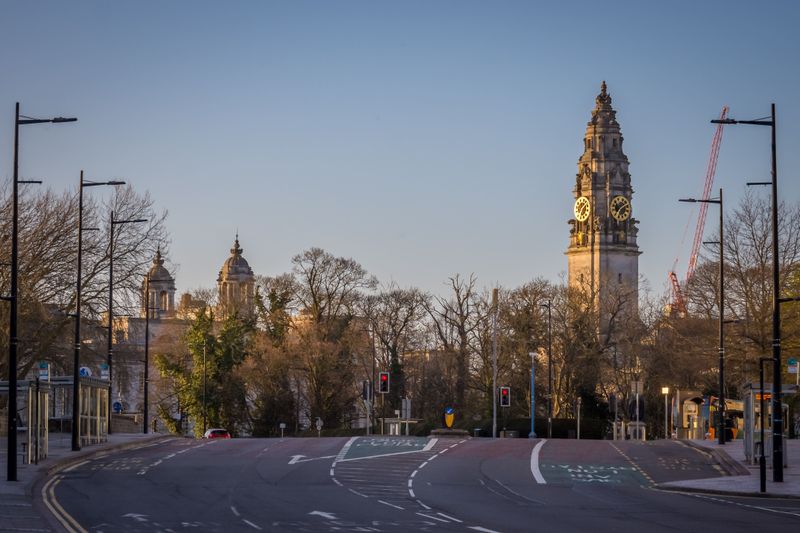
The area around Cardiff Castle, the Victorian arcades and the pedestrianised St Mary Street is the postcard Cardiff — everything on your doorstep, the stadium two minutes away, and the most hotels per square metre. Stay here if it is your first visit and you want to walk everywhere; be aware that on rugby weekends the streets stay loud and busy until late, and rooms are at their priciest.
Cardiff Bay
South of the centre, the regenerated waterfront around the Wales Millennium Centre and Mermaid Quay is a calmer, more modern base with restaurants, the Senedd and water views. It is a two-stop train or a Baycar bus from the centre, prices run a touch lower than the core, and it suits travellers who want evenings by the water rather than in the thick of the pub crowd.
Pontcanna and Canton
West of the river, Pontcanna is Cardiff’s leafy, gastropub-and-deli neighbourhood — Victorian terraces, independent cafes and the green expanse of Pontcanna Fields and Bute Park on the doorstep. Good value, genuinely local, and a 15-minute walk or short bus to the centre. Canton, just beyond, mixes everyday Cardiff life with a lively food-and-drink strip on Cowbridge Road.
Cathays and Roath
North and east of the centre, Cathays is the student heart around the universities and Cathays Park’s civic buildings and museum, while Roath wraps around the lovely Roath Park and its Scott Memorial Lighthouse. Both are cheaper, well connected by bus and a short walk to Cathays Park, and good for travellers who want a residential, café-rich base rather than the centre’s bustle.
Food and Drink: Cawl, Welsh Cakes and a Pint of Brains
Cardiff’s food scene has grown up fast: alongside the traditional Welsh staples there is a strong independent café culture, a covered Victorian market, and a clutch of serious modern restaurants. But the soul of eating here is still informal — a bowl of cawl on a wet day, a warm Welsh cake from the market, and a pint of locally brewed Brains in a proper pub.
What to Order
- Cawl — the Welsh national broth of lamb or beef with leeks and root vegetables, the ultimate wet-weather comfort food.
- Welsh cakes — griddled spiced currant cakes, best warm and dusted with sugar from a market stall.
- Glamorgan sausage — a meat-free sausage of Caerphilly cheese, leek and breadcrumbs, a genuine local invention.
- Welsh rarebit — a sophisticated cheese-on-toast made with ale and mustard, the pub-lunch classic.
- Bara brith — a dense, fruited tea loaf, sliced and buttered with a pot of tea.
Where to Eat
Cardiff Central Market — a covered Victorian hall — is the best single stop for Welsh cakes, cheese and grazing, with the famous Ashton’s fishmonger inside. The Victorian and Edwardian arcades hide independent cafes and small restaurants; Pontcanna and Canton hold the densest run of gastropubs and delis; and Mermaid Quay in Cardiff Bay puts waterfront dining within reach of the arts venues. For a sit-down treat, the city’s modern-Welsh restaurants make a point of local lamb, seafood and cheese.
Timing and Etiquette
Pubs are central to Cardiff life and open from late morning; food service typically runs noon–3pm and 6–9pm, with all-day options around the centre. A pint of Brains SA — the local Cardiff brewery’s bitter — is the traditional order. Tipping in restaurants is around 10% if service is not already added; in pubs you are not expected to tip, though offering to buy the bar staff a drink is the old Cardiff courtesy.
Cultural Sights: The Castle, the Stadium and the Bay
Cardiff’s headline sights cluster in two tight zones — the castle-and-civic core in the centre, and the regenerated waterfront in Cardiff Bay — with a two-stop train linking them. You can cover the essentials in a single energetic day, but two lets you slow down and add the National Museum and a stadium tour.

Cardiff Castle
The single must-see, sitting in the dead centre of the city. The site holds a Roman fort wall from the first century AD, a Norman motte-and-bailey raised in the 1080s, and the lavish Gothic Revival apartments the third Marquess of Bute commissioned from the architect William Burges in the nineteenth century — among the most extravagant interiors in Britain. The wartime tunnels inside the walls served as air-raid shelters. General admission runs around £15.50 .
Principality Stadium
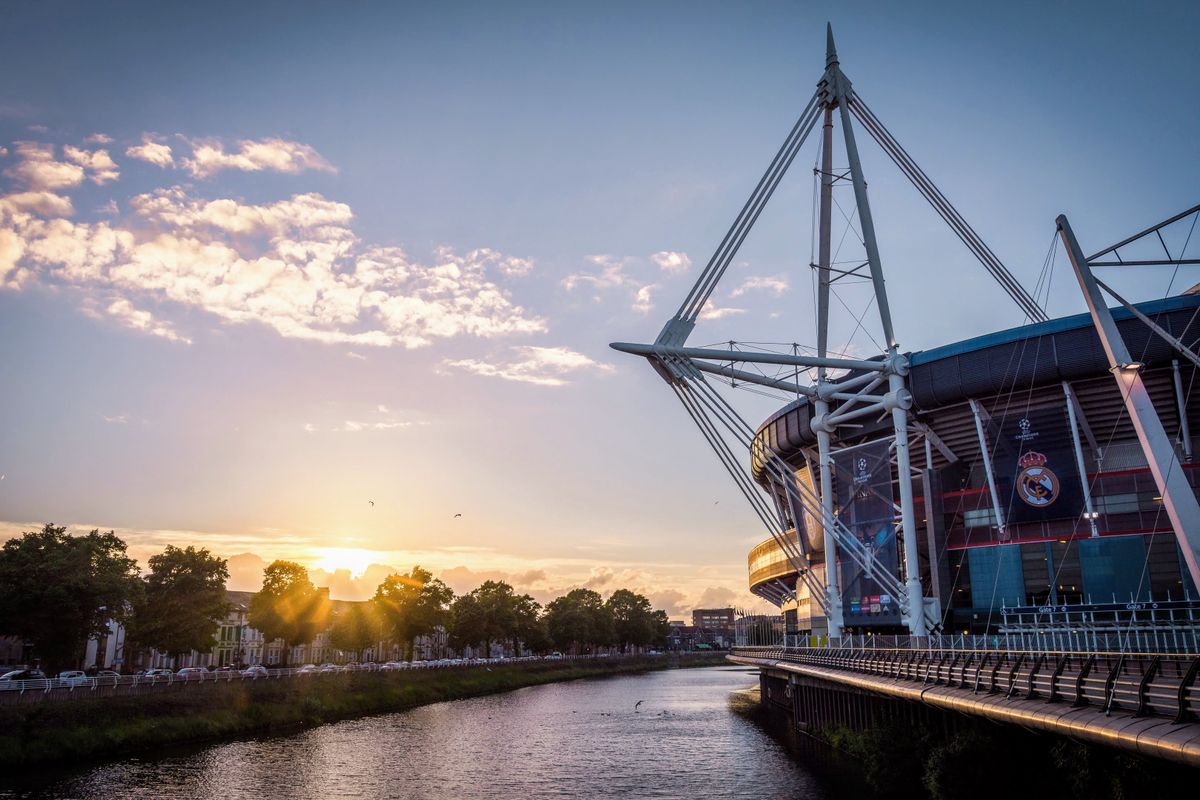
The home of Welsh rugby, opened in 1999 as the Millennium Stadium for that year’s Rugby World Cup, holds 73,931 for sport and was Britain’s first stadium with a fully retractable roof . Its position right in the city centre, beside the River Taff, is what makes a Wales international such an event. Stadium tours run on non-event days and take you onto the pitch and into the dressing rooms.
Wales Millennium Centre and the Senedd
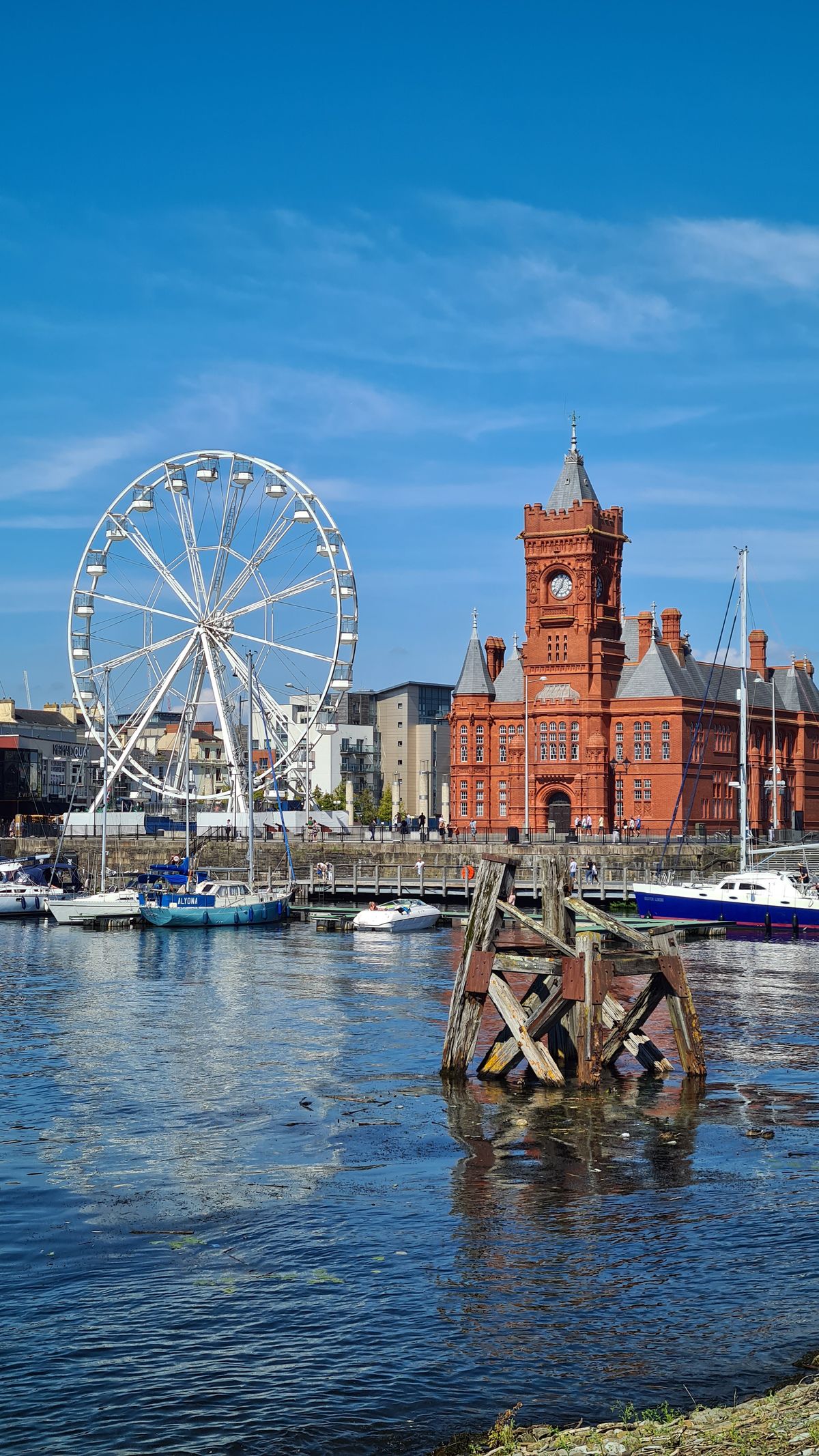
The bronze-domed Wales Millennium Centre, opened in 2004, is the national arts venue, home to Welsh National Opera; the slogan cut into its front in Welsh and English is one of the city’s most photographed sights . Next door, the Senedd — the Welsh Parliament building, designed by Richard Rogers and opened in 2006 — is free to enter and tour. Both sit on the regenerated waterfront created by the Cardiff Bay barrage.
National Museum Cardiff and Llandaff Cathedral

The free National Museum Cardiff in Cathays Park holds one of Europe’s best Impressionist collections outside Paris — the Davies sisters’ Monets, Renoirs and Van Goghs — alongside natural-history and Welsh art galleries . A short trip northwest, the medieval Llandaff Cathedral, with Jacob Epstein’s striking Christ in Majesty sculpture, rewards an hour. Round out a cultural day with a walk through Bute Park, the green lung beside the castle.
Rugby, Music and Nightlife
Cardiff is a sporting and music city before it is anything else. A Wales rugby international at the Principality Stadium is the defining Cardiff experience, the centre’s pubs and clubs run hard on weekends, and the arts venues from the Wales Millennium Centre to the live-music rooms keep the city busy on non-match nights.
Live Rugby and Sport
If your trip overlaps a Wales home international — especially in the Six Nations (typically February–March) — everything else bends around it. The stadium’s city-centre location means up to 73,931 fans pour straight into the surrounding bars before and after kick-off . Cardiff City football and Cardiff rugby (the Blues) play through the season too. Tickets for internationals sell out far ahead; the atmosphere in the city, ticket or not, is the draw.
Live Music and the Arts
The Wales Millennium Centre hosts opera, musicals and touring shows; the Utilita Arena (formerly the Motorpoint Arena) handles big-name concerts; and smaller rooms like Clwb Ifor Bach (“the Welsh Club”) on Womanby Street and the Tramshed champion live and Welsh-language music . Womanby Street is the heart of the city’s independent music scene and well worth a night out.
Pubs and Nightlife
St Mary Street and the surrounding lanes are the mainstream nightlife spine, busiest on weekends and rugby nights; for something more characterful, the old pubs around the castle and the independent bars of Womanby Street and Pontcanna give a more local feel. The Brewdog, City Arms and Tiny Rebel taprooms anchor a strong craft-beer scene alongside the traditional Brains houses.
Day Trips From Cardiff
Cardiff is the natural base for South Wales, with fast trains and good roads reaching mountains, coast and castles in well under two hours. If you have more than two days, give one of them to a day trip — the contrast sharpens your sense of what makes Cardiff itself distinct.
Brecon Beacons (Bannau Brycheiniog)
The national park’s southern edge is about an hour north by car or bus, with Pen y Fan — the highest peak in southern Britain — a popular half-day hike . Waterfall Country around Ystradfellte and the Brecon Mountain Railway add gentler options. It is the best quick escape from city to mountain in Britain.
Caerphilly Castle
Just 20 minutes north by train, Caerphilly is the largest castle in Wales and one of the greatest medieval fortresses in Europe, ringed by elaborate water defences and famous for its dramatically leaning tower . The town also gives its name to the crumbly white cheese. An easy half-day return.
Penarth and the Glamorgan Coast
The genteel Victorian seaside resort of Penarth, with its restored pier, sits just across Cardiff Bay — reachable by train, bus or a barrage walk in under half an hour. Beyond it, the Glamorgan Heritage Coast around Llantwit Major and the dramatic cliffs of Southerndown make a fine coastal day by car or bus.
St Fagans and Barry Island
St Fagans National Museum of History, four miles west, is a free open-air museum of re-erected historic Welsh buildings and one of the country’s most popular attractions . For nostalgia, Barry Island — the seaside resort made famous by the sitcom Gavin & Stacey — is a short train ride south for a classic British beach day.
When to Visit: A Season-by-Season Guide
Cardiff’s weather is the single biggest factor in timing a trip. It is one of the wetter cities in the UK, with rain possible in any month, and the rugby calendar drives prices as much as the seasons. Here is how the year actually feels on the ground.
Spring (March–May)
Variable and often wet early on, but Bute Park and the city’s gardens come alive, and late spring brings the first reliably mild days. The end of the Six Nations rugby falls in March, so check fixtures — a home match weekend will be busy and pricey. May is one of the better months: greener, drier and not yet into the summer-festival crowds.
Summer (June–August)
The warmest and driest stretch, with long daylight and the city’s festival season — food, music and sport fill the calendar. Temperatures are mild rather than hot, rarely above the low 20s°C, and rain is still common, so pack layers and a waterproof. This is peak visitor season; book accommodation ahead, especially around major concerts at the stadium and arena.
Autumn (September–November)
A strong season: September often holds onto summer’s warmth, the autumn rugby internationals bring big match weekends, and Bute Park turns gold. Crowds ease outside match days and prices soften. Pack for shortening days and increasing rain, but autumn is arguably the most atmospheric time to walk the castle grounds and the riverside.
Winter (December–February)
Mild by continental standards — rarely freezing — but grey, wet and dark, with short days. The upside is the lowest prices, a cosy pub culture made for the weather, the Christmas market, and the start of the Six Nations in late January and February, when a home rugby weekend lights the whole city up. Bring a serious waterproof.
Budget Breakdown: What Cardiff Actually Costs
Cardiff is noticeably cheaper than London and most of southern England, and good value by UK-capital standards. The figures below are per-person daily estimates excluding flights, in pounds, based on 2025–2026 prices.
Backpacker (£50–80/day)
A hostel dorm bed runs £20–35; pub lunches, market food and a supermarket dinner keep food to £15–25; the centre and parks are free to walk. Budget one paid attraction such as the castle and you stay comfortably under £80.
Mid-Range (£110–180/day)
A three-star hotel or central apartment is £80–130 for a double (much more on rugby weekends); add £35–50 for restaurant meals, £15–25 for attractions and the occasional taxi, and a pint or two. This is the typical comfortable-tourist band.
Luxury (£280+/day)
A four- or five-star room such as the Parkgate or the Voco runs £180–350+, fine dining adds £60–120, and private tours and premium match tickets push the day well past £280. Six Nations weekends can double these figures.
Key Fixed Costs
- Cardiff Castle entry — about £15.50 general admission
- National Museum Cardiff — free
- Principality Stadium tour — about £14
- Train Cardiff Central to Cardiff Bay — about £2
- T9 Airport Express to the centre — about £5
Practical Tips and Safety
Cardiff is a safe, easy and famously friendly city for visitors, but a handful of practical habits make the difference between a smooth trip and an avoidable headache. None of this is alarming — it is the ordinary common sense of any popular British city.
Money and Payments
Wales uses the pound sterling; cards and contactless are accepted virtually everywhere, including buses and trains, so you can travel almost cashless. ATMs are plentiful; a little cash is handy for market stalls and the odd traditional pub. Scottish and Northern Irish banknotes are legal but occasionally queried — Bank of England notes are simplest.
Safety and Scams
Cardiff is a low-crime city; the realistic risk is the ordinary big-night-out trouble around St Mary Street late on weekends and rugby evenings, and opportunistic pickpocketing in crowds. Keep bags zipped in busy areas. The UK government rates the country a standard, low-risk destination; emergency services are reached on 999 (or 112) .
Health and Water
Tap water is safe and excellent throughout the city . EU visitors should carry a GHIC/EHIC card; everyone else should have travel insurance. Pharmacies (chemists) are widespread for minor ailments, and the NHS 111 service advises on non-emergencies. Carry a waterproof — the single most useful piece of Cardiff health advice is to stay dry.
Practical Essentials
- Language: English everywhere; Welsh is co-official and appears on all signage.
- Plugs: Type G three-pin, 230V — bring a UK adapter.
- Tipping: around 10% in restaurants if not added; not expected in pubs.
- Weather: pack a waterproof and layers in every season.
- Rugby days: check the fixture list before booking for crowds and prices.
Frequently Asked Questions
How many days do you need in Cardiff?
Two full days is the sweet spot: one for Cardiff Castle, the arcades and the National Museum in the centre, and one for Cardiff Bay and a stadium tour. One day covers the essentials at a rush; three or more lets you add a day trip to the Brecon Beacons, Caerphilly Castle or the coast.
What is the best time of year to visit Cardiff?
Late May to September offers the mildest, driest weather and the longest days. Autumn brings the rugby internationals and golden parks; winter is grey and wet but cheap and cosy. Whenever you go, pack a waterproof — Cardiff is one of the rainier UK cities — and check the rugby fixtures, which drive crowds and prices.
Is Cardiff expensive?
No — it is noticeably cheaper than London and good value by UK-capital standards. A mid-range trip runs roughly £110–180 per person per day excluding flights, and backpackers can manage on £50–80. The big exception is a Six Nations rugby weekend, when hotel prices spike sharply.
Do I need to book Cardiff Castle and a stadium tour in advance?
You can usually walk into Cardiff Castle, but booking online saves queuing in summer and on event days. Principality Stadium tours should be booked ahead and only run on non-event days — a rugby international or concert closes the tours entirely, so check the fixture list first.
Is Cardiff walkable, or do I need public transport?
The centre is exceptionally walkable — flat, compact and largely pedestrianised, with the castle, arcades, market and stadium all within 15 minutes of each other. The main journey most visitors take is the two-stop train or the Baycar bus down to Cardiff Bay; otherwise you can see almost everything on foot.
How do I get from Cardiff Airport to the city centre?
The T9 Airport Express bus runs into the city centre and Cardiff Bay in about 40 minutes for roughly £5, while a taxi takes around 25–30 minutes for £35–45 . Many visitors instead fly into Bristol Airport across the estuary and bus or train into Cardiff, which often has more routes.
Is Cardiff safe for tourists?
Yes, very. Cardiff is a low-crime, friendly city, and the main risk is the ordinary late-night rowdiness around St Mary Street on weekends and rugby evenings. Take the usual precautions with bags in crowds, and you will find the city remarkably easy and welcoming. Emergency services are reached on 999.
Do they speak Welsh in Cardiff?
English is the everyday language and you will be understood everywhere, but Welsh (Cymraeg) is co-official, appears on all road signs and public signage, and is actively promoted. You will hear it spoken, especially among younger and Welsh-medium-educated Cardiffians, and a friendly “diolch” (thank you) is always appreciated.
What food is Cardiff famous for?
Welsh staples above all — cawl (lamb-and-leek broth), Welsh cakes from the Central Market, Glamorgan sausage, Welsh rarebit and bara brith — washed down with locally brewed Brains beer. Alongside the traditional fare, Cardiff has a strong independent café scene and a growing roster of modern Welsh restaurants championing local lamb, seafood and cheese.
Was This Guide Helpful?
We update our Cardiff guide as prices, transit and opening hours change. Let us know if it helped — your feedback shapes the next revision.
Ready to Experience Cardiff? Walk It Slowly
Cardiff rewards a slow traveller. Its set pieces are world-class — the castle in the city centre, the roaring stadium, the reborn bay — but the city’s real magic is in the in-between: a warm Welsh cake in the Victorian market, a pint of Brains in an old pub, the river path through Bute Park, the pre-match buzz on a rugby Saturday. Plan the big three, then leave room to get lost. For the wider picture, see our Wales travel guide, and pair Cardiff with London, Edinburgh and Dublin for a complete British-and-Irish trip.
Explore More City Guides
Cardiff is one stop in our growing library of British and Irish city guides. Keep planning with these companion pages:
More city guides you might like



Plan your trip to Cardiff
The booking tools we use ourselves. FFU may earn a commission at no extra cost to you.
Plan & book your trip to Cardiff
Booking through these searches supports our guides at no extra cost to you.