
City Guide · The Black Sea Coast
Constanța, Romania: Ancient Tomis, the Black Sea Port, and the Beaches of Mamaia
I came to Constanța expecting a workmanlike port town and left convinced it is the most underrated city break on the Black Sea. This is the oldest continuously inhabited city in Romania, founded as the Greek colony of Tomis around 600 BC, the place where the Roman poet Ovid was exiled and died, and a city whose ancient layers sit casually beneath the everyday traffic of a working harbour . My favourite way to spend a morning here is to walk the Peninsula district from Piața Ovidiu down to the freshly restored seafront Casino, detour into the museum that guards the astonishing 2,000-square-metre Roman mosaic, then ride a few minutes north to drop my bag on the sand at Mamaia, Romania’s premier beach resort. We tell first-timers to stop treating it as a one-day stopover on the way to the beach: give it two days, split between the ancient peninsula and the eight-kilometre sandbar of Mamaia, and you get a rare combination of archaeology, Art Nouveau, fresh Black Sea seafood, and proper summer-resort hedonism in a single, easy-to-reach destination just two and a half hours from Bucharest . Treat this guide as the brief I would hand my own family before they boarded the train at Bucharest’s Gara de Nord.
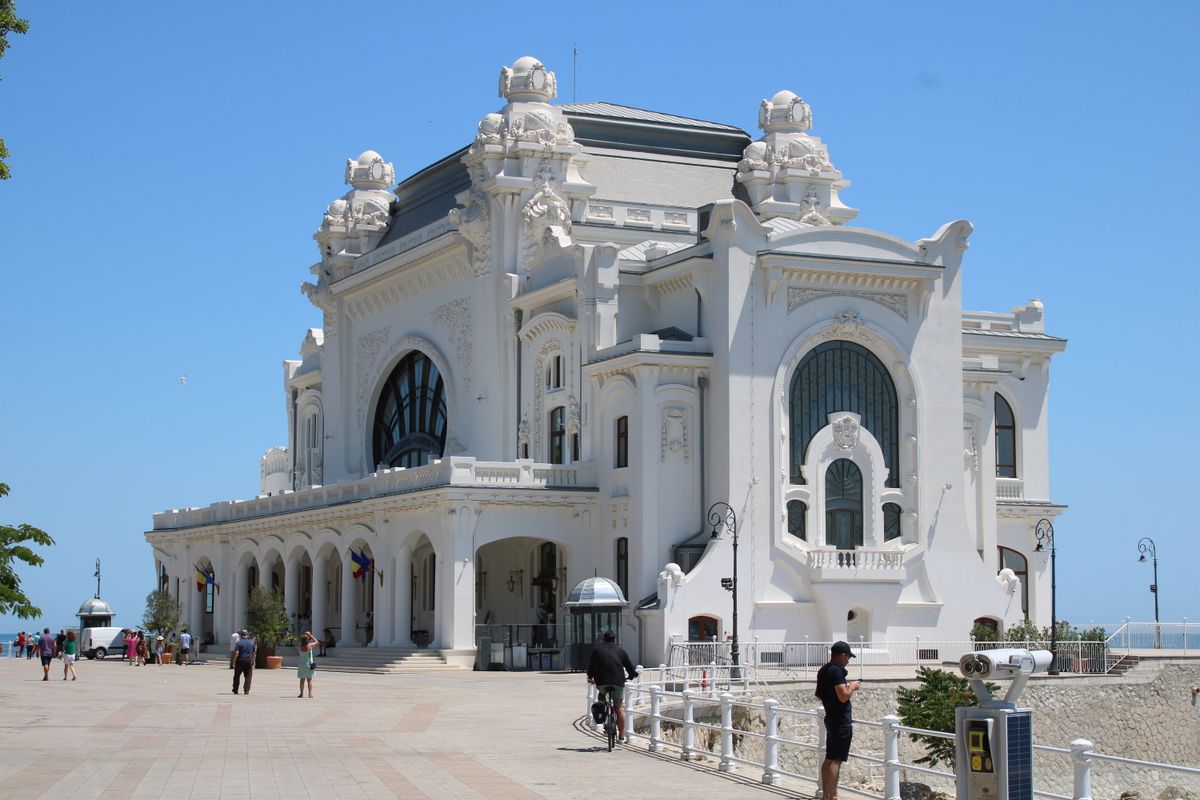
Table of Contents
Why Constanța?
Constanța is the great two-in-one destination of the Romanian Black Sea: a genuinely ancient city wrapped around a working harbour, with the country’s premier beach resort attached to its northern edge. Founded as the Greek colony of Tomis around 600 BC, it is the oldest continuously inhabited city in Romania and one of the oldest in Europe, later renamed for the family of the emperor Constantine the Great . With a city population of roughly 264,000 at the 2021 census, it is the country’s fourth-largest city, the capital of Constanța County, and the anchor of the largest port on the Black Sea — a harbour stretching some 30 kilometres and ranking among the biggest in Europe .
The city reads as a set of productive contrasts. The historic Peninsula district packs Greek and Roman ruins, an Ottoman-era mosque, an Orthodox cathedral, and a string of belle-époque buildings into a few walkable blocks, all of it overlooked by the recently restored Art Nouveau Casino on the seafront. Step a few kilometres north and the register changes completely: Mamaia is an eight-kilometre sandbar of hotels, beach clubs, and a water park, the most developed resort strip in the country and the summer playground of the Romanian coast . Few cities let you stand in a 4th-century Roman warehouse in the morning and a beach club by mid-afternoon.
The geography makes it easy to enjoy. The old town occupies a blunt peninsula jutting into the sea, so you orient yourself by the water on three sides, and the major sights — Piața Ovidiu, the museum, the mosque, the casino, the aquarium — cluster within a fifteen-minute walk of one another. Mamaia sits a short bus or taxi ride to the north, and the whole region is the jumping-off point for two of Romania’s headline excursions: the UNESCO-listed Danube Delta around Tulcea and the vast Greek-and-Roman ruins of Histria, the self-styled “Pompeii of Romania” .
This guide covers the districts you will actually use, the Black Sea seafood and Dobrogean cooking worth seeking out, the museum-and-mosaic tier of sights, the casino and the aquarium, the resort nightlife of Mamaia, the day trips Romanians take on summer weekends, and the practical realities of the train from Bucharest, Mihail Kogălniceanu airport, and the Schengen-era border. Start on the peninsula and the seafront; everything else flows from there.
Neighborhoods: Finding Your Constanța
📍 Constanța Map: Every Place in This Guide
Constanța is small enough to walk and clear in its layout: a dense historic Peninsula at the tip, a 19th- and 20th-century city centre behind it, the vast working port to the south, and the resort strip of Mamaia stretched along a sandbar to the north. The single biggest mistake first-timers make is to drive straight to the beach and never see the ancient city behind it. This section walks the five districts you will actually use — the Peninsula old town, the seafront promenade, the city-centre core around the train station, Mamaia, and the southern resorts — with notes on access and who each suits best .
Think of it as two cities joined by a fifteen-minute bus ride: the cultural, historic, year-round Constanța of the Peninsula and centre, and the seasonal, hedonistic beach city of Mamaia and the resorts. Most visitors split their time between the two, and the best base depends entirely on whether you have come for the ruins or the sand.
A word on choosing where to sleep, since it shapes the whole trip. If you have come primarily for the beach in high summer, base yourself in Mamaia: you will pay more, but you wake up on the sand and the nightlife is on your doorstep. If you have come for the history, or are visiting outside the core summer, base yourself in the city — ideally near the Peninsula or the centre — where hotels are cheaper, the sights are walkable, and life carries on year-round. Budget travellers and those who want a quieter beach should look south to Eforie or the “Olympian” resorts, trading a little extra transit time for noticeably lower prices and calmer sand. Whatever you choose, the short distances mean you are never locked out of the other half of the destination: the bus and the ride-hailing apps connect the city and Mamaia cheaply through the day and well into the night in season.
The Peninsula (Old Town)
The blunt headland at the city’s tip is where Constanța began as ancient Tomis, and it remains the densest concentration of sights — the museum, the Roman mosaic, the Genoese Lighthouse, the Carol I Mosque, and the seafront casino all sit within a few hundred metres of one another. It is atmospheric and slightly faded, with cobbled lanes, belle-époque facades in varying states of repair, and the sea visible at the end of almost every street.
- Piața Ovidiu with the Ovid statue and the National History & Archaeology Museum
- The Roman Mosaic edifice and the Carol I Grand Mosque
- The seafront promenade, the Casino, and the Genoese Lighthouse
Best for: history, architecture, slow walking, culture-first visitors. Access: walkable; city buses and taxis from the centre and station.
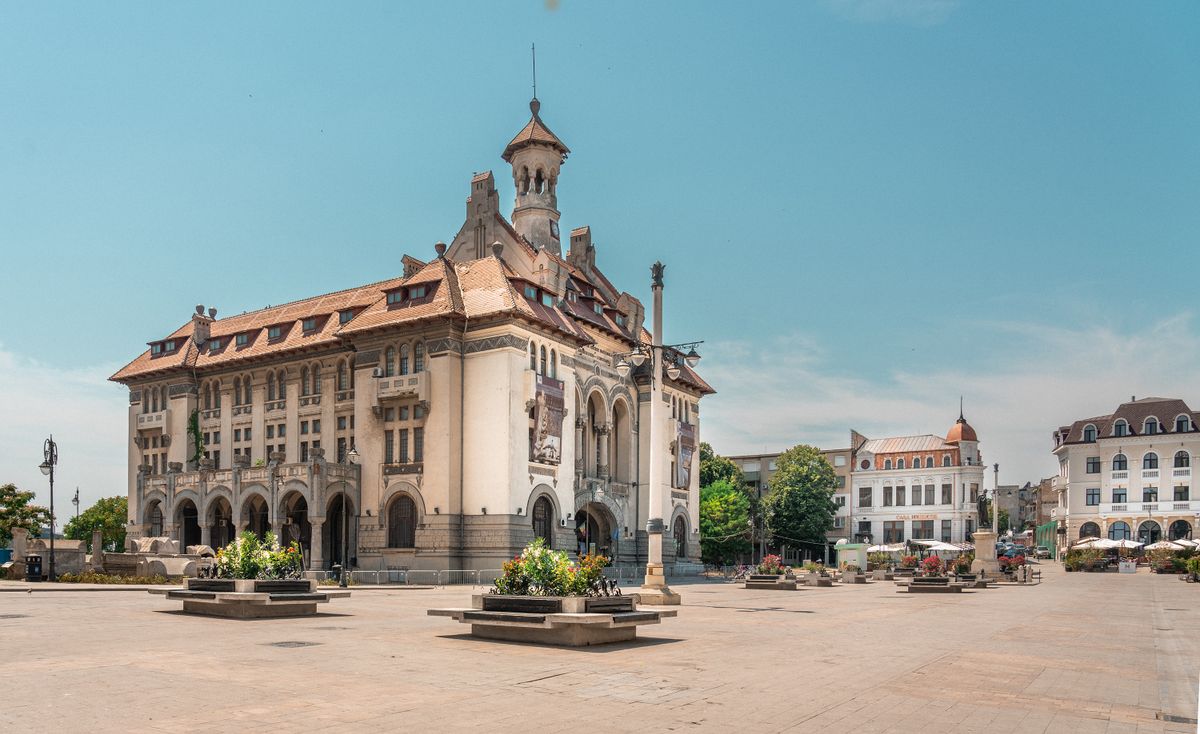
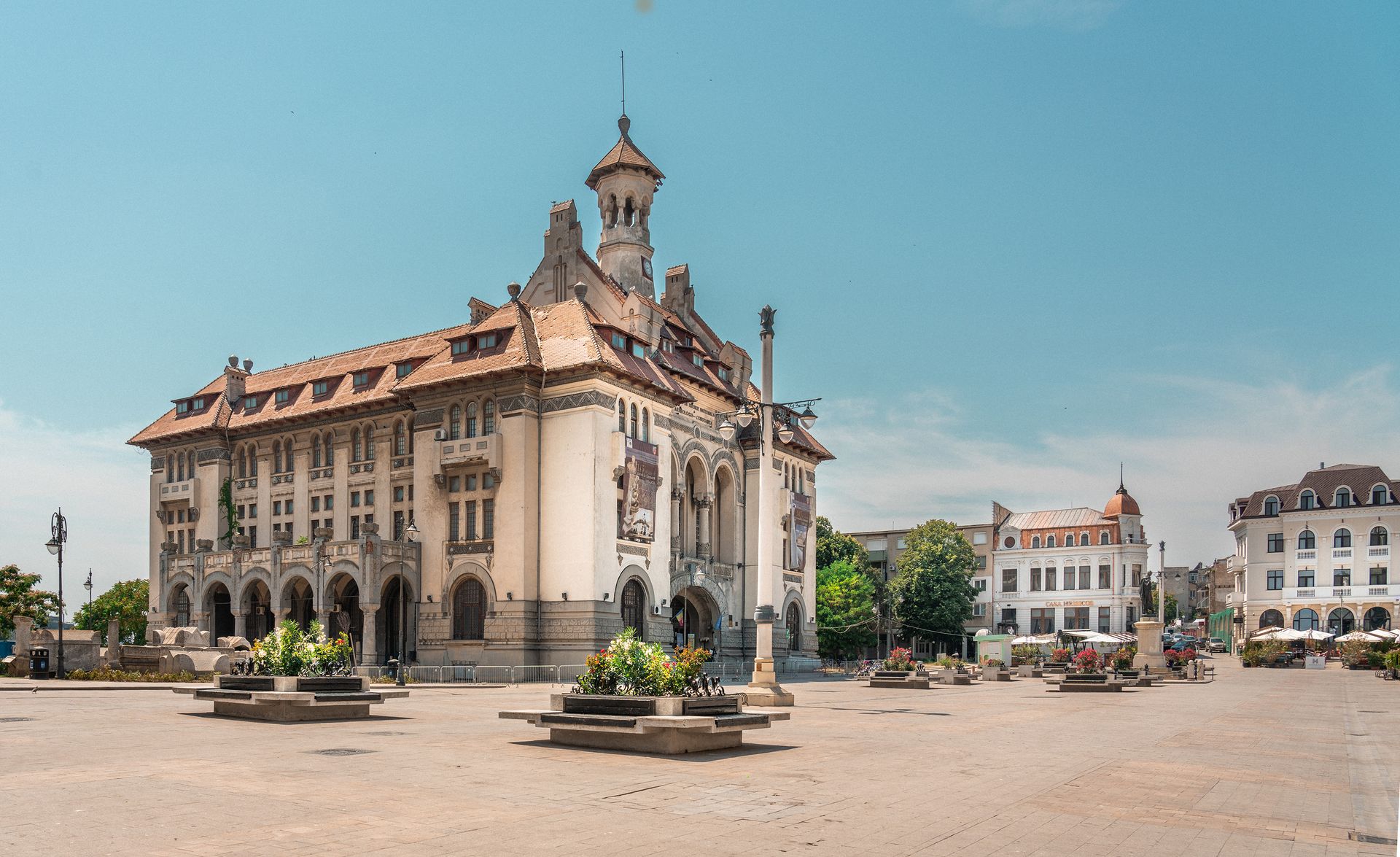
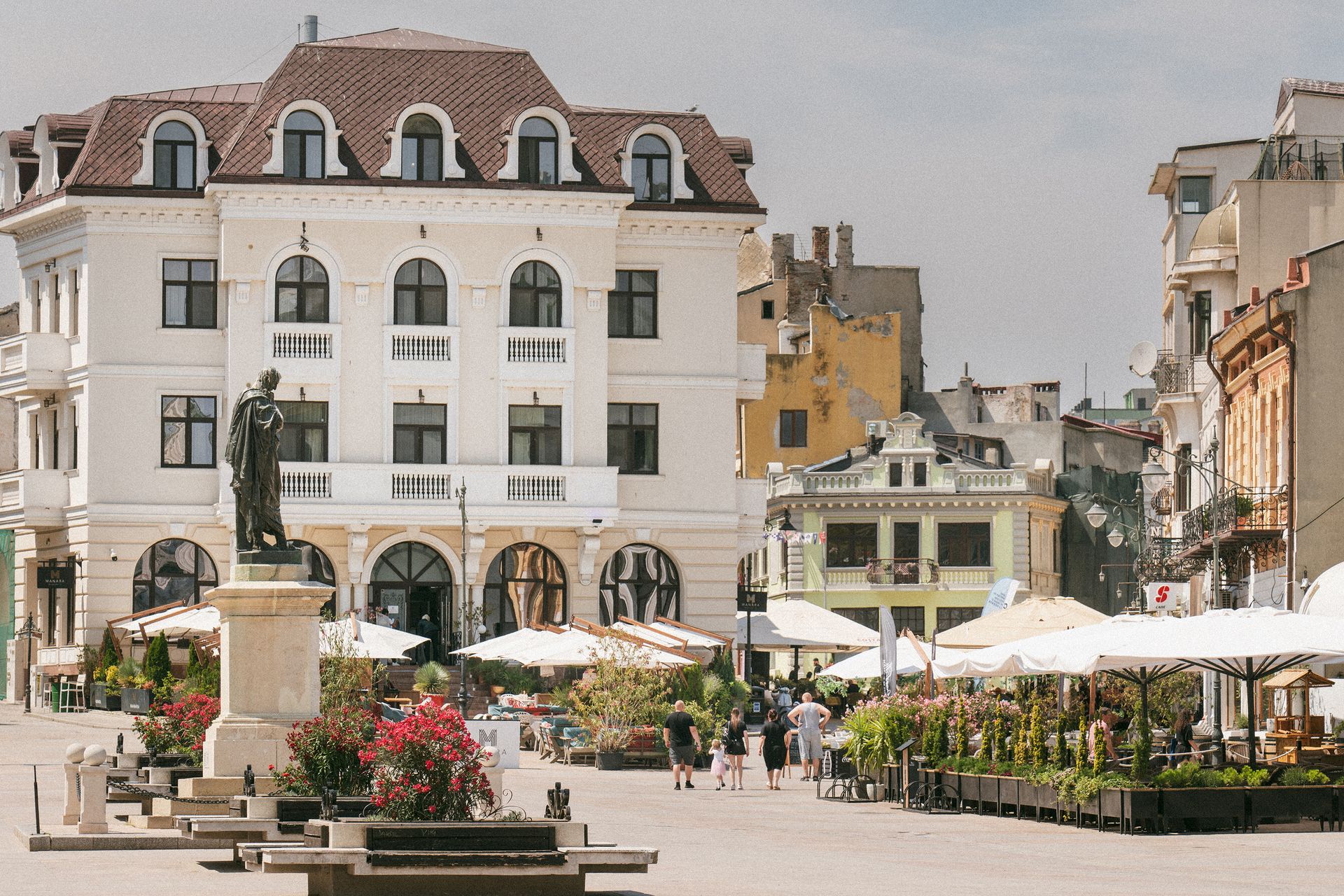
The Peninsula is where you should begin and where the city’s two-thousand-year story is most legible. Start at Piața Ovidiu, the square named for the exiled Roman poet, where the 1887 bronze statue of Ovid stands in front of the grand 1911 building that now houses the National History and Archaeology Museum. From there it is a short walk to the Roman Mosaic edifice, the mosque with its climbable minaret, and the seafront, where the restored Casino anchors a promenade that runs past the Genoese Lighthouse. The district is best in the morning light and on foot; it is compact enough to cover the headline sights in half a day, and its faded grandeur is part of the appeal rather than a flaw. Wander off the main route and you find quiet courtyards, half-restored mansions, small Orthodox churches, and the Ottoman-era street pattern still legible beneath the modern city. The Peninsula has been gentrifying slowly, with cafés and small hotels moving into restored belle-époque buildings, but it remains refreshingly unpolished — a real, lived-in old town rather than a sanitised heritage zone, where the ancient and the everyday sit side by side.
The Seafront Promenade (Faleza)
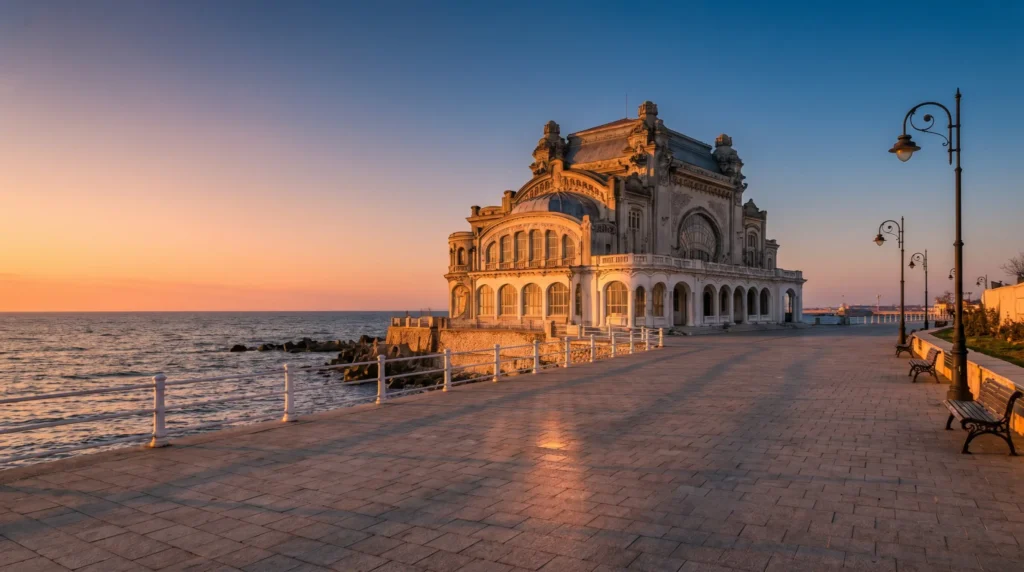
The clifftop promenade running along the eastern edge of the Peninsula is the city’s great public space — a wide, balustraded walkway overlooking the Black Sea, anchored by the Casino and lined with benches, cafés, and viewpoints. It is where Constanța comes to stroll at sunset, and the single most photogenic stretch of the city.
- The restored Art Nouveau Casino and its café
- The Genoese Lighthouse and the harbour viewpoints
- The Constanța Aquarium and the small-boat marina below
Best for: sunset walks, photography, casual cafés, families. Access: walkable from the Peninsula; level promenade.
The Faleza is where the city turns its face to the sea, and an evening stroll along it is the quintessential Constanța ritual. The promenade runs from the casino north along the cliff edge, with the open Black Sea on one side and the city behind, and it is busiest at golden hour when locals come out to walk, the casino glows, and the lighthouse and harbour cranes catch the last light. Below the promenade sits the marina and the aquarium, and the whole stretch is flat, paved, and pram-friendly. Build at least one sunset here into your trip; it is free, atmospheric, and the best way to understand why the seafront has always been the city’s heart.
City Centre & the Station
Behind the Peninsula spreads the modern city centre — the commercial heart around Ștefan cel Mare and the pedestrianised shopping streets, the main train station to the west, and the everyday Constanța of markets, offices, and apartment blocks. It is less photogenic than the old town but where most of the practical infrastructure sits.
- The pedestrian shopping streets and City Park Mall
- Constanța Gară (main railway station) and the bus terminals
- Everyday restaurants, markets, and budget hotels
Best for: transport connections, budget stays, everyday shopping. Access: the railway station and the main bus routes converge here.
The centre is where you will arrive and where the city’s daily life happens away from the tourist sights. The main train station sits on the western side, about two kilometres from the Peninsula, and it is the arrival point for the trains from Bucharest and the hub for the buses that fan out to the old town and up to Mamaia. The area around the pedestrianised streets has the city’s mainstream shopping, the City Park Mall, and a good spread of mid-range and budget hotels that are cheaper than the seafront or Mamaia. It is not where you come for atmosphere, but it is practical, well-connected, and a sensible base for a culture-focused trip outside the summer peak.
Mamaia
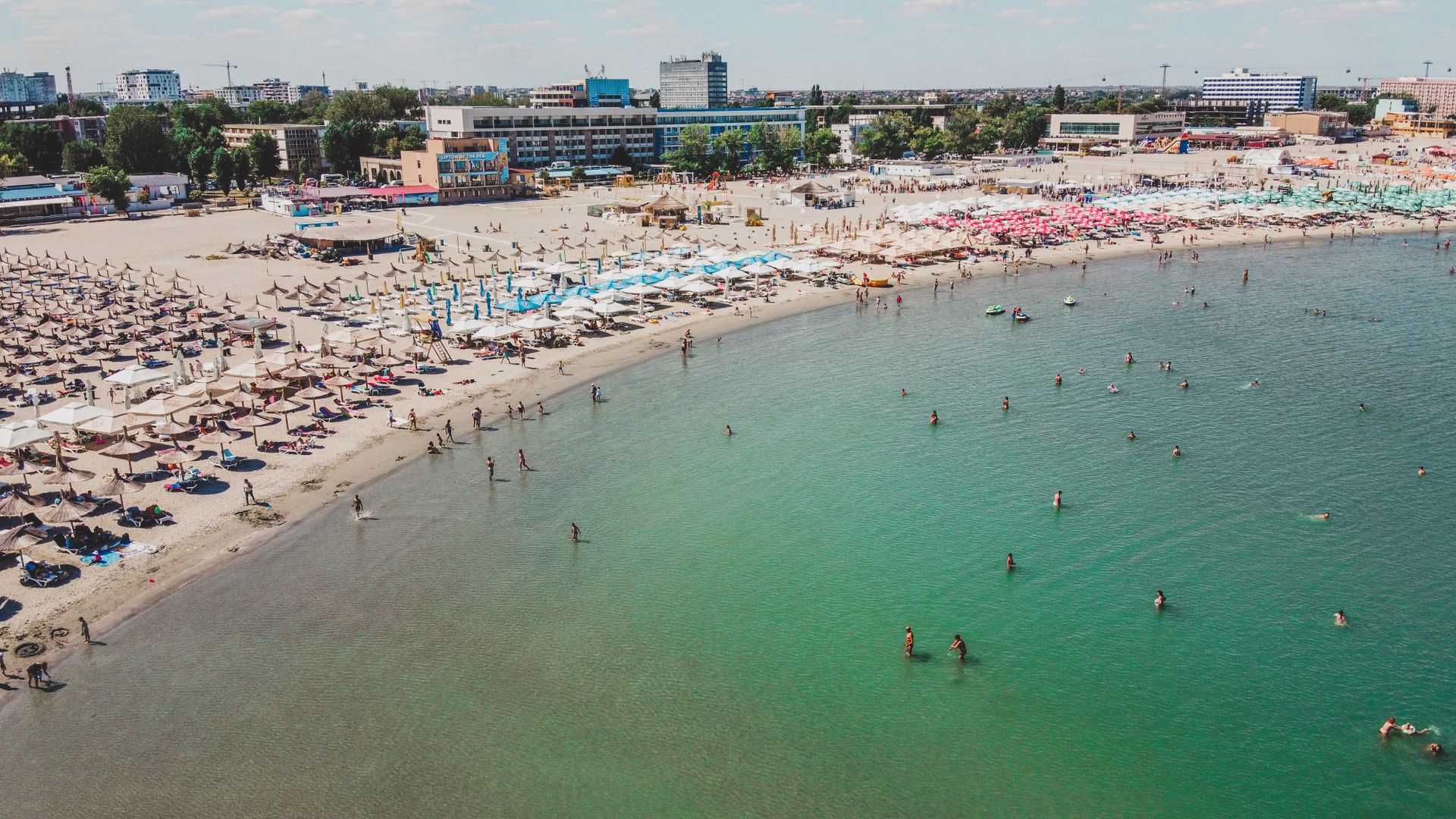
Romania’s premier beach resort occupies an eight-kilometre sandbar between the Black Sea and Lake Siutghiol, just north of the city — a near-continuous run of hotels, beach clubs, restaurants, and the Aqua Magic water park, only a few hundred metres wide at its narrowest .
- Eight kilometres of wide sand-and-sea beach with beach clubs
- The Aqua Magic water park and the cable car (telegondola)
- Lakeside watersports on Lake Siutghiol behind the strip
Best for: beach holidays, nightlife, families, summer crowds. Access: frequent city buses and taxis from Constanța; ~15–20 minutes .
Mamaia is the reason most Romanians come to this coast, and in July and August it is the busiest resort in the country. The sandbar is wide enough to hold a continuous wall of hotels facing the open sea, with the calmer freshwater of Lake Siutghiol behind for watersports, and the beach itself is broad, sandy, and serviced by clubs renting loungers and umbrellas. The southern end holds the Aqua Magic water park and the lower station of the cable car that runs the length of the strip, while the northern end (Mamaia Nord) is the centre of the late-night club scene. Hotels here are pricier than in the city, and the resort is overwhelmingly seasonal — lively from June to September and largely shuttered the rest of the year. Stay here for a beach-first trip; commute in for the culture. A practical note on the strip’s geography: it is long and thin, so where you stay within Mamaia matters — the southern end is closer to the city, the water park, and the cable car, while Mamaia Nord at the far north is the nightlife hub but a longer haul from the sights. The beach itself is free to walk on, though the prime stretches are operated by clubs and hotels that charge for loungers and umbrellas; there are also public sections if you bring your own towel. In peak season the strip throbs with music, families, and sunbathers from morning to small hours, which is either the whole appeal or the thing to escape, depending on your trip.
The Southern Resorts & Eforie
South of the city stretches a chain of smaller, often quieter and cheaper resorts — Eforie Nord and Eforie Sud, then the mythologically named Olimp, Neptun, Jupiter, Venus, and Saturn, plus the bohemian backpacker favourite of Costinești. They offer a lower-key, lower-cost alternative to Mamaia.
- Eforie Nord and the therapeutic mud of Lake Techirghiol
- The “Olympian” resort string: Olimp, Neptun, Venus, Saturn
- Costinești’s relaxed, youthful, budget beach scene
Best for: budget beach trips, spa and mud treatments, quieter sands. Access: trains and buses south from Constanța; 20–45 minutes .
The southern coast is where Romanians who find Mamaia too expensive or too loud tend to go, and it rewards travellers willing to ride a little further. Eforie Nord, the closest, is famous for the saltwater and therapeutic black mud of Lake Techirghiol, where bathers coat themselves in lake mud before rinsing in the sea — an only-on-this-coast experience. Further south the “Olympian” resorts each have their own character and price point, from the quieter family beaches of Venus and Saturn to the youthful, music-festival energy of Costinești. None has the scale or the nightlife of Mamaia, but they are cheaper, calmer, and easy day trips or alternative bases reachable by frequent trains and buses from the city .
The Food

Constanța eats the way a port city should — fresh fish off the Black Sea, the layered flavours of the Dobrogea region where Romanian, Turkish, Tatar, Greek, and Bulgarian traditions meet, and, in summer, the easy beachfront cooking of a resort coast. This is the part of Romania where you reliably find seafood, which is rarer inland than visitors expect, and where the Ottoman legacy of the Dobrogea shows up in grilled meats, stuffed vegetables, and syrup-soaked pastries. Approach it the way locals do: eat fish and mussels on the seafront, seek out a Dobrogean or Tatar speciality you cannot get in Bucharest, and do not skip the everyday Romanian staples done well. Prices are gentle by Western European standards — a generous seafood meal with wine rarely tops RON 150 per person outside the priciest seafront terraces — and the quality climbs sharply in the summer season when the catch is freshest.
Black Sea Seafood
Seafood is the headline reason to eat in Constanța, and it is at its best from late spring through early autumn. The local stars are Black Sea fish — fried or grilled hamsii (anchovies), stavrid (horse mackerel), turbot (calcan), and gobies (guvizi) — alongside mussels (midii) served by the bowl in white-wine-and-garlic broth, and increasingly farmed sea bass and bream. The classic way to eat is a seafront terrace with a cold glass of local white, a plate of small fried fish to share, and a bowl of mussels. Portions are generous and the bill is friendly.
- On Plonge — a long-running seafront fish restaurant on the promenade; grilled and fried Black Sea fish (mains RON 40–90, ~$9–20)
- Marco Polo — popular central seafood-and-Italian spot; mussels and pasta dishes (RON 35–80, ~$8–18)
- Irish & Music Pub — a city-centre institution with a strong fish-and-grill menu (RON 30–70, ~$7–16)
It helps to understand why seafood looms so large here when it is comparatively rare in the rest of the country. Romania is a largely inland, meat-and-dairy food culture; the Black Sea coast is the one place where fish and shellfish are genuinely central to the local diet, a legacy of the fishing communities that have worked these waters for centuries and of the Greek, Turkish, and Lipovan (Russian Old Believer) traditions layered along the coast. The Black Sea itself is a peculiar, brackish, low-salinity sea, which gives its fish a distinct character and supports the small oily species — anchovies and sprats — that fry up so well. The mussels are farmed and wild-gathered close to shore, and the turbot is the prized catch of the deeper water. None of this is haute cuisine; it is honest, generous, well-priced fishermen’s food, and that is exactly its charm.
A few practical notes make the seafood better. The freshest fish is whatever is in season and local rather than imported, so ask what came off the boats that day and lean toward the small fried fish (hamsii and guvizi) and the mussels, which are cheap, abundant, and unmistakably of this coast. Turbot (calcan) is the prestige local fish, traditionally breaded and fried, and worth the splurge if you see it fresh. Pair it all with a Romanian white — the country makes excellent dry whites from Fetească Regală and Tămâioasă — and you have the definitive Constanța meal. On the seafront terraces you pay a premium for the view; a block or two inland the same dishes cost noticeably less, and locals often prefer the unfussy fish places in the centre to the tourist-facing promenade restaurants.
Dobrogean & Turkish-Tatar Cooking
The Dobrogea, the region between the Danube and the sea, has been a crossroads of peoples for centuries, and its cooking carries a strong Ottoman and Tatar imprint you will not find elsewhere in Romania. Look for plăcintă dobrogeană (a flaky, salty-cheese regional pie), Tatar specialities like șuberek (a fried meat pastry) and geampara, grilled meats and mititei (skinless grilled sausages), and the Turkish-influenced sweets and coffees of the old Ottoman community. The Carol I Mosque’s neighbourhood is the traditional heart of this heritage.
- Şuberek stands & Tatar bakeries — fried meat pastries in the old town (RON 8–15, ~$2–3)
- Plăcintă dobrogeană kiosks — the regional cheese pie, sold by the slice (RON 6–12, ~$1.50–3)
- Local cofetărie — Turkish-style baklava, sarailie, and strong coffee (RON 8–20, ~$2–4)
Eating the Dobrogean specialities is the best way to taste the city’s multicultural history, and most of it is cheap street and bakery food rather than restaurant fare. The plăcintă dobrogeană — a flat, flaky pie filled with salty sheep’s cheese — is the regional snack to seek out, sold from kiosks and bakeries and best eaten warm. The Tatar șuberek, a thin fried pasty of spiced minced meat, is the other essential, a legacy of the Crimean Tatar community that has lived on this coast for generations. Finish with a Turkish-style sweet and a small strong coffee in the old Ottoman quarter near the mosque, and you will understand why the Dobrogea tastes different from the rest of Romania — it sat at the edge of the Ottoman world for centuries and kept the flavours.
Beyond Fish and Pies
Constanța also serves the full Romanian repertoire, and doing the staples well is part of the experience. The national comfort foods — sarmale (cabbage rolls), mici/mititei (grilled sausages), ciorbă (sour soup), and mămăligă (polenta) — are everywhere, alongside the grilled-meat-and-beer culture that dominates summer terraces. The coast’s market gardens supply excellent tomatoes and vegetables, and the city’s cafés and the resort strip add an international, casual layer for when you tire of fish. The Romanian breakfast and the all-day café culture are worth leaning into as well — a plate of ouă (eggs), fresh bread, local cheese, and tomatoes, washed down with strong coffee, is the standard start to a day, and the cakes and pastries of the city’s cofetării are a sweet-toothed delight. Vegetarians do better here than in much of meat-heavy Romania, thanks to the abundant summer produce, the Turkish-influenced vegetable dishes, and the cheese pies, though you will need to ask, since the default local diet leans firmly toward fish and meat. And for self-caterers and picnickers, the markets and the small neighbourhood shops make assembling a beach lunch cheap and easy.
- Mici (mititei) — grilled skinless beef-and-pork sausages, the national grill staple (RON 4–6 each)
- Ciorbă de burtă / de perișoare — sour tripe or meatball soup, a Romanian classic (RON 18–30)
- Sarmale cu mămăligă — cabbage rolls with polenta and sour cream (RON 30–45)
- Papanași — fried doughnut-style cheese dumplings with sour cream and jam (RON 18–28)
One more thing sets the Constanța table apart from inland Romania: the rhythm of eating on a resort coast. In high summer, meals stretch late and loose — a long lunch of fried fish on the sand, a sundowner on a terrace, and dinner that drifts past midnight in Mamaia — and the kitchens stay open accordingly. The seafront restaurants know they are feeding holidaymakers and price and pace themselves for it, while the city’s everyday spots a few streets back keep more normal hours and lower prices. The smart move is to mix the two: take the celebratory, view-first meals on the promenade or the beach when you want the setting, and eat your better-value, more authentic meals in the city centre and the old town, where the seafood is just as fresh and the bill noticeably lighter. Markets are worth a look too — the city’s produce markets overflow in summer with the tomatoes, peppers, and stone fruit of the surrounding Dobrogean plain, and a picnic of market bread, cheese, and tomatoes on the beach is both cheap and quintessentially local.
Where to Drink
The drinking culture splits by season and district. In the city, the centre around the Irish & Music Pub and the old town’s wine bars and cafés is the year-round scene, good for Romanian wine, local craft beer, and the strong coffee culture. In summer, the action moves north to Mamaia, where the beach clubs and the bars of Mamaia Nord run late into the night. Romanian wine is the smart order anywhere — the country is a serious, underrated wine producer, and dry whites from the Murfatlar region just inland from Constanța are the obvious local match for the seafood — while țuică and palincă (plum and fruit brandies) are the traditional digestifs. A glass of Murfatlar white on a seafront terrace at sunset is the city’s signature drink. Beer drinkers are well served too: Romania has a long lager tradition and a growing craft scene, and a cold beer with a plate of grilled mici on a summer terrace is the default local order. For something more adventurous, ask for a small glass of țuică — the plum brandy that opens many a Romanian meal — and you will be drinking exactly as the locals do, though be warned it is potent and traditionally downed before rather than after eating.
If you take one piece of advice from this section, make it this: do not leave Constanța without eating Black Sea fish by the water and tasting at least one Dobrogean or Tatar speciality you cannot get elsewhere in Romania. Those two experiences — the fresh local catch and the Ottoman-tinged regional cooking — are what make eating here distinct from eating anywhere else in the country, and both are cheap, abundant, and woven into everyday life on the coast.
Food Experiences You Can’t Miss
- A seafront seafood lunch of fried Black Sea fish and a bowl of mussels with a Murfatlar white
- A warm slice of plăcintă dobrogeană and a Tatar șuberek from an old-town kiosk
- Turkish-style baklava and strong coffee in the Ottoman quarter near the mosque
- A summer evening of grilled mici and cold beer on a Mamaia beach terrace
Cultural Sights
For a working port of its size, Constanța is astonishingly rich in things to see, and the best of them cluster within a fifteen-minute walk on the Peninsula. The pull is the sheer span of history on display — Greek and Roman antiquity, Byzantine and Ottoman layers, and the belle-époque ambition of the early 20th century — all of it overlooking the sea. A practical note before you start: most of the headline sights are within a few hundred metres of one another, so a single unhurried day on the Peninsula covers the museum, the mosaic, the mosque, the casino, and the aquarium on foot, with the beach a short ride away when you are done. Buy a combined or individual ticket as you go rather than in advance — none of the sights require pre-booking outside the busiest summer days — and consider climbing the mosque minaret early, before the midday heat and the crowds, for the best light over the port and the sea.
National History & Archaeology Museum (Muzeul de Istorie Națională și Arheologie)
The grand 1911 former city hall on Piața Ovidiu now holds Romania’s most important regional archaeology collection, tracing the Dobrogea from prehistory through Greek Tomis and Roman Constantiana to the medieval and Ottoman eras. The highlights are the Greek and Roman statuary and the famous 2nd-century “Glykon” serpent statue carved from a single block of marble. It is the essential first stop for understanding the layered city around it; admission is modest (around RON 20–30) and it sits directly beside the Roman Mosaic edifice .
The Roman Mosaic (Edificiul Roman cu Mozaic)
A short step from the museum, a purpose-built hall protects one of the largest surviving Roman mosaics in Europe — the floor of a vast 4th-century commercial complex that linked the upper city to the ancient port, spanning some 2,000 square metres of which a large, beautifully preserved section of polychrome mosaic remains . The geometric and floral patterns, the surviving walls, and the storage dolia (giant clay jars) give an unusually vivid sense of how the Roman port functioned. It is the single most impressive antiquity in the city and worth a slow visit.
The Carol I Grand Mosque (Moscheea Carol I)
Commissioned by King Carol I and completed in 1910, the Grand Mosque is the seat of the Mufti of Romania’s Muslim community and one of the first reinforced-concrete buildings in the country. Its great draw for visitors is the 47-metre (about 164-foot) minaret, climbable by 140 steps for the best panorama in the city — a sweep over the Peninsula, the port, and the sea. The interior holds a large Turkish carpet, a gift from Sultan Abdul Hamid II, said to be one of the largest in Europe .
The Constanța Casino (Cazinoul din Constanța)
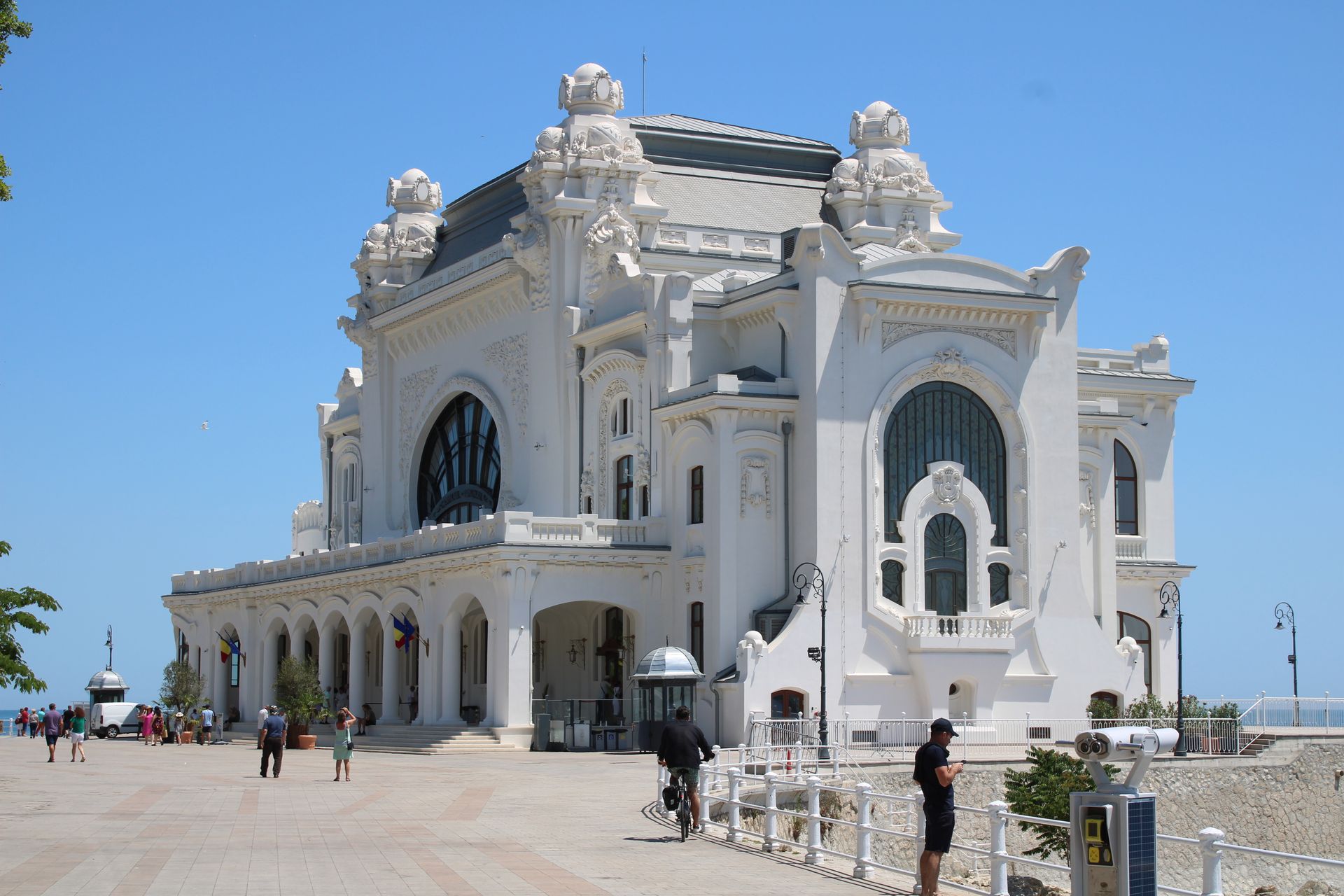
The city’s defining image, the Casino is a flamboyant Art Nouveau pile on the seafront, designed by the Swiss-Romanian architect Daniel Renard and inaugurated in 1910. After decades of dereliction it became a celebrated symbol of faded grandeur, then underwent a five-year, roughly €40-million restoration and reopened to the public on 21 May 2025 as a cultural venue with exhibitions, events, and a café . Visiting the restored interior and walking the surrounding promenade is now the headline experience of any trip to the city.
The Genoese Lighthouse (Farul Genovez)
A short walk along the seafront from the casino stands the slender stone Genoese Lighthouse, built in 1860 by the Danubius and Black Sea Company to honour the medieval Genoese merchants who once traded from this coast. It no longer functions as a working light but remains a much-loved landmark and viewpoint, marking the tip of the promenade with the open sea beyond .
The Constanța Aquarium & the Seafront
Opened in 1958 on the seafront below the casino, the Constanța Aquarium displays Black Sea, Danube, and freshwater species across a series of tanks and is a reliable family stop, especially on a hot or windy afternoon . Nearby sit the Dolphinarium and the Natural Sciences Museum complex in the Tăbăcărie park area to the north, near Mamaia. Pair the aquarium with the promenade walk and the casino for a complete seafront afternoon.
Piața Ovidiu & the Ovid Statue
The heart of the old town is Piața Ovidiu, the square named for the Roman poet Ovid, who was exiled to Tomis by the emperor Augustus in 8 AD and died here around 17 AD. At its centre stands a bronze statue of the poet, the work of the Italian sculptor Ettore Ferrari, unveiled in 1887 . The square, ringed by the museum and old-town facades, is the natural starting point for exploring the Peninsula and a quiet reminder that this is one of the oldest continuously inhabited spots in Europe.
Entertainment
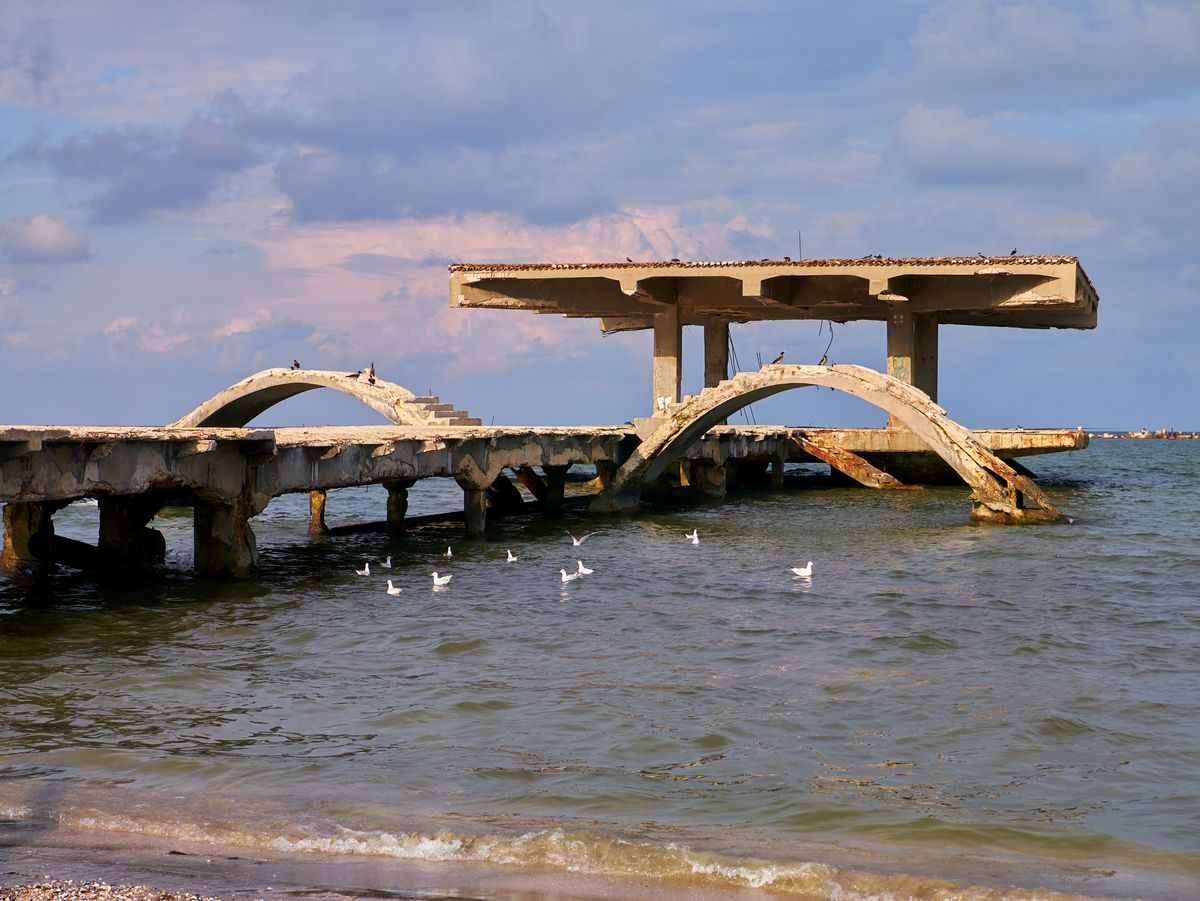
Constanța’s entertainment is overwhelmingly a summer affair, and it splits cleanly between the year-round cultural life of the city and the seasonal hedonism of the coast. In the warm months the resort strip of Mamaia becomes one of the liveliest nightlife destinations in the country, the Black Sea hosts Romania’s biggest music festivals, and the beaches double as open-air clubs after dark. Out of season the focus shifts to the city’s theatres, the casino’s new cultural programme, and the everyday bar-and-café scene. The trick, as ever, is to match the season to your expectations — come in July and August for the full resort experience, and outside the peak for a calmer, culture-led trip.
It is worth saying plainly that the coast’s summer nightlife is on a different scale to the rest of Romania. For two months a year this stretch of the Black Sea becomes the country’s party capital, drawing young Romanians from across the nation and beyond for a season of festivals, beach clubs, and all-night dancing that has more in common with the big Mediterranean resort coasts than with the quiet inland cities. If that is what you have come for, you will not be disappointed; if it is not, the good news is that it is easy to sidestep — the city itself, the southern resorts, and the shoulder seasons all offer the coast without the clubs.
Mamaia Beach Clubs & Nightlife
In summer, the northern end of the resort — Mamaia Nord — is the centre of the coast’s club scene, a run of beach clubs and open-air venues that draw big-name DJs and a young Romanian crowd through the night. The clubs typically open onto the sand, charge entry on big nights (roughly RON 50–150), and run until dawn. It is the most concentrated nightlife in the region and the reason many young Romanians spend their summers here; pace yourself, and expect the action to peak well after midnight.
NEVERSEA Festival
The Black Sea coast hosts NEVERSEA, one of Europe’s largest beachfront music festivals, staged over several days each summer on the Constanța waterfront with a line-up of major international electronic and pop acts. It is the headline event of the coastal calendar, draws hundreds of thousands of attendees, and transforms the city for its duration; tickets and accommodation sell out well in advance, so plan ahead if your trip overlaps it .
The Casino as a Cultural Venue
Since its 2025 reopening, the restored Casino has become a year-round cultural anchor, hosting exhibitions, concerts, and events in its grand Art Nouveau halls, with a café on site . Check the current programme when you arrive; an evening event in the building that symbolises the city is among the most atmospheric things you can do here, and a welcome year-round counterweight to the seasonal beach scene.
Theatre, Opera & the Performing Arts
The city supports a genuine cultural life beyond the beach. The “Oleg Danovski” National Theatre of Opera and Ballet and the Constanța State Theatre stage opera, ballet, and drama through the season, and the summer brings open-air performances and concerts to the seafront and the parks. Tickets are inexpensive by Western standards (often RON 30–80), and a night at the opera or ballet is an easy, affordable way to spend an evening in the cooler months. This year-round cultural life is one of the things that distinguishes Constanța from a pure resort town: even in the depths of winter, when Mamaia is shuttered, the city’s theatres, museums, and the restored casino give it a real off-season identity, and the low ticket prices make sampling the local arts scene an easy, low-commitment pleasure.
Aqua Magic & Family Fun
At the southern end of Mamaia, the Aqua Magic water park is the coast’s biggest family attraction, with slides, pools, and a full day’s worth of activities for children, while the Mamaia cable car (telegondola) runs the length of the strip for a scenic ride above the beach . Together with the aquarium and dolphinarium in the city, they make Constanța a strong family destination — the entertainment is not all late-night clubs.
Day Trips

Constanța is the natural base for exploring the Dobrogea and the wider Black Sea coast, and a few of Romania’s headline excursions are within easy reach. Two of them — the Danube Delta and the ruins of Histria — are genuinely world-class, while the southern resorts and the inland wine country round out a varied set of options. A car gives you the most freedom for the inland and coastal sites, but trains and organised tours cover the essentials if you are without one. The Dobrogea, the historic province between the Danube and the sea, is one of Romania’s least-visited and most distinctive regions — a flat, windswept, multicultural plain studded with ancient sites, salt lakes, and wetlands — and using Constanța as a launchpad to explore it is one of the real rewards of basing yourself here rather than treating the city as a beach-only stop.
The Danube Delta & Tulcea (~2 hours by road)
The single greatest excursion from Constanța is the Danube Delta, the largest and best-preserved river delta in Europe and a UNESCO Biosphere Reserve covering some 5,800 square kilometres of channels, reed beds, and lakes that host one of the richest birdlife concentrations on the continent . The gateway town of Tulcea, about two hours northwest, is where boat trips into the delta depart. It is best as an overnight rather than a rushed day trip, but a long day allows a boat tour into the channels to see pelicans, herons, and the labyrinth of waterways before returning to the coast.
Histria (~1 hour by road)
About an hour north of the city lie the extensive ruins of Histria, the oldest Greek colony on Romanian soil, founded by settlers from Miletus in the 7th century BC and inhabited for some 1,300 years before silting harbours and barbarian raids ended it. Dubbed the “Pompeii of Romania,” the site spreads across a windswept lakeshore with Greek and Roman streets, basilicas, baths, and defensive walls, plus an on-site museum . It is an atmospheric, uncrowded half-day for anyone drawn to the ancient world.
Eforie & Lake Techirghiol (~30 minutes by train)
Half an hour south by frequent train, Eforie Nord sits beside Lake Techirghiol, famous for its highly saline water and therapeutic black mud. The local ritual is to coat yourself in the mineral-rich lake mud, let it dry, then rinse off in the sea — a free, only-on-this-coast spa experience, alongside a quieter beach than Mamaia. It makes an easy, cheap half-day or full-day escape from the city.
Murfatlar Wine Country (~30 minutes by road)
Just inland, the Murfatlar region is one of Romania’s most important wine areas, its sunny, chalky slopes producing the dry whites and sweet dessert wines that pair so well with the coast’s seafood. Several wineries offer tastings and tours, and a half-day in the vineyards is a relaxed counterpoint to the beach — and the best way to understand the local wine you have been drinking on the seafront.
Adamclisi & the Tropaeum Traiani (~1 hour by road)
For Roman-history enthusiasts, the monument of Tropaeum Traiani at Adamclisi, about an hour inland, commemorates Emperor Trajan’s early-2nd-century victory over the Dacians and is one of the most significant Roman monuments in the country. The reconstructed triumphal monument and the adjacent ruined city and museum make a rewarding, off-the-beaten-track day for those who have already done the coastal sites. It pairs naturally with the Murfatlar vineyards on the same inland loop, turning a half-day of Roman history into a full, varied day out from the coast.
Seasonal Guide
Spring (March – May)
Spring is the quiet, atmospheric season for the city itself, with daytime highs climbing from the low teens in March to the low twenties Celsius by May. The ruins, the museum, and the seafront are at their most peaceful, accommodation is cheap, and the Murfatlar vineyards green up — but the sea is still cold and the Mamaia resort largely shuttered until late May. Ideal for a culture-first trip without crowds .
Summer (June – August)
This is high season and the reason most visitors come. Temperatures sit in the high twenties to low thirties Celsius, the Black Sea is warm and swimmable, Mamaia runs at full tilt, and the festival calendar — headlined by NEVERSEA — fills the coast. Expect peak prices, busy beaches, and a long, lively party season; book accommodation well ahead, especially around festival weekends.
Autumn (September – November)
Early September is arguably the sweet spot — the sea is still warm, the crowds thin after the school holidays, and prices drop, while the city and ruins stay pleasant. By October the resort winds down and the weather cools into the teens, leaving a calm, golden shoulder season good for the culture and the wine country before winter sets in.
Winter (December – February)
Winters on the coast are cold, grey, and windy, with temperatures hovering around freezing and the Black Sea sometimes whipped into a dramatic swell. Mamaia and the resorts close almost entirely, but the city keeps a quiet year-round life — the museum, the restored casino’s cultural programme, the opera, and cosy restaurants — for travellers happy to skip the beach for low-season prices and empty streets. The seafront promenade is bracing but beautiful out of season, with the waves crashing against the cliffs and the casino dramatically lit against grey skies.
The practical upshot is that Constanța is really two destinations depending on when you come. From June to September it is a beach city, and the whole apparatus of the coast — the hotels, the clubs, the beach service, the festivals, the day-boats — runs at full capacity, with prices and crowds to match. The rest of the year it is a compact, affordable, history-rich port town where the ancient sights, the museum, and the restored casino carry the visit and the sea is something to look at rather than swim in. If your priority is the beach, target July and August and accept the peak; if it is the culture and the value, the May and September shoulders are ideal, combining mild weather and thin crowds with a sea that is still pleasant in early autumn. There is no genuinely bad time to see the ancient city — only a clear best season for the sand .
Getting Around
Getting around Constanța is refreshingly simple compared with a big capital city. There is no metro or tram, the historic core is walkable, the resort strip runs along a single road, and the train from Bucharest delivers you to a compact, legible city where the sea is always a reference point. The main decisions are how to arrive from the capital, and how to shuttle between the city and Mamaia — both of which are cheap and easy. Below is everything you need on the trains, buses, airport, and taxis.
Trains from Bucharest
The fastest and most comfortable way in is the train from Bucharest’s Gara de Nord, run by the national operator CFR Călători, which covers the roughly 225 kilometres to Constanța in about two to two and a half hours on the faster InterCity services . Trains run frequently in summer, fares are low (typically RON 50–90 second class), and the line continues south to the resort towns of Eforie, Neptun, and Mangalia. The main station, Constanța Gară, sits about two kilometres west of the Peninsula, connected by city bus and taxi. Book ahead online or at the station for the faster InterCity services in peak summer, when the popular morning and Friday-evening departures fill up; the slower regional trains are cheaper but take noticeably longer. The journey itself is flat and unremarkable scenically, crossing the Danube on the long Cernavodă bridge before reaching the coast, but it is comfortable, reliable, and far less stressful than driving the congested motorway in season.
Local Buses & the Mamaia Connection
Constanța’s city buses, run by CT BUS, cover the city and crucially link the centre and station to Mamaia along the main coastal route — the line you will use most. Buses are cheap (a single ride is around RON 2–3) and frequent in summer; tickets are bought from kiosks, machines, or contactless on board on many routes. There is no metro or tram; the bus network plus walking covers everything most visitors need .
Tickets & Contactless Travel
For the buses, the simplest approach is contactless bank-card payment where available, or a paper ticket from a kiosk; validate on boarding. Given the low fares and short distances, many visitors simply mix walking, the occasional bus to Mamaia, and ride-hailing rather than buying any pass. There is no integrated city travel card aimed at tourists, so pay per ride.
Airport Access
- Mihail Kogălniceanu International Airport (CND) — about 25 km / 15 miles north of the city; taxi or transfer ~30–40 min, RON 80–150
- Bucharest Henri Coandă (OTP) — Romania’s main hub; ~2.5 h by train or road, the usual gateway for international flights
Taxis & Ride-Hailing
Metered taxis are inexpensive (flag-fall around RON 3–4 plus roughly RON 2–3 per kilometre), and the ride-hailing apps Bolt and Uber operate in the city, often cheaper and easier than flagging a cab. They are the most convenient way to reach Mamaia after the buses thin out at night. A short hop across the city costs only a few lei, and even the run out to the airport or the southern resorts stays inexpensive by Western standards, so many visitors rely on ride-hailing for everything beyond walking distance rather than puzzling over bus routes. Agree the fare or use the app’s quote before setting off, and stick to the app cars or clearly marked metered taxis rather than unlicensed drivers touting at the station.
Navigation Tips
Apps: Google Maps, Moovit. The compact Peninsula is best on foot, and the sea on three sides makes orientation easy. For Mamaia, the single coastal road runs the length of the strip, so distances are linear and predictable; the cable car offers a scenic alternative to walking the eight-kilometre beach in summer.
Budget Breakdown: Making Your Lei Count

| Tier | Daily | Sleep | Eat | Transport | Activities | Extras |
|---|---|---|---|---|---|---|
| Budget | RON 200–350 | RON 120–200 hostel/guesthouse | RON 50–90 | RON 10–20 bus | RON 20–40 museums | RON 20 |
| Mid-Range | RON 450–800 | RON 280–500 3-star hotel | RON 120–220 | RON 40–80 taxis | RON 60–120 | RON 60 |
| Luxury | RON 1,500+ | RON 900+ seafront/Mamaia 4–5★ | RON 350+ | RON 150+ private transfer | RON 250+ | RON 200+ |
Where Your Money Goes
Constanța is one of the better-value city-and-beach destinations in the European Union, though prices swing hard by season. Outside summer, food, museums, and transport are very cheap — a museum is a couple of euros, a bus ride well under a euro, and a generous seafood meal with wine is rarely more than RON 120–150 per person. The big variable is accommodation in July and August, when Mamaia’s seafront hotels charge multiples of their low-season rates and book out around festival weekends. The single biggest saving is to visit in the September shoulder, when the sea is still warm but prices fall sharply .
Money-Saving Tips
- Visit in early-to-mid September for warm sea and shoulder-season prices
- Base in the city or a southern resort like Eforie and commute to Mamaia for the day
- Eat seafood a block inland from the seafront promenade, where the same dishes cost less
- Take the train rather than a taxi or rental for the trip from Bucharest and along the coast
- Use the cheap, frequent city buses for the Mamaia run instead of taxis during the day
It is worth understanding how dramatically the season distorts the budget here, because it is the single biggest factor in what a Constanța trip costs. In the dead of winter or the depths of spring, the city is genuinely cheap — a comfortable three-star hotel room can be had for the price of a budget bed in summer, restaurants are quiet and quick, and the museums and the casino are uncrowded. As soon as the resort season opens in June the calculus flips: Mamaia’s seafront hotels can triple or quadruple their rates, beach-club loungers and umbrellas add up, and the priciest weekends — especially around NEVERSEA — see the whole coast sell out at peak prices. The travellers who get the best value treat the two Constanțas separately, spending on the beach only when the sea is warm enough to justify it and otherwise leaning on the city’s year-round affordability. Even at the height of summer, though, the destination remains cheaper than almost any comparable beach-and-city break in Western Europe, which is much of its appeal.
Practical Tips
Constanța is an easy, low-friction destination for most travellers — an EU city with good infrastructure, widely understood English, safe streets, and gentle prices. The practical notes below cover the handful of things worth knowing before you arrive, from money and connectivity to what to pack and how to behave at the mosque, but none of them should give pause: this is a straightforward place to visit, and the most useful preparation is simply to bring sun protection in summer and a sense of which half of the destination — ancient city or beach resort — you have come for.

Language
Romanian is the official language, a Romance tongue closer to Italian than to its Slavic neighbours. English is widely understood by younger people and in tourist and resort settings, and the Dobrogea’s multicultural history means some Turkish and Tatar is still spoken in older communities. A few words of Romanian (bună ziua, mulțumesc) are appreciated but rarely necessary in Constanța.
Cash vs. Cards
The currency is the Romanian leu (RON); the euro is not generally accepted, so change money or withdraw lei from an ATM. Cards are accepted almost everywhere — hotels, restaurants, shops, and increasingly buses — but carry some cash for small kiosks, beach vendors, market stalls, and the street-food snacks where card payment may not be available .
Safety
Constanța is generally safe for visitors, with violent crime rare; the usual precautions against petty theft apply in crowded summer areas, on busy beaches, and in nightlife districts. Take care with the sea itself — swim near lifeguarded sections of the beach, heed flag warnings, and be aware that some areas have sudden drop-offs .
What to Wear
Pack for the beach in summer — swimwear, sun protection, and a hat — but bring something a little more covered for visiting the Carol I Mosque (shoulders and, for women, hair coverings are appreciated inside). Evenings on the coast can be breezy even in high summer, so a light layer is worth having; winters need a proper coat and wind protection.
Cultural Etiquette
Romanians are warm and hospitable; a handshake and basic courtesies go a long way. When visiting the mosque, dress modestly and remove your shoes as directed. Tipping around 10% in restaurants is customary for good service, and it is polite to greet shopkeepers and café staff rather than launching straight into a request.
Connectivity
Mobile and data coverage is excellent across the city and the resort coast, and Romania has some of the fastest, cheapest internet in Europe. EU roaming applies for EU visitors at no extra cost; others can buy an inexpensive local SIM or eSIM from Orange, Vodafone, or Digi on arrival. Free Wi-Fi is widespread in cafés, hotels, and many public areas.
Health & Medications
Pharmacies (farmacie) are plentiful and well-stocked, and EU visitors with a EHIC/GHIC card are covered for state healthcare; everyone else should carry travel insurance. Tap water is treated and safe to drink, though many prefer bottled for taste. Bring sun protection — the summer Black Sea sun is strong, and the open beaches offer little natural shade.
Luggage & Storage
The main train station has limited left-luggage facilities, and many hotels will hold bags before check-in or after check-out, which is the easiest option if you want a final beach day before an evening train. For day trips, travel light and keep valuables with you rather than leaving them on the sand. A common pattern is to check out in the morning, leave your bags at the hotel, spend a last day on the beach or at the museum, and collect them on the way to an evening train back to Bucharest — most hotels are happy to oblige, and it lets you make the most of the final day without lugging your luggage around.
Frequently Asked Questions
How many days do I need in Constanța?
Two days is the sweet spot: one for the Peninsula and seafront — the museum, the Roman mosaic, the mosque, the casino, and the aquarium — and one for the beach at Mamaia. Add a third day if you want a Danube Delta or Histria excursion, or if you have come primarily for a beach holiday and simply want more time on the sand. A single rushed day is enough only if you treat the city as a stopover and accept you will skip either the ruins or the beach; given how compact the old town is and how close Mamaia sits, two unhurried days genuinely deliver the whole destination, and they are the itinerary we recommend to almost everyone.
Is Constanța good for solo travellers?
Yes. The city is safe, walkable, and affordable, with a sociable summer scene in Mamaia and easy public transport. Solo travellers will find hostels and guesthouses in the city, plenty of casual seafood spots where eating alone is unremarkable, and a young festival-and-beach crowd in summer that makes meeting people easy. Out of season it is quieter and more contemplative — better for a solo traveller who wants to wander the ruins and the promenade in peace than for one chasing a social scene. Either way, basic precautions against petty theft in crowded summer areas are all that is required.
Do I need a car, or is public transport enough?
For the city and Mamaia, no car is needed — the train from Bucharest, frequent local buses, and ride-hailing cover everything. A car only becomes useful for the inland and coastal day trips (Histria, Murfatlar, Adamclisi), and even those can be reached by organised tours or, for the Delta, by going to Tulcea and taking a boat. If you do drive, be warned that the A2 motorway from Bucharest to the coast suffers severe jams on summer weekends, and that parking in the compact old town and along the Mamaia strip is tight in peak season — another reason most visitors are better off arriving by train and getting around on foot and by bus.
What about the language barrier?
Minimal in practice. Romanian is the language, but English is widely understood among younger people and in all tourist and resort settings, and menus and signs in the main areas are often bilingual. A translation app covers any gaps; a few polite words of Romanian are welcomed but not required. The Dobrogea’s multicultural history also means you may hear Turkish, Tatar, and other languages in the older communities, but none of this complicates a visit — getting by in English is straightforward throughout the city and the coast.
When is the best time to visit for the beach?
Mid-June to early September for warm, swimmable sea and a fully open resort. July and August are the peak — busiest and priciest, with the festival scene at full tilt — while early September offers the best balance of warm water and lower prices. Outside this window the beach is cold and Mamaia largely closed. If you want the resort experience with the clubs, the beach service, and the festivals, you must come in the core summer; if you simply want to see the city and dip a toe in the sea, the warm tail of September gives you most of it without the crowds or the peak rates.
Can I use credit cards everywhere?
Cards are accepted at hotels, restaurants, shops, and increasingly on buses, so you can largely travel cashless. Keep some lei for beach vendors, small kiosks, market stalls, and street-food snacks, where card payment is not always possible. The euro is not generally accepted — use lei. ATMs are plentiful in the city and the resort, and withdrawing from a bank machine gives a better rate than airport or street exchange bureaux; decline the “pay in your home currency” prompt and choose to be charged in lei.
Is the Constanța Casino open to visit?
Yes — after a five-year restoration the iconic seafront Casino reopened to the public on 21 May 2025 as a cultural venue, with exhibitions, events, and a café in its restored Art Nouveau halls. Visiting the building and walking the surrounding promenade is now the headline experience of any trip to the city. For decades it was a celebrated ruin, a symbol of faded glory photographed by visitors from around the world; the restoration has brought it back to life while keeping its 1910 grandeur, so check the current programme of exhibitions and events when you arrive.
Ready to Experience Constanța?
Ancient Tomis, a restored Art Nouveau casino, fresh Black Sea seafood, and the best beach resort in the country — all two and a half hours from Bucharest. Come for a weekend, split it between the Peninsula and Mamaia, and you will wonder why Constanța is not on more itineraries. For the full country context, read the Romania Travel Guide.
Explore More City Guides
- Bucharest City Guide
- Brașov City Guide
- Cluj-Napoca City Guide
- Romania Country Guide
- Romania Travel Guide (full)
- All City Guides
Alex the Travel Guru
Alex is the Facts From Upstairs travel guru — a full-time traveller and writer who builds each city guide from primary sources, tourism boards, transit operators, and on-the-ground reporting. Alex has spent time across Romania and the Black Sea coast, from the cobbled Peninsula of Constanța to the beach clubs of Mamaia and the wetlands of the Danube Delta, and writes the guide they wish they’d had on the first visit.
More city guides you might like
Plan your trip to Constanța
The booking tools we use ourselves. FFU may earn a commission at no extra cost to you.
Plan & book your trip to Constanța
Booking through these searches supports our guides at no extra cost to you.