
Sofia, Bulgaria: The Capital Where Romans, Ottomans and Communists Share a Sidewalk
I came to Sofia expecting a grey post-socialist way-station and left arguing with myself about when to go back. We had budgeted two nights and stayed five, because this is a city where you can stand on one corner and see a gold-domed cathedral, a 4th-century Roman rotunda, an Ottoman mosque and a Communist-era ministry all at once — and then ride an escalator down into a metro station built straight through excavated Roman streets. Sofia sits at 550 metres on a high plain, with Vitosha mountain rising 2,290 metres directly behind it, so a morning of museums can become an afternoon on a ski lift. It is one of Europe’s oldest and most affordable capitals, and one of its most quietly surprising. For the wider Bulgarian picture — the euro changeover, Schengen, the Rila peaks this city leans against — read our Bulgaria travel guide. What follows is everything I wish I had known before my first morning on Vitosha Boulevard.

Table of Contents
Why Sofia?
Sofia is the kind of capital that travellers skip on the way to the Black Sea and then regret missing. It is a city of roughly 1.29 million people sitting on a high plain at 550 metres, which makes it the third-highest capital in Europe after Andorra la Vella and Madrid. Behind it rises Vitosha, a 2,290-metre mountain that doubles as a city park, a hiking range and a winter ski hill, all reachable by public bus from the centre.
What makes Sofia genuinely unusual is its stratigraphy. The Celtic Serdi founded a settlement here around 390 BC; the Romans turned it into Serdica, a city Emperor Constantine the Great loved so much he reportedly called it “my Rome.” Ottoman mosques, an Orthodox cathedral the size of a small country, a synagogue and a Catholic church sit within a few hundred metres of each other — a religious crossroads the locals are quietly proud of. And under it all, exposed beside the metro, run the original Roman streets you can walk for free.
Then there is the price. Sofia remains one of the most affordable capitals in the European Union, where a sit-down dinner with a glass of wine can land under €15 and a craft beer rarely tops €3. It is also one of the greenest big cities on the continent, with the South Park and Borisova Gradina meeting the mountain at the city’s edge. The contradiction at Sofia’s heart is what hooks most visitors: it is a national capital that still feels like a discovery, a place that has never learned to perform for tourists the way Prague or Budapest do, and is all the better for it.
It helps that Sofia is small enough to walk. The historic core fits inside a twenty-minute stroll, so you can see a 4th-century rotunda, a 16th-century mosque, a Stalinist government quarter and Europe’s third-largest Orthodox cathedral on the same morning, then ride the metro to the airport in time for an afternoon flight. There is exactly one cathedral here for every layer of empire that passed through — Thracian, Roman, Byzantine, Ottoman and Soviet — and the city wears all of them at once. Over the next sections we will walk you through the Nevsky Cathedral, the buried Serdica, the UNESCO-listed Boyana Church and the day trip to Rila Monastery that alone justifies the flight.
Neighborhoods: Finding Your Sofia
📍 Sofia Map: Every Place in This Guide
Sofia is not a city of dramatic, photogenic quarters in the way of Lisbon or Istanbul; its character is subtler, and its districts blur into one another across a compact, walkable centre. But each neighbourhood has its own flavour, and knowing them turns a confusing grid of Cyrillic street signs into a city you can read. Here is how I’d map your time, from the layered historic core out to the mountain villages where the trails begin.
One thing to grasp before you arrive: Sofia is far more spread-out than its tight tourist core suggests. The sights almost everyone comes for cluster inside a single square kilometre around Sveta Nedelya and the cathedral, and you could happily spend three days without ever leaving it. But the city proper rolls on for miles in every direction — sober grids of mid-century apartment blocks, leafy inner suburbs, and the green skirts of Vitosha — and it is in those outer districts that you find the everyday Sofia of neighbourhood mehanas, weekend markets and local prices. Where you choose to base yourself shapes the whole trip: stay in the Centre or on Vitoshka for sights-on-the-doorstep convenience, in Oborishte or Lozenets for a quieter, more residential feel, or out in Boyana if the mountain is your priority. The metro and the dense tram network stitch it all together, so even an outer-district base keeps you fifteen minutes from the cathedral.
The Centre (Tsentar)
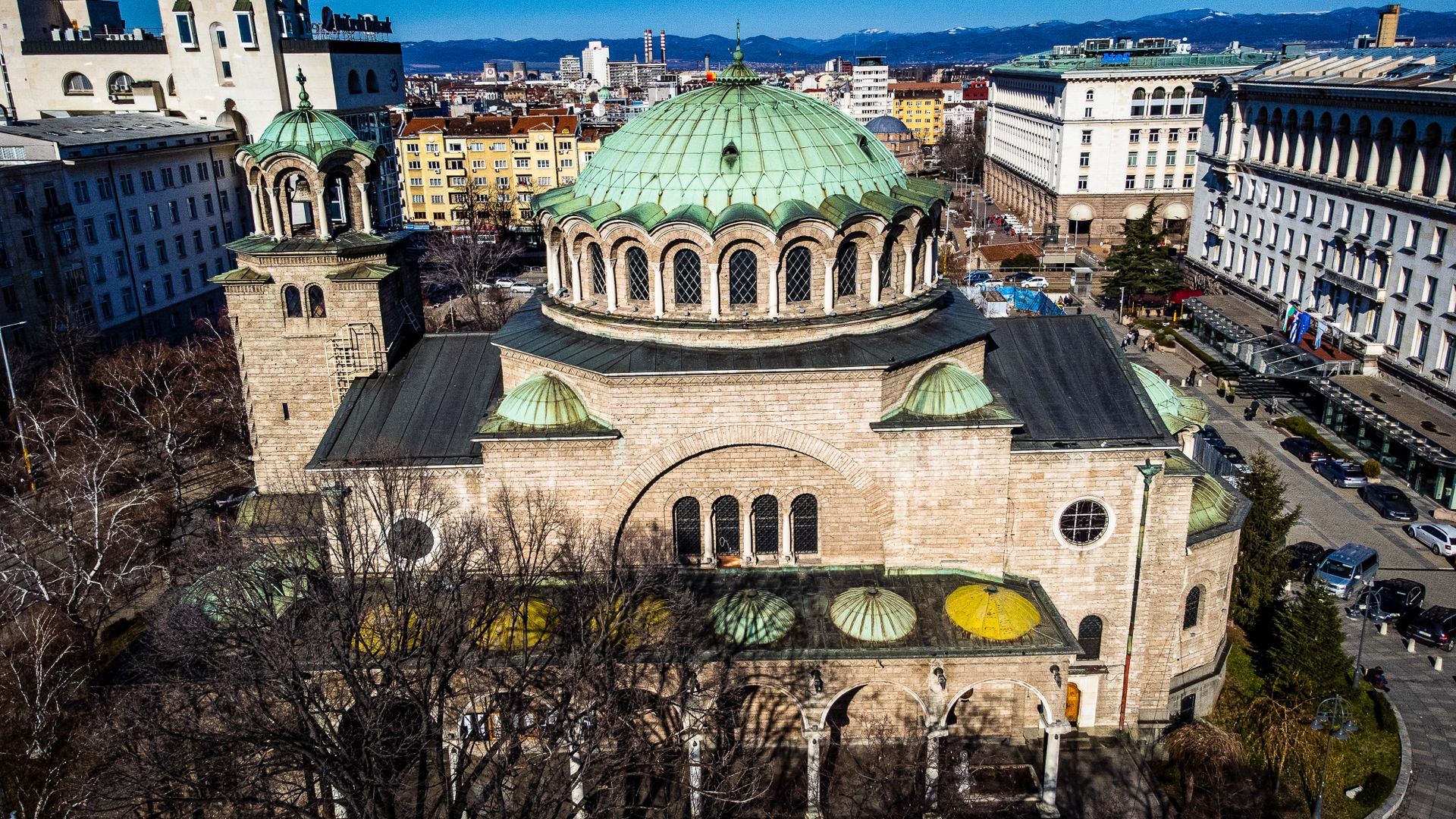
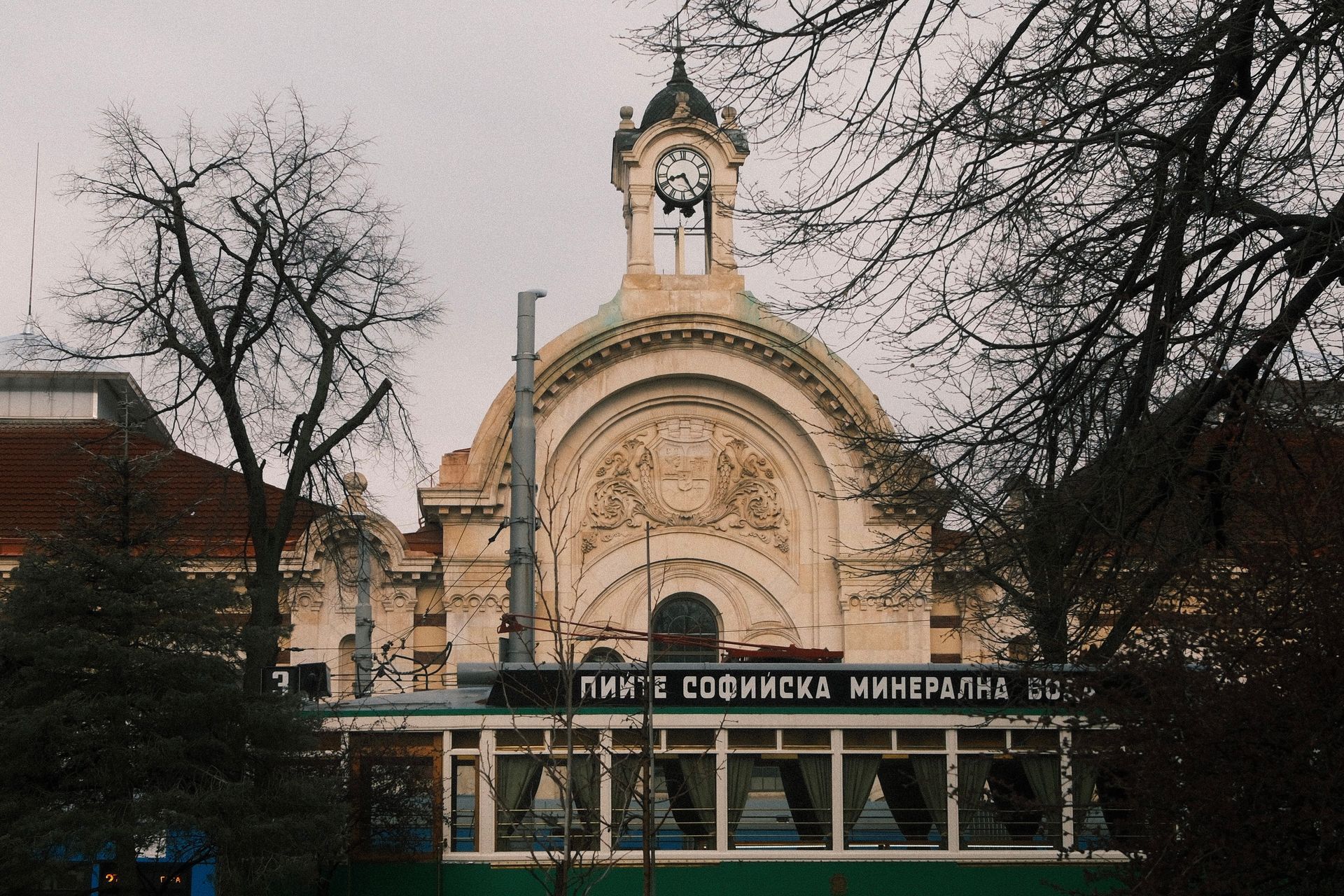
The historic core wraps around Sveta Nedelya Square and the “Largo,” the monumental Stalinist ensemble built in the 1950s as the showpiece of socialist Sofia. This is where the city’s layers collide most dramatically: within a two-minute walk you pass the Banya Bashi Mosque, the Sofia Synagogue, the St Nedelya Orthodox church and the open-air Roman complex of Serdica, exposed when the metro was driven through it. The Largo’s three austere blocks once housed the Communist Party headquarters; today they hold ministries and the Presidency, where you can watch the hourly changing of the guard. It is a stage set for the whole of Bulgarian history, and almost everything on it is free to walk through.
- Sveta Nedelya Square and the Largo
- The Serdica archaeological complex (open-air, free)
- Banya Bashi Mosque and the Central Mineral Baths
Best for: first-timers who want everything in walking distance. Access: Serdika metro station (M1/M2/M4).
Vitosha Boulevard (Vitoshka)
Sofia’s pedestrianised shopping spine runs from Sveta Nedelya south towards the mountain, with the National Palace of Culture anchoring its far end. “Vitoshka,” as everyone calls it, is the city’s see-and-be-seen promenade — café terraces, ice-cream queues, buskers and a clean line of sight to the wall of Vitosha closing off the view ahead. It is the obvious place for a first evening: take an outdoor table, order a glass of Bulgarian Mavrud, and watch the city walk past as the mountain turns pink behind the NDK. International boutiques mix with local designers, and the side streets hide some of Sofia’s best small restaurants.
- NDK (National Palace of Culture) and its park
- Café terraces with mountain views
- Boutiques and the city’s best people-watching
Best for: coffee, shopping and a first evening stroll. Access: NDK metro station (M2).
Oborishte & the Doctor’s Garden
The leafy diplomatic quarter east of the cathedral is Sofia at its most elegant. Secessionist and National Revival villas line quiet streets, embassies occupy the grandest of them, and the Alexander Nevsky complex dominates the skyline. This is the cultural heart of the city: the National Gallery in the former royal palace, the icon-filled crypt museum, the Sofia University rotunda and the small, shaded Doctor’s Garden, a memorial park to the medics of the Russo-Turkish war. It rewards aimless wandering more than any other part of town — pick a direction and you will stumble on a museum, a monument or a hidden café within minutes.
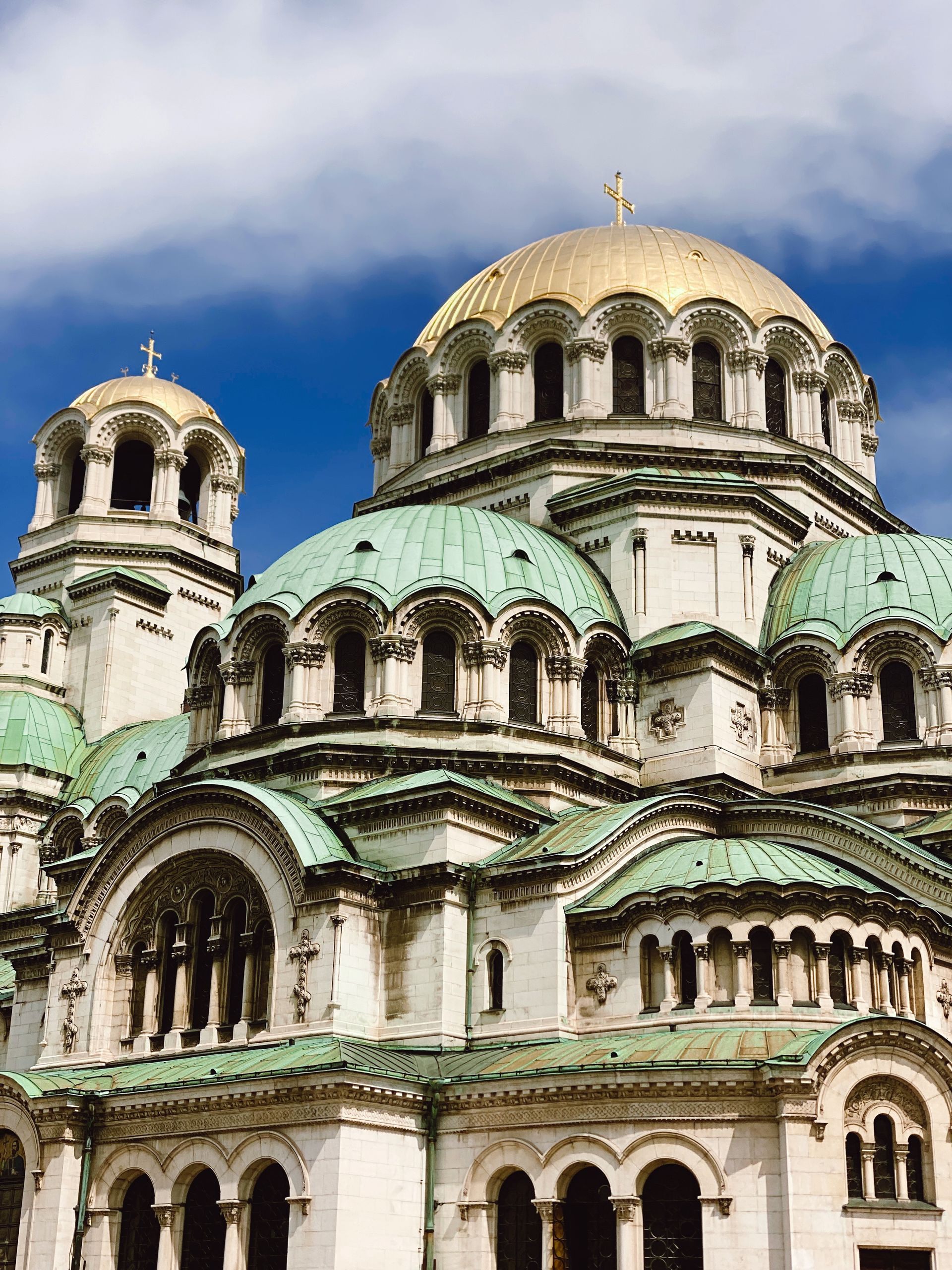
- Alexander Nevsky Cathedral and its icon crypt
- The National Gallery (former royal palace)
- Doctor’s Garden and Sofia University
Best for: culture, museums and slow walks. Access: a 10-minute walk from Serdika.
Studentski Grad
The “student town” in the southeast is Sofia’s nightlife furnace — a dense, charmless but electric grid of clubs, bars and late-night kitchens powered by the tens of thousands of students at the universities clustered here. It is not somewhere you go for the architecture; you go for the energy, the cheap drinks and a crowd that does not stop until dawn. Prices here are the lowest in the city, the music ranges from techno to chalga, and a night out can cost less than a single cocktail back home. Take an official taxi or ride-hail back to the centre rather than waiting for the night bus.
- Wall-to-wall clubs and live-music bars
- 24-hour street food
- The lowest drink prices in the city
Best for: nightlife and budget travellers. Access: bus and tram from the centre, ~20 minutes.
Lozenets
A green, upscale residential district that climbs gently towards the vast South Park, Lozenets has quietly become Sofia’s brunch-and-specialty-coffee heartland. Independent roasters, natural-wine bars, bakeries and young families fill its tree-lined streets, and it has the relaxed, lived-in feel that the tourist centre lacks. For a longer stay it makes an ideal base — close enough to walk to NDK and Vitoshka, far enough to feel like a local neighbourhood, and on the doorstep of the city’s biggest park for a morning run before the sights open.
- Specialty coffee shops and bakeries
- South Park access
- Calm, tree-lined streets
Best for: digital nomads and a local-feeling base. Access: tram and bus, ~10 minutes from NDK.
Boyana & Dragalevtsi
At the very foot of Vitosha, these former villages are now leafy mountain suburbs and the gateway to the slopes. Boyana is Sofia’s UNESCO trump card, home to the tiny medieval church whose frescoes rewrote the story of European painting, and to the sprawling National Museum of History in a former Communist government residence. Dragalevtsi, next door, has a working monastery in the woods and a chairlift that hauls hikers and skiers up onto the mountain. The villages themselves are dotted with garden restaurants where Sofians drive out at weekends for grilled meat and mountain air.
- The UNESCO-listed Boyana Church
- National Museum of History
- Trailheads and the Dragalevtsi chairlift
Best for: hikers, skiers and a half-day escape. Access: bus 64/107 from the centre.
Zhenski Pazar & the Women’s Market
The gritty, vivid market quarter northwest of the centre is where Sofia actually eats. The Women’s Market — Zhenski Pazar — is a long open-air bazaar of produce, spices, pickles, cheese and cheap eats that has fed the city for over a century, recently spruced up but still gloriously unpolished. A short walk away, the handsome 1911 Central Market Hall (Tsentralni Hali) reopened after renovation as a food court of stalls and small kitchens. Between them you can assemble a picnic of sirene cheese, lyutenitsa, fresh bread and honey for a few euros, then eat it in the City Garden.
- The Women’s Market (Zhenski Pazar) produce stalls
- Tsentralni Hali / Central Market Hall
- Cheap banitsa and grilled meats
Best for: food lovers and market wanderers. Access: a 10-minute walk from Serdika.
Borisova Gradina & the East
Sofia’s oldest and largest park sweeps southeast from the centre, fringed by the Vasil Levski national stadium and entered across the Eagles’ Bridge (Orlov Most), the city’s traditional gathering and protest point. Borisova Gradina is the city’s lungs: joggers and cyclists on the alleys, chess players under the chestnuts, lakes and fountains, open-air concerts in summer and a blaze of colour in autumn. It is also where Sofians come to escape the heat, and a lovely buffer between the museum-heavy centre and the residential south — wander in after a morning of sightseeing and you will see the city off-duty.
- Borisova Gradina (Boris’s Garden) park
- Eagles’ Bridge (Orlov Most)
- Vasil Levski Stadium
Best for: runners, picnics and a green break. Access: a short walk east from Sofia University metro.
Reduta & Yavorov
East of Borisova Gradina, Reduta and the surrounding Slatina district are where you see everyday Sofia — Communist-era apartment blocks softened by leafy courtyards, neighbourhood markets, and a genuinely local restaurant scene that almost no tourist reaches. There is little to “see” in the guidebook sense, but a meal here, surrounded by Sofians off the clock, is one of the more honest experiences the city offers, and prices drop noticeably away from the centre. It is also handy for the eastern metro stations and a quieter, cheaper place to stay on a longer trip.
- Authentic neighbourhood mehanas and bakeries
- Local produce markets without the tourist mark-up
- Quiet residential streets and pocket parks
Best for: seeing the real, lived-in Sofia. Access: eastern metro stations on the M1/M4.
Knyazhevo & the Western Foothills
On the southwestern edge, where the city dissolves into the lower slopes of Vitosha, Knyazhevo is an old spa village now folded into Sofia — famous for its mineral springs, where locals still queue with bottles to fill at the public fountains. A vintage tram rattles out here from the centre, and from the village the forest trails climb straight up the mountain. It is the quietest, greenest corner of the city, a world away from Vitoshka’s bustle and a lovely place to end a hiking day with a soak and a meal.
- Knyazhevo mineral springs and public fountains
- The scenic vintage tram line from the centre
- Forest trailheads onto Vitosha
Best for: spa-lovers, hikers and a slow green half-day. Access: tram to the western terminus, ~25 minutes.
So Where Should You Stay?
For a first visit of two or three days, base yourself in the Centre or just off Vitosha Boulevard: you wake up within a five-minute walk of the cathedral, the Roman ruins and the markets, and the metro hub at Serdika puts the airport and every other district one ride away. For a longer or more relaxed stay, Oborishte and Lozenets offer leafier, quieter streets with excellent coffee and a local feel while remaining an easy walk or short tram ride from the sights. Choose Boyana or Dragalevtsi only if the mountain is your main draw — they are beautiful and green but a real bus ride from the centre. Wherever you land, the city’s small footprint and cheap, frequent transport mean no base ever feels truly far from the action, so let price and atmosphere, rather than distance, guide the choice.
The Food

Bulgarian food is a Balkan crossroads — Mediterranean vegetables, Ottoman grills, Slavic dairy and a national obsession with yogurt that has a genuine scientific footnote: the bacterium Lactobacillus delbrueckii subsp. bulgaricus, the microbe that makes true Bulgarian yogurt, was identified in 1905 by a Bulgarian medical student named Stamen Grigorov. Bulgarians will tell you, only half joking, that the yogurt is why they live so long. Sofia is where all of this converges, cheaply and well — a city where you can eat brilliantly on a backpacker budget and where even the fine dining rarely stings. The headline ingredients are simple: ripe tomatoes and peppers, sheep’s-milk cheese, grilled pork, walnuts, herbs and an awful lot of dairy. What follows is how to eat your way through a few days here, from the morning bakery to the late-night mehana.
Eating in Sofia rewards a little planning and a willingness to wander off Vitoshka. The restaurants directly on the main boulevard are pleasant enough but pricier and blander than what you’ll find a street or two back, where the mehanas the locals actually use sit. Lunch tends to be the big, cheap meal of the day for Sofians, with many places offering a set “menu of the day” for a handful of euros; dinner runs late and leisurely. Tipping around 10% is normal and appreciated. And do not be shy about the markets — assembling your own lunch from a cheese stall, a bakery and a fruit vendor is both the cheapest and one of the most enjoyable ways to eat here. Below, the dishes and drinks that matter, grouped so you can build a few days of very good, very affordable eating.
Bulgarian Classics & the Mehana
The mehana — the traditional tavern — is the heart of Bulgarian dining. Expect clay pots, folk décor, live music if you’re lucky, a carafe of house rakia and slow-cooked stews that arrive bubbling. The ritual is fixed and worth following: order a shopska salad and a round of rakia to start, take your time over them, then move on to a grilled or clay-pot main. The salad is built to be eaten with the brandy, the sharp cheese and cold vegetables cutting the heat of the spirit. Central Sofia has dozens of mehanas; the better ones sit a street or two off Vitoshka, away from the obvious tourist traps. Portions are generous and the bill, even with wine, rarely troubles €15 a head.
- Shopska salata — the national salad of diced tomato, cucumber, onion, roasted pepper and a snowdrift of grated sirene cheese (€3–5)
- Kavarma — a slow-cooked pork-and-vegetable clay-pot stew, the comfort dish of the mehana (€6–9)
- Kebapche & kyufte — the grilled minced-pork roll and patty, the default pub plate, usually served with fries and lyutenitsa (€1–2 each)
- Sarmi — vine or cabbage leaves stuffed with rice and mince, the festive-table classic (€4–6)
Banitsa, Bakeries & Street Food
The Bulgarian morning begins at the bakery. Banitsa — coiled sheets of filo layered with eggs, yogurt and sirene, baked until the top blisters — is the national breakfast, bought hot from a counter and eaten standing on the street with a cup of boza or ayran. Every Sofia neighbourhood has its own favourite bakery, and locals are fiercely loyal to theirs. At New Year, a special banitsa is baked with little paper fortunes tucked inside, one for each member of the family. Beyond banitsa, the bakery counters and street kiosks turn out a whole category of cheap, satisfying snacks that will keep your food budget tiny and your sightseeing fuelled.
- Banitsa — flaky filo-and-cheese pastry, the national breakfast (€1–1.50)
- Princessa — open-faced toast grilled with mince or cheese, a bakery-counter staple (€1)
- Mekitsi — pillowy fried dough eaten warm with jam, yogurt or honey (€1–2)
- Gevrek — the sesame bread ring sold from every street cart, Sofia’s answer to the bagel (€0.50)
Beyond Shopska and Banitsa
Sofia’s tables run far deeper than the two headliners. Cold soups, fiery relishes, tripe broth and egg scrambles all have devoted followings, and a wave of new-wave bistros around the centre and Lozenets is reinterpreting them with seasonal produce and local wine. If you eat only shopska and banitsa you’ll have a fine time; if you push past them you’ll start to understand why Bulgarians get misty-eyed about home cooking. Don’t leave without trying tarator on a hot day — a chilled yogurt soup that sounds odd and tastes like summer — and at least one bowl of the notorious tripe soup, which locals swear is the only true cure for a rakia hangover.
- Tarator — chilled yogurt, cucumber, walnut, garlic and dill soup, summer’s saviour (€2–4)
- Lyutenitsa — the roasted red-pepper-and-tomato relish smeared on bread at every table (a jar, €2–3)
- Shkembe chorba — the legendary tripe soup, hangover cure and acquired taste, seasoned with garlic and vinegar at the table (€3–4)
- Mish-mash — a summer scramble of eggs, peppers, tomato and sirene (€3–5)
- Bob chorba — the hearty bean soup that is Bulgaria’s everyday lunch (€2–4)
Cheese, Dairy & the Bulgarian Larder
If one thing defines the Bulgarian table it is dairy. Sirene, the brined white cheese, goes into everything from shopska salad to banitsa; kashkaval, the firm yellow cheese, is grilled, fried and grated over chips. Then there is the yogurt — thicker, tangier and more alive than almost anything you’ll find further west, eaten plain, drunk as salty ayran, or whipped into tarator. The markets are the place to understand it all, with great wheels of cheese, jars of honey from the mountain hives, and ropes of dried peppers and sausages hanging from the stalls. A picnic assembled at Zhenski Pazar costs almost nothing and teaches you more about Bulgarian food than any restaurant.
- Sirene — the brined white sheep’s- or cow’s-milk cheese at the heart of the cuisine (by the kilo at markets, a few euros)
- Kashkaval — the firm yellow cheese, grilled or fried as kashkaval pane (€3–5 a plate)
- Kiselo mlyako — the famous live Bulgarian yogurt, eaten with honey and walnuts (€1–2)
- Lukanka & sudzhuk — flat-pressed and spiced dry sausages, the market snack of choice (by weight)
Drinks: Rakia, Wine & Boza
No Bulgarian meal is complete without rakia, the fierce grape or plum brandy of around 40% that opens every gathering and is often home-distilled with fierce family pride. Sip it, never shoot it, alongside a salad. Bulgaria is also a serious and badly underrated wine country, with a 6,000-year viticultural history and indigenous grapes — the dark, peppery Mavrud of Thrace and the structured Melnik of the southwest — that the city’s new wine bars are championing. For something gentler and stranger, try boza, the thick, faintly sweet fermented-millet drink that Bulgarians sip at breakfast, or ayran, the salted yogurt drink that is the perfect foil to a greasy grill.
Sweets, Coffee & the Café Ritual
Bulgarians take coffee seriously, and the mid-morning or afternoon stop at a café is a social institution rather than a quick caffeine hit — expect to linger. Espresso culture is strong, prices are tiny, and the new generation of specialty roasters in Lozenets and the centre would not be out of place in Melbourne or Oslo. To accompany it, the pastry cabinets are full of temptations: garash, a dense flourless walnut-and-chocolate torte that is the city’s signature cake; baklava and other syrup-soaked sweets inherited from the Ottoman centuries; and tikvenik, a pumpkin-and-walnut cousin of banitsa eaten in autumn. Round off any big meal with a small, strong coffee and a slice of something walnut-heavy, and you’ll have eaten exactly as a Sofian does.
Food Experiences You Can’t Miss
- Graze the open-air Women’s Market (Zhenski Pazar) for cheese, honey, pickles and seasonal produce, then eat lunch at the renovated Central Market Hall food stalls.
- Drink rakia — the roughly 40% grape or plum brandy that opens every Bulgarian meal — paired with a shopska salad in a proper mehana, the way locals do.
- Try boza, the thick, faintly sweet fermented-millet breakfast drink, beside a fresh banitsa at a bakery counter.
- Drink Bulgarian wine at a natural-wine bar — the country’s indigenous Mavrud and Melnik reds are world-class and absurdly cheap by the glass.
- End a meal with a slice of garash, the dense walnut chocolate torte that is Sofia’s favourite café cake.
- Take a coffee on a Vitoshka terrace mid-morning — Sofians treat coffee as a social institution, and watching the boulevard wake up is a pleasure in itself.
A word on the new wave, too: Sofia is in the middle of a genuine food renaissance. A generation of chefs who trained abroad has come home to open small, ambitious bistros around the centre and Lozenets, plating modern takes on grandmother’s recipes with foraged herbs, local cheese and natural Bulgarian wine. You can eat a tasting menu here for what a single main course costs in London or Berlin, and the kitchens are unburdened by the expectations that weigh on better-known European capitals. It is one of the most exciting and underpriced dining scenes on the continent right now, and a reason in itself to give the city an extra evening.
What ties it all together is generosity. Bulgarians feed guests as a point of honour, portions are large, and the rhythm of a meal — salad and rakia, then grills or clay pots, then coffee and maybe a cake — is unhurried. Eat the way locals do, lingering for hours over a table of small plates, and Sofia’s food stops being a list of dishes and becomes the best window you have into the country. Come hungry, come curious, and budget for one more meal than you think you’ll have time for — you will want it.
Cultural Sights

Sofia’s great gift to the sightseer is concentration: almost everything below sits inside the same walkable square kilometre, and the bulk of it is free. You can knock off the headline sights in a focused morning, but the city rewards lingering — stepping into the cool of the Rotunda, watching the changing of the guard at the Presidency, or simply sitting in the cathedral’s vast incense-filled nave as the choir rehearses. Here are the monuments worth building your days around, roughly in the order you’ll meet them walking out from Sveta Nedelya Square.
Alexander Nevsky Cathedral
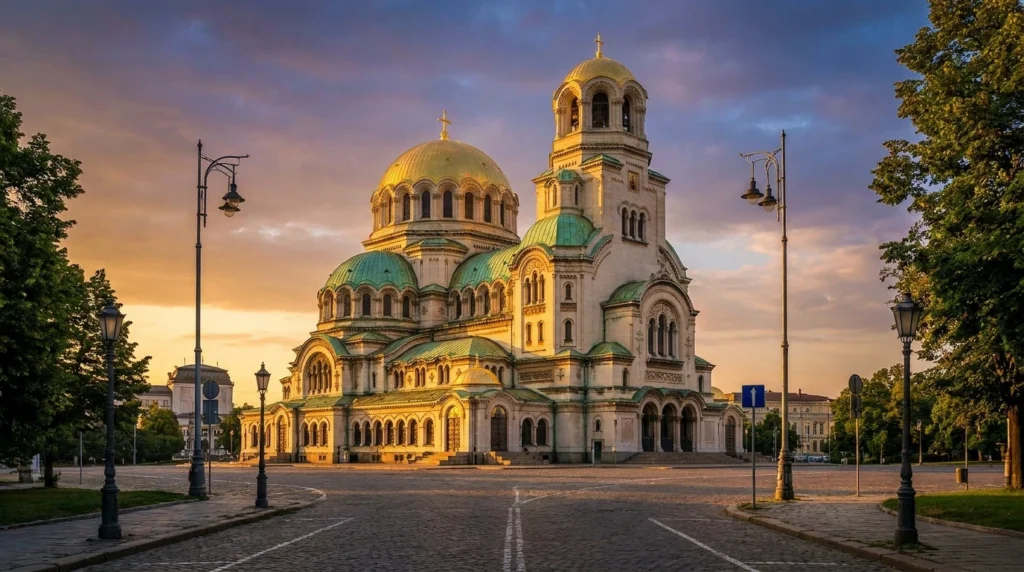
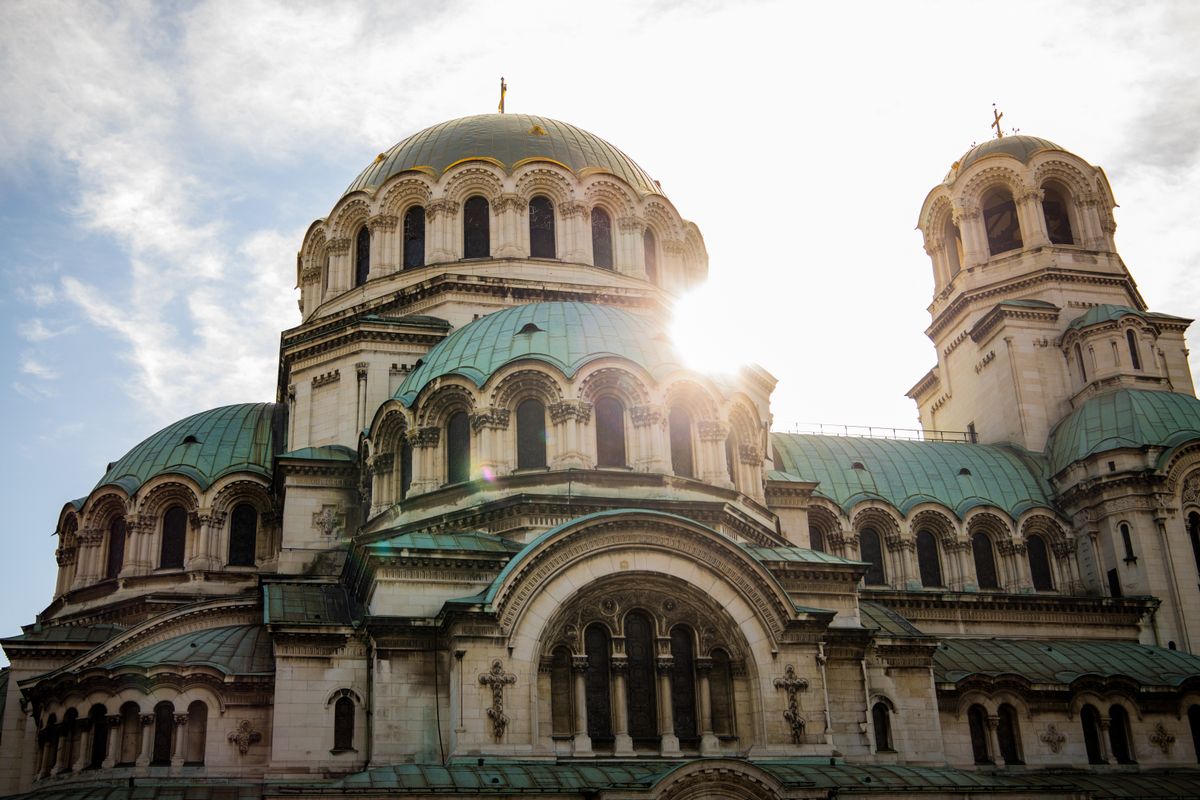
Sofia’s defining monument and one of the largest Orthodox cathedrals in the world, the gold-domed Alexander Nevsky was begun in 1882 and completed in 1912 as a national memorial to the roughly 200,000 soldiers — Russian, Bulgarian, Romanian and Finnish — who died in the 1877–78 Russo-Turkish War that liberated Bulgaria from five centuries of Ottoman rule. Its neo-Byzantine bulk holds up to 10,000 worshippers under a central dome plated in gold. Entry to the cavernous, incense-thick nave is free; the crypt below, now a museum of medieval Bulgarian icons, costs about 10 BGN (~€5) and is one of the finest icon collections in the world. Come early for the light through the dome, and step outside again to see the whole gilded mass glow at sunrise — the single most photographed view in the country.
St George Rotunda
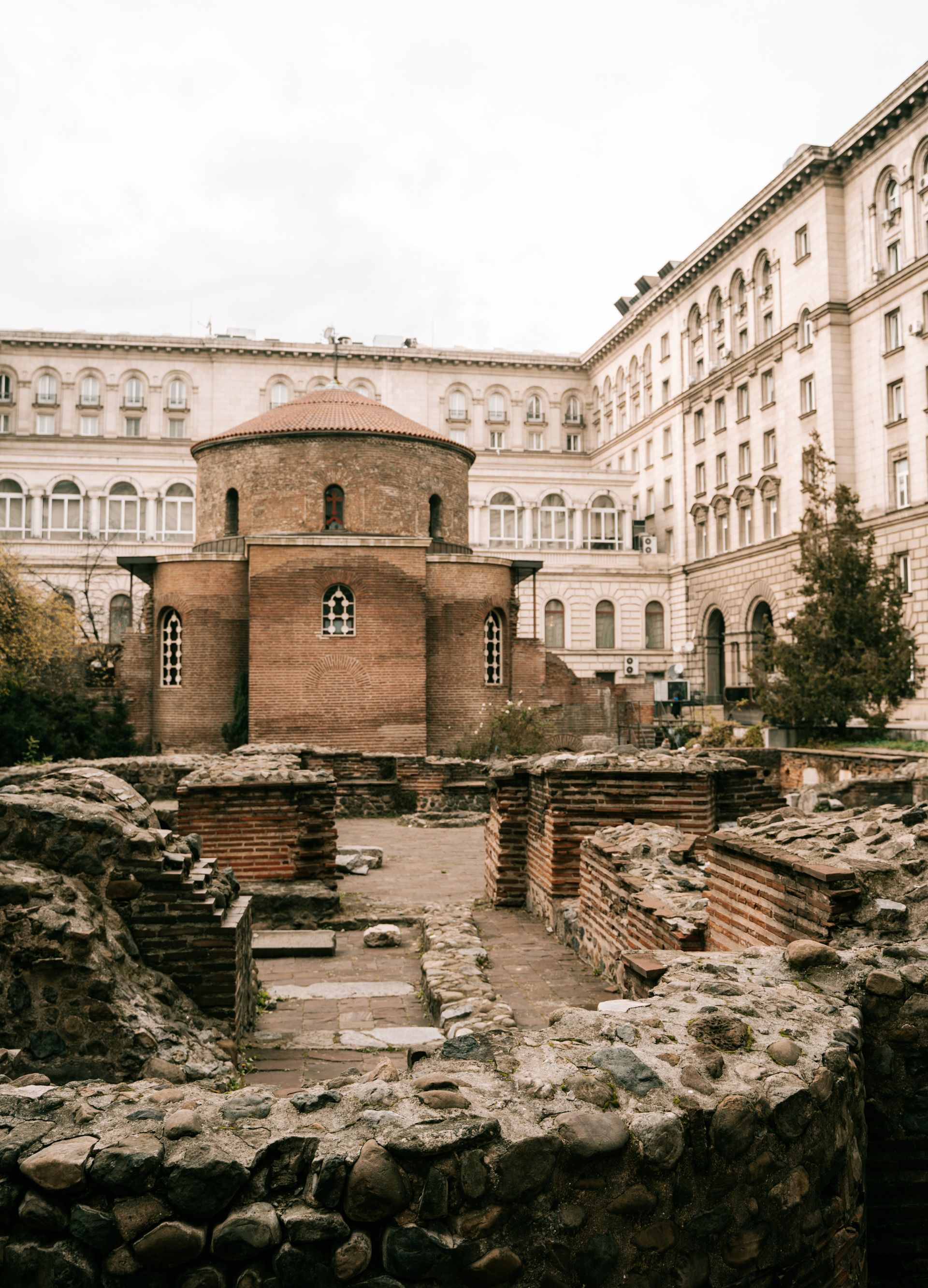
The red-brick Rotunda of St George is the oldest building in Sofia — a 4th-century Roman structure, originally part of the Serdica baths complex, that became an early Christian church and, remarkably, still holds Orthodox services today. Admission is free. Inside, three superimposed layers of frescoes survive: a Roman decorative scheme, an early Christian one, and medieval Christian paintings, some hidden under Ottoman plaster for centuries and only rediscovered in the 20th century. The Rotunda sits in a sunken courtyard ringed by the Serdica ruins and surrounded by the Presidency and a five-star hotel, a perfect snapshot of how Sofia stacks its eras on top of one another.
The Roman Serdica Complex
Beside and beneath Serdika metro station, a vast open-air archaeological zone preserves the streets, walls, shops and an early Christian basilica of Roman Serdica — the city Emperor Constantine the Great so admired that he is said to have called it “my Rome” and considered making it his eastern capital. When the metro line was extended, the city chose to expose rather than rebury the find, so the ancient pavements now run right up to the station escalators. It is free, largely unfenced and walkable day or night, and it remains Sofia’s most quietly astonishing experience: a working subway threading through a Roman city.
Boyana Church (UNESCO)
On Vitosha’s lower slopes, the tiny three-part medieval Boyana Church holds 240 surviving frescoes across several periods, but it is the layer painted in 1259 by the anonymous Master of Boyana — startlingly individual, almost portrait-like faces that anticipate the Italian Renaissance by decades — that earned it UNESCO World Heritage status in 1979. Admission is about 10 BGN (~€5), and visits inside are capped at 10 minutes for small groups to protect the fragile paint from heat and breath. Combine it with the enormous National Museum of History a short walk away, and you have one of the best half-days in Sofia.
National Palace of Culture (NDK)
The colossal congress centre that closes the southern end of Vitosha Boulevard is Bulgaria’s largest multifunctional venue, opened in 1981 to mark the country’s 1,300th anniversary. Brutally monumental in the late-socialist style, NDK hosts everything from classical concerts and tech conferences to film festivals and trade fairs, and its broad fountained plaza is the city’s main gathering, protest and skateboarding space. The building divides opinion, but the view back up Vitoshka from its steps at dusk — the boulevard funnelling towards the floodlit cathedral with the mountain behind — is one of Sofia’s signature scenes.
Banya Bashi Mosque & the Square of Tolerance
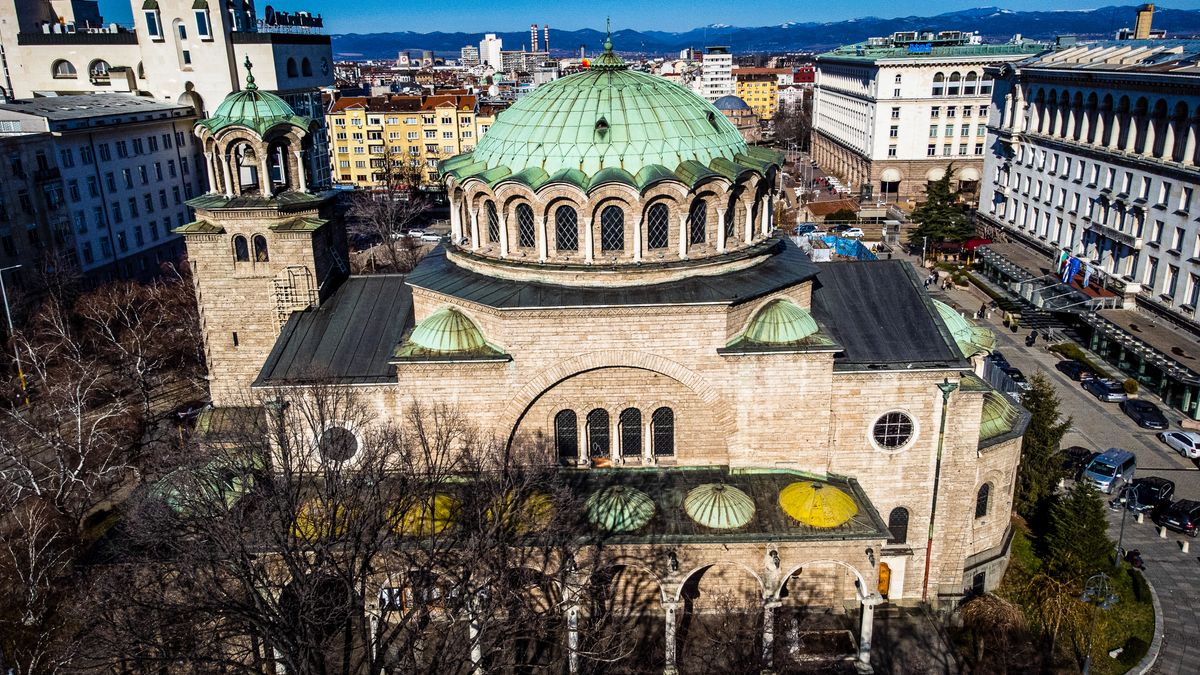
The 1566 Banya Bashi Mosque, built in the school of the great Ottoman architect Mimar Sinan and named for the mineral baths it once stood beside, is the only working mosque left in central Sofia. What makes its setting extraordinary is the company it keeps: within a few hundred metres stand the Sofia Synagogue (one of the largest Sephardic synagogues in Europe), the St Nedelya Orthodox cathedral and the Catholic Cathedral of St Joseph. Sofians call this cluster the “Square of Tolerance,” and it is genuinely moving to stand at its centre. Visitors may enter the mosque outside the five daily prayer times; dress modestly and remove your shoes. Taken together, this single intersection tells the whole story of Sofia better than any museum could — four faiths, four empires, all sharing one small patch of ground in the heart of the modern capital.
Entertainment
Sofia punches absurdly above its weight after dark, and the reason is price. Culture that would cost a small fortune in Vienna or Milan — a night at the opera, a philharmonic concert, a craft-beer crawl — comes in here at a fraction of the price, which means you can fill every evening of a trip without watching your budget. The scene splits broadly into two: world-class high culture in the grand old institutions of the centre, and a young, scrappy, fast-evolving nightlife of craft bars, wine rooms and clubs. The best evenings mix both. Here is how to spend them.
Opera, Ballet & Classical Music
For a capital this affordable, Sofia’s high culture is an absolute steal. The Sofia Opera and Ballet stages a serious international repertoire — full Wagner cycles among them — while the Sofia Philharmonic plays at the acoustically renowned Bulgaria Hall, and smaller chamber series fill the city’s churches and galleries. Typical cost is just €8–30 a ticket, a fraction of what the same seat costs in Vienna or Milan. Book a few days ahead online or at the box office; dress is smart-casual rather than black-tie, and the audiences are warm and knowledgeable.
Theatre at the Ivan Vazov
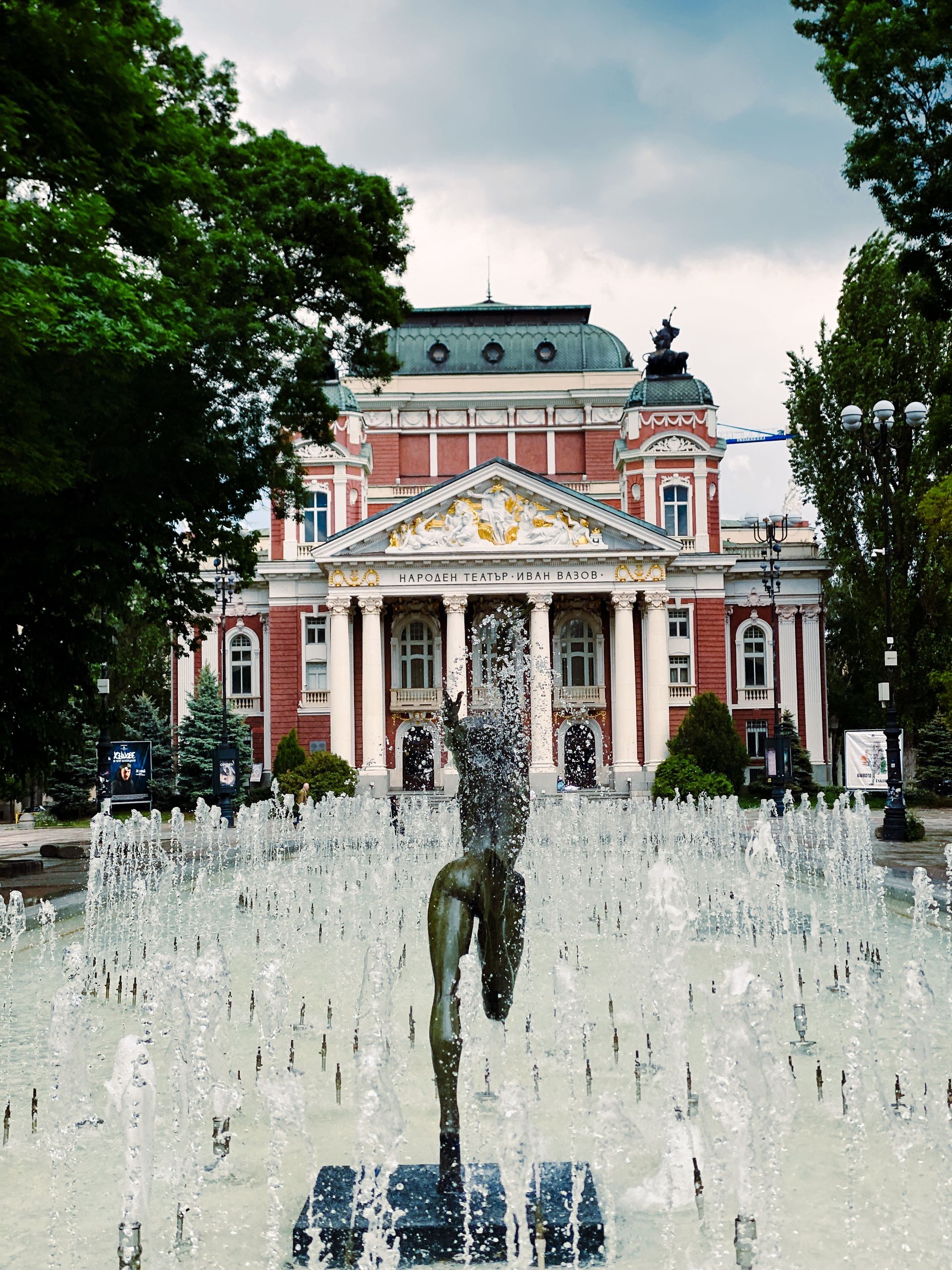
The neoclassical Ivan Vazov National Theatre is Bulgaria’s grandest stage, a Viennese-designed pile fronted by a fountain in the City Garden at the very centre of town. Performances are in Bulgarian, so the drama itself may be hard to follow, but the gilded auditorium, the surrounding garden and the after-show café scene make an evening here worthwhile even for non-speakers. Typical cost €5–15. The garden in front is one of the best free people-watching spots in Sofia, day or night.
Craft Beer & Wine Bars
Sofia’s craft-beer scene has exploded over the past decade, clustering around the centre and Lozenets, and it sits alongside a growing crowd of natural-wine bars pouring indigenous Bulgarian grapes — the spicy Mavrud of Thrace and the dark Melnik of the southwest. Typical cost is €2–4 a glass, among the cheapest in any EU capital, and the bartenders are usually delighted to walk you through the country’s wine regions. Pair a flight with a board of sirene and lyutenitsa for a perfect, cheap evening, and ask the bartender what’s open from a small Bulgarian producer — the answers are often the highlight of the night.
Clubs & Live Music
Nightlife runs the full spectrum, from the wall-to-wall student clubs of Studentski Grad to the glitzy chalga (Balkan pop-folk) halls and a healthy roster of indie and electronic venues near the centre. Typical cost is free to €10 entry, with drinks at €2–5. Be warned that things start very late — most clubs barely fill before midnight and run until dawn — and chalga halls, with their live singers and bottle service, are a uniquely Bulgarian spectacle worth seeing once.
Vitosha by Cable Car
In winter the Simeonovo gondola and the older Dragalevtsi chairlift turn the city’s own backyard into a ski resort, hauling you from the suburbs to the slopes in minutes; in summer the same lifts are a scenic ride up to alpine meadows, the Boyana waterfall trail and the boulder-strewn Stone River. A return lift ticket runs roughly €8–15. There is nowhere else in Europe where you can ski in the morning and stand inside a Roman rotunda by lunchtime.
However you spend the evening, the golden rule of Sofia nightlife is that it starts late and stays cheap. Restaurants fill around nine, bars after ten, and the clubs barely stir before midnight, so pace your day accordingly and resist the urge to head out too early. Most venues cluster within walking distance of the centre, with the student district of Studentski Grad the one outlier worth a taxi. And keep some cash for the smallest bars and the night-time taxi home — even an indulgent evening out here rarely troubles what you’d spend on a single round of drinks in Western Europe.
Day Trips

Rila Monastery (2 hours by car/tour)
The single most rewarding day trip in Bulgaria, and for many travellers the reason to come at all. Founded in the 10th century by the hermit St Ivan of Rila and rebuilt in its present striped, arcaded glory after an 1833 fire, Rila has been a UNESCO World Heritage Site since 1983 and remains a living monastery deep in a forested mountain valley about two hours south of the city. The frescoed main church, the candy-striped arcades wrapping the courtyard, and the surviving 1334–35 Hrelyo Tower are extraordinary; so is the deep silence once the day-trippers leave and the monks ring the bells. Most visitors take an organised tour, very often paired with the Boyana Church, since reaching it independently means slow connections through the town of Blagoevgrad — a hired car or a guided tour is far easier and lets you add a stop at the nearby Stob earth pyramids.
Plovdiv (1.5 hours by train or bus)
Bulgaria’s second city and a 2019 European Capital of Culture, Plovdiv is one of the oldest continuously inhabited cities on the planet, with archaeological strata reaching back to the 6th millennium BC. The cobbled Old Town of bay-windowed National Revival mansions, the Roman theatre of Philippopolis still hosting summer concerts under the stars, and the buzzing Kapana arts-and-crafts district of galleries, bars and street art make it an easy, brilliant day out by frequent train or bus. Honestly, Plovdiv merits an overnight to do it justice, but you can absolutely see the highlights in a long day if you catch an early train and pace yourself.
Vitosha Mountain (30 minutes by bus)
Sofia’s own mountain is barely a day trip at all — it is part of the city, and one of the things that makes Sofia unique among European capitals. Bus 64 or the Simeonovo gondola lift you from the suburbs onto trails leading to the Black Peak (Cherni Vrah, 2,290 m), the eerie boulder field of the Stone River, the Boyana waterfall, and, in winter, a full set of groomed ski runs — all technically within the city limits and reachable on public transport. Pack layers and proper shoes whatever the season; the summit is a markedly different, colder climate from the streets below, and the afternoon weather can turn from sunshine to fog and rain with little warning.
Koprivshtitsa (1.5 hours by train)
A perfectly preserved museum-town of National Revival houses tucked into the Sredna Gora mountains, Koprivshtitsa is where the 1876 April Uprising against Ottoman rule first broke out — a place that holds an almost sacred status in the national memory. Its cobbled lanes, brightly painted merchant mansions (several open as house-museums furnished as they were in the 19th century), arched stone bridges and clean mountain air make a peaceful, slow-paced contrast to the capital. It is one of the prettiest small towns in the whole country, refreshingly free of crowds, and best appreciated by simply wandering with no fixed plan.
Seven Rila Lakes (2.5 hours + hike)
A drive to the Panichishte trailhead, a chairlift and then a moderate two-to-three-hour hike reach this chain of seven glacial lakes strung high across the Rila range — among the most photographed landscapes in all of Bulgaria, each lake named for its shape: the Eye, the Kidney, the Tear, the Twin. The full circuit climbs above the treeline to staggering panoramas of the surrounding peaks. It is best from June to September once the snow has melted from the upper trails; go with an organised tour for the pre-dawn start, the long transport leg and the navigation, since the weather up here is fickle and the paths are easy to lose in cloud.
Seasonal Guide

Sofia has a true four-season continental climate, sharpened by its altitude and the mountain at its back, so the city you get depends heavily on when you come. The shoulder seasons of late spring and early autumn are the sweet spot — mild, golden and uncrowded — but each season has its own distinct pleasures, from summer’s café evenings to winter’s ski-and-mulled-wine combination. Here is what to expect month by month.
Spring (March – May)
Daytime highs climb from about 10°C in chilly March to a pleasant 22°C by late May. The parks green up almost overnight, the café terraces reopen along Vitoshka, the blossom comes out in Borisova Gradina, and Vitosha’s lower trails dry out for walking. Crowds are thin and prices are at their lowest — this is the best-value window of the whole year, when you can have the cathedral, the Rotunda and the Roman ruins almost entirely to yourself. Pack layers, since the evenings stay cool well into May and the mountain holds onto its snow.
Summer (June – August)
Warm, dry and lively, with highs around 28–30°C and long golden café evenings that run past midnight. The whole city decamps to South Park and Borisova Gradina to escape the heat; chilled tarator soup appears on every menu, open-air concerts and film screenings fill the NDK plaza, and Vitosha’s high meadows offer cool, fragrant hiking a short ride above the city. Brief but dramatic afternoon thunderstorms are common — they roll in off the mountain, clear quickly, and leave the streets washed and cool.
Autumn (September – October)
The connoisseur’s season, and my own favourite. Mild, settled days around 18–24°C, low golden light on the parks, and the grape harvest filling the city’s wine bars with the year’s first young Mavrud and Melnik. The summer crowds melt away, hotel prices ease, the chestnuts in the parks turn copper, and the slanting autumn sun does flattering things to the cathedral domes. Bring a light jacket for the cooler evenings, but expect plenty of warm, clear afternoons for walking.
Winter (December – February)
Cold and frequently snowy, with daytime highs hovering near freezing — but in Sofia that is a feature, not a bug. Vitosha’s slopes open for skiing a short bus ride from your hotel, the Christmas market fills the City Garden with mulled wine, crafts and lights, and the steam from the historic mineral baths hangs visibly in the frozen air. The cathedral under fresh snow is unforgettable. Bring proper boots and a warm coat; the cobbles ice up and the mountain demands real grip.
Getting Around
Getting around Sofia is refreshingly simple and cheap. The compact centre is best covered on foot, with a fast, modern metro and a dense web of trams, buses and trolleybuses filling in everything beyond walking distance — all on one shared, low-cost ticketing system. You will rarely wait long, rarely pay much, and almost never need a car. The only real learning curves are the Cyrillic signage and the universal rule that you must always validate a ticket the moment you board. Here is how the pieces fit together.
The Metro
Sofia’s clean, modern, surprisingly handsome metro opened in 1998 and has expanded fast: it now runs four lines across 47 stations and roughly 52 km of track, carrying about 470,000 riders a day. It is by far the fastest way across the city, immune to the surface traffic, and the M4 line connects the airport directly to the centre. Trains run roughly 05:00 to midnight at frequencies of a few minutes, and several stations double as accidental museums — Serdika sits on the Roman ruins, and others display archaeological finds turned up during construction.
Trams, Buses & Trolleybuses
Above ground, an extensive and characterful network of trams, buses and trolleybuses — some of the trams gloriously vintage — fills every gap the metro misses and reaches the residential districts and the foot of Vitosha. A single ride is 1.60 BGN (~€0.82); buy from machines, kiosks or by contactless tap on board. The same ticketing system and rechargeable card cover all surface transport and the metro, so one card does everything.
Tickets & the Travel Card
For any stay beyond a day or two, load a rechargeable card or buy a day pass (around 4 BGN / €2) giving unlimited rides across the metro, trams, buses and trolleybuses — excellent value given how cheap individual tickets already are. Crucially, validate your ticket or tap your card every single time you board a surface vehicle, even mid-journey transfers: plain-clothes inspectors do check, they show no mercy to confused tourists, and the on-the-spot fines are steep.
Airport Access
- Metro Line M4 from Sofia Airport (SOF) Terminal 2 runs into the centre quickly and costs the standard fare of about €0.82 — the cheapest and most reliable transfer there is
- Official airport taxi (OK Supertrans), booked at the desk in arrivals, costs roughly €8–12 to the centre depending on traffic
Taxis & Ride-Hailing
Sofia taxis are cheap when they are honest: flag-fall is around 1 BGN (~€0.50) with a per-kilometre rate near 1 BGN, all of which should be displayed on a sticker in the window. Use the app-based ride-hailing services or the official yellow OK Supertrans cars, and firmly avoid the unmarked or oddly-priced taxis that loiter at the airport and Central Station — they are notorious for fleecing arriving tourists with rigged meters.
Navigation Tips
Apps: Google Maps and Moovit both carry full, accurate Sofia transit data and will route you door to door. The one real hurdle is the alphabet — station and street signs are increasingly bilingual Cyrillic and Latin, but not always, so learning a handful of Cyrillic letters (especially М for metro, Ц for centre, and the names of your home and destination stations) pays off within the first hour. Download an offline map before you arrive in case your data drops, and remember that the metro announcements are in Bulgarian first — counting stations rather than relying on hearing the name is the safe habit.
Budget Breakdown: Making Your Euro Count
| Tier | Daily | Sleep | Eat | Transport | Activities | Extras |
|---|---|---|---|---|---|---|
| Budget | €35–55 | Hostel dorm €12–20 | Bakery + mehana €10–15 | Day pass €2 | Free sights / ruins | Beer €2–3 |
| Mid-Range | €70–110 | 3★ hotel €45–70 | Restaurants €20–30 | Metro + taxi €6 | Boyana + Rila tour €40 | Wine, café €10 |
| Luxury | €180+ | 5★ / boutique €120+ | Fine dining €50+ | Private car €40 | Private guide €80 | Spa, opera €30+ |
Where Your Money Goes
Sofia is one of the cheapest capitals in the European Union, and the maths is forgiving: even comfortable mid-range travellers eat, drink and sleep extremely well here for what a single restaurant dinner costs in Western Europe. Your two biggest variable costs are accommodation — the gap between a hostel dorm and a central hotel is the main lever on a daily budget — and day trips, since a guided run to Rila Monastery or the Seven Lakes will be among your priciest single line items. Food, transport and sights, by contrast, stay remarkably gentle. Many of the city’s headline attractions cost nothing at all: the open-air Roman Serdica ruins, the exterior of the Rotunda, the soaring nave of the Nevsky Cathedral, the parks, the markets and the central squares are all free. Budget travellers can comfortably see Sofia on €35–55 a day, while €70–110 buys a genuinely indulgent trip. Only at the luxury tier — private guides, fine dining, five-star hotels — does Sofia start to cost what other capitals charge for the basics.
To put real numbers on it: a frugal backpacker can roll through a full day — a hostel bed, a banitsa breakfast, a market lunch, a mehana dinner with a beer, and a day pass on the metro — for around €35–45, with most of the city’s best sights costing nothing on top. A mid-range traveller staying in a comfortable central three-star, eating two proper restaurant meals, taking the odd taxi and joining a guided day trip will spend €70–110, and eat and drink far better than that sum buys almost anywhere else in the EU. Even the luxury tier, at €180 and up, undercuts what Paris or Rome charge for a merely decent day. The euro changeover has not dented this: prices were converted at the fixed peg, and Sofia remains, by a wide margin, one of the best-value capitals in Europe. Build your budget around accommodation and day trips, and let the cheap food, transport and free sights take care of themselves. The honest summary is that Sofia is a place where you can travel a tier above your usual style for the same money — eat where you’d normally only window-shop, and still come home having spent less than you feared.
Money-Saving Tips
- Eat banitsa and bakery lunches on the move; save the sit-down mehana feast for dinner, when it is still cheap.
- Use the metro and a day pass rather than taxis — it is faster, beats the traffic and costs a fraction as much.
- Walk the free Serdica ruins, the Rotunda courtyard and the central squares; fully half of Sofia’s best sights cost nothing.
- Drink Bulgarian wine and rakia rather than imports — local is both better and cheaper here.
Practical Tips
Language
The language is Bulgarian, written in the Cyrillic alphabet — which Bulgaria effectively gave the wider Slavic world, since the script’s development is tied to the disciples of Saints Cyril and Methodius working in the medieval Bulgarian Empire. Younger Sofians, especially in hospitality and tech, speak good English; older generations often speak Russian or German rather than English. The single most useful thing you can do is learn to read the Cyrillic letters, so that menus, metro stations and street names stop being a wall of mystery.
Cash vs. Cards
Bulgaria adopted the euro on 1 January 2026, retiring the lev that had served the country for over a century. Cards and contactless payment are now widely accepted across central Sofia — restaurants, hotels, shops, even many market stalls — but it is still wise to carry some cash in euros for the smallest bakeries, market vendors, taxis and rural day-trip stops, where card machines can be unreliable or absent.
Safety
Sofia is a notably safe capital for visitors, and violent crime against tourists is rare. The realistic risks are mundane: rigged-meter taxis at the airport and station, and opportunistic pickpocketing in crowded trams, markets and on busy Vitoshka. Use the official taxi companies or ride-hailing apps, keep bags zipped and worn in front on packed transport, and you will almost certainly have an uneventful, hassle-free trip.
What to Wear
Dress for the season and, crucially, for the mountain that looms over the city — layers in spring and autumn, genuinely warm gear and grippy footwear in winter, when the cobbles ice over and Vitosha is a different world. For churches and the working mosque, cover your shoulders and knees; women may want to carry a light scarf for the mosque and the more conservative monasteries on day trips.
Cultural Etiquette
The famous trap first: Bulgarians traditionally shake their heads for “yes” and nod for “no,” the reverse of most of Europe, which can derail entire conversations until you adjust. Beyond that, Sofians are warm but initially reserved with strangers, and a little effort with the language — “zdravei” for hello, “blagodarya” for thank you — earns disproportionate goodwill. Tipping around 10% in restaurants is appreciated but not obligatory.
Connectivity
As an EU member state, Bulgaria falls under EU “roam like at home” rules, so visitors with an EU SIM use their data and calls at domestic rates. For everyone else, local prepaid SIMs from A1, Yettel or Vivacom are cheap and easy to buy with a passport, and free Wi-Fi is widespread in cafés, hotels and across much of the public transport network.
Health & Medications
Tap water is perfectly safe to drink, and Sofians are rightly proud of the city’s spring water — you’ll see people filling bottles at public fountains. EU visitors should carry a valid EHIC or GHIC card for state healthcare; everyone else should travel insured. Pharmacies (look for the sign reading “аптека”) are plentiful, well stocked and inexpensive, and several in the centre operate around the clock.
Luggage & Storage
Both Sofia Central Station and the airport have staffed or automated left-luggage facilities, and a number of central hostels will store bags for non-guests for a small fee. That makes it easy to drop your pack on arrival and spend a free first day on Vitosha or in the museums before you can check in — well worth doing given how compact the centre is.
Opening Hours & Timing
Sofia keeps relaxed but reliable hours. Museums typically open mid-morning and close in the late afternoon, with many shut on Mondays, so check before you build a day around one. Shops and supermarkets stay open late and often on Sundays, and the city has a healthy supply of round-the-clock bakeries, pharmacies and convenience stores. Churches are generally open through the day but ask quiet and modest dress during services. Restaurants serve lunch from around noon and dinner well into the evening, and nightlife, as everywhere here, runs very late — plan an afternoon coffee-and-rest if you intend to see the city after dark.
Accessibility
Accessibility is improving but uneven. The modern metro stations are lift-equipped and step-free, and the newest trams and buses are low-floor, but the historic centre’s cobbles, kerbs and older buildings can be challenging for wheelchair users and those with limited mobility. If access is a priority, base yourself near a metro station, lean on the metro for longer hops, and check individual museums and restaurants ahead, as retrofitted ramps and lifts are not yet universal.
Frequently Asked Questions
How many days do I need in Sofia?
Two full days is enough for the central sights — the Alexander Nevsky Cathedral, the open-air Roman ruins, the St George Rotunda, the markets and a stroll down Vitosha Boulevard. But give it three or four and the trip transforms: you can add the UNESCO-listed Boyana Church, a half-day hiking or skiing on Vitosha mountain, and at least one big day trip to Rila Monastery or Plovdiv, all without ever feeling rushed. Sofia rewards a slower pace than its size suggests.
Is Sofia good for solo travellers?
Yes, excellent. It is safe, compact, genuinely affordable and full of hostels, free walking tours and a friendly backpacker scene around the centre. English is widely spoken among younger Sofians, group day tours make the harder-to-reach sights easy to share with other travellers, and the low prices mean a solo budget stretches a long way. Solo women travellers generally report feeling very comfortable here, day and night, with the usual sensible precautions.
Do I need a car, or can I rely on public transport?
Inside the city you absolutely do not need a car — the metro, trams, buses and cheap taxis cover everything, and central Sofia is small enough to walk. A car is more hassle than help in town, with tricky parking and heavy traffic. The only time wheels help is for the rural day trips: Rila Monastery and the Seven Rila Lakes are far easier with a guided tour or a hired car than with the slow, infrequent rural buses, while Plovdiv and Koprivshtitsa are simple by train.
What about the language barrier?
It is very manageable. Bulgarian is written in Cyrillic, which looks daunting at first, but central signage is increasingly bilingual and most people under 40 speak at least some English. Spend half an hour learning to read the Cyrillic alphabet before you arrive — it is genuinely easy — and the city’s menus, metro maps and street signs suddenly become legible. A couple of polite phrases will earn you warm smiles.
When is the best time to visit?
May to June and September to October give the best balance of mild weather, golden light and thin crowds, and they are my favourite windows for the city itself. Come December to March if your priority is skiing Vitosha and soaking up the Christmas market and snow-dusted domes. July and August are warm, lively and great for café evenings, but hotter and prone to dramatic afternoon thunderstorms.
Can I use credit cards everywhere?
Almost everywhere that matters. Cards and contactless work in the great majority of central restaurants, hotels, shops and even many market stalls since the euro changeover. Still, carry a little cash in euros for the smallest bakeries, individual market vendors, taxis and the rural stops on day trips, where card machines can be missing or temperamental. You’ll rarely need much, but a few notes save awkward moments.
Is Sofia worth visiting, or should I head straight to the coast?
Very much worth it — and skipping it is the classic Bulgaria mistake. Sofia is one of Europe’s most underrated capitals: 7,000 years of layered Thracian, Roman, Ottoman and Communist history stacked within a walkable centre, a 2,290-metre mountain on its doorstep for hiking and skiing, world-class day trips, and prices that still feel like a secret. Give it at least two days before you race off to the Black Sea; you’ll be glad you did.
Is Sofia expensive?
No — it is one of the cheapest capitals in the European Union, and the single most pleasant surprise for most first-time visitors. A sit-down dinner with a glass of local wine can land under €15, a craft beer rarely tops €3, a metro day pass costs around €2, and many of the headline sights — the Roman ruins, the Rotunda courtyard, the cathedral nave, the parks and markets — are completely free. Budget travellers thrive on €35–55 a day, and even an indulgent mid-range trip rarely runs past €110. The euro changeover has not changed the picture; prices converted at the fixed peg and Sofia remains a genuine bargain.
Is Sofia a walkable city?
The historic core is wonderfully walkable — the cathedral, the Roman ruins, the Rotunda, the markets and Vitosha Boulevard all sit within a twenty-minute stroll of one another, so you can see the headline sights entirely on foot. Beyond that compact centre the city spreads out, and that is where the fast, cheap metro and the dense tram and bus network take over, reaching the outer districts and the foot of Vitosha. Pack comfortable shoes for the centre’s cobbles, and let public transport handle anything further afield.
Ready to Experience Sofia?
Pack layers, learn ten letters of Cyrillic and give this layered, affordable capital the days it deserves. For the full country context, read the Bulgaria Travel Guide.
Explore More City Guides
Alex the Travel Guru
Alex has spent two decades crossing the Balkans by train, bus and the occasional questionable rural minibus, and rates Sofia among Europe’s most undersold capitals. When not arguing the case for shopska salad and rakia, Alex is usually halfway up Vitosha looking back at the city. Every figure in this guide is sourced and dated; see the list below.
More city guides you might like
Plan your trip to Sofia
The booking tools we use ourselves. FFU may earn a commission at no extra cost to you.
Plan & book your trip to Sofia
Booking through these searches supports our guides at no extra cost to you.