
City Guide · Bay of Kotor (Boka) · Coastal Montenegro
Kotor, Montenegro: Fjord-Like Boka Bay, the UNESCO Walled Town & the Climb to San Giovanni
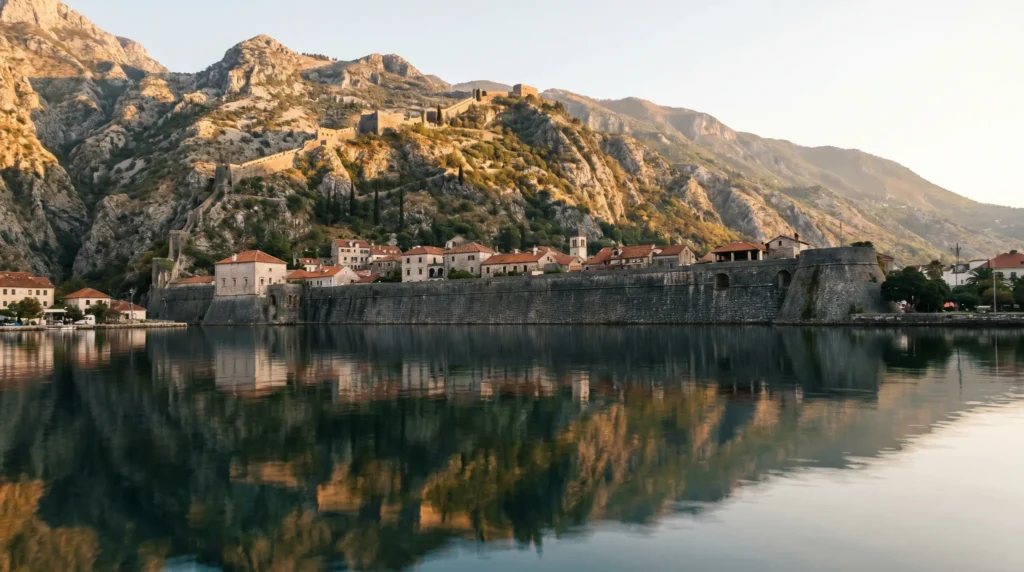
I came to Kotor expecting a pretty harbour and found one of the most theatrical landscapes in Europe — a medieval stone town wedged into the deepest corner of a 28-kilometre fjord-like bay, its 4.5 kilometres of Venetian walls climbing 1,350 stone steps up a near-vertical limestone cliff to a ruined fortress 260 metres above the rooftops. The whole Natural and Culturo-Historical Region of Kotor has been a UNESCO World Heritage Site since 1979 , and the town walls themselves were re-listed in 2017 as part of the transnational Venetian Works of Defence. Inside the walls there are no street names, just a maze of marble-smooth squares orbiting the twin-towered St Tryphon Cathedral, consecrated in 1166. Out on the water, the islet church of Our Lady of the Rocks floats off Perast on a man-made reef of scuttled ships and centuries of votive stones. The catch is the cruise ships: Kotor is a major Adriatic port, and on a peak-summer morning several thousand day-trippers can pour through one tiny gate at once. This guide is the brief I would hand my own family before they flew into Tivat — and for the wider country frame (the euro, Durmitor, Lake Skadar, the Njegoš mausoleum on Lovćen) read it alongside our Montenegro country guide.
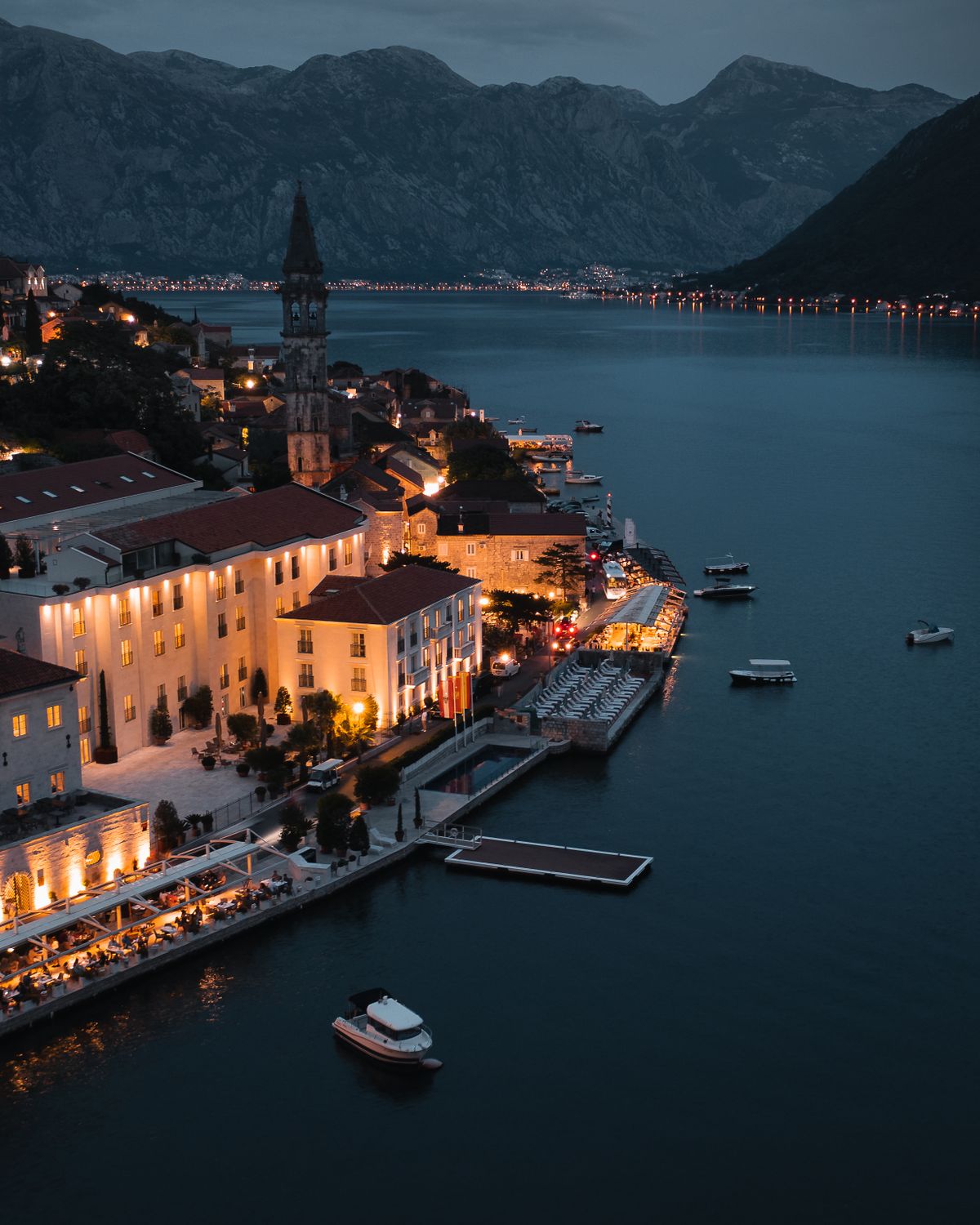
Table of Contents
- Why Kotor?
- Best Time to Visit Kotor
- Getting There — Tivat, Podgorica & the Bay Road
- Getting Around — Walking, Boats & the Lovćen Road
- Neighborhoods & the Boka Towns
- Cultural Sights
- Food & Drink in Kotor
- Entertainment & Nightlife
- Day Trips from Kotor
- Budget & Costs
- Practical Information
- Frequently Asked Questions
Why Kotor?
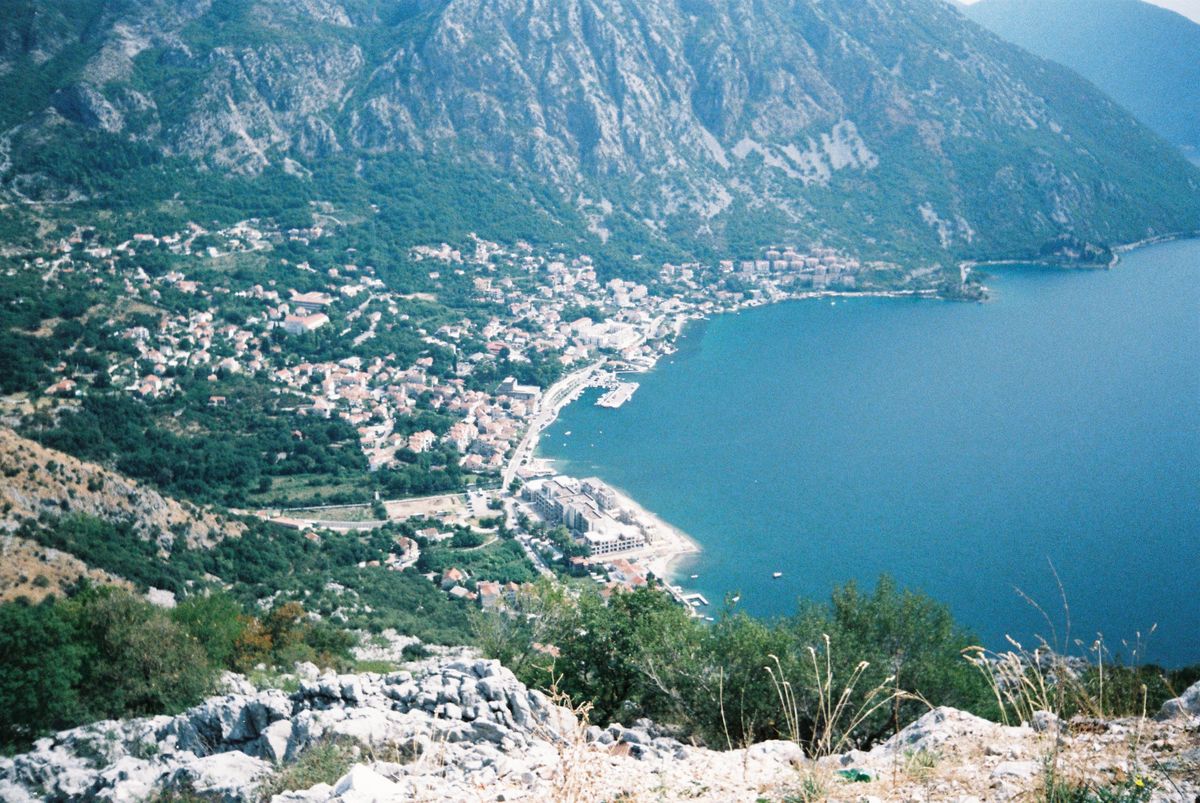
Kotor is the place where the Mediterranean folds in on itself. The Bay of Kotor — the Boka Kotorska — cuts 28 kilometres inland through the limestone mass of the coastal Dinaric mountains, narrowing to the Verige Strait, just 340 metres wide, before opening into the inner bays where the town sits. Its 107-kilometre shoreline and sheer mountain walls give it the look of a Norwegian fjord transplanted to the Adriatic, though geologically it is a drowned river canyon rather than a glacial one. Tucked into the deepest, most sheltered corner is a town of roughly 13,500 people whose medieval core has barely changed in five centuries — and the entire region has carried UNESCO World Heritage status since 1979.
The town wears its history in stone. For four centuries Kotor was a Venetian possession (1420–1797), and the Lion of St Mark still presides over its gates; before that it passed through Byzantine, Serbian and Hungarian hands, and after Venice fell it was Austrian, then Yugoslav, then Montenegrin. The defining feature is the fortification system: 4.5 kilometres of walls, up to 20 metres high and 15 metres thick in places, ring the town and then march straight up the cliff face behind it, a zig-zag of 1,350 steps climbing 260 metres to the Castle of San Giovanni (St John’s Fortress). In 2017 these walls were inscribed by UNESCO a second time as part of the transnational “Venetian Works of Defence between the 15th and 17th Centuries”.
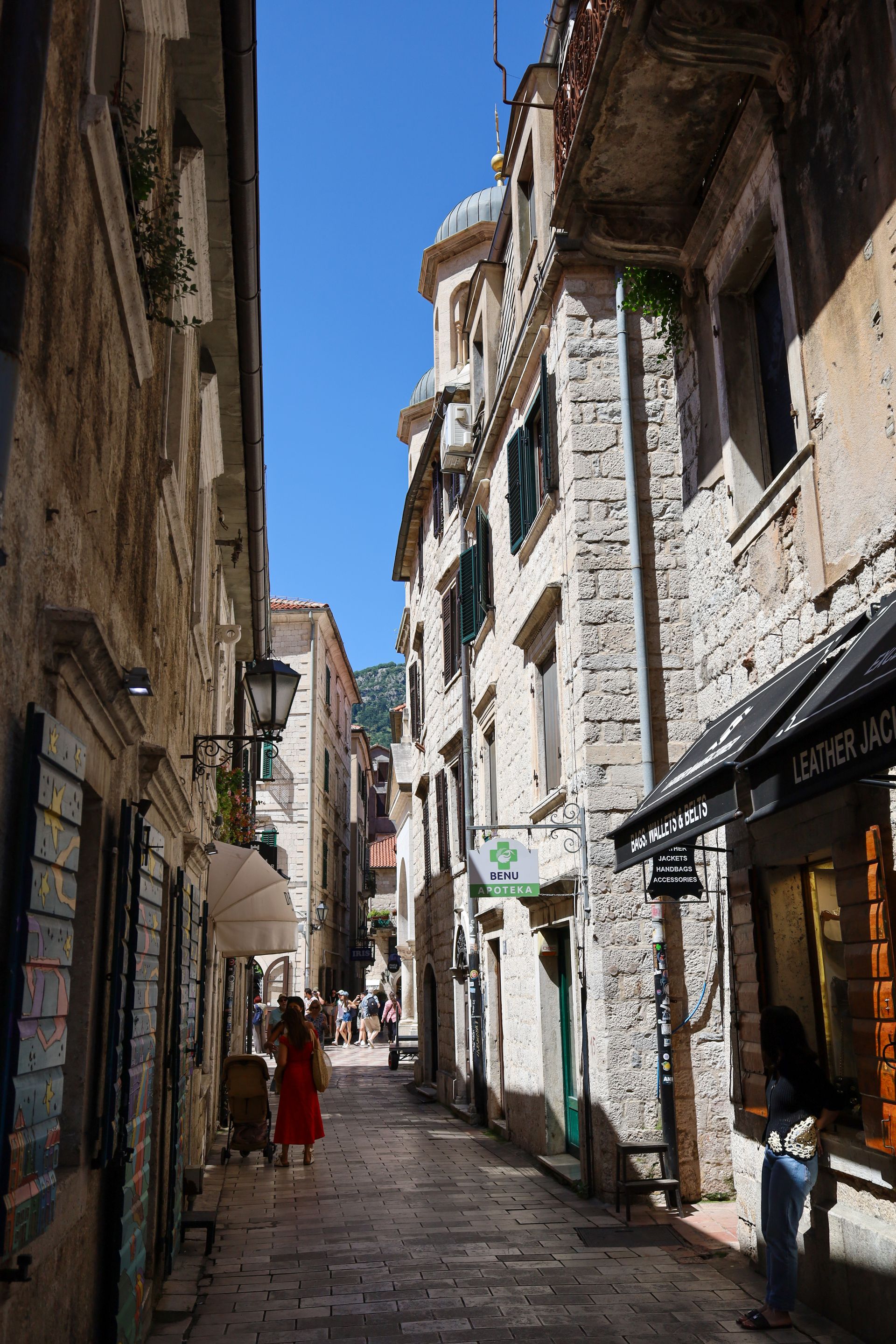
Inside the gate, the Old Town is a car-free labyrinth of polished limestone squares and alleys with no formal street names, organised instead around its churches and palaces. The centrepiece is the Cathedral of St Tryphon, one of the oldest in the Adriatic, consecrated in 1166 and rebuilt after repeated earthquakes — its mismatched Romanesque towers are the symbol of the town. The squares fill with cats (Kotor’s unofficial mascot, with a museum to prove it), café tables and, in summer, the human tide from the cruise ships moored at the quay just outside the walls.
And it is the cruise traffic that defines the rhythm of a Kotor day. The town is one of the Adriatic’s busiest cruise ports, and on a peak-season morning multiple large ships can disgorge several thousand day-trippers who funnel through the Sea Gate within an hour or two. The single most useful piece of Kotor knowledge is timing: the walls and the Old Town belong to early risers and evening strollers, while the midday hours between roughly 10:00 and 16:00 belong to the ships. Stay overnight, climb the fortress at dawn, and you get a different, emptier, far more beautiful town.
Beyond the walls, Kotor is the natural base for the whole Boka and the mountainous interior behind it. The Baroque town of Perast and its two island churches sit a short drive around the bay; the serpentine Kotor–Lovćen road switchbacks up the mountain to the Njegoš mausoleum and the old royal capital of Cetinje; and the beach resorts of Budva and Sveti Stefan are half an hour south. Montenegro sits on US State Department Travel Advisory Level 1, the lowest tier , and the UK FCDO describes it as generally safe for visitors.
What keeps Kotor from feeling like a museum is that people still live and work inside the walls. Laundry hangs from shuttered windows above designer boutiques; old women sell figs and pomegranates from doorways; the bell of St Tryphon still marks the hours over a working parish rather than a stage set. The town is compact enough to learn in a single evening — you can cross the Old Town end to end in under ten minutes — yet dense enough that you keep finding new courtyards, votive shrines and tiny squares on the third and fourth pass. That combination — a genuinely lived-in medieval port wrapped in some of the most theatrical scenery in Europe — is why so many travellers who plan a single night end up staying three.
Best Time to Visit Kotor
Kotor has a Mediterranean climate, but its position at the head of a deep, mountain-walled bay gives it two quirks: it is one of the rainiest spots on the Adriatic in winter, and its sheltered summer waters warm up beautifully for swimming. The practical sweet spots are the shoulder seasons — May to June and September to October — when the sea is warm enough to swim, daytime highs sit in a comfortable mid-20s band, and the cruise-ship crowds are thinner than the July–August peak. Plan around two variables in Kotor: the weather, and the cruise calendar.

Spring (March – May) — green walls, building heat
Spring is the quiet, green run-up to the season. March and April are still cool and can be wet, but by May the daytime highs climb into the low-to-mid 20s°C, the mountains behind the bay are at their greenest, and the wildflowers are out on the Lovćen slopes. Late May is one of the best windows of the year: the sea is warming toward swimmable, the cruise schedule has not yet hit its summer density, and the climb to San Giovanni is far more pleasant in 22–25°C than in the August furnace. Book accommodation inside the walls a couple of weeks ahead for the May long weekends, when Montenegrins and Serbians take short breaks to the coast. Pack a light layer for cooler evenings and the chance of a spring shower off the mountains.
Summer (June – August) — hot, swimmable, cruise-dense
The peak. July and August deliver hot, dry weather with daytime highs of 28–31°C and warm Adriatic water ideal for swimming off the bay’s small beaches and pontoons. It is also when Kotor is at its most crowded: this is the busiest cruise period, and the Old Town can be shoulder-to-shoulder between mid-morning and late afternoon. The smart summer rhythm is to climb the walls at first light, swim or take a boat trip in the heat of midday, and reclaim the Old Town in the evening once the ships have sailed. Accommodation peaks in price; book months ahead for August. The compensating pleasures are long warm evenings, the full Boka boat-trip and beach-club scene, and a packed festival calendar including the Kotor summer carnival and open-air concerts within the walls.
Autumn (September – October) — the sweet spot
September and October are arguably the finest time to be in Kotor. The sea stays warm enough to swim well into October, the fierce summer heat eases to a comfortable mid-20s, the cruise crowds thin after early September, and the light turns soft and golden over the bay. This is the connoisseur’s window: shoulder-season room rates, an Old Town you can actually photograph without crowds, and a fortress climb in ideal temperatures. The catch arrives in late October and November, when the autumn rains set in — the head of the Boka is genuinely one of the wettest places on the Adriatic — so pack a proper rain jacket and treat the Lovćen road as weather-dependent from mid-October. Early-to-mid September is the single best fortnight of the Kotor year.
Winter (November – February) — mild, very wet, near-empty
Kotor in winter is mild by European standards — daytime highs of 10–14°C, snow in the town itself a rarity — but it is strikingly wet, with the bay’s mountain-trap geography funnelling heavy Adriatic rain into the inner Boka. The cruise season ends, most boat trips stop, and the Old Town empties to a handful of year-round cafés and locals; many restaurants and small hotels close from November to Easter. The upside is atmosphere and price: a near-deserted UNESCO town, dramatic storm skies over the bay, and the cheapest rooms of the year. Mount Lovćen often carries snow, and the serpentine road can close briefly in storms. Bring a waterproof and sturdy shoes — the marble lanes are slick in rain — and treat any fortress climb or Lovćen plan as conditional on the weather.
Getting There — Tivat, Podgorica & the Bay Road
Kotor has no airport of its own, but it is wedged between two: Tivat (TIV), barely 8 kilometres around the bay, and Podgorica (TGD), the capital’s airport about 90 minutes inland. Most visitors fly into one of those, or arrive by cruise ship, by the scenic coastal bus, or by car along the spectacular bay road. There is no passenger rail to Kotor itself — Montenegro’s single rail line runs from Bar through Podgorica to Belgrade — so the practical choices are plane, bus, boat or car.
Tivat Airport (TIV) — the closest option
Tivat Airport sits right on the Bay of Kotor about 8 kilometres from Kotor town, a 15-to-20-minute taxi ride away. It is a seasonal-leaning airport that swells in summer with charter and low-cost flights from across Europe — the UK, Germany, Russia and the Nordics among them — making it the obvious gateway for a Boka holiday. A taxi from TIV to Kotor runs roughly €15–25; confirm the fare before you set off.
Podgorica Airport (TGD) — the year-round hub
Podgorica, the capital’s airport, lies about 65 kilometres inland and is Montenegro’s busier year-round airport, with more reliable winter connections including national carrier Air Montenegro. The drive to Kotor takes around 90 minutes via the coast. A taxi runs €60–80; a cheaper option is a bus or transfer to Kotor’s coastal bus network.
By bus — the coastal network
Kotor sits on Montenegro’s well-developed coastal bus network, with frequent services along the Adriatic to Budva (about 40 minutes), Herceg Novi, Bar and Ulcinj, and inland to Podgorica and Cetinje. International coaches connect Kotor to Dubrovnik (around 2–2.5 hours including the border), Mostar, Sarajevo and Belgrade. The bus station sits just outside the Old Town walls; buy tickets at the counter and expect a small fee for stowed luggage.
By car — the bay road and the ferry shortcut
Driving into Kotor is one of the great Adriatic road experiences, the coastal road hugging the bay past Perast with the mountains rising straight from the water. From the Croatian side and Dubrovnik, the Kamenari–Lepetane car ferry across the Verige Strait saves the long drive around the head of the bay and runs around the clock. Note that the Old Town is entirely pedestrian; park in the paid lots outside the walls.
By cruise ship
Kotor is one of the Adriatic’s premier cruise calls, with ships mooring at the quay metres from the Sea Gate. If you are arriving on a ship, the entire Old Town is on your doorstep; if you are staying in town, the cruise schedule is the single biggest factor in how crowded your day feels.
Getting Around — Walking, Boats & the Lovćen Road

Kotor itself is tiny and entirely walkable — the Old Town is pedestrian-only and you can cross it in five minutes — so the real transport question is how you reach the rest of the Boka and the mountains behind it. Inside the walls there are no cars; beyond them, the tools are your feet for the wall climb, boats for the bay, the coastal bus for nearby towns, and a car or driver for the serpentine Lovćen road.
Walking & the wall climb
The Old Town is a flat, car-free maze you navigate on foot by landmark rather than street name. The one strenuous walk is the climb to San Giovanni: 1,350 steps and about 260 metres of ascent up the fortified switchbacks behind the town, taking most people 60–90 minutes each way. There is a modest entry fee in season; go at dawn or dusk to beat the heat and the cruise crowds, and wear proper shoes — the worn stone is slippery.
Boats & the bay
Boat trips are the signature Kotor experience and the best way to escape the midday crowds: small operators run half-day loops from the Old Town quay to Perast, Our Lady of the Rocks and the swimming spots of the inner bay. Expect €20–40 for a shared group trip; private skippers cost more but let you set the pace. The Kamenari–Lepetane car ferry also shortcuts the drive across the Verige Strait.
Coastal buses & taxis
Frequent coastal buses link Kotor to Budva (~40 minutes), Tivat, Herceg Novi and beyond from the station outside the walls. Taxis are inexpensive and metered — a hop to Tivat airport runs €15–25 — but agree the fare or insist on the meter first. Local ride-hail is limited; for day trips, a hired driver is often the easiest option.
The serpentine Lovćen road
The old Kotor–Lovćen road is a famous feat of engineering and one of the great drives in the Balkans: a tight succession of 25-plus hairpin switchbacks climbing the mountain wall directly behind the town, with each bend opening a wider view back over the whole bay. It is narrow, steep and not for nervous drivers; many visitors hire a local driver or join a tour. The road leads to Lovćen National Park, the Njegoš mausoleum and the old royal capital of Cetinje.
Neighborhoods & the Boka Towns: Finding Your Kotor
📍 Kotor Map: Every Place in This Guide
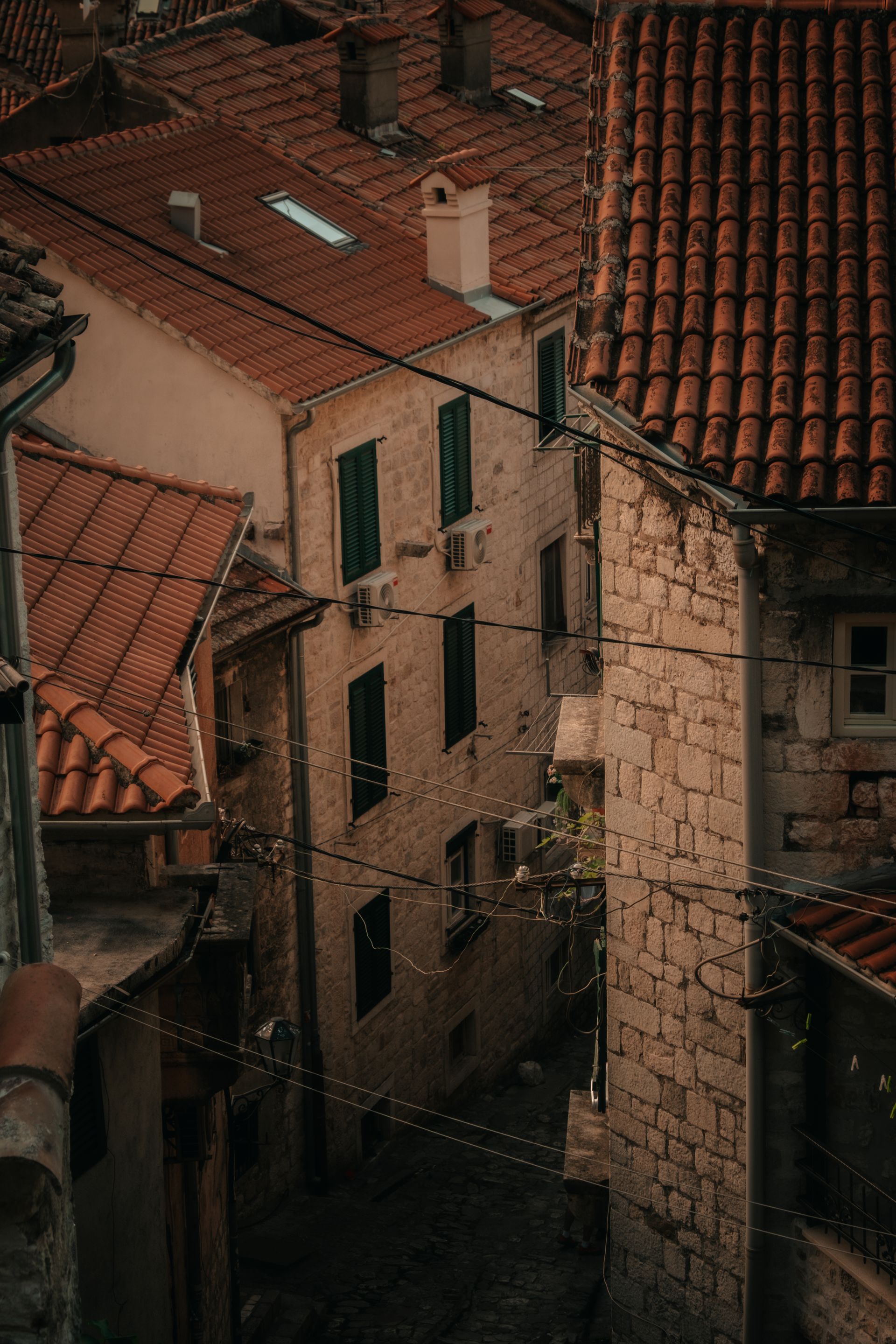
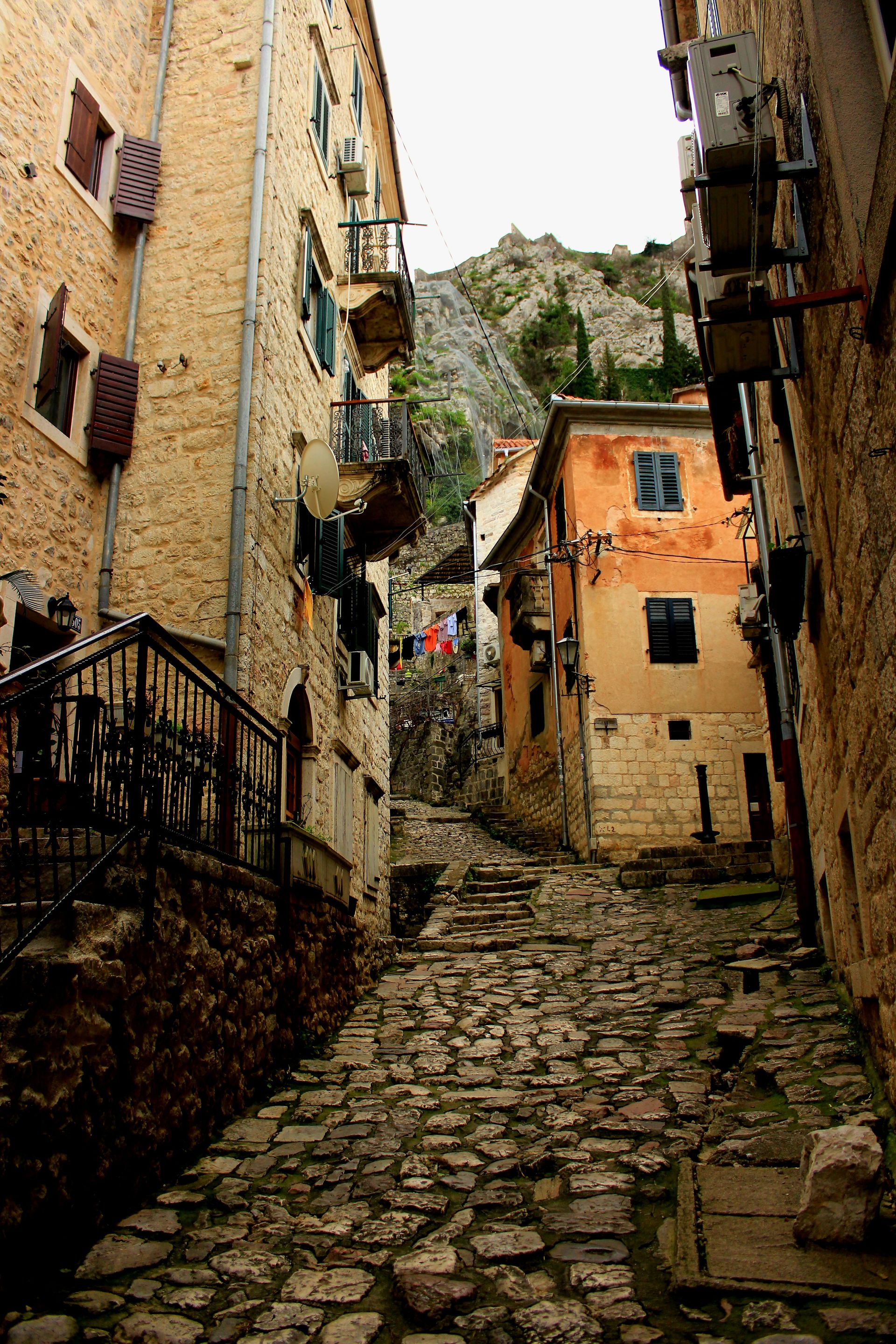
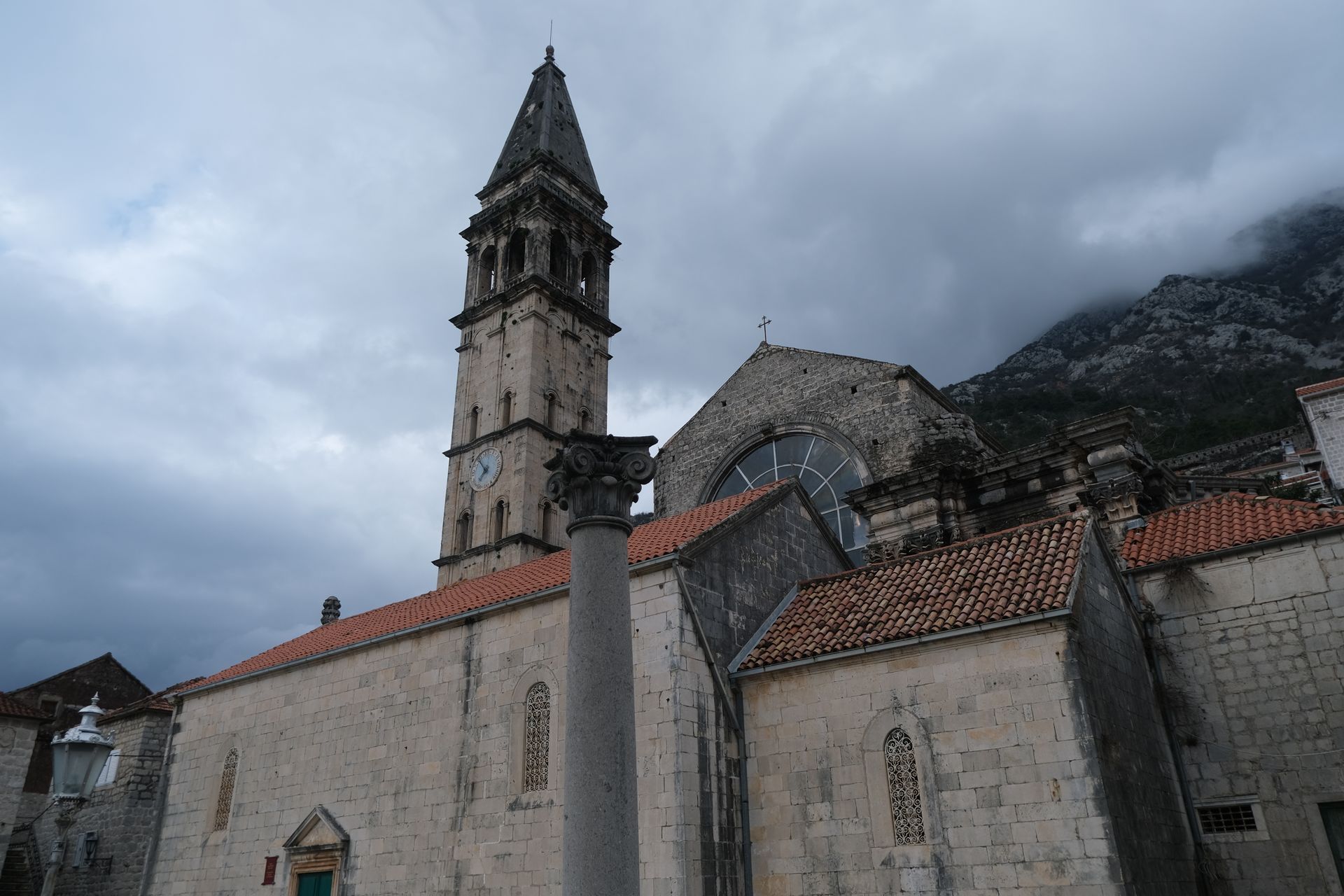
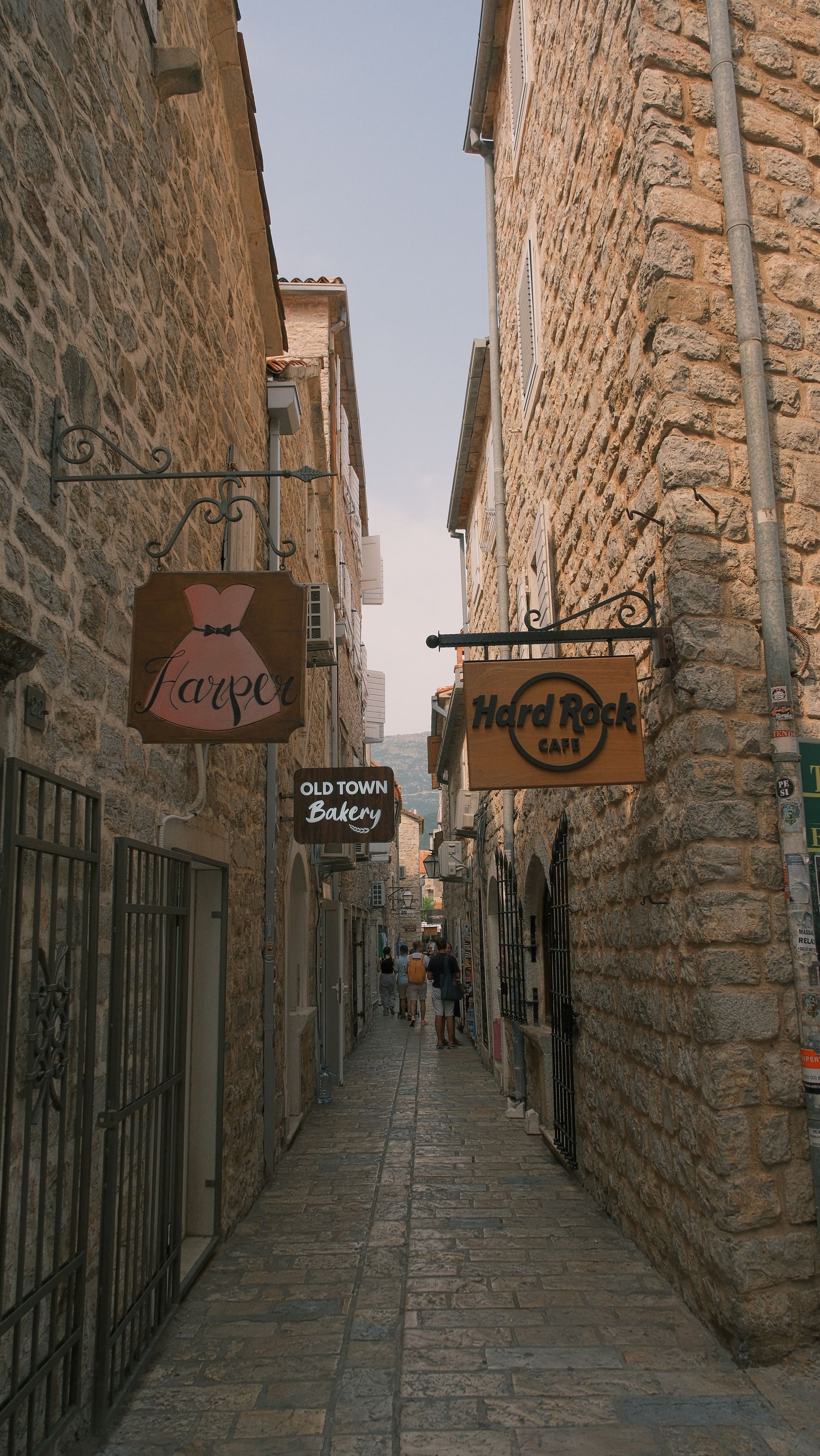
Kotor is not a city of distinct quarters — the walled Old Town is barely 400 metres across — so its “neighbourhoods” are really the zones of the town plus the string of historic settlements ringing the bay. The organising logic is simple: the Old Town is the dense medieval core, the modern town and marina spread along the waterfront outside the walls, and a chain of Boka towns — Dobrota, Perast, Prčanj, Risan — line the shore within a short drive or boat ride. Pick your base by mood: the walls for atmosphere, the waterfront for views and quiet, or Perast for Baroque romance.
The Old Town (Stari Grad)
The walled medieval core and the reason you came — a car-free labyrinth of marble squares, Venetian palaces and Romanesque churches with no street names, organised around the twin-towered St Tryphon Cathedral. The main squares (the Square of Arms by the Sea Gate, the Cathedral Square, the Flour Square) chain together through alleys barely wide enough for two; the famous Kotor cats lounge on every step. This is where the cafés, the bars, the boutique stone hotels and the wall-climb trailhead all cluster.
- St Tryphon Cathedral and the Square of Arms
- The Cats Museum and the maze of unnamed alleys
- The trailhead for the climb to San Giovanni
Best for: atmosphere, history and nightlife. Access: on foot through the Sea Gate; the dead-centre of everything.
The Waterfront & Marina (outside the walls)
The modern town wraps around the Old Town along the bay, with the cruise quay, the marina, the bus station and a promenade of cafés and hotels looking back at the floodlit walls. Staying just outside the walls trades a little atmosphere for views, quiet at night and easier parking.
- The bay-front promenade and marina
- The cruise quay and the floodlit-walls view
- Parking lots and the bus station
Best for: views, quiet sleep and convenience. Access: a two-minute walk from the Sea Gate.
Dobrota
The long, leafy waterfront suburb stretching north along the bay from Kotor, lined with old sea-captains’ villas, small churches and swimming spots — a quieter, more residential base within walking distance of the Old Town.
- Sea-captains’ stone villas along the shore
- Small pebble-and-pontoon swimming spots
- Quiet bay-front restaurants
Best for: a quiet stay with bay swimming. Access: a 15–25-minute walk or short taxi north of the Old Town.
Perast
The exquisite Baroque town a short drive around the bay, all honey-coloured Venetian palaces and the 55-metre St Nicholas bell tower, facing its two famous islets — Our Lady of the Rocks and St George. Car-free along its single waterfront street, it is the most romantic base in the Boka.
- Our Lady of the Rocks and St George islets
- The St Nicholas church and bell tower
- Waterfront Baroque palaces and seafood konobas
Best for: Baroque romance and the islet boat trip. Access: about 25 minutes by car or boat from Kotor.
Prčanj & Risan
The lesser-visited Boka villages: Prčanj with its grand Birth of Our Lady church on the southern shore, and Risan at the bay’s head, the oldest settlement of all, with Roman mosaics from a 2nd-century villa.
- Prčanj’s monumental waterfront church
- Risan’s Roman mosaics
- Quiet, local-feeling waterfronts
Best for: escaping the crowds and Roman history. Access: short drives around the bay west and north of Kotor.
The Lovćen Slope & Špiljari
The mountain wall behind the town, where the wall climb passes the tiny ruined hamlet of Špiljari and the Church of Our Lady of Remedy before reaching San Giovanni, and the serpentine road climbs on toward Lovćen National Park.
- The Church of Our Lady of Remedy on the climb
- The ruined hamlet of Špiljari
- The serpentine road to Lovćen
Best for: the climb, the views and the mountain road. Access: on foot up the walls, or by the serpentine road by car.
Cultural Sights

Kotor’s sights cluster tightly inside and just above the walls, and they tell one continuous story: a Venetian merchant town that fortified itself against the sea and the mountains and has guarded its medieval core for five centuries. You can walk the entire circuit below — cathedral, churches, squares, museums and the fortress climb — in a single full day, with the wall climb saved for a cool morning. What makes Kotor unusual is how completely intact the ensemble is, which is exactly what UNESCO recognised in 1979.
Cathedral of St Tryphon
The heart of Kotor — a Romanesque cathedral consecrated in 1166 on the site of an earlier 9th-century church, dedicated to the city’s patron saint. Its two mismatched bell towers are the result of repeated earthquake damage and rebuilding, most dramatically after the catastrophic 1667 quake; inside are a celebrated 14th-century stone ciborium over the altar and a reliquary chapel. Admission a few euros; modest dress required. One of the oldest cathedrals on the eastern Adriatic.
The Castle of San Giovanni (St John’s Fortress)
The ruined citadel crowning the cliff 260 metres above the town, reached by 1,350 steps up the fortified switchbacks — the defining Kotor experience. The climb passes the Church of Our Lady of Remedy roughly halfway and ends at the Illyrian-rooted, Venetian-rebuilt fortress with the definitive panorama over the whole bay. Modest entry fee in season; allow 2–3 hours round trip. Go at dawn for cool air and an empty trail.
Our Lady of the Rocks & St George Islets (Perast)
The two islets off Perast: St George, a natural island with a Benedictine monastery, and Our Lady of the Rocks, the man-made islet whose church holds a votive collection including a famous embroidered icon worked over decades with the maker’s own hair. Reached by short boat shuttle from Perast; small entry donation. The boat trip is the classic half-day from Kotor.
The Town Walls & Gates
The 4.5-kilometre fortification system that rings the town and climbs the mountain — up to 20 metres high and 15 metres thick, with the Sea Gate (1555) carrying the Venetian Lion of St Mark, the River Gate and the Gurdić Gate. Re-inscribed by UNESCO in 2017 within the transnational Venetian Works of Defence. Free to walk the lower town sections; fee for the fortress climb.
The Maritime Museum of Montenegro
Housed in the Baroque Grgurina Palace on the Square of Arms, the museum tells the story of the Boka’s extraordinary seafaring tradition through ship models, navigation instruments, portraits and weapons. Admission a few euros. The best primer on why these small bay towns were once major Adriatic maritime powers.
Church of St Luke & St Nicholas
On the small square that bears its name, the Romanesque Church of St Luke (1195) is unusual for having served both Catholic and Orthodox congregations, while the larger neighbouring Serbian Orthodox Church of St Nicholas dominates the square with its twin towers. Free to enter; quietly atmospheric, away from the cathedral crowds.
Food & Drink in Kotor

Kotor eats the way the Boka has always eaten: from the sea in front and the mountains behind. The bay’s sheltered, brackish waters are a serious shellfish nursery, so mussels and oysters are local staples; the fresh Adriatic fish comes off day boats; and from the Lovćen slopes come the celebrated Njeguši smoked ham (njeguški pršut) and sheep’s cheese. The cooking is Mediterranean-Venetian at its core, with strong Italian influence in the pastas and risottos and a Balkan grill tradition layered on top. The eating geography is simple: tourist-priced terraces fill the Old Town squares, better-value konobas hide in the back alleys and along the Dobrota waterfront, and the finest seafood is often in Perast and the bay villages. Wash it down with Montenegro’s robust Vranac red or a crisp Krstač white.
Boka Seafood & the Konobas
The signature Kotor meal is seafood in a konoba (traditional tavern): black risotto stained with cuttlefish ink, grilled bay mussels (dagnje na buzaru), fresh fish by the kilo and Boka oysters from the farms near Risan. Order whole fish priced by weight and let the waiter steer you to the day’s catch.
- Konoba Scala Santa — classic Old Town konoba, seafood mains ~€12–22
- Galion — upmarket waterfront fish restaurant facing the walls (~€20–40 mains)
- Mussels na buzaru — the Boka classic, a shared pot ~€10–14
Njeguši Ham, Cheese & Mountain Fare
From the Lovćen village of Njeguši come the two great Montenegrin mountain products: njeguški pršut, air-dried and smoked in the mountain microclimate, and the firm sheep’s cheese served with it.
- Njeguši platter — pršut, cheese, olives and bread (~€8–14)
- Kačamak / cicvara — the mountain cornmeal-and-cheese dishes (~€6–9)
- Grilled lamb — from the interior, often spit-roast (~€12–18)
Beyond the Bay Classics
Kotor’s café and sweet culture leans Venetian and Ottoman at once, and the espresso habit runs deep. The Old Town squares are made for a long coffee or an evening glass of Vranac.
- Vranac — Montenegro’s flagship red, PGI-protected since 1977 (~€3–5 a glass)
- Krstač — the native white grape (~€3–5 a glass)
- Krofne & baklava — the bakery sweets (~€1–3)
- Rakija — the fruit brandy, the standard toast (~€2–4 a shot)
Food Experiences You Can’t Miss
- A pot of buzara mussels and a glass of Vranac on an Old Town square at dusk
- A Njeguši pršut-and-cheese platter on the way up the Lovćen road
- Fresh oysters at a waterfront konoba in Perast or near Risan
Entertainment & Nightlife

Kotor’s after-dark life is not about mega-clubs — that is Budva’s job, half an hour south — but about the atmosphere of an illuminated medieval town: candlelit konobas, wine bars on hidden squares, a couple of lively late bars within the walls, and the floodlit fortress glowing above it all. The town also runs a busy summer cultural calendar, from the famous winter and summer carnivals to open-air concerts and theatre inside the walls. For high-energy clubbing, the move is a taxi to Budva; for a long, civilised evening of wine, seafood and stone-walled charm, you stay exactly where you are.
Old Town Wine Bars & Konobas
The squares and alleys fill with candlelit tables in the evening; wine bars pour Vranac and Krstač by the glass, and the konobas turn into long-dinner venues. Typical cost a glass of wine €3–5, a cocktail €7–10. No booking needed; the scene builds from about 21:00.
Late Bars & the Summer Scene
A handful of bars within the walls run late in summer, and the warm-weather crowd spills into the squares well past midnight. Typical cost a drink €4–8. Busiest July–August; quiet out of season.
The Kotor Carnival & Summer Festivals
Kotor stages a celebrated carnival tradition — a summer carnival in early August and a traditional winter carnival in February — plus a packed calendar of open-air concerts, the KotorArt summer festival and theatre within the walls. Typical cost many events free; ticketed concerts vary.
Boat Parties & Sunset Cruises
Evening and sunset cruises on the bay are a relaxed alternative to bar-hopping, gliding past Perast and the islets as the light goes. Typical cost €20–40 per person for a group sunset trip.
Budva Nightlife (the clubbing run)
For serious clubbing, the resort town of Budva — about 40 minutes south — is the Montenegrin coast’s party capital, with big beach clubs and late venues. Typical cost varies; plan it as a taxi-out, taxi-back night.
Day Trips from Kotor

Kotor’s position at the head of the Boka makes it the perfect base for the whole Montenegrin coast and the mountainous interior behind it. Because there is no rail, the practical tools are a hired driver, a small-group tour, a boat, or the coastal bus. The five trips below are the classics, ordered by distance — the first two are half-days, the last needs a full day.
Perast & Our Lady of the Rocks (25 minutes by boat or car)
The essential half-day: the Baroque town of Perast and a short boat shuttle to the man-made islet church of Our Lady of the Rocks, with its votive collection and 1452 origin legend. Best as a morning boat trip from Kotor while the cruise crowds fill the Old Town.
Lovćen & the Njegoš Mausoleum (1 hour by car)
The serpentine road climbs to Lovćen National Park and the mausoleum of the poet-prince-bishop Petar II Petrović-Njegoš on the 1,657-metre Jezerski Vrh peak, completed in 1974, reached by 461 steps for a 360-degree view over half of Montenegro. The drive itself is the attraction.
Budva & Sveti Stefan (30–45 minutes by car)
The coast’s beach-and-nightlife capital, with a walled Old Town that claims 2,500 years of history, plus the iconic fortified islet of Sveti Stefan just south. Easy by coastal bus or car.
Cetinje (45 minutes by car)
The old royal capital, founded in 1482, cradle of Montenegrin statehood, with its monastery, former royal palaces and national museums — usually combined with the Lovćen trip on the serpentine road.
Dubrovnik, Croatia (2–2.5 hours by car)
The walled Pearl of the Adriatic is a long but very doable day across the Croatian border; pair this Kotor guide with our Dubrovnik city guide. Allow time for the border crossing and carry your passport.
Budget Breakdown: Making Your Euros Count
| Tier | Daily | Sleep | Eat | Transport | Activities | Extras |
|---|---|---|---|---|---|---|
| Budget | €35–60 | €15–30 hostel/guesthouse | €8–15 bakeries & konobas | €2–5 buses | €8–15 fortress & churches | €3–8 coffee/wine |
| Mid-Range | €80–150 | €55–110 stone boutique | €25–45 Old Town dining | €15–30 taxis | €25–40 boat trip + sights | €10–25 bars |
| Luxury | €250+ | €180–400 Boka luxury hotel | €70–130 fine seafood | €60–120 private driver | €50+ private skipper/guide | €30+ wine & cocktails |
Where Your Money Goes
Kotor is mid-priced for the Adriatic — cheaper than Dubrovnik across the border, pricier than the Montenegrin interior — and the gap between the tiers is mostly about where you sleep and how you cross the bay. Accommodation is the biggest lever: a hostel dorm or simple room runs €15–30, a stylish stone boutique inside the walls €55–110, and the bay’s luxury hotels €180–400. Food follows the same pattern — a bakery-and-konoba day costs under €15, while a full seafood dinner with wine pushes €30–45. The classic spend is the half-day boat trip to Perast (€20–40), with the fortress climb a token few euros and city buses almost free. The costs that climb fastest are a private skipper, a day-trip driver for the Lovćen loop, and any meal on the cruise-crowd squares by the Sea Gate. A realistic all-in budget is €35–60 a day shoestring, €80–150 comfortable, and €250-plus for the luxury tier with a driver and a private boat.
Money-Saving Tips
- Eat two minutes deeper into the maze or out in Dobrota — the Sea-Gate squares carry a cruise premium.
- Climb the walls and walk the Old Town for free; save the paid boat trip for the bay.
- Visit in late September–October for warm sea, thin crowds and the lowest room rates of the season.
Practical Information

Language
Montenegrin (Crnogorski) is the official language, closely related to Serbian, Croatian and Bosnian, and written in both the Latin and Cyrillic alphabets — you will see both on signs. English and Italian are widely spoken in tourism; Russian is common too. “Hvala” (thank you) and “dobar dan” (good day) earn instant goodwill.
Cash vs. Cards
Montenegro uses the euro despite not being in the EU, having adopted it unilaterally in 2002. Cards work in Old Town hotels, restaurants and shops; carry euro coins and small notes for bakeries, small konobas, the fortress fee and parking. ATMs are plentiful but some charge withdrawal fees.
Safety
Montenegro sits on US State Department Travel Advisory Level 1 (Exercise Normal Precautions) and Kotor is a low-crime town; the main risks are petty pickpocketing in the summer crush and slips on the worn, often-wet marble lanes. Wear grippy shoes for the wall climb.
What to Wear
Smart-casual everywhere; pack proper shoes for the steep stone steps and a swimsuit for the bay. Modest cover (shoulders and knees) for St Tryphon Cathedral and the churches. A light layer for cool evenings and a rain jacket from mid-October.
Cultural Etiquette
Coffee and a slow pace are the social glue; do not rush a meal. Montenegrins are warm and direct; a rakija is often offered as a welcome. Respect church dress codes and photograph the Kotor cats freely — they are practically civic property.
Connectivity
Mobile data is cheap and fast; local SIMs from Telekom, m:tel or One cost a few euros, and EU roaming increasingly covers Montenegro. Free Wi-Fi is standard in cafés and hotels.
Health & Medications
The US CDC recommends routine vaccinations plus Hepatitis A for most travellers to Montenegro; tap water is safe in Kotor though many drink bottled. Pharmacies (apoteka) are easy to find; the emergency number is 112.
Luggage & the Wall Climb
Hotels hold bags before and after stays; the Old Town’s steps and lack of vehicle access mean wheeled cases are awkward on arrival. Carry only water and a phone up the fortress climb — there is no left-luggage at the top.
Frequently Asked Questions
How many days do I need in Kotor?
Two nights is the sweet spot — enough for a dawn climb to San Giovanni, a full Old Town day, and a half-day boat trip to Perast and Our Lady of the Rocks, with an extra day for the Lovćen serpentine and Cetinje or the Budva coast. Day-trippers off cruise ships see the Old Town in a few hours but miss the empty, magical mornings and evenings.
Is Kotor good for solo travellers?
Yes — it is a small, low-crime, walkable UNESCO town on US State Department Travel Advisory Level 1, easy to navigate on foot and sociable in its squares and hostels. The main cautions are slips on wet marble and the steep fortress climb rather than personal safety.
How hard is the climb to San Giovanni fortress?
It is a genuine workout: 1,350 steps and about 260 metres of ascent, taking most people 60–90 minutes up. Wear proper shoes, carry water, and go at dawn or dusk to avoid the heat and the cruise crowds. There is a modest entry fee in season, and the panorama from the top is the best in Montenegro.
When is the best time to visit Kotor?
Late spring (May–June) and early autumn (September–October) are the sweet spots: warm swimmable sea, comfortable mid-20s days, and thinner cruise crowds than the July–August peak. Early-to-mid September is arguably the single best fortnight. Winters are mild but very wet, and many businesses close.
How do I avoid the cruise-ship crowds?
Stay overnight and use the off-hours: the Old Town and the wall climb are wonderfully quiet at dawn and after the ships sail in the evening, while the midday hours of roughly 10:00–16:00 belong to the day-trippers. Schedule your boat trip for the crowded midday window so you are out on the bay, not in the squares.
Do I use euros in Montenegro?
Yes — Montenegro uses the euro despite not being an EU member, having adopted it unilaterally in 2002. Cards work in Old Town hotels and restaurants, but carry euro coins and small notes for bakeries, small konobas, the fortress fee and parking. ATMs are everywhere though some charge fees.
Is Kotor worth visiting, or just a cruise stop?
It is worth two nights in its own right. The combination of a fjord-like bay, an intact medieval walled town, a cliff-top fortress climb, the islet churches of Perast and the serpentine mountain road into Lovćen is among the most dramatic on the Adriatic — and it is the natural base for the whole Boka and the Montenegrin interior. The day-trippers who only see it at midday genuinely miss the best of it.
Ready to Experience Kotor?
Kotor rewards the traveller who stays the night — a UNESCO walled town wedged into a fjord-like bay, where the cruise crowds fade at dusk and leave you the floodlit walls, the empty squares and a dawn climb to a cliff-top fortress. For the full country context, read the Montenegro Travel Guide.
Explore More City Guides
- Dubrovnik City Guide
- Tirana City Guide
- Athens City Guide
- Montenegro Country Guide
- More Montenegro travel guides
- All City Guides
Alex the Travel Guru
Alex has spent two decades writing travel guides from the ground up — walking the walls, climbing the steps, eating the buzara and checking every price against the local source. This Kotor guide was built the same way: real numbers, real sources, and the brief Alex would hand his own family before they flew into Tivat.
More city guides you might like

Plan your trip to Kotor
The booking tools we use ourselves. FFU may earn a commission at no extra cost to you.
Plan & book your trip to Kotor
Booking through these searches supports our guides at no extra cost to you.