
City Guide · Tirana County · Central Albania
Tirana, Albania: Painted-Facade Capital, Skanderbeg Square & the Pyramid Beneath Mount Dajti
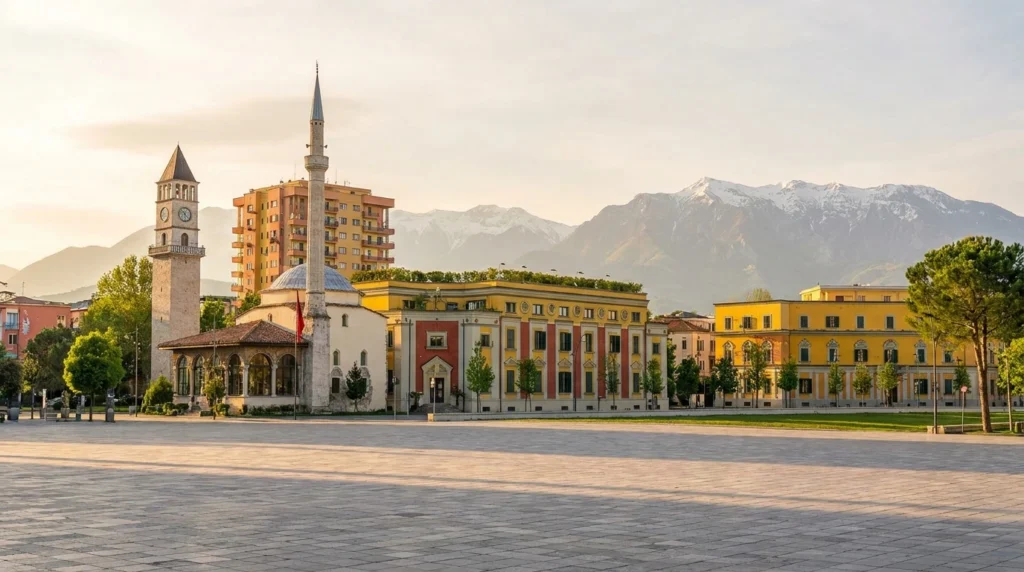
I arrived in Tirana braced for grey concrete and left convinced it is the most under-rated capital in Europe — a city founded in 1614 by the Ottoman general Sulejman Pasha Bargjini that spent forty-six years sealed behind one of the most paranoid dictatorships on the continent and then, in the 2000s, painted its decaying socialist blocks in tangerine, magenta and cobalt on the orders of an artist-turned-mayor. The 40,000-square-metre Skanderbeg Square at its centre was pedestrianised in 2017 and won the European Prize for Urban Public Space in 2018 ; the brutalist Pyramid that Enver Hoxha’s daughter designed as his mausoleum reopened in October 2023 as a youth tech campus ; and a 1980s nuclear bunker under the eastern hills is now one of the best Cold-War museums anywhere. Above it all, the 1,613-metre Mount Dajti is reachable by cable car in fifteen minutes from the edge of town. Treat this guide as the brief I would hand my own family before they boarded a Wizz Air flight into TIA — and for the wider Albanian frame (the lek, the Riviera, the UNESCO towns of Berat and Gjirokastër) read it alongside our Albania country guide.

Table of Contents
- Why Tirana?
- Best Time to Visit Tirana
- Getting There — TIA, Rinas Express & the Buses
- Getting Around — Walking, Buses & the Dajti Cable Car
- Top Neighbourhoods
- Cultural Sights
- Food & Drink in Tirana
- Entertainment & Nightlife
- Day Trips from Tirana
- Budget & Costs
- Practical Information
- Frequently Asked Questions
Why Tirana?
Tirana is the only European capital where you can stand in a square named for a 15th-century anti-Ottoman warlord, look up at a brutalist pyramid built as a communist dictator’s mausoleum and now full of teenagers learning to code, and walk five minutes to a sealed neighbourhood where ordinary Albanians were forbidden to set foot until 1991. The city was founded in 1614 by the Ottoman Albanian general Sulejman Pasha Bargjini, who built a mosque, a bakery and a hammam at the crossing of the caravan routes ; it was proclaimed Albania’s capital on 8 February 1920 and confirmed permanently in 1925. For most of the 20th century it was a small Balkan town that punched far below its weight; the transformation came after 2000, when the painter-mayor Edi Rama (later prime minister) ordered the decaying socialist apartment blocks repainted in violent oranges, purples and patterned geometrics — an act of municipal art therapy that became the city’s defining visual signature.
The city wears three identities at once. It is an Ottoman foundation — the Et’hem Bey Mosque on Skanderbeg Square, begun in 1791 and finished around 1821 by Haxhi Ethem Bey, a great-grandson of the city’s founder, with rare interior frescoes of trees, waterfalls and bridges that are almost unheard-of in Islamic religious art. It is a communist relic — the Pyramid of Tirana, designed by Enver Hoxha’s architect daughter Pranvera Hoxha and opened in 1988 as the Enver Hoxha Museum, sat derelict for three decades before the Dutch firm MVRDV reopened it on 16 October 2023 as TUMO Tirana, a free youth tech campus you can now climb the outside of. And it is a 21st-century European city — the 40,000-square-metre Skanderbeg Square, pedestrianised in June 2017 to a design by 51N4E and the artist Anri Sala, won the 2018 European Prize for Urban Public Space, and the surrounding Blloku district has gone from forbidden Politburo compound to the busiest café-and-cocktail quarter in the Balkans.
The pull beyond the centre is the day-trip rotation. Mount Dajti — the 1,613-metre national-park ridge on the city’s eastern edge — is reached by the Dajti Ekspres cable car in about fifteen minutes, the longest gondola in the Balkans, depositing you at roughly 1,050 metres for panoramic views back over the whole Tirana plain. Krug (Kruja), the medieval citadel of the national hero Skanderbeg with its restored castle, Ottoman bazaar and Skanderbeg Museum, sits about 35 kilometres north. Berat, the UNESCO “City of a Thousand Windows”, and Durrës, the Adriatic port with the largest Roman amphitheatre in the Balkans, are each a comfortable day trip on the new motorway network. No other Balkan capital lines up a Cold-War bunker museum, an Ottoman old town, a 1,600-metre cable-car mountain and a UNESCO World Heritage city inside a 90-minute radius.
What guidebooks under-rate is the scale and the speed of change. Tirana’s walkable core is small — you can cross Skanderbeg Square, walk down the Murat Toptani pedestrian street, reach the Pyramid and continue to the Blloku bars in under twenty-five minutes on foot. The city sits at about 110 metres elevation on the Tiranë and Lanë rivers, ringed by hills, with the Grand Park and its artificial lake providing the green lung to the south. Nënë Tereza International Airport (TIA), Albania’s only international airport, sits about 11 kilometres northwest and handled 11.6 million passengers in 2025 — up from 7.3 million in 2023, one of the fastest-growing airports in Europe. Albania has no passenger rail spine worth using for tourists; the country runs on intercity furgon minibuses and a fast-improving motorway network, and Tirana is the hub of all of it.
And then the colour story — the single most distinctive thing about a Tirana walk. After 2000, hundreds of grey socialist apartment blocks were repainted in saturated colour and bold geometric patterns under Edi Rama’s “city as canvas” programme; the policy drew international attention and is widely credited with shifting the city’s self-image from post-communist decay to creative confidence. Albania sits on US State Department Travel Advisory Level 1 (the lowest tier) and the UK FCDO advisory describes the country as generally safe for visitors.
Best Time to Visit Tirana
Tirana has a humid subtropical climate softened by its inland-plain position below Mount Dajti, with hot dry summers and mild, strikingly wet winters — the city records around 1,266 mm of rain a year yet also some 2,544 hours of sunshine, putting it among both the wettest and the sunniest capitals in Europe. The practical sweet spots are the two shoulder seasons: late spring (May–June) and early autumn (September–October), when daytime highs sit in the comfortable 18–27°C band, the café terraces are full, and the day-trip mountains are green rather than baked. Plan around which Tirana you want, and use the four-season breakdown below as the realistic timeline.

Spring (March – May) — the ideal window
The best window of the Tirana year arrives in May. Daytime highs climb from the mid-teens in March to a comfortable 22–26°C by late May, the winter rain tapers off, and the surrounding hills and the Grand Park are at their greenest. This is prime café-terrace and walking-tour weather: the Blloku bars push tables onto the pavement, the Dajti cable car runs in clear air with the best plain views of the year, and the Krug and Berat day trips are pleasant rather than punishing. The catch is that this is also the start of the inbound tourism surge that has followed Albania’s post-2022 boom; book Blloku boutique rooms two to three weeks ahead, especially over Albanian public holidays. April still carries a chance of the residual wet-season showers, so pack a light shell. May is the single best month to time a first Tirana visit.
Summer (June – August) — hot, lively, half-empty bars
The peak of the central-plain heat. June-to-August daytime highs sit at 30–34°C with low humidity but fierce midday sun, and the city empties out in a very Albanian way: a large share of the Blloku nightlife scene physically relocates to the Albanian Riviera beach clubs for July and August, so the capital can feel quieter at night than in spring. Plan two-shift days — sightsee 08:00–11:30, retreat to a café or the air-conditioned museums in the early afternoon, and return after 17:30 when the boulevards cool. The Dajti cable car is a genuine heat-escape: the summit ridge runs several degrees cooler than the plain. Summer is also festival season, with open-air concerts in the Grand Park amphitheatre, and hotel rates dip 10–20% from the spring high because most beach-bound tourists skip the capital entirely. If you can tolerate the heat, August is a value window.
Autumn (September – November) — the second sweet spot
September and October are arguably the equal of May. The summer heat breaks to a comfortable 20–27°C, the Riviera crowd drifts back so the Blloku scene refills, and the light turns soft and golden over the mountains. Rainfall picks up from late October as the wet season returns, and November can be genuinely soggy — this is one of the rainiest stretches in any European capital — but the rain comes in bursts rather than all-day drizzle, and the city’s café culture is built for it. The shoulder-season pricing of late September and October is among the best value of the year, with boutique hotels well below their spring peak and no queues at the Pyramid, Bunk’Art or the National History Museum. Pack layers and a proper rain jacket from mid-October onwards.
Winter (December – February) — mild, wet, low-tourism
Tirana’s winters are mild by European standards — daytime highs of 10–14°C, overnight lows rarely below 2–4°C, and snow in the city itself a rarity — but they are wet, with December and January delivering the bulk of the annual 1,266 mm of rain. Mount Dajti, by contrast, often carries snow, and the cable car runs to a genuinely wintry summit. The upside of winter is price and atmosphere: this is the cheapest and quietest tourism stretch of the year, the indoor museums are uncrowded, and the café-and-raki culture is at its cosiest. New Year is the one busy window, when Albanians fill the Blloku bars and Skanderbeg Square hosts a public celebration. Bring a waterproof and sturdy shoes — some side streets flood in heavy rain — and treat any Dajti or day-trip plan as weather-dependent.
Getting There — TIA, Rinas Express & the Buses
Tirana is the gateway to all of Albania. The single answer for almost every international visitor is a flight into Nënë Tereza International Airport (TIA), also called Rinas, about 11 kilometres northwest of the centre, and a 20-to-25-minute taxi or the Rinas Express airport bus into town. Albania has no usable passenger rail for tourists, so the alternatives are the international furgon and coach network from neighbouring Balkan capitals, or a ferry into Durrës from Italy followed by a short transfer.
Nënë Tereza International Airport (TIA) — the default option
TIA (IATA: TIA, ICAO: LATI) is Albania’s only international airport and one of the fastest-growing in Europe, handling 7,257,662 passengers in 2023, 10,708,975 in 2024 and 11,640,044 in 2025. It sits in the municipality of Krug about 11 kilometres (6 nautical miles) northwest of central Tirana. Low-cost carriers dominate — Wizz Air and Ryanair run dense networks to Italy, Germany, the UK and across Europe — alongside legacy links on Lufthansa, ITA Airways, Turkish Airlines and Austrian. The terminal is modern and compact; immigration is quick for the visa-free nationalities.
From TIA to the city — the 11-kilometre transfer
Three viable options to cover the airport-to-centre leg:
- Rinas Express airport bus (default for budget) — the official airport bus runs between the terminal and central Tirana (near the National History Museum / Skanderbeg Square) roughly hourly, with a fare around 400 lek (~$4.30 USD) and a 30-to-40-minute run depending on traffic.
- Official airport taxi — the regulated taxi rank charges a fixed fare of roughly 2,000–2,500 lek ($22–27 USD) for the city-centre drop, 20–25 minutes door-to-door. Confirm the price before boarding.
- Ride-hail (Patoko / Speed Taxi apps) — local ride-hail apps usually undercut the rank, often around 1,500–2,000 lek; Uber and Bolt do not operate in Albania, so download a local app before you land.
Furgon and coach — from neighbouring capitals
Albania’s long-distance transport runs on the furgon (shared minibus) and a growing coach network rather than trains. International coaches connect Tirana to Pristina (Kosovo, ~5 hours), Skopje (North Macedonia), Podgorica (Montenegro), Ohrid and Thessaloniki, and there are long-haul lines to Athens and across Italy via the ferry. Tirana’s intercity terminal (the Terminali i Autobuzëve i Tiranës, north of the centre) is the hub for domestic furgons to Berat, Gjirokastër, Sarandë and the Riviera; departures are frequent in the morning and thin out by mid-afternoon.
Ferry — via Durrës
The Adriatic port of Durrës, about 35 kilometres west of Tirana, runs car-and-passenger ferries to Bari and Ancona in Italy on lines such as GNV and Adria Ferries. From Durrës, a furgon or taxi reaches central Tirana in 45–60 minutes on the SH2 highway. This is the route for travellers bringing a car from Italy or combining Albania with a Puglia itinerary.
Getting Around — Walking, Buses & the Dajti Cable Car

Tirana’s historic and nightlife core is small, flat and entirely walkable: Skanderbeg Square, the Et’hem Bey Mosque, the National History Museum, the Pyramid, the Blloku bars and the New Bazaar all sit within a fifteen-to-twenty-five-minute walk of one another. For almost every visitor, walking plus the occasional taxi is the whole transport strategy. There is no metro and no usable rail; the city runs on municipal buses, taxis and ride-hail apps, with the Dajti cable car as the one piece of genuine tourist transit.
Walking & cycling — the default
The post-2017 pedestrianisation pushed cars off Skanderbeg Square and the Murat Toptani and Pazari i Ri streets, and the city has steadily added cycle lanes. Distances are short and the terrain is flat across the centre; the only climb of note is up to the Dajti lower cable-car station on the eastern edge. Bike-share and rental shops cluster around Blloku.
City buses
Tirana’s municipal bus network is cheap and extensive but unsignposted in English; pay the conductor on board (a flat fare of about 40 lek, ~$0.45 USD) in cash. The most useful tourist line is the one to the Dajti cable-car lower station; most other journeys inside the centre are faster on foot. Buses run roughly 05:30–22:00.
Taxis & ride-hail
Metered taxis are inexpensive (typical in-centre hop 300–600 lek, ~$3–7 USD) but agree the fare or insist on the meter before setting off. Uber and Bolt do not operate in Albania; local ride-hail apps (Patoko, Speed Taxi) are reliable, show the price upfront, and are the easiest option for non-Albanian speakers. Download one before you arrive.
The Dajti Ekspres cable car
The Dajti Ekspres gondola — the longest cable car in the Balkans — lifts you from the eastern edge of the city up the flank of Mount Dajti in about fifteen minutes, climbing to roughly 1,050 metres for sweeping views back over the whole Tirana plain. The summit ridge of the 1,613-metre mountain sits within Dajti National Park and has restaurants, walking trails and an adventure park. Round-trip tickets run around 1,400–1,500 lek (~$15–16 USD); ride at opening time for the clearest air and the best plain views.
Neighborhoods: Finding Your Tirana
📍 Tirana Map: Every Place in This Guide
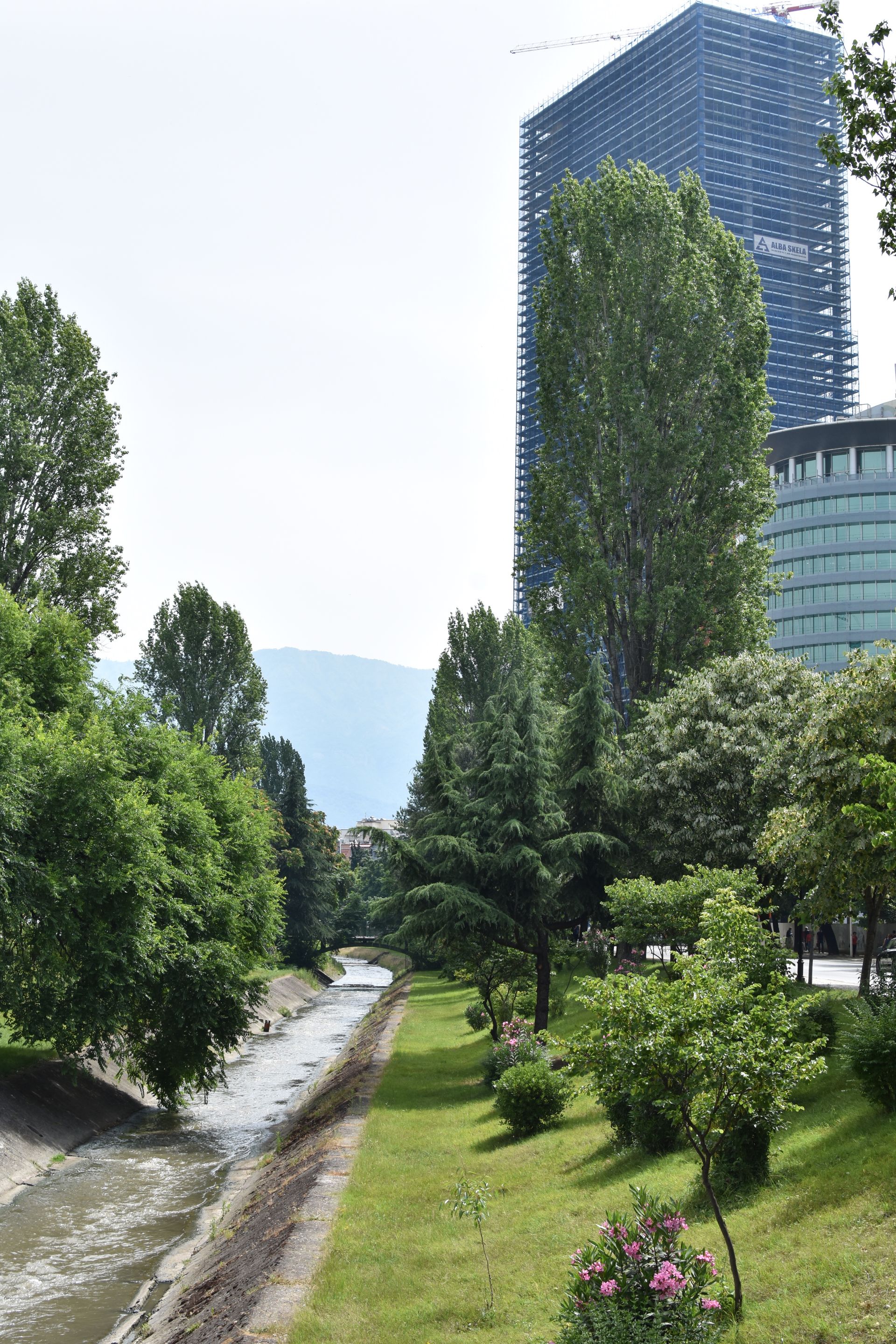
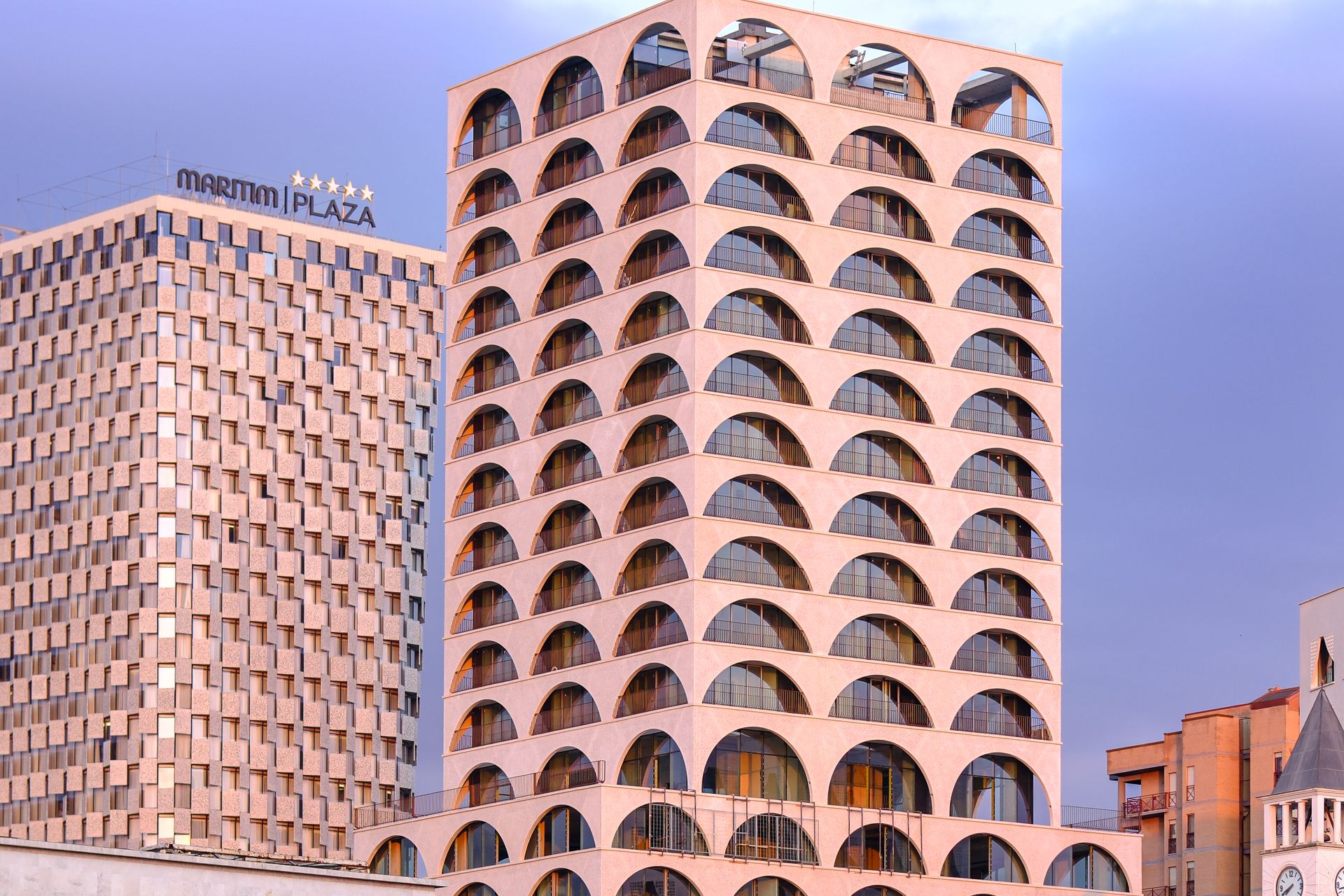
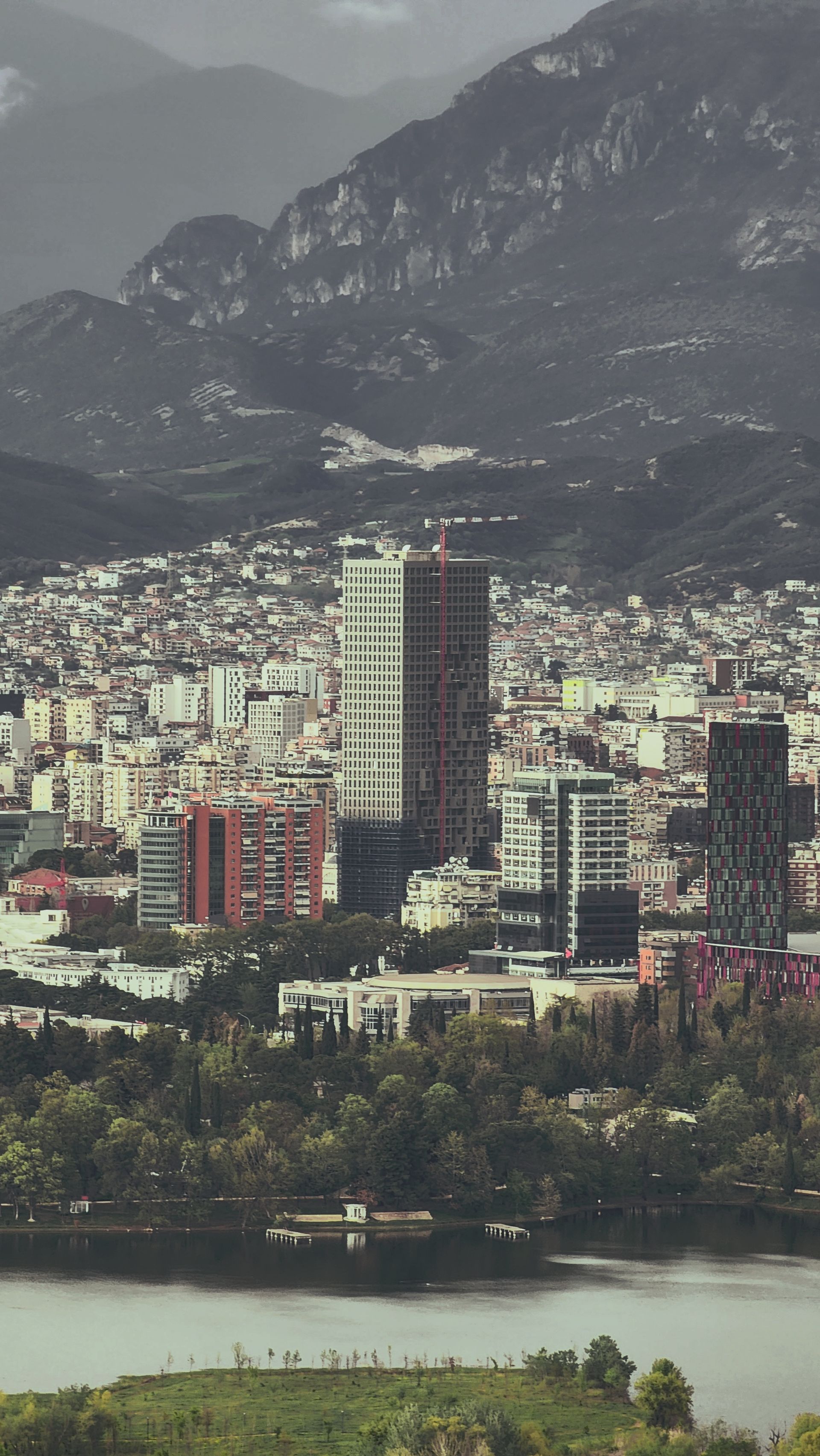
Tirana is not a city of ancient quarters — it is a young capital that grew explosively in the 20th century, so its “neighbourhoods” are really zones of mood radiating out from one central square. The whole core fits inside a thirty-minute walk, which means you can change character completely — from ceremonial plaza to forbidden-Politburo cocktail district to working produce market — in a few hundred metres. The organising logic is simple: Skanderbeg Square is the hinge, the grand Boulevard of the Martyrs runs south from it like a spine, Blloku sits just southwest, the Pazari i Ri just east, and the green of the Grand Park and the wall of Mount Dajti bracket the city north-south and east. Pick your base by what you want your evenings to look like — Blloku for nightlife, the centre for monuments, the Pazari for old-Tirana atmosphere — and walk everywhere.
Skanderbeg Square & the Centre
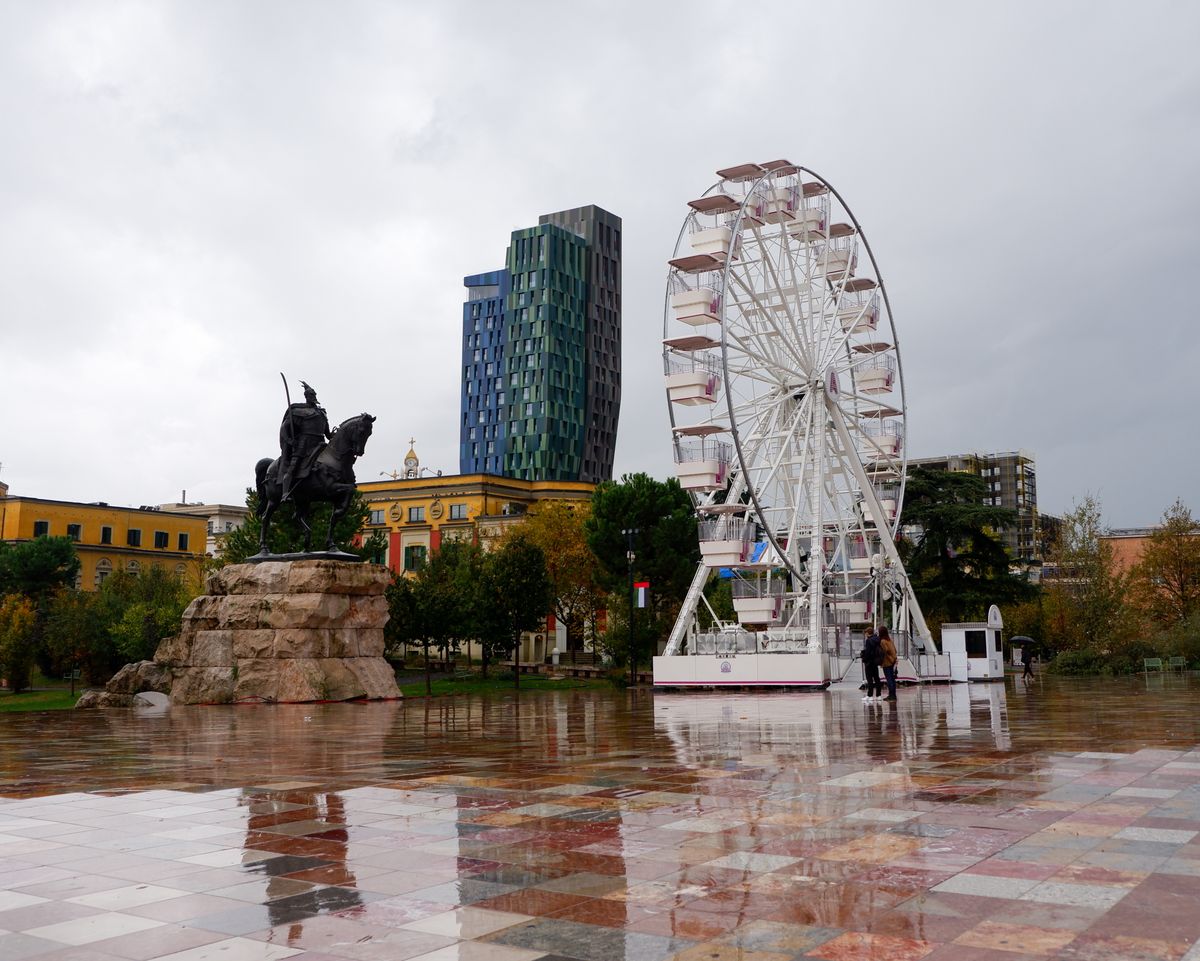
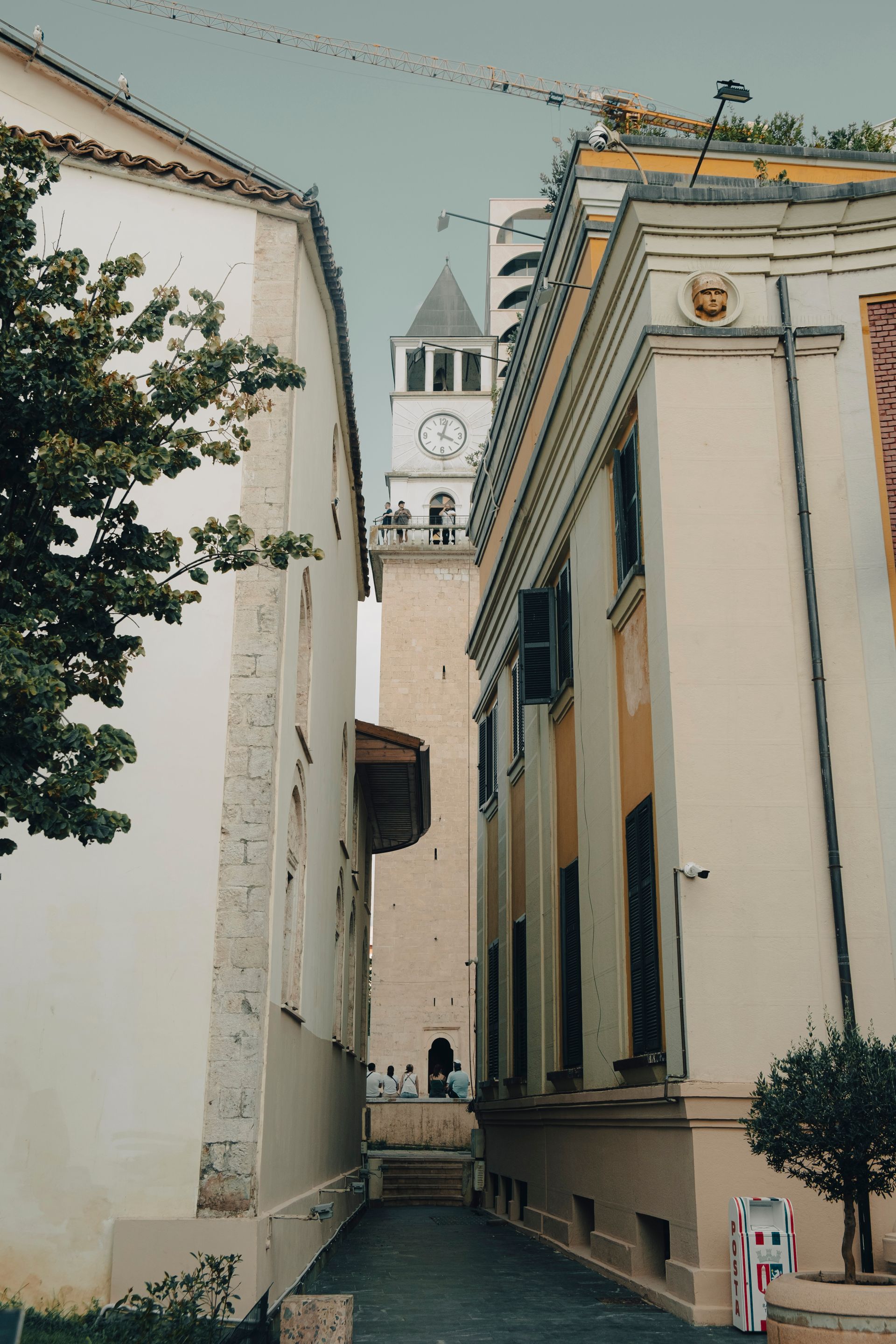
The civic heart and the obvious orientation point — a 40,000-square-metre pedestrian plaza, redesigned in 2017, ringed by the National History Museum (with its famous socialist-realist mosaic facade), the Et’hem Bey Mosque, the Clock Tower, the Opera and the City Hall. The square’s 2017 redesign by 51N4E and the artist Anri Sala tilted the surface into a gentle pyramid clad in stone from every region of Albania and ringed it with fountains and shade gardens, transforming what had been a chaotic traffic roundabout into one of Europe’s most-awarded public spaces — it took the European Prize for Urban Public Space in 2018. By day it fills with families, skateboarders and wedding-photo parties; at dusk the fountains run and the surrounding painted facades catch the low light. This is where you orient, where the museums cluster, and where every walking tour begins.
- National History Museum & “The Albanians” mosaic
- Et’hem Bey Mosque and the Clock Tower
- The fountains and shade-tree edges of the square itself
Best for: first-time orientation, museums and monuments. Access: the walkable dead-centre of the city.
Blloku (Ish-Blloku)
Once the sealed compound of the communist Politburo — Enver Hoxha’s villa still stands — and forbidden to ordinary Albanians until the regime fell in 1991, Blloku is now the busiest café, restaurant and cocktail quarter in the Balkans.
- Enver Hoxha’s former residence
- Third-wave coffee bars and craft-cocktail spots
- Boutique shopping and people-watching
Best for: nightlife, coffee culture and dining. Access: ten minutes’ walk south-west of Skanderbeg Square.
Pazari i Ri (New Bazaar)
The restored produce-market quarter just east of the centre, rebuilt around a covered market hall and now lined with traditional restaurants, raki bars and the best concentration of byrek and grilled-meat spots in the city.
- The covered market hall and produce stalls
- Traditional tavernas and qebaptore
- Antique and craft stalls on weekends
Best for: food, markets and old-Tirana atmosphere. Access: five-to-ten minutes’ walk east of the square.
The Pyramid & the Boulevard
The grand Boulevard Dëshmorët e Kombit (Boulevard of the Martyrs of the Nation) runs south from the square past the government ministries to the Pyramid and on toward the Grand Park; this is the ceremonial spine of the communist-era city, now lined with cafés and the reopened Pyramid tech campus.
- The Pyramid (TUMO Tirana) and its climbable exterior
- The Prime Minister’s Office and Parliament
- Café terraces along the boulevard
Best for: architecture and Cold-War history. Access: a straight ten-minute walk south of the square.
The Grand Park & Artificial Lake
The green lung of the city to the south — a large landscaped park around an artificial lake, with running paths, lakeside cafés, the Presidential complex and the open-air amphitheatre that hosts summer concerts.
- The lakeside loop and rowing
- Summer concerts at the amphitheatre
- Saint Procopius church and quiet woodland
Best for: green space, running and a summer escape from the heat. Access: fifteen minutes’ walk south of the Pyramid.
Dajti & the Eastern Edge
The eastern fringe where the city meets the mountain — the lower Dajti cable-car station, the Bunk’Art 1 museum in a Hoxha-era nuclear bunker, and the suburbs climbing toward the national park.
- Dajti Ekspres lower station
- Bunk’Art 1 Cold-War museum
- Trailheads into Dajti National Park
Best for: the cable car, Cold-War history and hiking. Access: a short bus or taxi ride east of the centre.
Cultural Sights

Tirana’s sights cluster tightly, and they tell one continuous story: an Ottoman foundation, a half-century of communist isolation, and a 21st-century reinvention that has chosen to confront its dictatorship rather than bulldoze it. You can walk the entire circuit below — square, mosque, museum, pyramid, two bunkers and a surveillance house — in a single full day, with the Dajti cable car saved for a clear morning. What makes the city unusual among post-communist capitals is how directly it puts the dark years on display.
Skanderbeg Square & the Equestrian Monument
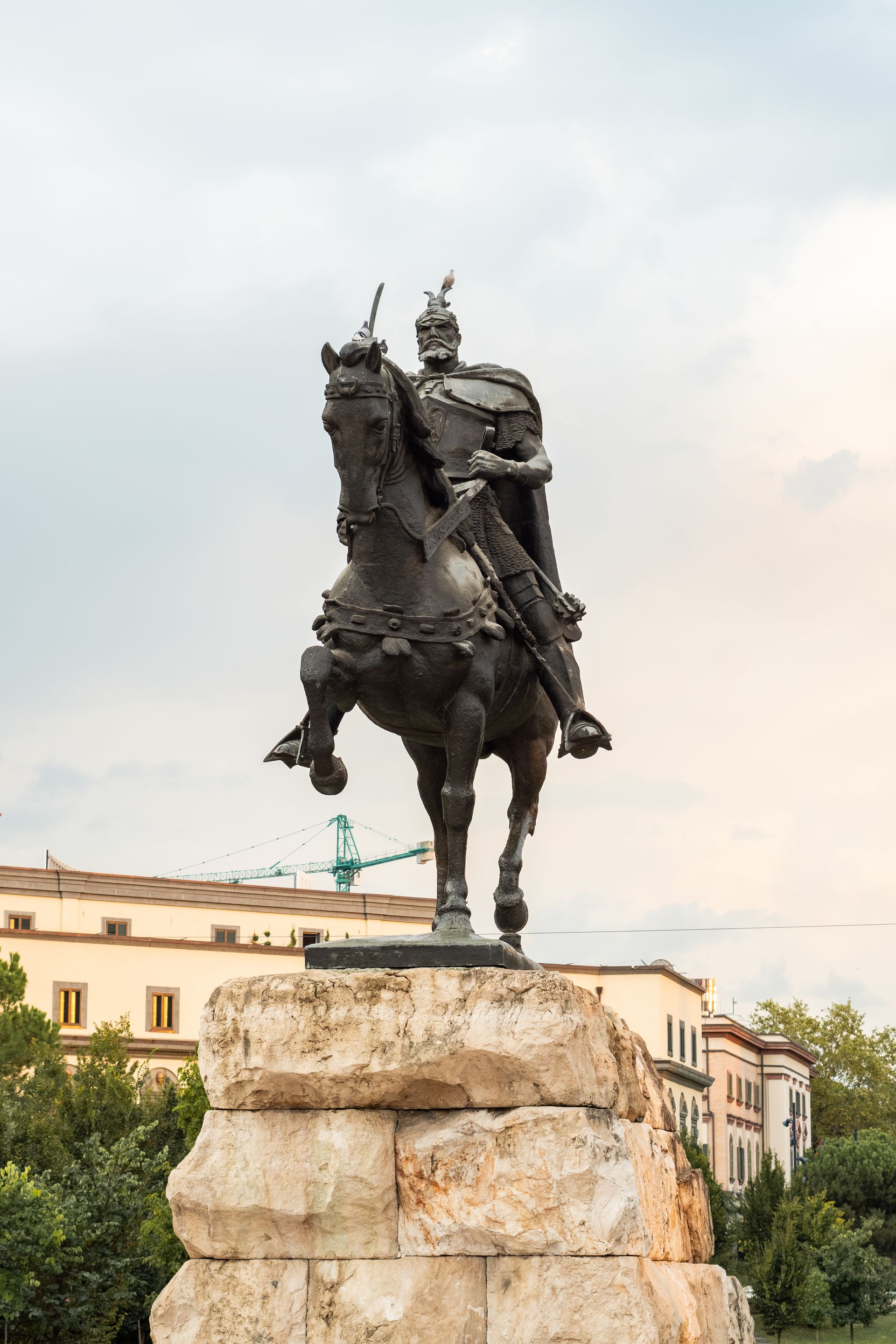
The civic heart of Albania — a 40,000-square-metre pedestrian plaza redesigned by 51N4E and the artist Anri Sala, opened in June 2017 and awarded the European Prize for Urban Public Space in 2018. At its centre stands the equestrian monument to Gjergj Kastrioti Skanderbeg, the 15th-century warlord who held off the Ottomans for a quarter-century and remains the national hero whose double-headed-eagle banner became the Albanian flag. Admission free. Best at dusk when the fountains run and the painted facades catch the light.
Et’hem Bey Mosque
The 19th-century jewel on the square, begun in 1791 by Molla Bey and completed around 1821 by his son Haxhi Ethem Bey, a great-grandson of Tirana’s founder. It is famous for its rare frescoes of trees, waterfalls and bridges — landscape imagery almost unheard-of in Islamic religious art — and it reopened to worshippers on 18 January 1991, a symbolic moment in the return of religious freedom. Admission free; dress modestly. Open outside prayer times.
The Pyramid of Tirana (TUMO)
Designed by Enver Hoxha’s architect daughter Pranvera Hoxha and her husband, it opened on 14 October 1988 as the Enver Hoxha Museum, then sat derelict for thirty years as a graffiti-covered ruin that locals climbed for fun. The Dutch firm MVRDV reopened it on 16 October 2023 as TUMO Tirana, a free youth tech-and-creativity campus, adding stepped terraces you can still climb to the apex. Admission free to climb the exterior. Founded 1988, reborn 2023.
Bunk’Art 1 & Bunk’Art 2
Two of the most powerful Cold-War museums in Europe, both built inside genuine Hoxha-era atomic bunkers. Bunk’Art 1, opened in 2014 in a vast multi-storey command bunker on the city’s eastern edge near the Dajti cable car, traces communist Albania’s history and the regime’s siege paranoia; Bunk’Art 2, opened in 2016 beside the Interior Ministry on Skanderbeg Square, documents the Sigurimi secret police. Admission roughly 500–1,000 lek ($5–11 USD). Allow two hours for Bunk’Art 1.
National History Museum
Albania’s largest museum, instantly recognisable for the giant socialist-realist mosaic “The Albanians” across its facade on Skanderbeg Square; inside, the collection runs from Illyrian antiquity through the Ottoman centuries to the communist-terror pavilion. Admission around 500 lek (~$5 USD). Closed Mondays.
House of Leaves (Museum of Secret Surveillance)
A small but devastating museum in the former Sigurimi surveillance house, documenting four decades of wiretapping, informants and interrogation under the dictatorship. Admission around 700 lek (~$8 USD). One of the most affecting hours in the city.
Mount Dajti & the National Park
The 1,613-metre mountain on the city’s eastern wall, reached by the Dajti Ekspres cable car to roughly 1,050 metres for panoramic views, restaurants, trails and an adventure park inside Dajti National Park. Cable-car round trip around 1,400–1,500 lek. Best on a clear morning.
Food & Drink in Tirana

Tirana eats far better than its budget-Balkan reputation suggests. Albanian cooking sits at the crossroads of three culinary worlds — Ottoman (grilled meats, byrek, baklava), Mediterranean (olive oil, vegetables, seafood from the nearby Adriatic) and Italian (espresso culture, pasta, the cross-Adriatic influence of decades of Italian television) — and the capital has added a genuine new-Albanian fine-dining movement on top in the last decade. The eating geography is simple: street food and traditional tavernas concentrate in the Pazari i Ri, the trend-driven restaurants and the coffee-and-cocktail scene fill Blloku, and a handful of destination kitchens sit near the Grand Park. Portions are large, prices are low by any European standard, and the raki is poured generously.
Traditional Albanian & the Pazari i Ri Tavernas
Albanian cooking is Mediterranean-Balkan at heart — olive oil, lamb, peppers, yoghurt and feta-style cheese — with strong Ottoman and Italian influences. The Pazari i Ri (New Bazaar) is the best single place to eat traditionally, with tavernas around the restored covered market hall serving grilled meats, tëll burani (oven-baked lamb and rice) and fërgesë straight from clay dishes. The market itself is the larder — stalls of mountain cheese, cured meats, honey, olives and the season’s produce — and the tavernas ringing it cook what the stalls sell. Come hungry, order to share, and let the waiter steer you to the day’s grill.
- Oda — classic Albanian taverna near the Pazari (mains ~700–1,200 lek, ~$8–13 USD)
- Mullixhiu — farm-to-table new-Albanian by chef Bledar Kola, near the Grand Park (tasting from ~2,500 lek, ~$27 USD)
- Pazari i Ri tavernas — grilled qofte and fërgesë (~600–1,000 lek, ~$7–11 USD)
Byrek, Qebap & Street Food
The everyday food of Tirana is byrek — flaky filo pastry filled with cheese, spinach or minced meat, sold from byrektore on every block for pocket change — alongside qofte (grilled meatballs) and sufllaqe (the Albanian souvlaki wrap).
- Byrektore counters — a slice of byrek (~50–100 lek, under $1 USD)
- Sufllaqe stands — the Albanian wrap (~200–300 lek, ~$2–3 USD)
- Qebaptore — grilled qofte plates (~400–700 lek, ~$4–8 USD)
Beyond Byrek and Qofte
Tirana’s café and dessert culture is a destination in itself, fuelled by espresso (a legacy of close Italian ties) and the national spirit, raki. The Blloku coffee scene rivals any in the Balkans.
- Fërgesë — the Tirana signature: peppers, tomato and cottage cheese baked in a clay dish (~500–800 lek)
- Tavë kosi — baked lamb and rice in an egg-and-yoghurt custard (~700–1,000 lek)
- Raki — the grape or mulberry spirit, the standard toast (~150–300 lek a shot)
- Albanian espresso — the social currency of Blloku (~80–150 lek)
Food Experiences You Can’t Miss
- A morning byrek-and-coffee crawl through the Pazari i Ri
- A long Blloku evening over raki and grilled qofte
- A new-Albanian tasting menu at Mullixhiu to see where the cuisine is going
Entertainment & Nightlife

Tirana’s after-dark reputation punches well above the city’s size, and the centre of gravity is Blloku — the once-forbidden Politburo enclave that has become, by common Balkan consensus, the liveliest nightlife district between the Adriatic and Athens. The scene is café-to-cocktail rather than mega-club: Albanians treat the evening as a long social arc that starts with espresso, slides into wine or raki, and runs late on weekends. Add a low-cost opera and ballet house on the square, summer concerts in the Grand Park amphitheatre, rooftop bars with Dajti views, and the seasonal migration of the whole scene to the Riviera in high summer, and you have a nightlife that is cheap, walkable and distinctly its own.
Blloku Bars & Cocktail Scene
The former Politburo compound is now the undisputed nightlife centre of the Balkans, packed with craft-cocktail bars, wine bars and late-night cafés that spill onto the pavements. The irony is not lost on locals: the streets where the communist elite lived sealed off from ordinary Albanians are now where the whole city comes to drink and be seen. Typical cost a cocktail 600–1,000 lek (~$7–11 USD). No booking needed; bars fill from 21:00 and run past midnight at weekends.
Live Music & the Amphitheatre
The Grand Park amphitheatre and various Blloku venues programme live music through the warmer months, and the city hosts a growing festival calendar. Typical cost free-to-2,000 lek depending on the act.
Opera & the Theatre of Opera and Ballet
The National Theatre of Opera and Ballet on Skanderbeg Square stages opera, ballet and orchestral seasons at very low prices by European standards. Typical cost 500–1,500 lek.
Summer on the Riviera
A genuinely Albanian quirk: in July and August much of the Blloku scene physically relocates to beach clubs on the Albanian Riviera, so the summer capital is quieter at night than spring or autumn. Typical cost varies; plan beach nightlife as a day trip south.
Rooftop Bars & the Sky Tower
The revolving Sky Tower bar and a cluster of new rooftop venues give panoramic views over the painted city to Mount Dajti. Typical cost a drink 500–900 lek.
Cinema & Cultural Centres
Modern multiplexes screen films in English with Albanian subtitles, and the reopened Pyramid (TUMO) and various galleries run a busy cultural-events programme. Typical cost 400–700 lek for a film.
Day Trips from Tirana
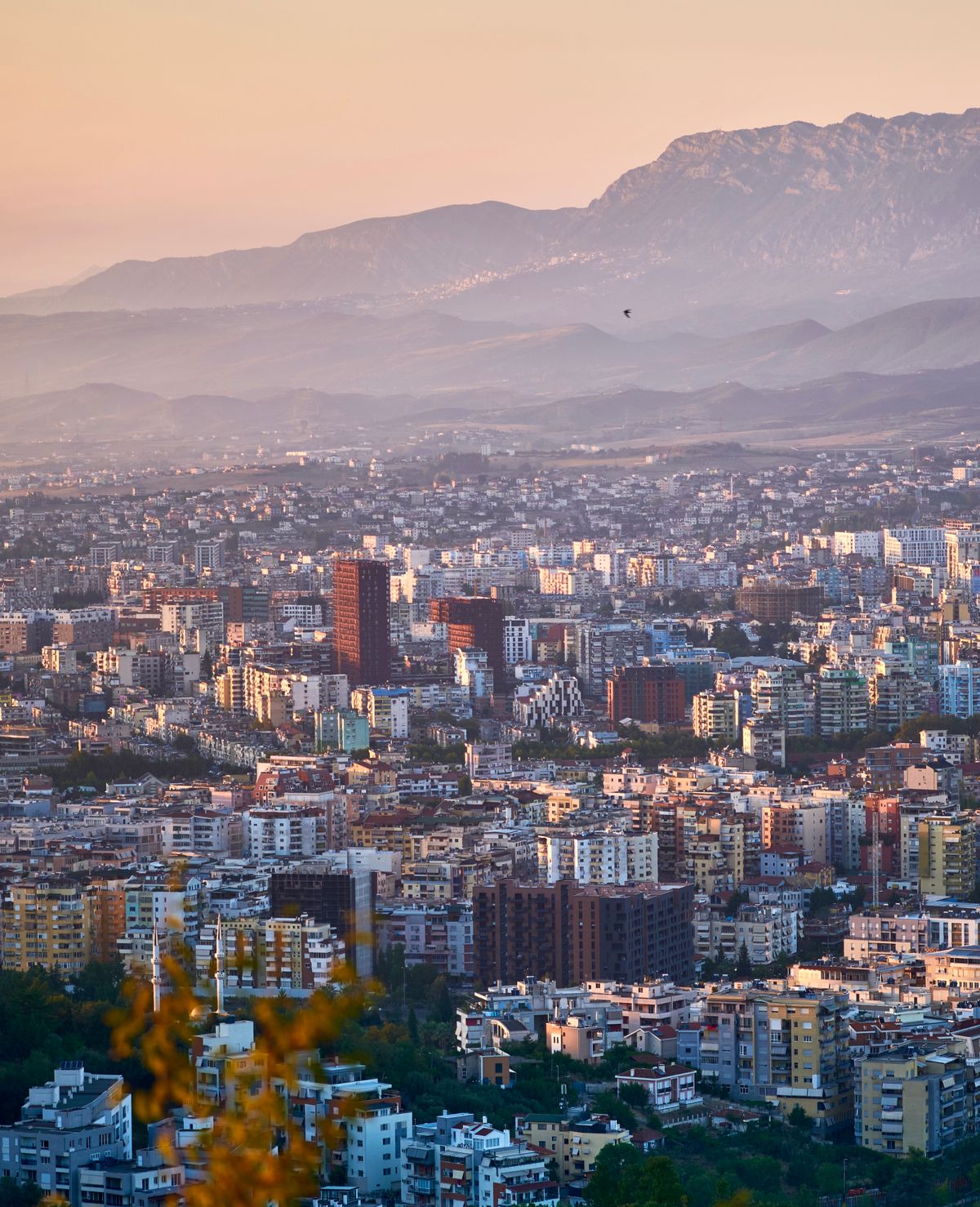
Tirana’s greatest practical asset is its position: it sits at the centre of a small country, on a fast-improving motorway network, within a comfortable day’s round trip of a mountain national park, a medieval castle town, a Roman port and a UNESCO World Heritage city. Because Albania has no tourist rail, the practical tools are a hired driver, a small-group tour, or the morning furgon minibuses that leave from the intercity terminal. The five trips below are the classics, ordered by distance — the first two are half-days, the last needs a long day or an overnight.
Mount Dajti (15 minutes by cable car)
The closest escape: ride the Dajti Ekspres gondola fifteen minutes up to roughly 1,050 metres for trails, restaurants and the best panorama of the Tirana plain, inside the 1,613-metre Dajti National Park. Half a day is enough; combine with Bunk’Art 1 at the lower station, which sits beside the cable-car base.
Krug / Kruja (45 minutes by car)
The medieval citadel of Skanderbeg, about 35 kilometres north, with a restored castle, the Skanderbeg Museum, the ethnographic museum and a genuine Ottoman bazaar selling antiques and crafts — the most atmospheric half-day from the capital.
Durrës (45 minutes by car)
The Adriatic port city about 35 kilometres west, home to the largest Roman amphitheatre in the Balkans (2nd century AD), a long city beach and a buzzing seafront. Easy by furgon or the SH2 highway.
Berat (2 hours by car)
The UNESCO World Heritage “City of a Thousand Windows”, about 120 kilometres south, with its tiered Ottoman houses climbing the hillside and an inhabited castle quarter. A long but rewarding day; an overnight is better.
Bovilla Reservoir (1 hour by car)
The turquoise drinking-water reservoir in the hills northeast of the city, with a short sharp ridge hike to a famous viewpoint over the water — the most popular nature half-day among locals.
Budget Breakdown: Making Your Lek Count
| Tier | Daily | Sleep | Eat | Transport | Activities | Extras |
|---|---|---|---|---|---|---|
| Budget | $30–50 | $12–25 hostel/guesthouse | $8–15 byrek & tavernas | $2–5 buses | $5–12 museums | $3–8 coffee/raki |
| Mid-Range | $70–120 | $45–80 boutique hotel | $20–40 Blloku dining | $8–15 taxis | $15–25 cable car + sights | $10–20 bars |
| Luxury | $200+ | $130–250 Plaza/Maritim | $60–100 fine dining | $40–80 private driver | $40+ private guide | $30+ rooftop bars |
Where Your Money Goes
Tirana is one of the cheapest capitals in Europe, and the gap between the budget and mid-range tiers is mostly about where you sleep and where you eat. Accommodation is the single biggest lever: a hostel dorm or a simple guesthouse room runs $12–25, a stylish Blloku boutique room $45–80, and the international-brand hotels (Plaza, Maritim, Marriott) $130–250. Food follows the same pattern — a byrek-and-taverna day costs under $15, while full Blloku restaurant meals with wine push $30–40. Everything else is cheap: museums are mostly under $8, the Dajti cable car is the one notable activity cost at ~$16 round trip, city buses are almost free at ~40 lek a ride, and an espresso that anchors an hour of people-watching is under a dollar. The costs that climb fastest are day trips with a private driver and any nightlife run in Blloku. A realistic all-in budget is $30–50 a day shoestring, $70–120 comfortable, and $200-plus for the luxury tier with a driver and fine dining.
Money-Saving Tips
- Eat byrek, sufllaqe and qofte from the Pazari and street counters — full meals for $2–5.
- Walk the compact centre and save taxis for the airport and day trips.
- Visit in late September–October or winter for the lowest room rates, well below the May/September peaks.
Practical Information

Language
Albanian (Shqip) is a unique isolate branch of the Indo-European family, written in the Latin alphabet. English is widely spoken by under-40s and across tourism; Italian is common among older Albanians thanks to decades of cross-Adriatic TV and migration. “Faleminderit” (thank you) and “përshëndetje” (hello) earn instant goodwill.
Cash vs. Cards
The lek (ALL) is cash-king for street food, the Pazari, buses and small cafés; Blloku restaurants, hotels and supermarkets take Visa and Mastercard. Carry small notes. ATMs are everywhere but some charge high withdrawal fees; euros are sometimes accepted but at poor rates — pay in lek.
Safety
Albania sits on US State Department Travel Advisory Level 1 (Exercise Normal Precautions) and Tirana is a low-crime capital; the main risks are petty pickpocketing in crowds and chaotic traffic for pedestrians. Cross with care — drivers can be assertive.
What to Wear
Smart-casual works everywhere; Blloku skews stylish in the evening. Pack a light shell for spring and a proper rain jacket from mid-October. Modest cover (shoulders and knees) for the Et’hem Bey Mosque.
Cultural Etiquette
Coffee is the social glue — accepting a coffee invitation is good manners. Note the Albanian head gesture quirk: a head shake can mean yes and a nod no in some contexts, so confirm verbally. Raki is offered as a welcome.
Connectivity
Mobile data is cheap and fast; local SIMs from Vodafone, One or Telekom Albania cost a few euros, and EU roaming agreements increasingly cover Albania. Free Wi-Fi is standard in cafés and hotels.
Health & Medications
The US CDC recommends routine vaccinations plus Hepatitis A and typhoid for most travellers to Albania; tap water is treated but most visitors drink bottled. Pharmacies (farmaci) are plentiful; private clinics in Tirana are good and inexpensive.
Luggage & Storage
Hotels hold bags before check-in and after check-out as standard; left-luggage options near Skanderbeg Square and the airport make a day-trip-then-fly-out plan easy.
Frequently Asked Questions
How many days do I need in Tirana?
Two full days cover the city itself — the Skanderbeg Square monuments, the Pyramid, Bunk’Art, the museums and a Blloku evening — with a third day for a Dajti cable-car morning plus a Krug or Durrës day trip. Use Tirana as your Albania base and add nights for Berat or the Riviera.
Is Tirana good for solo travellers?
Yes — it is a low-crime, compact, walkable and English-friendly capital that sits on US State Department Travel Advisory Level 1. Solo travellers find the Blloku café culture easy to dip into, hostels are sociable, and the main caution is assertive traffic rather than personal safety.
Do I need a ticket for the Dajti cable car?
Yes — buy a round-trip ticket (about 1,400–1,500 lek, ~$15–16 USD) at the lower station; no advance booking is needed. Ride at opening on a clear morning for the best views over the plain, and budget two to three hours including time at the top.
What about the language barrier?
Manageable. English is widely spoken by younger Albanians and across tourism, hotels and Blloku restaurants; Italian helps with older people. Learning “faleminderit” (thank you) earns goodwill, and translation apps handle menus. The unique head-gesture quirk — where a shake can mean yes — is the only real pitfall.
When is the best time to visit Tirana?
Late spring (May–June) and early autumn (September–October) are the sweet spots, with comfortable 18–27°C days and full café terraces. Summer is hot and the nightlife thins as the scene moves to the Riviera; winters are mild but among the wettest in Europe. May is the single best month.
Can I use credit cards everywhere in Tirana?
Hotels, Blloku restaurants and supermarkets take Visa and Mastercard, but street food, the Pazari market and small cafés are cash-only. Carry small lek notes for everyday purchases; ATMs are everywhere though some levy high fees. Pay in lek rather than euros for the best value.
Is Tirana worth visiting, or just a stopover for the rest of Albania?
It is worth two days in its own right. Few capitals pack a Cold-War bunker museum, a reborn brutalist pyramid, an Ottoman mosque with painted frescoes, a 1,600-metre cable-car mountain and the busiest café scene in the Balkans into one walkable centre. It is also the natural and cheapest base for day trips to Krug, Durrës and Berat.
Ready to Experience Tirana?
Tirana rewards the traveller who arrives without expectations — a painted, fast-changing capital where Cold-War memory, Ottoman heritage and Balkan café culture collide beneath a 1,600-metre mountain. For the full country context, read the Albania Travel Guide.
Explore More City Guides
Where to Stay
Alex the Travel Guru
Alex has spent two decades writing travel guides from the ground up — walking the streets, riding the cable cars, eating the byrek and checking every price against the local source. This Tirana guide was built the same way: real numbers, real sources, and the brief Alex would hand his own family before they flew into TIA.
More city guides you might like
Plan your trip to Tirana
The booking tools we use ourselves. FFU may earn a commission at no extra cost to you.
Plan & book your trip to Tirana
Booking through these searches supports our guides at no extra cost to you.