
City Guide · Auvergne-Rhône-Alpes
Lyon, France: France’s Gastronomic Capital, a UNESCO Old Town, and the City Where Two Rivers Meet
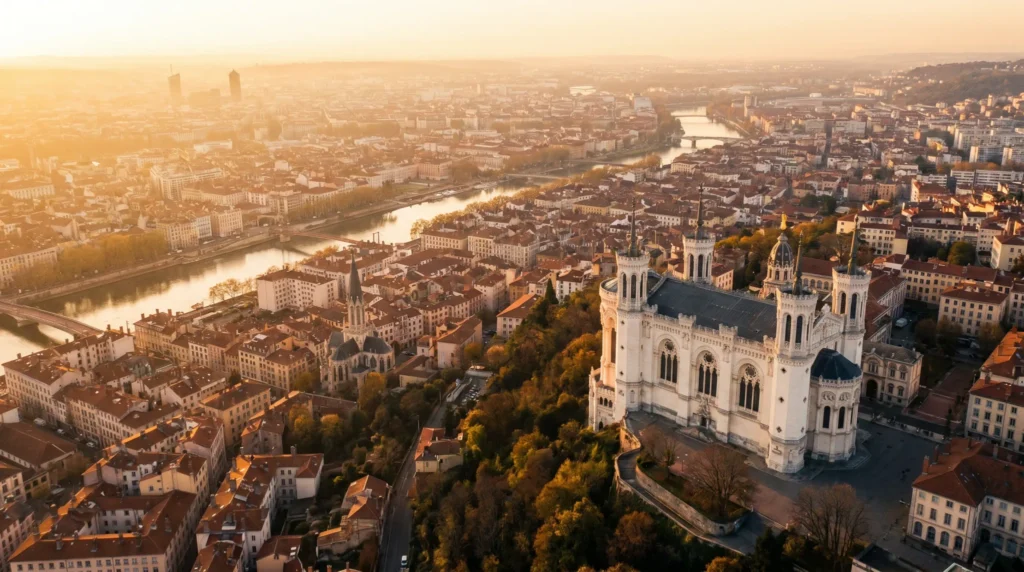
I came to Lyon for the bouchons and stayed for the hills. We tell first-time travellers that this is the French city that rewards an appetite more than a checklist — about 522,000 people inside the city proper and roughly 2.3 million across the wider metropolitan area — spread across a peninsula and two hills where the Rhône and the Saône finally join. My favourite Lyon ritual is climbing through the Renaissance lanes of Vieux Lyon, ducking through a hidden traboule passageway, and emerging on the Fourvière hill as the whole UNESCO-listed old town — 500 hectares of it, inscribed in 1998 — spreads out below . Treat this guide as the brief I would hand my own family the day before they boarded the TGV from Paris, just two hours north: the bouchons and Les Halles de Paul Bocuse, the basilica and the Roman theatres, the silk-weaving Croix-Rousse, the modern Confluence, and the December Fête des Lumières when four million people fill the streets .

Table of Contents
Why Lyon?
Lyon is the great French city that most foreign visitors skip and most French food-lovers worship. For two thousand years it has been a crossroads — the Romans founded Lugdunum here in 43 BC as the capital of the Three Gauls, and the city has been profiting from its position at the confluence of the Rhône and the Saône ever since. In 1998 UNESCO inscribed 500 hectares of the historic city — from the Roman remains on Fourvière through the Renaissance lanes of Vieux Lyon to the silk-workers’ Croix-Rousse and the grid of the Presqu’île — recognising “an exceptional testimony to the continuity of urban settlement over more than two millennia” . The city proper holds about 522,000 residents, with roughly 2.3 million across the metropolitan area, which makes Lyon the third-largest city in France and the capital of the Auvergne-Rhône-Alpes region .
The city reads as a layered map you climb as much as walk. Two hills frame the centre: Fourvière, “the hill that prays”, crowned by its basilica and the Roman theatres; and the Croix-Rousse, “the hill that works”, where 19th-century silk weavers (the canuts) built tall-windowed workshops and the secret traboules — covered passageways threading between streets — to carry bolts of silk in the dry. Between them runs the Presqu’île, the long peninsula of grand squares and shopping that ends where the two rivers meet at the gleaming, modern Confluence district. The whole geography is the city’s signature: this is the place where the green Saône and the broad Rhône finally join .
And then there is the food. Lyon’s claim to be the gastronomic capital of France is not marketing — it is the legacy of the mères lyonnaises, the home-trained women cooks who professionalised the city’s bistros, and of Paul Bocuse, the most decorated chef of the 20th century, whose Michelin three-star restaurant held its rating for more than half a century and whose name now graces the city’s great covered food market . The bouchon — the small, convivial Lyonnais bistro serving offal-rich regional classics — is the city’s edible soul, and Les Halles de Lyon Paul Bocuse its temple. Few cities of this size eat so seriously, or so well.
The density of layered heritage is unusual even by French standards. On Fourvière alone you can see a 2,000-year-old Roman theatre still used for summer concerts, a 19th-century basilica of dazzling Byzantine excess, and a panoramic terrace over the whole confluence — all within a few hundred metres. Down in Vieux Lyon, one of Europe’s largest surviving Renaissance quarters, the cobbled lanes hide some 315 traboules, a handful open to respectful visitors . What keeps it coherent rather than overwhelming is the funicular and the river: you ride up the hills and walk down through history.
This guide covers the neighbourhoods you will actually walk, the bouchons and markets worth seeking out, the basilica-and-Roman-theatre tier on Fourvière, the silk-weaving Croix-Rousse, the modern Confluence, and the wine-and-villages day trips Lyonnais themselves take on weekends — the Beaujolais hills and the medieval Pérouges above all. Lyon’s calendar peaks in early December, when the four-day Fête des Lumières turns the whole city into a canvas for light artists and draws several million visitors . One orientation point: Lyon is built around its table and its rivers, not its monuments alone. Walk the old town in the morning, give a long lunch to a bouchon, climb a hill for the golden hour, and keep an evening for the riverbanks. For the wider French context, this guide pairs with our France Travel Guide and the sibling Paris, Marseille and Bordeaux city guides.
Getting There
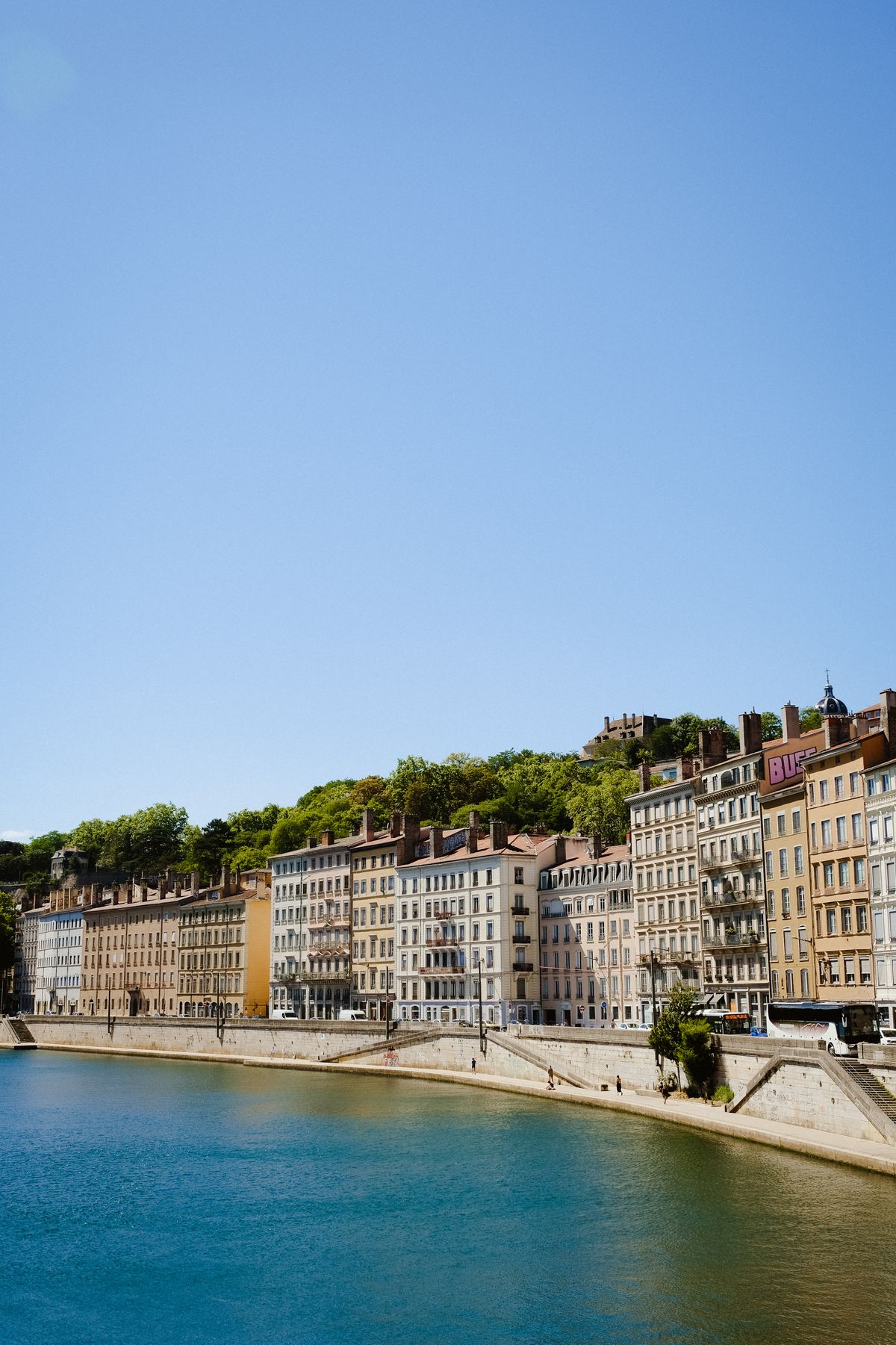
Lyon–Saint-Exupéry Airport (LYS), about 25 kilometres east of the centre, is the largest in the Auvergne-Rhône-Alpes region, handling roughly 11 million passengers in 2024 . It runs domestic links to Paris, Nantes and Bordeaux plus European and long-haul service on the legacy carriers and low-cost lines. The Rhônexpress tram-train reaches the centre (Part-Dieu) in about 30 minutes for around €16.50 one way; a taxi to the historic core is roughly €50–€65 depending on time of day.
Rail is usually the smarter inbound from elsewhere in France. The TGV INOUI links Paris Gare de Lyon and Lyon Part-Dieu in about 2 hours, one of the busiest high-speed corridors in Europe, with services also reaching the central Lyon Perrache station . Advance fares start around €30; expect €70–€110 last-minute. Lyon is also a major junction for trains to Marseille (about 1h40), Geneva, Turin and the Alps, making it a natural hub for a wider trip.
By road, FlixBus and BlaBlaCar Bus run intercity coaches from Paris, Marseille and across the south-east into the Perrache coach area . Coaches are the cheapest option and useful for towns the train does not reach; the A6 motorway connects Lyon to Paris and the A7 (the “Autoroute du Soleil”) runs south toward Provence and the Mediterranean.
Getting Around
Lyon’s historic centre is built for walking, and the network beyond it is one of the best in France: a four-line metro, two funiculars up the Fourvière hill, a tramway, a dense bus system, and the Vélo’v public-bike scheme — all run under the TCL brand . The compact core means most visitors barely use transit inside the Presqu’île and Vieux Lyon — the squares, the riverbanks and the old town are all within a 20-minute walk of each other. Transit matters mainly for the airport, the two hills, the train stations and the Confluence.
The Metro and Funiculars
Lyon’s metro opened in 1978 and runs four lines (A, B, C and D) crossing under the rivers and hills, with Line C a rack railway that climbs the Croix-Rousse and the two historic funiculars (the ficelles) carrying you up Fourvière from Vieux Lyon . The funicular is the easy way up to the basilica and the Roman theatres — do not try to walk it on a hot day. A single TCL ticket runs about €2.00 and is valid for an hour with transfers across metro, tram, bus and funicular.
Trams and Buses
The TCL tram network fills in everywhere the metro does not reach, with lines linking Part-Dieu station, the Confluence, the university campuses and the stadium, and the same ticket covers tram, bus, metro and funicular . Buses cover the hill neighbourhoods and the late hours; the C-series “trolleybus” lines are frequent through the centre. For most visitors the metro and funicular do nearly all the work, with the tram useful mainly for Part-Dieu and the Confluence.
Vélo’v Public Bikes and Cycling
Lyon launched Vélo’v in 2005 — one of the world’s first large-scale bike-share schemes — and it remains a cheap way to cover the flat Presqu’île and the riverbanks, with stations across the centre. A short-term subscription costs a few euros, with the first 30 minutes of each ride free. The Rhône and Saône have long, traffic-free riverside paths (the berges), and the flat peninsula makes cycling easy — though the two hills are best left to the funicular and the metro.
Airport Access
- Rhônexpress tram-train to Part-Dieu — about 30 minutes, around €16.50 one way
- Shuttle bus and regional services for nearby towns — cheaper but slower and less direct
- Taxi LYS to the historic centre — about 35–45 minutes, roughly €50–€65
Taxis and Rideshare
Licensed Lyon taxis carry an illuminated roof sign; flag-fall and per-kilometre rates are regulated, with higher night and Sunday tariffs. A typical cross-centre ride runs €10–€18. Uber and Bolt both operate in the city and are often cheaper and easier to book than a street hail. Card payment is standard, but carry small notes for shorter trips.
Navigation Tips
The lanes of Vieux Lyon bend and rename themselves within a block, but Lyon is easy to orient: the Saône is west, the Rhône is east, the Presqu’île is the peninsula between them, and the two hills bookend the view. Google Maps and Citymapper both handle Lyon’s transit well. Much of the centre is pedestrian-only or restricted, so do not plan to drive into the core — park at a Park-and-Ride (P+R) on a metro line instead.
Neighbourhoods: Where to Base Yourself
📍 Lyon Map: Every Place in This Guide
Lyon’s character changes hill by hill and bank by bank, and choosing the right quartier shapes the whole trip. The historic core is compact — you can walk the Presqu’île end to end in half an hour — but each quarter has its own rhythm, price point and altitude. Below are the five neighbourhoods most first-time visitors actually consider, with an honest read on who each suits.


Vieux Lyon (Old Town)
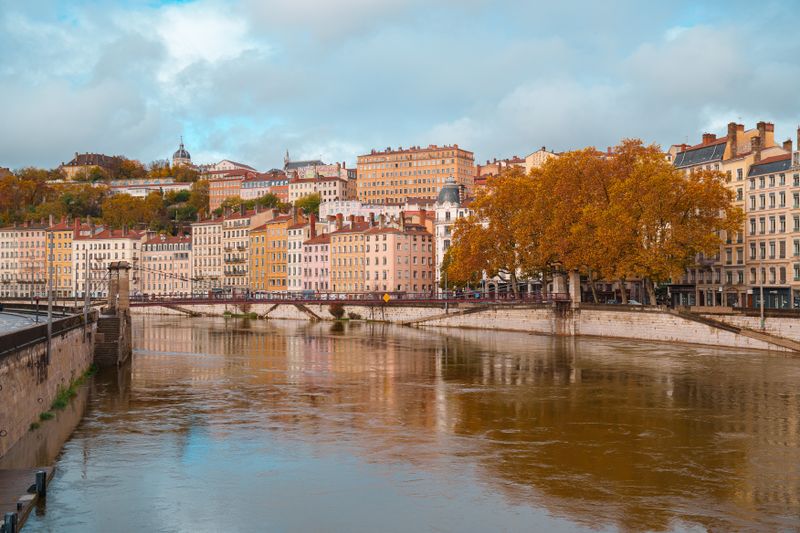
The Renaissance heart at the foot of Fourvière, on the right bank of the Saône, is the postcard Lyon — narrow cobbled lanes, hidden traboules, and the funicular two minutes away. It is also the most touristed and lively after dark. Stay here if it is your first visit and you want the old town on your doorstep; be aware the lanes around Rue Saint-Jean stay busy until late.
Presqu’île (The Peninsula)
The long peninsula between the rivers is Lyon’s grand centre: the Place Bellecour (one of the largest squares in Europe), the opera, the smartest shopping, the bouchons and the grandest hotels. It is central, flat and walkable, the natural base if you want comfort and the squares on your doorstep, and predictably among the more expensive parts of town to sleep in.
Croix-Rousse
The northern hill of the silk weavers — “the hill that works” — has become Lyon’s most characterful neighbourhood, with tall-windowed canut workshops, a daily market, independent bars and a creative-class crowd. It is a steep climb or a short metro ride to the centre, and offers better value and a far more local feel than the old town, with the best traboules to explore.
Confluence and Part-Dieu
South of the Presqu’île where the rivers meet, the regenerated Confluence is Lyon’s modern face — bold architecture, the Musée des Confluences, a shopping mall and waterside walks — while across the Rhône, Part-Dieu is the business district around the main TGV station. Both are practical, well-connected bases if you value transit links and modern rooms over old-town atmosphere.
The Food: The Gastronomic Capital of France
Lyon eats the way no other French city of its size eats — richly, traditionally, and with a pride that borders on religion. This is bouchon country, built on the legacy of the mères lyonnaises and crowned by Paul Bocuse, and its covered markets, bouchons and neo-bistros make it the best eating city in France outside Paris. The trick is to anchor a day around Les Halles, eat one proper bouchon lunch, and never rush the cheese course.

What to Order
- Quenelle de brochet — a poached pike dumpling in a creamy sauce Nantua of crayfish butter, the bouchon signature.
- Salade lyonnaise — frisée with lardons, croutons and a poached egg, the city’s everyday starter.
- Andouillette & tablier de sapeur — offal classics (a chitterling sausage; breaded, fried tripe) for the adventurous.
- Saucisson brioché & rosette de Lyon — sausage baked in brioche, and the famous dry cured sausage.
- Cervelle de canut & praline tart — a herbed fresh-cheese spread, and the bright-pink praline tart for dessert.
Where to Eat and Drink
Les Halles de Lyon Paul Bocuse, the great indoor food market in Part-Dieu, is the place to graze on oysters, charcuterie and cheese and to buy a praline tart; the Presqu’île and Vieux Lyon hold the densest runs of bouchons, the small bistros that serve the regional classics in a convivial, paper-tablecloth setting . Look for the “Bouchons Lyonnais” certification label to find the genuine article rather than a tourist imitation. The Croix-Rousse market and the riverside food halls round out the options.
Wine, Simply
Lyon sits between two great wine regions — the Beaujolais just to the north and the northern Rhône (Côte-Rôtie, Condrieu) just to the south — and the local saying is that a third river, the Beaujolais, flows through the city. Order a pot lyonnais, the traditional 46-centilitre thick-bottomed bottle, of a young Beaujolais or a Côtes-du-Rhône and you drink the way the city has for generations . You do not need a famous label to drink superbly here.
Cultural Sights: The Roman Hill, the Basilica and the Confluence
Lyon’s UNESCO World Heritage listing — inscribed in 1998 — covers the whole 500-hectare historic city, so in a sense Lyon itself is the monument . But a handful of set-piece sights anchor a first visit: the Fourvière basilica and the Roman theatres, Vieux Lyon and its traboules, the Croix-Rousse silk quarter, and the 21st-century Musée des Confluences. Most cluster on the two hills and the peninsula; only the funicular makes Fourvière easy.
Basilica of Notre-Dame de Fourvière
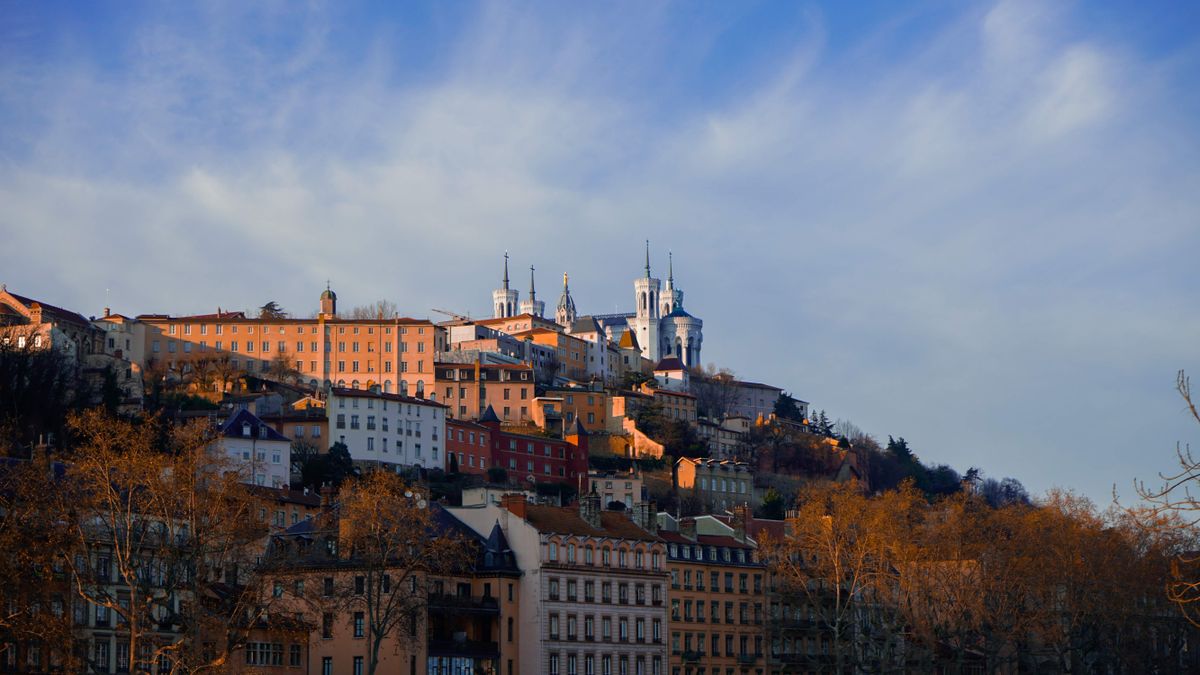
Built 1872–1884 on the hill where the Romans founded the city, the Basilica of Notre-Dame de Fourvière is a riot of Byzantine-Romanesque mosaics, gilding and marble, and one of the most-visited sights in France — entry is free, and the esplanade beside it gives the single best panorama over Lyon and, on a clear day, the distant Alps . Take the funicular up from Vieux Lyon; the climb on foot is steep.
The Roman Theatres of Fourvière

Just below the basilica, the Gallo-Roman theatre — built around 15 BC and one of the oldest in France — and the adjacent odeon are remarkably intact, and the free archaeological park sits beside the excellent Lugdunum museum of Roman Lyon. Each summer the theatres host the Nuits de Fourvière performing-arts festival; the site and the ruins are otherwise free to wander .
Vieux Lyon and the Traboules

One of the largest surviving Renaissance districts in Europe, Vieux Lyon is laced with traboules — covered passageways that thread through buildings and courtyards, originally used by silk workers and later by the wartime Resistance. Some 315 traboules survive across the city, with a marked handful open to respectful visitors in Vieux Lyon and the Croix-Rousse; the tourist office maps the public ones .
Musée des Confluences

Opened in December 2014 at the southern tip of the peninsula where the two rivers meet, the Musée des Confluences is a deconstructivist crystal-and-steel science-and-anthropology museum, one of the boldest buildings in France. Its sweeping galleries cover natural history, human societies and the origins of life; admission is around €9–15, and it is reached by tram or a riverside walk .
The Festival of Lights, Opera and Nightlife
Lyon’s entertainment runs on its two great loves — light and music — framed by rivers that have become the city’s stage. The December Fête des Lumières turns the whole city into an open-air gallery of light art; the Opéra plays its black-glass-domed house; and the bars of Vieux Lyon, the Croix-Rousse and the river péniches (barge clubs) keep the city up far later than its monuments suggest.
Fête des Lumières
Held over four days around 8 December, the Fête des Lumières covers Lyon’s squares, facades and hills with monumental light installations and projection-mapping by international artists, drawing several million visitors to one of Europe’s great winter events . It grew from the centuries-old tradition of Lyonnais placing candles (lumignons) in their windows on the Virgin’s feast day. Book rooms far ahead; it is the single busiest time in the city.
Opera and Classical
The Opéra National de Lyon performs opera and ballet behind the historic facade and modernist black dome of Jean Nouvel’s rebuilt opera house on the Place de la Comédie, with tickets ranging from budget upper seats to premium stalls . The Auditorium de Lyon hosts the city’s national orchestra, and each summer the Roman theatres on Fourvière host the Nuits de Fourvière festival of music, dance and theatre.
Bars, Quays and River Clubs
For nightlife, Vieux Lyon and the Place des Terreaux fill with terrace crowds; the Croix-Rousse leans bohemian wine-bar and live-music; and along the Rhône the moored péniches — converted barges — run as bars and late clubs through the warm months. The riverside quays themselves, pedestrianised and lit, are where Lyon strolls on a warm evening, glass in hand. Craft-beer bars and natural-wine spots have multiplied across the Presqu’île.
Day Trips From Lyon
Lyon is the natural base for two great wine regions, a preserved medieval village and the gateway to the Alps, with fast trains and easy drives reaching all of it in under two hours. With more than two days, give one to the Beaujolais or Pérouges.
The Beaujolais (45 minutes by car or wine tour)
Just north of the city, the Beaujolais hills roll with vineyards, golden-stone villages (the Pierres Dorées) and the ten cru appellations — Morgon, Fleurie, Brouilly and the rest — that make far more than the cheerful Beaujolais Nouveau the region is famous for . A guided minibus tour from Lyon (roughly half a day) is the simplest way to taste; with a car you can village-hop the Route des Vins at your own pace.
Pérouges (50 minutes by train and bus)
One of the best-preserved medieval villages in France, Pérouges sits on a hilltop about 35 kilometres north-east, its cobbled ramparted streets so intact that they have served as a film set for centuries of period dramas . Walk the walls, eat the local sugared galette de Pérouges flatbread, and you step straight into the 15th century within an hour of the city.
Vienne and the Northern Rhône (30 minutes by train)
South along the Rhône, the Roman town of Vienne holds a superb temple and amphitheatre and sits at the foot of the steep Côte-Rôtie and Condrieu vineyards, among the greatest of the northern Rhône . It makes an easy half-day combining Roman ruins, a riverside town and serious wine.
The Alps and Annecy (about 2 hours by train)
For more time, Lyon is the gateway to the Alps: the lakeside town of Annecy, the spa town of Aix-les-Bains and the mountains around Chambéry and Grenoble are all within about two hours, opening a whole region of lakes and peaks south-east of the city.
When to Visit: A Season-by-Season Guide
Lyon’s semi-continental climate gives it warmer summers and crisper winters than the Atlantic west, and the food-and-festival calendar shapes the year as much as the weather. Here is how each season actually feels on the ground.
Spring (March–May)
One of the loveliest times to visit: the parks bloom, the limestone glows, temperatures climb into the high teens and low 20s°C, and the riverside terraces reopen. May in particular offers warm days, long light and manageable crowds before the summer peak. Some rain lingers, so pack a light jacket, but the shoulder-season value is excellent and the bouchons are uncrowded.
Summer (June–August)
Warm and lively, with highs in the high 20s to low 30s°C and the city at its most outdoor. The Nuits de Fourvière festival fills the Roman theatres through June and July; the riverbanks and the péniche bars come into their own. August can feel quiet as Lyonnais leave for holidays and some bouchons close, so check ahead. Use the rivers and the shaded squares to escape the afternoon heat.
Autumn (September–November)
Arguably the best season for food-lovers: the Beaujolais harvest fills the hills, game and mushrooms appear on menus, the heat eases and the crowds thin. The third Thursday of November brings the global release of Beaujolais Nouveau, celebrated hard in the city’s bars and bouchons. October stays mild before the November greyness sets in.
Winter (December–February)
Cold and often grey, with daytime highs of 5–9°C — but December is unmissable for the Fête des Lumières, when the whole city glows and several million visitors arrive. The Christmas markets, the warm bouchons and the proximity of the Alpine ski resorts (about two hours away) make winter rewarding if you dress for it. January and February are the quietest, cheapest weeks of the year.
Budget Breakdown: What Lyon Actually Costs
Lyon is noticeably cheaper than Paris — roughly comparable to Bordeaux for food and lodging — and one of the best-value great-eating cities in Europe, with bouchon lunches that punch far above their price. The figures below are per-person daily estimates excluding flights, in euros, based on 2025–2026 prices.
Backpacker (€55–80/day)
A hostel dorm bed runs €22–35; market grazing at Les Halles and a bouchon lunch menu keep food to €18–30; the old town, the basilica and the Roman theatres are free. Add a funicular ride and a glass of Beaujolais and you stay under €80.
Mid-Range (€120–200/day)
A three-star hotel or central apartment is €85–145 for a double (more in festival season); add €40–60 for meals, €15–25 for sights and transit, plus a museum or two. This is the typical comfortable-tourist band.
Luxury (€330+/day)
A four- or five-star room runs €260–520+, fine dining at a Bocuse-legacy table adds €90–180, and a private Beaujolais tour with tastings pushes the day well past €330. Fête des Lumières week lifts room rates sharply.
Key Fixed Costs
- Musée des Confluences entry — about €9–15
- Fourvière basilica — free; the funicular up is a standard TCL fare
- Single metro/tram/funicular fare — about €2.00
- Rhônexpress airport tram-train to Part-Dieu — about €16.50 one way
- TER train to Vienne — about €6–9 each way
Practical Tips and Safety
Lyon is a safe, easy city for visitors, but a handful of practical habits make the difference between a smooth trip and an avoidable headache. None of this is alarming — it is the ordinary common sense of any popular European destination.
Money and Payments
France uses the euro; cards (including contactless) are accepted almost everywhere, but small markets and some bakeries still prefer cash for low-value orders, so carry €20–30 in small notes. ATMs are plentiful; avoid the standalone non-bank machines, which apply poor exchange rates, in favour of bank ATMs.
Safety and Scams
Violent crime is rare; the realistic risk is pickpocketing in crowds around Place Bellecour, on the busy metro and at Part-Dieu station. Use a zipped bag worn to the front, and be wary of petition and friendship-bracelet scams near the major squares. The UK and US governments rate France a low-risk destination overall .
Health and Water
Tap water is safe to drink throughout the city. EU visitors should carry an EHIC/GHIC card; everyone else should have travel insurance. Pharmacies (pharmacies, marked with a green cross) are widespread and competent for minor ailments, and at least one in each district stays open late on a rota.
Practical Essentials
- Language: French; English is common in hotels and central restaurants, less so in neighbourhood bouchons — a bonjour opens every door.
- Plugs: Type C/E, 230V — bring an EU adapter.
- Tipping: service is included; rounding up or leaving small change is plenty.
- Sundays & Mondays: many shops close Sunday and some bouchons close Sunday–Monday; markets are the exception.
- The hills: wear real shoes — the funiculars help, but Lyon is a climbing city.
Frequently Asked Questions
How many days do you need in Lyon?
Three full days is the sweet spot: one for the praying hill (the Fourvière basilica, the Roman theatres and Lugdunum) and Vieux Lyon with its traboules; one for a market morning at Les Halles, the Presqu’île and the Croix-Rousse; and one for the Confluence and a half-day in the Beaujolais or at Pérouges. Two days covers the old town and one good bouchon lunch at a rush.
What is the best time of year to visit Lyon?
Late September and early October are the standout — the Beaujolais harvest, warm days, fewer crowds and the bouchons at their most generous — with May a close spring runner-up. Summer brings the Nuits de Fourvière festival but quieter Augusts. Early December is unmissable for the Fête des Lumières, if you can handle the crowds and the cold.
Is Lyon expensive?
It is noticeably cheaper than Paris — roughly on par with Bordeaux — and one of Europe’s best-value great-eating cities. A mid-range trip runs about €120–200 per person per day excluding flights, and backpackers can manage on €55–80. A bouchon lunch menu is remarkable value; fine dining and festival-week rooms are where costs climb.
What exactly is a bouchon, and how do I find a real one?
A bouchon is a small, convivial Lyonnais bistro serving rich regional classics — quenelles, salade lyonnaise, andouillette, charcuterie — in a paper-tablecloth setting. To find the genuine article, look for the official “Bouchons Lyonnais” certification label, avoid the photo-menu places on Rue Saint-Jean, go at lunch, and order the fixed-price menu rather than à la carte.
Is Lyon walkable, or do I need public transport?
The Presqu’île and Vieux Lyon are exceptionally walkable — flat in the centre and largely pedestrianised. You mainly need transit for the airport, the train stations, the Confluence, and the funicular up Fourvière (do not walk the hill on a hot day). The four-line metro, two funiculars and tram are excellent, with a single ticket valid for an hour.
How do I get from Lyon airport to the city centre?
The Rhônexpress tram-train runs from Lyon–Saint-Exupéry to Part-Dieu station in about 30 minutes for roughly €16.50 one way , while a taxi takes around 35–45 minutes for €50–65 depending on time of day. From Part-Dieu the metro and tram reach the rest of the city on a standard TCL fare .
Is Lyon safe for tourists?
Yes, very. Violent crime is rare and the main risk is pickpocketing in crowds. Both the UK and US governments rate France a low-risk destination. Take the usual precautions with bags around Place Bellecour, on the metro and at Part-Dieu station, and watch for petition and bracelet scams near the major squares.
Can I do a day trip to the Beaujolais without a car?
Yes — the simplest way is a guided minibus wine tour from Lyon, which handles the driving and the tastings in roughly half a day . Some Beaujolais towns are reachable by TER train and local bus, but the vineyards and golden-stone villages are spread out, so a tour or a car gives you far more for a day in the hills.
What food is Lyon famous for?
Its bouchon cuisine above all — quenelle de brochet in sauce Nantua, salade lyonnaise, andouillette and other offal classics, saucisson and rosette de Lyon, cervelle de canut, and the bright-pink praline tart — plus the legacy of Paul Bocuse and the great covered market that bears his name. Anchor a day around Les Halles and eat one proper bouchon lunch.
Was This Guide Helpful?
We update our Lyon guide as prices, transit and opening hours change. Let us know if it helped — your feedback shapes the next revision.
Ready to Experience Lyon? Climb the Hills, Eat the City
Lyon rewards a hungry traveller. Its set pieces are world-class — the Fourvière basilica over the rivers, the Roman theatres, the Renaissance traboules of Vieux Lyon, the crystal Musée des Confluences — but the city’s real magic is at the table: a quenelle in a paper-tablecloth bouchon, a market morning at Les Halles, a pot of Beaujolais at golden hour on the riverbank. Plan the old town and the hills, give one long lunch to a bouchon, then leave room to wander. For the wider picture, see our France travel guide, and pair Lyon with Paris, Marseille and Bordeaux for a complete French trip.
Explore More City Guides
Lyon is one stop in our growing library of French and European city guides. Keep planning with these companion pages:
More city guides you might like


Plan your trip to Lyon
The booking tools we use ourselves. FFU may earn a commission at no extra cost to you.
Plan & book your trip to Lyon
Booking through these searches supports our guides at no extra cost to you.