
Languages of Papua New Guinea
All languages of Melanesia →fluent beta classical · classes by phone with Maya at ranas.ai/maya
Papua New Guinea Travel Guide — Sing-Sings, Sepik Villages & the World’s Last Great Unmapped Frontier
I need to say this up front, because it’s the honest way to open this guide: Papua New Guinea is not an easy trip, and I’m not going to pretend otherwise. It is also the single most extraordinary place I have ever tried to describe to friends afterward, and I have never once succeeded. This is a country with roughly 840 known languages packed into a population smaller than London’s — more languages than any other nation on Earth, spoken across highland valleys that stayed unmapped by outsiders until the 1930s and river deltas that still move almost entirely by dugout canoe. You come here for tribal sing-sings with feathers and face paint that predate the word “festival,” WWII history so raw the wreckage is still in the jungle, and reefs in Milne Bay that most divers have never heard of because there simply aren’t enough dive boats to spread the word. But you also come here having read the safety advisories carefully, booked through operators who know the ground, and accepted that this is adventure travel in the truest sense — not a beach week with better Instagram captions.
In This Guide
- Overview — Why Papua New Guinea Rewrites Your Idea of Remote
- Sing-Sing Season — Mount Hagen & Goroka Shows
- Best Time to Visit Papua New Guinea (Season by Season)
- Getting There — POM, Air Niugini & the Long Way In
- Getting Around — Domestic Flights, PMVs & Dugout Canoes
- Top Regions — Highlands, Islands & the Sepik
- Culture & People — 840 Languages, One Country
- A Food Lover’s Guide to Papua New Guinea
- Off the Beaten Path
- Practical Information
- Budget Breakdown — What Papua New Guinea Actually Costs in 2026
- Frequently Asked Questions
Overview — Why Papua New Guinea Rewrites Your Idea of Remote
Papua New Guinea occupies the eastern half of the island of New Guinea plus several hundred outlying islands, a territory of about 462,840 square kilometres split between German and British colonial administrations from 1884, unified under Australian control after World War I, and independent since 16 September 1975. That short official history barely touches the real story, which is geographic: the Owen Stanley and central highland ranges are so steep and so thickly forested that entire highland societies of hundreds of thousands of people were not contacted by the outside world until the 1930s, and some valleys still aren’t reachable by road at all.
The result is the most linguistically diverse country on the planet — 840-odd known living languages, roughly one for every 14,000 people, alongside the official trio of English, Tok Pisin and Hiri Motu. It also means a country where tribal identity, ceremonial exchange and customary land ownership still shape daily life far more than any national government structure, which is exactly what draws travellers here: not resorts, but the closest thing left to travel as it worked before the internet flattened everywhere else.
None of that comes free. Infrastructure is thin, prices are higher than the region’s poverty statistics would suggest (imported fuel and food, a small domestic market), and the same isolation that preserved 840 languages has also preserved serious safety and security challenges I’ll walk through honestly in the Practical section below. This is not a “wing it” destination. It rewards travellers who go in with a plan, a reputable local operator, and realistic expectations — and it pays that investment back tenfold.
Sing-Sing Season — Mount Hagen & Goroka Shows
Time an August or September trip around the Highlands’ two great cultural shows. The Mount Hagen Cultural Show runs 14–16 August 2026 at Queen’s Park, an event started in 1961 to build unity among rival Highlands tribes and now drawing dozens of groups in full “bilas” — feathered headdresses, shell ornaments, clay and ochre face paint — for competitive sing-sing dance performances.
A month later, the Goroka Show takes over the Eastern Highlands from 18–20 September 2026, marking its 70th anniversary since it began in the late 1950s as a similar unity-building exercise — today it’s PNG’s longest-running cultural festival, with more than 100 tribal groups converging on the showgrounds. Both shows are the single most photographed thing in PNG tourism for good reason, and both fall squarely in the dry season sweet spot — book flights and Highlands lodges months ahead, because the whole country’s limited accommodation stock converges on these two weekends.
Best Time to Visit Papua New Guinea (Season by Season)
May – October · Dry season (peak)
The most reliable weather nationwide, cooler nights in the Highlands, and the window for both major cultural shows. This is when trekking operators run the Kokoda Track and when Highlands roads are least likely to wash out. Book accommodation and trek permits well ahead of the August–September show season.
November – April · Wet season
Heavier rain, higher humidity, and rougher seas for diving liveaboards on the coast, though Milne Bay and the New Guinea Islands region still operate — this is genuinely a year-round dive destination since it sits outside the main cyclone belt. Port Moresby and the Highlands feel the wet season most; expect afternoon downpours and occasional road disruption in remote areas.
Year-round considerations
PNG straddles the equator’s edge, so temperatures don’t swing dramatically by month — the real variable is rainfall and, in the Highlands, altitude-driven cold at night above 1,500 metres. Whatever season you pick, build slack into any itinerary that depends on small domestic flights or river transport; delays from weather and aircraft availability are normal, not exceptional.
Getting There — POM, Air Niugini & the Long Way In
Port Moresby’s Jacksons International Airport (POM) is the country’s main gateway and the hub for national carrier Air Niugini and regional airline PNG Air, handling roughly 1.6 million passengers a year across around 30 non-stop destinations. The realistic international routes for most travellers run through Australia — Brisbane and Cairns are the busiest international links — with Air Niugini also flying non-stop to Tokyo Narita and China Southern operating to Guangzhou. There is no meaningful overland or ferry route in from neighbouring Indonesia for casual tourism, so flying is effectively the only practical entry.
Almost every non-citizen needs a visa arranged before arrival through the eVisa portal run by PNG’s Immigration and Citizenship Authority — apply at least a week ahead, since processing typically runs 5–10 business days, and standard tourist e-Visas cost roughly US$100 for a single entry. Australian and New Zealand passport holders are the exception, entering visa-free for tourist stays. Passports must be valid at least six months beyond your departure date.
Getting Around — Domestic Flights, PMVs & Dugout Canoes
Internal flights aren’t a luxury here, they’re the backbone: with so few roads connecting the Highlands, coast and islands, Air Niugini and PNG Air’s domestic network is how most multi-region itineraries actually work, and Lae, Mount Hagen and Goroka are consistently the busiest routes out of Port Moresby. Book domestic legs early and keep buffer days — small-plane schedules shift with weather and demand.
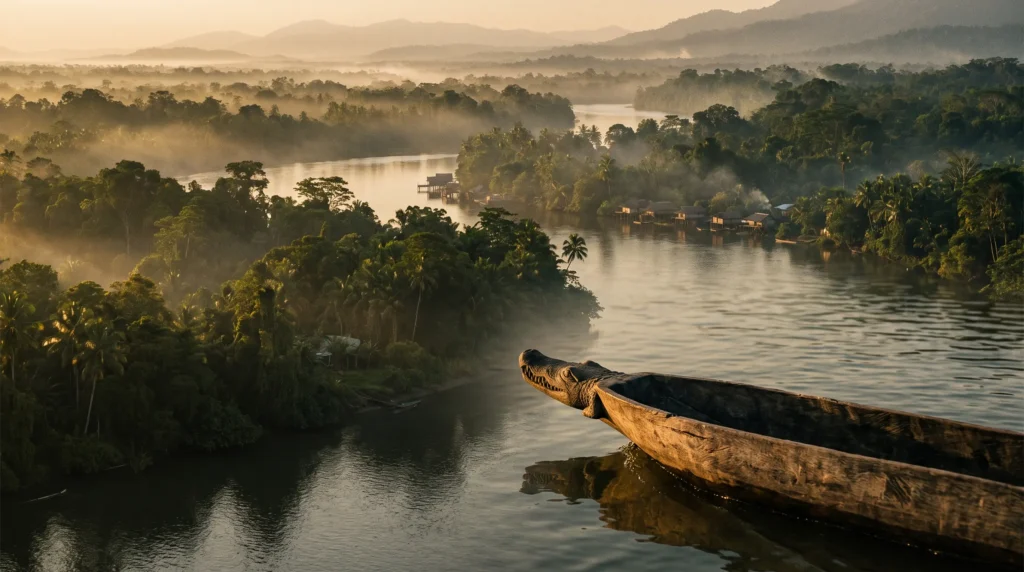
On the ground, both the US State Department and UK FCDO specifically advise against using local public motor vehicles (PMVs) or unlicensed taxis; arrange transfers through your hotel, lodge or tour operator instead. Along the Sepik River, travel is by dugout canoe between stilt villages — arranged through river lodges or guided expeditions, not something to freelance. Any trek, including Kokoda, should be booked through a licensed operator with local guides; independent trekking is discouraged by both governments’ current advice.
Top Regions — Highlands, Islands & the Sepik
Port Moresby & Central Province
The capital and main transit hub — most visitors spend a night here connecting flights rather than lingering, though the National Museum and Parliament Haus are worth a stop. Owers’ Corner, 50km east, is the traditional start of the Kokoda Track.
Kokoda Track & Oro Province
A roughly 96-to-138-kilometre single-file trail (sources vary by measurement method) through the Owen Stanley Range, site of the brutal 1942 WWII campaign between Japanese and Australian/Papuan forces trying to control the overland route to Port Moresby. Most guided treks take 8–10 days, climbing past 2,000 metres — it’s a serious physical undertaking and, per current government advice, one to do only with a reputable trekking company.
Western Highlands & Mount Hagen
Home to the Mount Hagen Show and to the Kuk Early Agricultural Site, PNG’s sole UNESCO World Heritage listing — a 116-hectare swamp in the Wahgi Valley where archaeological evidence shows independent, continuous agricultural development stretching back 7,000 to possibly 10,000 years, among the earliest anywhere on Earth.
Eastern Highlands & Goroka
Cooler, greener, and home to the Goroka Show and the famous “mudmen” of the Asaro Valley, whose ash-grey clay masks and slow, ghostly movements began as a battle tactic and are now a signature cultural performance for visitors.
Milne Bay & Tufi
The country’s premier diving region: WWII wrecks, muck-diving sites, and coral reefs across the D’Entrecasteaux, Trobriand, Woodlark and Louisiade archipelagos, reached from the port town of Alotau. Tufi’s volcanic fjords — sometimes called the “Scandinavia of the tropics” — offer a completely different look, with dive resorts built right on the fjord edges.
East Sepik & the Sepik River
PNG’s cultural heartland for tribal art: stilt villages along a slow brown river, elaborately carved spirit houses (“haus tambaran”), and a culture still centred on the crocodile. Travel is by dugout canoe, arranged through river lodges — genuinely one of the world’s last untouristed river journeys.
East New Britain & Rabaul
A volcanic province on New Guinea Islands with active cones overlooking Rabaul’s harbour, WWII Japanese tunnel networks, and diving among the same wrecks and reefs that make the region a quieter alternative to Milne Bay.
Culture & People — 840 Languages, One Country
No single “PNG culture” exists in the way travel guides usually describe a nation — with over 800 distinct language groups, the country is better understood as hundreds of small nations sharing one flag since 1975. Customary land tenure, clan obligations and ceremonial exchange (the famous Kula ring trade network around the Trobriand and D’Entrecasteaux Islands is a textbook anthropology case study) still structure everyday life far more than national institutions do.
The Mount Hagen and Goroka shows exist precisely to bridge that diversity, giving dozens of tribal groups a shared stage for sing-sing dance, feathered “bilas” costume and drumming that would otherwise be seen only within their own communities. Photography at these shows is welcomed and expected; photographing people outside organised events should always be asked for first, and a small gift or fee is often appropriate given how central reciprocal exchange is to Melanesian custom.
A Food Lover’s Guide to Papua New Guinea
The closest thing to a national dish is mumu — meat, sweet potato (kaukau), greens and other vegetables wrapped in banana leaves and slow-cooked over heated stones in an underground earth oven, traditionally for feasts and ceremonial occasions. Staples across the Highlands lean on kaukau, taro and sago, while coastal and island communities eat far more fish, coconut and rice.
Sago — extracted from the pith of sago palms — is the traditional staple through the Sepik and much of the lowlands, prepared as a dense, chewy starch alongside grilled river fish. Betel nut (buai) chewing, mixed with lime powder and mustard stick, is a near-universal social habit you’ll see everywhere from village markets to Port Moresby street corners — the red-stained teeth and spat juice are a genuine cultural fixture, not a curiosity to comment on. Fresh tropical fruit — pawpaw, pineapple, passionfruit — and PNG-grown coffee, a genuine specialty export from Highlands cooperatives, round out most visitors’ food memories.
Off the Beaten Path
Kuk Early Agricultural Site
PNG’s only UNESCO World Heritage Site sees a tiny fraction of the visitors that better-known ancient agricultural landmarks draw elsewhere in the world — a working swamp landscape near Mount Hagen where you can see, rather than just read about, 7,000-plus years of continuous land modification.
Trobriand Islands
Known in academic literature for the Kula ring ceremonial exchange system and a matrilineal culture markedly different from the mainland Highlands — reached by small plane or liveaboard from Alotau, with almost no resort infrastructure.
Tufi’s fjords
Rainforest-lined volcanic fjords with dive resorts perched on the cliffs above — a landscape most people don’t associate with the tropical Pacific at all, and correspondingly few visitors make it out here.
Sepik spirit houses
Villages along the middle and upper Sepik build elaborately carved “haus tambaran” ceremonial houses, some of the finest traditional woodcarving anywhere in the Pacific — best seen on a multi-day river lodge itinerary rather than a day trip.
Practical Information
Safety — read this section properly. Both the US State Department and the UK Foreign Office currently advise caution well beyond the usual “stay alert” boilerplate. The US rates Papua New Guinea Level 3: Reconsider Travel overall, citing crime, civil unrest and piracy, with the Panguna Mine area of Bougainville and most of the Highlands Region (excluding Mount Hagen and Goroka towns themselves) rated Level 4: Do Not Travel. The UK FCDO similarly advises against all but essential travel to parts of the country, flagging recurring tribal fighting — including a “fighting zones” declaration across most of Enga Province — plus violent crime, kidnapping risk, and specific attack and robbery incidents on the Kokoda Track. None of this means don’t go — thousands of travellers visit Port Moresby, the Highlands shows, Milne Bay and the Sepik safely every year — but it does mean: book through established, reputable operators, avoid PMVs and unlicensed taxis, don’t walk after dark, and check both advisory pages again close to your departure date, since local conditions shift.
Health. Malaria prophylaxis is recommended for areas below 2,000 metres elevation, alongside up-to-date routine vaccines and, for many travellers, hepatitis A/B, typhoid and a polio booster. Bring a solid repellent and consider Japanese encephalitis vaccination for extended rural stays. A specific and unusual warning worth heeding: both governments have logged deaths from methanol-contaminated home-brewed alcohol — stick to sealed, reputable-brand drinks.
Money. The kina floats against major currencies and traded around 4.3–4.5 per US dollar through 2026; ATMs and cards work in Port Moresby and provincial capitals but cash is essential in villages, on the Sepik and at Highlands markets. Declare cash over K20,000 on arrival; a K50 departure “green fee” applies to most foreign passport holders leaving the country.
Connectivity & practicalities. Mobile data coverage is reasonable in towns and essentially absent along the Sepik and deep Highlands — download maps and messages offline. Plugs: Australian-style (Type I), 240V. Time zone: UTC+10, no daylight saving.
Budget Breakdown — What Papua New Guinea Actually Costs in 2026
PNG is one of the more expensive destinations in the wider Asia-Pacific region relative to its income level, because so much — fuel, imported food, spare parts for the boats and small planes that move you around — has to be flown or shipped in.
Budget (US$120–200/day): Guesthouse or mission-run lodging, local guided day tours, domestic flights booked well ahead for lower fares, market food and simple meals.
Mid-range (US$250–450/day): Highlands lodge during show season, a guided multi-day Sepik River trip or short Kokoda section, a couple of domestic flight legs, restaurant meals in Port Moresby or Alotau.
Splurge (US$600+/day): Milne Bay or Tufi dive liveaboard/resort packages, full Kokoda Track expedition with porters and guides, multi-region Highlands-plus-Sepik-plus-islands itineraries stitched together with charter flights.
Fixed costs to plan around: the eVisa fee (~US$100), the K50 departure green fee, and domestic flight costs that add up fast on a multi-region trip — budget generously for internal transport, since it’s rarely the cheapest line item.
Planning Your First Trip to Papua New Guinea
A realistic first-timer route: fly into Port Moresby, connect to Mount Hagen or Goroka to time a cultural show (August or September), spend two or three nights in the Highlands, then fly out to Alotau or Tufi for a few days of diving before heading home through Port Moresby. Ten to fourteen days covers Highlands-plus-coast without over-packing the domestic flight schedule; add a Sepik River lodge stay if you have the extra time and budget. Most itineraries route through Australia, so pair this trip with our Australia guide for the Brisbane or Cairns stopover, or extend the Pacific theme with our Fiji guide.
Frequently Asked Questions
Is Papua New Guinea safe to visit in 2026?
Read the advisories carefully before deciding. The US rates it Level 3: Reconsider Travel, with parts of the Highlands and the Bougainville mine area at Level 4: Do Not Travel, and the UK advises against all but essential travel to parts of the country, citing tribal fighting and crime. Travellers who go through reputable local operators, avoid PMVs, stay off the streets after dark and check current advice before booking generally have safe, well-run trips — but this is not a destination for improvising.
Do I need a visa?
Most nationalities need an eVisa arranged in advance through the Immigration and Citizenship Authority’s online portal — apply at least a week ahead and expect to pay roughly US$100 for a single-entry tourist permit. Australian and New Zealand citizens can enter visa-free for tourism.
Can I do the Kokoda Track as a first-time trekker?
It’s a genuinely demanding 8-to-10-day trek over mountainous terrain above 2,000 metres, and current government advice recommends going only with an established trekking company and local guides rather than independently, given past attacks along the route. Build up fitness beforehand; this is not a casual hike.
What vaccines or medication do I need?
Malaria prevention is recommended below 2,000 metres elevation, plus routine vaccines and, for most travellers, hepatitis A/B and typhoid coverage. Talk to a travel clinic 4–6 weeks before departure.
Papua New Guinea or Fiji for a first Pacific trip?
Choose Fiji for a more conventional beach-resort holiday with far simpler logistics; choose Papua New Guinea if the draw is tribal culture, WWII history and genuinely remote diving, and you’re comfortable with a more demanding, guide-led style of travel.
When should I book the cultural shows?
Months ahead. The Mount Hagen Show (14–16 August 2026) and Goroka Show (18–20 September 2026) each pull in visitors from across PNG’s small hotel and lodge stock, so Highlands accommodation and domestic flights sell out early around both weekends.
Ready to Explore Papua New Guinea?
Feathered headdresses at dawn in a Highlands showground, a dugout canoe sliding past a carved spirit house on the Sepik, a WWII wreck sitting untouched forty metres down in Milne Bay. Papua New Guinea doesn’t hand any of this to you easily — but for travellers willing to plan properly and go in with open eyes about the risks, it delivers something genuinely rare: a country that hasn’t been flattened into a highlight reel yet.
Explore More
- Australia Travel Guide — the main gateway in and out of PNG
- Fiji Travel Guide — an easier-logistics Melanesian neighbour
- Bali City Guide — more Coral Triangle diving and island culture
- Philippines Travel Guide — another Pacific diving frontier
How this guide was built
Published . Built from authoritative sources — Wikipedia’s Papua New Guinea, Port Moresby International Airport, Kokoda Track and Goroka Show entity pages; UNESCO’s World Heritage Centre listing for the Kuk Early Agricultural Site; the Papua New Guinea Tourism Promotion Authority’s visa, customs and events pages; the Immigration and Citizenship Authority’s eVisa guidance; the Bank of Papua New Guinea; the US State Department’s Papua New Guinea travel advisory; the UK Foreign, Commonwealth & Development Office’s Papua New Guinea safety and security and entry requirements pages; and the US CDC’s Papua New Guinea traveler health page. Numeric and safety claims carry inline citations.
Sources cited on this page
- Wikipedia — Papua New Guinea
- UNESCO — Kuk Early Agricultural Site
- PNG Tourism Promotion Authority — Visa, Customs & Quarantine
- Immigration and Citizenship Authority (PNG)
- US State Department — Papua New Guinea Travel Advisory
- UK FCDO — Papua New Guinea Safety and Security
- US CDC — Papua New Guinea traveler page
- Wikipedia — Kokoda Track
- Wikipedia — Port Moresby International Airport
- Bank of Papua New Guinea
- PNG Tourism Promotion Authority — Mount Hagen Show
- Wikipedia — Goroka Show
More country guides you might like
Plan your trip to Papua New Guinea
The booking tools we use ourselves. FFU may earn a commission at no extra cost to you.
Plan & book your trip to Papua New Guinea
Booking through these searches supports our guides at no extra cost to you.