
City Guide · Japan · Kantō
Tokyo, Japan: World’s Largest Metro, Densest Michelin Map, Best Rail Network on Earth
Part of our Japan travel guide.
Tokyo still humbles even seasoned travellers on day one. The best way to understand it is as a federation of villages strung on the Yamanote Line — fewer than 14 million people in the 23 wards , but more than 37 million in the broader metropolitan region , the largest urban agglomeration on the planet. A classic Tokyo morning ritual: a 6 a.m. walk through Tsukiji Outer Market for tamagoyaki on a stick, then a Yamanote loop with one coffee and the morning light hitting Shinjuku’s west side. The city ships more Michelin stars than any other on Earth and a JR train roughly every two minutes on the green Yamanote ring . Treat this guide as the brief you’d want in hand the night before clearing Haneda customs.
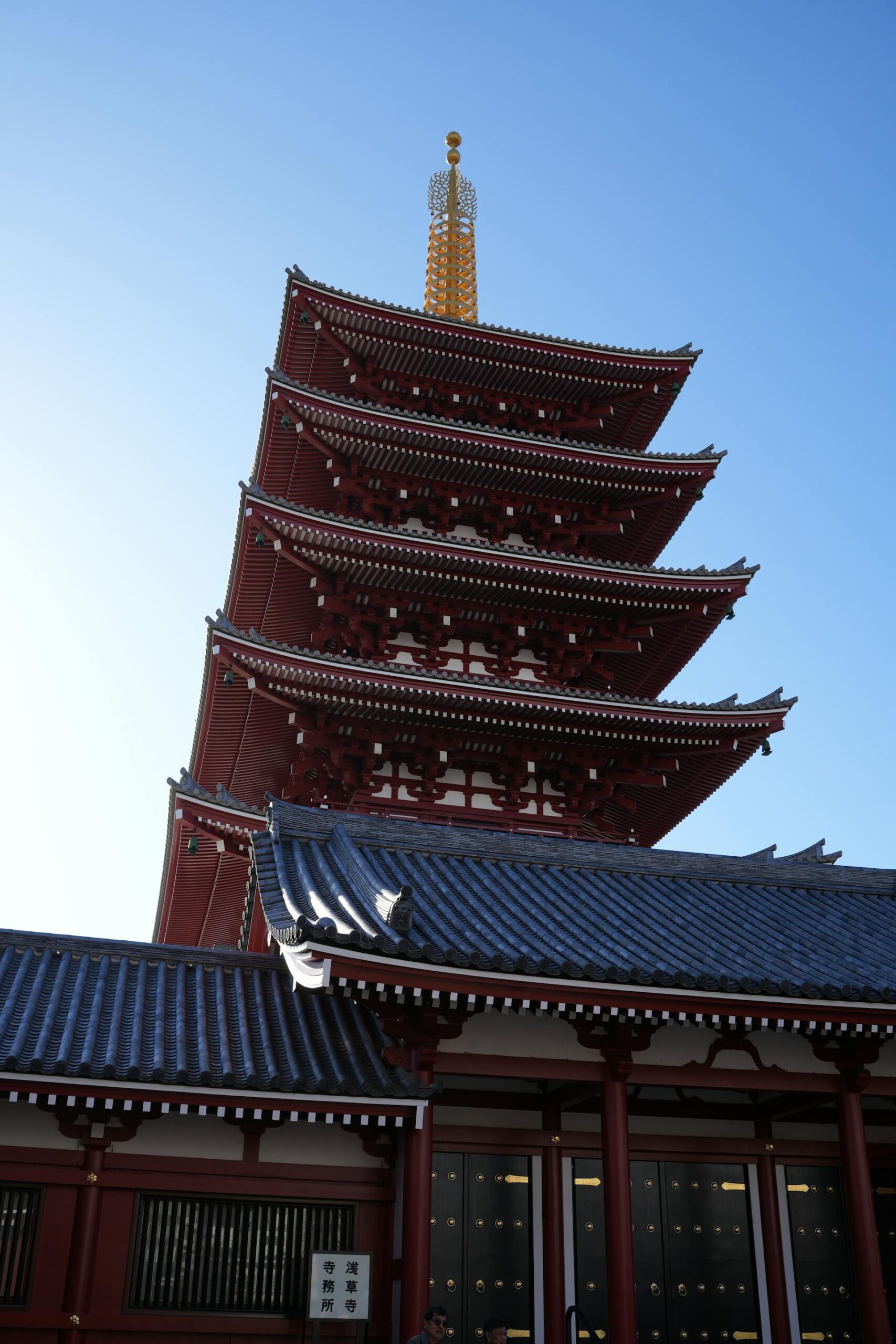
Table of Contents
Why Tokyo?
Tokyo is the largest urban region on Earth — roughly 37.4 million people across the broader Kantō plain and just under 14 million inside the 23 special wards that most travellers think of as “Tokyo”. The Statistics Bureau of Japan publishes monthly metropolitan population estimates that confirm the slow western drift toward the Tama region . The capital sits on the eastern edge of Honshū at 35.6°N , where the Sumida and Arakawa rivers spill into Tokyo Bay; from above it looks like a quilt of low-rise neighborhoods stitched together by elevated rail and the Yamanote loop. Walk it and the scale rearranges itself: each Yamanote stop opens onto its own contained city — its own department store, its own underground food hall, its own night-time alley grid — and the whole thing keeps doing that for thirty stations before the train brings you back to where you started.
What makes Tokyo singular for visitors is the density of culture per block. The metropolitan region holds more Michelin-starred restaurants than any other city in the world , the largest concentration of restaurants per capita on the planet , an Imperial Palace that still functions as a working residence , a 645 CE Buddhist temple that anchors the oldest district , the world’s busiest pedestrian intersection at Shibuya, and a depachika basement-food culture that turns every flagship department store into a tasting menu. The contrast register is wider than any other capital: a 12th-century shrine grove like Meiji Jingū sits one Yamanote stop from the cosplay-and-crepes block in Harajuku, and both are 15 minutes from the all-night neon stack of Shinjuku’s Kabukichō.
The city is also Japan’s launchpad. Haneda (HND) is 16 km south of central Tokyo, Narita (NRT) is 70 km east, the Tōhoku, Tōkaidō and Hokuriku Shinkansen radiate from Tokyo Station, and the Yamanote Line runs roughly every two minutes during the day with a JR signage layer in English on every platform . Plan six full days here as your urban anchor, then ride the bullet train south-west to Kyoto, north to Sendai, or fly to Sapporo or Okinawa for the country’s other regional accents. The official metropolitan tourism board also lays out a winter-and-festivals overview that pairs well with this guide as a planning companion .

Best Time to Visit Tokyo
Tokyo is a four-season city with a sharp humid summer and a bone-dry sunny winter. The Japan Meteorological Agency’s long-run normals for the central observatory show January average highs around 10°C with bright skies, and August averages of 31°C with 75–80% humidity . The Tokyo Convention & Visitors Bureau (Go Tokyo) maintains a current seasonal events calendar that complements JMA’s climate page . The two windows worth re-arranging your year around are sakura (cherry blossom, late March to early April) and kōyō (autumn foliage, mid-November to early December).
Spring (March – May)
The headline is sakura. Forecast services like the Japan Weather Association publish a sakura-front map every January and update weekly through March; central Tokyo’s kaika (first bloom) date typically lands 22–28 March, with full bloom four to seven days later . Hanami spots compress fast — Shinjuku Gyoen gates close at 18:30 and the inner garden has paid admission to manage capacity . May is the warmest month before the rainy season; book Golden Week (29 Apr – 5 May) accommodation 3+ months out.
Summer (June – August)
June is tsuyu, the rainy season; the city is humid, green and quietly dramatic . July and August are hot, with multi-week stretches above 32°C and tropical nights (>25°C overnight). Festivals are the trade-off: Sumida River Fireworks in late July is the largest on the Tokyo calendar, drawing roughly a million spectators along the Asakusa banks . The Tokyo Yakult Swallows play at Jingu Stadium most nights of the summer with the best beer-girl culture in NPB . Mt Fuji’s official climbing season runs roughly 1 July to 10 September on the Yoshida trail .
Autumn (September – November)
The best season for first-time visitors. Typhoon risk fades through September, then dry, low-humidity, 18–22°C days settle in for October and November. Kōyō peaks for ginkgo at the Meiji Jingu Gaien avenue in late November ; Rikugien and Koishikawa Korakuen colour up roughly the same fortnight.
Winter (December – February)
Cold and bright. December averages 12°C/4°C with very low humidity; the air is unusually clear and Mt Fuji is visible from west-side high-floors on perhaps 50% of mornings. The official tourism board publishes a winter overview with illuminations, onsen ryokan day-trips and the annual New Year shrine first-visit (hatsumōde) traditions at Meiji Jingū .
Getting There — Haneda, Narita and Visit Japan Web
Tokyo has two international airports. Haneda (HND) sits 16 km south of the city in Ōta ward and reaches central Tokyo in 13 minutes on the Tokyo Monorail to Hamamatsuchō, then JR Yamanote on to Shinjuku, Shibuya or Tokyo Station . The Keikyū Airport Line is the cheaper alternative into Shinagawa and is the preferred route for most western-side hotels . Narita (NRT) sits 70 km east in Chiba and is served by two premium options: the JR Narita Express (N’EX), reaching Tokyo Station in about 53 minutes , and Keisei’s Skyliner, reaching Nippori/Ueno in 36 minutes . The Airport Limousine Bus runs door-to-hotel coaches from both airports and remains the simplest option with three or more checked bags .
Visit Japan Web is the official immigration / customs pre-clearance portal: register your flight, passport and accommodation 6+ hours before landing and you receive QR codes that route you through the “fast lane” gates at HND and NRT — measurably faster than the paper-form lane in 2026 . The 90-day visa-free entry rule for ~70 nationalities is set on the Ministry of Foreign Affairs page; confirm your nationality is listed before flying . The Japan National Tourism Organization keeps the canonical entry-requirements summary in one English page .
Getting Around — JR, Tokyo Metro, Suica & Pasmo
JR East and the Yamanote Loop
The Yamanote Line is the green-livery JR East loop that ties Tokyo’s western core (Shinjuku, Shibuya, Harajuku, Ikebukuro) to Tokyo Station, Akihabara and Ueno on the eastern arc . Daytime headways run roughly two minutes on weekdays, three minutes on weekends; the full loop takes about an hour . JR East’s Tokyo route map is the single most useful PDF in your phone . Other JR lines you will use: the Chūō (orange, fastest east-west), the Sōbu (yellow, local east-west), and the Keihin-Tōhoku (blue, parallel to Yamanote on the eastern arc). For longer hops, the Tōkaidō, Tōhoku and Hokuriku Shinkansen depart Tokyo Station; the Tokyo Wide Pass and the JR East Tokyo Pass cover most day-trip uses without needing a full nationwide JR Pass .
Tokyo Metro and Toei Subway
The Tokyo Metro network operates 9 lines and is the workhorse of off-Yamanote movement ; the Toei Subway operates 4 additional lines and shares interchange at most central stations. The combined Tokyo Metro & Toei 24/48/72-hour Tourist Pass is the single best transit deal in the city — three days of unlimited subway for ¥1,500 if your itinerary stays inside the Yamanote ring . The Marunouchi (red), Hibiya (silver), Ginza (orange) and Chiyoda (green) lines are the four you will memorise first.
Suica and Pasmo IC Cards
Suica (JR East) and Pasmo (private operators) are the two interchangeable contactless transit cards. Both work on every train, subway, bus, taxi, vending machine, convenience store and most coin lockers nationwide . Welcome Suica is the tourist-friendly version: a deposit-free card valid 28 days, sold at HND/NRT counters and JR East ticket offices . The mobile-wallet version (Apple Pay/Google Pay) is the cleanest 2026 path for most travellers — top up from a phone, tap through any gate, and spend leftover balance at any 7-Eleven before flying home. The 2024 IC-card chip shortage that caused the temporary physical-card sales freeze has eased; 2026 supply is normal .
Taxis and Walking
Tokyo taxis are excellent and expensive: ¥500 flag-fall for the first 1.096 km, then ¥100 per 255 m. Use them only for late-night cross-ward hops once trains stop (last train ~00:30, first train ~05:00). Walking the Yamanote ring sounds quaint but ought to be: each loop stop is its own destination and most travellers under-walk. Apps that work: Google Maps (transit routing), Citymapper (Tokyo is fully supported), and Japan Travel by NAVITIME for the most accurate next-train timings.
Neighborhoods: Finding Your Tokyo
Comparing bases beyond Tokyo? Our guide to where to stay in Japan covers Tokyo, Kyoto and Osaka neighbourhood by neighbourhood.
📍 Tokyo Map: Every Place in This Guide
Shinjuku
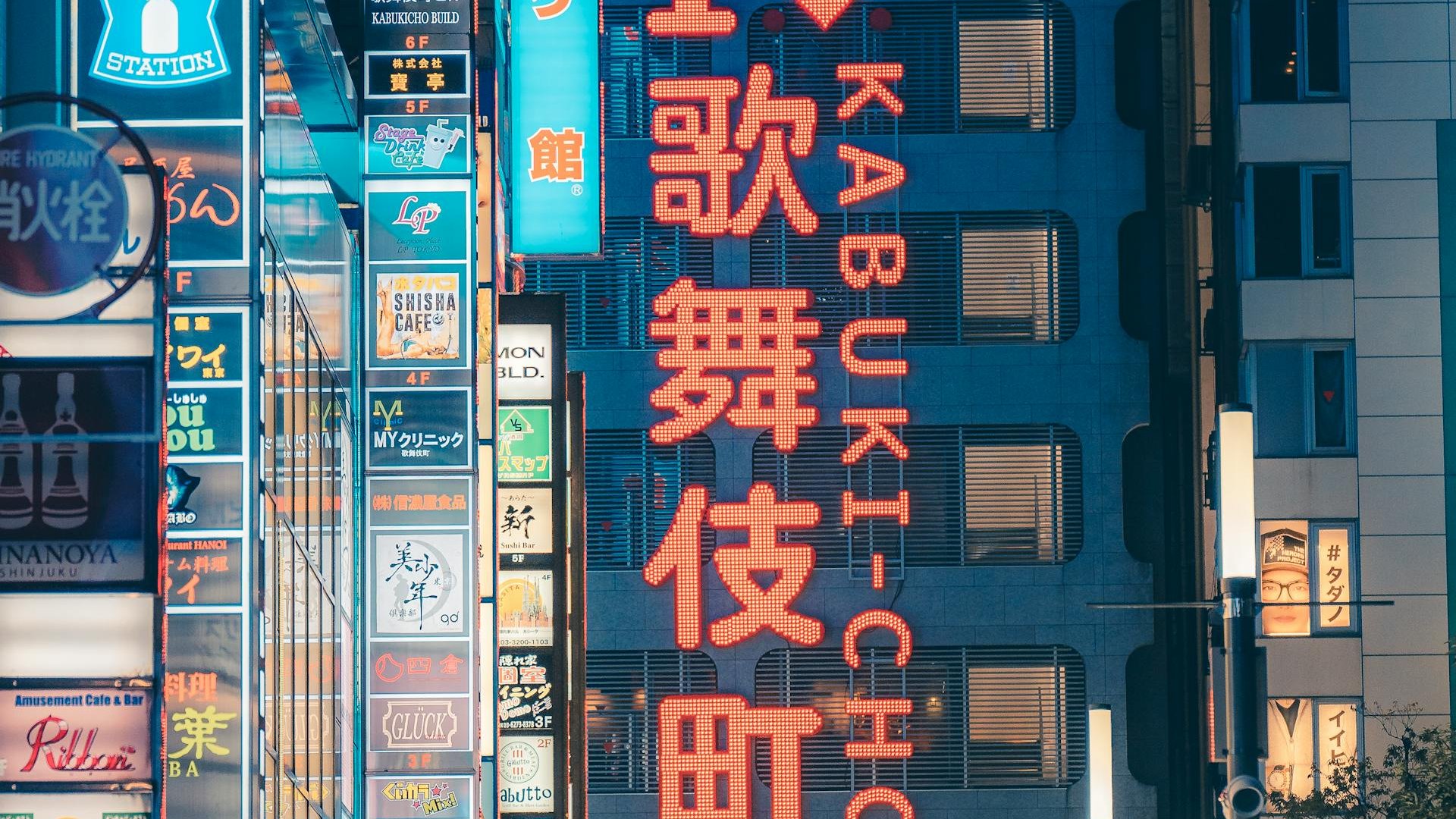
Shinjuku is the western capital of Tokyo: the world’s busiest railway station by daily passenger count , the all-night Kabukichō entertainment district, the calmest 58-hectare imperial garden in the city centre at Shinjuku Gyoen , and the free observation decks on the 45th floor of the Tokyo Metropolitan Government Building. Sleep here if you want maximum train connectivity and 24/7 convenience.
- Shinjuku Gyoen — sakura, then ginkgo
- Omoide Yokochō — post-war yakitori alley
- Golden Gai — 200-bar warren in 6 micro-blocks
Best for: first-timers, late-night arrivers, transit-heavy itineraries. Access: JR Yamanote/Chūō, Shinjuku Line, Marunouchi Line, Toei Ōedo, Toei Shinjuku.
Shibuya
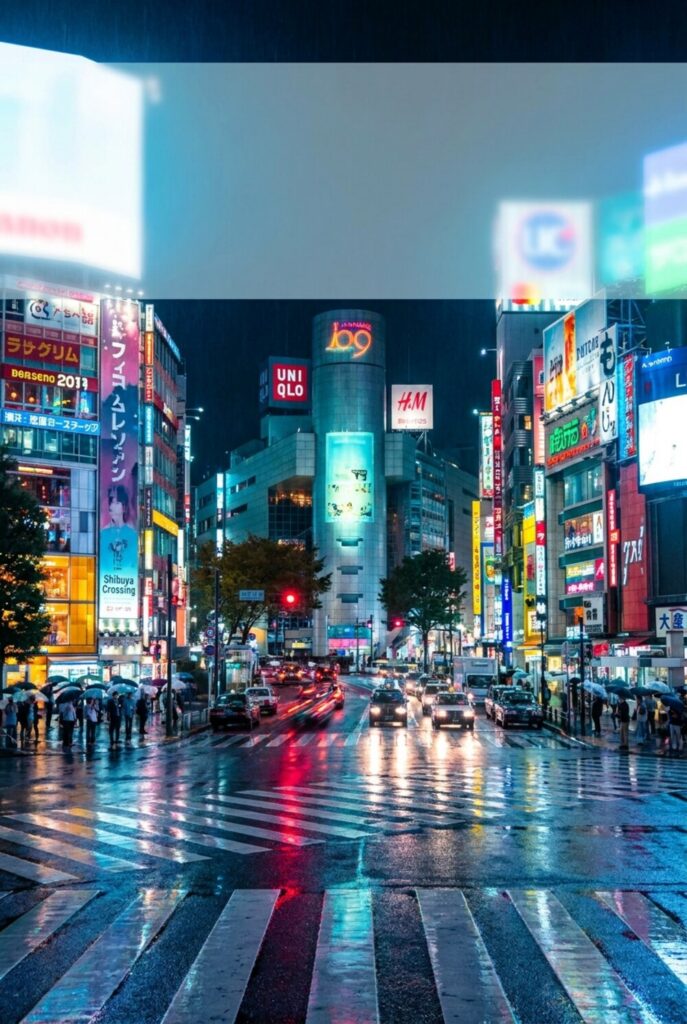
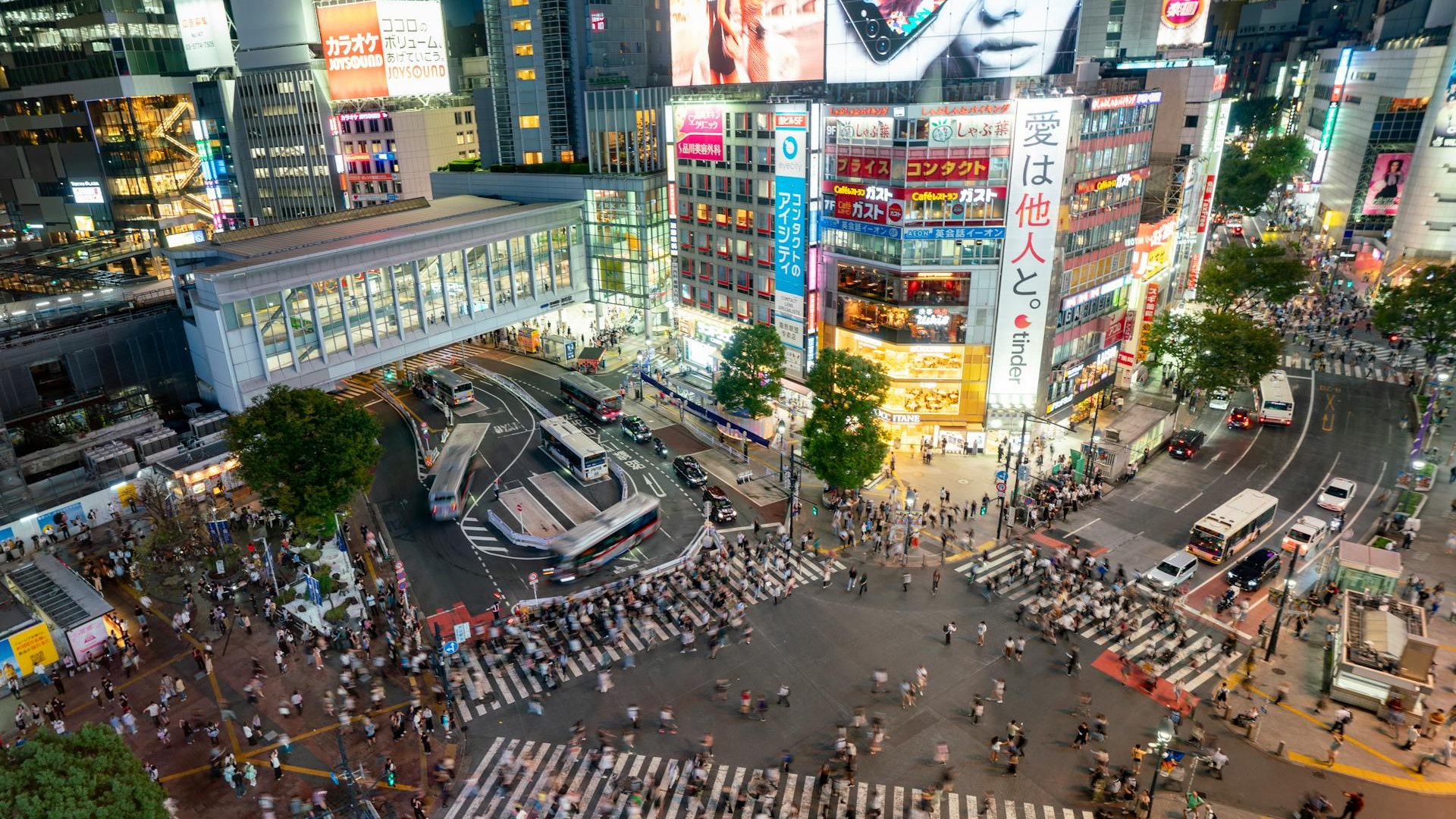
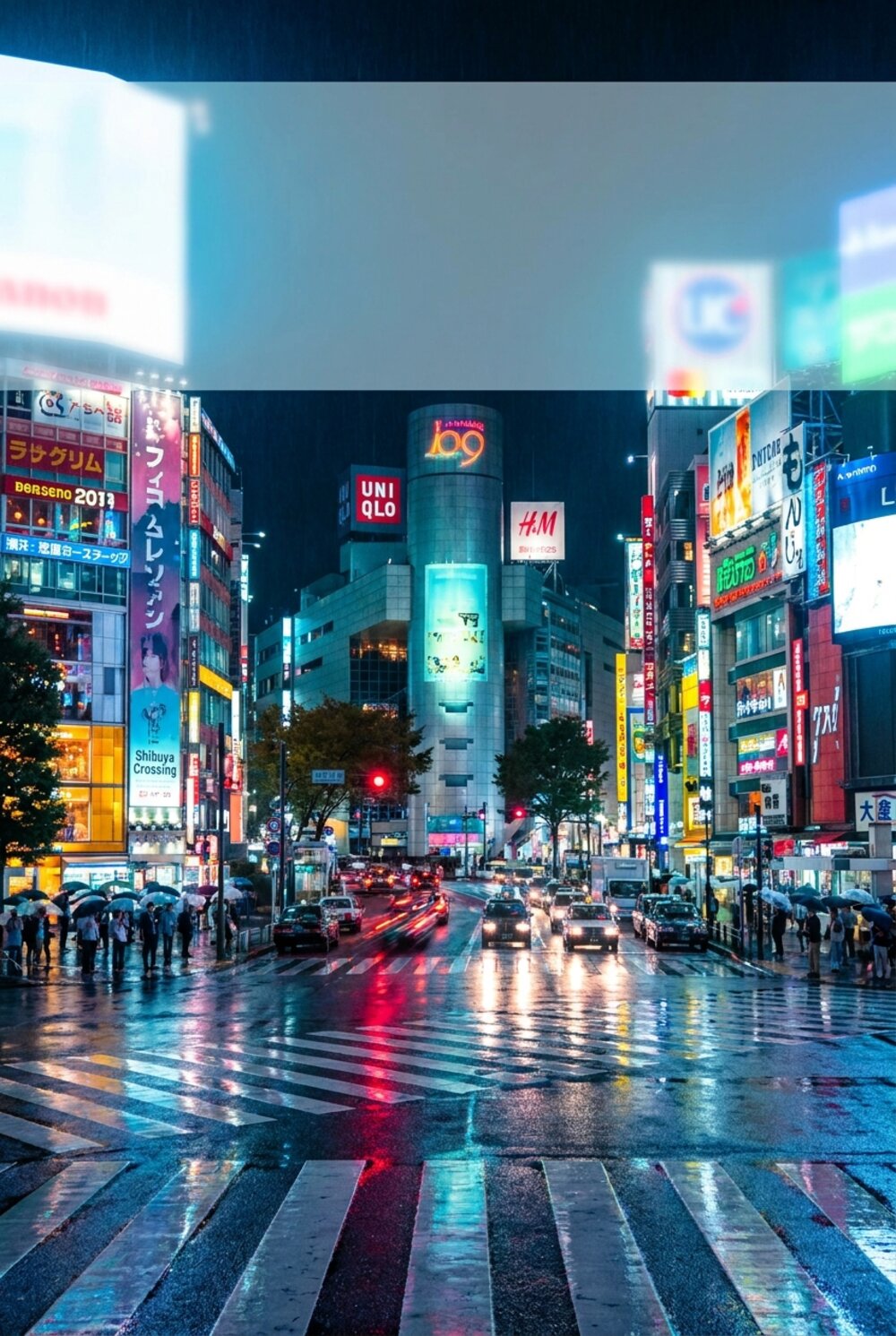
Shibuya is the youth-culture capital and the visual shorthand most travellers picture when they think of Tokyo. The Scramble Crossing handles up to 3,000 pedestrians per signal cycle . Shibuya Sky on the 47th floor of Shibuya Scramble Square is the best 360° city-skyline view in town and worth booking 2–3 days ahead .
- Shibuya Sky — sunset slot books out first
- Center-gai — fast-food and youth-fashion grid
- Daikanyama T-Site — bookshop village 10 min south
Best for: nightlife, fashion, contemporary architecture. Access: JR Yamanote/Saikyō, Ginza Line, Hanzōmon, Fukutoshin, Tōkyū lines.
Harajuku
Harajuku is the youth-fashion lab one Yamanote stop north of Shibuya — Takeshita-dōri for crepes-and-cosplay, Omotesandō for the architecturally ambitious flagships (Prada, Tod’s, Dior), and Cat Street as the back-route between them. Meiji Jingū sits in 70 hectares of forested grove next to the Yamanote tracks and remains the most visited shrine in Japan over New Year — roughly 3 million visitors in the first three days .
- Meiji Jingū — torii gate sake-barrel approach
- Takeshita-dōri — youth fashion + ¥600 crepes
- Yoyogi Park — Sunday rockabilly dancers
Best for: design and fashion fans, photographers, brunch culture. Access: JR Yamanote (Harajuku), Chiyoda/Fukutoshin (Meiji-jingūmae).
Ginza
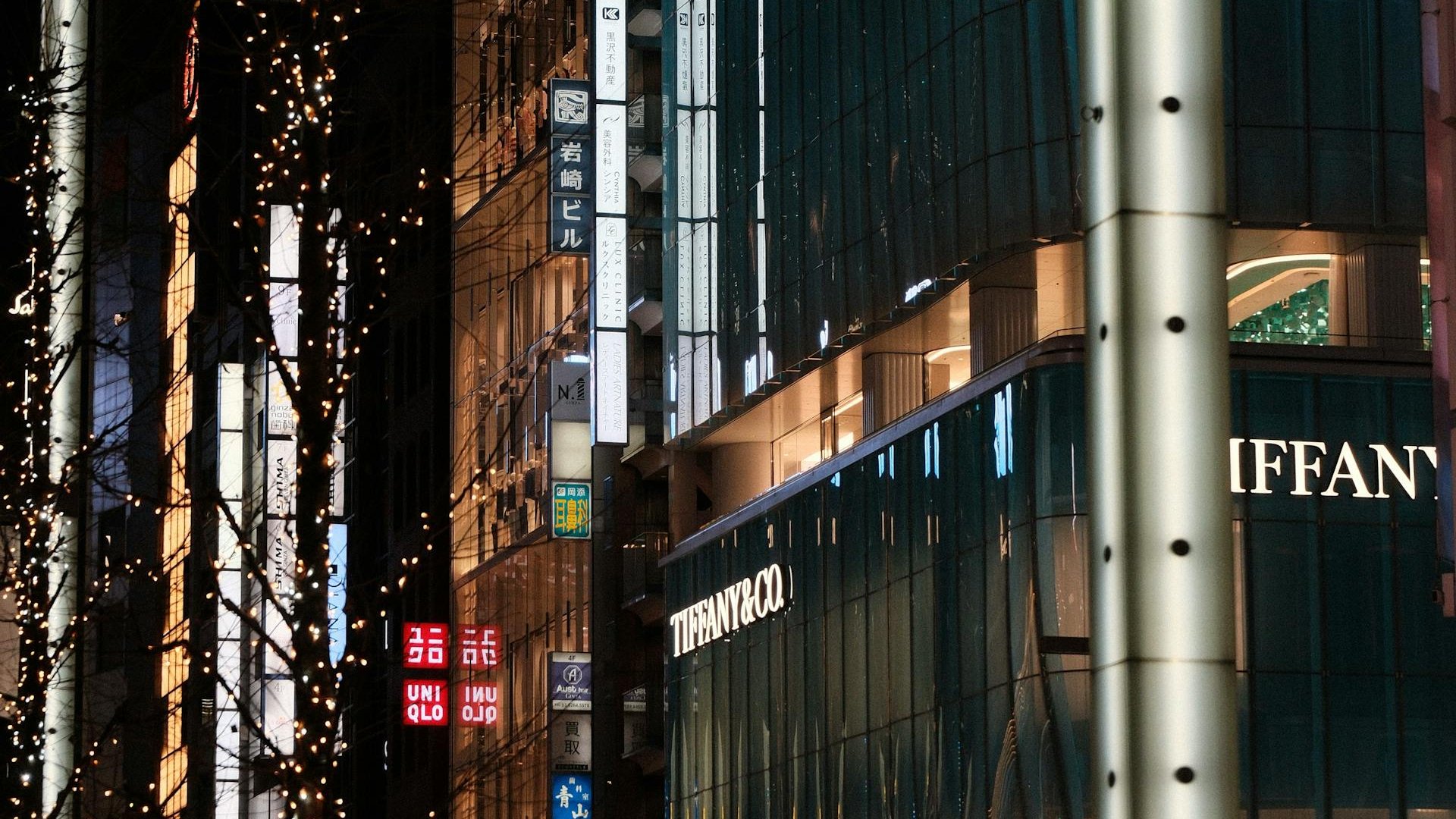
Ginza is the Marunouchi-adjacent luxury district: department stores rebuilt to last (Mitsukoshi, Matsuya, Wakō), the 12-story Ginza Six with its rooftop garden, the Imperial Theatre, and the densest cluster of Michelin sushi counters in the world. Saturday and Sunday afternoons close Chūō-dōri to vehicles for hokōsha tengoku (“pedestrian heaven”) .
- Ginza Six rooftop — free, sunset views
- Wakō Clock Tower — 4 chōme intersection
- Kabuki-za Theatre — single-act tickets at side entrance
Best for: serious food, architecture, traditional theatre. Access: Ginza, Marunouchi, Hibiya lines.
Asakusa
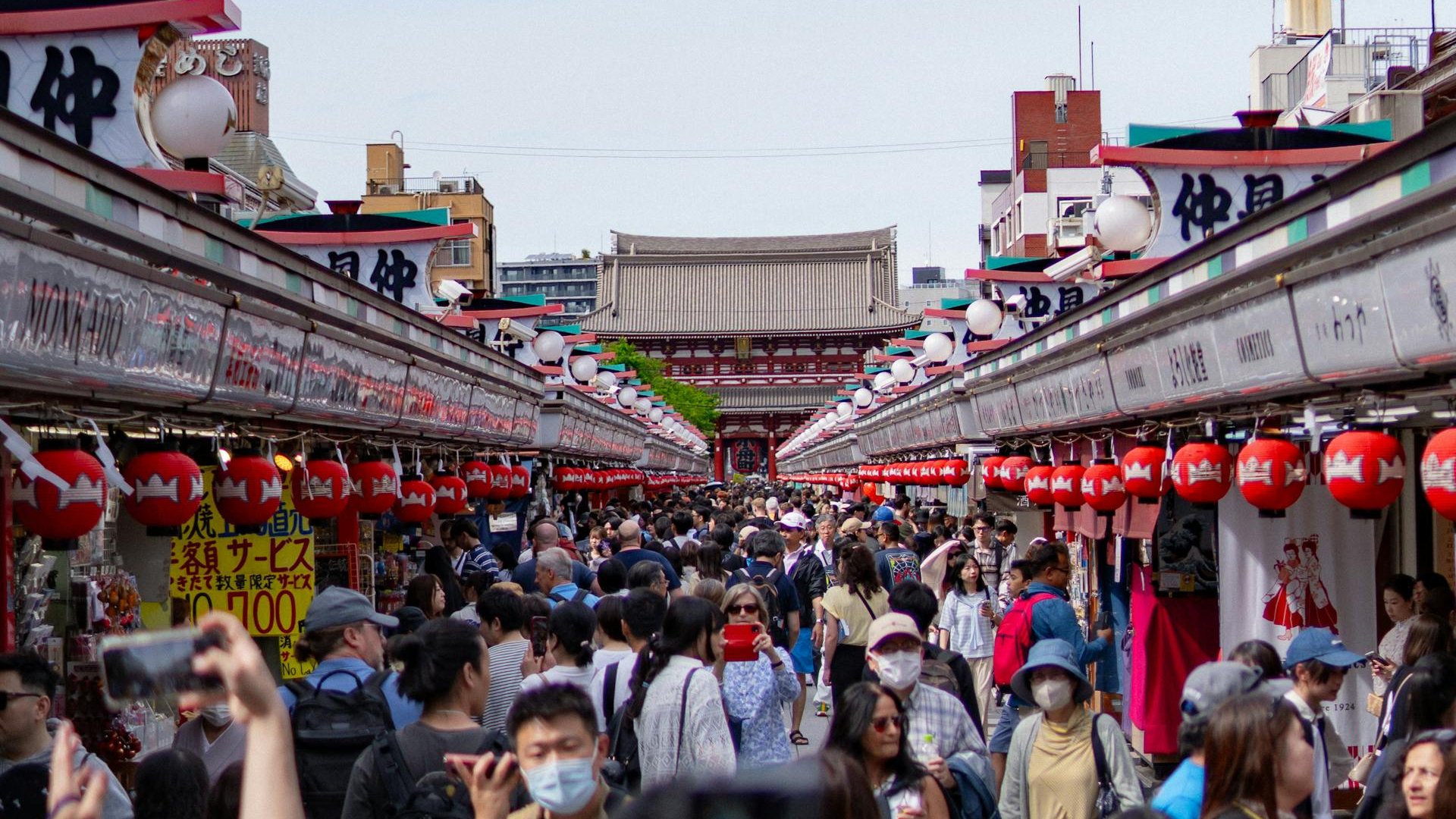
Asakusa is the oldest tourist district, anchored by Senso-ji — Tokyo’s oldest Buddhist temple, founded in 645 CE according to its origin story . The 250-meter Nakamise approach to the Hozomon Gate runs from the iconic Kaminarimon (“Thunder Gate”) and is best walked at 7 a.m. before tour buses arrive, or after 19:00 when the lanterns light . Tokyo Skytree is one Sumida bridge crossing east at 634 m tall .
- Senso-ji + Hozomon Gate — temple at dawn
- Sumida River cruise — to Hama-rikyū gardens
- Asakusa Hoppy Street — Shōwa-era izakaya alley
Best for: first-day pilgrimage, river views, traditional crafts. Access: Ginza Line (Asakusa), Toei Asakusa Line, Tobu Skytree Line.
Akihabara
Akihabara is the electronics-and-otaku capital. Yodobashi Akiba is the largest electronics megastore in Japan; the side streets house anime, manga and games shops stacked four floors high, plus maid-cafés and retro arcades. The 2026 generation of Akihabara is less anime-only and more otomedōro (“maiden-road”), with female-skewed merchandise growing rapidly in Kanda-Myōjin-side blocks.
- Mandarake Complex — 8 floors of vintage manga
- Yodobashi Akiba — electronics megastore
- Super Potato — third-floor retro game shop
Best for: electronics, anime fans, retro arcade gamers. Access: JR Yamanote/Sōbu, Hibiya Line, Tsukuba Express.
Meguro & Naka-Meguro
Meguro is the leafy southwest residential band; Naka-Meguro’s 4 km canal is Tokyo’s most photographed cherry-blossom tunnel in late March. Off-sakura season the area is the city’s best lifestyle-store and third-wave-coffee belt, anchored by the Starbucks Reserve Roastery on the canal’s east bank. The Meguro Museum of Art and the Meguro Parasitological Museum sit ten minutes apart on opposite ends of the spectrum.
- Naka-Meguro canal — sakura tunnel late March
- Starbucks Reserve Roastery — Tokyo flagship
- Meguro Sky Garden — rooftop park on Ōhashi Junction
Best for: coffee crawls, design shopping, neighbourhood walks. Access: JR Yamanote (Meguro), Hibiya Line (Naka-Meguro).
Roppongi & Azabudai
Roppongi has shifted from purely nightlife into a culture triangle: the Mori Art Museum and Tokyo City View on the 52nd floor of Roppongi Hills, the National Art Center Tokyo, and the Suntory Museum of Art together form the “Roppongi Art Triangle”. Azabudai Hills, opened 2023 and now fully operational, hosts the relocated teamLab Borderless installation in the basement-level Mori Building Digital Art Museum ; the original Toyosu installation continues as teamLab Planets . Tokyo Tower’s 333-meter orange-and-white silhouette anchors the southern view .
- Mori Art Museum + Tokyo City View — 52F
- teamLab Borderless Azabudai — 2024-relocated
- Tokyo Tower — best photographed from Zōjō-ji
Best for: contemporary art, late-night eats, embassies/expats. Access: Hibiya Line (Roppongi), Toei Ōedo Line.
Yanaka — Old Tokyo
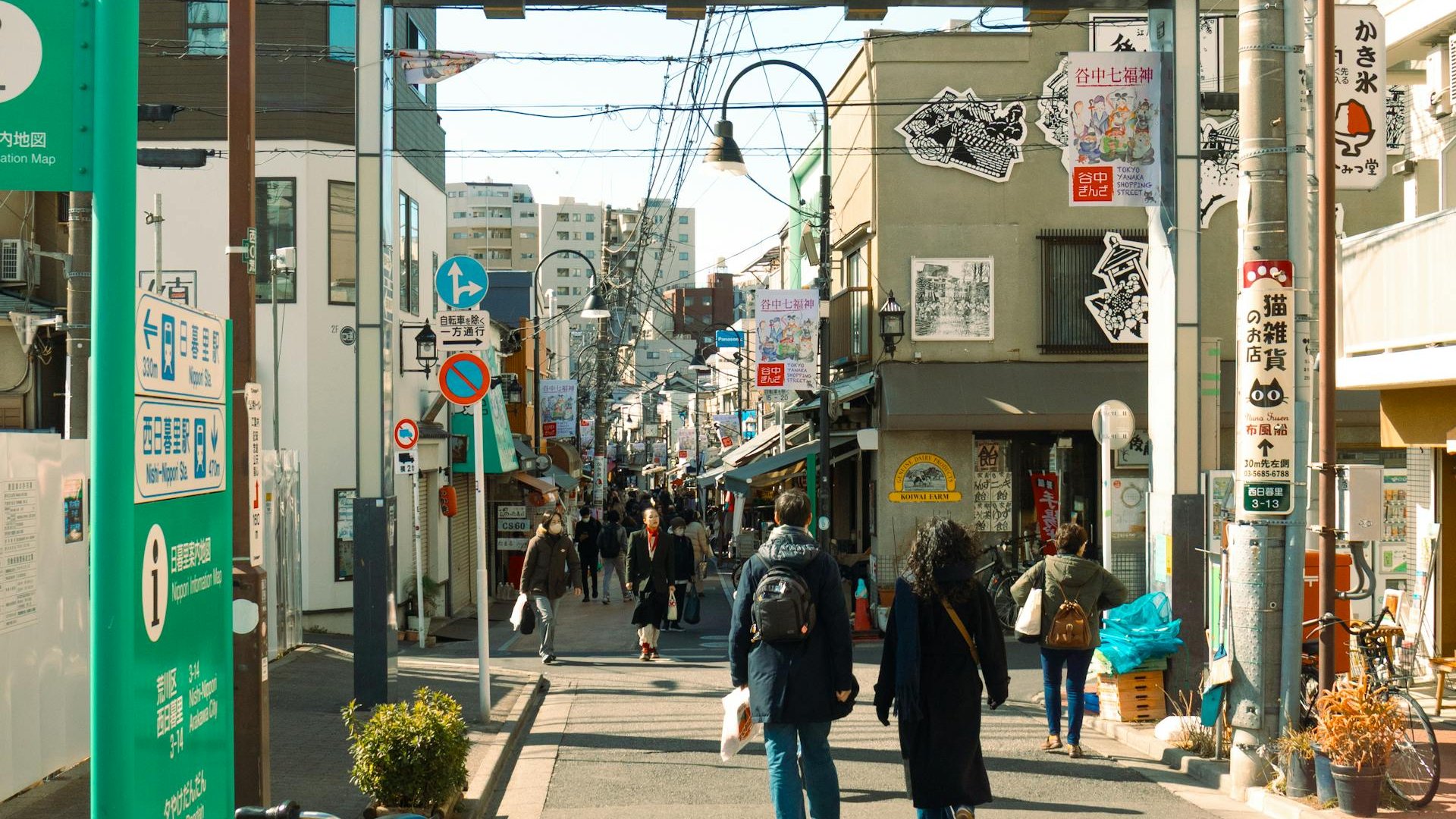
Yanaka is the survivor neighborhood that escaped both the 1923 Great Kantō Earthquake and the 1945 firebombing, leaving a low-rise Edo grid of timber houses, traditional sweet shops and a quiet temple belt. Walk the Yanaka Ginza shopping street at golden hour for the “sunset stairs” (Yūyake Dandan) and stop at any of the 70 temples between Nippori and Sendagi stations .
- Yanaka Ginza — Yūyake Dandan stairs
- SCAI The Bathhouse — gallery in former bathhouse
- Yanaka Cemetery — sakura avenue, Tokugawa Yoshinobu’s tomb
Best for: photographers, slow walks, traditional crafts. Access: JR Yamanote (Nippori), Chiyoda Line (Sendagi).
The Food

Tokyo holds more Michelin-starred restaurants than any other city in the world — the 2025 Tokyo guide listed 226 starred restaurants across the city . The metropolitan region also runs the largest restaurant count per capita anywhere on the planet — estimates put Tokyo’s eating-establishment count north of 150,000 . Tokyo Cheapo’s restaurant-density analysis is the standard reference for that figure . The implication is simple: even a six-day trip will only sample one slice of the spectrum. Plan by category, not by restaurant.
Sushi
Sushi in Tokyo splits into three tiers. Edomae sushi counters at the Michelin end run ¥30,000–¥60,000 per person and book 30–90 days ahead through hotel concierges . Mid-tier neighborhood sushi-ya in the ¥6,000–¥12,000 range serve the same nigiri vocabulary at counter-bar pace and accept walk-ins. Conveyor-belt (kaiten) sushi at chains like Sushiro and Kura Sushi runs ¥120 per plate and is genuinely good. The Toyosu Market — successor to Tsukiji Inner — is the wholesale auction floor and home to the best mid-priced sushi breakfasts in the city .
- Sushi Saito — Three Michelin stars, omakase ¥45,000+, concierge-only bookings
- Daiwa Sushi (Toyosu) — Counter omakase ¥4,500, queue from 06:00
- Sushiro Shibuya — Conveyor-belt, ¥120/plate, late-night to 23:00
Ramen
Tokyo’s ramen scene is its most democratic food category — most bowls are ¥800–¥1,400 and almost every neighborhood has a queue-worthy specialist. The four Tokyo style-pillars are: shōyu (soy-base, often the platonic Tokyo bowl), shio (clear salt-base, lighter), tonkotsu (Hakata-style pork-bone, white and creamy), and tsukemen (cold dipping noodles). Order at the front-of-shop ticket vending machine in cash, hand the ticket to the counter, eat in 15 minutes, leave.
- Tsuta (Sugamo) — First Michelin-starred ramen shop, shōyu, ¥1,200 base
- Afuri (Ebisu) — Yuzu shio, lighter than the genre, ¥1,100
- Ichiran (Shibuya) — Tonkotsu, solo-booth seating, 24/7
Beyond Sushi and Ramen
The Tokyo food map is much wider than the headline two. Build at least one meal each from this list:
- Izakaya — Japanese gastropub-tavern, sharing plates and beer/highball, ¥3,000–¥5,000 per person
- Yakitori — Charcoal chicken skewers; Omoide Yokochō (Shinjuku) and Toranomon Yokochō are the alley-style anchors
- Tonkatsu — Breaded pork cutlet; Tonki in Meguro is the Shōwa-era classic, ¥2,200 set
- Tempura — At its best in counter shops in Ginza and Asakusa; Tempura Kondō runs ¥15,000 lunch courses
- Soba — Hand-cut buckwheat noodles; cold zaru in summer, hot kake in winter, ¥1,000–¥1,500
- Unagi — Charcoal-grilled freshwater eel over rice, seasonal peak July–August, ¥3,500–¥6,000
Kissaten — Old Coffee Shops
A kissaten is a Shōwa-era coffee shop that has not changed its menu, lighting or wood paneling since 1970. The classic order is a hand-drip burendo (¥600), a slice of fluffy tamago sando egg sandwich (¥800), or a glass-cup pudding for dessert. The genre has had a quiet revival in 2025–26 as travellers tire of generic third-wave cafés.
- Cafe de l’Ambre (Ginza) — Founded 1948, aged-bean specialist
- Bonta (Shinjuku) — Smoky, vinyl-only, ¥600 hand-drip
- Coffee Lion (Shinjuku) — Classical-music kissaten, no conversation rule
Depachika — Department Store Basement Food Halls
A depachika is the basement food hall of a flagship department store — Mitsukoshi, Isetan, Takashimaya — and is the single most underrated tourist activity in Tokyo. Each is the size of a small supermarket but the entire floor is staffed by chef counters: bento, sushi, wagashi, French pastry, hand-thrown soba, ¥3,000 strawberries. Arrive at 17:00–17:30 weeknights for the half-price discount window on day-of bento, or at 10:00 weekends for the morning baking debuts. A ¥2,000 depachika picnic on a park bench is one of the best food experiences of any trip.
- Isetan Shinjuku B1 — Tokyo’s most ambitious depachika; the wagashi corner is staggering
- Mitsukoshi Ginza B2 — Strongest French-pastry counter in the city
- Takashimaya Shinjuku B1 — Best mid-tier sushi and tempura takeaway
Toyosu Market
Toyosu Market on Tokyo Bay replaced the historic Tsukiji Inner Market in October 2018 as the city’s wholesale fish auction . The tuna auction viewing deck opens 05:30; the market’s public restaurant block (intermediate wholesalers’ restaurants) opens 06:00 and serves the freshest sushi breakfasts in the city, with most counters under ¥4,500. Tsukiji Outer Market — the retail food street — remained at its original site and is the easier 9 a.m. visit if Toyosu’s 5:30 alarm is too brutal .
Food Experiences You Can’t Miss
- A 06:00 sushi breakfast at Toyosu Market followed by a Yurikamome-line ride back to Shinbashi
- An izakaya crawl through Omoide Yokochō and Golden Gai across one Shinjuku evening
- A 17:00 depachika bento picked up at Isetan B1 and eaten on a Shinjuku Gyoen lawn
Cultural Sights

Senso-ji
Tokyo’s oldest Buddhist temple sits in Asakusa and dates its founding to 645 CE — older than the city itself . The 250-meter Nakamise approach runs from the iconic Kaminarimon (“Thunder Gate”) to the Hozomon Gate and the Hondo main hall behind it. Free admission, dawn to dusk; lantern illumination after 18:30 is the best photographic window .
Meiji Jingu
The Meiji Shrine, built in 1920 to enshrine the spirits of Emperor Meiji and Empress Shōken, sits in a 70-hectare planted forest of 100,000 donated trees . The southern torii is among the largest wooden torii in Japan, made from a 1,500-year-old Taiwanese cypress. Free admission; the inner garden (Kiyomasa’s well, iris pond) is ¥500 .
Imperial Palace East Gardens
The Imperial Palace itself is closed to the public except for two days a year, but the East Gardens — the former Edo Castle inner citadel — are open free of charge most days, and contain the foundation stones of the original keep . The Kunaichō (Imperial Household Agency) runs free guided tours on weekday mornings; book online 30+ days in advance .
Tokyo Skytree
At 634 meters, Tokyo Skytree is the tallest tower in Japan and the second-tallest free-standing structure in the world. Two observation decks: Tembo Deck at 350 m (¥1,800–¥2,400) and Tembo Galleria at 450 m with a glass-floor spiral ramp (¥2,500–¥3,500 combined). The clearest Mt Fuji days are November–February, late afternoon. Buy timed tickets ahead — same-day queues regularly exceed two hours on weekends .
Tokyo Tower
The 333-meter orange-and-white Eiffel-inspired tower in Shiba Park has been a city symbol since 1958. Two decks: Main Deck at 150 m (¥1,200) and Top Deck at 250 m (¥3,000 with bundled English audio tour). The best photograph is taken not from the tower but from the steps of Zōjō-ji temple immediately to its east, with the temple roof in the foreground and the tower lit at dusk .
teamLab Borderless & teamLab Planets
The two flagship immersive-art installations from the teamLab collective sit at opposite sides of central Tokyo. teamLab Borderless reopened in early 2024 in the basement of Azabudai Hills (Mori Building Digital Art Museum) ; teamLab Planets in Toyosu is the barefoot-and-knee-deep-water installation that books out 2–3 weeks ahead in spring . ¥3,800–¥4,800 each. Both are independently worth a half-day; pick one if time is short.
Museums Worth the Detour
Tokyo’s “Grutto Pass” is a ¥2,500 ticket-book covering 80+ museums, gardens and zoos, valid 60 days from first use — the best museum bargain in the city if you visit four or more . Top-tier picks: Edo-Tokyo Museum (closed for renovation through late 2026 — confirm before visiting), Nezu Museum (Aoyama, contemporary architecture and tea-garden), Mori Art Museum (Roppongi Hills 53F), and the Tokyo National Museum in Ueno (oldest and largest in Japan). The Yamanote-side art-and-museum belt alone fills three full days for the museum-curious.
Entertainment & Nightlife

Beyond the depachika and the izakaya, Tokyo’s nightlife splits into four clean tiers. Standing bars (tachinomi) in Shinbashi and Yūrakuchō run ¥500 highballs and close at 23:00. Golden Gai in Shinjuku is the 200-bar warren in 6 micro-blocks; expect a ¥500–¥1,000 cover charge per bar plus drinks. Cocktail counters in Ginza (Bar High Five, Star Bar) run ¥2,500–¥3,500 cocktails and are world-class. Live music at the Blue Note Tokyo (Aoyama) and the Cotton Club (Marunouchi) cover the Western jazz/soul side; Liquidroom and WWW (Shibuya) cover indie and electronic.
Sport & Seasonal Spectacle
The Yakult Swallows play at Jingu Stadium most summer evenings — among the most travel-friendly NPB experiences with English-speaking staff and a stadium-snack culture . Sumo’s Tokyo Grand Tournaments run in January, May and September at Ryōgoku Kokugikan; tickets release 1.5 months prior , with English-language ticket booking via the official portal .
Day Trips from Tokyo

Kamakura (60 min by JR Yokosuka Line)
The 12th–13th century shogunate capital sits 60 minutes south of Tokyo by JR Yokosuka Line and is the easiest day trip on this list. Anchor on the 13.35-meter Great Buddha (Kōtoku-in), Hasedera temple with its 11-headed Kannon and seasonal hydrangea staircase, and Tsurugaoka Hachimangū shrine at the head of Wakamiya-Ōji avenue. The Enoden tram between Kamakura and Enoshima is itself a sight — single-track, single-car, runs along the Sagami Bay coast. Day trip cost: ¥1,940 round-trip from Tokyo Station.
Nikkō (110 min by Tobu Limited Express)
Nikkō’s UNESCO-listed shrine and temple complex — Tōshō-gū, the Tokugawa Ieyasu mausoleum, and Rinnōji — is the most lavishly decorated religious site in Japan. The Tobu Nikkō Pass (¥4,780 standard, ¥6,070 all-area) covers the Limited Express ride from Asakusa plus all local buses to Lake Chūzenji and Kegon Falls; book on the Tobu site or at Asakusa Station’s information counter . Best season: late October to early November for kōyō.
Hakone (90 min by Odakyu Romancecar)
Hakone is the canonical onsen-day-trip destination — hot springs, the Hakone Open-Air Museum (Picasso pavilion + 120 outdoor sculptures), the cable-car-pirate-ship loop around Lake Ashi with Mt Fuji on the south horizon, and an Edo-period checkpoint museum at Sekisho. The Hakone Free Pass (¥6,100 from Shinjuku) covers Odakyu Romancecar one-way plus all local Hakone transport . Plan two days if you can — the onsen ryokan stay is the experience.
Yokohama (30 min by JR Tōkaidō Line)
Yokohama is Tokyo’s southern port-city sibling — Japan’s largest Chinatown, the Minato Mirai 21 waterfront, the Cup Noodles Museum (Yokohama is where Momofuku Ando worked), and the Sankeien Garden. Best as a half-day add-on: arrive by lunch, eat in Chinatown, walk Minato Mirai at sunset, return to Tokyo by 21:00. Round-trip from Tokyo Station: ¥940.
Mt Fuji and the Five Lakes (110 min by Limited Express)
Lake Kawaguchiko is the closest of the Fuji Five Lakes to Tokyo and the standard base for Mt Fuji photography (Chūreitō Pagoda viewpoint, Ōishi Park, the Fuji Subaru Line up to the 5th Station). Climbing season runs roughly 1 July to 10 September on the Yoshida trail; outside that window the upper trails are closed and the climb is genuinely dangerous . The Yamanashi Prefecture climbing-permit page lists the 2026 reservation requirements and the per-climber ¥2,000 conservation fee in detail . For a day-trip without climbing, the 09:30 Limited Express from Shinjuku reaches Kawaguchiko at 11:30 and you can be back in Shinjuku by 18:30.
Practical Tips
Visa
Roughly 70 nationalities (US, UK, Canada, Australia, EU, NZ, Singapore, Korea among them) receive 90 days visa-free on arrival; confirm your nationality on the Ministry of Foreign Affairs page before flying . Pre-clear immigration through Visit Japan Web 6+ hours before landing to use the QR-code fast lane at HND/NRT .
Currency & Cash
The currency is the Japanese yen (¥, JPY). The Bank of Japan publishes the official monetary-policy outlook that drives the yen’s rate window . Tokyo is more cash-friendly than most capitals — small ramen shops, kissaten, shrine vending machines, taxis outside the central wards and many traditional restaurants still prefer cash. ATMs at 7-Eleven, Lawson and Japan Post Bank accept foreign cards 24/7. A ¥10,000 note is the standard withdrawal denomination.
Plug, Voltage, Frequency
Type A two-flat-pin plugs at 100V — the lowest mains voltage in any major travel country . North-American devices (110V) work fine; European 220V devices need a step-up converter for hair-dryers and similar high-draw items. Eastern Japan including Tokyo runs at 50Hz; western Japan (Kyoto, Osaka onward) runs at 60Hz . Most modern phone/laptop chargers handle both.
Tap Water
Safe to drink everywhere in Tokyo. The Tokyo Metropolitan Waterworks Bureau treats to standards above WHO guidelines and most locals drink straight from the tap. The CDC’s Japan health page lists no destination-specific drinking-water warnings .
Tipping & Manners
Do not tip — tipping is genuinely uncomfortable for service staff and many will run after you to return forgotten change. Bow as the universal greeting / thanks; volume down on the train (no phone calls in carriages); shoes off when entering tatami-floored rooms and most homes; the Japan National Tourism Organization keeps a current etiquette overview that covers temple behaviour, escalator side-standing (left in Tokyo, right in Osaka) and chopstick rules .
Budget Breakdown: What Tokyo Costs in 2026
| Tier | Daily | Sleep | Eat | Transport | Activities | Extras |
|---|---|---|---|---|---|---|
| Budget | $70–110 | Hostel dorm $30–50 | Conveyor sushi + ramen $20 | 72h Metro Pass $11 | Free shrines + parks | 7-Eleven onigiri lunches |
| Mid-Range | $180–280 | 3★ business hotel $130–180 | Izakaya + 1 Michelin lunch $60 | Suica taps + 1 Shinkansen leg | Skytree + 1 teamLab $40 | Department-store depachika dinner |
| Luxury | $500+ | Park Hyatt / Aman $700+ | Omakase $300+ | Hire car / private taxi | Private guide + onsen ryokan day trip | Custom tailoring, kaiseki dinner |
Where Your Money Goes
Tokyo is cheaper than London or New York at the budget tier and roughly equivalent at the mid-range tier; only the luxury tier (Aman, Bulgari, Park Hyatt, three-star sushi) breaks past major-Western-capital ceilings. Numbeo’s 2026 cost-of-living index puts Tokyo restaurant prices about 30–40% below Manhattan and roughly equivalent to Berlin . Tokyo Cheapo’s neighbourhood-by-neighbourhood guides are the best zero-cost research layer for budget travellers .
Money-Saving Tips
- Lunch at any Michelin-starred restaurant is roughly one-third of dinner — Tempura Kondō’s ¥15,000 lunch course costs ¥45,000 at dinner
- The Tokyo Metro & Toei 72-hour pass at ¥1,500 pays for itself by the second day if you stay inside the Yamanote ring
- Depachika basement food halls discount day-of bento by 30–50% from 17:00 weeknights
- Free observation decks: Tokyo Metropolitan Government Building (45F, both north and south towers, open until 22:00 most days)
- Skip the JR Pass for 2-city itineraries; buy single Shinkansen tickets at the green-window counter or via SmartEX
Frequently Asked Questions
How many days do I need in Tokyo?
Six full days as an urban anchor is the realistic floor for first-time visitors — two days inside the Yamanote western core (Shinjuku, Shibuya, Harajuku), two days on the eastern arc (Ueno, Asakusa, Akihabara, Ginza), one Mt Fuji or Hakone day-trip, and one slow day for a depachika picnic and a single museum. Three days is enough for a stopover; ten days lets you breathe and double-back on the surprises.
Is Tokyo good for solo travellers?
Among the easiest capitals on Earth. Tokyo consistently ranks as one of the world’s safest large cities, English transit signage is comprehensive, single-counter dining (ramen, soba, sushi) is the cultural default rather than a quirk, and the city is genuinely walkable end-to-end. Female solo travellers report Tokyo as one of the best big-city solo experiences in Asia. The only practical risk is over-stimulation; build rest mornings into the week.
Is the Tokyo Metro & Toei 72-hour Pass worth it?
Yes if you sleep inside the Yamanote ring and use the metro 4+ times per day. The pass costs ¥1,500 for 72 consecutive hours of unlimited Tokyo Metro and Toei Subway rides, and pays for itself by trip 6–7 at the standard ¥180–¥330 single-fare bracket . Layer it on top of a Welcome Suica for JR loops and you have full coverage for ~¥2,000 over three days.
What about the language barrier?
Lower than its reputation. Every Tokyo train, subway and JR sign is bilingual; ticket machines run in English; restaurant menus in tourist districts come with photos or English translations. Outside the Yamanote ring or in older kissaten, Google Translate’s camera mode and a friendly smile will carry every transaction. Learning arigatō gozaimasu (thank you), sumimasen (excuse me) and oishī (delicious) goes a long way.
When are the busiest weeks?
Sakura week (last week of March + first week of April) is the global tourism peak — book accommodation 4+ months out. Golden Week (29 April – 5 May) is the domestic travel peak; trains and ryokan saturate. Obon mid-August (~13–16) is the second domestic peak. Christmas–New Year is busy on hotel rates but quiet on streets — most shops close 1–3 January. The kōyō shoulder windows of mid-October to mid-November are the best price-quality trade-off.
Can I use credit cards everywhere?
In Tokyo, mostly yes — Visa, Mastercard and Amex work at every chain restaurant, hotel, department store and most cafés. Cash remains the practical default at small ramen shops, kissaten, traditional izakaya, shrine vending machines and most taxis outside the central wards. Carry ¥10,000–¥20,000 in cash as a daily backstop. Decline dynamic currency conversion at the till — always pay in yen.
Is sumo tournament season worth planning around?
Yes if your dates align. The Grand Sumo Tournaments at Tokyo’s Ryōgoku Kokugikan run three times a year — January, May and September — for 15 days each. The May 2026 tournament runs 10–24 May, January 2026 ran 12–26 January, and September 2026 runs 13–27 September. Tickets release roughly six weeks ahead via the official English ticket portal . The cheapest unreserved upper-deck seats start around ¥3,800; the “masu seat” box-seat experience for four people runs ¥38,000–¥45,000.
What about the “Tokyo” vs “Tokyo Metropolitan Region” distinction?
Useful to know. “Tokyo” in everyday speech can mean any of three things: the 23 special wards (~14 million people, what most travellers visit), Tokyo Metropolis as an administrative unit including the western Tama region and the Izu/Ogasawara islands (~13.96 million per the latest Tokyo Metropolitan Government population brief ), or the Greater Tokyo Area including Yokohama, Kawasaki, Chiba and Saitama (~37 million, the world’s largest urban agglomeration ). The Statistics Bureau of Japan publishes monthly population estimates for both definitions .
Ready to Experience Tokyo?
Six full days in the world’s largest urban region, three neighborhoods slept in, two depachika picnics and one Mt Fuji day-trip — that is the Tokyo rhythm. For the full country context, read the Japan Travel Guide; for the second half of any Japan itinerary, pair Tokyo with the Kyoto City Guide via a 2h 15min Tōkaidō Shinkansen leg.
Explore More City Guides
- Kyoto City Guide — Japan’s former imperial capital, 2h 15min south by Shinkansen
- Osaka City Guide — Kansai food capital and Universal Studios Japan base
- Seoul City Guide — Tokyo’s nearest international peer, 2h 30min by direct flight
- Bangkok City Guide — Asia’s hub-city alternative for the wider region
- Reykjavík City Guide — Tier-A peer guide and the FFU gold-standard reference
- Japan Country Guide
- Japan 14-Day Itinerary
About This Guide
Written by the FFU Editorial Team · AI-assisted research, human-verified. Tokyo is one of the destinations FFU covers in the greatest depth — anchor city, base camp and reference point for the East Asia collection. For the full country context, read the Japan Travel Guide.
More city guides you might like
Plan your trip to Tokyo
The booking tools we use ourselves. FFU may earn a commission at no extra cost to you.
Plan & book your trip to Tokyo
Booking through these searches supports our guides at no extra cost to you.