
City Guide · United States · Mid-Atlantic
New York City: Five Boroughs, Seven Neighborhoods Deep, Three Pizza Styles a Day
Part of our United States travel guide.
I have flown into New York more times than any other city on this site, and the math still does not add up. Roughly 8.26 million people live across 322 square miles in the five boroughs , another 11 million in the surrounding metro , the subway runs 24 hours and 472 stations across four boroughs , and on a normal Tuesday the system carries more than four million riders before lunch . We tell first-time travellers that NYC is not really one city — it is five interlocking ones, glued together by the Q train and a shared anxiety about pizza. The first morning I walk Brooklyn Bridge from the DUMBO side, the second I do a Russ & Daughters bagel and a Lower East Side tenement walk, and the third I am at the Met before opening. Treat this guide as the brief I would hand my own family the night before they cleared JFK.
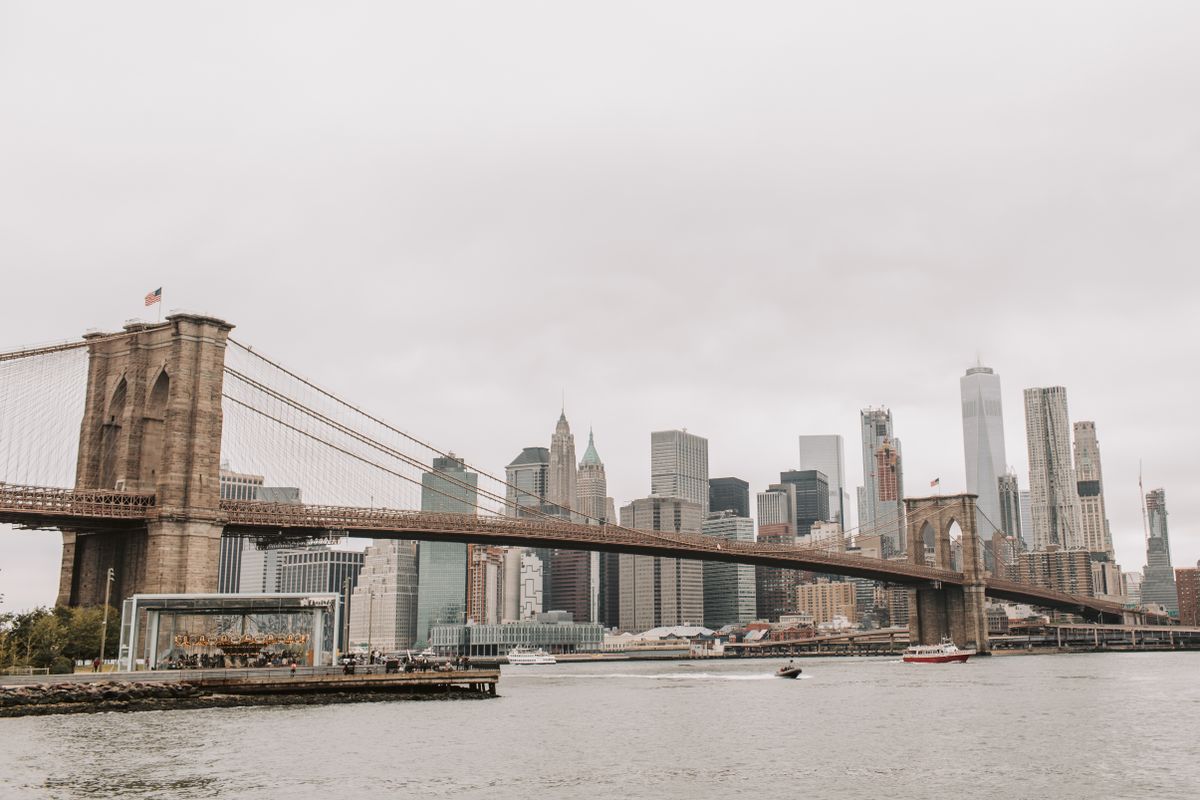
Table of Contents
Why New York City?
New York is the densest cultural map on the planet. Roughly 8.26 million people live in the five boroughs across 322 square miles of land , with another eleven million in the surrounding metro region across New York, New Jersey and Connecticut . The five boroughs — Manhattan, Brooklyn, Queens, the Bronx and Staten Island — sit at the mouth of the Hudson River where it meets the Atlantic, on a latitude (40.7°N) that gives the city four genuine seasons and the sharpest summer-vs-winter swing of any global gateway city . The municipal government runs the country’s largest school district, largest public-transit system and largest park network out of City Hall in Lower Manhattan .
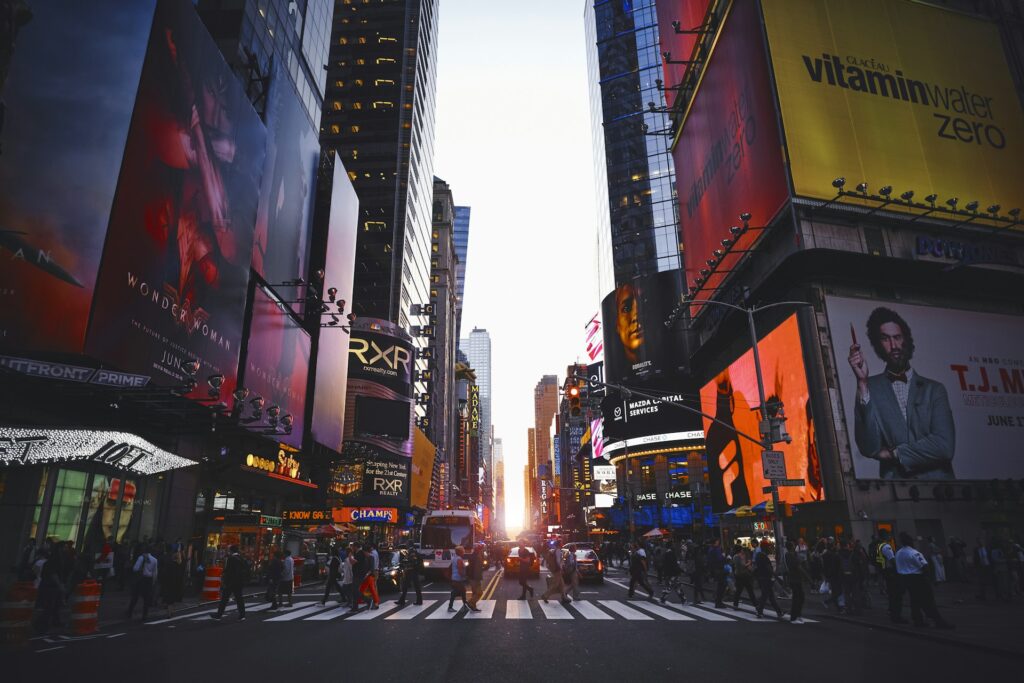
What makes New York singular for visitors is the density of everything per block. The official tourism board (NYC Tourism + Conventions) published 2024 visitor totals over 64 million on its research portal and runs an editorial site that maps neighborhoods, restaurants and Broadway lineups week by week . The MTA carries roughly four million riders a day on the subway alone, with another two million on local buses, the LIRR and Metro-North combined . Times Square — the “Crossroads of the World” intersection at 42nd Street and Broadway — remains the most-visited tourist anchor in the western hemisphere , but the New York that visitors fall for is almost always somewhere else: a side street in the West Village, a bagel shop on Houston, a baseball game on a Tuesday night in Flushing.
The geography rewards a rhythm of walk-train-walk. Manhattan is a 13.4-mile-long granite island that you can cross on foot in 30 minutes at most points; the subway then bridges Manhattan to the outer boroughs in 10–30 minutes per hop. Central Park is 843 acres of designed Olmsted-and-Vaux landscape in the middle of the highest-density neighborhoods on Earth — a fact that becomes obvious only when you stand at Bethesda Terrace at sunset and realise the surrounding skyline has receded into a half-circle of trees. The five-borough framing matters because each borough has its own identity, its own newspaper-of-record sub-section, and its own answer to the question “where should I eat?”. Manhattan ships the Michelin headlines and the Broadway lights; Brooklyn ships the brownstones, the waterfront skyline view, the most-photographed neighborhoods on Instagram and an outsized share of the city’s creative class; Queens ships the airport, the most linguistically diverse zip codes on Earth and the best Greek and Thai food on the eastern seaboard; the Bronx ships Yankee Stadium, the New York Botanical Garden and the city’s least-touristed authentic Italian-American neighborhood (Belmont’s Arthur Avenue); Staten Island ships the free ferry, a 30-minute round-trip that doubles as the best Statue of Liberty view in the city.
Plan five full days here as your urban anchor. NYC rewards repeat visits more than almost any city on this site: by visit three you start to develop personal blocks, personal pizza places, personal “my New York” geography. The official city tourism research desk publishes the visitor-economy data that confirms that pattern — first-time visitors weight Manhattan heavily, repeat visitors swing toward Brooklyn and Queens . Treat the first New York trip as a sampler and let the second trip go deep.
Best Time to Visit New York City
NYC is a four-season city with a sharp humid summer and a bright, dry winter. The National Weather Service’s New York forecast office at Brookhaven publishes daily, monthly and 30-year normals: January averages 0–3°C with bright skies, July and August average 25–30°C with multi-week stretches of 75–85% humidity . The two windows worth re-arranging your year around are autumn (mid-September to early November) — foliage in the Hudson Valley and Central Park, low humidity, 18–22°C days — and late spring (late April to May), when the cherry blossoms peak in Central Park, the Brooklyn Botanic Garden and the New York Botanical Garden in the Bronx .
Spring (March – May)
March is bracingly cold and grey; April is the pivot month; May is consistently mild and the city’s outdoor life resumes in earnest. Cherry-blossom peak runs late April through early May at the Brooklyn Botanic Garden’s cherry esplanade and at Central Park’s Cherry Hill above the Lake. The official city tourism site keeps a current spring events calendar that complements the NWS climate page . Memorial Day weekend (last Monday in May) launches the SummerStage outdoor concert series in Central Park and the broader summer-cultural calendar.
Summer (June – August)
July and August are genuinely hot and humid, with multi-day stretches above 32°C and tropical nights of 25°C+ overnight. The trade-off is the city’s richest free outdoor program: Shakespeare in the Park at the Delacorte (Central Park), Smorgasburg’s Saturday food market in Williamsburg and Sunday in Prospect Park , free SummerStage concerts across all five boroughs, and the Mermaid Parade at Coney Island in late June . The US Open tennis tournament in Flushing Meadows runs late August to early September. Hotel rates are at their lowest in the city in late July and August — counterintuitive, but the local-business calendar still treats summer as a tourist trough.
Autumn (September – November)
The best season for first-time visitors. Humidity drops sharply in mid-September; foliage in Central Park and along the Hudson Valley peaks in the last week of October and first week of November . The TCS New York City Marathon runs the first Sunday in November every year and crosses all five boroughs — 1 November in 2026, with roughly 55,000 runners and 2 million spectators along the 26.2-mile route . The Macy’s Thanksgiving Day Parade caps the month on the fourth Thursday of November — 26 November in 2026 — with the famous balloon inflation the night before on the Upper West Side .
Winter (December – February)
The romantic month is December: Rockefeller Center’s Christmas tree lights up the first week, the Bryant Park Winter Village runs through the first weekend of March, and the Bergdorf Goodman / Saks Fifth Avenue holiday windows are the city’s most-photographed retail block of the year. New Year’s Eve at Times Square draws roughly a million spectators behind crowd-control pens that close from 14:00 onward; the broadcast ball drop at midnight is, on the ground, less compelling than the parties anywhere else in the city. January and February are bone-cold, blue-sky and reliably the best museum months — queues at the Met and MoMA shrink to a fifth of their summer lengths.
Getting There — JFK, LaGuardia and Newark
NYC has three international airports across two states. John F. Kennedy International (JFK) sits 24 km east of Manhattan in Queens and reaches Midtown in 50–65 minutes via the AirTrain to Jamaica or Howard Beach, then the E or A subway westbound . The AirTrain itself is a $8.50 fare from any JFK terminal to either subway connection, with trains every 4–8 minutes around the clock . The Long Island Rail Road also stops at Jamaica and reaches Penn Station in 19 minutes — the fastest option from JFK if your hotel is near 34th Street .
LaGuardia (LGA) is the closest airport to Midtown at 13 km north-east in Queens; the M60 SBS bus runs into Astoria and connects to the N/W subway in roughly 35–45 minutes, and 2024’s LaGuardia Link Q70 SBS bus reaches Jackson Heights and the E/F/M/R/7 subway in about 12 minutes from the central terminal . Newark Liberty (EWR) sits 24 km west across the Hudson in New Jersey and is served by the AirTrain to the Newark Liberty International Airport rail station, then NJ Transit or Amtrak into Penn Station in 25–35 minutes . The PATH train from Newark via Journal Square reaches the World Trade Center in about an hour for a $3.00 fare, the cheapest EWR-to-Manhattan option for travellers without checked bags.
By rail, Amtrak runs the Empire Service up the Hudson Valley to Albany, the Maple Leaf to Toronto, and the Adirondack to Montreal — all from Penn Station’s Moynihan Train Hall, the 2021 reopening of the original 1910 McKim, Mead and White structure across Eighth Avenue .
Getting Around — Subway, OMNY, Citibike and Walking
The Subway
The NYC subway is the only major US transit system that runs 24 hours a day, every day of the year. The MTA operates 472 stations across four boroughs (everywhere except Staten Island), making it the largest rapid-transit system in the western hemisphere by station count . A 2024 weekday averages just over four million subway rides; weekend ridership runs about 60% of the weekday baseline . The 1, 2, 3, A, C, E, N, Q, R, W, 4, 5, 6, F, J and L lines together cover essentially every neighborhood you will visit; the 7 train serves Queens (Long Island City, Sunnyside, Jackson Heights, Flushing) and the G train is the only line that connects Brooklyn to Queens without going through Manhattan.
OMNY — the Tap-to-Pay System
The MetroCard is officially retired as of 2026; the system is now OMNY-only, the contactless tap-to-pay system that accepts any contactless credit/debit card or phone wallet at every fare gate and on every local bus . The base fare for subway and local bus is $3.00 as of 4 January 2026 . OMNY caps fares automatically at $34.00 per rolling 7-day window — you tap as you go and after the 12th ride in a week, every additional ride that week is free, no pass required. Express buses are $7.00 per ride and the LIRR/Metro-North use a separate ticket system or eTix mobile tickets .
Service Alerts and the Weekend Surprise
NYC subway service runs near-continuously on weekdays but the MTA performs significant track work on most weekends, with line reroutes and station bypasses that can add 20–40 minutes to off-hours trips. The official MTA service-alerts page is the authoritative source — check it before any weekend or late-evening ride . The 2025 Central Business District Tolling Program (“congestion pricing”) charges most cars $9 to enter Manhattan south of 60th Street during weekday peak hours and is now in steady-state operation ; this has measurably reduced midtown traffic and freed up surface buses, especially the M14 and M86 crosstown SBS routes.
Citibike, Taxis and Walking
Citibike is the city-wide bike-share network, with roughly 30,000 bikes across 2,000+ stations spanning Manhattan, Brooklyn, Queens, Jersey City and Hoboken. Day passes run $19 and are best for visitors who want to ride the Hudson River Greenway or do a Brooklyn-side waterfront loop . Yellow taxis are still the iconic Manhattan ride; the NYC Taxi & Limousine Commission sets the meter at $3.00 flag-fall plus $0.70 per 1/5 mile or per minute idle, with a $2.50 rush-hour surcharge weekdays 16:00–20:00 . Uber and Lyft cover the city comprehensively but cost roughly 1.5–2× a yellow cab in Manhattan due to congestion-zone surcharges. The free Staten Island Ferry runs every 30 minutes across New York Harbor between Whitehall (Lower Manhattan) and St. George (Staten Island) and gives you the best Statue-of-Liberty view in the city for $0.00 .
Boroughs & Neighborhoods: Finding Your New York
📍 New York City Map: Every Place in This Guide
SoHo & NoHo (Manhattan)
SoHo (“South of Houston”) is the cast-iron architecture district between Houston and Canal — the largest collection of cast-iron facades in the world, mostly built between 1840 and 1880 as light-manufacturing lofts and converted in the 1970s into the city’s first artist-loft neighborhood . NoHo (“North of Houston”) is the smaller cousin between Houston and 4th Street with the same architectural vocabulary at slightly larger scale. The shopping is now mostly flagship retail (Apple, Glossier, Aimé Leon Dore, every direct-to-consumer brand of the 2010s), but the cobblestone streets and the cast-iron lintels still photograph like a film set on Greene Street and Mercer.
- Greene Street — densest cast-iron block in the city
- Aimé Leon Dore café — flagship + Greek diner upstairs
- Dominique Ansel Bakery — the Cronut shop, Spring Street
Best for: shopping, architecture, brunch culture. Access: N/R/W (Prince St), C/E (Spring St), 6 (Spring St).
West Village & Greenwich Village (Manhattan)
The West Village is the cinematic New York: tree-lined brownstone blocks, off-grid streets that confuse Google Maps, jazz basements that have been open since the 1950s. The neighborhood was the heart of the post-war bohemian scene (Dylan, Patti Smith, the Stonewall uprising) and remains the city’s most-photographed residential blocks . Greenwich Village proper, immediately east, is the NYU campus belt: Washington Square Park, the chess tables under the arch, MacDougal Street’s coffee shops and comedy clubs. Stonewall Inn on Christopher Street — site of the 1969 Stonewall uprising and the seed of the modern LGBTQ+ rights movement — is a National Monument .
- Washington Square Park arch — chess + folk music
- Stonewall Inn / Stonewall NM — Christopher Street
- Magnolia Bakery — Bleecker Street, the original
Best for: walks, jazz, late-night eats. Access: 1 (Christopher St-Sheridan Sq), A/B/C/D/E/F/M (W 4 St-Washington Sq).
Lower East Side (Manhattan)
The LES is the city’s immigration story made into a 30-block grid. Between 1880 and 1920 it was the most densely populated neighborhood on Earth, with tenement buildings packing 20+ residents per 600-square-foot apartment. The Lower East Side Tenement Museum on Orchard Street curates that history through restored 97 Orchard tenement apartments — one of the city’s most-visited small museums . The 21st-century LES layered nightlife and small-counter restaurants on top of the original Jewish-immigrant food spine: Russ & Daughters for bagels and lox since 1914, Katz’s Delicatessen for pastrami since 1888, and a Friday-night bar density that rivals any in the city.
- Tenement Museum — 97 Orchard Street tours
- Russ & Daughters — East Houston, since 1914
- Katz’s Delicatessen — East Houston, since 1888
Best for: food history, bars, small live music. Access: F/M/J/Z (Delancey/Essex), B/D (Grand St).
Midtown & Times Square (Manhattan)
Midtown is the headline-skyline grid: the Empire State Building on 34th, the Chrysler Building on 42nd, Grand Central Terminal’s 1913 Beaux-Arts masterpiece in the exact centre, Rockefeller Center’s 30 Rock and Top of the Rock observation deck, the Theatre District’s 41 Broadway venues, and Times Square at the centre of it all. Midtown is the densest hotel district in the city and the right base for a first NYC trip; sleep here for one half of your week and base in Brooklyn or the Lower East Side for the other half. The official NYC Tourism site keeps a current Midtown / Theatre District itinerary .
- Grand Central Terminal — main concourse + Whispering Gallery
- Bryant Park — behind the New York Public Library
- Top of the Rock — best Empire State view
Best for: first-timers, theatre, headline sights. Access: every Manhattan subway line passes within four blocks.
Upper East Side / Upper West Side (Manhattan)
The Upper East Side is Museum Mile — the Met, the Guggenheim, the Frick (reopened 2024), the Neue Galerie, the Cooper Hewitt, all on Fifth Avenue between 70th and 105th — plus the city’s wealthiest residential blocks. The Upper West Side, on the other side of Central Park, is Lincoln Center, the American Museum of Natural History, Zabar’s on Broadway, and the most cinematic stretch of the Hudson River Greenway. Sleep on either side of the park if your trip is museum-heavy; the crosstown buses (M66, M86, M96) bridge the two sides in well under quarter of an hour.
- Museum Mile — Met, Guggenheim, Frick
- Lincoln Center — opera, ballet, NY Phil
- Zabar’s — Broadway 80th, since 1934
Best for: museum trips, classical music, families. Access: 4/5/6 (UES), 1/2/3, B/C (UWS).
Harlem (Manhattan)
Harlem is the cultural capital of Black America: the Apollo Theater on 125th Street launched the careers of Ella Fitzgerald, Billie Holiday, James Brown, Lauryn Hill and dozens more ; Sylvia’s on Lenox is the canonical Harlem soul-food institution; the Studio Museum in Harlem has been the country’s leading museum of African American art since 1968. The history runs deeper still — the Harlem Renaissance of the 1920s established the neighborhood as the literary and intellectual centre of African American life in the country . The 125th Street commercial spine and Strivers’ Row brownstones (West 138th and 139th between 7th and 8th Avenues) are the canonical walks .
- Apollo Theater — Wednesday night Amateur Night
- Strivers’ Row — W 138/139 brownstones
- Sylvia’s Restaurant — Lenox Ave, since 1962
Best for: live music, soul food, architectural history. Access: 2/3 (125 St), A/B/C/D (125 St).
Williamsburg & Greenpoint (Brooklyn)
Williamsburg is the post-2010 creative-class capital of New York: warehouse-converted lofts, the city’s densest concentration of independent restaurants, the Saturday Smorgasburg food market on the East River waterfront, and Domino Park’s repurposed sugar refinery skyline view . Greenpoint, immediately north, is the Polish-American neighborhood that anchors the borough’s northern tip with traditional bakeries, Transmitter Park, and a slower pace than the Williamsburg core. The L train from Manhattan’s 14th Street reaches the centre of Williamsburg in just one underground stop; the East River Ferry from East 34th Street is the more scenic option .
- Domino Park — repurposed sugar refinery, skyline view
- Smorgasburg (Sat) — East River State Park
- Greenpoint Bakery — Manhattan Avenue, Polish since 1976
Best for: design, nightlife, food halls. Access: L (Bedford Av), G (Metropolitan Av-Lorimer), East River Ferry.
DUMBO & Brooklyn Heights (Brooklyn)
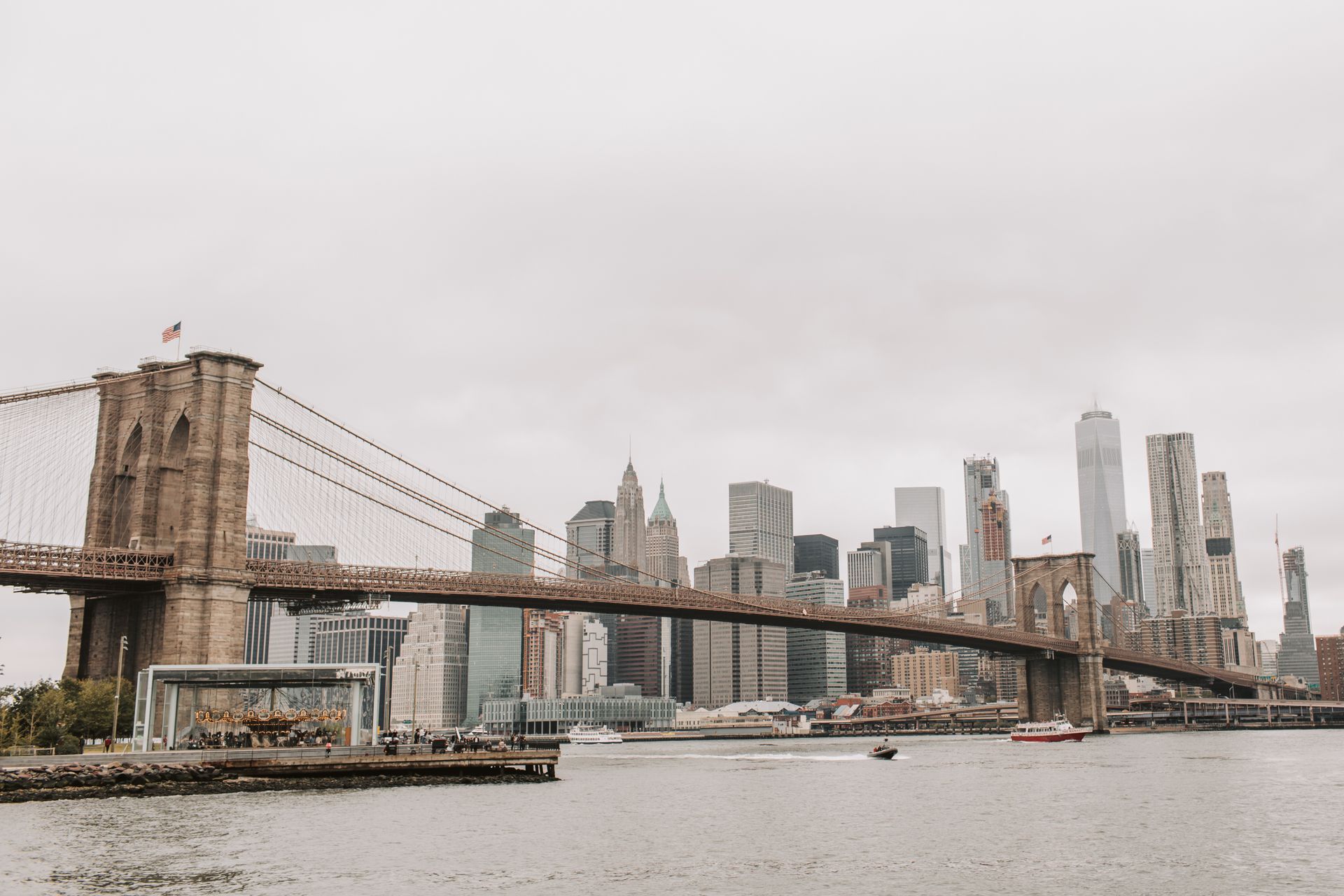
DUMBO (“Down Under the Manhattan Bridge Overpass”) is the most-photographed neighborhood in Brooklyn: the Washington Street view of the Manhattan Bridge with the Empire State Building framed underneath is on every NYC postcard sold since 2015 . Brooklyn Bridge Park’s 85-acre waterfront stretches from the Manhattan Bridge south to Atlantic Avenue with skyline-view lawns, Jane’s Carousel inside its glass pavilion, and the city’s best skyline-photography vantages. Brooklyn Heights, on the bluff above, is the country’s first Historic District (designated 1965), with row houses dating to the 1820s and the Brooklyn Heights Promenade running 0.6 miles along the harbour edge. The Brooklyn Bridge itself — opened 24 May 1883 as the longest suspension bridge in the world — is the canonical walk between the boroughs .
- Washington Street — the bridge-frame photo
- Brooklyn Bridge Park — Pier 1 lawn at sunset
- Brooklyn Heights Promenade — harbour-edge walk
Best for: photographers, skyline views, waterfront walks. Access: F (York St), A/C (High St), 2/3/4/5 (Borough Hall).
Astoria & Long Island City (Queens)
Astoria is the historic Greek-American neighborhood and the food belt that rewards visitors who get past the East River. Steinway Street’s Greek tavernas, Egyptian shisha cafés and Czech beer garden (Bohemian Hall, 1910) make for the most-varied dinner crawl in the city . The Museum of the Moving Image is in Astoria; Socrates Sculpture Park sits on the East River. Long Island City, immediately south, is the rapidly built-up high-rise waterfront with the MoMA PS1 contemporary art space, Gantry Plaza State Park’s skyline lawns, and the cheapest Manhattan-skyline-view hotel rates in the city.
- Steinway Street — Greek tavernas + shisha
- MoMA PS1 — LIC, contemporary art annex
- Gantry Plaza State Park — Pepsi-Cola sign + skyline
Best for: food crawls, contemporary art, budget hotels. Access: N/W (Astoria-Ditmars), 7 (Vernon Blvd-Jackson Av).
The Bronx and Staten Island
The Bronx ships Yankee Stadium, the New York Botanical Garden’s 250 acres of plantings (Holiday Train Show + Orchid Show + spring cherry tunnel) , the Bronx Zoo, the Edgar Allan Poe Cottage, and Belmont’s Arthur Avenue — the city’s least-touristed Italian-American neighborhood, where the Arthur Avenue Retail Market still operates as a covered food hall. Staten Island ships the free 25-minute ferry to St. George with the best Statue-of-Liberty view in town, plus the Snug Harbor Cultural Center and the largest Tibetan-art museum in the western hemisphere. Together the two outer boroughs hold roughly 30% of the city’s population and almost none of its tourism — rewarding for repeat visitors with a half-day to spare.
- NYBG — cherry walk + Holiday Train Show
- Arthur Avenue Retail Market — Belmont, Bronx
- Staten Island Ferry — free, 25 min, harbour views
Best for: repeat visitors, free attractions, Yankees + zoo. Access: 4/B/D (Yankee Stadium); B/D (NYBG via Bx12); SI Ferry from Whitehall.
The Food
NYC’s food map is wider than any other US city by a long margin. The Michelin Guide’s 2025 New York selection lists 36 starred restaurants across the five boroughs, with 5 three-star houses anchoring the top tier. The official tourism eat-and-drink desk maintains a current restaurant list across all neighborhoods, splits and price tiers . Plan by category — pizza, bagels, deli, food halls, brunch — not by Yelp ranking. Most New Yorkers eat the same five categories on rotation; the joy of the city is the depth within each.
Pizza — Three Styles a Day
NYC pizza splits into three live traditions, each worth a meal. NY-style slice pizza is the foldable, thin-crust, hand-tossed slice you eat at a counter; the city ships roughly 1,400 active slice pizzerias and the bar for entry is high. Joe’s Pizza on Carmine Street has been the West Village benchmark since 1975 with a $4.50 cheese slice that is the textbook reference . Sicilian-style is the rectangular thicker-crust slice with sauce on top of cheese; L&B Spumoni Gardens in Bensonhurst (Brooklyn) is the standard. Coal-oven Neapolitan is the original American pizza style, traced to Lombardi’s on Spring Street (1905), the first licensed pizzeria in the United States; whole-pie format only, $30 for a 16-inch.
- Joe’s Pizza (Carmine St) — The West Village slice benchmark, $4.50 plain, $5 Sicilian
- Lombardi’s (Spring St) — America’s first pizzeria (1905), coal-oven, whole-pie
- L&B Spumoni Gardens (Bensonhurst) — The Sicilian-square benchmark, $5 a slice
- Di Fara (Midwood) — Cult-status, made-to-order whole pies, ~$35
- Roberta’s (Bushwick) — Brooklyn artisanal wood-fired, $19–$24 whole pie
Bagels & Bagel Shops
NYC bagels are dense, chewy and boiled-then-baked — a texture that has not been successfully replicated anywhere else, generally credited to NYC’s Catskill-watershed tap water. The category splits between traditional appetising shops (Russ & Daughters since 1914, the gold-standard cured-fish-and-bagel counter on Houston Street, $19 “The Classic” with cream cheese and lox) and quick-counter shops (Ess-a-Bagel, Murray’s, Black Seed, Tompkins Square Bagels) selling bagel sandwiches under $10. Order with care: a New Yorker’s bagel is plain, sesame, everything or poppy — never blueberry, never cinnamon-raisin, never toasted unless the bagel is genuinely stale.
- Russ & Daughters (Houston St) — The Classic with sable + cream cheese, $19, since 1914
- Ess-a-Bagel (3rd Ave) — The 51st-St quick-counter standard, sandwiches $9–$13
- Tompkins Square Bagels (Avenue A) — East Village, sandwiches $7–$11
Deli & Pastrami
The Jewish deli — the 19th-century LES institution that put pastrami, brisket and matzo-ball soup on the American menu — survives in three concentrated locations. Katz’s Delicatessen on East Houston (1888) is the most famous, with its “Send a Salami to Your Boy in the Army” neon and a pastrami sandwich that runs $26 hand-cut, sliced to order in front of you . 2nd Avenue Deli (now on East 33rd Street) and Pastrami Queen on the Upper East Side are the surviving full-format peers. The category is genuinely dwindling — under a dozen full-service Jewish delis remain in the five boroughs — and worth a meal on every visit.
- Katz’s Delicatessen (Houston) — Pastrami $26, sliced-to-order, since 1888
- 2nd Avenue Deli (E 33rd) — Matzo-ball soup, $14, kosher-style
- Pastrami Queen (UES) — Lexington Ave, the uptown counterpart
Halal Carts & Street Food
The halal-cart chicken-and-rice plate is the city’s signature street food — chicken, lamb or both over yellow rice with a paper cup of white sauce and a paper cup of red, $10–$12 from any of roughly 6,000 carts city-wide. The Halal Guys at 53rd and 6th built the category in 1990; the original cart is still on the southwest corner most evenings . Beyond halal, the city’s street-food map runs deep: the Birria-Landia taco trucks in Queens (Jackson Heights and Williamsburg), Nathan’s Famous on the Coney Island boardwalk for a hot dog, and chestnut/nut-roast vendors in Midtown winter for the smell more than the calories.
Brunch — The City’s Saturday Religion
Brunch is genuinely religious in NYC — expect long waits at any popular spot on a Saturday or Sunday between mid-morning and early afternoon. Best categories: diner brunch (Tom’s Restaurant in Morningside Heights for the Seinfeld exterior, B&H Dairy on 2nd Avenue for the LES classic), bottomless brunch (around $50 with a fixed-window pour of mimosas, abundant in Murray Hill), and third-wave brunch (Jack’s Wife Freda in SoHo, Sadelle’s in SoHo, Cláudia in the West Village). Bottomless brunch is capped under New York State liquor law and never runs longer than the printed window.
Food Halls & Markets
Three flagship food halls anchor the city. Chelsea Market (810 16th Street, in the old National Biscuit Co. factory) ships Los Tacos No. 1 (the city’s best taco), Lobster Place’s sushi counter, and a brick concourse that connects directly to the High Line. Smorgasburg at the East River State Park (Williamsburg, Saturdays) and Prospect Park (Sundays) is the city’s open-air food market with 75+ vendors per weekend — the originating ramen burger and rainbow bagel both came from here . Eataly at the Flatiron and Downtown locations is the Italian food hall flagship, with a rooftop birreria worth the elevator ride.
- Chelsea Market — Los Tacos No. 1, Lobster Place, Brick Lane Curry House
- Smorgasburg — Sat Williamsburg / Sun Prospect Park, $5–$15 per item
- Eataly Flatiron — 5th Ave + 23rd, rooftop Birreria
Korean BBQ & Koreatown
NYC’s Koreatown runs along West 32nd Street between Fifth Avenue and Broadway — one block, three storeys deep on most lots, with KBBQ tabletop grills, 24-hour Korean diners (Gammeeok, Mil Jung Sik) and the densest karaoke-bar concentration outside Seoul. KBBQ is genuinely good here: Cote on West 22nd Street holds the city’s only Michelin star for Korean BBQ ($85 prix-fixe Butcher’s Feast). For lower-budget KBBQ, head to West 32nd Street and walk in anywhere with an open table — quality is reliable and runs $40–$60 per person.
Beyond the Headlines
One meal each from this list rounds out a NYC food week:
- Old-school Italian-American — Rao’s in East Harlem (impossible to book), Carbone in the Village (3-month wait), or Don Angie in the West Village
- Chinese — Joe’s Shanghai for soup dumplings (Chinatown), Xi’an Famous Foods for hand-pulled noodles ($12–$15)
- Sushi — Sushi Nakazawa (West Village, $150 omakase), or Sushi by Bou for a $50 30-minute timed counter experience
- Vietnamese — Pho Bang in Chinatown, Madame Vo in the East Village
- Steak — Peter Luger in Williamsburg (cash-only, since 1887), Keens in Midtown (since 1885)
Food Experiences You Can’t Miss
- A Russ & Daughters bagel-and-lox order eaten on a Lower East Side stoop
- A Saturday Smorgasburg lap with five vendors and one ramen-burger
- A late-night Joe’s Pizza slice at 02:00 after a West Village bar crawl
Cultural Sights & Entertainment
The Metropolitan Museum of Art
The Met holds 1.5+ million objects across 5,000 years of art — the largest encyclopaedic collection in the western hemisphere — spread across the main Fifth Avenue building (Egyptian Wing’s Temple of Dendur, the European paintings galleries, the American Wing) and the Met Cloisters in Fort Tryon Park (medieval European art and architecture) . Standard general admission is $30 for non-NY-state residents; New York State residents and NY/NJ/CT students can pay-what-you-wish at the door . The Met Cloisters admission is included with the Fifth Avenue ticket on the same day.
Museum of Modern Art (MoMA)
MoMA, on West 53rd Street between Fifth and Sixth Avenues, holds the canonical 20th-century modern collection — van Gogh’s Starry Night, Picasso’s Les Demoiselles d’Avignon, Matisse’s The Dance — plus a deep design and architecture wing and the city’s best museum cinema . The 2019 expansion added 40,000 square feet of gallery and reorganised the collection chronologically across three floors. Standard admission is $30; free Friday evenings 17:00–21:00 thanks to UNIQLO sponsorship .
American Museum of Natural History (AMNH)
AMNH on the Upper West Side runs from 77th to 81st on Central Park West — 28 interconnected buildings, 200+ million specimens, the Theodore Roosevelt Memorial Hall facing the park, and the Hayden Planetarium under the Rose Center for Earth and Space’s glass cube. The 2023 Richard Gilder Center for Science, Education and Innovation added a sculpted-canyon entrance on Columbus Avenue and the Susan and Peter J. Solomon Family Insectarium . General admission is $28; the museum is among the city’s most family-friendly afternoons.
The Whitney, Guggenheim & Brooklyn Museum
The Whitney Museum of American Art moved to a Renzo Piano-designed building at the southern terminus of the High Line in 2015; permanent collection focused on 20th- and 21st-century American art, $30 admission, free under-19 . The Guggenheim on Fifth Avenue is the Frank Lloyd Wright spiral — 1959, the only Wright building in NYC — and the spiral ramp itself is half the experience; $30 admission . The Brooklyn Museum in Prospect Park is the city’s second-largest art museum, with the Sackler Center for Feminist Art (Judy Chicago’s Dinner Party permanent installation) and the country’s most ambitious Egyptian collection outside the Met .
9/11 Memorial & Museum
The 9/11 Memorial occupies the footprints of the Twin Towers in Lower Manhattan, with two 1-acre reflecting pools and the names of 2,983 victims inscribed on bronze parapets around the pool edges . The Museum, below ground next to the Memorial, exhibits artefacts, oral-history recordings and the structural “slurry wall” that held back the Hudson River; $33 admission, free Mondays 17:30–19:00. One World Observatory at the top of One World Trade Center is the third-tallest observation deck in the city; ticketed $44.
Statue of Liberty & Ellis Island
The Statue of Liberty National Monument and Ellis Island National Museum of Immigration sit on adjacent islands in New York Harbor, both reachable only by Statue Cruises ferry from Battery Park . Round-trip ferry plus pedestal access runs $25 for adults; Crown access (the climb up the spiral inside Liberty’s skull) is capped at 240 reservations per day and books out 3+ months ahead . Ellis Island, on the same ferry, ran 12 million immigrant inspections between 1892 and 1954 — an estimated 40% of present-day Americans descend from someone processed through the Great Hall .
Empire State Building & Top of the Rock
The Empire State Building (1931, 102 stories, 443 m to antenna tip) opened the era of skyscrapers on Manhattan and remained the tallest building in the world for 41 years. The 86th-floor observatory is open daily until 02:00; $44 standard, $79 with the 102nd-floor add-on . Top of the Rock at Rockefeller Center (30 Rock’s 70th-floor observation deck) is the better Manhattan view in most travellers’ books because it includes the Empire State Building in the photograph ; $40 standard. Edge at Hudson Yards (the cantilevered glass-floor deck on 30 Hudson Yards) is the third major option at $42, with the most distinctive geometry and the lowest queue.
The High Line
The High Line is a 2.33-km elevated linear park built on the bed of a 1934 freight rail line, running from Gansevoort Street in the Meatpacking District north to West 34th Street at Hudson Yards. The park opened in three phases between 2009 and 2014 (with the Spur extension in 2019) and now draws 8 million visitors a year . Free, dawn to dusk; the southern Whitney-end entry is the most-photographed section.
Federal Hall, Stonewall & Other NPS Sites
The National Park Service runs four monuments inside the city limits. Federal Hall National Memorial at 26 Wall Street marks the site where George Washington took the first presidential oath of office (1789) and where the first US Congress drafted the Bill of Rights . Stonewall National Monument on Christopher Street commemorates the 1969 Stonewall uprising. Gateway National Recreation Area covers Jamaica Bay, Floyd Bennett Field and Sandy Hook (NJ) . All free.
Entertainment & Nightlife
NYC’s entertainment density — live theatre, jazz, comedy, classical music, sports — is the highest in any English-speaking city. Plan one big-ticket evening per visit and leave the rest of the calendar to the smaller-counter venues that the city specialises in.
Broadway
The Broadway Theatre District contains 41 venues with 500+ seats each, almost all clustered between 41st and 54th Streets west of 6th Avenue. The Broadway League’s 2023–24 season report counted 12.3 million attendees, with Hamilton, The Lion King, Wicked and MJ leading the long-running list . Standard ticket prices run $89–$249 for the front-of-house seats; the TKTS booth at the north end of Times Square sells day-of tickets at 25–50% off, with shorter queues at the South Street Seaport and Lincoln Center booths.
Lincoln Center, Carnegie Hall & the Apollo
Lincoln Center for the Performing Arts on the Upper West Side is the city’s classical-music and dance campus — the Metropolitan Opera, the New York Philharmonic at David Geffen Hall, the New York City Ballet and Lincoln Center Theater all share the Josie Robertson Plaza . Carnegie Hall on West 57th Street remains the country’s most prestigious classical-music stage; the cheapest gallery-bench seats start at $20. The Apollo Theater on 125th Street in Harlem runs Wednesday-night Amateur Night — the show that launched Ella Fitzgerald, James Brown and Lauryn Hill — with $25 tickets . The Brooklyn Academy of Music (BAM) ships the city’s most ambitious experimental performance program .
Jazz, Comedy & Live Music
The Village Vanguard on Seventh Avenue South (since 1935) and the Blue Note on West 3rd Street are the legacy jazz clubs; small-format jazz spans Smalls and Mezzrow on West 10th Street, the Smoke Jazz Club on the Upper West Side and Dizzy’s Club at Jazz at Lincoln Center. Comedy clubs cluster in the West Village (Comedy Cellar — the Macdougal Street original, $25 cover) and the East Village (UCB East). Indie and electronic live music ships through Brooklyn (Music Hall of Williamsburg, Elsewhere in Bushwick, Baby’s All Right) and Manhattan (Bowery Ballroom, Mercury Lounge, Webster Hall).
Sport & Seasonal Spectacle
The Yankees (American League) play in the Bronx; the Mets (National League) play at Citi Field in Flushing — both share the same April–September baseball season with $20 standing-room tickets at most weeknight games. The Knicks and Rangers share Madison Square Garden in Midtown; tickets run $80–$300. The TCS New York City Marathon takes over all five boroughs on the first Sunday in November every year — a free spectator event with 2 million people lining the 26.2-mile route . The Macy’s Thanksgiving Day Parade caps that month with 50 million national television viewers and a roughly 3.5-million-strong crowd along the 2.5-mile Central Park West → Sixth Avenue route .
Day Trips from New York City
Liberty Island & Ellis Island (40 min by ferry)
The Statue Cruises ferry from Battery Park serves both Liberty Island and Ellis Island on a single $25 ticket; expect 90 minutes for the Liberty pedestal and 90–120 minutes for the Ellis museum, plus 40 minutes’ ferry time round-trip. Reserve Crown access (240/day) at least 3 months ahead through the National Park Service’s reservation portal . Best done as a half-day rather than a full day; the on-island walk-around is exposed in summer and cold in winter.
Hudson Valley (60–90 min by Metro-North)
The Hudson Valley north of NYC is the country’s most cinematic 90-minute getaway: Beacon (Dia:Beacon, the contemporary-art mecca in a former Nabisco factory), Cold Spring (Main Street antique shops, Breakneck Ridge hike with skyline-from-cliffs view), Sleepy Hollow (Washington Irving’s Sunnyside, the Headless Horseman’s legendary grounds), and Hyde Park (FDR Presidential Library and the Vanderbilt Mansion National Historic Site). All on the Metro-North Hudson Line out of Grand Central; round-trip fares run $30–$48 . The official New York State tourism site keeps a current valley itinerary .
Storm King Art Center (90 min by Metro-North + shuttle)
Storm King is a 500-acre outdoor sculpture park in New Windsor, NY — the country’s largest open-air contemporary-art museum, with 100+ permanent works by Calder, Serra, Goldsworthy, Maya Lin and others scattered across rolling pasture and woodland . The shuttle from the Beacon Metro-North station runs weekends April–November; the visit is genuinely 4–6 hours including travel. $20 admission for adults, free for under-18.
Coney Island & Brighton Beach (45 min by subway)
Coney Island is the historic Brooklyn beach-and-boardwalk amusement district at the southern end of the D, F, N, Q lines — Nathan’s Famous (since 1916), the Cyclone wooden roller coaster (1927), the Wonder Wheel (1920), and Luna Park’s newer rides . Brighton Beach, immediately east, is “Little Odessa” — the Russian-and-Ukrainian-immigrant neighborhood with restaurants, bakeries and a Brighton Beach Avenue commercial spine that feels like a different country entirely. Best summer day-trip in the city: a Q-train ride down the line, an afternoon on the beach, a hot dog at Nathan’s, a Cyclone lap, and dinner in Brighton Beach.
Governors Island (10 min by ferry)
Governors Island is a 172-acre car-free island in New York Harbor between Manhattan and Brooklyn, opened to the public in 2003 after 200 years of US military and Coast Guard use . The island is open to the public roughly May through October; ferry from the Battery Maritime Building (Manhattan) or DUMBO (Brooklyn) is $4 round-trip. Highlights: the Hammock Grove’s 1,500 hammocks under shade trees, The Hills (artificially constructed hilltop with the best Statue of Liberty view in the harbour), Fort Jay and Castle Williams (early-19th-century military fortifications open free), and the QC NY thermal-baths spa.
The Hamptons & Long Island (LIRR, half-day each way)
The Hamptons (East and South Hampton, Bridgehampton, Sag Harbor, Montauk) are the New York elite’s summer retreat — expensive, scenic and crowded between Memorial Day and Labor Day. The Long Island Rail Road runs to East Hampton and Montauk via the Cannonball Limited (peak summer Fridays) and the regular Montauk Branch year-round . For travellers without summer-house invitations, Jones Beach State Park — 6.5 miles of Atlantic-facing sand 75 minutes from Manhattan by LIRR + bus — is the realistic public-beach equivalent .
Practical Tips
Visa & ESTA
Citizens of 41 Visa Waiver Program countries (UK, EU, Australia, NZ, Japan, South Korea, Singapore, Canada and many others) can enter the US for up to 90 days with an approved ESTA — the Electronic System for Travel Authorization, which costs $21 and is normally approved within 72 hours of application . The official Visa Waiver Program page on travel.state.gov lists current eligibility and renewal rules . Apply for ESTA at least 72 hours before departure; airlines can deny boarding without a confirmed approval.
Currency & Cards
The currency is the United States dollar (USD, $). NYC is one of the most card-friendly cities on the continent — Visa, Mastercard, Amex and Discover all work essentially everywhere, including most food carts, bodegas and farmers’-market stalls. Apple Pay and Google Pay are widely accepted. Cash matters at some classic institutions: Peter Luger Steakhouse is famously cash-only, several old-school deli counters still prefer cash, and yellow taxis sometimes mark their card readers “broken” (insist or get out). ATMs from Chase, Bank of America and Citibank charge no foreign fees on each other’s networks for many international cards; standalone bodega ATMs charge $3–$5 per withdrawal.
Plug, Voltage, Frequency
Type A and Type B plugs (two flat pins, with the optional third grounding pin) at 120V / 60Hz . UK, EU and Australian devices need a plug adapter; high-draw items like hair-dryers usually need a step-down voltage converter as well (the US 120V is half of European 240V). Modern phone and laptop chargers handle both voltages without conversion.
Tap Water
NYC tap water is genuinely among the cleanest in any major US city and is famously the secret behind New York bagels and pizza dough. The city’s water comes from the Catskill, Delaware and Croton watersheds and is so well-protected upstream that NYC is one of the few major US cities operating under a federal “filtration avoidance determination” (no sand-bed filtration plant required). Drink straight from any tap. The CDC’s travel-health page has no NYC-specific drinking-water cautions .
Tipping
Tipping is genuinely expected, not optional, in the US service economy: 18–22% on restaurant bills (the higher end for full-service dinners), 15–20% on taxi fares, $1–$2 per drink at bars, $2–$5 per bag for hotel bellhops, and $2–$5 per night for hotel housekeeping. Many restaurants now print suggested tip lines at 18%/20%/22% on receipts; iPad checkout screens at counter-service shops often default to 20%/25%/30% — you are not obligated to tip the higher end on counter service, and a flat-rate $1–$2 is fine.
Safety
NYC is statistically among the safest large cities in the United States. The NYPD CompStat data dashboard publishes weekly precinct-level incident counts ; in aggregate, the major-crime rate per capita is well below most US peer cities. Standard urban precautions apply: keep your phone in a front pocket on the subway, don’t leave bags unattended on a restaurant bench, walk in well-lit streets after midnight. Subway cars are safe at any hour but emptier cars at 02:00–05:00 are best avoided in favour of the conductor’s mid-train car.
Language & Etiquette
English is the dominant language; an estimated 37% of NYC residents speak a language other than English at home and the city documents over 200 languages spoken on a regular basis. New Yorker etiquette is famously direct — “please” and “thank you” are common but lengthy small-talk is not. Walk fast, stand right on escalators (left side is for walking), don’t stop in the middle of sidewalks to take photos, and order pre-walking-up to coffee counters.
Budget Breakdown: What New York Costs in 2026
| Tier | Daily | Sleep | Eat | Transport | Activities | Extras |
|---|---|---|---|---|---|---|
| Budget | $90–140 | Hostel dorm $55–95 | $3 slice + halal-cart + bagel $20–30 | OMNY-cap $34/wk | Free: SI Ferry, High Line, Brooklyn Bridge | NYPL reading rooms; SummerStage |
| Mid-Range | $250–400 | 3☆ Manhattan hotel $200–320 | 1 mid-counter dinner + brunch $80–120 | OMNY + 2 cabs/day | Met + MoMA + Top of the Rock $100 | Broadway TKTS booth $60–110 |
| Luxury | $700+ | Plaza / Carlyle / Mark $700+ | Per Se / Le Bernardin $400+ | Private hire / Uber Black | Private museum tour, helicopter, Crown ticket | Spa, suite upgrades, hotel-bar nightcap |
Where Your Money Goes
NYC is the most expensive US city after San Francisco at the budget tier and the most expensive in the world at the luxury tier. Numbeo’s 2026 cost-of-living index puts Manhattan restaurant prices roughly 15–25% above San Francisco and 80–100% above Berlin . The Bureau of Labor Statistics’ New York–Newark–Jersey City CPI data confirms that food-away-from-home in the metro area runs ~22% above the national average . Where the city beats expectations: free public attractions (Staten Island Ferry, Brooklyn Bridge walk, all NPS sites except Liberty/Ellis ferry, Central Park, the High Line, half of the major museums on certain free-evening windows), and the OMNY weekly fare cap.
Money-Saving Tips
- Use the OMNY weekly fare cap ($34 for 12+ rides in a rolling 7 days) instead of buying a 7-day unlimited — the cap is automatic
- The Met, AMNH and Brooklyn Museum offer pay-what-you-wish for NY-state residents (and student discount with ID) at the door
- MoMA is free Friday evenings 17:00–21:00 (UNIQLO Free Friday Nights)
- The TKTS booth at Times Square North sells day-of Broadway tickets at 25–50% off; the South Street Seaport booth is shorter-queue
- The Staten Island Ferry is free, year-round, every 30 minutes — the best Statue-of-Liberty view in the city without paying the $25 cruise fare
- Bounce luggage storage runs $5–$8 per bag/day at participating bodegas city-wide — useful for early-arrival or late-flight days
- The Whitney Museum runs Pay-What-You-Wish admission Friday evenings 19:00–22:00 — the cheapest path into one of the city’s best modern collections
- The free Staten Island Ferry, the Brooklyn Bridge walk, and the Central Park loop together fill an entire zero-cost day with the city’s most-photographed views
Frequently Asked Questions
How many days do I need in New York City?
Five full days as an urban anchor is the realistic floor for first-time visitors — one day for headline Manhattan sights (Statue of Liberty, 9/11 Memorial, Empire State or Top of the Rock), one day for Central Park plus a Museum Mile stop (Met or AMNH), one day for downtown walking (SoHo, West Village, Lower East Side), one day in Brooklyn (DUMBO + Williamsburg + Brooklyn Bridge walk), and one Broadway night plus a slow brunch. Three days is enough for a stopover; ten days lets you breathe and start to develop personal blocks.
Is the NYC subway safe at night?
Yes, with normal urban precautions. The NYPD’s CompStat data shows subway-related major crime well below pre-pandemic baselines and below most US peer cities’ equivalent transit systems on a per-rider basis . Practical advice: between 02:00 and 05:00, board the conductor’s mid-train car (the one with the conductor leaning out the window at each stop), keep your phone in a front pocket, and don’t fall asleep on a long ride. Solo travellers regularly use the subway at all hours without incident; the late-night MTA app shows live train arrival times so you don’t spend long periods on empty platforms.
Is the OMNY weekly cap actually worth it?
Yes — it’s the default for any visitor riding the subway 3+ times a day. The cap is $34 for unlimited rides over a rolling 7-day window once you’ve paid 12 individual fares with the same card or device . There’s no enrolment, no pass to buy — just keep tapping your contactless card or phone wallet at every gate and the system caps automatically. The 7-day unlimited MetroCard is now retired; OMNY is the only contactless system .
What’s the best time of year for Broadway tickets?
January and February are the cheapest months — tourism dips, theatres run full-price discount weeks, and TKTS booths sell unsold seats at 25–50% off. Tony Awards season (May/June) and the December holiday window are the most expensive. For headline shows (Hamilton, Wicked, MJ, current revivals), book 4–8 weeks ahead through the Broadway League’s official ticketing partners or via the show’s producer site; resale-broker tickets are usually 1.5–3× face value. Same-day discount tickets are sold at TKTS booths in Times Square (north end), Lincoln Center and the South Street Seaport.
Where should I stay on a first NYC trip?
Midtown Manhattan (between 30th and 60th, west of Park Avenue) is the right base for first-timers: every subway line passes within four blocks, Broadway is at your doorstep, hotels are most numerous, and the headline sights (Empire State, Top of the Rock, Central Park, Times Square) are walkable. Mid-range alternatives that punch above the price: the Lower East Side (East Houston Street area — food and bar density without the Times Square crush), Brooklyn’s Williamsburg or DUMBO (skyline views from the room, 15-min subway to Manhattan), and Long Island City in Queens (cheapest skyline-view hotels in the city, one quick 7-train hop to Midtown ). Avoid the deep-discount Times Square chains in May–September unless your budget genuinely demands them.
Can I use credit cards everywhere?
Yes — NYC is essentially card-only at chain restaurants, hotels, supermarkets and most bars. Cash matters at: yellow taxis (insist if the driver claims the card reader is broken), a handful of cash-only legacy restaurants (Peter Luger, some old-school delis), bodega ATMs, and counter tipping at the few diner-style places that still keep cash tip jars. Apple Pay and Google Pay are accepted at most points of sale including OMNY tap gates, food carts, and bodegas. Carry $40–$60 in small bills as a daily backstop.
What about the language barrier?
None — NYC is the most linguistically accessible large city on Earth for English-speakers. Roughly 37% of residents speak a language other than English at home, but English is universal in business and service contexts. Waiters, hotel staff, taxi drivers, museum desk staff and subway agents all speak English. Tipping etiquette and service-economy customs are a bigger learning curve for travellers than language ever is.
Is the Statue of Liberty Crown ticket worth the trouble?
Only if you book 3+ months ahead and the harbour weather is clear. The Crown is capped at 240 reservations per day — about 5% of total Liberty Island visitors — and books out from the moment the National Park Service’s reservation portal opens 90 days in advance . The 354-step climb up the spiral staircase is genuinely tight and not for claustrophobics; the view from the Crown windows is impressive but more historic-feel than spectacular. The Pedestal ticket (no reservation past 90 days, $25) is 80% of the experience for 20% of the hassle.
Ready to Experience New York City?
Five full days as the floor, two boroughs slept in, three pizza styles a day — that’s the New York rhythm. For the full country context, read the United States Travel Guide; for North American sister-city pairing, run NYC + Toronto on a 1-hour-flight schedule.
Explore More City Guides
- Toronto City Guide — Closest North-American sibling, 1h flight, financial / cultural peer
- London City Guide — Transatlantic financial & theatrical sister, 7h flight
- Tokyo City Guide — The other top-tier global capital, the Yamanote vs the IRT
- Reykjavík City Guide — Tier-A peer guide and the FFU gold-standard reference
- United States Country Guide
- All City Guides
Alex the Travel Guru
Alex has been writing destination guides for FFU since 2019, with a New York City rotation that runs through every season — foliage trips up the Hudson, December store-window walks down Fifth Avenue, July rooftop-bar crawls in Williamsburg, and one slow February museum week every year. New York is the city Alex has visited most often after Reykjavík and Tokyo — the closest thing to a sixth-sense city in any travel writer’s rotation. For the full country context, read the United States Travel Guide.
More city guides you might like


Plan your trip to New York City
The booking tools we use ourselves. FFU may earn a commission at no extra cost to you.
Plan & book your trip to New York City
Booking through these searches supports our guides at no extra cost to you.