
Mexico City, Mexico: Where Aztec Pyramids Meet Art Deco Cafés at 2,240 Metres
Part of our Mexico travel guide.
Mexico City Guide
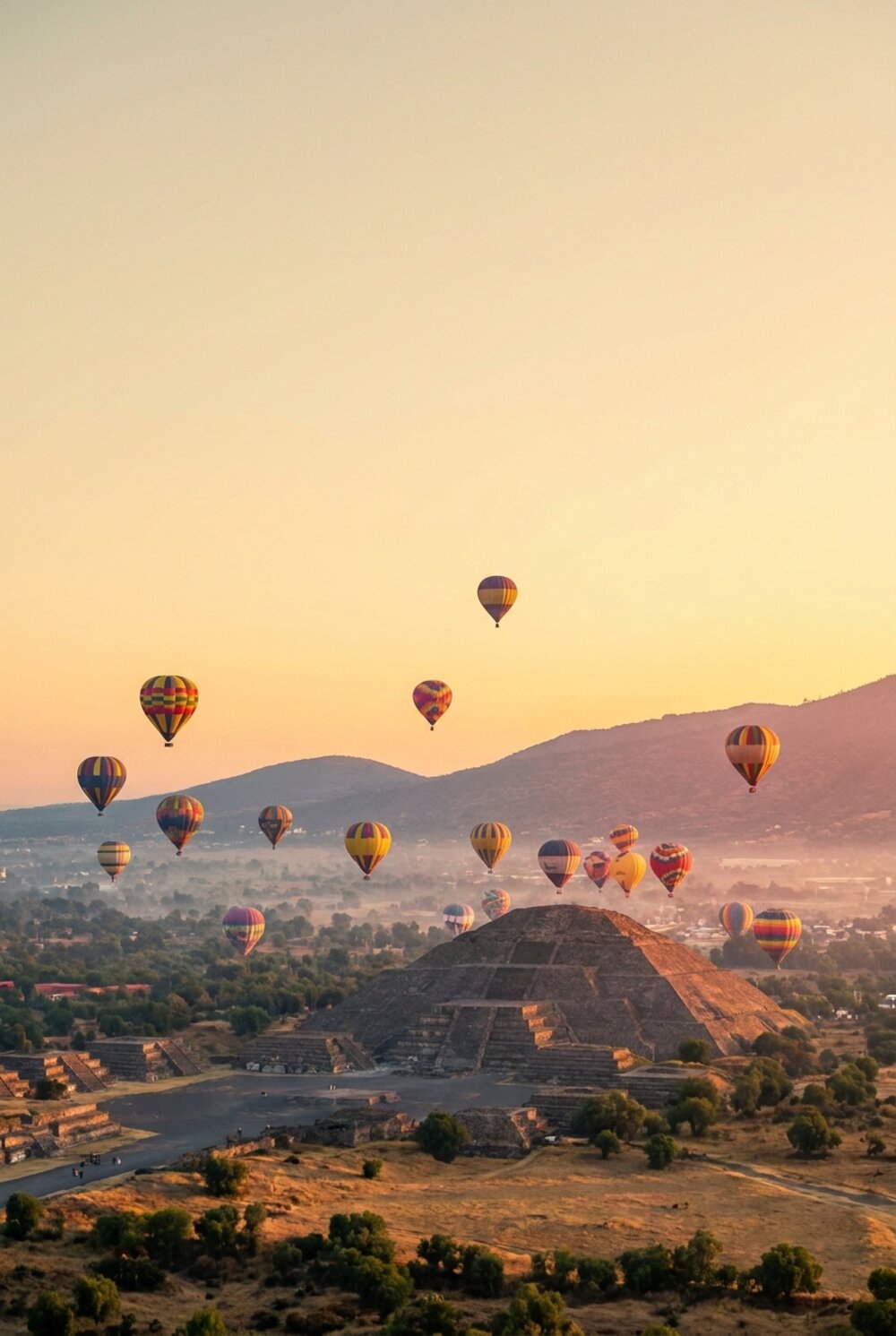
Table of Contents
Why Mexico City?
Mexico City is the capital that was founded on a lake, built with the stones of a pyramid, and still reads its own history out loud every time you order a taco al pastor. The Zócalo, the ceremonial plaza at the civic centre, was laid out in 1521 directly on top of the Aztec ceremonial precinct of Tenochtitlán, and the colonial Metropolitan Cathedral was built with limestone blocks quarried from the adjacent Templo Mayor pyramid that the Spanish had just demolished. A single morning walk from the cathedral steps to the Casino Español takes you across roughly seven centuries of continuous urban occupation, which is a claim very few other capitals on earth can make.
At 9.2 million residents inside the 16 alcaldías of Ciudad de México and roughly 22 million across the Valley of Mexico metropolitan area, the city is the largest Spanish-speaking metropolis on the planet and North America's biggest. The contradiction that hits every first-time visitor is how legible the city feels despite the scale: twelve colour-coded Metro lines, a flat 5-peso single fare, and a café-and-jacaranda grid in Roma and Condesa that could pass for Paris if the altitude were not 2,240 metres above sea level. You can finish your second flat white in a Roma Norte roastery and be standing in front of Frida Kahlo's blue courtyard house in Coyoacán twenty minutes later by Uber.
Mexico City is also the city that invented the taco al pastor — the shaved-pork shawarma adaptation brought by Lebanese immigrants in the 1960s — and now anchors one of the most decorated fine-dining scenes in Latin America. Pujol and Quintonil have both appeared inside the World's 50 Best Restaurants top ten in recent years, and the 2024 edition of the Michelin Guide Mexico awarded the city its first-ever stars, including stars for Pujol, Quintonil, Sud777, EM and Rosetta. Over the course of this guide you will get our pick of the nine neighbourhoods worth structuring a visit around, a four-category tour of the food from street-corner taquerías up to tasting menus, practical routes to the Templo Mayor, Chapultepec Castle, the Museo Nacional de Antropología, the Casa Azul and a day trip to Teotihuacán's 65-metre Pyramid of the Sun, plus the 2026 festival calendar from the jacaranda bloom in March to the Day of the Dead on 2 November and the Guadalupe pilgrimage on 12 December, which draws roughly 10 million pilgrims to a single basilica in the north of the city.
Neighborhoods: Finding Your Mexico City
📍 Mexico City Map: Every Place in This Guide
Mexico City is administratively divided into 16 alcaldías (boroughs) and roughly 1,800 colonias (neighbourhoods) spread across 1,485 km² of the Valley of Mexico. Travellers only need to learn a shortlist. The city radiates out from the Zócalo, with the historic colonial core on the east, the green lung of Bosque de Chapultepec on the west, Roma-Condesa café-and-Art-Deco belt immediately southwest of Reforma, Coyoacán's cobblestoned south, and Polanco's embassy-and-tasting-menu high ground tucked between Chapultepec and the financial towers of Nuevo Polanco. Distances are deceptive: Centro to Coyoacán looks long on the map but runs around half an hour by Uber outside rush hour, and the Roma-Condesa-Juárez triangle is flat enough to walk end-to-end in an afternoon. The following nine neighbourhoods cover every itinerary from a four-night first visit to a two-week deep-dive, and each one anchors to a specific Metro or Metrobús stop so you can drop it into your route without a map.
Centro Histórico
Centro Histórico is the 668-block UNESCO-inscribed colonial core laid out by Alonso García Bravo in 1521 directly over the Aztec ceremonial precinct of Tenochtitlán. The Zócalo — formally Plaza de la Constitución — is the second-largest city square on earth at roughly 57,600 m², bounded by the Metropolitan Cathedral (built 1573–1813), the National Palace with its Diego Rivera murals, the Templo Mayor archaeological site, and the Old Portal de Mercaderes. Calle Madero, the pedestrianised east-west artery, runs from the Zócalo to the Palacio de Bellas Artes past the gold-tiled 18th-century Casa de los Azulejos. Hotels here run the full range from the Gran Hotel Ciudad de México (famous Tiffany stained-glass ceiling, rooftop cathedral views) to mid-range business chains and budget hostels on República de Cuba. The neighbourhood's strengths are walkability and history; its weaknesses are noise into the evening and the very early morning street-sweeping crews.
- Zócalo & Metropolitan Cathedral — the ceremonial centre of Mexico since 1521.
- Templo Mayor archaeological site and museum — the uncovered base of the Aztec double pyramid.
- Palacio Nacional — Diego Rivera's History of Mexico murals on the main staircase.
- Palacio de Bellas Artes — art nouveau exterior, art deco interior, Ballet Folklórico venue.
Best for: first-timers, colonial history, Rivera murals. Access: Metro Line 2 Zócalo station.
Roma Norte
Roma Norte is the leafy, walkable café-and-cantina neighbourhood immediately south of Avenida Chapultepec that has become the single most-requested base for first-time Anglophone visitors since roughly 2015. The streets around Plaza Río de Janeiro — with its replica Michelangelo's David at its centre — are lined with early-20th-century Beaux Arts and Art Deco apartment buildings, many of which survived the 1985 earthquake and were lovingly restored after the second major 2017 quake. Independent roasteries like Buna, Quentin and Cardinal anchor a block-by-block third-wave coffee scene, and the Mercado Roma food hall on Querétaro houses roughly 40 small vendors under one roof. Nightlife is understated — craft cocktail bars like Licorería Limantour (ranked inside Latin America's 50 Best Bars every year since 2014), Handshake Speakeasy and Baltra — rather than club-heavy. Airbnb density in Roma Norte has driven rents up sharply over the last five years and is the single biggest reason the city convened a gentrification commission in 2024.
- Plaza Río de Janeiro — the neighbourhood's photogenic central square.
- Mercado Roma — 40-vendor gourmet food hall on Querétaro.
- Licorería Limantour — Latin America's 50 Best cocktail bar.
- Casa Lamm — 1911 mansion converted into a cultural centre and gallery.
Best for: first-timers, coffee, cocktails, leafy walking. Access: Metro Line 1 Insurgentes / Metrobús Álvaro Obregón.
Condesa
Condesa is Roma Norte's slightly greener, slightly quieter twin across Avenida Insurgentes, built in the 1920s on the former racecourse of the Jockey Club de México — which is why its two main parks, Parque México and Parque España, still trace the elliptical shape of the original track. Avenida Ámsterdam, the oval promenade that runs around Parque México, is one of the city's most popular dog-walking and jogging loops at 1.5 km per lap. The neighbourhood is unusually dense with Art Deco apartment blocks (Edificio San Martín, Edificio Basurto) and with mid-century modernist architecture by Mario Pani. Restaurants lean boutique-bistro rather than viral: Lardo for Mediterranean brunches, Merotoro for Baja-inspired seafood, and the 40-year-old El Parnita taquería on Yucatán for the neighbourhood's best pulpo taco. Weekend mornings bring a permanent farmer's market to Parque México's northwest corner and two tianguis street markets to the flanking streets. Condesa's dog-friendly cafés and wide sidewalks make it the single most popular neighbourhood for families and digital nomads on medium-length stays.
- Parque México — the neighbourhood's 9-hectare green core with Art Deco fountains.
- Avenida Ámsterdam — 1.5 km oval promenade on the former racecourse.
- Edificio Basurto — 1945 Francisco Serrano Art Deco tower with helix staircase.
- El Parnita — 40-year institution for pulpo tacos and aguas frescas.
Best for: long stays, families, Art Deco, dog-walkers. Access: Metro Line 1 Chapultepec / Metrobús Sonora.
Coyoacán
Coyoacán is the cobblestoned former colonial village twelve kilometres south of the Zócalo, absorbed into the city as it grew but still run around a village-style jardín centenario with a 16th-century parish church. This is where Hernán Cortés set up his interim capital while rebuilding Mexico City after 1521, and where Frida Kahlo and Diego Rivera lived on-and-off at the Casa Azul on Calle Londres. The Museo Frida Kahlo opened in the Casa Azul in 1958 and now receives roughly 500,000 visitors a year; advance online tickets are strongly recommended because the walk-up queue routinely runs two hours on weekends. Next door is the Museo Leon Trotsky (the villa where Trotsky was assassinated in 1940). Coyoacán's Saturday-Sunday food market (Mercado de Coyoacán) is the reference point for tostadas de jaiba (crab tostadas) in the city. The neighbourhood pairs naturally with San Ángel and with a walk through the nearby Viveros de Coyoacán public nursery park.
- Museo Frida Kahlo (Casa Azul) — the artist's blue cobalt courtyard home.
- Jardín Centenario — the 16th-century plaza and the coyote fountain.
- Mercado de Coyoacán — tostadas and tianguis, open daily until roughly 18:00.
- Museo Leon Trotsky — the fortified villa where Trotsky was killed.
Best for: art pilgrims, colonial-village atmosphere, slow weekend afternoons. Access: Metro Line 3 Coyoacán or Viveros, then 15-min walk.
Polanco
Polanco is the affluent embassy-and-luxury-shopping neighbourhood immediately north of Bosque de Chapultepec, laid out in the 1930s in a California-colonial style that stands in sharp architectural contrast to the rest of the city. The single kilometre-and-a-half of Avenida Presidente Masaryk is the most expensive retail street in Latin America by per-square-metre rents, with flagships for Hermès, Louis Vuitton, Cartier and Tiffany. The neighbourhood concentrates a disproportionate share of the city's tasting-menu restaurants: Pujol (Enrique Olvera), Quintonil (Jorge Vallejo), Biko, and the Fairmont Four Seasons, Hyatt Regency and Las Alcobas on Masaryk. The Museo Soumaya, opened 2011 in its asymmetric hexagonal silver-tile shell designed by Fernando Romero for Carlos Slim, houses a collection of roughly 66,000 works — free admission — and the Museo Jumex sits directly across Plaza Carso with a rotating programme of contemporary art. Nightlife pockets around Parque Lincoln and Campos Elíseos; the Lincoln area's outdoor chess tables are a weekend photograph institution.
- Pujol — Enrique Olvera's tasting-menu flagship, reservations 60 days out.
- Museo Soumaya — Carlos Slim's asymmetric silver-tile art museum, free entry.
- Museo Jumex — rotating contemporary-art programme across the plaza.
- Avenida Presidente Masaryk — the city's luxury-retail spine.
Best for: tasting menus, luxury shopping, embassy-corridor hotels. Access: Metro Line 7 Polanco.
San Ángel
San Ángel is the colonial cobblestone neighbourhood roughly four kilometres west of Coyoacán, clustered around the Plaza San Jacinto and the former Dominican monastery of Ex-Convento del Carmen (consecrated 1628). The Saturday-only Bazar Sábado on Plaza San Jacinto is the city's most-established craft market, running since 1960 with roughly 75 juried artisans selling Oaxacan alebrijes, Talavera ceramics, silver from Taxco and textiles from Chiapas inside a restored 17th-century mansion. The Museo Casa Estudio Diego Rivera y Frida Kahlo — two separate Functionalist studio houses joined by a rooftop bridge, designed by Juan O'Gorman in 1931 — is the neighbourhood's architectural highlight and a reference point for Latin American modernism. San Ángel pairs easily with Coyoacán on a single Saturday (both south of the river, both cobblestoned, complementary museums), and the restaurant San Angel Inn on the edge of the neighbourhood occupies a 17th-century hacienda that is still one of the city's great special-occasion dining rooms.
- Bazar Sábado — Saturday-only juried craft market on Plaza San Jacinto since 1960.
- Museo Casa Estudio Diego Rivera y Frida Kahlo — O'Gorman's twin studio houses, 1931.
- Ex-Convento del Carmen — crypt with 17th-century mummified remains.
- San Angel Inn — 17th-century hacienda restaurant, margaritas at sundown.
Best for: Saturday crafts, modernist architecture, Rivera pilgrimage. Access: Metrobús Dr Gálvez / La Bombilla.
Juárez / Zona Rosa
Juárez is the mid-rise colonia directly north of Reforma and east of Chapultepec, best known abroad for its Zona Rosa subzone — Latin America's oldest openly-LGBTQ nightlife district, concentrated along Calle Génova and Amberes. Zona Rosa also houses the city's Koreatown along Calle Hamburgo, anchored by roughly 60 Korean restaurants, BBQ houses, noraebang rooms and PC bangs that serve Mexico's second-largest Korean diaspora after Monterrey. The wider Juárez colonia is quieter: a grid of early-20th-century Porfirian mansions, several of which have been converted into small boutique hotels (Casa Goliana, Umbral), and a stretch of Reforma running up to the Monumento a la Revolución. Colonia Juárez is also where you find the US Embassy (Reforma 305), which means the neighbourhood is thick with notary publics, translation agencies and visa-photograph studios on the side streets. The Colonia Cuauhtémoc next door adds several more embassy properties and a small cluster of Japanese restaurants on Río Pánuco.
- Zona Rosa nightlife strip — Calle Génova, Amberes and Florencia.
- Koreatown on Calle Hamburgo — roughly 60 Korean venues.
- Monumento a la Revolución — 1938 triumphal dome with observation deck.
- US Embassy — Reforma 305, with the associated Anzures consular annexe.
Best for: LGBTQ nightlife, Korean food, embassy errands. Access: Metro Line 1 Insurgentes / Metro Line 3 Hidalgo.
Narvarte
Narvarte is the middle-class residential colonia southeast of Colonia del Valle, still largely lived-in by chilangos (Mexico City natives) rather than tourists, and therefore the one neighbourhood on this list where prices have not yet been pulled upward by Airbnb-driven gentrification. The cluster of taco stands along Avenida Cuauhtémoc south of Viaducto — Taquería Los Parados, El Vilsito (tacos al pastor at a working mechanic's shop after 20:00), and Orinoco — is one of the most respected in the whole city for late-night street-corner tacos. Mercado Lázaro Cárdenas sells weekday fondas at roughly 80 pesos (~$4.70) for a three-course comida corrida. The grid is flat, the sidewalks are reliable, and the Metrobús corridor on Cuauhtémoc makes it easy to pair Narvarte with a Roma or Condesa base for the evenings. Architecturally it is mostly 1950s-to-1970s four-storey residential blocks rather than Art Deco, which keeps the neighbourhood affordable and uncrowded.
- El Vilsito — the working mechanic's shop that becomes a taco al pastor institution after 20:00.
- Taquería Los Parados — standing-room late-night tacos on Monterrey.
- Mercado Lázaro Cárdenas — weekday fonda comida corrida around 80 pesos.
- Parque Delta shopping centre — on the site of the former Diablos Rojos baseball stadium.
Best for: late-night street tacos, local residential feel, budget travellers. Access: Metro Línea 9 Chilpancingo / Metrobús Nápoles.
Xochimilco
Xochimilco is the UNESCO-inscribed ancient Aztec canal and chinampa (floating-garden) district on the southern edge of the city, and the one Mexico City neighbourhood most visitors see only as a day-trip destination rather than a base. The 180 km of pre-Hispanic canals are the last surviving fragment of the lacustrine system that once filled the entire Valley of Mexico, and chinampa farmers still grow lettuces, radishes, mint and flowers on the constructed rectangular island plots using the same alluvial-silt technique documented in 16th-century codices. The trajinera flat-bottomed barges — painted in primary colours and named after women (Lupita, Rosita, Maria) — run from eight embarcaderos at around 500 pesos (~$29) per boat per hour for up to 15 passengers. The best of the embarcaderos, Nativitas and Cuemanco, are also the closest to the Museo Dolores Olmedo (reopened at its original Xochimilco site after a years-long relocation) which holds one of the largest Frida Kahlo and Diego Rivera collections anywhere.
- Trajinera canal ride — 500 pesos/hour per boat, mariachi optional.
- Museo Dolores Olmedo — Kahlo and Rivera collection in a hacienda.
- Chinampa floating-garden tours — book via De la Chinampa or Arca Tierra.
- Isla de las Muñecas (Island of the Dolls) — cultish canal-deep photo stop.
Best for: Sunday boat trips, UNESCO canals, agricultural heritage. Access: Tren Ligero from Tasqueña to Xochimilco terminus.
The Food
Mexican food in CDMX is unusually democratic: the 20-peso taco al pastor you eat standing up on a Calle Madero corner and the 3,500-peso tasting menu at Pujol draw on the same nixtamalised-corn pantry, and both end with a shot of Oaxacan mezcal if you want it. The 2024 Michelin Guide Mexico awarded the city its first-ever stars, with Pujol, Quintonil, Sud777, EM and Rosetta picking up one star each and a further 16 Bib Gourmand restaurants recognised. Pujol and Quintonil have both placed inside the World's 50 Best Restaurants top ten in recent years. What follows is structured the way most first-time visitors actually eat: street tacos at night, a long market lunch, one splurge, and a regional-Mexican detour into Oaxacan, Yucatecan or Poblano cuisine. Mexican food culture places unusual weight on the meal being a shared social object, served in the middle of the table on small plates with fresh tortillas arriving in a cloth-lined wicker basket — which is why the traditional comida corrida weekday lunch set still runs three to four courses for around 100 pesos (~$5.90) in working-class fondas. Corn — in a dozen heirloom varieties ranging from white criollo to blue bolita to the red Chalqueño from nearby Chalco — is the foundation of almost every dish on the table.
Street Tacos & Antojitos
The Mexico City street taco universe runs on small corn tortillas, fresh salsas in squeeze bottles, cilantro and onion, a wedge of lime, and a category-specific protein. The canonical CDMX varieties are al pastor (marinated pork shaved off a vertical trompo spit, a Lebanese-Mexican 1960s invention), suadero (beef brisket confit on a convex comal), campechano (a mixed beef-and-chorizo taco), lengua (braised beef tongue), tripa (crisped tripe), longaniza (paprika pork sausage), cochinita pibil (Yucatán-style slow-cooked pork), and barbacoa (pit-cooked lamb, weekend breakfast only). Most al pastor and suadero stands fire up around 18:00 and stay open until 03:00; most barbacoa stands close by 14:00 on Saturdays and Sundays only. Prices run 15 to 25 pesos per taco (~$0.90 to $1.50) at street stands, and 30 to 60 pesos (~$1.80 to $3.50) in sit-down taquerías. The tortilla is the tell: a proper taquería presses its own corn masa from nixtamal (lime-treated dried corn) the same day, rather than using commercial factory tortillas.
- El Huequito (Centro, established 1959) — one of the original al pastor stands. 22 pesos (~$1.30) per taco.
- El Tizoncito (Condesa) — claims to have invented al pastor in 1966; sit-down version 28 pesos (~$1.65) per taco.
- Los Cocuyos (Centro) — late-night suadero and campechano institution on Calle Bolívar. 20 pesos (~$1.20) per taco.
- El Vilsito (Narvarte) — mechanic's shop by day, al pastor taquería 19:00 to 03:00. 25 pesos (~$1.50) per taco.
- El Turix (Polanco) — Yucatán-style cochinita pibil tacos. 32 pesos (~$1.90) each, tortas de cochinita at 68 pesos (~$4).
- Taquería Orinoco (Roma Norte) — polished fast-casual chain, al pastor 28 pesos (~$1.65), open until 04:00.
Markets & Fondas
Mexico City has roughly 329 formal public markets and more than 1,000 weekly tianguis (street markets), which are the primary way most chilangos still eat and shop. Mercado de San Juan in Centro is the gastronomic-specialities market: imported cheeses, exotic meats (crocodile, iguana), and the city's most-famous ant-egg tacos at La Gran Casa Orihuela for around 180 pesos (~$10.60) a portion. Mercado Jamaica is the flower market that stays open around the clock; Mercado Roma on Avenida Querétaro is the polished 40-vendor gourmet hall; and Mercado de Medellín in Roma Sur is the Caribbean-Latin-American diaspora market with Cuban, Colombian, Argentine and Peruvian ingredients. Fondas — small family-run lunch-only restaurants inside the markets — serve the comida corrida three-course set for 80 to 120 pesos (~$4.70 to $7.00) between 13:00 and 17:00 on weekdays. Mercado de Coyoacán is the reference point for tostadas de jaiba (crab) and tostadas de camarón seco (dried shrimp), at roughly 60 pesos (~$3.55) each. Saturday brings the jarring but unmissable Mercado de Portales, a full-block Saturday-only seafood market that disappears by 16:00.
- Mercado de San Juan — exotic meats, imported cheese, ant-egg tacos from 180 pesos (~$10.60).
- Mercado Jamaica — 24-hour flower and produce market, fondas from 90 pesos (~$5.30).
- Mercado Roma — 40-vendor gourmet food hall, tacos from 60 pesos (~$3.55).
- Mercado de Medellín — Caribbean-Latin-American groceries and ceviche stands.
- Mercado de Coyoacán — tostadas de jaiba and de camarón, 60 pesos (~$3.55).
- Mercado de Portales — Saturday-only seafood market, oysters at 20 pesos (~$1.20) each.
Michelin-Listed Tasting Menus
The 2024 Michelin Guide Mexico, the country's first, awarded five one-star restaurants to Mexico City: Pujol (Polanco), Quintonil (Polanco), Sud777 (Pedregal), EM (Cuauhtémoc) and Rosetta (Roma Norte). A further Bib Gourmand list recognised taquerías and fondas across the city. The most-requested reservation is still Pujol, which Enrique Olvera opened in 2000 and moved to its current Polanco home in 2017; the Mole Madre course, a single aged mole served alongside a young mole refreshed daily, has run continuously since January 2013 (over 4,000 days at the time of writing). Tasting menus run 2,500 to 3,500 pesos (~$147 to $206) per head before wine pairing. Quintonil (Jorge Vallejo) is the neighbour and rival; Rosetta (Elena Reygadas) leans Italian-Mexican in a Roma Norte Porfirian mansion; Sud777 (Edgar Núñez) focuses on Valle de Bravo-sourced vegetables; and EM by Lucho Martínez is the tasting-menu newcomer. Reservations for all five open between 30 and 60 days in advance via the restaurants' own websites or Tock, and dinner slots disappear within hours.
- Pujol (Polanco) — Enrique Olvera, one Michelin star. Tasting menu 3,500 pesos (~$206). Reservations 60 days out.
- Quintonil (Polanco) — Jorge Vallejo, one Michelin star. Tasting menu 3,200 pesos (~$188).
- Rosetta (Roma Norte) — Elena Reygadas, one Michelin star. À la carte mains 450 to 680 pesos (~$26 to $40).
- Sud777 (Pedregal) — Edgar Núñez, one Michelin star, vegetable-forward tasting 2,500 pesos (~$147).
- EM (Cuauhtémoc) — Lucho Martínez, one Michelin star, 14-course tasting 2,800 pesos (~$165).
- Contramar (Roma Norte) — Gabriela Cámara's long-running lunch-only seafood temple; pescado a la talla 580 pesos (~$34), no reservations after 13:00.
Regional Mexican & Mezcalerías
Because CDMX is the country's capital, all 32 states are represented on its restaurant map. The regional cuisines you absolutely should try beyond central-Mexican are Oaxacan (moles, tlayudas, chapulines), Yucatecan (cochinita pibil, sopa de lima, papadzules), Poblano (mole poblano, chiles en nogada seasonally in August-September), Jalisciense (birria de res) and Veracruzano (seafood and huachinango a la veracruzana). Mezcalerías — bars specialising in artisanal Oaxacan mezcal from single-village palenques — exploded as a category from roughly 2012 and are now a standard fixture of Roma Norte and Centro Histórico. Pours run 90 to 250 pesos (~$5.30 to $14.70) per shot depending on maguey variety (espadín is the common one, tobalá and tepeztate are the rare wild varieties). Casa Franca, La Botica and La Clandestina are the most-respected mezcalerías in Roma; Bósforo in Centro is the cramped two-storey institution. Pulque — the pre-Hispanic fermented-maguey drink that has been drunk continuously for over a thousand years — has seen a revival at pulquerías like Las Duelistas (Centro) and La Hija de los Apaches (Álvaro Obregón), where a litre runs 50 to 90 pesos (~$3 to $5.30).
Beyond Tacos and Tasting Menus
The city's food map extends well beyond tacos and tasting menus. Look for tamales de olla served from insulated street-corner pots in the mornings (15 to 25 pesos / ~$0.90 to $1.50 each), tortas ahogadas — Guadalajara-style pork sandwiches drowned in tomato salsa — from specialist torterías, pozole (hominy-and-pork stew) served in deep bowls at El Moro's neighbour Casa de Toño (75 pesos / ~$4.40), chilaquiles for breakfast at almost any café (90 to 140 pesos / ~$5.30 to $8.25), and birria-quesa-tacos (Jalisco-style cheese-and-stewed-beef tacos) at the newer generation of Condesa and Roma stands. Churros from the 1935-founded El Moro (original branch on San Juan de Letrán) are a mandatory 03:00 nightcap at 45 pesos (~$2.65) for six, paired with a cup of four-spice hot chocolate. For breakfast, the molletes (open-faced bean-and-cheese sandwiches) at the Cardinal café chain and the huevos divorciados at Lalo! in Roma Sur run 140 to 180 pesos (~$8.25 to $10.60).
- Tamales de olla — street-corner morning tamales at 15 to 25 pesos (~$0.90 to $1.50) each.
- El Moro churros — the 1935 24-hour churrería, six churros for 45 pesos (~$2.65).
- Pozole at Casa de Toño — 24-hour chain, deep bowl 75 pesos (~$4.40).
- Chiles en nogada (Aug-Sep only) — Poblano stuffed chile in walnut cream at Azul Histórico, 380 pesos (~$22.35).
Food Experiences You Can't Miss
The single highest-leverage food experience in the city is a guided tacquería crawl through Centro and Roma with a local food writer or chef; reputable operators include Eat Mexico, Club Tengo Hambre and Mexico City Food Tours, and a four-hour circuit with six to eight stops runs 1,400 to 2,200 pesos (~$82 to $129) per person. If you prefer to self-guide, the single-best unstructured night is the midnight taco al pastor run between El Huequito, Los Cocuyos and El Vilsito: three of the most-respected trompo spits in the city inside a single 20-peso-a-taco circuit, an Uber apart and all open until at least 02:00. For a daytime experience, pair the Mercado de San Juan's exotic-meat vendors with a glass of Oaxacan mezcal at neighbouring La Casa de Los Tacos, followed by a dessert walk to El Moro for churros. A second excellent full-day plan is the Arca Tierra chinampa brunch in Xochimilco: a five-hour Sunday-only event on a working floating-garden farm at roughly 2,500 pesos (~$147) per person, with the chef preparing everything grown on the plot that morning.
- Saturday morning at the Mercado de San Juan — pair a two-hour market walk with the ant-egg tacos at La Gran Casa Orihuela.
- A pulquería hop on a Friday night — Las Duelistas for the neon atmosphere, La Hija de los Apaches for the traditional crowd.
- A book-ahead chef's counter at Pujol, Quintonil or EM — the only way to see a full Michelin tasting menu unfold in 14 to 18 courses.
- A chinampa brunch at Arca Tierra in Xochimilco — a five-hour Sunday event on a working floating-garden plot, roughly 2,500 pesos (~$147) per person.
- A midnight taco al pastor run between El Huequito, Los Cocuyos and El Vilsito — three of the best trompo spits in the city in a single 20-peso-a-taco circuit.
- A guided food tour with Eat Mexico or Club Tengo Hambre — four hours, six to eight stops, 1,400 to 2,200 pesos (~$82 to $129) per person.
Cultural Sights
Zócalo & Templo Mayor
The Zócalo is the 57,600 m² civic plaza at the heart of Centro Histórico, bounded by the Metropolitan Cathedral, the National Palace and the Templo Mayor archaeological site. The Templo Mayor was the double pyramid at the ceremonial centre of the Aztec capital Tenochtitlán, dedicated jointly to the rain god Tlaloc and the war god Huitzilopochtli and first consecrated in 1325 CE; it was progressively enlarged in seven stages before being demolished by the Spanish in 1521. The uncovered base and the adjacent museum display the monolithic Coyolxauhqui stone discovered by electricity workers in 1978, plus thousands of ritual offerings excavated since. Admission 90 pesos (~$5.30), Tuesday to Sunday 09:00 to 17:00; free entry for Mexican citizens and residents on Sundays.
Teotihuacán (Pyramid of the Sun)
Teotihuacán is the UNESCO-inscribed pre-Aztec archaeological city 48 km northeast of Mexico City, with an estimated peak population of 100,000 to 200,000 around 400 CE that made it one of the largest cities in the world at the time. The Pyramid of the Sun stands 65 metres tall and 225 metres on each side at the base; the smaller Pyramid of the Moon closes the north end of the Avenue of the Dead. Climbing the pyramids has been closed for restoration since 2020, but the site itself is open 09:00 to 15:00 daily, admission 95 pesos (~$5.60). Buses run from Terminal Central del Norte every 20 minutes; the journey is roughly one hour each way.
Museo Frida Kahlo (Casa Azul)
The Casa Azul is the cobalt-blue courtyard house at Londres 247 in Coyoacán where Frida Kahlo was born in 1907 and died in 1954, converted into a museum by Diego Rivera in 1958 following her death. The collection includes Kahlo's palette, her corsets, her wheelchair, several of her lesser-seen paintings, the 1930s kitchen stencilled with her and Rivera's names, and the bedroom where she painted in the last years of her life. Admission 270 pesos (~$15.90) for foreign visitors on weekdays, 310 pesos (~$18.25) weekends; timed-entry tickets must be booked in advance through the museum's website. Open Tuesday 10:00 to 17:30, Wednesday 11:00 to 17:30, Thursday-Sunday 10:00 to 17:30.
Chapultepec Castle (Castillo de Chapultepec)
Chapultepec Castle is the neoclassical castle built in 1785 on Chapultepec Hill and the only royal castle in the Americas to have housed a sovereign monarch — Maximilian I of Mexico, who ruled as Habsburg-backed Emperor from 1864 until his execution in 1867. The castle was converted into the Museo Nacional de Historia in 1944 and holds Porfirio Díaz's state carriage, Maximilian's gilded staterooms, Juan O'Gorman's Mural of Independence, and a terrace offering a clear view down Paseo de la Reforma to the Ángel de la Independencia monument. Admission 90 pesos (~$5.30), Tuesday to Sunday 09:00 to 17:00. Budget 90 minutes for the castle plus another hour for the adjacent Chapultepec park.
Palacio de Bellas Artes
The Palace of Fine Arts is the country's flagship performing-arts venue, begun in 1904 under Porfirio Díaz and finally inaugurated in 1934 after the Revolution. The exterior is Art Nouveau in white Carrara marble, the interior is Art Deco in onyx and steel, and the main concert hall houses the Tiffany glass stage curtain depicting the Valley of Mexico (the only one of its kind in the world). Murals on the upper floors include Diego Rivera's reproduction of his censored Rockefeller Center fresco “Man at the Crossroads” (restored here in 1934), David Alfaro Siqueiros's New Democracy, and Rufino Tamayo's México de Hoy. Admission to the museum portion is 90 pesos (~$5.30), free on Sundays; Ballet Folklórico performance tickets run 700 to 1,600 pesos (~$41 to $94).
Museo Nacional de Antropología
The National Museum of Anthropology is the country's most-visited museum and one of the great anthropological institutions on the planet, opened at its current Chapultepec Park site in 1964 in the Pedro Ramírez Vázquez-designed building with its central umbrella-fountain atrium. The 23 permanent galleries on the ground floor trace pre-Hispanic civilisations from the Olmec colossal heads through the Maya, Zapotec, Mixtec, Aztec and Teotihuacan cultures; the upper floor covers contemporary indigenous Mexico. The single most-photographed object is the Aztec Sun Stone (Piedra del Sol), a 24-tonne basalt monolith carved between 1250 and 1521 and held in the central Mexica hall. Admission 95 pesos (~$5.60), Tuesday to Sunday 09:00 to 18:00, free Sundays for Mexican residents. Budget at least three hours.
Xochimilco Canals (UNESCO)
The Xochimilco canal-and-chinampa system was inscribed on the UNESCO World Heritage List in 1987 jointly with Mexico City's Centro Histórico as the last surviving fragment of the lacustrine network that once filled the entire Valley of Mexico. The 180 km of canals , the chinampa (floating-garden) plots, and the eight embarcaderos from which colourful trajineras depart are open daily; trajinera rentals run around 500 pesos (~$29.40) per boat per hour (up to 15 passengers) at a government-fixed tariff, plus optional mariachi boat alongside for roughly 250 pesos (~$14.70) per song. Pair with the Museo Dolores Olmedo and, for the more adventurous, a chinampa-to-table brunch at Arca Tierra.
Entertainment
Lucha Libre
Lucha libre is the freestyle masked-wrestling spectacle that Mexico elevated into an art form from roughly 1933 onward, and Arena México in Colonia Doctores is the 16,500-capacity temple of the sport run by Consejo Mundial de Lucha Libre (CMLL). CMLL cards run Tuesday (20:30), Friday (20:30) and Sunday (17:00) most weeks of the year; tickets run from roughly 80 pesos (~$4.70) for the upper balcony to 700 pesos (~$41) for ringside. The second major promoter, AAA, runs at Arena Ciudad de México in the north of the city. Photography is fine, flash is discouraged, and throwing peanut shells at booed rudos (villains) is considered a local rite of passage. Match nights are family outings: expect children, grandparents and T-shirt vendors hawking Blue Demon and Místico masks at the entrances for 120 to 300 pesos (~$7.10 to $17.65). Arrive half an hour early; the first bouts are usually junior wrestlers and are often the most technically interesting.
Cantinas & Mezcalerías
The cantina is a century-old CDMX institution: a long bar, tiled floors, free botana snacks brought with each round, and a rotating clientele that has historically run older and male but now skews mixed. Flagship examples run from 1900-founded La Opera (where Pancho Villa supposedly shot a bullet into the ceiling, still visible today) to the 1940s La Polar (famous for its birria de res) and the no-tourists Covadonga in Roma Norte. Expect 45 to 90 pesos (~$2.65 to $5.30) per beer, 80 to 160 pesos (~$4.70 to $9.40) per tequila shot, and complimentary snacks. Mezcalerías are the younger sibling: see Bósforo in Centro, La Botica in Roma, and Casa Franca for live jazz with mezcal flights of three pours around 380 pesos (~$22.35).
Nightclubs & Live Music
Mexico City's club scene concentrates in three corridors: Zona Rosa (mixed and LGBTQ), Roma Norte and Juárez (craft cocktails and smaller live venues), and Polanco / Nuevo Polanco (upscale rooftop and hotel clubs). Salón Tenampa on Plaza Garibaldi has been the mariachi venue since 1925 and is where you go for live trumpet-and-guitarrón at a cantina table; cover is free and beers are 90 pesos (~$5.30). Foro Indie Rocks and El Imperial anchor the independent-live-band scene in Roma. Tickets for larger acts at the Auditorio Nacional (10,000 capacity) run 800 to 4,500 pesos (~$47 to $265) through Ticketmaster; the Palacio de los Deportes and Foro Sol handle stadium shows and international pop tours. Plaza Garibaldi's surrounding blocks still require basic street awareness after midnight.
Mariachi & Plaza Garibaldi
Plaza Garibaldi in the north of Centro is the spiritual home of mariachi: every night from roughly 19:00 onward, 40 to 80 mariachi bands in full charro silver-buttoned uniform gather in the plaza looking for serenade bookings. A single song commissioned on the plaza runs around 250 pesos (~$14.70), a full 20-minute set around 2,500 pesos (~$147); locals hire them for birthdays and marriage proposals. The surrounding Museo del Tequila y el Mezcal offers structured 100-peso flights as a daytime primer. The plaza fully transitions into cantina and mariachi-serenade territory after 20:00, and pulquerías like La Hija de los Apaches anchor the edges.
Football & Baseball
Estadio Azteca, the only stadium in the world to have hosted two FIFA World Cup finals (1970 and 1986), is scheduled to host the opening match of the 2026 FIFA World Cup on 11 June 2026 under its shared hosting with Canada and the United States. Club América plays its Liga MX home fixtures at Azteca; Cruz Azul plays at Estadio Ciudad de los Deportes (temporary Azul) and Pumas UNAM plays at Estadio Olímpico Universitario. Liga MX tickets run 350 to 2,200 pesos (~$20.60 to $129.40). The Diablos Rojos baseball club plays at the 20,000-seat Estadio Alfredo Harp Helú; tickets run 80 to 700 pesos (~$4.70 to $41) and the season runs April to September.
Cinema & Performing Arts
Mexico City is a major international cinema city, with the Cineteca Nacional in Xoco (a Michel Rojkind-remodelled campus with ten screens and permanent archive programming) at its centre. Standard cinema tickets at Cinépolis run 80 to 140 pesos (~$4.70 to $8.25); the VIP format adds reclining seats and waiter service for around 260 pesos (~$15.30). The Palacio de Bellas Artes houses the Ballet Folklórico performances on Wednesdays and Sundays (700 to 1,600 pesos / ~$41 to $94), and the Auditorio Blas Galindo at Centro Nacional de las Artes runs a full classical and contemporary programme. The FICUNAM film festival runs in late February-March at Ciudad Universitaria; the Festival Internacional de Cine runs in October.
Day Trips
Teotihuacán (1 hour by bus from Terminal Norte)
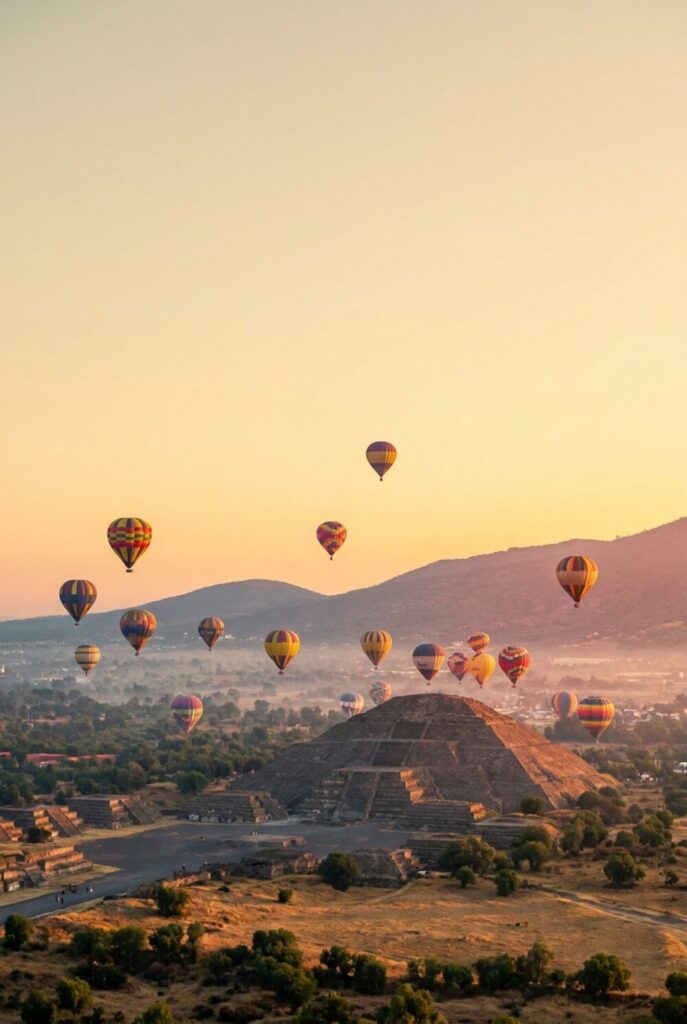
Teotihuacán is the single most popular day trip from the capital, a 48-kilometre drive northeast to the UNESCO-inscribed pre-Aztec archaeological city that peaked around 400 CE with a population estimated at 100,000 to 200,000. The site is laid out along the four-kilometre Avenue of the Dead, anchored by the 65-metre Pyramid of the Sun and the 43-metre Pyramid of the Moon, with the Temple of the Feathered Serpent (Quetzalcóatl) at the south end. Climbing the pyramids has been suspended since 2020, but the site and on-site museum are open 09:00 to 15:00 daily, admission 95 pesos (~$5.60). Autobuses Teotihuacán runs from Terminal Central del Norte every 20 minutes ; the journey is roughly one hour each way and costs 64 pesos (~$3.75). Hot-air balloon companies (Volar Globos, Sky Balloons) run sunrise flights over the site from roughly 2,800 pesos (~$165) per person including pickup from CDMX hotels.
Puebla (2 hours by ADO bus from TAPO)
Puebla is the UNESCO-listed colonial city 134 kilometres southeast of CDMX, founded in 1531 and famous for its Talavera-tiled colonial façades, its 70-plus churches including the twin-towered baroque Cathedral (1575–1690), and as the birthplace of mole poblano and chiles en nogada. The ADO-operated bus from Terminal TAPO runs every 20 minutes from 05:00 to 00:00 with a journey time of 2 hours and a one-way fare of around 280 pesos (~$16.50). Puebla is an easy day trip if you start before 08:00; the Zócalo, the Cathedral, the Capilla del Rosario at Santo Domingo, and the Biblioteca Palafoxiana (the oldest library in the Americas, inscribed by UNESCO in 2005) are all within a ten-block walk. Pair with the Tuesday-Sunday mercado gastronómico at Los Sapos for lunch.
Xochimilco Canal Day (45 minutes by Tren Ligero from Tasqueña)
Xochimilco is the UNESCO-inscribed lacustrine district on the southern edge of the city proper, and while technically still inside CDMX it functions as a day trip because of the travel time from Centro. The trip runs Metro Line 2 southbound to Tasqueña, then the Tren Ligero light-rail extension to Xochimilco terminus (combined about 45 minutes and 8 pesos / ~$0.50 one-way). At the canal embarcaderos, trajinera rentals run around 500 pesos (~$29.40) per boat per hour at a government-fixed tariff. Combine the canal ride with the Museo Dolores Olmedo and, for a longer plan, a chinampa-to-table brunch at Arca Tierra (about 2,500 pesos / ~$147 per person, Sundays only, book three weeks ahead). Best days are Saturdays and Sundays when mariachi and marimba bands play on the water.
Taxco (3 hours by ADO bus from Taxqueña)
Taxco is the silver-mining mountain town 175 kilometres southwest of CDMX, built vertically on a steep ravine and traversed exclusively by white-with-red-stripe VW Beetle taxis on its narrow cobblestoned streets. The baroque Santa Prisca Cathedral (built 1751–1758 by the Borda silver fortune) is the centrepiece, and the Mercado de Plata stocks roughly 300 silver workshops that together make Taxco the silver-jewellery capital of Latin America. The ADO bus from Terminal Taxqueña runs every 40 minutes with a journey time of three hours and a one-way fare around 320 pesos (~$18.80). Taxco works as a long day trip (depart CDMX at 07:00, back by 21:00) or as an overnight with dinner at Restaurante del Ángel Inn. Bring walking shoes: the town is almost entirely vertical.
Cuernavaca (1 hour 30 minutes by Pullman de Morelos from Taxqueña)
Cuernavaca is the 1,500-metre-altitude garden city 85 kilometres south of CDMX, long marketed as the "City of Eternal Spring" because its year-round daytime temperatures sit in a narrow 22-28°C range. Hernán Cortés built his personal palace here in 1526 (now the Museo Cuauhnáhuac), and the Catedral de la Asunción de María with its 16th-century Franciscan murals sits opposite. The Jardín Borda (1783) is the former summer residence of Emperor Maximilian and his wife Carlota; the Pyramid of Teopanzolco on the eastern edge of the city is a small surviving pre-Aztec ruin. Pullman de Morelos runs from Terminal Taxqueña every 20 minutes for 160 pesos (~$9.40) each way, journey 1h 30m. Cuernavaca works as a relaxed Saturday or Sunday with lunch at Las Mañanitas and a pool afternoon at one of the restored hacienda hotels.
Seasonal Guide
Mexico City sits at 2,240 metres in the Valley of Mexico and has a high-altitude subtropical highland climate: warm days, cool nights, and a clean divide between the winter-spring dry season and the May-October rainy season. Temperatures vary narrowly through the year but altitude and sun angle punish under-dressed visitors at both ends of the day.
Spring (March – May)
The driest weeks of the year and the single most photographed: from mid-March to mid-April, the city's roughly 40,000 jacaranda trees bloom lilac along Paseo de la Reforma, Parque México, Parque España and the Avenida Ámsterdam loop in Condesa. Daytime temperatures climb from 22°C in March to 28°C in late April, nights stay around 8 to 12°C, and the UV index at altitude routinely reaches 11 at noon. Holy Week (Semana Santa) at the end of March or beginning of April empties many chilango-run restaurants but fills the Basílica de Guadalupe and Iztapalapa's live Passion Play. Expect the year's worst air quality in April-May when the valley traps forest-fire smoke before the rains arrive.
Summer (June – August)
The rainy season: almost daily late-afternoon thunderstorms from 16:00 to 19:00, typically clearing by dinner, with the city greener and the air markedly cleaner than in spring. Daytime temperatures plateau at 22 to 24°C, nights drop to 12°C, and the highs are modest because the clouds arrive on schedule. Carry a compact umbrella and a light rain layer; most outdoor plans are safe if scheduled before 15:00. The Pride parade (Marcha del Orgullo LGBT+) runs the last Saturday of June along Paseo de la Reforma. Chiles en nogada season opens in mid-August and runs through the end of September at Puebla-influenced restaurants like Azul Histórico and Nicos.
Autumn (September – November)
The single most eventful stretch of the year. The Grito de Independencia on the night of 15 September fills the Zócalo with several hundred thousand people for the president's balcony address at 23:00, followed by a 16 September military parade. The rains begin to taper from late September, and 31 October to 2 November is Día de los Muertos: the Mega Procesión de Catrinas along Paseo de la Reforma on the last Saturday of October, massive altars in the Zócalo, all-night cemetery vigils at Mixquic on 2 November, and restaurant altars at Pujol, Azul Histórico and Nicos. Book accommodation six months in advance for the Day of the Dead weekend.
Winter (December – February)
The driest and clearest skies of the year, with daytime temperatures in the 20 to 22°C range and nights dropping to 6 to 8°C. The Feast of the Virgin of Guadalupe on 12 December draws an estimated 10 million pilgrims to the Basílica de Guadalupe in the north of the city over the first two weeks of December — one of the largest annual Catholic pilgrimages on the planet. Christmas posadas (candle-lit neighbourhood processions) run 16-24 December, and 6 January is Día de los Reyes Magos, when families cut the rosca de reyes bread ring. Pack a light wool layer for evenings; heating is uncommon in older buildings.
Getting Around
Metro CDMX
The Sistema de Transporte Colectivo Metro operates twelve colour-coded lines across 195 stations and roughly 226 kilometres of track, serving an average of four million passengers per weekday on the pre-pandemic baseline. A single journey costs a flat 5 pesos (~$0.30) regardless of distance or transfers, paid by rechargeable Movilidad Integrada card (formerly Tarjeta CDMX) purchased from station-front machines for a one-off 15-peso card cost. That makes Mexico City's Metro one of the cheapest big-city systems on earth. The first two carriages at each end are reserved for women and children during rush hours; enforcement is strict. Peak hours are 07:00-09:30 and 18:00-20:30, when carriages genuinely can reach crush loading.
Metrobús
The Metrobús is the city's seven-line articulated bus-rapid-transit network running on dedicated centre-lane corridors across Insurgentes, Reforma, Eje 4 Sur and four other arterials. A single ride is 6 pesos (~$0.35), paid with the same Movilidad Integrada card as the Metro. The Line 7 double-decker buses run up Paseo de la Reforma from Indios Verdes to Campo Marte and are the single most useful bus in the city for visitors since they pass most of the Reforma hotel cluster. Metrobús has better surface access to Roma, Condesa and Juárez than the subway does because three of the lines physically traverse those neighbourhoods.
Ecobici
Ecobici is the city's bike-share network, operating roughly 480 docking stations and 6,800 bicycles across the central alcaldías. A seven-day tourist pass costs around 391 pesos (~$23); a one-day pass is roughly 128 pesos (~$7.50) and includes unlimited 45-minute trips. The network covers Centro, Roma, Condesa, Juárez, Polanco, Hipódromo and Del Valle densely; it thins out past Coyoacán. Paseo de la Reforma is closed to private cars and open to cyclists every Sunday 08:00-14:00 for Muévete en Bici, which extends for 55 kilometres of car-free streets across the city centre.
Uber & Didi
Uber and Didi both operate at full scale in CDMX and are substantially cheaper than US-equivalents: a 7-kilometre ride across Roma to Polanco runs 90 to 140 pesos (~$5.30 to $8.25) depending on time of day. Street taxis (pink-and-white "rosa y blanco" libres or metered "sitio" taxis) are available but rideshare is the default for most visitors because of transparent pricing, in-app route sharing and driver ratings. Flag-fall for metered street taxis is 14.60 pesos (~$0.85); the per-kilometre rate is roughly 1.80 pesos. Avoid unmarked taxis hailed on the street outside major transit hubs.
Airport Access
Mexico City has two international airports: the long-established Aeropuerto Internacional Benito Juárez (AICM / IATA: MEX) 5 kilometres east of the Zócalo, and the newer Felipe Ángeles International (AIFA / IATA: NLU) 45 kilometres north of downtown, opened in March 2022. The two are not interchangeable: always confirm which airport your ticket is for.
- AICM to Centro — Metro Line 5 Terminal Aérea station, 5 pesos (~$0.30), 25 minutes.
- AICM to Centro — Uber/Didi, roughly 220 pesos (~$13), 25 to 45 minutes depending on traffic.
- AICM Metrobús Line 4 to Centro — 30 pesos (~$1.80), 40 minutes.
- AIFA to Centro — Mexibús + shuttle or dedicated AIFA bus, 120 to 160 pesos (~$7 to $9.40), roughly 1h 45m.
- AIFA to Centro — Uber, roughly 650 pesos (~$38), 1h 10m outside peak.
Navigation Tips
Use Google Maps for transit routing (it has Metro, Metrobús and walking transfer data), Moovit for live arrival updates, and Uber or Didi for any door-to-door journey. The city's grid is easy once you learn the rule: most avenues run either east-west (Reforma, Insurgentes's short cross-streets, Chapultepec, Reforma) or north-south (Insurgentes is the longest continuous avenue in the Americas, at 28.8 kilometres). Colonia names matter more than street names: an address always includes the colonia, not just the street, because many street names repeat across the city.
Budget Breakdown: Making Your Pesos Count
Mexico City is one of the most affordable global capitals with genuine tasting-menu-grade food, world-class museums at 90-to-270-peso admissions, and a Metro fare that is lower than any other city on this list. All prices below are in Mexican pesos with USD conversions at the mid-market rate of 17 MXN per USD on 2026-04-19 (xe.com). Costs can scale up to European levels in Polanco if you stay on Masaryk and dine at Pujol, or down to South Asian levels in Narvarte and Centro if you base in hostels and eat from the markets.
| Tier | Daily | Sleep | Eat | Transport | Activities | Extras |
|---|---|---|---|---|---|---|
| Budget | 800 pesos (~$47) | Hostel dorm 300-450 pesos (~$18-26) | Fonda lunch + street tacos 150 pesos (~$9) | Metro + Metrobús 30 pesos (~$1.80) | 1 museum 90 pesos (~$5.30) | 1 pulque or beer 60 pesos (~$3.55) |
| Mid-Range | 2,000 pesos (~$118) | 3-star hotel 1,100 pesos (~$65) | Market brunch + sit-down taquería 400 pesos (~$23.50) | Uber + Metro 200 pesos (~$11.75) | 2 museums + lucha libre 260 pesos (~$15.30) | Cocktail in Roma 180 pesos (~$10.60) |
| Luxury | 6,000+ pesos (~$353) | Polanco/Roma boutique 4,000+ pesos (~$235) | Pujol or Quintonil tasting 3,500 pesos (~$206) | Private driver 1,500 pesos (~$88) | Guided Templo Mayor + Teotihuacán 1,800 pesos (~$106) | Mezcal flight at Bósforo 500 pesos (~$29.40) |
Where Your Money Goes
Sleep is the single largest line on any Mexico City trip: a bed in a Roma Norte dorm runs 300 to 450 pesos (~$18 to $26), a polished 3-star in Centro or Juárez runs 900 to 1,400 pesos (~$53 to $82), and a boutique Polanco or Four Seasons suite clears 4,000 to 9,000 pesos (~$235 to $529). Food scales in the opposite direction: a full day of street tacos and market meals can come in under 200 pesos (~$12), and the jump to the Michelin one-star tier is an order of magnitude (3,200+ pesos / ~$188+ per head at dinner). Transport is the line that stays trivial across every tier: the Metro is 5 pesos (~$0.30) a ride, and even in the luxury tier the best way to cross town is still an Uber at 100 to 200 pesos (~$5.90 to $11.75). Activities sit in the middle: almost all the major museums charge 90 to 270 pesos (~$5.30 to $15.90) admission and most are free on Sundays for Mexican residents.
Money-Saving Tips
The single biggest money-saving move in Mexico City is to base yourself in a colonia where public transit covers everything you want to see: Roma Norte, Juárez, Centro Histórico and Condesa all sit on at least two Metro or Metrobús lines, which means you can replace most 200-peso Uber rides with 5-peso Metro fares. The second biggest is to front-load museums: the big four (Templo Mayor, Bellas Artes museum, Castillo de Chapultepec, Museo Nacional de Antropología) together cost roughly 365 pesos (~$21.50) at foreigner pricing and can be covered across two mornings on a Tuesday-Wednesday schedule to dodge the Sunday crush. The third is to pick one tasting-menu splurge rather than three, because the jump from 500-peso cantina dinners to 3,500-peso Pujol-level menus is an order of magnitude that no daily budget absorbs gracefully.
- Buy a Movilidad Integrada transit card once and use it across Metro, Metrobús, Tren Ligero and Ecobici; top up 50 pesos at a time.
- Lunch at a fonda off the main tourist circuit (Mercado Lázaro Cárdenas in Narvarte, Mercado de Jamaica) for an 80 to 120-peso (~$4.70 to $7.05) comida corrida three-course set.
- Go to museums on a Sunday if you hold Mexican residency; go on a Tuesday if you do not, because Sunday lines can add an hour.
- Book Uber-pool-style DidiExpress for non-peak cross-town rides; fares run 20 to 30% below standard Uber.
- Skip hotel breakfast and eat chilaquiles or a concha with a café de olla at a neighbourhood bakery for 80 to 120 pesos (~$4.70 to $7.05).
Practical Tips
Language
Spanish is the universal language of Mexico City and English proficiency outside the tourist core is limited. Restaurant staff in Roma, Condesa, Polanco and Centro will usually speak enough English to take an order; Metro ticket sellers, taxi drivers, and most market vendors will not. A hundred words of basic Spanish — greetings, numbers, menu items, directions, "la cuenta por favor" — transforms the trip. Mexican Spanish includes dozens of chilanguismos (CDMX-specific terms): "chilango" means a native of the capital, "¡no manches!" is a mild exclamation ("no way!"), "wey" is the ubiquitous informal filler equivalent to "dude", and "qué padre" means "how cool". Google Translate's camera mode handles menus and signs reliably.
Cash vs. Cards
Card acceptance has improved dramatically since 2022 in restaurants, hotels, supermarkets and chain shops, and contactless Visa / Mastercard works at most mid-range and higher venues. Below that tier — taquerías, fondas, tianguis, Metro stations, street vendors, cantinas — cash is still the overwhelming default. Withdraw pesos from a bank-branded ATM (BBVA, Banamex, Santander) rather than the standalone Banco Azteca or airport ATMs, which charge 120 to 180-peso (~$7 to $10.60) access fees on top of your home bank's foreign-transaction fee. Carry 300 to 500 pesos in small denominations for tacos, tips and Metro top-ups; nobody can break a 500-peso note at a taco stand.
Altitude & Acclimatisation
Mexico City sits at 2,240 metres above sea level, which is high enough that roughly 20% of visitors report mild altitude symptoms (shortness of breath on stairs, mild headache, disrupted sleep) in their first 24 to 48 hours. The city is not in the altitude-sickness-danger zone (that starts above 2,500 metres for most people and becomes serious above 3,500), but alcohol hits harder, dehydration is faster, and sunburn is sharper because the air is thinner. Arrive hydrated, avoid alcohol for the first 24 hours, and pace the first day on the flat (Reforma, Chapultepec) rather than climbing to Chapultepec Castle.
Air Quality (IMECA) & Environment
Air quality in the Valley of Mexico is measured on the IMECA scale (Índice Metropolitano de la Calidad del Aire), published live by the city government. Readings below 50 are good, 51 to 100 moderate, 101 to 150 unhealthy for sensitive groups, above 150 unhealthy for everyone. The worst air quality sits from late March to early May when forest-fire smoke gets trapped in the valley before the rains arrive; the cleanest stretch is July-August during the daily thunderstorms. If the city issues a Fase 1 ambiental contingency, older cars are pulled from the road and outdoor exercise is discouraged.
Seismic Awareness
CDMX sits on the dry bed of Lake Texcoco, which means its soft alluvial sediments amplify seismic waves from distant subduction-zone earthquakes on the Pacific coast. The two defining earthquakes in living memory both struck on 19 September — the 1985 Michoacán magnitude-8.0 event that killed an estimated 10,000 people and the 2017 Puebla magnitude-7.1 event that killed 370. The city runs the SASMEX early warning system, which gives 30 to 60 seconds of alert time via the loudspeaker network before the seismic waves arrive. If the alarm sounds, move to a triangle of life (away from windows, under a reinforced doorway or next to an internal wall) and stay there until it stops.
Safety
The US State Department assigns Mexico City a Level 2 "Exercise Increased Caution" advisory, the same level as much of Western Europe, with specific notes on not flagging taxis on the street at night. Roma, Condesa, Polanco, Juárez, Coyoacán, San Ángel and Centro (during daylight) are overwhelmingly safe by standard solo-traveller standards. Keep a cheap second phone if you have one, avoid flashing jewellery or camera bodies around Plaza Garibaldi after 22:00, and use Uber rather than street taxis after dark. Iztapalapa, Tepito, and the far eastern alcaldías require local knowledge.
Tipping & Tap Water
Tap water in Mexico City is officially potable but culturally almost never consumed unfiltered; restaurants and hotels use filtered or bottled water for drinking, and you should too. Bottled water (Ciel, Bonafont) runs 15 to 25 pesos (~$0.90 to $1.50) per 1 litre. Tipping is 10 to 15% at sit-down restaurants (15% is the new standard in Roma, Condesa and Polanco), 20 pesos (~$1.20) per bag for hotel porters, and 10% for taxi drivers if they help with luggage. Tips on card machines are selected from preset percentage prompts; you can always override.
Connectivity & Luggage
Mobile data coverage is excellent across CDMX with three carriers (Telcel, AT&T, Movistar); an Airalo eSIM or a Telcel Amigo prepaid SIM at the airport for 200 pesos (~$11.75) for 3 GB / 30 days is typical. Luggage storage at AICM Terminal 1 runs around 200 pesos (~$11.75) per bag per day; most hotels store bags for free before check-in and after check-out.
Frequently Asked Questions
How many days do I need in Mexico City?
Four full days is the working minimum for a first visit that covers the headline experiences: one day for Centro Histórico (Zócalo, Templo Mayor, Palacio de Bellas Artes, Palacio Nacional), one day for Chapultepec (Castle plus the Museo Nacional de Antropología), one day for Coyoacán plus San Ángel (Casa Azul, Diego Rivera studio, Bazar Sábado on Saturdays only), and one day for Teotihuacán. Add a fifth day for Xochimilco and a Roma-Condesa afternoon, a sixth for a Puebla day trip, and a seventh for food — a Pujol or Quintonil lunch, a Mercado de San Juan walk and a cantina evening. A week is the comfortable sweet spot. Two weeks lets you fold in Taxco, Cuernavaca and a slower pace, and is the length most returning visitors eventually settle on.
Is Mexico City good for solo travellers?
Yes, for most solo travellers. The neighbourhoods where first-time visitors concentrate — Roma, Condesa, Juárez, Polanco, Coyoacán and Centro during daylight — are all walkable and well-populated with other travellers and cafés that welcome single diners at the counter. Solo female travellers report the city as more welcoming than the Mexican Caribbean in many ways, with women-only carriages on the Metro in rush hours and plentiful female-coded spaces (Café Nin, Panadería Rosetta, the Ángel food hall) for a glass of wine alone. The standard caveats apply: do not hail unmarked street taxis at night, stick to Uber or Didi, keep a second phone, and walk home in groups after 02:00 from Roma cantinas and Zona Rosa clubs.
Do I need the Movilidad Integrada transit card?
Yes, effectively. The Movilidad Integrada card replaces the older Tarjeta CDMX and is the single way to pay for the Metro (5 pesos / ~$0.30), Metrobús (6 pesos / ~$0.35), Tren Ligero (3 to 8 pesos / ~$0.18 to $0.50), Trolebús (4 pesos / ~$0.25), Cablebús (7 pesos / ~$0.40) and Ecobici. A card costs 15 pesos (~$0.90) once from any station-front vending machine and is reloadable at the same machines or at OXXO convenience stores in 10-peso increments. Four days of all-transit use in CDMX will not cross 150 pesos (~$8.80) in fares.
What about the language barrier?
Much lower than most first-time visitors expect but higher than, say, Cancún's resort strip. Restaurant staff in Roma, Condesa, Polanco, Centro and the museum restaurants have enough English for service; market vendors, Metro station staff, taxi drivers and most fonda cooks will not. A hundred words of Spanish — "buenos días", numbers up to 1,000, "¿cuánto cuesta?", "la cuenta por favor", "sin cilantro" — turns every encounter into a friendlier one. Google Translate's camera mode handles menus on the fly, and the larger museums (Antropología, Bellas Artes, Templo Mayor) have full English signage.
When is the best time to visit Mexico City?
The three best windows are mid-March to mid-April (jacaranda bloom, dry weather, pre-summer crowds), late October to early November (Día de los Muertos, cooler mornings, shoulder pricing), and late November to early December (clear dry skies, Guadalupe pilgrimage build-up, pre-Christmas posadas). Avoid Holy Week (Semana Santa, varying dates late March/early April) when much of the city closes and pilgrims fill the Basílica, and avoid the worst of the April-May air-quality season if you are asthmatic. Day-of-the-Dead weekend — the Saturday closest to 31 October — is the single busiest weekend of the year and wants six months of accommodation planning.
Can I use credit cards everywhere?
At mid-range and above — chain supermarkets (La Comer, Chedraui), hotels, sit-down restaurants in Roma, Condesa, Polanco and Centro, chain cinemas, Liverpool or Palacio de Hierro department stores — Visa and Mastercard contactless works almost universally. Below that tier you need cash: taquerías, tianguis street markets, Metro stations, street vendors, most cantinas, most taxis (rideshares excepted), and the trajinera operators in Xochimilco. Plan to pull out 800 to 1,200 pesos (~$47 to $71) per day for cash-heavy use; carry a mix of 20-, 50- and 100-peso notes.
Is it safe to eat the street food?
Yes, with the standard street-food rules: follow queues (a packed stand with 20 locals around it is the best food-safety indicator in the city), eat at stands where the tortillas are pressed fresh on-site, and check that the trompo al pastor is actively spinning and being shaved (not sitting cold). Avoid unchilled ceviche from stalls without refrigeration after 16:00, wash your hands or use sanitiser before you eat, and carry a 150-peso (~$8.80) course of bismuth subsalicylate (Pepto-Bismol) just in case. Most travellers who get sick in CDMX do so from salads or ice cubes made with tap water at mid-range restaurants, not from the taquerías themselves.
Ready to Experience Mexico City?
Mexico City is the best-value major capital on the planet right now: world-class museums at 90-peso admissions, Michelin tasting menus at a third of their New York equivalents, and a public transit system that runs all twelve Metro lines for a flat 5 pesos. Build a first trip around Centro, Roma-Condesa, Coyoacán and a Teotihuacán day trip, layer in one tasting menu, one lucha libre night, and one Xochimilco Sunday, and you will see why the city's repeat-visitor rate is among the highest in the Americas. For the full country context, read the Mexico Travel Guide.
Explore More City Guides
Where to Stay
Mexico City hotels guide — the full neighbourhood-by-neighbourhood breakdown of where to sleep in CDMX, from Roma Norte boutiques to Polanco luxury to Centro Histórico colonial conversions.
Alex the Travel Guru
Alex the Travel Guru is Facts From Upstairs' in-house city-guide author, with a fifteen-year track record of long-form writing on Latin American capitals. He has eaten his way across Roma Norte three times, booked Pujol from London on three continents, and still thinks the best bite in the city is a 20-peso taco de suadero at Los Cocuyos at 01:00 on a Friday. He splits time between Mexico City, Tokyo and a small town in Asturias, and writes the FFU country and city guides from the research desk he maintains in all three places.
Sibling Cities
Other city guides we recommend for americas-focused trip planning around Mexico City:
- Toronto city guide — Canada
- Vancouver city guide — Canada
- Cartagena de Indias city guide — Colombia
- Rio de Janeiro city guide — Brazil
More city guides you might like
Plan your trip to Mexico City
The booking tools we use ourselves. FFU may earn a commission at no extra cost to you.
Plan & book your trip to Mexico City
Booking through these searches supports our guides at no extra cost to you.