
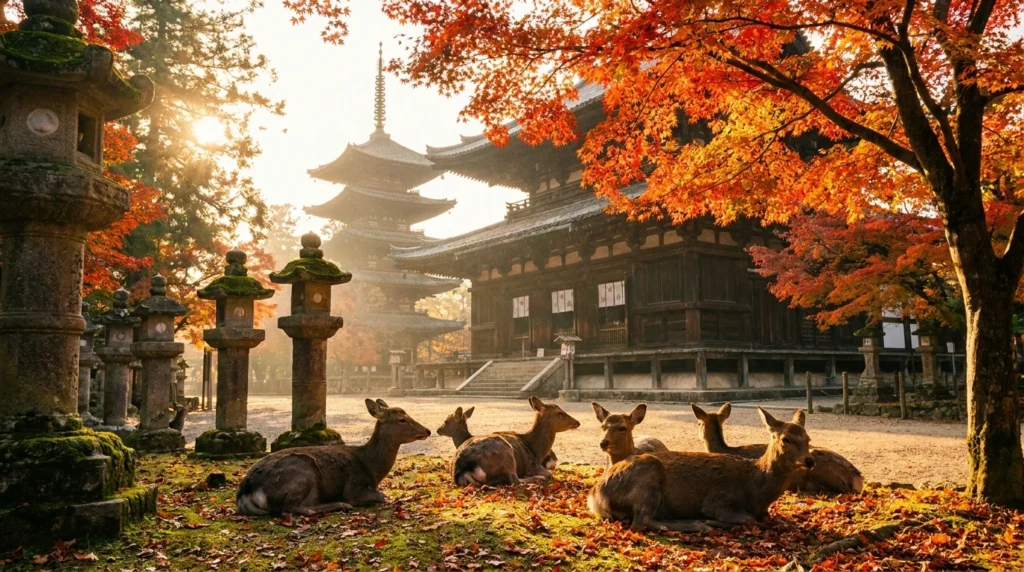
Nara, Japan: Bowing Deer, the Great Buddha and Japan’s First Capital
I came to Nara expecting a half-day stopover and ended up rebooking my hotel to stay the night. We had crossed over from Kyoto on a morning train, planning to “do the deer and the Big Buddha” before lunch, and instead found ourselves still wandering the lantern-lined paths of Kasuga Taisha at dusk, long after the day-trippers had caught their trains home. This was Japan’s first permanent capital — Heijō-kyō, the seat of power in the 8th century — and the temples here are older and grander than almost anything in Kyoto, set inside a deer-filled park the size of a small town. For the wider Japan context — the JR Pass, the yen, Shinkansen logistics — read our Japan travel guide. What follows is everything I wish I’d known before that first morning among the deer.

Table of Contents
Why Nara?
Nara is where Japan, as a unified state, first put down roots. In 710 CE the imperial court moved here and built Heijō-kyō, the country’s first permanent capital, and the city held the seat of government until 784 . Those seven decades — the Nara period — gave Japan its first great wave of monumental Buddhist architecture, its first written histories, and temples that still stand, older and in some cases larger than anything in the more famous Kyoto an hour to the north. To walk Nara is to walk the 8th century with deer underfoot.
And the deer are not a metaphor. More than 1,200 wild sika deer roam freely through Nara Park, unfenced and unbothered, designated a national natural monument and protected as such . They cross the roads, doze on the lawns beneath the pagodas, and — most famously — bow their heads to beg the special crackers sold from park stalls. It is genuinely strange and genuinely lovely, a city of around 367,353 people that has handed its grandest historic core over to a herd of semi-tame animals.
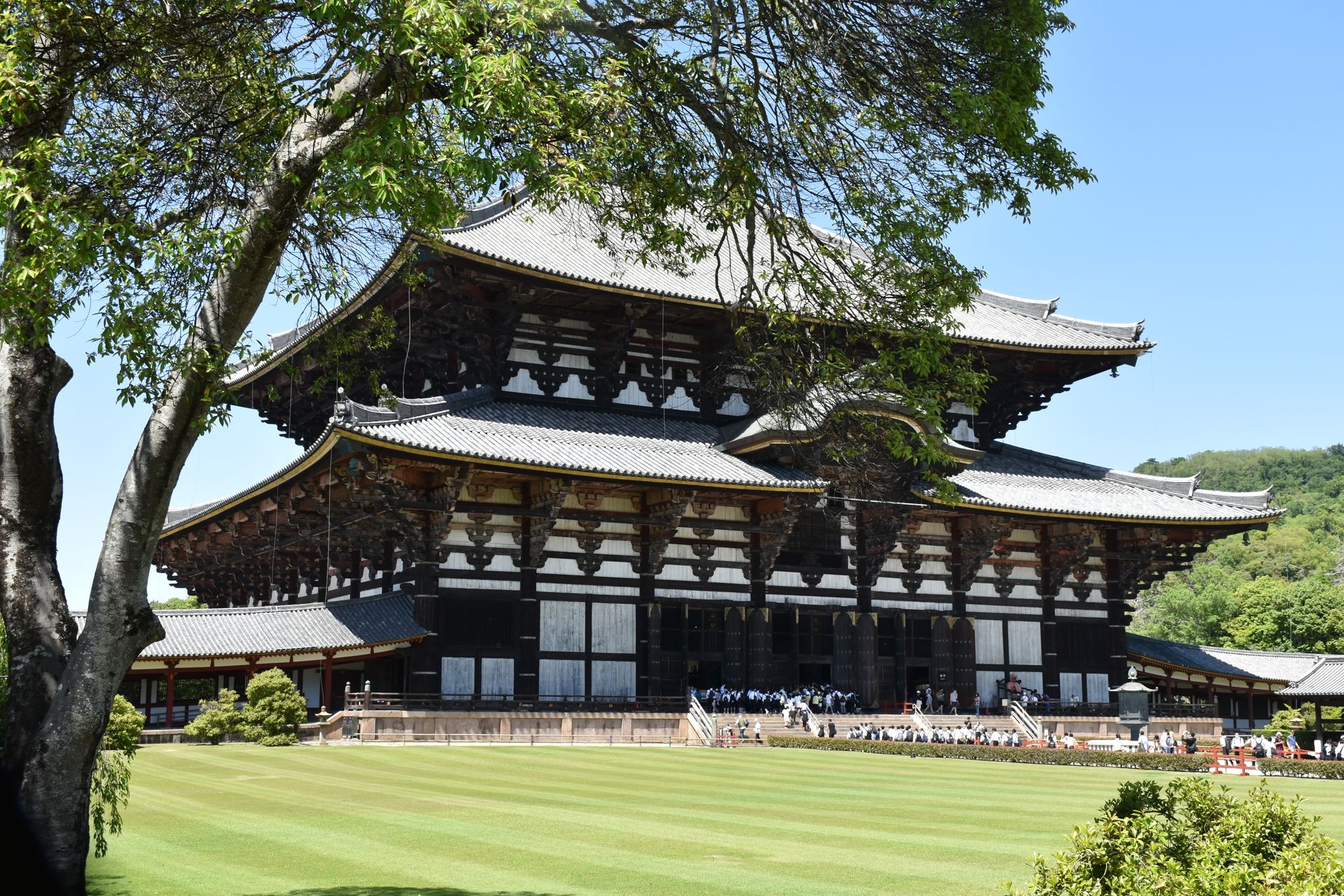
The contrast that defines Nara is scale against serenity. This is home to Tōdai-ji’s Great Buddha — a 14.98 m bronze colossus cast in 752 — housed in a wooden hall so vast it was the largest wooden building on earth until 1998 . Yet the overwhelming feeling is calm: green hills, lantern-lined forest paths, the slow drift of visitors and deer across enormous open lawns. Few cities hold something this monumental in a setting this gentle.
History here is also unusually legible. Eight separate sites — Tōdai-ji, Kōfuku-ji, Kasuga Taisha, the Kasugayama primeval forest, the Heijō Palace ruins and more — are bundled into a single UNESCO listing, “Historic Monuments of Ancient Nara,” inscribed in 1998 . Because the capital moved away early, Nara was spared much of the medieval warfare and modern redevelopment that reshaped other cities, and what survives is a remarkably intact picture of how Japan’s first urban civilisation actually looked.
Most travellers give Nara a single hurried afternoon between Kyoto and Osaka, and that is the one mistake this guide exists to fix. The day-trip is easy — under an hour from either city — but the rewards multiply once the tour buses leave. Stay for the lantern light at Kasuga Taisha, the early-morning hush at Tōdai-ji before the crowds, the merchant lanes of Naramachi at dusk. By the time you’ve watched the deer settle under the cherry trees as the sky turns, the question stops being “is Nara worth a day” and becomes “why didn’t I book the night.”
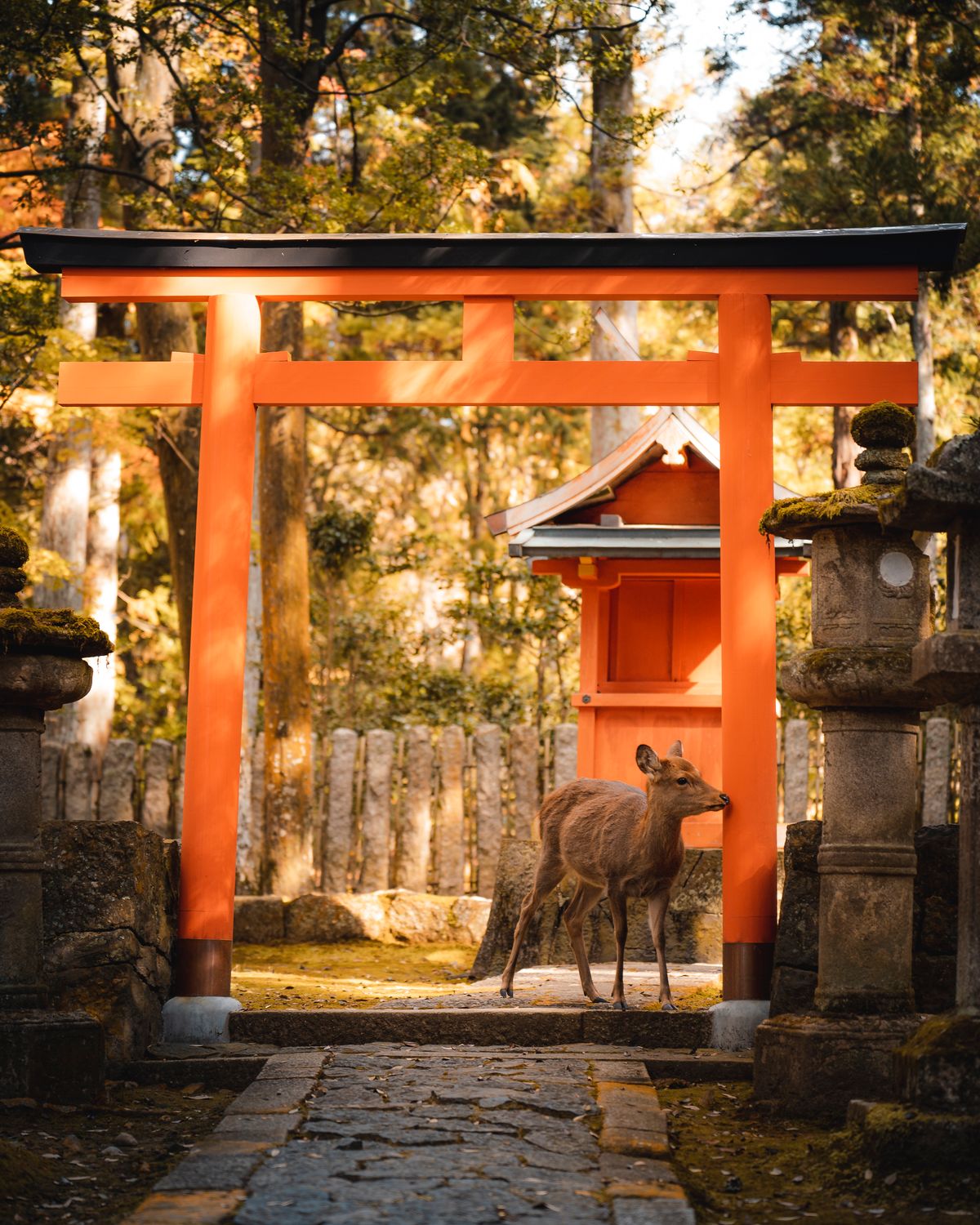
Neighborhoods: Finding Your Nara
📍 Nara Map: Every Place in This Guide
Nara is compact, and almost everything a visitor wants sits in or around the great green sweep of Nara Park on the east side of town. But the city does break into distinct characters, and where you base yourself shapes the pace of your trip. The park and its temples are the obvious heart; the old merchant quarter of Naramachi is the place to eat and stay; the station district handles arrivals and transit; and the western Nishinokyō plain and the Heijō Palace ruins hold quieter, older treasures most day-trippers never reach. Here’s how to read them.
Nara Park & the Deer
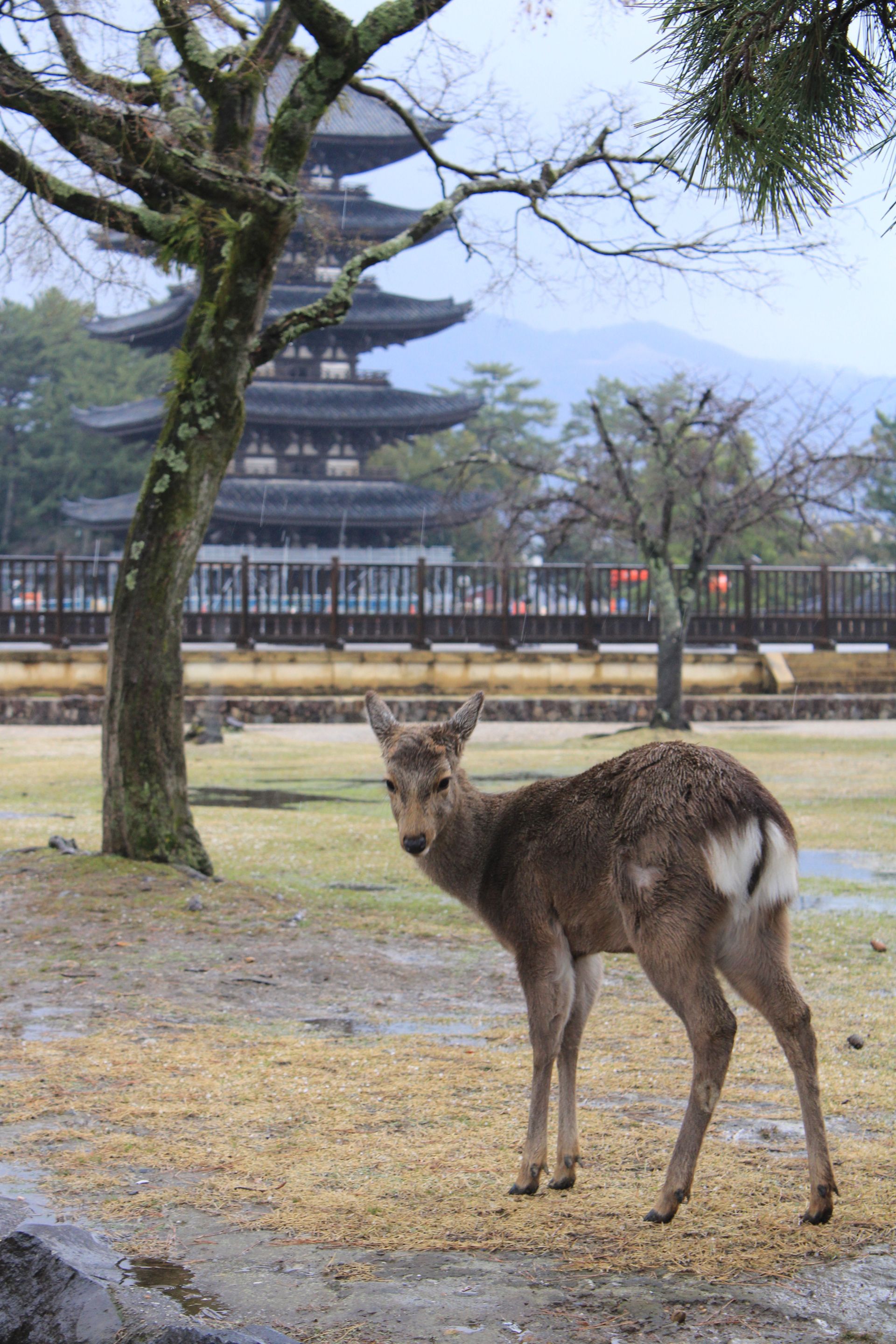
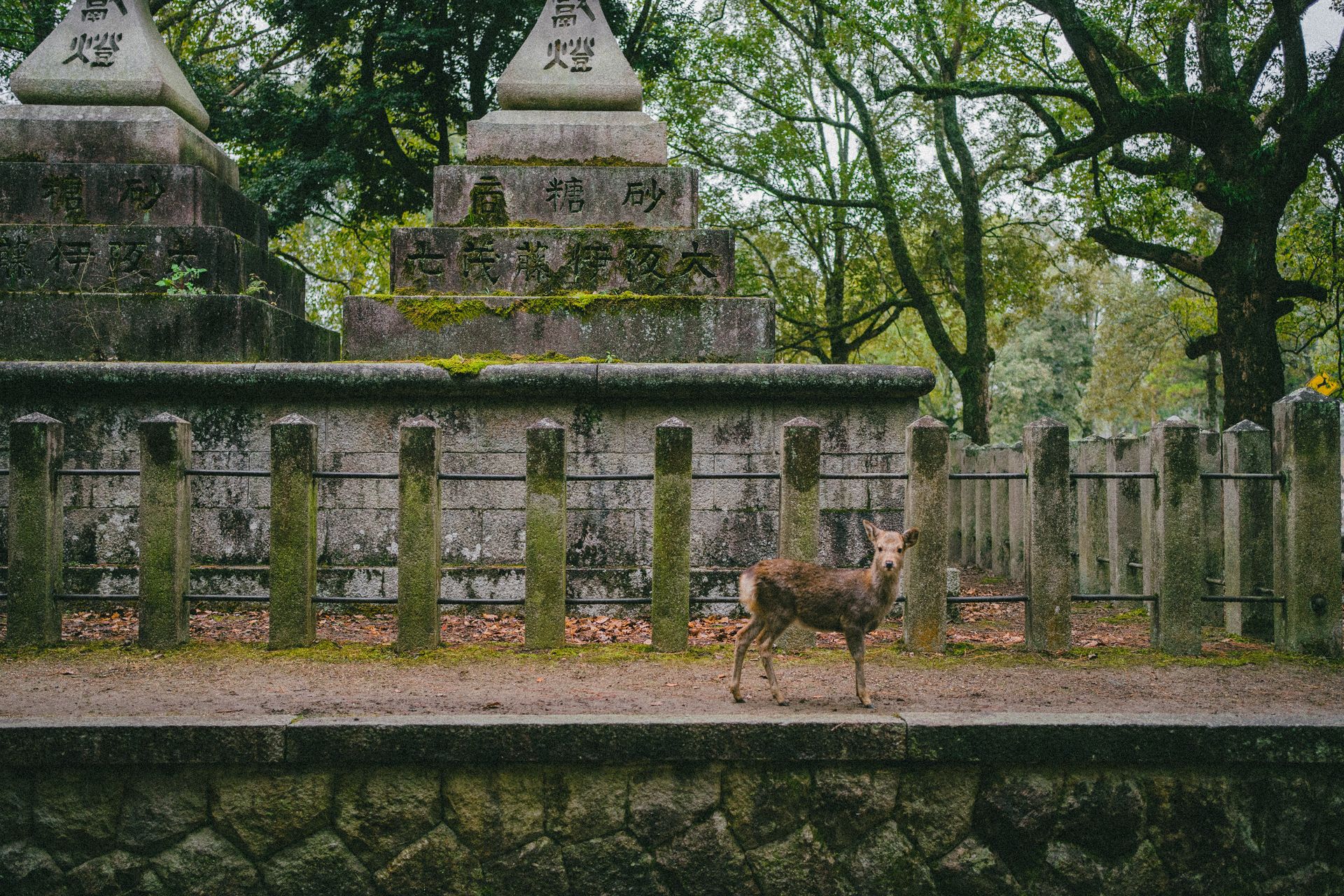
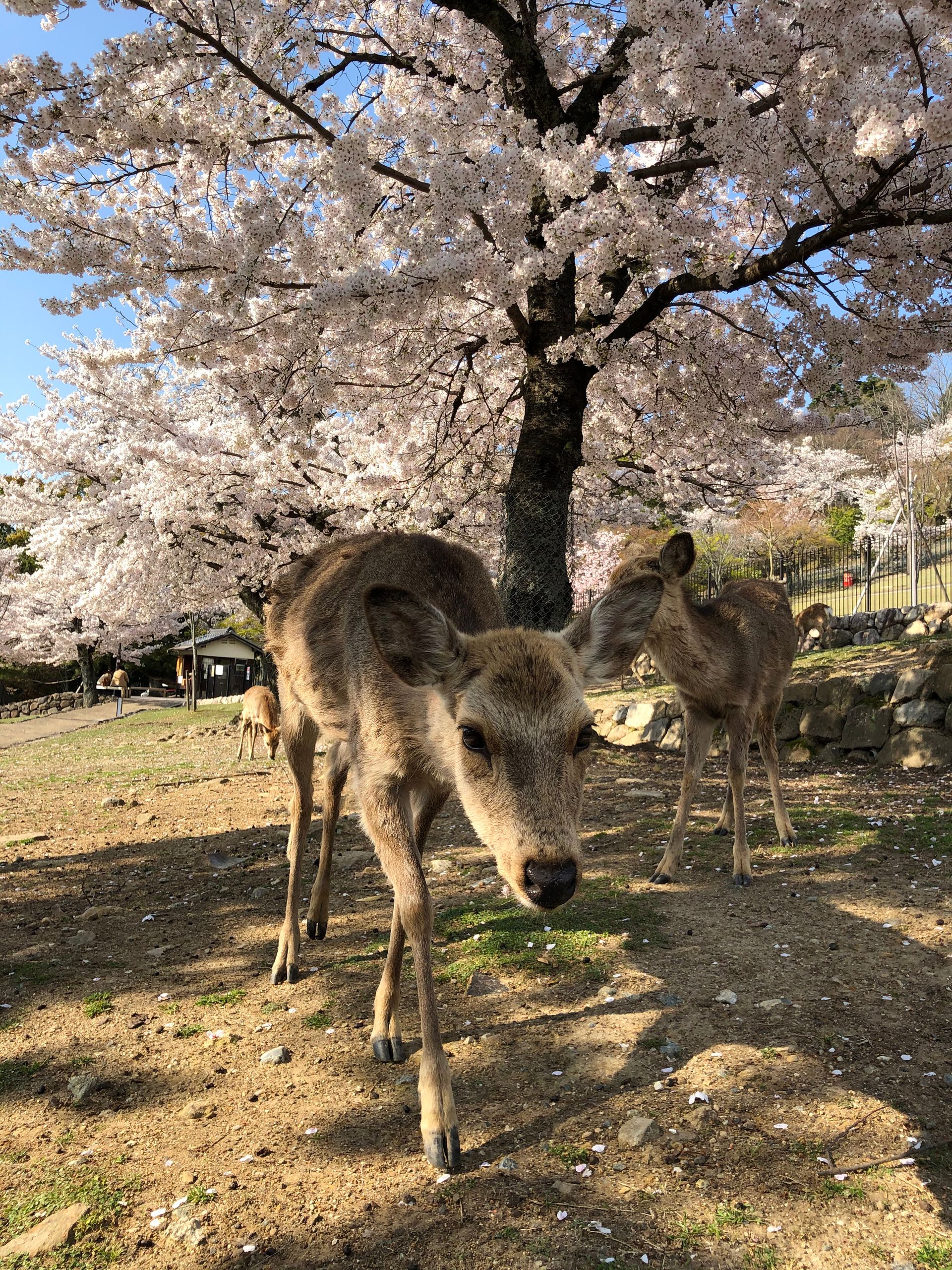
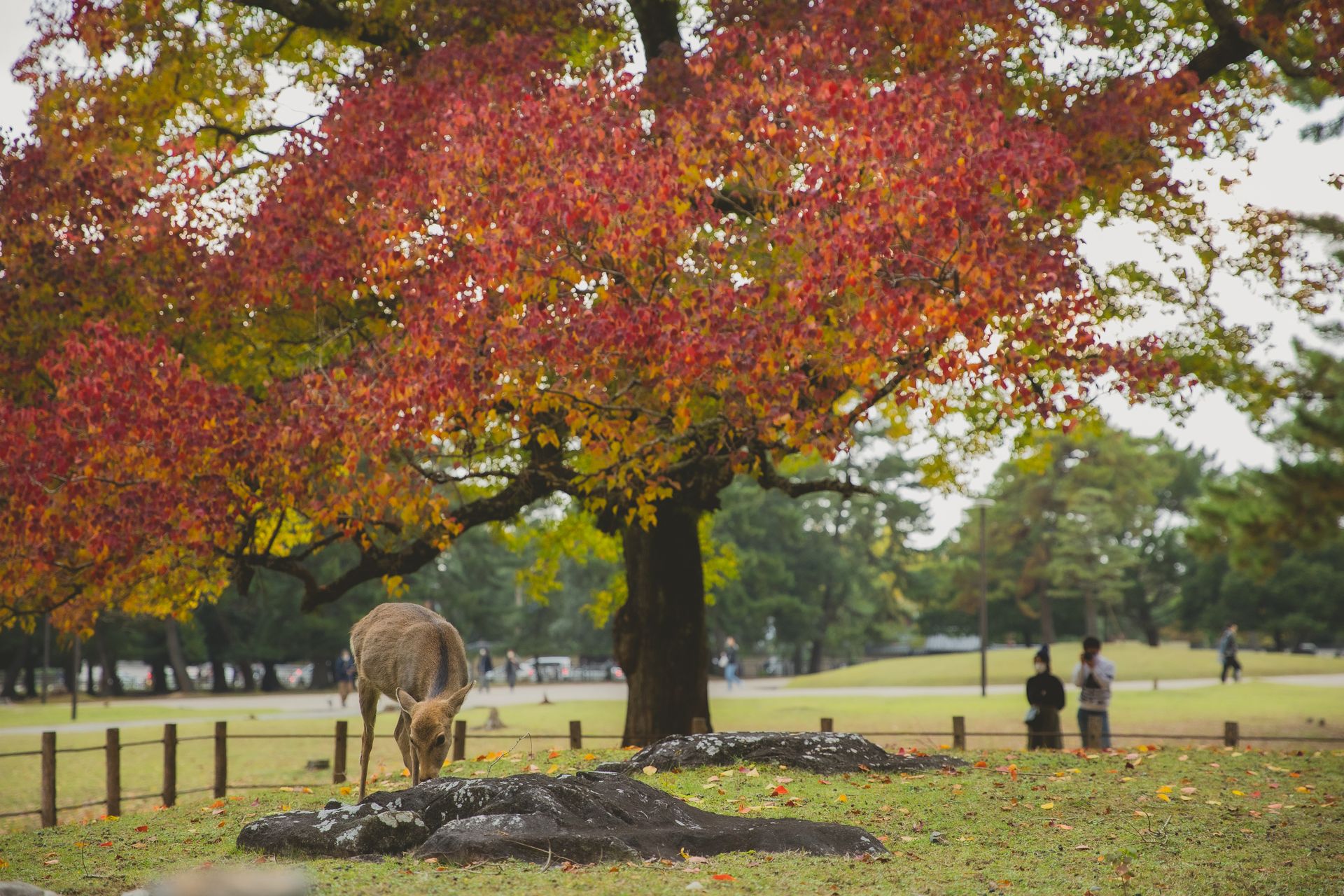
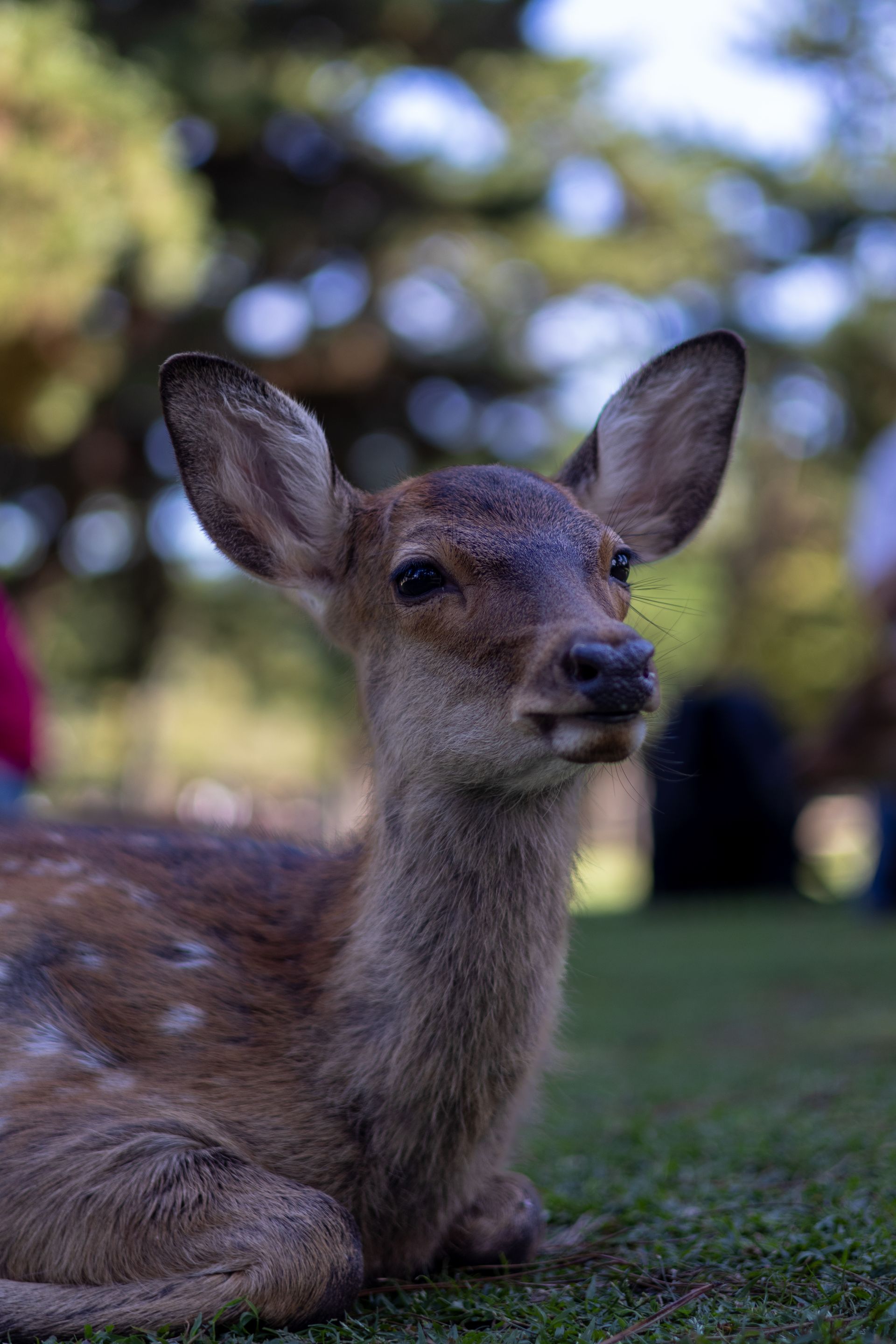
The heart of any visit is Nara Park, a 502-hectare expanse established in 1880 that holds the deer, the headline temples and the shrine within an easy walk of one another . This is not a fenced zoo: the 1,200-plus sika deer move where they please, dozing under the trees, blocking footpaths and bowing for the senbei crackers sold from stalls. The park rolls gently uphill from the city toward the wooded slopes of Kasugayama, and the great sights — Tōdai-ji, Kōfuku-ji, Kasuga Taisha — ring its edges. Spend your first hours here and you’ll understand the city’s whole rhythm.
- Tōdai-ji and the Great Buddha at the park’s northern edge
- The Kōfuku-ji five-story pagoda on the western side
- The deer lawns and the Ukimido pavilion on Sagiike Pond
Best for: first-timers who want the icons within a short walk. Access: a 5–20 minute walk east from Kintetsu Nara Station, the closest gateway to the park.
A practical word on the deer, because they are the reason most people come. They are wild animals, not pets: the cute bow can flip into a nip if you tease them with crackers, and you should feed quickly and show empty hands when the food runs out. Keep food out of bags and pockets, mind small children, and never let a deer corner you against a fence. Treated with a little respect, the encounter is one of the gentlest wildlife experiences anywhere; treated carelessly, it ends with a bruised hip and a torn map. Early morning is the calmest time, before the crowds and the cracker-frenzy build.
Naramachi (the Old Merchant Town)
South of Sarusawa Pond, Naramachi is the lattice-fronted former merchant district, a grid of narrow lanes lined with restored machiya townhouses that now hold cafés, craft shops, sake bars and small museums. This is where Nara feels most lived-in and least like a day-trip set piece — the crowds thin, the pace slows, and the architecture rewards a slow wander. It’s also the city’s best base: stay here and you can be among the deer in ten minutes yet retreat to quiet lanes and good restaurants come evening, when the day-trippers have gone.
- Restored machiya townhouses and the Naramachi Lattice House
- The hanging “migawari-zaru” lucky monkey charms on house eaves
- Small craft studios, sake bars and kakigōri (shaved-ice) cafés
Best for: overnight stays, food and atmosphere. Access: a 10-minute walk south of Kintetsu Nara Station, just below Sarusawa Pond.
Naramachi rewards the kind of aimless evening wandering that the park, full of closing-time crowds, doesn’t allow. The streets are too narrow for tour buses, so the rhythm here is residential — shutters coming down, the smell of grilling somewhere, a sake bar’s lantern flicking on. Book a machiya guesthouse if you can; sleeping inside one of these old timber-and-paper houses, with its tiny inner courtyard garden, is one of the quiet pleasures of a Nara overnight and the single best reason not to rush back to Kyoto.
Kintetsu Nara Station District
The busy blocks around Kintetsu Nara Station are the city’s practical centre: the closest rail gateway to the park, ringed by hotels, the Higashimuki and Mochiidono covered shopping arcades, convenience stores and the bus stands for sights further out. It isn’t pretty in the way the park or Naramachi are, but it’s where most visitors arrive, eat a quick lunch and stock up. The arcades are a good wet-weather fallback and a reliable source of cheap, fast food, souvenirs and the city’s famous freshly pounded mochi.
- Higashimuki and Mochiidono covered arcades
- Nakatanidou, the mochi shop famous for high-speed pounding demonstrations
- Hotels, coin lockers and the main tourist information centre
Best for: arrivals, quick meals and shopping. Access: Kintetsu Nara Station, the terminus of the Kintetsu line from Kyoto and Osaka.
JR Nara & the Western Centre
About a kilometre west of the park sits JR Nara Station, the second rail gateway, used by travellers arriving on JR lines (and JR Pass holders). The streets around it are a more workaday slice of the modern city — offices, business hotels and chain restaurants — and a longer walk from the deer than Kintetsu Nara. If you hold a JR Pass it’s still a sensible arrival point, with frequent loop buses bridging the gap to the park, but for sightseeing convenience most visitors prefer Kintetsu Nara.
- The handsome former JR Nara Station building, now a tourist office
- Business hotels and chain dining for budget overnights
- Loop buses east to Nara Park and the temples
Best for: JR Pass holders and budget chain hotels. Access: JR Nara Station, on the Yamatoji and Nara lines from Osaka and Kyoto.
Nishinokyō
Two stops south-west of the centre on the Kintetsu line, the quiet Nishinokyō district holds two of Nara’s greatest temples away from the deer crowds: Yakushi-ji, with its twin pagodas, and Tōshōdai-ji, founded by the Chinese monk Ganjin. Both are UNESCO-listed and both see a fraction of the foot traffic of Tōdai-ji, which is precisely their appeal. This is where to go on a second day, or in the afternoon once the park feels overrun — serene temple precincts, classical Tenpyō-era architecture, and the rare sensation of having an 8th-century National Treasure almost to yourself.
- Yakushi-ji and its reconstructed and original pagodas
- Tōshōdai-ji, founded 759 by the monk Ganjin
- Quiet lanes and rice fields between the two temples
Best for: a calmer second day and temple-lovers. Access: Nishinokyō Station on the Kintetsu Kashihara line, about eight minutes from the centre.
What makes Nishinokyō special is the absence of the thing that defines the park: crowds. Where Tōdai-ji can feel like a procession, Yakushi-ji’s twin-pagoda precinct and Tōshōdai-ji’s serene main hall are often near-empty even in high season, which lets the architecture breathe and lets you actually sit with it. The two temples sit a flat ten-minute walk apart along quiet lanes between rice fields, and the stroll between them — past small shrines, vegetable plots and the occasional roadside Jizō statue — is half the pleasure. This is the Nara that rewards the second day, and the single best argument for not treating the city as a one-stop deer photo opportunity.
Heijō Palace Ruins
North-west of the modern city sprawls the vast site of the original 8th-century imperial palace, the political heart of Heijō-kyō and part of the same UNESCO listing as the temples . It is more archaeological park than tourist attraction — wide grassy plains punctuated by full-scale reconstructions of the great Suzaku Gate and the First Audience Hall — but for anyone interested in how Japan’s first capital was laid out, it’s extraordinary. There are good free museums on site, and the openness is a relief after the crowded park. Most visitors skip it; history travellers should not.
- The reconstructed Suzaku Gate and Daigokuden audience hall
- The Nara Palace Site Museum and excavation displays
- Wide-open grassland with room to breathe
Best for: history buffs and a quiet half-day. Access: a short walk from Yamato-Saidaiji Station or by loop bus.
Standing on the grass where the Daigokuden once towered, with the reconstructed audience hall rising at one end and a railway line slicing improbably across the middle of the ancient palace grounds, you get a vivid sense of just how vast Heijō-kyō was — a planned grid city laid out on the Chinese model, with the palace at its head. The on-site museums do an excellent job of bringing the excavations to life, with reconstructed offices, unearthed wooden tally-slips and scale models of the 8th-century capital. It’s free, rarely busy, and a 20-minute detour from the temple trail; for anyone who wants to understand why Nara matters beyond the deer, it’s essential.
Mount Wakakusa & the Hills
Rising directly behind the temples is the grassy dome of Mount Wakakusa, a 342 m hill whose treeless slopes give the best panorama over the city, the Great Buddha Hall’s roof and the plain beyond . Behind it lies the Kasugayama primeval forest, a protected ancient woodland that has been off-limits to logging for over a thousand years and is part of the World Heritage site. A short, steep climb up Wakakusa at sunset — deer grazing the slopes around you, the city glowing below — is one of Nara’s great free pleasures, and a fine way to end a day before dropping back into Naramachi for dinner.
The hill earns its place on any overnight itinerary. By day it’s a gentle picnic spot; near dusk it becomes the city’s best free theatre, the lowering sun gilding the temple roofs while deer graze around your feet on the open turf. The climb is genuinely steep in places and the surface is grass rather than steps, so wear shoes with grip and allow twenty to thirty minutes to the first terrace. Each January the entire mountainside is deliberately set ablaze in the Wakakusa Yamayaki festival, a centuries-old grass-burning rite capped by fireworks that draws crowds across the city below. There’s a small entrance fee and seasonal opening hours, so check before you go; outside those hours the slopes are closed, but the lower viewpoints near Tōdai-ji still reward the walk.
- The open summit views from Mount Wakakusa
- The ancient Kasugayama primeval forest behind it
- Deer grazing the grassy slopes at dusk
Best for: hikers and sunset chasers. Access: a 20-minute walk east of Tōdai-ji to the hill’s entrance gate (small fee, seasonal hours).
Where you base yourself comes down to the trip you want. For a single day, you barely need to choose — arrive at Kintetsu Nara, walk straight into the park, and you’ll see the icons. For an overnight, base in Naramachi for atmosphere or near Kintetsu Nara for convenience, and use the quieter morning and evening hours to have Tōdai-ji and Kasuga Taisha almost to yourself. Save Nishinokyō and the Heijō ruins for a second day or a slow afternoon; they reward the unhurried far more than the rushed. Whichever district you pick, distances here are forgiving — the whole historic core fits inside a long walk, and the deer come with you wherever you go.
The Food

Nara’s food is quieter and older than the showy street-food scenes of Osaka or the kaiseki temples of Kyoto, and that suits the city. This was the cradle of Japanese Buddhism, so vegetarian temple cuisine runs deep here, and the local specialities lean rustic and historic: persimmon-leaf-wrapped sushi born of the need to preserve fish far from the sea, the country’s oldest pickling traditions, and fresh-pounded mochi sold from arcade shops that draw a crowd just to watch. Prices are gentle by Japanese standards — a good lunch set runs ¥1,000–2,000, and you can eat very well for the cost of a coffee back home.
The flavours sit at a historic crossroads. As Japan’s first capital, Nara absorbed continental Buddhist culture early, and that legacy shows up on the plate: shōjin ryōri (devotional vegetarian cooking) refined in the temples, and ingredients tied to the land rather than the sea. The Yamato basin around the city grows excellent vegetables and tea, and the surrounding hills supply the wild greens and mountain vegetables (sansai) that turn up in spring. Eat seasonally and locally and you’ll taste a slice of the 8th century.
Don’t expect a dense restaurant grid, though — Nara is a place to eat well rather than eat constantly. The best meals cluster in Naramachi and along the arcades near Kintetsu Nara, and many of the most atmospheric places close early, in step with a city whose day-trippers vanish by dusk. Plan your big meal for lunch or book ahead for dinner, and you’ll be richly rewarded; turn up at 9 pm hungry and you may find the shutters already down.
Nara Specialities
Start with the dishes that exist nowhere else in quite this form. Kakinoha-zushi — bite-sized pressed sushi of mackerel or salmon wrapped in a fragrant persimmon leaf — was invented to preserve fish carried inland over the mountains, and the leaf imparts a faint, clean aroma while keeping the rice fresh. Then there’s narazuke, vegetables (often gourd or cucumber) pickled for months in sake lees until they turn amber and intensely savoury — one of Japan’s oldest preserved foods. Round it out with miwa sōmen, the prized thin wheat noodles from nearby Miwa, said to be the birthplace of sōmen in Japan, served chilled in summer or in hot broth in the cold months.
- Hiraso — a long-established Naramachi specialist for kakinoha-zushi sets (around ¥1,500, ~$10)
- Yamato-an — handmade miwa sōmen and soba in a quiet machiya setting (around ¥1,200, ~$8)
- Imanishi Honten — a historic narazuke maker selling the sake-lees pickles to take home (from ~¥600, ~$4)
For the full experience, order a kakinoha-zushi set with a side of narazuke and a cup of local Yamato tea — the salty-sweet pickle and the leaf-wrapped sushi together are a genuine taste of pre-modern Japan. Many Naramachi restaurants serve these as part of a fixed lunch set that also includes miso soup and seasonal vegetables, which is both the cheapest and the most representative way to eat in the city. If you only try one local thing, make it kakinoha-zushi; if you try two, add a slice of amber narazuke.
It’s worth understanding why these dishes exist, because the explanation is the history of the city on a plate. Nara sits deep inland in the Yamato basin, far from any coast, so before refrigeration the only way to bring fish this far was to salt and press it — hence kakinoha-zushi, the persimmon leaf lending both preservation and perfume. Narazuke, the amber sake-lees pickle, grew out of the same need to make food last and out of the city’s deep sake-brewing tradition, which left behind the lees that cure the vegetables. Even the noodles have lineage: Miwa, just south of the city, is widely held to be the birthplace of sōmen in Japan. Eat your way through a Nara lunch and you are, in a real sense, eating the logistics of the 8th century.
Temple & Vegetarian Cooking
Nara’s Buddhist roots give it a deep tradition of shōjin ryōri, the devotional vegetarian cuisine developed in monasteries — no meat, no fish, no pungent alliums, just tofu, seasonal vegetables, sesame and clever technique turned into something quietly luxurious. It’s some of the best vegetarian and vegan eating in Japan, and a meal of it is as much a cultural experience as a culinary one. Look too for chagayu, the thin tea-rice porridge that Nara’s temples have eaten for breakfast for over a thousand years, gentle and warming on a cold morning.
- Awa Naramachi — refined seasonal set meals built around tofu and local vegetables (lunch from ~¥2,500, ~$17)
- Onyasai / temple lodgings — chagayu tea-rice porridge breakfasts in the old tradition (around ¥1,000, ~$7)
- Yoshikien-area teahouses — matcha and wagashi sweets beside a classical garden (around ¥700, ~$5)
If you’re staying overnight, a shōjin ryōri dinner is one of the most memorable meals Nara offers — book a day ahead, as the best places prepare to order. Vegetarians and vegans who often struggle in fish-stock-heavy Japan will find Nara unusually easy, since the temple tradition means genuinely meat-and-fish-free cooking is understood and taken seriously rather than improvised. Pair it with a flask of local sake — Nara is widely credited as a birthplace of refined Japanese sake brewing, thanks to its temples.
The sake connection runs deeper than most visitors realise. The temple of Shōryaku-ji, in the hills south-east of the city, is often cited as the cradle of modern sake-brewing technique, where monks refined the methods that produced clear, refined sake rather than the cloudy farm brew that came before. That heritage survives in a clutch of historic breweries in and around the city, several of which run tasting rooms in Naramachi where you can compare a crisp, dry local junmai against the prefecture’s softer styles. A sake flight alongside a plate of narazuke pickles — the lees that brewing leaves behind, repurposed into food — is one of the neatest little circles in Japanese gastronomy, and a genuinely Nara thing to do of an evening.
Beyond Kakinoha-zushi and Sōmen
Save room for the sweets and the snacks, because Nara takes both seriously. The headline act is mochi — and specifically the theatrical, blisteringly fast pounding shows that draw crowds to the arcades near the station. Beyond that, the city’s wagashi (traditional sweets) tradition is among the oldest in Japan, and the street snacks reward grazing as you walk the park and lanes.
- Yomogi mochi — mugwort-flavoured pounded rice cake with sweet bean, pounded to order at Nakatanidō near Kintetsu Nara (around ¥150, ~$1)
- Kuzumochi — silky arrowroot-starch jelly with kuromitsu syrup and kinako, a regional favourite (around ¥600, ~$4)
- Manju & wagashi — steamed bean-filled buns from long-running Naramachi confectioners (around ¥200, ~$1.30)
- Kakigōri — fluffy shaved ice with seasonal syrups, a Nara summer obsession (around ¥800, ~$5)
- Yamato pork & beef — the prized local Yamato-niku and pork in donburi and grills (set from ~¥1,500, ~$10)
- Local craft sake — flights at Naramachi bars from the prefecture’s historic breweries (from ~¥1,000, ~$7)
The mochi-pounding deserves its fame: two workers swing and turn the sticky rice in a blur, chanting in rhythm, and a finished mugwort mochi is handed over still warm. It’s free to watch and cheap to eat, and the queue moves fast. For sit-down sweets, a bowl of summer kakigōri in a Naramachi café — Nara has become a serious shaved-ice destination — is a delight, as is a cup of matcha and a seasonal wagashi looking onto a temple garden. None of it is expensive, and all of it is rooted in centuries of local craft.
Where you eat matters as much as what you eat. The arcades immediately south of Kintetsu Nara station — Higashimuki and Mochiidono — are the densest concentration of casual restaurants, snack stands and souvenir confectioners, and they are where most day-trippers grab a quick bite between the park and the train. For something slower and more characterful, walk fifteen minutes south into Naramachi, where converted machiya townhouses hide tiny lunch counters, vegetarian kitchens and café-galleries; the lanes are quiet, the cooking is careful, and you trade convenience for atmosphere. A useful rule of thumb: eat your headline meal where the building has history, and graze near the station for everything else.
Drinks deserve a mention too. Beyond sake, Nara prefecture is strong tea country — the Yamato uplands produce good green tea, and a proper bowl of matcha whisked to order in a garden teahouse is one of the city’s signature small pleasures, usually served with a seasonal sweet for under ¥1,000. Coffee culture has arrived as well, with a handful of specialist roasters tucked into Naramachi machiya, so an afternoon caffeine stop is easy. And because Nara empties out in the evening, a quiet izakaya dinner with a flight of local sake feels like having a thousand-year-old capital almost to yourself.
Food Experiences You Can’t Miss
Some of the best eating in Nara is a ritual rather than a single dish — a porridge breakfast, a pounding show, a slow vegetarian dinner. Build at least one of these into your stay; half the pleasure is the setting, whether that’s a machiya dining room, a temple lodging or a garden teahouse.
- Watching the high-speed mochi pounding at Nakatanidō, then eating the warm result on the spot
- A shōjin ryōri vegetarian dinner in a Naramachi machiya or temple lodging (book ahead)
- A kakinoha-zushi lunch set with narazuke pickles and local Yamato tea
- A bowl of artisanal kakigōri shaved ice on a hot afternoon
- A flask of Nara sake in a Naramachi bar, in the city credited as a cradle of refined brewing
Cultural Sights
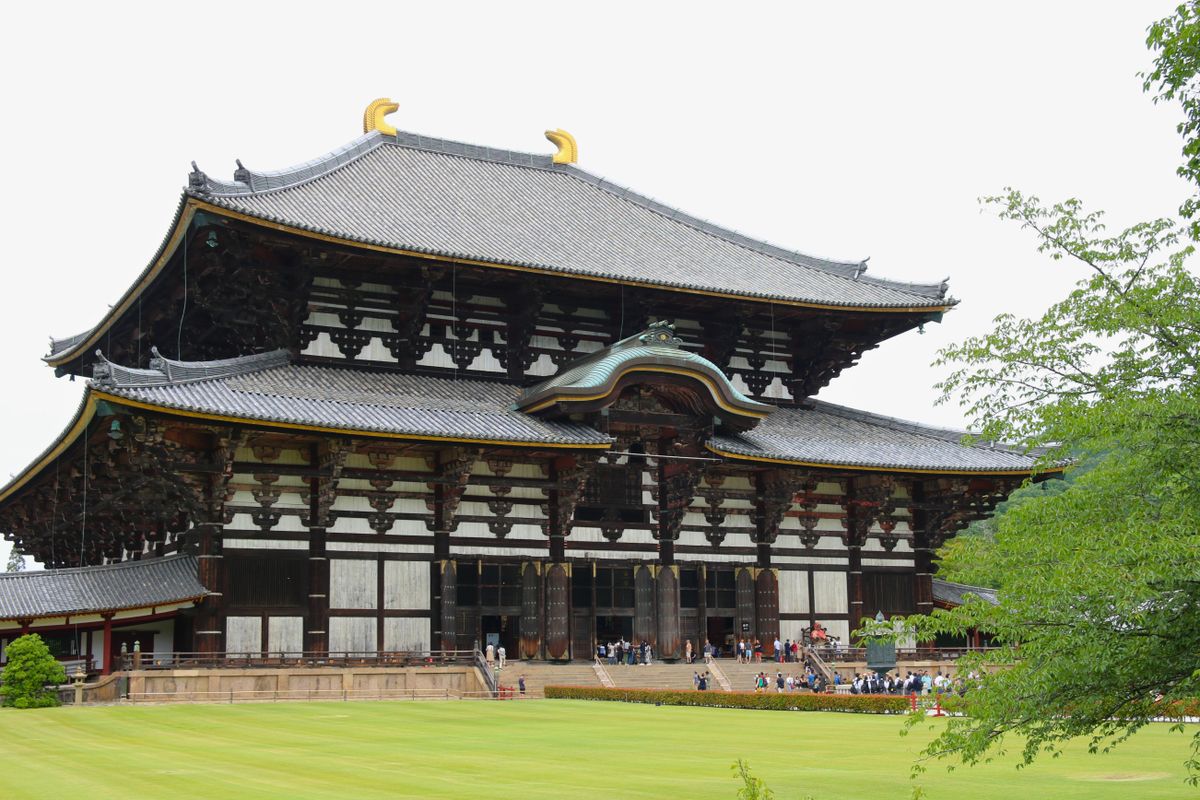
Tōdai-ji & the Great Buddha (東大寺)
Nara’s defining monument. Tōdai-ji was founded in the 8th century — its construction beginning in 743 — and its Great Buddha Hall (Daibutsuden) houses a seated bronze Buddha 14.98 m tall, cast and dedicated in 752 in an eye-opening ceremony of staggering ambition for its age . The hall itself, rebuilt at a reduced size in 1709, was the largest wooden building in the world until 1998 , and it still stuns. Look for the “Buddha’s nostril,” a pillar with a hole the size of the Daibutsu’s nostril that visitors squeeze through for luck. Admission is around ¥800 ; arrive at opening to beat the school groups.
Kasuga Taisha (春日大社)
Established in 768 as the tutelary shrine of the powerful Fujiwara clan, Kasuga Taisha is famous for its lanterns — over 3,000 bronze and stone lanterns line its approaches and hang from its eaves . The vermilion shrine sits at the foot of the sacred Kasugayama forest, reached along a deer-frequented path between rows of moss-furred stone lanterns. Twice a year — at Setsubun Mantoro on 3 February and Chūgen Mantoro on 14–15 August — every lantern is lit at once, a breathtaking sight . The inner precinct charges a small fee; the approach paths are free and best near dusk.
Kōfuku-ji & the Five-Story Pagoda (興福寺)
Founded in 669 and moved to Nara with the new capital in 710, Kōfuku-ji was the Fujiwara clan temple and once dominated the city . Its five-story pagoda — the current structure rebuilt in 1426 after fires — stands roughly 50 m tall and is one of Japan’s tallest wooden pagodas, the postcard silhouette over Sarusawa Pond . The temple’s National Treasure Museum holds extraordinary Nara-period Buddhist sculpture, including the famous three-faced, six-armed Ashura statue. The grounds are free; the museum and central hall charge admission.
Isuien Garden (依水園)
A classical strolling garden of two linked sections, Isuien is Nara’s finest, using “borrowed scenery” (shakkei) — the trick of framing distant features as part of the design — so that Mount Wakakusa and Tōdai-ji’s South Gate become backdrops to its ponds and tea houses. The front garden dates to the 17th century, the rear to the 19th, and walking the circuit reveals carefully composed views at every turn: stepping stones across the water, thatched tea pavilions, maples that blaze in November. It’s a serene counterpoint to the crowded park next door, and the adjoining Neiraku Art Museum holds Chinese and Korean bronzes and ceramics. Admission is modest; allow an unhurried hour, and pair it with a bowl of matcha in the garden teahouse looking out over the pond — one of the most restful experiences in the city.
Naramachi & the Lattice House
The old merchant quarter is a sight in itself — a grid of preserved machiya townhouses whose latticed wooden fronts, inner courtyards and hanging lucky-monkey charms tell the story of mercantile Nara. The Naramachi Lattice House (Naramachi Kōshi-no-ie) is a free, restored machiya you can walk through to see how these narrow, deep “eel-bed” houses were laid out. Small museums, sake shops and craft studios fill the surrounding lanes. Free to wander; best in the late afternoon.
Nigatsu-dō Hall
Part of the Tōdai-ji complex, this hillside hall offers the best free view over Nara — a wooden veranda looking out across the Great Buddha Hall’s roof to the city and plain beyond. It’s the stage for the dramatic Omizutori fire-and-water rites each March, when monks brandish giant flaming torches along the balcony, a ceremony that has run unbroken for over 1,250 years. Climb the lantern-lined stone steps in the late afternoon; the hall and its viewpoint are free and open into the evening.
Yakushi-ji & Tōshōdai-ji (Nishinokyō)
Out in quiet Nishinokyō stand two more UNESCO temples that most day-trippers miss. Yakushi-ji, with its elegant pagodas, dates to the early 8th century; Tōshōdai-ji was founded in 759 by the blind Chinese monk Ganjin, who brought Buddhist precepts to Japan, and its main hall is a masterpiece of Tenpyō-era architecture. Both are part of the “Historic Monuments of Ancient Nara” listing and both offer the rare luxury of a near-empty National Treasure. Each charges admission; combine them in a calm half-day.
Planning Your Temple Days
Eight of Nara’s monuments — Tōdai-ji, Kōfuku-ji, Kasuga Taisha and its primeval forest, Gangō-ji, Yakushi-ji, Tōshōdai-ji and the Heijō Palace ruins — together make up the “Historic Monuments of Ancient Nara,” inscribed by UNESCO as a World Heritage Site in 1998 . You will not see them all properly in a single day, and you shouldn’t try. The classic compact route links Kōfuku-ji, Tōdai-ji, Nigatsu-dō and Kasuga Taisha in one walkable loop through Nara Park, which is enough for a day trip; an overnight lets you add Isuien Garden, Naramachi and the Nishinokyō temples at a humane pace. Most temples open around 8 or 9 am and the big halls charge a separate admission, so carry coins and start early to have the Great Buddha Hall to yourself before the tour buses arrive.
Entertainment & Things to Do

Feeding & Watching the Deer
The single most popular thing to do in Nara needs no booking and barely any money: buy a stack of shika senbei (deer crackers) from a park stall for around ¥200 and meet the herd . The famous bow — deer dipping their heads to ask for food — is real, learned behaviour, and getting one to bow before you hand over a cracker is a genuine delight. Feed fast, keep the rest hidden, and show empty palms when you’re done. The best deer-watching is early morning and late afternoon, when the light is soft and the crowds thin; midday in peak season can be a cracker-fuelled scrum.
It is worth knowing a little about the deer before you meet them. Nara’s roughly 1,200 sika deer are wild animals that roam the park freely, protected for centuries as messengers of the gods and today designated a national Natural Monument . They are habituated to people, not tame: the same animals that bow politely for a cracker can also nip, butt or chase if they think you are hiding food, so feed them quickly, avoid teasing, and keep maps and tickets out of reach — the deer happily eat paper. Families with small children should hand crackers over together, and everyone should give the larger antlered stags a wide berth in the autumn rutting season. Treated with a little respect, the herd is one of the most charming wildlife encounters anywhere in Japan.
Lantern Light at Kasuga Taisha
Walking the lantern-lined approach to Kasuga Taisha as the light fades is one of Nara’s quiet wonders, and twice a year the shrine lights all 3,000-plus of its bronze and stone lanterns at once — at Setsubun Mantoro on 3 February and Chūgen Mantoro on 14–15 August . If your trip lines up with either festival, build your evening around it; if not, the inner precinct keeps a hall of permanently lit lanterns glowing year-round. Typical cost is a small precinct fee; the forest approach is free. Go at dusk, when the deer drift between the stone lanterns.
Climbing Mount Wakakusa
The grassy 342 m hill behind Tōdai-ji is the city’s best free hike and viewpoint — a short, steep walk up open slopes grazed by deer, with a sweeping panorama of the temples and plain from the top. It’s especially fine at sunset. Each January the hill becomes the stage for Wakakusa Yamayaki, when the entire mountainside is set ablaze in a spectacular grass-burning festival capped with fireworks. Typical cost is a small entrance fee in season; bring water and proper shoes, as the slope is steep.
Strolling Naramachi & the Arcades
Come evening, the entertainment is simply wandering — the lattice-fronted lanes of Naramachi, the covered Higashimuki and Mochiidono arcades, the sake bars and craft shops. This is when Nara belongs to its residents again, the day-trip crowds gone and the lanterns lit. Expect small bars, izakaya, speciality coffee and the occasional craft-sake tasting rather than nightclubs; Nara’s nightlife is gentle and early, in keeping with the city. Typical cost: a few hundred yen for arcade snacks, a little more for a sake flight.
Seasonal Festivals
Nara’s calendar is studded with ancient rites worth planning around. Omizutori, the fire-and-water ceremony at Tōdai-ji’s Nigatsu-dō, runs through early March and has been performed for over 1,250 years; Wakakusa Yamayaki sets the hillside alight in January; and Shika-no-Tsunokiri, the centuries-old ceremonial cutting of the deer’s antlers for safety, takes place over autumn weekends. Each is free or low-cost to watch, though crowds and limited viewing space mean arriving early pays off. Whenever you visit, it’s worth checking what’s on.
Tea, Gardens & Slow Afternoons
For a gentler kind of entertainment, Nara’s gardens reward an unhurried afternoon: matcha and a seasonal sweet at Isuien or Yoshikien, both with borrowed views of Tōdai-ji and the hills; or the calm of Yakushi-ji’s precinct out in Nishinokyō. Typical cost is a modest garden fee plus a few hundred yen for tea. This is the antidote to the deer scrum, and exactly the sort of thing the overnight visitor gets that the day-tripper never does. Pair a garden hour with a visit to one of the small Naramachi museums — the Lattice House, a craft studio, a sake brewery’s tasting room — and you have a full, low-key afternoon that costs almost nothing and feels a world away from the crowds at the Great Buddha Hall. It’s the slow, civilised side of Nara that most itineraries never make room for.
Day Trips

Nara sits at the quiet centre of the Kansai region, and that location is one of its underrated strengths: within an hour by train you can reach two of Japan’s greatest cities and some of its oldest sacred landscapes, then return each night to a calm, deer-grazed town. A single Kintetsu hub plus the JR Yamatoji line opens up a remarkable spread of day trips, from neon street-food districts to mountainside cherry forests and the rural cradle of the Japanese state. Below are the excursions most worth your time, roughly in order of how easily they pair with a Nara base.
Kyoto (45 minutes by Kintetsu Limited Express)
Nara’s great neighbour and the obvious pairing — the Kintetsu Limited Express links the two in around 45 minutes, making each an easy excursion from the other . Spend a day on Kyoto’s Fushimi Inari shrine, the Arashiyama bamboo grove and the golden Kinkaku-ji, then return to Nara’s calmer evening. Many travellers base in Kyoto and visit Nara, but doing it the other way — sleeping in Nara, day-tripping to Kyoto — gives you Nara’s magical empty mornings. Trains run frequently all day, and the ordinary (non-express) Kintetsu service is cheaper if you don’t mind a few extra minutes and stops. See our Kyoto city guide.
Osaka (35–45 minutes by Kintetsu or JR)
Japan’s kitchen is a short hop west — the Kintetsu Nara Line reaches Osaka-Namba in about 40 minutes, dropping you in the heart of the Dōtonbori street-food district . Spend a day on takoyaki and okonomiyaki, Osaka Castle and the neon of Namba, then ride back to Nara’s quiet. It makes a brilliant contrast: monumental calm by day, kuidaore excess by night. JR’s Yamatoji line also connects the two for Pass holders, terminating at Osaka’s Tennōji and central stations. Trains are frequent and cheap. See our Osaka city guide.
Hōryū-ji & Ikaruga (15 minutes by JR)
Just south-west of the city, Hōryū-ji holds some of the oldest wooden buildings on earth and was Japan’s first UNESCO World Heritage site, inscribed in 1993 . A short JR ride and a bus reach the temple, whose 7th-century pagoda and main hall predate even Nara’s capital era. It’s a serene, scholarly half-day among foundational Japanese architecture, with far fewer crowds than the city temples. The surrounding Ikaruga countryside — low hills, rice paddies and smaller temples — makes for a gentle add-on, and the whole excursion pairs neatly with an afternoon back among the deer.
Mount Yoshino (1.5 hours by Kintetsu)
Japan’s most celebrated cherry-blossom mountain lies south of Nara, its slopes planted with thousands of trees that bloom in tiers up the hillside each spring . Reached by Kintetsu train and a cable car, Yoshino is a UNESCO-listed sacred site of temples and shrines on the Kii Mountain pilgrimage routes that rewards a visit in any season, but in early-to-mid April it is one of the most spectacular sights in the country, when the blossom opens in waves from the lower to the upper slopes. Go midweek and early to beat the blossom crowds, and consider an overnight in a temple lodging if you want the mountain to yourself at dawn.
Asuka (about 40 minutes by Kintetsu)
The rural birthplace of the Japanese state, Asuka predates even Nara as a centre of power and is dotted with ancient burial mounds, mysterious carved stones and the country’s oldest Buddha statue at Asuka-dera. It’s best explored by rental bicycle across gentle farmland — a peaceful, deeply historic counterpoint to the temple crowds, and a glimpse of Japan before it had a permanent capital at all. Pedal between the keyhole tombs of long-forgotten emperors, the enigmatic Ishibutai megalith and small village temples, stopping for a farmhouse lunch along the way. A relaxed full day, and the most off-the-beaten-track of Nara’s day trips.
Seasonal Guide
Spring (March – May)
Nara’s finest season. Cherry blossoms wash over the park and Mount Wakakusa in late March and early April, with deer grazing beneath the petals; Tōdai-ji’s Omizutori fire rites run through early March; and Yoshino’s tiered blossoms peak mid-April. Mild days, cool evenings and intense crowds at the blossom peak — go early in the day and book accommodation well ahead. May is the quiet sweet spot once the blossom rush ends: fresh greenery, comfortable temperatures and thinner crowds, with the new fawns starting to appear among the herd. Pack layers for cool mornings and a light raincoat for the occasional shower.
Summer (June – August)
Hot and humid, with a rainy spell in June. The reward is the Chūgen Mantoro lantern festival at Kasuga Taisha on 14–15 August, when 3,000-plus lanterns blaze at once, plus shaved-ice (kakigōri) season in the cafés. Start sightseeing at opening to dodge the midday heat, and keep water handy in the shadeless park. July and August can top the mid-thirties Celsius with draining humidity, so plan indoor stops — the temple halls, the National Treasure museums, an air-conditioned kakigōri café — around the worst of the afternoon, and save the open lawns for early morning and evening. It’s the cheapest peak-festival season if you can take the heat.
Autumn (September – November)
The second-best season. November brings flaming maples across the park and temple grounds, cool clear air and the ceremonial antler-cutting (Shika-no-Tsunokiri) on autumn weekends. Comfortable walking weather and superb photography; mid-to-late November is the foliage peak and draws weekend crowds, so favour weekday mornings. Early autumn is warm and can still carry a typhoon or two, but by late October the air sharpens and the light turns golden — arguably the most photogenic time to shoot the deer against the colour. Bring a light jacket for the evenings, which cool quickly once the sun drops behind the hills.
Winter (December – February)
Quiet, crisp and the cheapest, most crowd-free time to visit. Snow occasionally dusts the temple roofs and the deer. The Wakakusa Yamayaki grass-burning festival lights the hillside in January, and the Setsubun Mantoro lantern festival follows on 3 February. Bundle up — the open park is cold and the wind cuts across the lawns — and enjoy having the Great Buddha Hall nearly to yourself. Days are short, so start early, and warm up between sights with chagayu tea-rice porridge or a hot bowl of miwa sōmen. For travellers who prize atmosphere over weather, a clear, cold winter morning at an empty Tōdai-ji is hard to beat.
Getting Around
Trains: Kintetsu vs JR
Two railways serve Nara, and which you use matters. The Kintetsu Nara Line terminates at Kintetsu Nara Station, a 5-minute walk from the park — the most convenient gateway, with Limited Express trains reaching Kyoto in about 45 minutes and Osaka-Namba in about 40 . JR’s Yamatoji and Nara lines run to JR Nara Station, roughly a kilometre west of the park, and are the choice for JR Pass holders since the pass doesn’t cover Kintetsu. For sightseeing, arrive at Kintetsu Nara; for JR Pass travel, use JR Nara and a loop bus. The two stations are about fifteen minutes’ walk apart, so if you arrive at one and your hotel is by the other, it’s an easy stroll or a single short bus hop rather than a problem.
Buses & the Loop Line
Nara’s city buses, including the circular loop line connecting JR Nara, Kintetsu Nara and the park, fill the gaps between the stations and the sights. A flat fare covers most central rides, and an all-day bus pass is worth it if you’re visiting Nishinokyō or the Heijō ruins. Most of the core, though, is best on foot — the park temples are an easy walk from Kintetsu Nara, and buses are mainly for the outlying sites. The loop bus is genuinely useful in two cases: arriving JR-side with luggage, and in high summer when the walk across the shadeless park saps you before you’ve even met a deer.
IC Cards / Prepaid Transit
Tap-and-go IC cards (ICOCA, Suica, PASMO and the rest, all interoperable nationwide) work on every train and bus in Nara — just tap in and out. Buy or top up an ICOCA at any JR station; it also pays at convenience stores and many shops. It saves fumbling for change on buses and is the simplest way to move around the wider Kansai region. Mobile Suica/ICOCA on a phone works identically, and is the slickest option of all if your phone supports it — top up by card and never touch a ticket machine.
Airport Access
Nara has no airport of its own, so you’ll arrive via one of Osaka’s two — and the limousine bus is the simplest link in both cases, running direct to the stations near the park.
- Kansai International Airport (KIX) — direct limousine bus to Kintetsu/JR Nara, about 90 minutes, around ¥2,100
- Osaka Itami Airport (ITM) — limousine bus to Nara, about 60–80 minutes, around ¥1,500
Taxis
Flag-fall starts around ¥600–700. Taxis are clean, metered and reliable but pricey for anything but short hops or late-night returns; with the compact core and good trains, most visitors rarely need one. Useful for reaching Nishinokyō or the Heijō ruins if you’ve missed a bus.
On Foot
The honest truth is that Nara is a walking city. The classic sightseeing core — Kōfuku-ji, the Naramachi lanes, Tōdai-ji, Nigatsu-dō and the Kasuga approach — forms one continuous, mostly flat ribbon through Nara Park that you can cover comfortably on foot in a day, and walking is by far the best way to experience the deer drifting across the lawns between temples. Wear proper shoes for the gravel paths and grassy slopes, carry water in summer, and treat the trains and buses as tools for the outlying sites rather than the centre. Most visitors find they barely touch public transport once they reach the park.
Navigation Tips
Apps: Google Maps, Navitime for Japan Travel. Google Maps handles Nara’s trains and buses well, including which station gets you closest. Download an offline map of the park, as paths wind between temples and the deer lawns can disorient. Station signage is bilingual; smaller bus stops less so, so screenshot your route.
Budget Breakdown: Making Your Yen Count
| Tier | Daily | Sleep | Eat | Transport | Activities | Extras |
|---|---|---|---|---|---|---|
| Budget | ¥6,000–9,000 | ¥3,000 hostel/guesthouse | ¥1,800 arcade & sets | ¥600 bus/IC | ¥1,000 temple fees | ¥600 deer crackers, snacks |
| Mid-Range | ¥12,000–22,000 | ¥9,000 machiya/hotel | ¥4,500 restaurants | ¥1,200 trains/bus | ¥2,000 temples & garden | ¥1,500 sake, sweets |
| Luxury | ¥40,000+ | ¥28,000 ryokan/upscale | ¥10,000 shōjin/kaiseki | ¥2,500 taxis | ¥3,000 guide & museums | ¥3,000 crafts, tea |
Where Your Money Goes
Nara is one of the cheaper places to visit in Japan because so much of it is free or near-free: the deer park, the lantern approaches, Mount Wakakusa’s slopes and Naramachi’s lanes cost nothing, and the headline temple admissions are modest — Tōdai-ji’s Great Buddha Hall is around ¥800 . Your biggest variable is accommodation: a day trip costs almost nothing beyond transport and a couple of temple tickets, while an overnight in a machiya or ryokan is where the spending happens — and, this guide argues, where the value is too.
Break it down and a frugal day is genuinely cheap. A return Kintetsu fare from Kyoto or Osaka runs a few hundred yen each way, a stack of deer crackers is around ¥200, and you could see Tōdai-ji, Kōfuku-ji’s grounds and the Kasuga approach for well under ¥2,000 in admissions while spending the rest of the day on free park, shrine paths and hill walks. Food is where you choose your level: a fixed-price lunch set or a couple of arcade mochi keeps you under ¥2,000, while a shōjin ryōri dinner or a ryokan kaiseki can run ¥10,000 and up. The luxury tier is almost entirely about where you sleep and eat — the sights themselves never cost much, which is part of what makes Nara such good value compared with the rest of the Kansai triangle.
Money-Saving Tips
- Day-trip on a budget but consider one night to halve your crowds and double your time — the overnight premium is often less than a second day’s worth of transport and rushed meals
- Buy a day bus pass only if visiting Nishinokyō or the Heijō ruins; the core is walkable, so for a single park day the pass rarely pays for itself
- Eat your main meal at lunch, when fixed-price sets are cheapest, and graze on arcade mochi, manju and convenience-store snacks in the afternoon
- Use an IC card and pay the cheap Kintetsu fare to land right by the park rather than walking from JR Nara
- Many of the best things — the deer, the lantern paths at dusk, Mount Wakakusa’s sunset, Naramachi’s lanes and the Heijō Palace museums — are completely free
How Nara Compares
Set against its Kansai neighbours, Nara is the budget winner of the three. Kyoto’s headline temples often charge more and stack admission fees on top of crowded transport, while Osaka’s appeal — food, nightlife, shopping — is built on spending. Nara, by contrast, delivers its single most memorable experience, the free-roaming deer, for the price of a ¥200 cracker stack, and surrounds it with grounds and shrine approaches that cost nothing to wander. The result is that even a comfortable mid-range day rarely tops ¥20,000 including a good meal, and a careful traveller can have a genuinely rich day here for the price of a single Kyoto dinner. If your Japan trip is running over budget, a Nara day or overnight is the rare stop that pulls the average back down rather than pushing it up.
Practical Tips
Language
Japanese is the language; English signage is good at the major temples, stations and the tourist office, and staff at headline sights usually manage basic English. Off the tourist track — small Naramachi shops, local buses — expect less, so a translation app and a few polite phrases (sumimasen, arigatō) go a long way. Menus at popular restaurants often have English or photos.
Cash vs. Cards
Japan is more cash-reliant than visitors expect, though Nara’s hotels, larger restaurants and arcade shops increasingly take cards and IC payment. Carry yen for small temple fees, deer crackers, bus fares and tiny machiya cafés. Convenience-store ATMs (7-Eleven, Japan Post) reliably accept foreign cards for withdrawals.
Safety
Nara is extremely safe, with very low crime; the main hazards are the deer themselves — they can headbutt or nip if teased with food, so feed promptly and mind children — and the summer heat in the shadeless park. Standard travel sense applies, but solo and night-time walking are about as safe as anywhere in Japan.
What to Wear
Comfortable walking shoes are essential — you’ll cover a lot of ground on gravel temple paths and grassy slopes. Dress for the season: light, breathable clothes and sun protection in summer; warm layers in winter, as the open park is cold. Modest, slip-off footwear helps at temples where you remove shoes indoors.
Cultural Etiquette
At shrines and temples, bow slightly, keep voices low and don’t photograph where signs forbid it; purify your hands at the water basin before entering a shrine, and remove your shoes where indicated. With the deer, never tease or chase them, and don’t feed anything but the official crackers. Don’t litter — discarded plastic harms the deer, which sometimes eat it, and the city has waged a long campaign against it. A few small courtesies go a long way in Japan: queue patiently, don’t eat while walking in busy temple areas, and keep phone calls off the trains. None of it is hard, and observing it marks you as a considerate guest rather than just another day-tripper.
Connectivity
Wi-Fi is widespread at stations, the tourist office and many cafés, and a pocket Wi-Fi or travel eSIM is the easiest way to stay online across Kansai. Coverage in the park and on the hills is good. Download offline maps for the temple paths, where the winding routes between sights can confuse, and screenshot your bus route in case you lose signal in the forest. If you’re touring the wider Kansai region, a single eSIM bought before you fly covers Nara, Kyoto and Osaka alike with no faffing over local SIM cards on arrival.
Health & Medications
Tap water is safe to drink and pharmacies are easy to find near the stations. Bring any prescription medication with you, as some common Western drugs are restricted in Japan — check the rules before you travel. Summer heatstroke is the realistic risk in the open park; carry water and a hat.
Luggage & Storage
Coin lockers at Kintetsu and JR Nara stations handle day-trip bags; they fill up in peak season, so arrive early or use the staffed luggage service at the tourist office. If you’re moving on the same day, lockers near the park entrance save you hauling cases past the deer.
Accessibility
The flat central park and the main approaches to Tōdai-ji and Kōfuku-ji are largely manageable for wheelchairs and pushchairs, and the Great Buddha Hall has step-free access at the entrance, though gravel paths and some temple thresholds can be uneven. The hillside halls — Nigatsu-dō and the climb up Mount Wakakusa — involve steps and steep slopes that are not step-free. Stations are well equipped with lifts and accessible toilets, and the loop bus has low-floor vehicles on many runs. If mobility is a concern, base your day around the park core, use the bus rather than the longer walks, and visit the big halls early before the crowds make the gravel paths harder to navigate.
Frequently Asked Questions
How many days do I need in Nara?
A single day covers the headline icons — the deer, Tōdai-ji, Kōfuku-ji and Kasuga Taisha — but it will feel rushed and crowded. One overnight is the sweet spot: it buys you the empty early-morning and golden-evening hours when the day-trippers have gone, plus time for Naramachi, Isuien Garden and Mount Wakakusa. Two days lets you add Nishinokyō and the Heijō ruins at a calm pace.
Is Nara good for solo travellers?
Excellent — it’s compact, exceptionally safe, easy to navigate on foot, and packed with low-key cafés, guesthouses and free sights that suit solo exploring. English signage at the major temples and stations makes it stress-free, and the deer park is a natural ice-breaker. It also pairs effortlessly with solo bases in Kyoto or Osaka a short train ride away. Solo diners are well catered for, too: counter seats at noodle and rice-set restaurants are the norm, and nobody bats an eye at a single traveller lingering over a garden matcha or a Naramachi sake flight. For first-time solo visitors to Japan, Nara is about as gentle an introduction as the country offers.
Do I need a JR Pass, or should I take the Kintetsu line?
It depends where you’re coming from. If you already hold a JR Pass, ride the JR line free to JR Nara and walk or bus the kilometre to the park. If you don’t, the Kintetsu line is cheaper, faster to the centre and drops you a 5-minute walk from the deer at Kintetsu Nara — the better choice for a one-off visit.
What about the language barrier?
Minimal at the tourist core. English signage is good at the temples, stations and tourist office, and staff at major sights handle basic English. In small Naramachi shops and on local buses it thins out, so a translation app helps, but Nara is one of the easier Japanese cities to navigate without the language. Restaurant menus at popular spots often carry English or photos, and a smartphone camera-translation app handles the rest. As ever in Japan, a few polite words — sumimasen for “excuse me,” arigatō gozaimasu for “thank you” — are warmly received and smooth almost any interaction.
When is the best time to visit for cherry blossom or autumn colour?
Late March to early April for cherry blossom across the park and Mount Wakakusa (mid-April for nearby Yoshino’s famous tiered bloom), and November for autumn maples. Both peaks are gorgeous but busy — visit early in the day and book accommodation well ahead. For fewer crowds, winter is quiet, cheap and atmospheric. If your dates are flexible, the first half of May and late October are the underrated sweet spots: the headline blossom and foliage rushes have passed, the weather is comfortable, the deer are at their photogenic best with spring fawns or autumn coats, and both lodging prices and crowds drop noticeably. Whatever the season, the single most reliable trick is to be at the temples at opening time and to linger after the last day-trip trains leave around 5 pm.
Can I use credit cards everywhere?
Increasingly, but not universally. Hotels, larger restaurants and arcade shops usually take cards and IC payment, but small temple fees, deer crackers, bus fares and tiny machiya cafés often want cash. Carry some yen and use 7-Eleven or Japan Post ATMs, which reliably accept foreign cards, to top up.
Are the bowing deer safe, and how should I behave around them?
They’re wild animals, not pets, but generally gentle if respected. Buy only the official crackers, feed quickly, then show open empty hands so they know the food is gone — teasing them with crackers can earn a headbutt or nip. Mind small children, keep other food hidden, and never corner a deer. The bowing itself is genuine learned behaviour — the deer dip their heads to solicit a cracker — and most encounters are charming rather than fraught, but the animals do get pushy in a feeding frenzy and the antlered stags are best given space in the autumn rut, which is why the park ceremonially trims their antlers each year. Keep maps, tickets and paper out of reach, since the deer will happily eat them. Treated calmly, the encounter is one of Japan’s loveliest.
Is Nara better as a day trip or an overnight?
Both work, but this guide makes the case for the overnight. The day trip is easy and sees the icons; the overnight transforms the experience, handing you near-empty temples at dawn and dusk, lantern-lit shrine paths, a machiya dinner and the chance to slow down in a city most people sprint through. If you can spare the night, take it.
Ready to Experience Nara?
Come for the deer and the Great Buddha, but stay the night for the empty mornings and lantern-lit dusks the day-trippers never see. For the full country context — rail passes, the yen, the wider Kansai region — read the Japan Travel Guide.
Explore More City Guides
Alex the Travel Guru
Alex has spent two decades chasing the gaps between the guidebook lines — the empty hour at a famous temple, the lane the tour buses can’t reach, the overnight that turns a day trip into a memory. For Facts From Upstairs, Alex pairs on-the-ground reporting with the official sources — tourism boards, transit operators and UNESCO listings — so every figure on this page is checked and cited. In Nara, that meant rebooking a hotel to stay among the deer after dark, and never regretting it.
More city guides you might like
Plan your trip to Nara
The booking tools we use ourselves. FFU may earn a commission at no extra cost to you.
Plan & book your trip to Nara
Booking through these searches supports our guides at no extra cost to you.