
City Guide · Quang Nam · Central Vietnam
Hoi An, Vietnam: Lantern-Lit Trading Port, Cao Lâu Capital & UNESCO Old Town on the Thu Bồn River
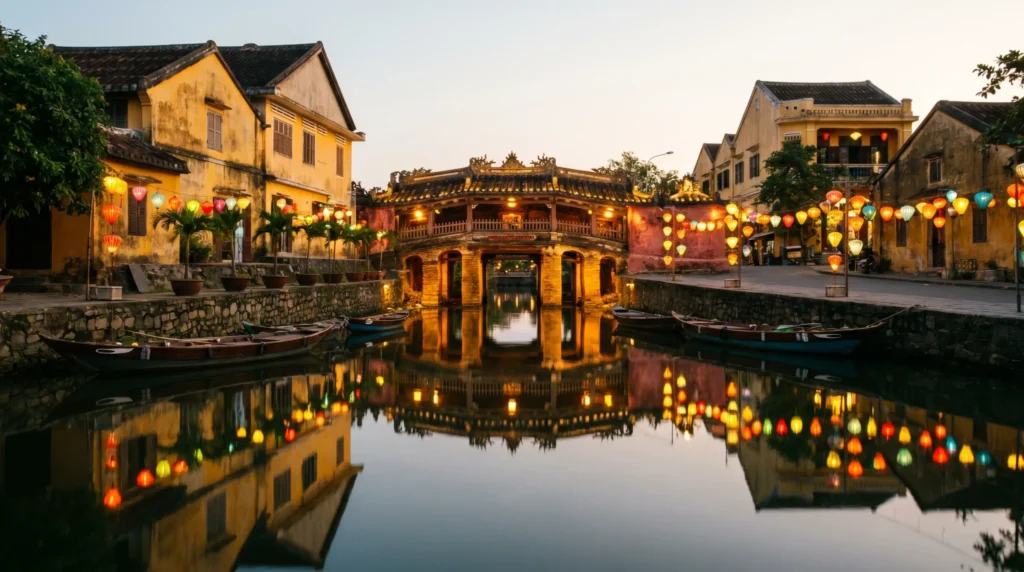
I came to Hoi An expecting the Instagram cliché of yellow walls and silk lanterns and got handed something more interesting — a 30-hectare UNESCO trading port that absorbed Champa, Chinese, Japanese, Vietnamese and French traders across four hundred years and somehow kept 1,068 of its original timber-and-brick shophouses still standing on the same plots they were measured on in the 17th century. The Japanese Covered Bridge has been on the 20,000-đồng note since 2006 , the cao lâu noodles legendarily require water from a single 16th-century well, and on the 14th day of every lunar month the Old Town turns off its electric lighting and runs only on silk lanterns. UNESCO inscribed the site on 12 December 1999 alongside the Cham Hindu sanctuary at My Sơn forty kilometres inland , and the surrounding Quảng Nam province (now folded into Da Nang city as of June 2025) still holds the highest density of Central-Vietnam UNESCO heritage anywhere in the country. Treat this guide as the brief I would hand my own family before they boarded a Vietnam Airlines flight into Da Nang DAD — and for the wider Vietnam frame (the dong, the Reunification Express trans-country corridor, the typhoon-season rules) read it alongside our Vietnam country guide.

Table of Contents
- Why Hoi An?
- Best Time to Visit Hoi An
- Lantern Festival — Full Moon Calendar 2026
- Getting There — Da Nang DAD, Reunification Express & Grab
- Getting Around — Pho Co Pedestrian Zone, Bicycles & Ferries
- Top Neighbourhoods
- Cultural Sights
- Entertainment & Nightlife
- Day Trips from Hoi An
- Food & Drink in Hoi An
- Practical Information
- Budget & Costs
- Planning Your Trip
- Frequently Asked Questions
Why Hoi An?
Hoi An is the only place in Southeast Asia where you can stand in a 17th-century Japanese covered bridge first laid down in 1593 , walk five minutes to a Chinese assembly hall built in honour of the sea goddess Mazu, eat a noodle dish that is legendarily made only with water from a single 16th-century Cham well , and get fitted for a tailored linen suit ready for collection at sundown the next day — all without leaving an Old Town that fits inside a 30-hectare grid. The Western traders who first dropped anchor here in the 16th century knew the place as Faifo ; the Vietnamese sources called it Hai Pho (“sea town”); the modern name Hoi An (“peaceful meeting place”) survived the port’s 19th-century commercial collapse precisely because the Thu Bồn River silted up and Da Nang took over the regional trade — an economic disaster at the time that turned out to be the single best preservation event in Southeast-Asian heritage history. UNESCO inscribed Hoi An Ancient Town on 12 December 1999 (Reference 948) on the back of 1,068 surviving heritage houses sitting on their original 17th-century plot lines.
The city wears three identities simultaneously. It is a Cham trading port — the wider region was the last Hindu Cham frontier of Champa, an Indianised polity that ran the central-Vietnam coast from the 2nd century until 1832 , and the My Sơn Hindu sanctuary 36 kilometres southwest preserves over 70 brick temples built by Cham kings between the 4th and 13th centuries to worship Shiva under the Sanskrit name Bhadreśvara. It is a 15th-19th-century international entrepôt — Chinese (Fujian, Cantonese, Hainanese, Chaozhou and a fifth pan-Chinese congregation), Japanese (the Japanese Covered Bridge, finished in 1595, is their architectural fingerprint ) and European traders (Portuguese, Dutch and French missionaries from the early 16th century, including Alexandre de Rhodes who completed the Romanisation of Vietnamese into chữ Quốc ngữ ) all built quarters here. And it is a 21st-century tailor-and-lantern town — roughly 600 tailor shops turning out custom suits on a 24-to-48-hour timeline, alongside the silk-paper lantern industry that lights the Old Town every full-moon evening.
The pull beyond the Old Town is the day-trip rotation. My Sơn Sanctuary — the UNESCO Cham Hindu temple complex inscribed alongside Hoi An on the same day in 1999 (Reference 949) — is 36 kilometres southwest, ideal as a sunrise tour. The Marble Mountains (Ngũ Hành Sơn, the “Five Elements Mountains” of metal, water, wood, fire, earth, with Buddhist and Hindu grottoes in Mount Thủy reached by a 156-step staircase ) sit 20 kilometres north on the Da Nang shuttle axis. Cu Lao Cham — the offshore archipelago 19 kilometres east of the Old Town and a UNESCO Biosphere Reserve since 2009 with 135 coral species and a famous swallow-nest harvest — is reachable by 30-minute speedboat. Hue, Vietnam’s former Nguyễn-dynasty imperial capital and a third UNESCO site on its own right (Forbidden Purple City, 1802–1945) , sits 130 kilometres north over the Hai Van Pass — one of the world’s best coast roads, a 21-kilometre Annamite spur Jeremy Clarkson called “a deserted ribbon of perfection” on Top Gear in 2008. No other small city on Vietnam’s central coast lines up three UNESCO sites, a major coastal beach (An Bang/Cua Đại), a national-park-tier coastline and an active cultural-heritage industry inside a 90-minute radius.
What guidebooks under-rate is the scale. Hoi An’s heritage core is small enough that you can walk Tran Phu (the spine of the Old Town, the “Street of Pagodas”) end-to-end in twelve minutes, cut south through Bach Dang to the Thu Bồn waterfront in three more, cross the An Hoi pedestrian bridge to the night market in five and double back to the Japanese Covered Bridge in another seven. A bicycle from your guesthouse will reach An Bang Beach in twenty minutes, the Tra Que herb-and-vegetable village in fifteen, the Cam Thanh coconut-water palm grove in twelve, and the Thanh Ha pottery village (a working ceramics community since the 16th century) in twenty-five. Da Nang International Airport — central Vietnam’s primary aviation gateway with 11 million annual capacity across two terminals — sits 30 kilometres north on Highway 1A, a 30-to-45-minute Grab car or fixed-fare taxi away. The Reunification Express (the 1,726-km Hanoi-HCMC railway) does not stop in Hoi An itself ; you ride to Da Nang station and transfer.
And then the lantern story — the third reason most visitors come and the single most distinctive Hoi An evening in any month. On the 14th day of every lunar month, the Old Town turns off its electric street lighting from approximately 19:00 to 21:30 and lights only by silk paper lanterns — hung outside every shophouse, threaded across Tran Phu, dropped on the Thu Bồn in floating paper boats, and reflected off the surface from end to end. The 2026 Full-Moon Lantern dates are 1 February, 3 March, 1 April, 1 May, 30 May, 28 June, 28 July, 26 August, 25 September (Mid-Autumn Festival peak, Tết Trung Thu, the country’s biggest lantern night) , 24 October, 23 November and 23 December. The mathematics of the calendar mean two lantern nights fall in May 2026; that is the single best month of the year to time a Hoi An visit. Vietnam itself sits on Travel Advisory Level 1 (the lowest tier) per the US State Department and the UK FCDO advisory was last refreshed on 21 April 2026.

Best Time to Visit Hoi An
Hoi An has a tropical monsoon climate split into a long dry season (December–August, with March–May the comfortable sweet spot) and a short, intense rainy season (September–November) that culminates in central Vietnam’s annual typhoon window. The South Central Coast averages 25–27°C year-round with minimal seasonal swing, and the country as a whole is hit by 6–8 tropical cyclones a year — most of which break across this stretch of coast. The single most important calendar fact is that the Old Town flooded badly in 2017 (Typhoon Damrey) and again in 2020 and 2024 (Typhoon Yagi recovery context); high water rises into the ground floors of Bach Dang riverfront shophouses every autumn, sometimes more than once. Plan your trip around which Hoi An you want, and use the four-season breakdown below as the realistic timeline.
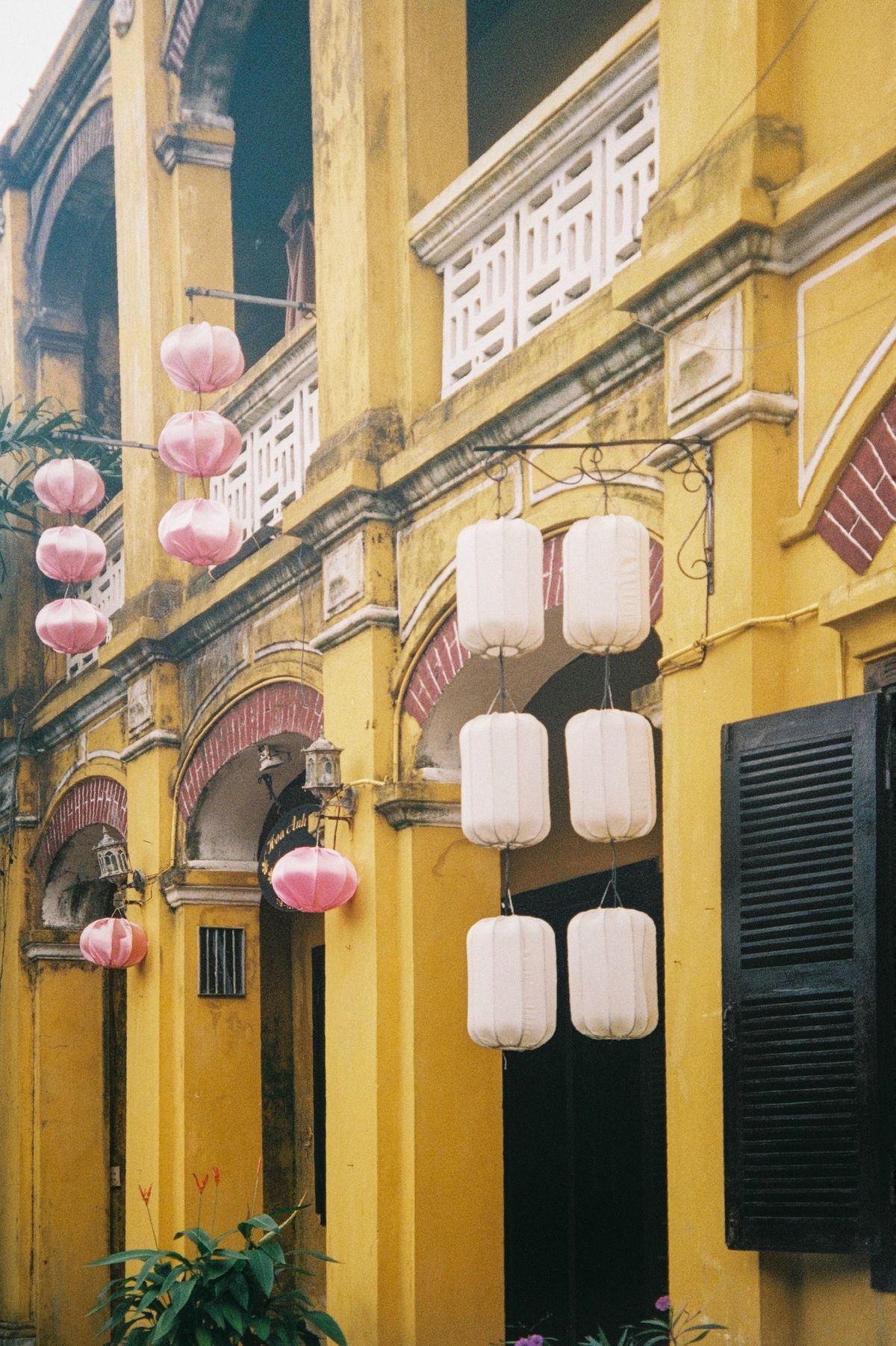
Spring (March – May) — the ideal window
The single best window of the Hoi An year. Daytime highs run 24–30°C with humidity in the 70–78% range, the South Central Coast is between monsoons, and rainfall drops below 50 mm per month from late February to early June. The lantern festival nights (1 April, 1 May and 30 May for 2026, the latter giving you two lantern nights in a single calendar month) are at their photogenic best because the dry-season air is clearer than autumn and you can comfortably linger on the Bach Dang waterfront from 18:30 onwards. Bicycle rides to An Bang and Tra Que are pleasant in the morning rather than punishing; the cao lâu shops are open with full menus; the tailor scheduling buffer (24-to-48-hour delivery) holds because Old Town power is reliable and the Quảng-Nam-tier flooding risk is functionally zero. The catch: this is also Vietnam’s primary inbound tourism window, and Hoi An hotel rates run 20–40% above shoulder prices, with boutique riverfront rooms at $80–180 USD a night and Anantara/Four Seasons resorts above $300. Tết (Lunar New Year, 17 February 2026) still affects the first week of February and reaches into March in residual closures — tailor shops in particular shut for 5–7 days. Book three weeks ahead.
Summer (June – August) — hot, humid, beach window
The peak of the central-coast heat and the peak of An Bang beach traffic. June-to-August daytime highs sit at 32–36°C with overnight lows of 26–28°C, and humidity climbs above 80%; the dry season holds, with rainfall averaging 60–90 mm per month, but the heat at midday inside the Old Town becomes the limiting factor. Plan two-shift days: walk the Old Town 06:30–10:00, retreat to a coffee shop or pool 11:00–15:00, return at 15:30 for the afternoon and stay through the lantern hours. An Bang Beach and Cua Đại’s safe-swim windows are between 06:00 and 09:00 and after 16:30; midday UV runs 11+ on the Vietnamese MONRE scale. Cu Lao Cham snorkelling is at its annual best because the South China Sea visibility is highest in June-July before the typhoon mixing starts. Domestic Vietnamese tourism peaks in July; the central-coast train sleepers from Hanoi to Da Nang sell out three weeks ahead during national-holiday windows, and the August Vu Lan (filial piety) festival adds a quieter parallel lantern night. Hotel rates dip 10–15% from the spring high; the Anantara Hoi An runs around $260–320 in July.
Autumn (September – November) — rainy, typhoon, flood risk
The most weather-volatile window and the one that requires the most flexibility. The southwest monsoon retreats, the northeast monsoon takes over, and central Vietnam takes the brunt of the annual 6-to-8 typhoon hits. Mid-October to mid-November is the single most flood-prone window in Hoi An — the Thu Bồn River backs up against king-tide events, water enters Bach Dang ground floors at the bao đảm mark several times per typical autumn, and 2017’s Typhoon Damrey put boats on Tran Phu. Tour operators run rolling cancellation policies; My Sơn closes for safety days. The flip side: the September Mid-Autumn Festival (Tết Trung Thu, 25 September 2026) is the year’s biggest single lantern night, with full mooncake-and-lion-dance programming on Tran Phu, and the September shoulder-week before the typhoon risk arrives in earnest is one of the cheapest visit windows of the entire year (boutique hotels at $50–90, tailors with no waitlist, no queues at the heritage houses). Watch the National Centre for Hydro-Meteorological Forecasting alerts; build a 24-to-48-hour buffer into any central-coast itinerary that includes Hoi An in October-November.
Winter (December – February) — cool, dry, low-light
Hoi An’s second-best window if you don’t mind cooler evenings and the occasional drizzle from the residual northeast monsoon. December-February daytime highs sit at 22–26°C, overnight lows drop to 18–20°C (sweater weather by Vietnamese standards), humidity drops to 70–75%, and the typhoon risk closes by mid-December. The light gets soft and golden by mid-afternoon — photographers love this window. Tết itself (17 February 2026) is the country’s most important holiday and the only week of the year you should genuinely avoid because most Old Town shops close for 5–7 days, the tailor shops shutter for the full week, and family transport is at Lunar-New-Year peak; arriving in mid-January and leaving by 12 February is the cleanest pre-Tết window, while the post-Tết surge from 22 February onwards reopens everything. The 2026 Lunar New Year falls on 17 February (the 2027 date is 6 February). Western tourism is at its annual peak between Christmas and New Year, with Anantara/Four Seasons rates spiking 40–60% over December 27 – January 5; the Hoi An riverfront fireworks on 31 December are a small-but-popular event. The 25 January – 11 February window is the single quietest tourism stretch of the year apart from the worst of typhoon season.
Lantern Festival — Full Moon Calendar 2026

The Hoi An Full-Moon Lantern Festival (in Vietnamese, “Đêm Phố Cổ” — “Old-Quarter Night”) is the city’s defining cultural set-piece and the most photographed Vietnamese evening anywhere on the central coast. The local authorities switch off the Old Town’s electric streetlights and shopfront tube lights for approximately two-and-a-half hours on the 14th day of each lunar month, and from roughly 19:00 to 21:30 the entire UNESCO heritage zone is lit only by silk-paper lanterns hung outside every shophouse, threaded across Tran Phu and Le Loi, and dropped into the Thu Bồn river as floating paper-and-candle boats. The mathematics of the lunar calendar mean a small minority of Western months get two lantern nights (May 2026 is one of these), and others fall on inconvenient weekdays; the schedule below is the full 2026 calendar.
2026 Full-Moon Lantern Calendar
- 1 February 2026 (Sun) — lunar 14/12 of year-of-the-Snake; closes the pre-Tết Hoi An window
- 3 March 2026 (Tue) — lunar 14/1; first post-Tết lantern night, low crowds
- 1 April 2026 (Wed) — lunar 14/2; classic dry-season lantern night
- 1 May 2026 (Fri) — lunar 14/3; Vietnamese Reunification Day weekend, expect crowds
- 30 May 2026 (Sat) — lunar 14/intercalary 4; the rare second lantern night in a single Western month
- 28 June 2026 (Sun) — lunar 14/5; warm summer evening, latest sundown of the year (~18:35)
- 28 July 2026 (Tue) — lunar 14/6; mid-summer, rainy-season tail
- 26 August 2026 (Wed) — lunar 14/7; Vu Lan filial-piety festival night, parallel programming
- 25 September 2026 (Fri) — lunar 14/8 / Mid-Autumn Festival (Tết Trung Thu); the year’s peak lantern night, full mooncake-and-lion-dance programming on Tran Phu
- 24 October 2026 (Sat) — lunar 14/9; weather-dependent, typhoon-window risk
- 23 November 2026 (Mon) — lunar 14/10; first post-typhoon lantern night, cool
- 23 December 2026 (Wed) — lunar 14/11; closes the calendar year, very quiet
The 25 September Mid-Autumn night is the single biggest lantern event of the year — the Mid-Autumn Festival is Vietnam’s second-most-important traditional holiday, with mooncake gifting, kid-led lion-dance troupes through the Old Town, and a full programme of carp-shaped paper lanterns that maps onto the Cham-influenced symbolism of the central coast. Hotel rates for the 24-26 September window run 30–50% above September shoulder; Tran Phu becomes pedestrian-only from 18:00 and crowds peak on the Bach Dang waterfront, where the floating paper-boat trade runs heaviest.
What happens on a lantern night
From about 18:00 the Old Town shifts: car and motorbike traffic is barred from Tran Phu, Bach Dang and Nguyễn Thái Học from 17:30; the police set up wooden-barrier checkpoints at the An Hoi pedestrian bridge, the Japanese Covered Bridge entrance and at the eastern end of Bach Dang near the Hoi An Central Market; tailor shops and hospitality stay open but the Old Town shopfront-LED bars switch off in coordinated phases between 18:45 and 19:15. The lighting itself is silk paper over bamboo or wire frames, candles or low-wattage warm-white LEDs and ranges from $1 floating river-boats (sold by Vietnamese grandmothers from baskets at every Bach Dang river-stair) to $80–200 commissioned silk lanterns from heritage shops on Le Loi. The river itself becomes the centrepiece — sampans (~100,000-150,000 VND for 30 minutes, ~$4–6 USD) carry visitors on the Thu Bồn / Hoai while passengers drop paper boats from the bow; the photogenic high-water mark is around 20:15 when the lantern density on the river peaks.
Getting There — Da Nang DAD, Reunification Express & Grab
Hoi An has no airport and no rail station of its own. The single answer for almost every visitor is a flight into Da Nang International Airport (DAD) 30 kilometres north and a 30-to-45-minute Grab car or fixed-fare taxi south on Highway 1A and DT603 to the Old Town. The two viable alternatives are the Reunification Express (the 1,726-km Hanoi-Ho Chi Minh City rail line) into Da Nang station with a transfer, or the Hue rail-and-coach combination from the north over the Hai Van Pass. The land border options to Laos are not realistic for Hoi An itself.
Da Nang International Airport (DAD) — the default option
Da Nang DAD is central Vietnam’s largest airport and the third-busiest in the country after HCMC’s SGN and Hanoi’s HAN. The IATA/ICAO code pair is DAD/VVDN; the facility runs two terminals (T1 domestic, opened December 2011 with 4-million-pax capacity; T2 international, opened May 2017 with 6-million-pax capacity) for a combined 11-million-passenger annual ceiling, with 15.5 million handled in 2019 before the pandemic dip. Vietnam Airlines operates DAD as its third hub after Hanoi and HCMC ; VietJet Air bases part of its central-Vietnam fleet here ; Bamboo Airways serves it; international routes connect to Seoul, Bangkok, Singapore, Hong Kong, Tokyo, Kuala Lumpur and Doha among others. Domestic departures from Hanoi (HAN) and HCMC (SGN) run 25-30 daily flights each (~80 minutes one way, $35-90 USD ahead of summer peak). The airport sits 3 kilometres from central Da Nang and 30 kilometres north of Hoi An; the road transfer is the single most important onward leg.
From DAD to Hoi An — the 30-kilometre transfer
Three viable options to cover the airport-to-Old-Town leg:
- Grab car (default) — the Vietnamese ride-hail app is the most reliable choice; pre-book via the Grab app inside the terminal and meet your driver at the designated Grab pickup zone outside Arrivals. Typical fare 350,000–480,000 VND (~$14–19 USD) for a 4-seat car, 30–45 minutes door-to-door depending on rush-hour traffic on Highway 1A.
- Fixed-fare taxi (Mai Linh, Vinasun, Tien Sa) — the official airport taxi rank charges a fixed 380,000–500,000 VND ($15–20 USD) for the Old Town drop with no surge pricing. Confirm price before boarding; taxi drivers should write the fare on a paper ticket on departure.
- Xanh SM (electric green taxi) — VinFast’s 2023-launched all-electric taxi service runs comparable fares to Grab and is increasingly common at DAD. Tickets via the Xanh SM app or street-flag.
- Hotel shuttle / private transfer — most boutique hotels offer a $15–25 USD private transfer ; resorts run included shuttles. Useful in the typhoon-season window when reliable confirmed transport matters.
Reunification Express trains — via Da Nang station
The Reunification Express (Đường sắt Bắc-Nam) is Vietnam Railways’ 1,726-kilometre Hanoi-HCMC main line and the only viable rail spine of the country. The express services SE1/SE2, SE3/SE4 and SE5/SE6 stop at Da Nang station, 30 kilometres north of Hoi An — the city itself has never had a railway line. End-to-end Hanoi-HCMC takes about 30 hours; Da Nang sits at the midpoint, with Hanoi-Da Nang in 17-19 hours (4-bunk soft sleeper $45-55 USD), Hue-Da Nang in 2h45 ($10-15 USD AC seat, one of the world’s great train rides over the Hai Van Pass ), HCMC-Da Nang in 17-18 hours. From Da Nang station, the onward Grab to Hoi An runs 250,000-350,000 VND ($10-14 USD), 35-50 minutes. Vietnam Railways tickets at dsvn.vn or via the 12Go Asia third-party portal; sleepers sell out 5-7 days ahead of weekends and 3 weeks ahead of Tết.
Bus and minibus — Hue, Da Nang, Nha Trang
Open-tour bus operators (the long-haul Vietnamese sleeper-bus network used by mid-range backpackers) connect Hoi An to Hue (4 hours, 200,000-300,000 VND), Da Nang (45-75 minutes, 50,000-100,000 VND on a public bus, 200,000-300,000 VND on a tourist shuttle), Nha Trang (12 hours overnight sleeper, 350,000-500,000 VND) and Ho Chi Minh City (24 hours overnight sleeper, 600,000-900,000 VND). The yellow Bus 01 from Da Nang to Hoi An runs from the Đà Nẵng bus station hourly 06:30-19:00 for 30,000 VND (~$1.20 USD) on a 1h45 schedule with multiple stops; not suited to large luggage, but the cheapest viable route for backpackers.
Getting Around — Pho Co Pedestrian Zone, Bicycles & Ferries

Walking — the default in the Old Town
Hoi An’s UNESCO heritage core is a 30-hectare grid that fits inside a square less than 800 metres on each side. From the central Tran Phu axis you can reach the Japanese Covered Bridge in 5 minutes from any direction, the Hoi An Central Market in 4, the Phuc Kien Assembly Hall in 6, and the Bach Dang riverfront in 3. The streets are paved in stone slabs and are flat, with the only meaningful gradient being the 1.5-metre rise from the riverfront onto Tran Phu. The Old Town pedestrian zone is officially in force 09:00-11:00 and 15:00-22:00 on dry-season days and lengthens to all-day pedestrian-only on lantern-festival nights and Tết — outside those windows, motorbikes share the streets at low speeds. Footwear should grip on slick stone (post-rain hours have plenty of slips); the Bach Dang stairs to the river are slippery year-round.
Bicycle — the city’s daytime rhythm
Most boutique hotels lend or rent bicycles for free or 30,000-50,000 VND a day (~$1.20-2 USD). The bicycle is the right tool for the rhythms of Hoi An: ride 20 minutes east to An Bang Beach, 15 minutes north to the Tra Que herb-and-vegetable village, 12 minutes south through Cam Pho to the Cam Thanh basket-boat coconut grove, 25 minutes west to Thanh Ha pottery village. The dedicated bike lane on Dại Lộ Cao Hồng Lãnh and the rural lanes around An Bang are quiet, flat and signed; midday humidity is the limiting factor in summer. Helmets are not legally required for bicycles but useful to ask for.
Motorbike Grab & Xanh SM
Grab Bike (the motorbike-pillion version of the ride-hail app) and Xanh SM’s electric scooters are the fastest way to cover Hoi An’s outer ring. Typical fares: Old Town to An Bang 30,000-50,000 VND ($1.20-2 USD), Old Town to Cua Đại 40,000-60,000 VND, Old Town to Da Nang 350,000-450,000 VND. The Vietnamese motorbike-helmet law applies to passengers; Grab pillions are issued helmets on pickup. Self-drive motorbike rentals (~150,000-300,000 VND/day) require a Vietnamese motorbike licence or a 1949 International Driving Permit endorsement; the US State Department flags motorbike accidents as the leading injury cause for foreign visitors and the WHO ranks Vietnamese road traffic among the deadliest in Southeast Asia. Don’t self-drive a motorbike unless you have a year of motorbike experience and a Vietnamese-recognised licence.
Cyclos and electric trams
The traditional cyclo (xe xích lô, the bike-rickshaw) runs around the Old Town perimeter for 100,000-150,000 VND for a 30-minute loop — the slowest, most photogenic way to ride. The Hoi An tourism authority has also begun running silent electric trams from the Old Town gate to An Bang on a fixed timetable; tickets 25,000-50,000 VND.
Boats and ferries to An Bang & Cua Đại
The Cam Kim cross-river ferry leaves from the Bach Dang waterfront every 20 minutes during daylight, costs 10,000 VND on foot or 20,000 VND with a bicycle, and takes 8 minutes; you land on Cam Kim island for the cycling lanes around the rural villages and the boatbuilding workshops. The Cua Đại ferry runs from the eastern end of the Old Town to the beach at the river mouth in 25 minutes; in calm conditions , it’s a quieter alternative to the Highway-1A motorbike. Tour operators run multi-stop “basket boat tours” through the Bay Mau coconut forest at Cam Thanh from 04:30 to 17:00 daily for 150,000-300,000 VND; the basket boats themselves are a 4-metre coracle, ideal for families with kids.
Cu Lao Cham speedboats
For the Cham Islands — 19 kilometres east, the UNESCO Biosphere Reserve — speedboats run from the Cua Đại pier from approximately 08:00, with the round-trip + island day-tour costing 350,000-650,000 VND ($14-26 USD) including snorkel kit. Service is suspended in rough sea conditions (typically 15-20 days per autumn) and during the late-October-to-mid-November typhoon window the operators close on safety grounds; check the day-of forecast before booking.
Top Neighbourhoods: Finding Your Hoi An
📍 Hoi An Map: Every Place in This Guide
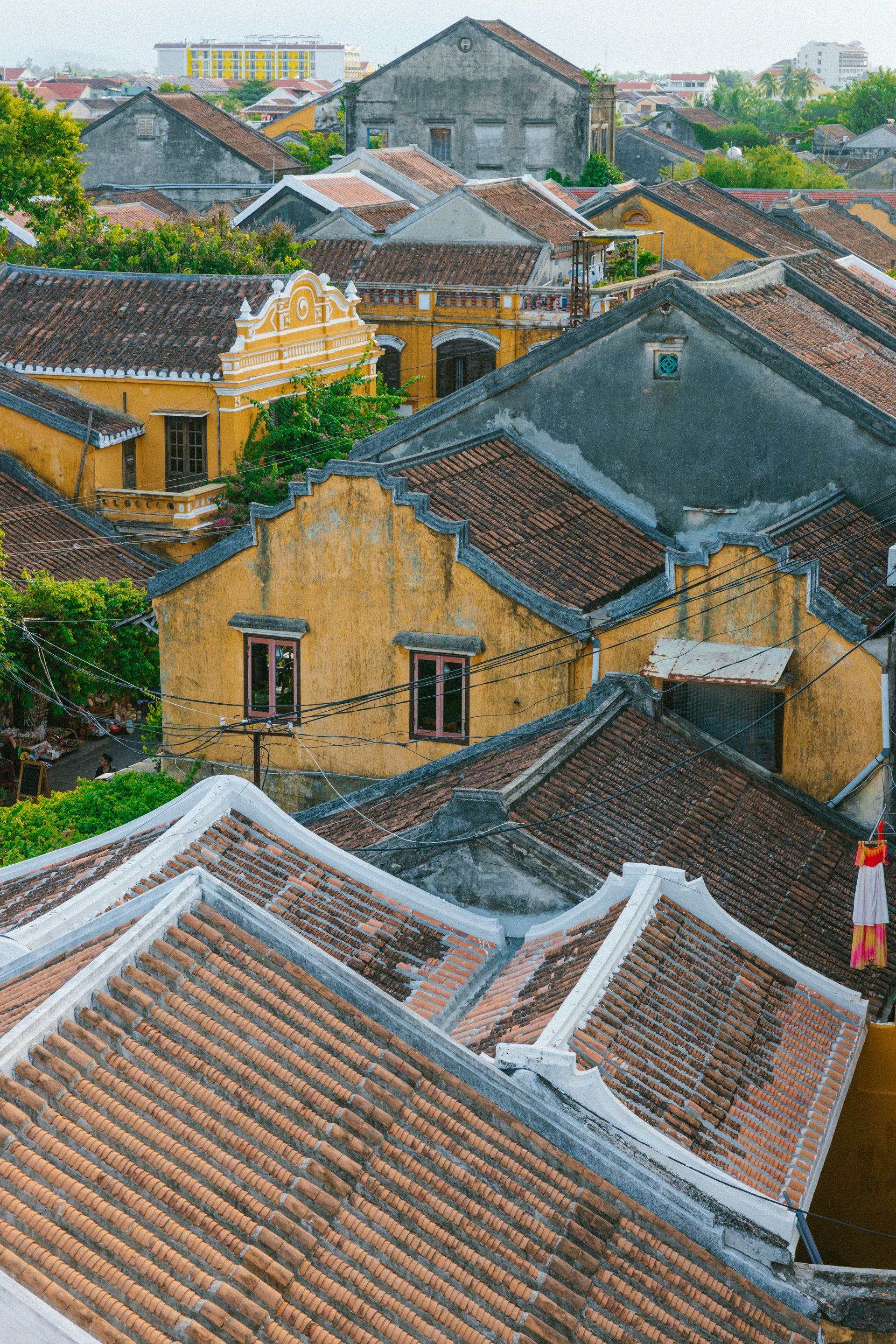
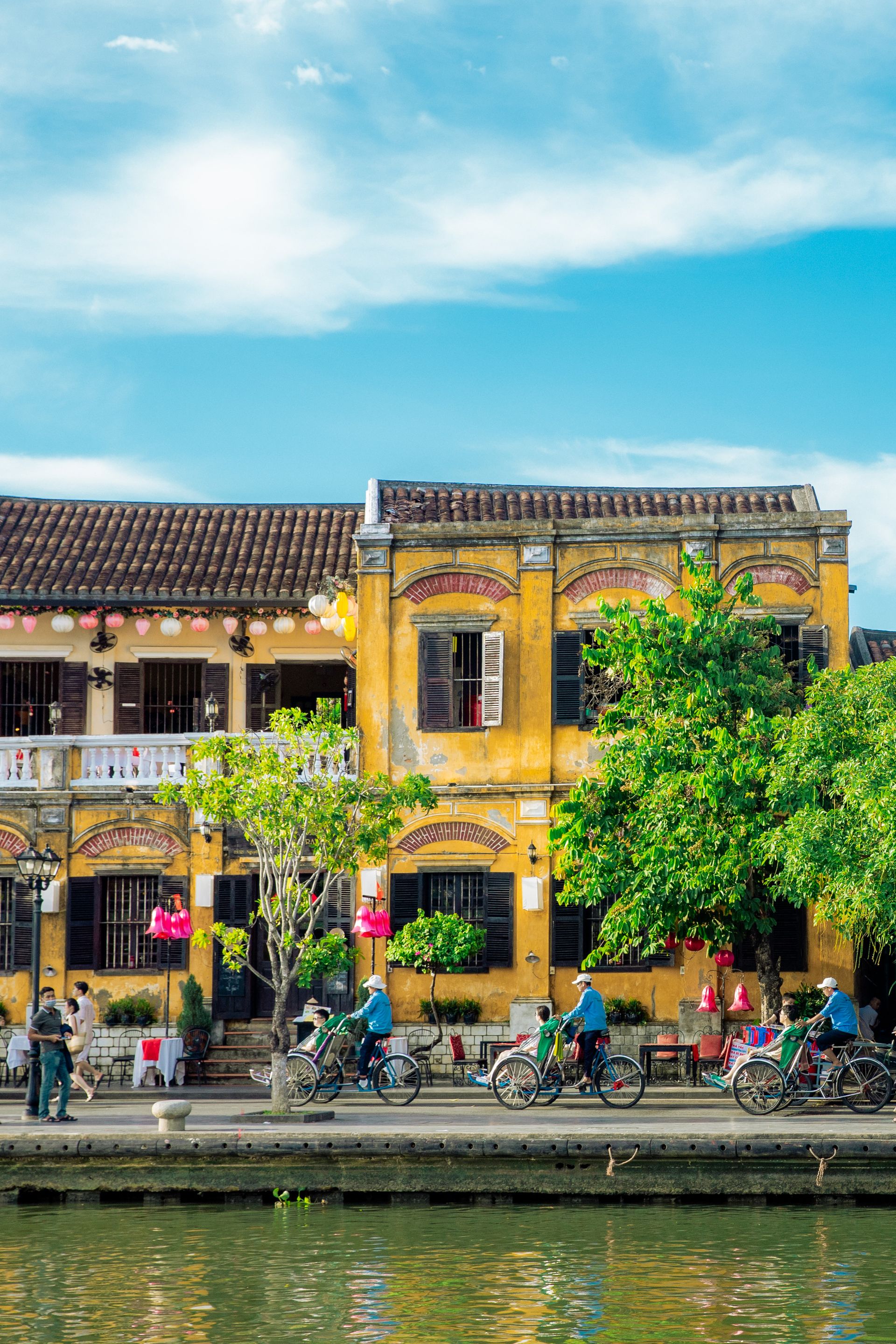
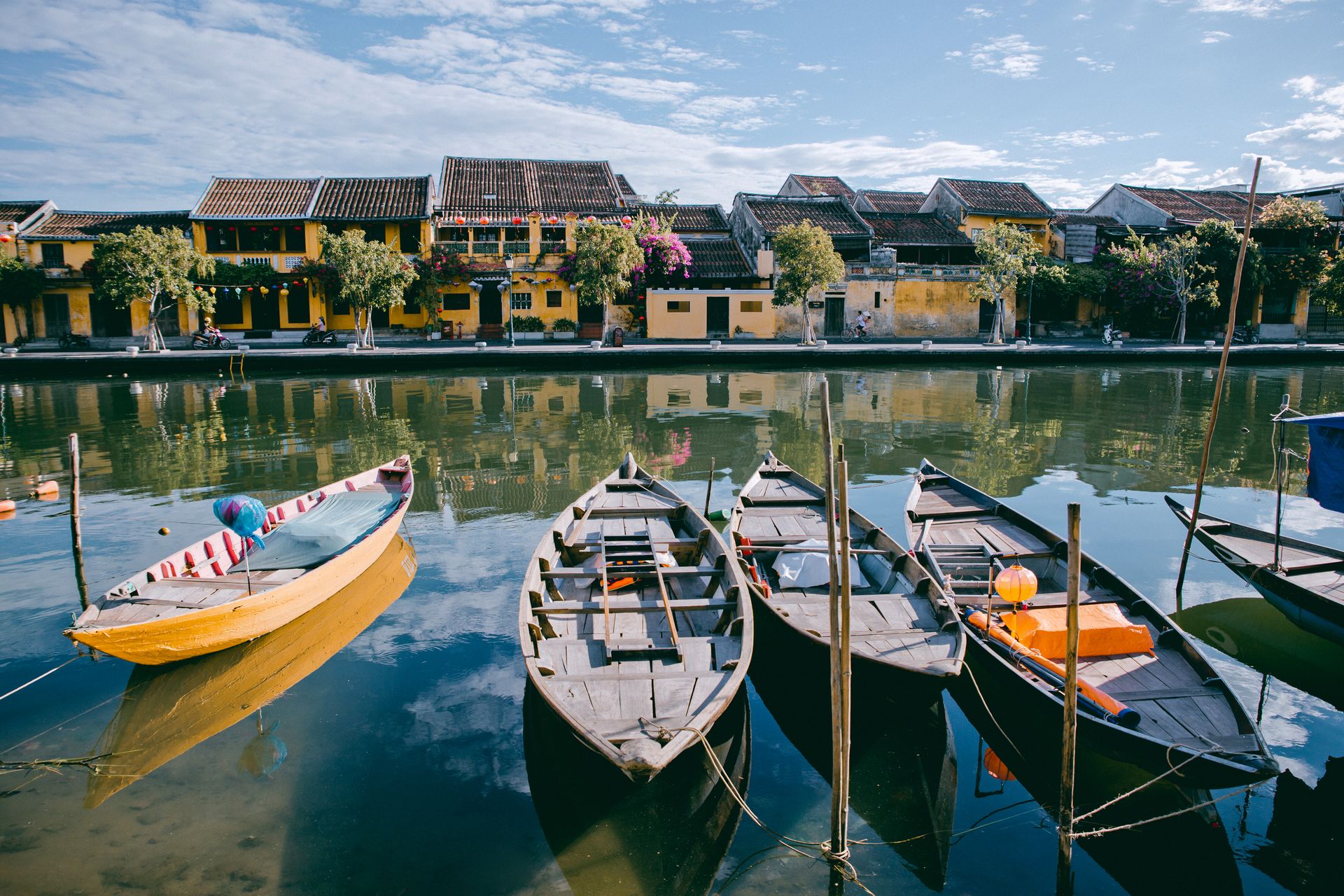
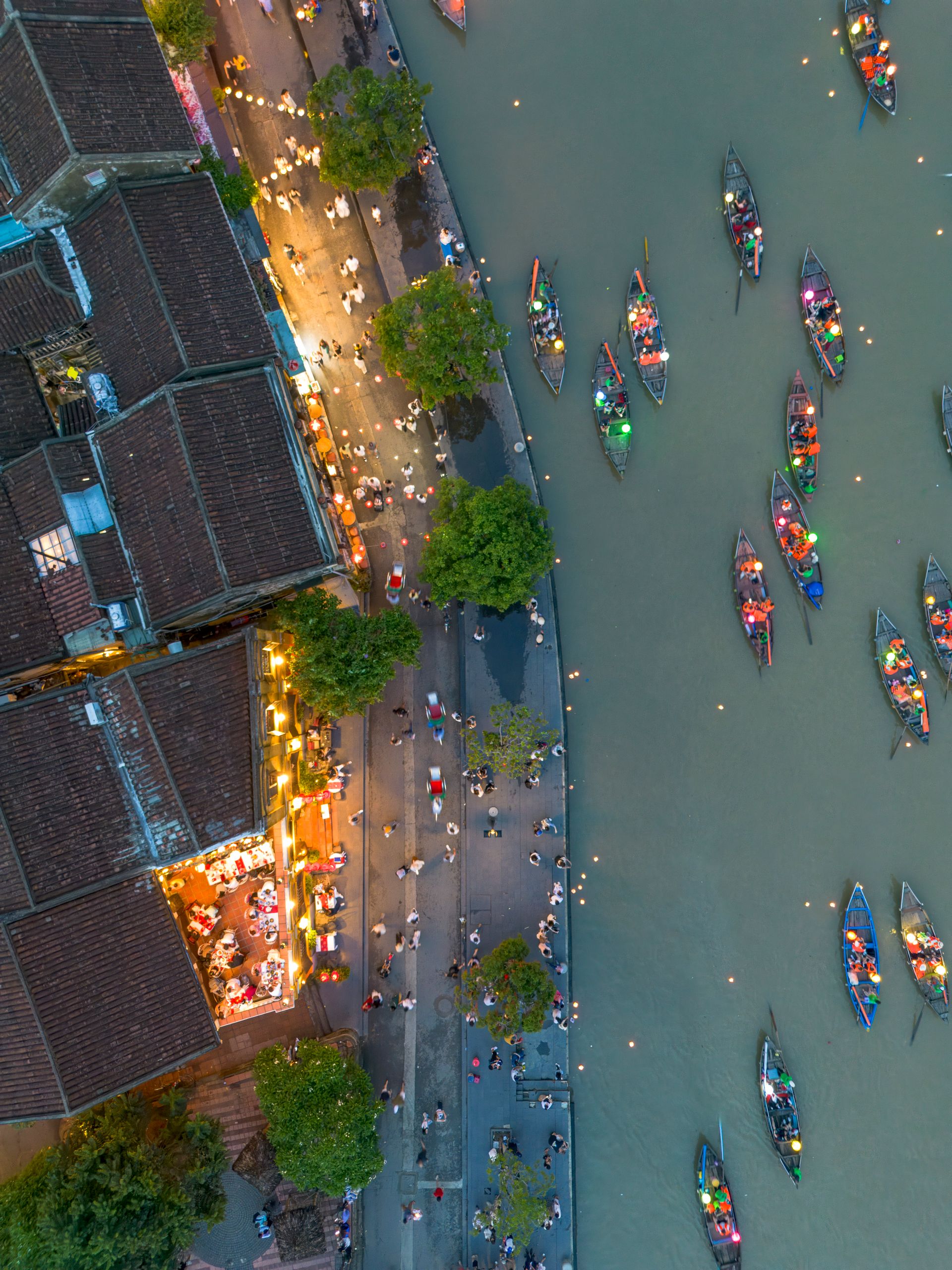
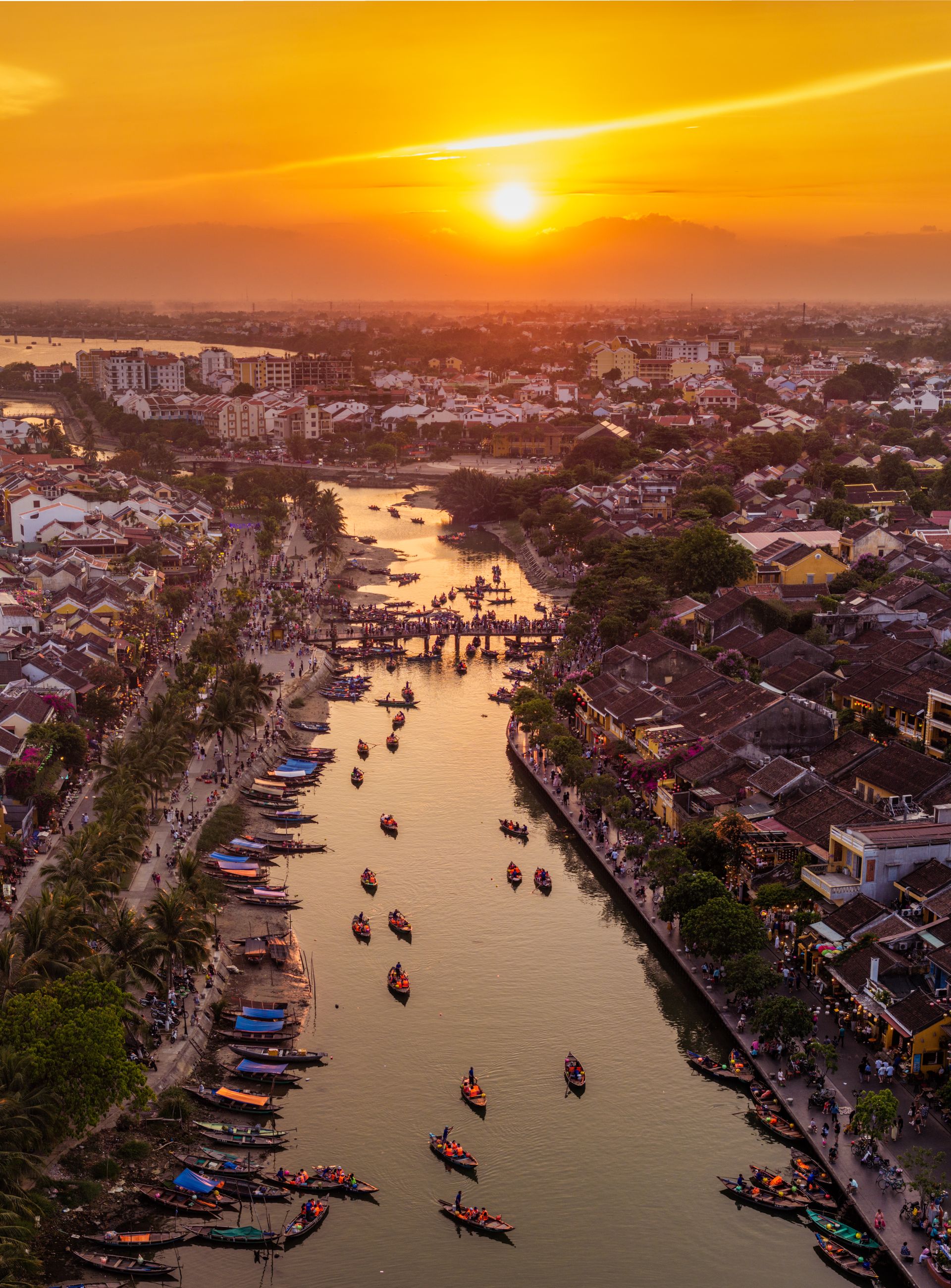


Hoi An’s neighbourhood map is a layered story: the UNESCO heritage core (Phố Cổ) inside the original 17th-century street grid; the Cam Pho district immediately south across the An Hoi pedestrian bridge; the An Bang and Cua Đại beach districts to the east; the Cam Thanh coconut-water palm grove to the southeast; the Cam Kim island across the Thu Bồn; the Tra Que herb village to the north; and the Thanh Ha pottery village on the western edge. We have ranked them by traveller-relevance, with the Old Town core and the An Bang/Cam Pho axis as the must-visits.
Phố Cổ — the Old Town UNESCO core
The 30-hectare UNESCO heritage zone south of Phan Chu Trinh and east of the Hoi An Centre for Cultural Heritage Preservation office is the Hoi An that everyone comes for. The grid has Tran Phu as the central east-west spine (assembly halls, heritage houses, the lantern shops); Bach Dang as the Thu Bồn riverfront axis; Le Loi as the second north-south spine (tailor shops); and Nguyễn Thái Học as the gallery-and-art-shop street. The Old Town sits on the original Cham trading-port site and its 17th-century plot lines are still visible — the Vietnamese state owns the entire heritage zone outright, with a 280-hectare buffer zone, and operates a 21-site monument list that the standard 120,000-VND visitor ticket covers as a five-site bundle. Look for Champa-era well-heads (the Ba Le well in particular), Chinese assembly halls, Japanese trading-house architecture and French colonial townhouses all in the same 800-metre walk.
- Japanese Covered Bridge (1593-1595) — the city symbol
- Phuc Kien Assembly Hall — Fujianese sea-goddess Mazu temple
- Tan Ky Old House — 200-year heritage trading family
- Hoi An Central Market — the working morning food hub
Best for: first-time visitors, lantern-night photographers, anyone with limited time. Access: walk — the Old Town is pedestrian-only 09:00-11:00 and 15:00-22:00.
Cam Pho — the riverside south of the An Hoi bridge
Cross the An Hoi pedestrian footbridge from Bach Dang and you’re on Cam Pho — the residential district immediately south of the Old Town with the An Hoi night market on its eastern edge and a quieter, more Vietnamese rhythm than the heritage core. This is where I would stay on a second-or-third Hoi An visit: tailor showrooms here are 25-30% cheaper than equivalents on Le Loi, the lantern-night views are the same (you’re looking at the Old Town from the south bank rather than from inside it), and the dawn morning runs along the river are unbroken. Riverside boutique hotels at the $40-90 USD tier cluster here. The An Hoi sculpture garden (free, 20-odd Cham-style stone sculptures) sits at the southern end of the bridge.
- An Hoi night market — the food-stall row east of the bridge
- An Hoi sculpture park
- Cam Pho Pagoda — quiet Vietnamese Buddhist temple
Best for: repeat visitors, photographers, budget mid-range stays. Access: walk via the An Hoi pedestrian bridge.
An Bang Beach — the surfer-and-resort coast
An Bang Beach lies 4 kilometres east of the Old Town on the South China Sea, reached by a 20-minute bicycle ride along Dại Lộ Cao Hồng Lãnh and a quiet rural lane through Cam An. The beach is 1.5 kilometres long, with white sand, a stable shore break (April-September) and a small but lively expat-and-tourism scene clustered around Hidden Beach Bar, Soul Kitchen, and the Sunday-morning surf lessons. Beach loungers run 30,000-50,000 VND a day with a drink purchase; the Tahini-and-fresh-fish places on the boardwalk are mid-range ($8-15 USD a meal). An Bang has slowly outgrown the more-famous-but-eroded Cua Đại as the default Hoi An beach because the 2014-2018 erosion crisis stripped Cua Đại’s sand, and An Bang remains the cleaner swim. October-November is closed for swim safety on the orange-flag rule.
- Hidden Beach Bar, Soul Kitchen, Salt Pub — the An Bang bar row
- An Bang Surf School — lessons 350,000-500,000 VND
- Sunday market on the dunes — small craft and fresh fish
Best for: beach holidays, families with kids, surfers. Access: 4 km / 20 min bicycle from the Old Town, or 50,000-VND Grab.
Cua Đại Beach — the resort row
Cua Đại Beach is 5 kilometres east of the Old Town at the Thu Bồn river mouth and is where the international resort tier sits — the Anantara Hoi An and the Four Seasons Resort The Nam Hai (now Four Seasons Resort Hoi An) are the headline two, with the Vinpearl Resort and the Boutique Hoi An Resort filling the next tier. The beach itself has been heavily affected by erosion since 2014, with sea walls, geotextile mattresses and ongoing sand-replenishment programmes; the swim is fine but the beach width varies year-to-year. The An Bang-Cua Đại stretch together is the working coastal axis of Hoi An tourism, and the river-mouth Cua Đại pier is also where the Cu Lao Cham speedboats depart.
- Anantara Hoi An Resort, Four Seasons Hoi An, Vinpearl Resort
- Cu Lao Cham speedboat pier (15-min walk south)
- Sea-wall esplanade for sunrise photography
Best for: luxury resort stays, package tourists. Access: 5 km / 25 min bicycle, or 60,000-VND Grab.
Cam Thanh Coconut Forest — the basket-boat district
Cam Thanh, 3 kilometres south-east of the Old Town along the Thu Bồn estuary, is a working palm-water village with the Bay Mau (“Seven-Hectare”) coconut grove at its heart. The basket-boat tour is the signature activity here — 4-metre coracles paddle through narrow channels in the palms, with fishermen demonstrating crab traps and the famous round-boat spinning trick (the boat operator sits on the gunwale, leans, and spins the basket boat 360 degrees on its axis). Tour entry 30,000 VND, basket-boat ride 150,000-300,000 VND for 90 minutes; small-group tours from Hoi An hostels include lunch and bicycle hire and run $20-40 USD per person. The Cam Thanh War Memorial commemorates the 1968 American military operations in the area; the village rebuilt from heavy bombing damage.
- Bay Mau Coconut Forest basket boats
- Coconut-leaf weaving demos
- Cam Thanh War Memorial (free)
Best for: families with young kids, photographers, half-day tours. Access: 3 km / 15 min bicycle from Old Town, or shuttle from any hostel-tour pickup.
Cam Kim Island — the cycling backwater
Cross the cross-river ferry from Bach Dang and you land on Cam Kim, the alluvial island in the middle of the Thu Bồn that holds Kim Bồng Carpentry Village — a 17th-century woodworking and boatbuilding centre that supplied Cham, Chinese and Japanese carpenters to the Old Town. Cycling lanes run the length of the island (8 kilometres end-to-end), past rice paddies, working boatyards, family-run carpentry workshops and a rural Vietnamese rhythm that is everything the Tran Phu Old Town is not. The Cam Kim ferry runs every 20 minutes from Bach Dang for 10,000 VND on foot or 20,000 VND with a bicycle; the round trip plus a 90-minute cycle takes a half-day. The Hoi An Memories show outdoor amphitheatre is on the eastern tip.
- Kim Bồng carpentry village
- Hoi An Memories show (Vinpearl, evening)
- Rice-paddy cycling lanes
Best for: half-day rural escape, repeat visitors. Access: Cam Kim ferry from Bach Dang.
Tra Que — the herb & vegetable village
Tra Que is the village 3 kilometres north of the Old Town that supplies the Hoi An restaurants with their fresh herbs — mint, perilla, Vietnamese coriander, cilantro and the lemongrass that anchors the cao lâu and white-rose dishes. The village is small (220 farming households, 7-8 hectares of organic-certified herb beds) and has built a parallel cultural-tourism economy around the famous Tra Que cooking schools. Two-hour bicycle visits run 100,000-150,000 VND including hands-on planting; half-day cooking-school programmes start at 800,000 VND with a market visit, garden tour, hands-on prep of three dishes (white rose, banh xeo, mi quang) and lunch. Red Bridge Cooking School runs a similar programme with a Thu Bồn river boat included.
- Tra Que Vegetable Village — herb-bed walks
- Tra Que Cooking School
- Red Bridge Cooking School (boat from Hoi An)
Best for: cooking-class travellers, families, photographers. Access: 3 km / 15 min bicycle from the Old Town.
Thanh Ha Pottery Village
Thanh Ha is the 16th-century working ceramics community on the western edge of Hoi An, 3 kilometres west of the Old Town, where you can watch wheel-thrown pottery and brick-making in family-run workshops descended from the Cham potters who supplied the trading port. The Thanh Ha Terracotta Park (entry 35,000 VND) is the headline attraction, with miniature replicas of world wonders made from local clay. The pottery industry here was nearly extinct by the early 2000s but a UNESCO-aligned cultural-heritage programme has reactivated wheel-thrown traditional pieces, with the village now exporting decorative tile and architectural ceramics back to the Old Town heritage-house restoration projects. Plan 90 minutes; combine with a Cam Kim ferry loop.
- Thanh Ha Terracotta Park
- Family pottery workshops
- Brick kilns (working)
Best for: craft-and-heritage travellers, families with school-age kids. Access: 3 km / 15-20 min bicycle from Old Town.
Cultural Sights: Japanese Bridge, Assembly Halls & Heritage Houses

Japanese Covered Bridge (Chùa Cầu)
The single most photographed building in Hoi An and the city symbol on the 20,000-đồng banknote. Construction began in 1593 and the bridge was completed in 1595 by the resident Japanese merchant community, who built it across a small canal at the western end of Tran Phu to give them passage to the Chinese enclave on the opposite side without crossing the busy waterfront. The Vietnamese name is Chùa Cầu (“Buddhist Temple Bridge”); the official name conferred in 1719 by Lord Nguyễn Phúc Chu was Lai Viễn Kiều (“a bridge to welcome guests from afar”). The structure is 18 metres long and 3 metres wide, with a small Taoist temple at the northern end dedicated to Bắc Đế Trấn Vũ (the Northern Emperor of Mysterious Heaven, a deity protecting against floods). Two stone monkeys guard the western entrance, two stone dogs the eastern — the conventional explanation is that the Year of the Monkey was when construction started and the Year of the Dog was when it finished, though folklore also attaches the dragon-myth interpretation in which a giant subterranean monster has its head in India, tail in Japan and body running through Hoi An. The bridge has been a National Historic-Cultural Relic since February 1990, was dismantled for major restoration in October 2023, and reopened in 2024 with reinforced foundations to address ongoing underground erosion. The Hoi An Old Town entry ticket includes a single bridge crossing.
Phuc Kien (Fujianese) Assembly Hall
The largest and most spectacular of Hoi An’s five Chinese assembly halls, built in 1697 by the Fujian (south-Chinese) merchant community to honour the sea-goddess Mazu (Thiên Hậu) who was credited with rescuing Fujianese shipping crews from typhoons. The triple-eaved entrance gate (added in 1975) is the visual signature; inside, the courtyard runs through three altar halls with a central dragon-fountain, and the rear hall houses the Mazu altar with the goddess flanked by Thuận Phong Nhĩ (“Wind-Following Ear”) and Thiên Lý Nhãn (“Thousand-Mile Eye”), the gods of hearing and vision. A side chapel holds the Six Lords of Fujian, the founding-fathers altar of the Phuc Kien diaspora. The complex is the most active of the five Hoi An assembly halls — full-moon and Lunar New Year worship draws Vietnamese-Chinese families from across the central coast. Open daily 07:30-17:30; included in the Old Town heritage ticket.
Quan Cong Temple (Chùa Ông)
Built in 1653 by the Cantonese-Vietnamese community, the Quan Cong Temple (“Quan” for the Three Kingdoms-era warrior general Guan Yu / Quan Vũ, “Cong” for “Lord”) on Tran Phu opposite the central market is the spiritual heart of Hoi An’s Chinese-Vietnamese mercantile community. The four-courtyard layout houses a 3-metre-high gilded statue of Guan Yu astride his red horse, with two standard-bearers on either side — the warrior-saint of loyalty and integrity is the patron of merchants and contracts, and the temple acts as a contractual oath-taking site for older Vietnamese-Chinese trading agreements. The roof carries dragon-motif ridge tiles in green-glazed ceramic, and the front-courtyard side rooms have temporary exhibitions on the Chinese-Vietnamese trading guilds of central Vietnam. Open daily 07:00-17:00; included in the heritage ticket.
Tan Ky Old House (Nhà cổ Tấn Ký)
The Tan Ky Old House on Nguyễn Thái Học is a 200-year-old timber-and-tile shophouse that has been continuously occupied by the same Vietnamese-Chinese family for seven generations — a working museum of the Hoi An merchant lifestyle. The house has been declared a National Cultural Relic and is one of the four heritage houses included on the standard Old Town visitor circuit. The architecture is the textbook three-section Hoi An shophouse: street-front trading hall, central courtyard with a small fish pond, and rear residential quarters with a back gate onto the Thu Bồn river-jetty. The interior holds 18th-century mother-of-pearl-inlay furniture, Chinese hanging poetry boards in the front room, and a flood-marker on the central column showing the high-water marks from the Hoi An floods of 1964 (over 2.5 metres above ground level), 2017 (Damrey, ~2 metres) and 2020. Family members lead the house tour personally; included in the Old Town heritage ticket. Open daily 08:00-17:30.
Phung Hung Old House (Nhà cổ Phùng Hưng)
One of the largest and oldest surviving heritage houses in Hoi An, on the corner of Nguyễn Thị Minh Khai near the Japanese Covered Bridge. The Phung Hung house was built in 1780 by a Vietnamese maritime trader and remained a working trading house through the late-19th-century commercial decline; the architecture mixes Vietnamese, Chinese and Japanese influences (timber tile-roof Vietnamese-style central section, four-eaved Chinese-style front, and a square Japanese-style flood-evacuation hatch in the upper-floor ceiling that was used to lift the family and inventory above the Thu Bồn floodwater). The four-pillar central column system carries 80 timber columns of jackfruit and ironwood. The current owners (eighth-generation descendants) live on the property and run guided 15-minute tours included in the Old Town heritage ticket. Open daily 08:00-18:00.
Hoi An Central Market & the Bach Dang Riverfront
The Hoi An Central Market on Tran Phu/Bach Dang is the working morning food hub of the Old Town and one of the most photogenic markets in Vietnam. The fresh-produce section (eastern corner) opens at 04:30 with the morning fish auction; the central food court runs 06:00-22:00 with the cao lâu, mi Quang and bún bò Huế stalls; the souvenir wing operates 09:00-21:00. The Bach Dang waterfront immediately south is the lantern-night centre of gravity — the An Hoi pedestrian footbridge crosses to the night market on the south bank, the floating-lantern paper boats are sold from baskets at every river-stair, and the sampan rides depart from the central jetty. Walking the Bach Dang from west (Japanese Covered Bridge) to east (the central market) at lantern hour is the single most-photographed walk in Hoi An.
Museum of Trade Ceramics & Sa Huỳnh Culture Museum
The Museum of Trade Ceramics on Tran Phu (housed in a restored heritage shophouse, included in the Old Town ticket) holds 268 ceramics drawn from the Hoi An trading-port era, including 9th-century Persian wares, 12th-century Chinese celadons, 13th-century Vietnamese trade ware and 17th-century Japanese Imari porcelain. The Sa Huỳnh Culture Museum next door covers the older 1,000 BC–200 AD Sa Huỳnh culture — the late Bronze-Age and early Iron-Age people of central Vietnam, ancestors of the Cham, whose burial-jar archaeology was recovered from sites around Hoi An (200+ artefacts in the museum collection). The two together cover roughly 3,000 years of trading-port and pre-trading-port history; budget 45 minutes for both. Both included in th e standard Old Town heritage ticket.
Tran Family Chapel (Nhà thờ tộc Trần)
The Tran Family Chapel on Le Loi is a private ancestral hall built in 1802 by the Tran family, descendants of a Mandarin-class Vietnamese-Chinese trading family who served the Nguyễn dynasty. The chapel has been continuously maintained by the family for eight generations and hosts twice-yearly ancestral worship ceremonies. Architecture is classic Vietnamese-Chinese: triple-eaved entrance gate, central courtyard, and a three-altar ancestral hall with the family lineage chart and the original Mandarin-court robes preserved in glass cabinets. The current head of the family welcomes visitors personally and gives a 10-minute history of the seven-century Trần lineage. Open daily 07:30-17:30; included in the Old Town heritage ticket. The 8th-generation tea ceremony is the value-add over the other heritage houses.
Cantonese Assembly Hall (Quảng Triệu Assembly Hall)
The Cantonese (Quảng Đông) assembly hall on Tran Phu west of Phuc Kien was built in 1885 by the Cantonese-Chinese community of Hoi An — a smaller and quieter alternative to the Fujianese hall. The temple is dedicated to Quan Cong (the same Three-Kingdoms general worshipped at Chùa Ông) and the rear courtyard holds a stone-and-glazed-ceramic dragon fountain. The five-coloured ceramic-tile roof is the architectural distinguishing feature versus the Fujianese hall’s green-glazed roof. Open daily 07:30-17:30; included in the Old Town heritage ticket. The five Hoi An Chinese assembly halls (Phuc Kien / Fujian, Trieu Chau / Chaozhou, Quang Dong / Cantonese, Hai Nam / Hainan and Ngu Bang / Five-Provinces) together represent the most complete extant set of overseas-Chinese trading-guild architecture anywhere in Southeast Asia.
Entertainment & Nightlife
Hoi An’s evening scene is built around the river and the lantern rather than the megaclub — this is a heritage town, not a party city, and the Old Town’s pedestrian core shuts to motor traffic from 18:00 so the whole place becomes a walkable lantern-lit promenade. The headline acts are the night market, the river boats, the bar strip on An Hoi islet, the cooking classes, and the staged cultural performances; the five categories below cover what actually fills a Hoi An night.
Lantern Boats & the An Hoi Night Market
The signature after-dark experience is a paper-lantern rowboat on the Thu Bồn — sampans hired from the Bach Đằng riverfront for 150,000-250,000 VND ($6-10 USD) for a 20-30 minute float, with a floating-candle lantern released onto the water for good luck. Cross the An Hoi pedestrian bridge to the An Hoi Night Market, a 200-metre lantern-stall strip selling silk lanterns, street snacks and souvenirs nightly from roughly 17:00 to 23:00. Best for: couples and photographers. Access: walk from the Japanese Covered Bridge in five minutes.
An Hoi Bar Strip & Riverside Cocktails
The nightlife such as it is clusters on the An Hoi islet and the Nguyễn Phúc Chu riverside, where bars like Mr Bean, Tiger Tiger and the long-running backpacker spots run happy-hour cocktails from 50,000-90,000 VND and a beer (Bia Larue or a craft pour at 7 Bridges Da Nang outposts) from 25,000-50,000 VND. Things wind down early by Vietnamese-city standards — the Old Town noise curfew keeps amplified music down after about 23:30. Best for: a low-key riverside drink rather than a late club night. Booking tip: no reservations needed midweek.
Hoi An Memories Show & Lune Performing Arts
The Hoi An Memories show on Hoai River Park (Cồn Hến islet) is central Vietnam’s largest staged production — a 60-minute outdoor spectacle with a cast of roughly 500 performers retelling 400 years of Hoi An history across a riverside stage, running most evenings at 20:00. Tickets run 600,000-1,200,000 VND ($24-48 USD) by seating tier. For something smaller, the bamboo-circus and traditional-arts performances in the Lune Performing Arts vein tour the region. Best for: families and first-timers. Booking tip: buy online 24-48 hours ahead in peak season.
Cooking Classes & Tra Que Herb Village
Hoi An is one of Southeast Asia’s best places to take a cooking class, and most run as a half-day with a market tour and a basket-boat or bicycle leg out to the Tra Que organic herb village (a 20-hectare working herb farm three kilometres northeast). Classes from operators like Red Bridge, Morning Glory’s school and the Tra Que farm cooperatives run 500,000-1,200,000 VND ($20-48 USD) including market visit, hands-on prep of cao lầu or white-rose dumplings, and the meal. Best for: food-focused travellers. Booking tip: morning sessions beat the afternoon heat.
Tailor-Shop Evenings & Late-Night Old Town
The Old Town’s ~600 tailor shops double as an evening activity — the back-half-of-trip houses (Yaly Couture, A Dong Silk, BeBe) stay open to 22:00 for fittings, so a measurement appointment slots neatly into a post-dinner stroll. Pair it with a Bach Đằng riverfront dessert (chè sweet soup, 20,000-40,000 VND) and the lantern walk. Best for: shoppers combining errands with the evening promenade. Access: Tran Phu and Le Loi, the tailor spine.
Day Trips from Hoi An

Hoi An has the highest day-trip density of any small Vietnamese city. Three UNESCO sites sit within a 130-kilometre radius, two more national-treasure-tier attractions inside an hour, and a Cham archipelago marine biosphere reserve 19 kilometres offshore. The five day trips below are ranked by traveller-relevance for a 3-to-5-night Hoi An stay.
My Sơn Sanctuary (40 minutes by minibus / Grab car)
The Cham Hindu temple complex 36-40 kilometres southwest of Hoi An, inscribed UNESCO World Heritage on the same day as the Old Town in 1999 (Reference 949). The complex was built between the 4th and 13th centuries by successive Cham kings, with the earliest documented temple raised by King Bhadravarman I (r. 380-413) who built a hall containing a lingam to worship Shiva under the Sanskrit name Bhadreśvara. At its peak the site held over 70 brick temples; archaeological survey identified 71 temple remnants in 14 groups. American B-52 bombing in 1969 levelled significant portions; today, surviving structures span groups A, B, C, D and E with restored brick towers, Cham sculpture and Sanskrit-and-Cham inscriptions on stone stelae. The single most important visit-time decision is sunrise — book a 04:30 minibus pickup, beat the heat and crowds, and you’ll have the central groups to yourself for the first hour. Group tours from Hoi An hostels run 350,000-500,000 VND ($14-20 USD) including the 150,000-VND site-entry ticket , transport and a guide; private Grab car runs 700,000-900,000 VND for the round trip. On-site facilities are basic; bring water, sun cover and walking shoes. The sanctuary has been included on the Cham cultural-heritage corridor with the Cham Museum in Da Nang since 2012.
Marble Mountains & Da Nang (30 minutes by Grab car / motorbike)
The Marble Mountains (Ngũ Hành Sơn, the “Five Elements Mountains”) are 20 kilometres north of Hoi An on the Da Nang shuttle axis, named after the Chinese five elements — Kim (metal), Thuỷ (water), Mộc (wood), Hoả (fire), Thổ (earth). The largest, Mount Thuỷ, is reached by a 156-step staircase or a paid elevator, and contains a network of Buddhist and Hindu grottoes including Huyen Khong Cave and Tang Chon Cave, with caves used as Viet Cong field hospitals during the American War. Site entry 40,000 VND, elevator 15,000 VND extra; budget 2-3 hours. Combine with central Da Nang’s Dragon Bridge (the 666-metre dragon-shaped road bridge that spits fire and water Saturday and Sunday at 21:00, opened 2013), the Cham Museum (the world’s most complete collection of Cham sculpture, in a 1915 French colonial building), the Han River Bridge, and a My Khe beach lunch — together a clean full-day Da Nang loop from Hoi An.

Ba Nà Hills & the Golden Bridge (90 minutes by minibus)
Ba Nà Hills is the French-colonial-era hill station 42 kilometres west of Da Nang (around 90 minutes from Hoi An), originally founded in 1919 by French colonists at 1,500 metres elevation. The Sun Group expansion turned the resort into one of Vietnam’s most-visited theme parks, anchored by a 2018-opened pedestrian footbridge — the Cầu Vàng (“Golden Bridge”) — held aloft by two giant stone hands. The Ba Nà cable car system is the engineering signature: opened 29 March 2013, it holds the Guinness world record for the longest non-stop single-track cable car at 5,801 metres, and was joined by additional sister lines. Theme-park attractions include a recreated French village, an alpine coaster, a wax museum and gardens; the Golden Bridge itself is a 5-minute walk from the cable-car summit. Day-trip pricing is 1,000,000-1,300,000 VND ($40-52 USD) including round-trip cable car , all rides and lunch; tour-operator group rates 1,400,000-1,800,000 VND with Hoi An hotel pickup. Best avoided on weekends and Vietnamese national-holiday weeks (Tết, Reunification Day, Vu Lan); midweek midday-arrival is calmest.
Cu Lao Cham Marine Park (30 minutes by speedboat)
The Cham Islands — 19 kilometres east of Hoi An (16 kilometres from the Cua Đại pier) — are an eight-island archipelago and a UNESCO Biosphere Reserve since 2009. The marine reserve holds 135 species of coral, 84 mollusc species and four tiger-shrimp species, with snorkel and dive sites concentrated around the central reef walls off Hòn Lao (the main inhabited island). The famous swallow-nest harvest from Salanganes swallows runs at about 1.4 tons annually at US$4,000 per kilogram — the nests anchor the local economy alongside fishing for the islands’ ~3,000 residents. Day-trip speedboat tours from Cua Đại pier run 350,000-650,000 VND ($14-26 USD) including snorkel kit , lunch on Hòn Lao, and a visit to Hai Tạng Pagoda (the 16th-century Buddhist temple on the central island). Service is suspended for 15-20 days each autumn during typhoon-window rough-sea periods; check the daily forecast and book through a registered Hoi An tour operator with safety insurance.
Hue Imperial City (130 km north over the Hai Van Pass)
Hue, Vietnam’s former Nguyễn-dynasty imperial capital from 1802-1945, sits 130 kilometres north of Hoi An over the Hai Van Pass and is the third UNESCO World Heritage Site of the central-Vietnam triangle (Imperial City inscribed 1993). The Imperial City complex includes the Forbidden Purple City (royal living quarters, mostly destroyed in 1968 American military operations and partially restored), the Citadel, the Royal Theater, and the seven scattered Nguyễn dynasty royal tombs in the surrounding countryside (Minh Mạng, Tự Đức and Khải Định being the headliners). The 130-km drive from Hoi An takes 3.5-4 hours via the Hai Van Pass on the Easy Rider motorbike route — one of Vietnam’s great road trips, a 21-kilometre Annamite-spur coastal road at 496-metre elevation that Top Gear in 2008 called “a deserted ribbon of perfection.” The Hai Van Tunnel (Southeast Asia’s longest road tunnel) carries through-traffic underneath. CFR-aligned Reunification Express trains Da Nang-Hue run 2h45 in air-conditioned seats; tourist motorbike tours run 1,400,000-2,500,000 VND ($55-100 USD) per person one-way with luggage transfer; the smarter visit pattern is one night in Hue rather than a same-day return, which is exhausting.
Phong Nha-Kẻ Bàng Caves (overnight, 350 km north)
Phong Nha-Kẻ Bàng National Park, 350 kilometres north of Hoi An in the North Central Coast region, is Vietnam’s premier cave-system UNESCO site (inscribed 2003) and home to Sơn Đoòng — the largest known cave in the world, with the central chamber over 5 kilometres long, 200 metres high and 150 metres wide. The full Sơn Đoòng expedition (operated by Oxalis Adventure on a quota system, with limited slots and a $3,000+ per-person price tag) is a multi-day commitment; viable alternatives are the Phong Nha Cave (boat tour through the river-cave entrance, half-day), the Paradise Cave (Thiên Đường) and the Tu Lan cave system (1-2-day moderate trekking). The drive from Hoi An is 6-7 hours (or train Da Nang-Đồng Hới in 5h on a CFR sleeper); plan 2-3 nights minimum. Suitable as the second leg of a longer central-Vietnam-plus-DMZ itinerary; not a same-day return.
Food & Drink in Hoi An — Cao Lầu, White Roses & Bánh Mì Phượng
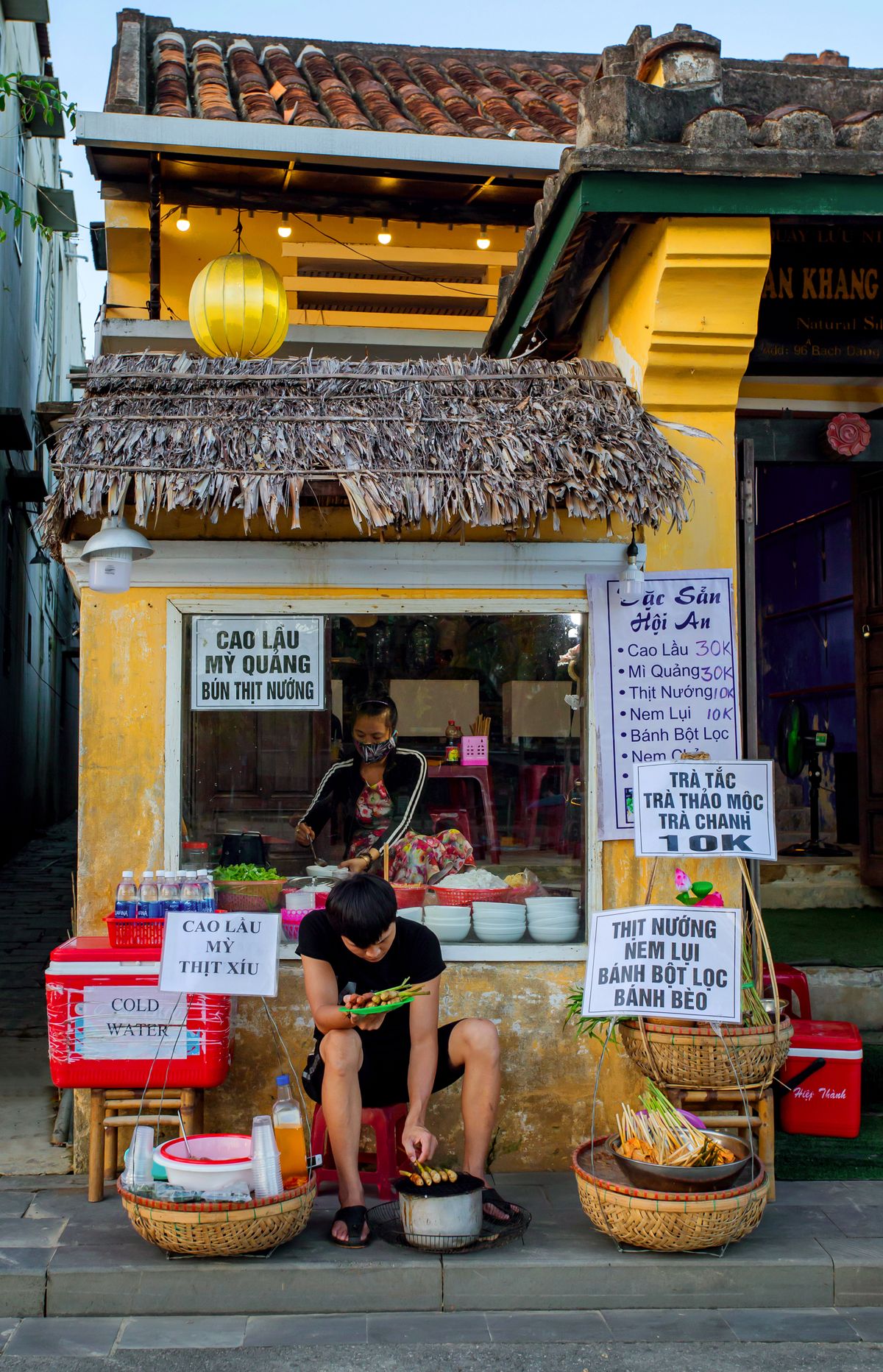
Hoi An is one of three Vietnamese cities (with Hue and Saigon) where the food alone justifies the trip. The cuisine is a Central-Vietnam Quang-Nam-province style anchored on five signature dishes — cao lâu, white rose dumplings, mì Quảng, Hoi An chicken rice, and bánh mì — that you cannot eat in this exact form anywhere else in the world. The fundamentals are Cham-influenced (heavy fresh herbs, turmeric, lemongrass, the Cham Islands lye-water for cao lâu) ; the technique is sophisticated (the noodles for cao lâu require three soakings); and the price point is among the lowest of any Vietnamese tourism city — a complete street-stall lunch runs 35,000-65,000 VND ($1.40-2.60 USD).
Cao lâu — the Hoi An exclusive
The single most Hoi-An-specific dish in Vietnam — cao lâu (literally “high-floor”) is a noodle dish that legendarily can only be made authentically in Hoi An. The defining ingredient is the noodle: rice flour soaked in lye water made from ashes of plants from the Cham Islands, which gives the noodles their characteristic chewy springy texture and grayish-brown or yellowish colour. The water for the lye soak must — per local tradition — come from the ancient Bá Lễ well, a 16th-century stone-lined Cham-era well that still operates inside the Old Town. The dish is assembled with rice noodles on a bed of greens and herbs (mint, perilla, cilantro, Vietnamese coriander), topped with five-spice-marinated char-siu-style pork, crispy fried noodle squares as croutons, and a small amount of pork-bone broth poured around the side. Served at room temperature, eaten with chopsticks, and never adjusted with chili or fish sauce until you taste it first. The legend is debatable (rice and lye soaking is the actual difference, not the geography) but the result is unique to Hoi An.
- Cao Lầu Bà Bé (19 Trần Phú) — arguably the best in Hoi An, family-run since the 1970s, 40,000 VND a bowl (~$1.60 USD)
- Cao Lầu Thầm (15 Trần Phú) — the most-recommended budget option, 35,000-45,000 VND
- Cao Lầu Lộc (Bach Đằng Street, near the night market) — riverside seating, 50,000 VND
White Rose Dumplings (Bánh Bao Bánh Vạc) — the Hoi An signature
The other Hoi-An exclusive: white rose dumplings (bánh bao bánh vạc) are translucent rice-flour dumplings shaped like small white roses, filled with shrimp or pork, steamed until the wrapper turns transparent, and served with crispy fried garlic on top and a small dish of nuớc chấm (sweet-sour fish sauce) for dipping. The shape and the recipe are protected: a single Hoi An family — the Trần family at White Rose restaurant on Hai Bà Trưng — controls the master recipe and supplies most of the Old Town restaurants from a single workshop. White Rose Restaurant runs an open kitchen where you can watch the family hand-shape the dumplings; budget 70,000-100,000 VND ($3-4 USD) for a plate of 12 dumplings. The 2026 family workshop runs daily 06:00-18:00 with a quiet 12:00-14:00 family-lunch break.
- White Rose Restaurant (533 Hai Bà Trưng) — the family kitchen, 100,000 VND for 12 dumplings
- Morning Glory Restaurant (Nguyễn Thái Học) — the same family-supplied dumplings, 110,000 VND
- Hoi An night market stalls — cheaper but not from the original family kitchen, 60,000-80,000 VND
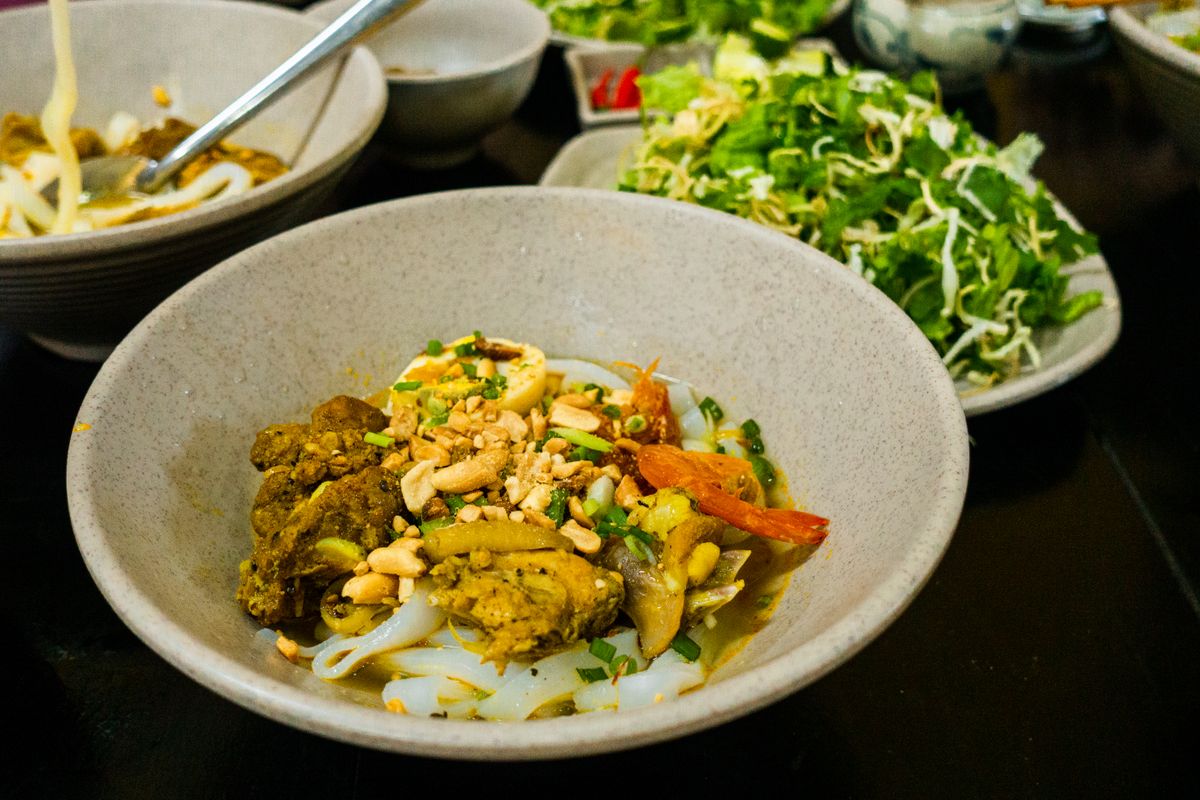
Mì Quảng — the Quảng Nam noodle
Mì Quảng (literally “Quang Nam noodles”) is the broader Quang-Nam-province noodle dish that is the everyday central-Vietnamese meal. It uses wide flat rice noodles, a turmeric-yellow broth (the colour comes from the turmeric, the depth from pork or chicken bones), and a topping of choice (shrimp, pork, chicken, fish, beef, or eel) with peanuts and toasted-sesame rice crackers (bánh tráng nướng) crushed on top as a textural element. Mì Quảng was added to Vietnam’s national intangible cultural heritage list in August 2024 and is the most-eaten dish in Quảng Nam province; in Hoi An it is the breakfast and lunch default in working-class kitchens.
- Mì Quảng Bà Mua (6 Trương Minh Lượng) — the local-favourite spot, 35,000-45,000 VND
- Mì Quảng Phú Chiêm (the village 8 km south of Hoi An, the dish’s ancestral home) — 30,000 VND
Bánh Mì Phượng — the Bourdain anchor
Bánh Mì Phượng on Phan Châu Trinh is the most-famous Vietnamese sandwich shop on earth, anchored by the 2014 Anthony Bourdain visit on Parts Unknown that called the bánh mì “a symphony in a sandwich.” The bánh mì itself is a Vietnamese-French hybrid — baguette introduced by French colonists in the mid-19th century, with rice flour blended in during the WWI era for affordability and a lighter crumb — and the Phượng version layers cha-lụa Vietnamese sausage, pâté, mayo, pickled carrot-and-daikon (đồ chua), cucumber, fresh coriander and chili. Five generations of the family kitchen now run two adjacent storefronts; queues run 30-60 minutes at lunch peak. A Phượng bánh mì costs 35,000-50,000 VND ($1.40-2 USD); Bánh Mì Madam Khanh (the “Banh Mi Queen”) one block south on Trần Cao Vân is the local-favourite alternative.
- Bánh Mì Phượng (2B Phan Châu Trinh) — the Bourdain shop, 35,000-50,000 VND
- Bánh Mì Madam Khanh / The Banh Mi Queen (115 Trần Cao Vân) — local-favourite, 30,000-40,000 VND
- Bánh Mì Bích (Phan Bội Châu) — quietest of the three, 30,000 VND
Hoi An Chicken Rice (Cơm Gà Hội An)
The Hoi An take on the Hainanese chicken-rice that runs across Southeast Asia: poached chicken (free-range Quảng Nam ga ta breed) on top of turmeric-and-pandan rice cooked in chicken stock, with a pickled-papaya-and-onion salad on the side, fish-sauce-and-chili dipping condiment, and a small bowl of chicken broth with chopped herbs. Two competing original family kitchens claim the title — Cơm Gà Bà Buội (since 1950) and Cơm Gà Bà Hương (since 1968) — and the rivalry runs four generations deep. Both are on the same street; both serve the same 50,000-80,000-VND plate; both are excellent.
- Cơm Gà Bà Buội (22 Phan Châu Trinh) — the original since 1950, 60,000-80,000 VND
- Cơm Gà Bà Hương (49 Lê Lợi) — the friendly rival since 1968, 60,000-80,000 VND
- Cơm Gà Xí (47/2 Trần Hưng Đạo) — budget version 35,000-50,000 VND
Beyond the headlines — the wider Hoi An menu
Beyond the Big Four, Hoi An’s wider menu rewards exploration.
- Bánh xèo — central-Vietnamese savoury crepe with shrimp, pork and bean sprouts, folded in rice paper with herbs (40,000-60,000 VND)
- Fresh spring rolls (gỏi cuốn) — rice-paper rolls with shrimp, vermicelli, herbs and lettuce; a Hoi An lunch staple (50,000 VND for 4)
- Bún bò Huế — the spicy beef-and-noodle soup from Hue, widely available across Hoi An (60,000-80,000 VND)
- Cơm tấm — broken-rice with grilled pork chops, fried egg and pickle (50,000-70,000 VND)
- Banh trang nuong — grilled rice-paper “Vietnamese pizza” with quail egg and dried shrimp (15,000-30,000 VND, sold by night-market vendors)
- Hoi An night-market sweets — chè (sweet bean-and-coconut soup), banh u tro (sticky-rice cakes), and Vietnamese egg coffee (cà phê trứng)
Coffee & drinks
Vietnamese coffee in Hoi An is at its central-Vietnam best. The default order is cà phê sữa đá (iced strong robusta-and-arabica blend with sweetened condensed milk; 25,000-40,000 VND); the photogenic order is cà phê trứng (egg coffee, the Hanoi creation involving whipped egg yolk and condensed milk, now found in every Hoi An café; 40,000-60,000 VND); the central-Vietnam specialty is cà phê dừa (coconut coffee, with coconut cream and crushed ice; 45,000-70,000 VND). Bia hơi — the Vietnamese fresh-draft beer brewed daily and served at low alcohol (4%), low price (10,000-20,000 VND a glass) — is the late-afternoon working-Vietnamese order. The wider Hoi An craft-beer scene has grown around 7Bridges Brewing, Pasteur Street and the riverside lantern-night bars. Vietnamese rice wine (rượu dê) is a 50%-ABV regional spirit; the lighter rượu nếp (sticky-rice wine, 25-40% ABV) is more approachable.
Cooking schools — Red Bridge & Morning Glory
Hoi An has the best cooking-class infrastructure in Vietnam, with two long-running schools at the top of the leaderboard. Red Bridge Cooking School operates from a riverside garden compound 4 kilometres east of the Old Town; the half-day class includes a Hoi An morning-market visit, a 25-minute boat ride down the Thu Bồn, hands-on prep of three classic dishes (cao lầu, banh xeo, fresh spring rolls), lunch by the river and recipes to take home; pricing 1,200,000-1,500,000 VND ($48-60 USD) per person. Morning Glory Cooking School runs from inside the Morning Glory restaurant on Nguyễn Thái Học with chef-restaurateur Trinh Diem Vy (a Vietnamese culinary icon) on site; classes 800,000-1,400,000 VND. Tra Que Cooking School (in the herb village 3 km north) adds a 30-minute herb-bed gardening session before the kitchen; 600,000-900,000 VND.
Practical Information

Hoi An is one of the most foreign-traveller-friendly cities in Vietnam, with the highest density of English-speaking tourism infrastructure of any city outside HCMC and Hanoi, but it has its own quirks — the Old Town entry-ticket system, the typhoon-window flooding, the curfew rules in residential lanes, and the cash-vs-card split. The 10-row table below covers the practical decisions that matter on the ground.
| Topic | Hoi An reality |
|---|---|
| Currency | Vietnamese đồng (VND); approximately 25,500 VND/USD as of 2026 . Carry mixed denominations 50,000 / 100,000 / 200,000 / 500,000 VND notes; the “50k” shorthand (50,000 VND ≈ $2 USD) is universal. |
| Old Town entry ticket | 120,000 VND per person (~$4.70 USD); covers a five-site bundle out of the 21 listed monuments (Japanese Bridge, an assembly hall, a heritage house, a museum and a folklore theatre). Sold at the Hoi An Centre for Cultural Heritage Preservation kiosks at the Old Town gates. You can walk the Old Town freely without it; the ticket is checked at the named monuments only. |
| Cash vs cards | Hotels, tailor shops, mid-range restaurants and Vietnamese supermarkets accept Visa/Mastercard; street-food stalls, the Old Town markets and most cafés are cash-only. Carry 500,000-1,000,000 VND per person per day in mixed notes. ATMs around Lê Lợi typically dispense 2,000,000 VND per transaction at a 50,000-100,000 VND fee. Cardless ATM withdrawal via the SHB and TPBank apps is available with a Vietnamese SIM card. |
| Safety & advisories | US State Department Travel Advisory Level 1 — Exercise Normal Precautions (December 2024 refresh) . UK FCDO advice last updated 21 April 2026 with a digital arrival-card update . Hoi An is one of the safest cities in Vietnam; the genuine risks are motorbike accidents, opportunistic bag-snatching from motorbike-pillion thieves, and dengue-carrying mosquitoes year-round. |
| Health & vaccinations | CDC recommends Hep A and typhoid vaccination for all Vietnam visitors; Japanese Encephalitis for extended rural visits; routine immunisations up-to-date. Dengue is a year-round mosquito-borne risk in Hoi An; use 30%+ DEET. No malaria risk in central-coast cities. Hoi An General Hospital (corner of Trần Hưng Đạo and Phan Đình Phùng) handles tourism cases; for serious incidents, Vinmec Da Nang or Hoan My Hoi An. |
| Tap water | Not potable; use bottled, in-room kettle-boiled, or refilled from filtered refill stations on Trần Phú and Lê Lợi (10,000-20,000 VND a litre, sustainable choice). Ice in established restaurants is hygienic; avoid street-vendor ice on hot days. |
| Mobile data & SIM | Viettel, Vinaphone and Mobifone all offer tourist SIM packages 200,000-300,000 VND ($8-12 USD) for 30 days unlimited data . eSIM via Airalo and Saily works on the central coast. 4G coverage across Hoi An is universal; 5G has rolled out in central Da Nang but is patchy on the Hoi An periphery. |
| Tipping | Not historically expected in Vietnamese culture but increasingly common in Hoi An tourism. Mid-range restaurants: round up the bill or 5-10%. Tailor shops: not expected, but a 50,000-100,000 VND tip after a successful tailored suit is a goodwill gesture. Hotel housekeeping: 20,000-40,000 VND per day. Tour guides (My Sơn, Cu Lao Cham): 100,000-200,000 VND per day. |
| Old Town curfew & sound | The Hoi An Centre enforces an 22:00 curfew on amplified live music inside the UNESCO heritage zone — bars and restaurants on Trần Phú and Bach Đằng turn off speakers at 22:00, with quieter unamplified service to ~24:00. The Cam Pho/An Hoi side runs marginally later but the same general rule applies. Residential alleys (Phan Bội Châu, Nguyễn Du) are quiet from 21:30. Old Town pedestrian-zone hours: 09:00-11:00 and 15:00-22:00 (extended on lantern nights and Tết). |
| Tailor turnaround | Reputable tailor shops (Yaly, BeBe, A Đông Silk) take measurements on Day 1, do a fitting on Day 2, and deliver finished garments on Day 3. Plan for two fittings; budget 90-250 USD for a tailored linen suit, 40-80 USD for a silk dress, 30-80 USD for a shirt. Drop off the day you arrive — the back-half-of-trip tailors stay open to 22:00. Hoi An is home to roughly 600 tailor shops. |
Budget & Costs — Stretching the Vietnamese Đồng
Hoi An is among the very best-value heritage destinations in Asia. The Vietnamese đồng runs around 25,500 VND to the US dollar in mid-2026 , the cost of living in Quảng Nam province sits below the Vietnamese national average, and Hoi An itself is materially cheaper than HCMC, Hanoi or Da Nang for almost every category except imported wine. The three-tier table below assumes a couple splitting accommodation and transport; solo travellers add roughly 25-35% to daily cost. All prices in USD with VND ranges.
| Tier | Daily / person | Sleep | Eat | Transport | Activities | Extras |
|---|---|---|---|---|---|---|
| Budget | $25-45 | $10-25 (homestay or hostel; dorm $8-15, private $20-40) | $5-10 (street stalls, cao lâu + bánh mì + bia hơi) | $2-5 (free hotel bicycle; Grab Bike for the airport) | $5-10 (Old Town ticket 120,000 VND; one cooking class skipped) | $3-5 (egg coffee, lantern, sampan ride) |
| Mid-Range | $70-130 | $40-90 (boutique riverside hotel or An Bang villa) | $15-30 (sit-down restaurants, occasional resort dinner) | $10-20 (Grab cars, Da Nang day-trip transport) | $15-30 (My Sơn tour, cooking class, Cu Lao Cham boat) | $10-20 (tailor consult, lantern + dinner cruise) |
| Luxury | $250+ | $200-650+ (Anantara Hoi An, Four Seasons The Nam Hai, Vinpearl Premium) | $50-120 (resort fine dining, Sake by Khải, Mango Rooms) | $30-70 (private guide + driver, Da Nang+Hue private transfers) | $80-200 (private My Sơn sunrise, exclusive Cu Lao Cham charter, full tailor wardrobe) | $50-150 (custom tailor suit + dress, fine-dining tasting menu, private boat) |
Where Your Money Goes — Hoi An Specifics
The Hoi An budget profile is unusual in three ways. First, food is extraordinarily cheap — a complete street-stall meal costs $1.40-2.60 USD , a sit-down Vietnamese restaurant lunch $4-8, and even mid-range tourist-tier dining tops out around $12-15. The street food in Hoi An is not just cheap; it is genuinely excellent, with banh mi, cao lầu, white rose dumplings and Hoi An chicken rice all available at sub-$2 USD price points from kitchens that have been operating for two-to-four generations. Second, accommodation is mid-priced for Asia: budget homestays start at $15 a night, mid-range boutique riverside hotels run $40-90, and the Anantara Hoi An ($260-650 depending on season) and Four Seasons The Nam Hai ($550-2,000) are the luxury anchors. Third, the tailor industry is the swing variable — a Hoi An visit can either be cheaper than expected (if you skip the tailor), or significantly more expensive (if you commit to a custom suit, dress and shirts wardrobe at 250-1,000 USD).
Money-Saving Tips
- Eat lunch at street stalls and dinner at sit-down restaurants — the price gap is 4-6x and the food is comparable
- Drink bia hơi (10,000-20,000 VND a glass) over imported beer (50,000-80,000 VND); the local beer is fresher and a fifth of the price
- Get the 120,000-VND Old Town ticket once and visit all five included sites in a single day — the ticket is dated and not extendable
- Book the My Sơn sunrise minibus over the private Grab car (350,000 VND vs 800,000 VND for the same itinerary)
- Hire a hotel bicycle (free at most boutiques) instead of Grab Bike for in-city transport
- Book the Cu Lao Cham snorkel boat through your Hoi An hostel rather than at the Cua Đại pier (saves 30%)
- Negotiate tailor shops at the start of a 3-piece order (suit + 2 shirts gets a 10-15% discount); never accept the first quoted price
- Pre-pay tailor on day-of-measurement at 50% rather than full upfront (insurance against quality issues at fitting)
- Skip the Old Town for dinner on lantern-festival nights when prices spike; eat in Cam Pho or An Bang for 25-30% less and walk back for the lantern hour
Planning Your Trip — A Five-Step Hoi An Anchor

Hoi An rewards travellers who arrive with the structure of a 4-day plan and the flexibility to adjust around weather and lantern dates. The five-step framework below is the cleanest way to lock in a Hoi An visit.
- Pick the dates around lantern night. The 14th-day-of-each-lunar-month Full-Moon Lantern Festival is the single most distinctive Hoi An evening of any month. The 2026 lantern dates are 1 February, 3 March, 1 April, 1 May, 30 May, 28 June, 28 July, 26 August, 25 September (Mid-Autumn peak), 24 October, 23 November and 23 December. Build your itinerary so a lantern night falls on Day 2 or Day 3 of your Hoi An stay — that gives you the daytime Old Town first, then the lantern evening, then a buffer day. Avoid Tết week (16-22 February 2026) when many tailors and Old Town shops close for 5-7 days.
- Book Da Nang DAD flights and the airport transfer. Vietnam Airlines, VietJet Air and Bamboo Airways all fly to DAD from international gateways and from HAN/SGN domestically. Lock the inbound flight with a 2026-26 spring fare, build a 30-45-minute Grab car or hotel transfer (350,000-500,000 VND) into Hoi An. The single most-skipped flight-booking trick: arrive late afternoon or evening, drop bags, take the lantern walk, and ease into the time zone overnight rather than chasing morning sites jet-lagged. Apply for the e-visa via the official Vietnam Immigration Department portal 3-5 working days ahead.
- Book accommodation by district, not by stars. Three solid base-camp choices for a 3-to-5-night stay: a Cam Pho riverside boutique ($60-110, lantern-night views, 3-minute walk to the Old Town); an An Bang Beach guesthouse or villa ($45-180, beach mornings, 20-minute bicycle ride to the Old Town); or a Cua Đại resort (Anantara Hoi An, Four Seasons The Nam Hai; $260-1,800, full-service luxury, 25-minute Grab to the Old Town). Avoid central Old Town hotels in October-November (flood risk) and choose Cam Pho instead. Book directly with the property where possible — the Vietnamese small-hotel sector keeps most of the booking-engine fee.
- Lock in the day-trip rotation early. My Sơn sunrise tours need 24-48 hours’ notice; Cu Lao Cham snorkel boats need a daily forecast check; cooking schools (Red Bridge, Morning Glory, Tra Que) book out 2-5 days ahead. Reserve at least the My Sơn tour, one cooking class, and the Cu Lao Cham boat (April-September) before you arrive; leave Marble Mountains and Da Nang Dragon Bridge as flexible day-of options. The Ba Nà Hills full-day visit is the one to push to a slow-weather day.
- Plan the tailor schedule on Day 1. The Hoi An tailor industry runs on a 24-to-48-hour turnaround. Drop off measurements in the morning of Day 1 (Yaly Couture, BeBe, A Đông Silk, BeBe Tailor are the reputable houses); Day 2 morning fitting; Day 3 final fitting and pickup; depart Day 4 minimum. The single most expensive Hoi An planning mistake is arriving the day before departure and trying to compress this into 24 hours — quality drops and the rush charge can push the price 30-50% higher.
Frequently Asked Questions
How many days do I need in Hoi An?
Three nights covers the Old Town and one beach day; four lets you add the My Sơn Sanctuary at sunrise plus a Cua Đại or An Bang afternoon; five fits Marble Mountains, Da Nang and a half-day Cu Lao Cham snorkel boat. The 14th-day-of-each-lunar-month Lantern Festival is worth timing to (next windows February 1, March 3, April 1, May 1, May 30 and June 28 of 2026). The default-recommended visit length for first-timers is four nights, with one full day reserved as a tailor-fitting / weather-flex buffer.
Is Hoi An safe and good for solo and family travellers?
Yes — Hoi An is one of the safest cities in Vietnam and consistently ranked one of Southeast Asia’s most family-friendly heritage destinations. The US State Department keeps Vietnam on Travel Advisory Level 1 (Exercise Normal Precautions, December 2024 refresh) and the Old Town is fully pedestrianised between 09:00-11:00 and 15:00-22:00. Watch motorbikes on the surrounding Lê Lợi/Trần Phú axes (motorbike accidents are the leading injury cause for foreign travellers per the State Department), follow CDC advice on dengue (year-round mosquito risk) and Hep A vaccination , and use Grab Bike helmets rather than self-drive motorbikes.
Do I need to buy the Hoi An Old Town entrance ticket?
Yes for the museum-and-heritage-house circuit (Japanese Covered Bridge, the assembly halls, the four heritage houses, the Museum of Trade Ceramics, the folklore theatre). The Hoi An Centre for Cultural Heritage Preservation sells the bundle at 120,000 VND (about US$4.70) and it covers a five-site selection from the 21 listed monuments — the standard tourist circuit. You can walk the Old Town freely without it; the ticket is checked at the gates of named monuments only. Children under 16 enter free with an accompanying parent. The ticket is valid for 24 hours from purchase and not extendabl e.
What about the Vietnamese-language barrier in Hoi An?
Manageable. English is widely spoken at hotels, restaurants and tailor shops in the Old Town and across An Bang Beach; signage is bilingual at all UNESCO sites; Google Translate camera mode handles street menus reliably. Outside the historic core, learning xin chào (hello) and cảm ơn (thank you) earns goodwill — Vietnamese is a tonal Austroasiatic language with six tones in the central dialect , written in the Latin-based chữ Quốc ngữ alphabet finalised by French Jesuit Alexandre de Rhodes in 17th-century Faifo (modern Hoi An) . The Quang-Nam regional dialect carries some loanwords from Cham; older heritage-house guides sometimes still speak French.
When is the Hoi An Lantern Festival in 2026?
The Hoi An Full-Moon Lantern Festival runs on the 14th day of each lunar month — for 2026 that means February 1, March 3, April 1, May 1, May 30, June 28, July 28, August 26, September 25 (Mid-Autumn Festival peak), October 24, November 23 and December 23. The Old Town turns off all electric lighting from about 19:00 to 21:30 on those nights and lights only by silk lanterns. The 25 September Mid-Autumn night (Tết Trung Thu) is the year’s biggest single lantern event with full mooncake-and-lion-dance programming and significantly higher hotel rates. The May 2026 calendar is unusual in giving you two lantern nights in the same Western month (May 1 and May 30) — one of the best months of the year for a Hoi An visit.
Can I use credit cards everywhere in Hoi An?
Hotels, tailor shops, mid-range restaurants and Vietnamese supermarkets accept Visa/Mastercard; street-food stalls, the Old Town markets and most cafés are cash-only. Carry 500,000-1,000,000 VND in mixed notes for any street-stall day. ATMs around Lê Lợi typically dispense 2,000,000 VND per transaction at a 50,000-100,000 VND fee. The 1,000-VND shorthand (“50k” = 50,000 VND ≈ US$2) is universal at street level. Tipping is not historically expected in Vietnamese culture but is increasingly common in Hoi An tourism — round up the bill or 5-10% in mid-range restaurants.
Is the Hoi An tailor industry worth it — and how does the overnight turnaround work?
Yes, with a 24-to-48-hour planning buffer. Hoi An is home to roughly 600 tailor shops; reputable houses (Yaly Couture, BeBe, A Đông Silk, BeBe Tailor) take measurements on Day 1, do a fitting on Day 2, and deliver finished garments on Day 3. Plan for two fittings; budget 90-250 USD for a tailored linen suit, 40-80 USD for a silk dress, 30-80 USD for a shirt. Drop off the day you arrive — the back-half-of-trip tailors stay open to 22:00. Avoid Tran Phu storefronts that quote “done in 4 hours” (rushed mass production); the better tier in Cam Pho and the Le Loi mid-strip is 25-30% cheaper for the same finish.
How do I get from Hoi An to My Sơn Sanctuary, Marble Mountains and Da Nang?
My Sơn Sanctuary (about 36-40 km southwest, the UNESCO Cham temple complex inscribed alongside Hoi An in 1999 ) is a half-day or sunrise tour by minibus or private Grab car (typical small-group tour 350,000-500,000 VND including the 150,000-VND site ticket). Marble Mountains (about 20 km north on the Da Nang shuttle axis) is 30 minutes by Grab car. Da Nang city itself is 30 km north — Highway 1A and DT603 in 30-45 minutes by Grab car (around 350,000-450,000 VND). Hue (130 km north over the Hai Van Pass) is a four-hour Easy Rider motorbike trip or a CFR-aligned Reunification Express train from Da Nang station.
Is Hoi An flooded in October-November — should I skip it?
Don’t skip it; build flexibility into the visit. Hoi An sits at sea level on the Thu Bồn estuary and floods 3-5 times in a typical October-November window; severe-flood years (2017 Damrey, 2020, 2024 Yagi recovery) put boats on Tran Phu and shut the Old Town for 24-72 hours. Stay on the Cam Pho or Cam Chau side (higher ground) rather than direct Bach Đằng riverfront in October-November, build a 48-hour buffer into the itinerary, watch the National Centre for Hydro-Meteorological Forecasting alerts, and use Hue/Da Nang as fallback bases if the Old Town closes. The post-typhoon-season window (mid-November onwards through to mid-March) is one of the best of the year — cool, dry, low-light, low-tourism, with all of the Old Town infrastructure operating.
Ready to Experience Hoi An?
Hoi An rewards travellers who slow down, walk the Old Town twice (once at noon, once on a lantern night), eat the cao lâu from a street stool, fit the tailored suit on Day 2, ride the bicycle through the rice paddies of Tra Que at dawn, take the sunrise minibus to My Sơn, and watch the Mid-Autumn moon rise over the Thu Bồn from the Bach Đằng waterfront. Pair this guide with the wider Vietnam country guide for the trans-country corridor (the Reunification Express, Tết, the dong, the typhoon-season rules) and with our Hanoi and Ho Chi Minh City companions for the north and south anchors of the classic Hanoi-Hue-Hoi-An-HCMC sweep.
Explore More City Guides
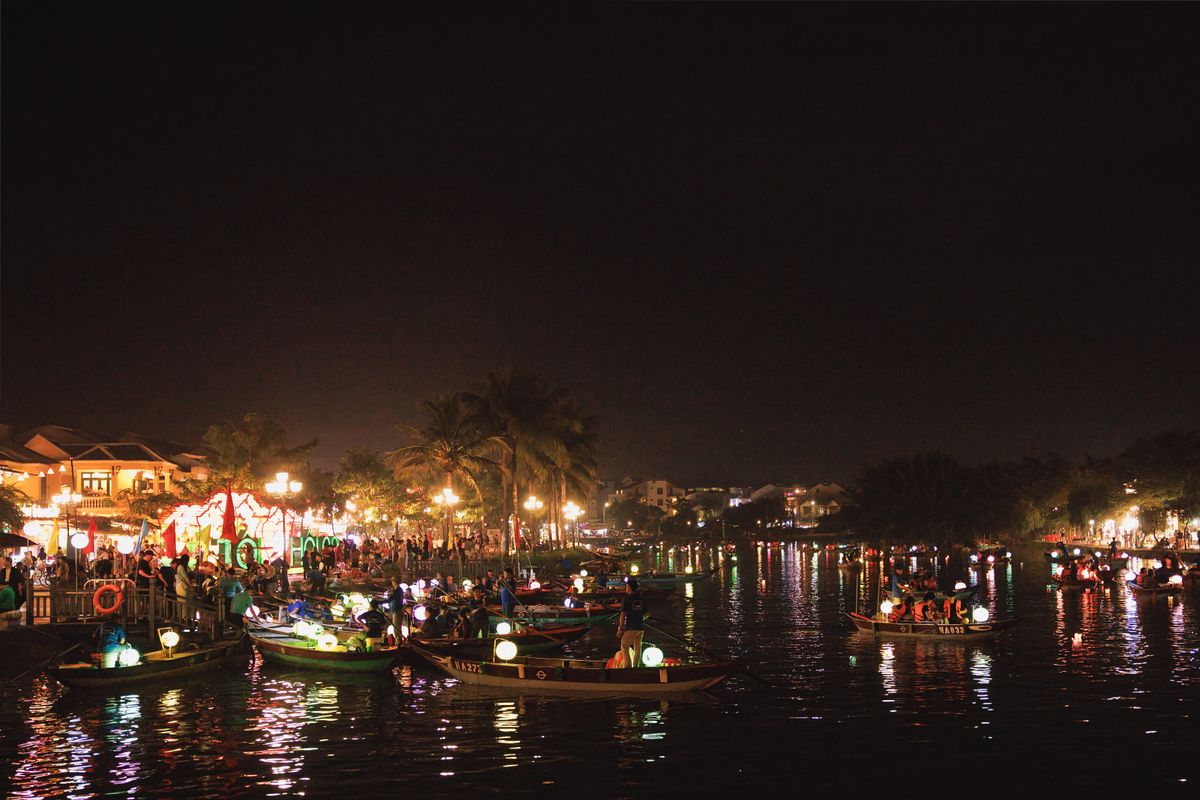
Where to Stay
Browse our Hoi An hotels guide for boutique riverside picks in Cam Pho, beach villas at An Bang, and the Anantara/Four Seasons resort tier on Cua Đại.
- Vietnam Country Guide — the wider Vietnamese frame: dong, e-visa, Tết, Reunification Express, typhoon rules (see also the Vietnam guide)
- Hanoi City Guide — the northern capital: Old Quarter, Hoan Kiem, Ha Long Bay day trips
- Ho Chi Minh City Guide — the southern megalopolis: District 1, Mekong Delta, Cu Chi tunnels
- Bangkok City Guide — the regional Southeast-Asian hub and a common pre/post-Vietnam stopover
- All City Guides
Alex the Travel Guru
Alex has spent the better part of two decades watching Hoi An grow from a 1990s post-doi-moi backwater of 35,000 visitors a year into the lantern-lit international heritage destination it is today. He’s walked the Old Town in flood, in Tết closure, in mid-July heat and on a Mid-Autumn lantern night with the moon directly over the Thu Bồn; he ordered his first cao lầu at Bà Bé in 2007 and his first tailored linen suit at Yaly in 2011. The Hoi An brief here reflects the rhythm of those visits, the Vietnamese-state tourism-board guidance, the UK FCDO and US State Department advice, and the ground-truth on what works for a 4-night stay in 2026 — with a soft spot for the Cam Pho riverside, the Bá Lễ-water cao lầu, and the 14th-day-of-each-lunar-month lantern walk.
More city guides you might like



Plan your trip to Hoi An
The booking tools we use ourselves. FFU may earn a commission at no extra cost to you.