
Languages of Iceland
All languages of Northern Europe →fluent beta classical · classes by phone with Maya at ranas.ai/maya
Iceland Travel Guide — Fire, Ice, Northern Lights & Midnight Sun on the Mid-Atlantic Ridge
The hardest thing to convey about Iceland is how fast the country flips on you. First-time travellers are often told Iceland is small, and that is technically true — 1,332 km around — but the weather, the light and the geology change so often within a single drive that the Ring Road feels twice as long. A strong case can be made that the finest hour on the island is a bath at Mývatn Nature Baths after a low-Kp aurora night — and an equally strong one that the Westfjords beat the south coast. Treat this guide as the brief you’d want in hand before boarding the red-eye north.

In This Guide
- Overview — Why Iceland Belongs on Every Bucket List
- Northern Lights 2026 — Solar Maximum Over the Land of Ice
- Best Time to Visit Iceland (Season by Season)
- Getting There — Flights & Arrival
- Getting Around — Ring Road, Flights & F-Roads
- Top Cities & Regions
- Icelandic Culture & Etiquette
- A Food Lover’s Guide to Iceland
- Off the Beaten Path
- Practical Information
- Budget Breakdown
- Planning Your First Trip to Iceland
- Frequently Asked Questions
Overview — Why Iceland Belongs on Every Bucket List
Iceland is a 103,000 km² volcanic island in the North Atlantic, sitting directly on the Mid-Atlantic Ridge where the North American and Eurasian tectonic plates drift apart by about 2 cm per year. The main landmass sits between 63°N and 66°N — just south of the Arctic Circle, which grazes only the small northern island of Grímsey. Roughly 400,000 people live here — about 383,726 according to Statistics Iceland on 1 January 2024 — which makes this one of the least densely populated countries in Europe and very much a place where you can drive a full day of Ring Road and see more sheep than humans.
Geography is the whole story. About 30 active volcanic systems punctuate the island, glaciers cover roughly 11% of the land area, and the 7,700 km² Vatnajökull ice cap is Europe’s largest by volume. More than 600 natural hot springs feed swimming pools, spas and the whole national social fabric. Rivers plunge in a procession of named waterfalls — Gullfoss, Seljalandsfoss, Skógafoss, Dettifoss, Dynjandi — and the island’s 4,970 km coastline is fringed with fjords, black-sand beaches and puffin cliffs. Latitude gives Iceland its two signature experiences: near-Midnight-Sun through June, when the sun barely sets, and a full-on Northern Lights season from late September through late March when the auroral oval parks overhead.
Culturally, Iceland is a Nordic outlier that punches far above its weight. It is not an EU member but it IS in the Schengen Area (since 2001) and the EEA, so the same 90-day rules apply as in Germany or France. The króna floats, cards replaced cash years ago, alcohol is state-monopoly taxed through Vínbúðin, and the same patronymic naming system the Vikings used still works — there is no meaningful surname. The 10th-century Sagas are still readable to modern Icelanders, same-sex marriage has been legal since 2010, and the country has ranked number one on the Global Peace Index for 17 consecutive years.
Practically, Iceland is outstanding and very expensive. Keflavík is 45 minutes from the capital by Flybus, Route 1 loops the whole island in 1,332 km, English is near-universal, and tap water is among the cleanest in the world and free everywhere. The price tag is the headline: a restaurant main lands around ISK 4,500–6,500 (USD 32–47), a half-litre of beer in Reykjavík is around ISK 1,500 (USD 11), and car rentals easily clear ISK 20,000 per day in summer. The pay-off is what is outside the windscreen — erupting fissures, glacier tongues, hot rivers you can bathe in, aurora overhead at midnight in February, and fewer humans than almost anywhere else you could fly to.

Northern Lights 2026 — Solar Maximum Over the Land of Ice
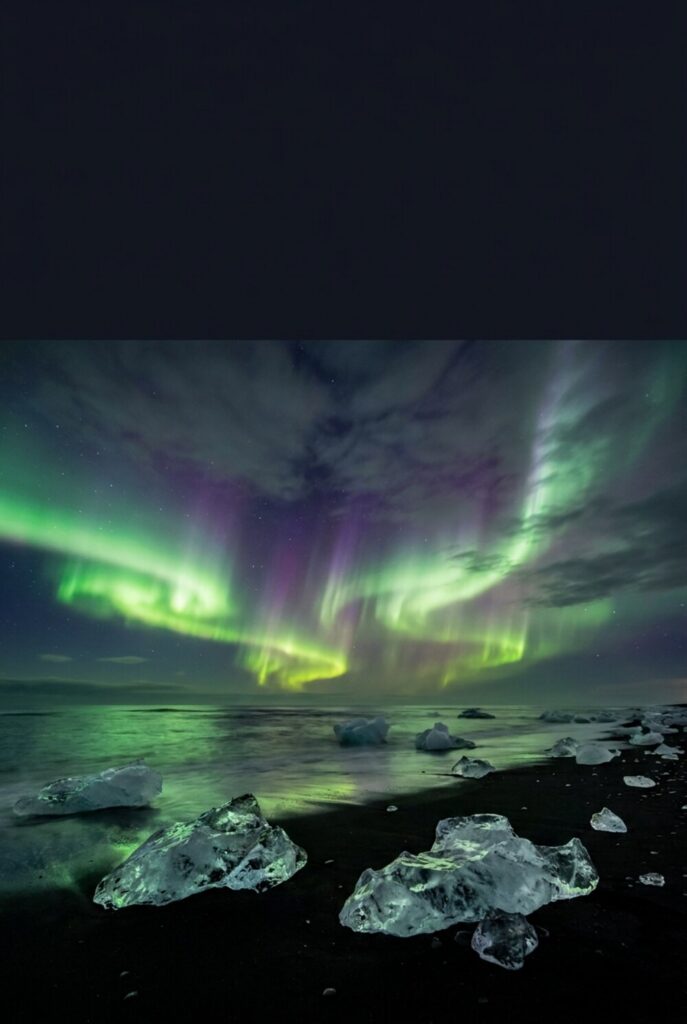
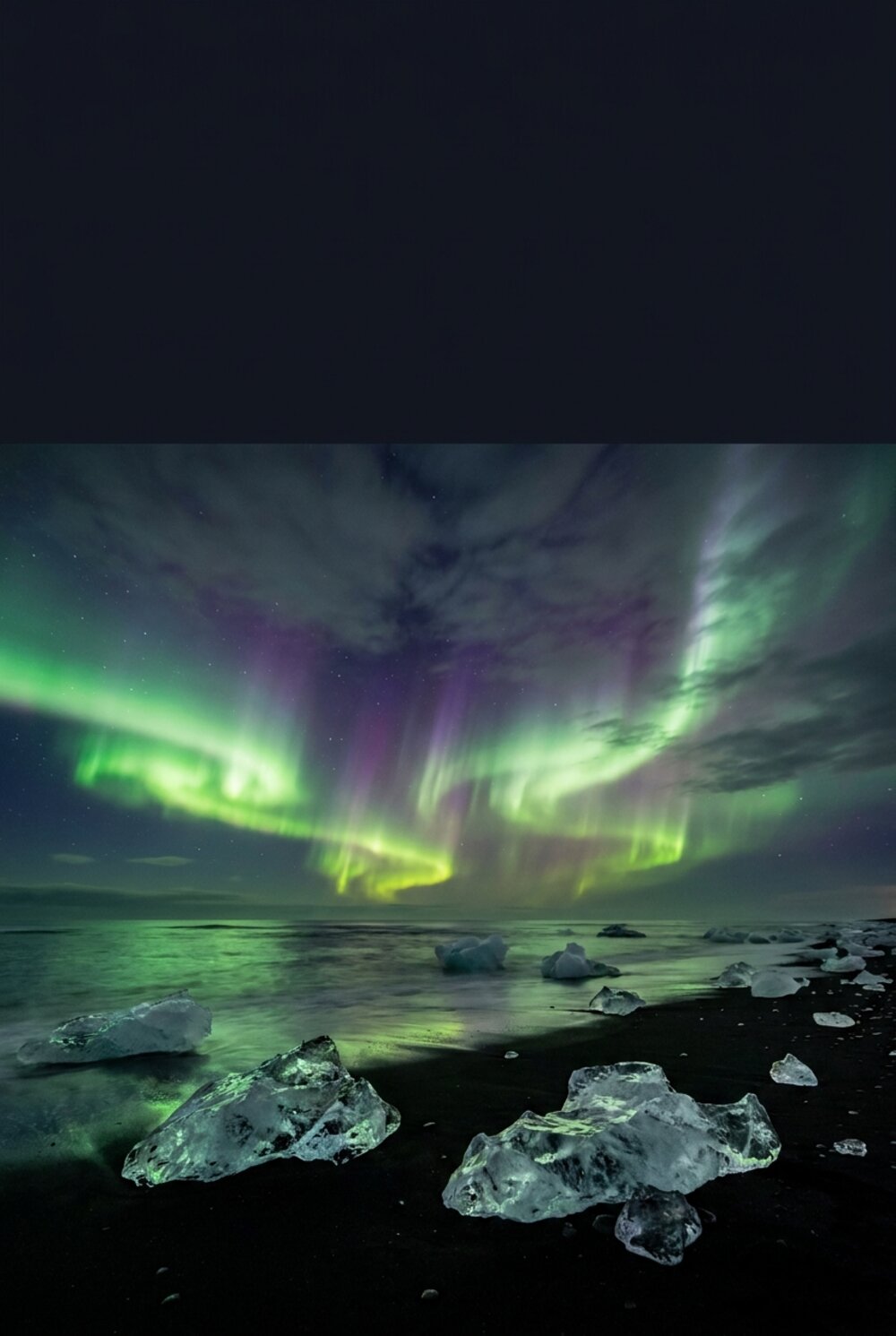
The aurora borealis runs on an eleven-year solar cycle, and NOAA’s Space Weather Prediction Center has confirmed Solar Cycle 25 reached its maximum in October 2024, with elevated activity expected to extend through 2025 and well into 2026 — among the strongest aurora seasons in two decades, and an unusually generous hook for Iceland travellers this winter. The Icelandic Met Office publishes a nightly aurora forecast that combines cloud cover with geomagnetic activity on a 0–9 Kp scale; a reading of 2 or 3 with a clear sky over Þingvellir or Lake Mývatn is usually enough. Practical season runs late September 2025 through late March 2026, peaking in the dark weeks of December through February.
For exact timing, camera settings and the best dark-sky spots this season, see our full guide to chasing the aurora at solar maximum: Northern Lights in Iceland 2026.
2026 sits squarely on the declining side of the maximum. Coronal-mass-ejection-driven storms are still expected at higher than typical frequency, which makes January–March 2026 a genuine “once a decade” window for travellers who can be flexible.
- Peak window: around 21 September 2025 through 23 March 2026, strongest December through February
- Þingvellir National Park: 45 minutes from Reykjavík, an International Dark Sky-quality site on the Mid-Atlantic rift — the most reliable short-drive aurora base
- Akureyri & Lake Mývatn: drier, colder inland microclimate in the north, fewer crowds, frequent above-freezing aurora nights at the Mývatn Nature Baths
- Vík & the south coast: aurora above Reynisfjara black-sand beach and the Reynisdrangar sea stacks
- Westfjords & Snæfellsnes: the emptiest skies in the country, aurora over Kirkjufell (Snæfellsnes) and the Látrabjarg cliffs (Westfjords)

Best Time to Visit Iceland (Season by Season)
Spring (Apr–May)
An awkward, thrilling shoulder. Coastal temperatures climb from near zero in early April to around 10°C by late May ; puffins return to the cliffs from mid-April at Látrabjarg and the Westman Islands ; and the countryside is loud with lambing. Aurora season ends around 21 March as the sky stays too bright to see it. Most F-roads and highland routes stay closed (typically opening mid-June). Reykjavík Arts Festival runs in late May, and shoulder-season prices are around 25–35% below July–August peak — genuinely the best-value month for first-time Iceland if you can skip both Midnight Sun and aurora.
Leaning towards the cold season? Here’s what an Iceland winter trip really looks like — northern lights, glacier hikes and hot springs included.
Summer (Jun–Aug)
The classic Iceland season and the busiest months. Reykjavík sits around 10–15°C with rare 20°C hot days; above the Arctic Circle the sun never fully sets from roughly late May to mid-July, and Reykjavík sees about 21 hours of visible daylight at summer solstice on 21 June. F-roads into the central highlands open mid-June through early September, unlocking Landmannalaugar, Þórsmörk and Askja for 4×4s. Puffin colonies peak June–July; whale-watching out of Húsavík peaks July–August ; and Þjóðhátíð on the August bank holiday is the Westman Islands’ rowdiest weekend. Reserve cabins, campers and tours three to six months ahead.
Autumn (Sep–Oct)
The underrated shoulder. Temperatures fall from around 10°C in early September to near zero by late October ; autumn colours paint the birch scrub in late September; the réttir sheep round-ups sweep rural Iceland during the first two weeks of September ; and the Iceland Airwaves music festival lights up Reykjavík in early November. Best of all — aurora season returns on 21 September. Downside: the highlands close for winter from late September, many coastal guesthouses shut for the off season, and the first snowstorms can arrive on the Ring Road from mid-October.
Winter (Nov–Mar)
The aurora, ice-cave and geothermal-pool-in-a-snowstorm season. Coastal temperatures sit around −2°C to 4°C; the highlands can drop well below −15°C; daylight shrinks to 4–5 hours in Reykjavík in December. The Þorrablót mid-winter food festival runs roughly late January to late February, featuring hákarl, Brennivín and more hospitality than the menu suggests. Natural ice caves under Vatnajökull are only accessible November through March ; dogsled and glacier-walk operators run all winter. Pack a base layer, mid-layer and real wind shell — Icelandic weather flips from calm to storm in hours.
Shoulder-season tip: Late September through mid-October and late February into mid-March hit a sweet spot — aurora viewing is live in both windows, car-rental rates fall around 30–40% off July prices, and both the autumn colours and spring-snow mountains photograph beautifully.
Getting There — Flights & Arrival
Almost every international visitor lands at Keflavík, 50 km south-west of Reykjavík. Three regional airports handle domestic flights to the Westfjords, north and east.
- Keflavík International Airport (KEF) — Iceland’s main gateway, around 7.8 million passengers in 2024; Flybus coach reaches the Reykjavík BSÍ terminal in roughly 45 minutes.
- Reykjavík Domestic Airport (RKV) — in-city airport for Icelandair Domestic flights to Akureyri, Ísafjörður and Egilsstaðir.
- Akureyri Airport (AEY) — North Iceland’s hub, 3 km from town; seasonal winter direct flights from London, Copenhagen and Amsterdam.
- Egilsstaðir (EGS) — East Iceland regional airport, useful for Seyðisfjörður and the Smyril Line ferry.
Flight times: New York–Keflavík around 5h 40min; London–Keflavík around 3h; Toronto–Keflavík around 5h 45min; Amsterdam–Keflavík around 3h 20min — Icelandair’s North Atlantic hub puts KEF under six hours from most of the East Coast and under four from most of Europe.
Flag carriers: Icelandair (flag), PLAY (low-cost), Icelandair Domestic (formerly Air Iceland Connect, now part of Icelandair).
Visa / entry: Iceland is NOT in the EU but IS in the Schengen Area — citizens of 60+ countries (US, UK, Canada, Australia, Japan) enter visa-free for up to 90 days in any 180-day window. ETIAS pre-authorisation will be required for visa-exempt travellers when the system launches; the European Commission’s expected window has been late 2026 / early 2027.
Getting Around — Ring Road, Flights & F-Roads
Iceland has no railways. The island moves on three parallel systems: Route 1 — the Ring Road — plus its paved branches for self-drive and coach travel; Icelandair Domestic flights from Reykjavík Domestic for the Westfjords and far north; and the F-roads of the central highlands, open only to genuine 4×4s in summer. There is no single rail or bus pass; you either drive, you fly, or you book a multi-day tour.
- Ring Road (Route 1): 1,332 km paved loop around the island, completed 1974 — plan at least 7 days to drive it comfortably
- Reykjavík → Golden Circle loop: 200 km, roughly 6 hours with Þingvellir, Geysir and Gullfoss stops
- Reykjavík → Vík: 186 km, about 2h 30min on Route 1
- Reykjavík → Akureyri: 388 km, about 5 hours direct — or 45 minutes flying with Icelandair Domestic
- Reykjavík → Ísafjörður (Westfjords): 455 km / 6–7 hours by road, or a 40-minute flight from Reykjavík Domestic
Speed limits: 50 km/h in towns, 80 km/h on gravel, 90 km/h on paved rural roads — enforcement is aggressive and automated.
F-roads & the highlands: F-roads are open only in summer (typically mid-June through early September), require a genuine 4×4 by Icelandic law, and almost always include unbridged river crossings. Standard rental insurance does NOT cover submerged engines or river damage.
Long-distance coach: Strætó BS runs inter-regional routes (Reykjavík–Akureyri around ISK 13,500, about 6h 30min) at far lower frequency than summer tours.
Apps: Veður (Met Office weather), SafeTravel (safetravel.is for registering hiking plans), and road.is / Umferðin (live road and 4×4 status).
Top Cities & Regions
📍 Map of Iceland: Every Place in This Guide
Reykjavík
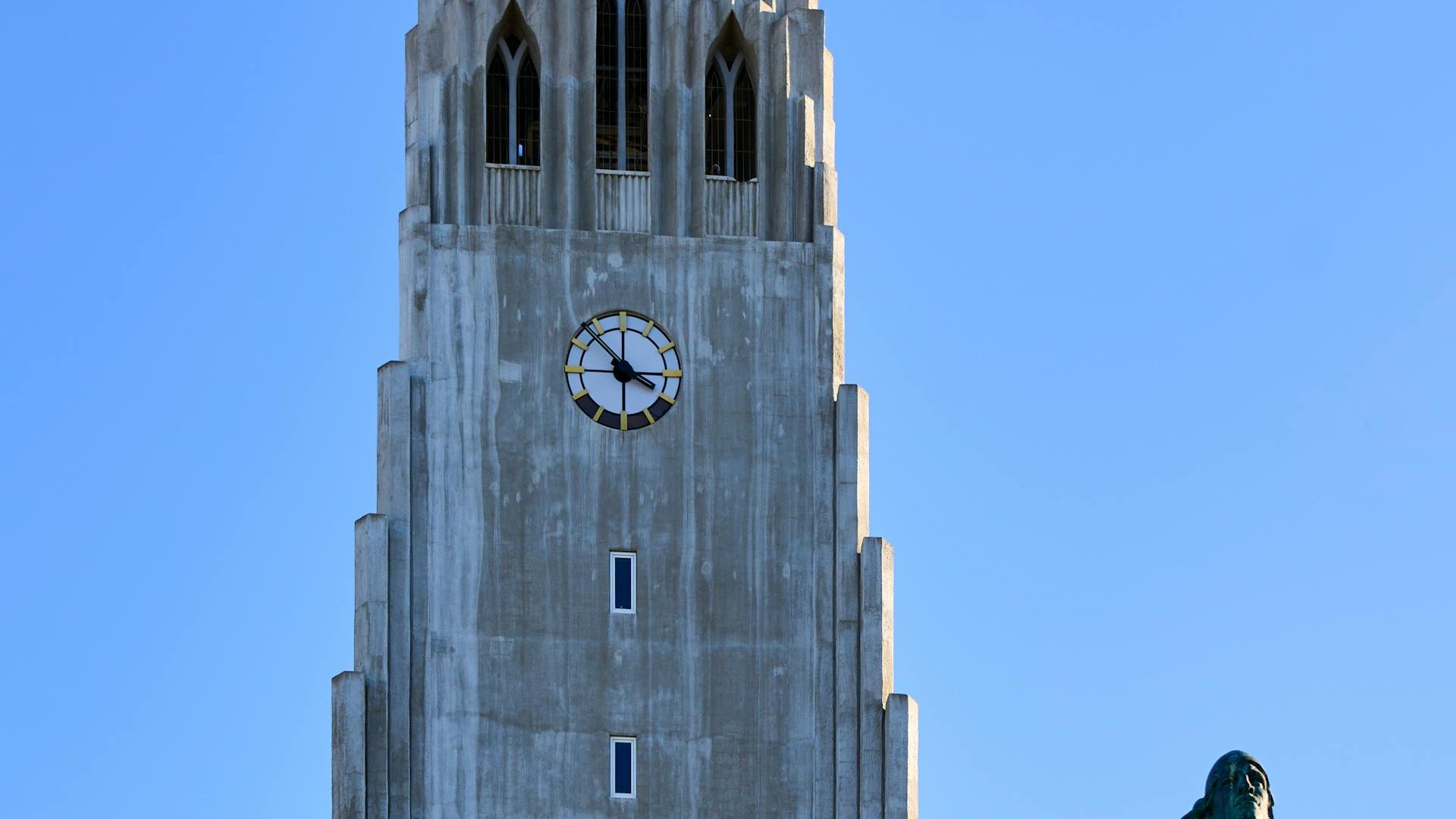
The world’s northernmost capital at 64°N and Iceland’s only real city — a walkable, candy-coloured port of around 140,000 in the greater capital area, defined by the basalt-column tower of Hallgrímskirkja, the Harpa concert hall, and the geothermal pools where Icelanders settle the day.
- Hallgrímskirkja — a 74.5 m Lutheran church completed 1986, with a bell-tower elevator for a pastel-roofed panorama
- Harpa Concert Hall — the honeycomb-glass waterfront building that opened in 2011
- Laugardalslaug and Sundhöll geothermal pools; the Sun Voyager (Sólfar) sculpture on Sæbraut
Signature eats: pylsur at Bæjarins Beztu, skyr with berries, plokkfiskur on the Laugavegur high street.
Golden Circle
Iceland’s iconic 200-km day-trip loop from Reykjavík, taking in three landmarks: Þingvellir’s rifting tectonic plates, the Haukadalur geyser field, and the 32 m Gullfoss waterfall. The country’s most photographed single day.
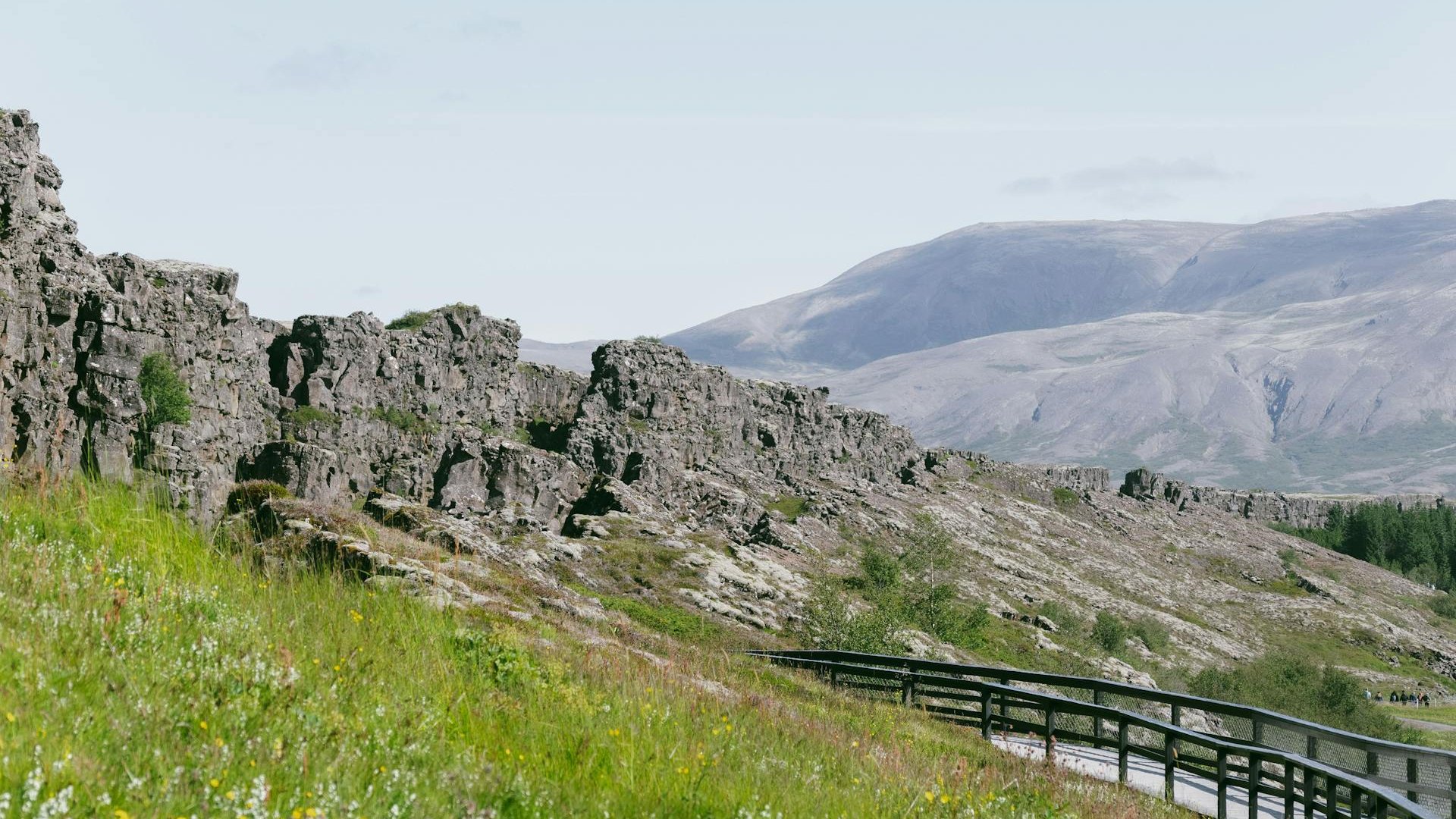
- Þingvellir National Park (UNESCO 2004) — site of the AD 930 Alþing parliament, with visible Mid-Atlantic Ridge walls you can walk between
- Haukadalur geothermal field — the original Geysir and the reliable Strokkur, which erupts 20–30 m every 6–10 minutes
- Gullfoss — the 32 m two-tier ‘Golden Falls’, full volume year-round
Signature eats: Friðheimar tomato soup at the geothermal greenhouse, Efstidalur II farm ice-cream.
South Coast (Vík & the Glaciers)
The Ring Road east of Reykjavík — black-sand beaches, icebergs calving into a lagoon, moss-covered lava, and three glacier-tongue waterfalls. The densest single stretch of landscape in Iceland.
- Seljalandsfoss (60 m, walk behind the curtain) and Skógafoss (60 m, 527 steps to the top)
- Reynisfjara black-sand beach and the Reynisdrangar sea stacks at Vík — sneaker-wave hazard, take the warning seriously
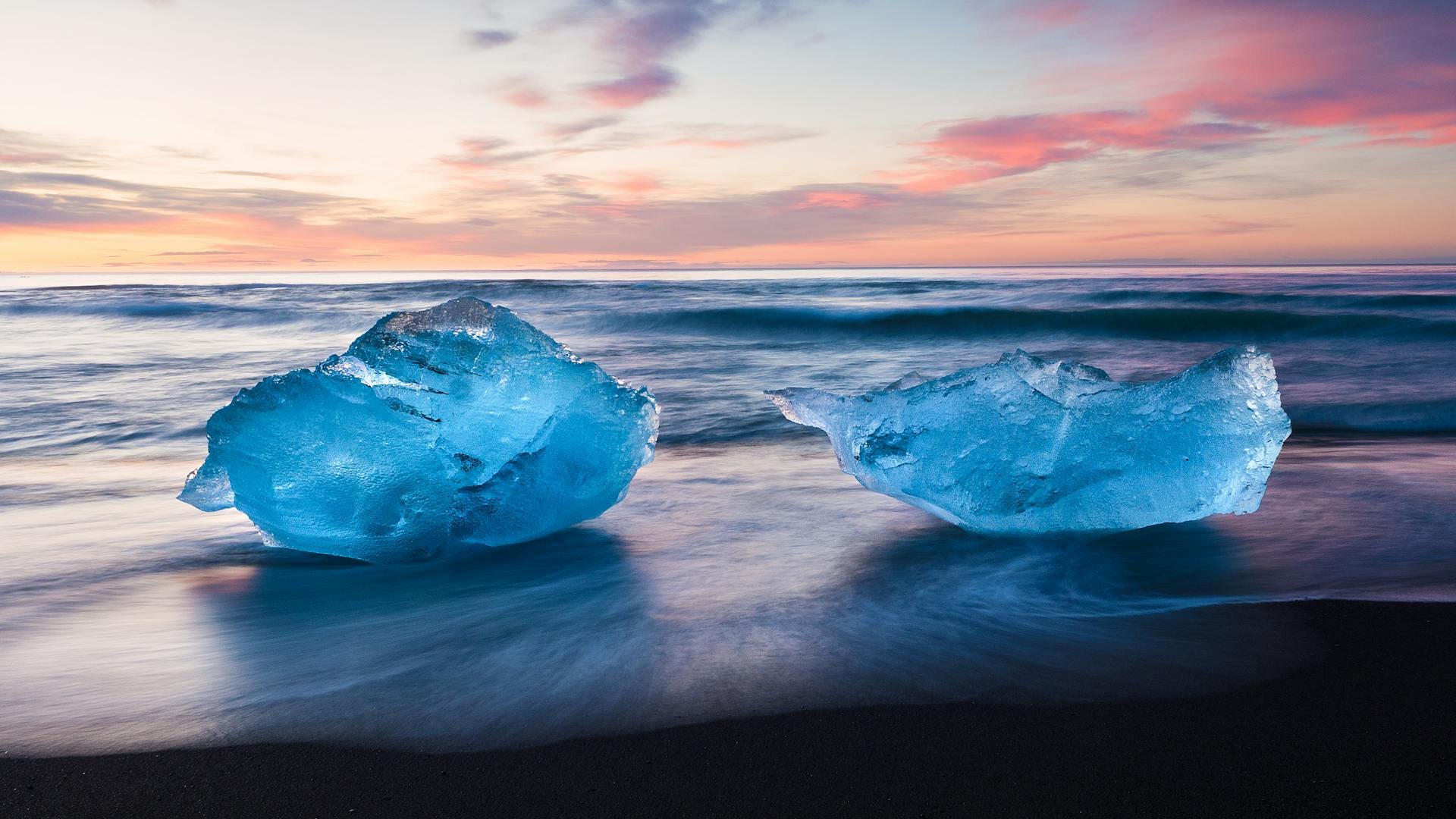
- Jökulsárlón glacier lagoon and Diamond Beach, where Breiðamerkurjökull icebergs wash up on black sand
Signature eats: arctic char at Vík, kjötsúpa at every Ring Road café, skyr.
Westfjords
A claw-shaped north-west peninsula joined to the mainland by a 7 km land bridge — Iceland’s least-visited quarter, fewer than 7,000 residents , and gravel roads that keep the coaches out.
- Dynjandi — a 100 m seven-tier ‘bridal veil’ waterfall
- Látrabjarg cliffs — 14 km long, up to 440 m high; Europe’s westernmost point and one of the world’s largest seabird colonies (May–August)
- Ísafjörður — the region’s capital, around 2,600 people, with the Westfjords Heritage Museum on the old harbour
Signature eats: fresh cod and plokkfiskur in Ísafjörður, hákarl (fermented Greenland shark — honestly acquired), Westfjords langoustine.
North Iceland (Akureyri & Mývatn)
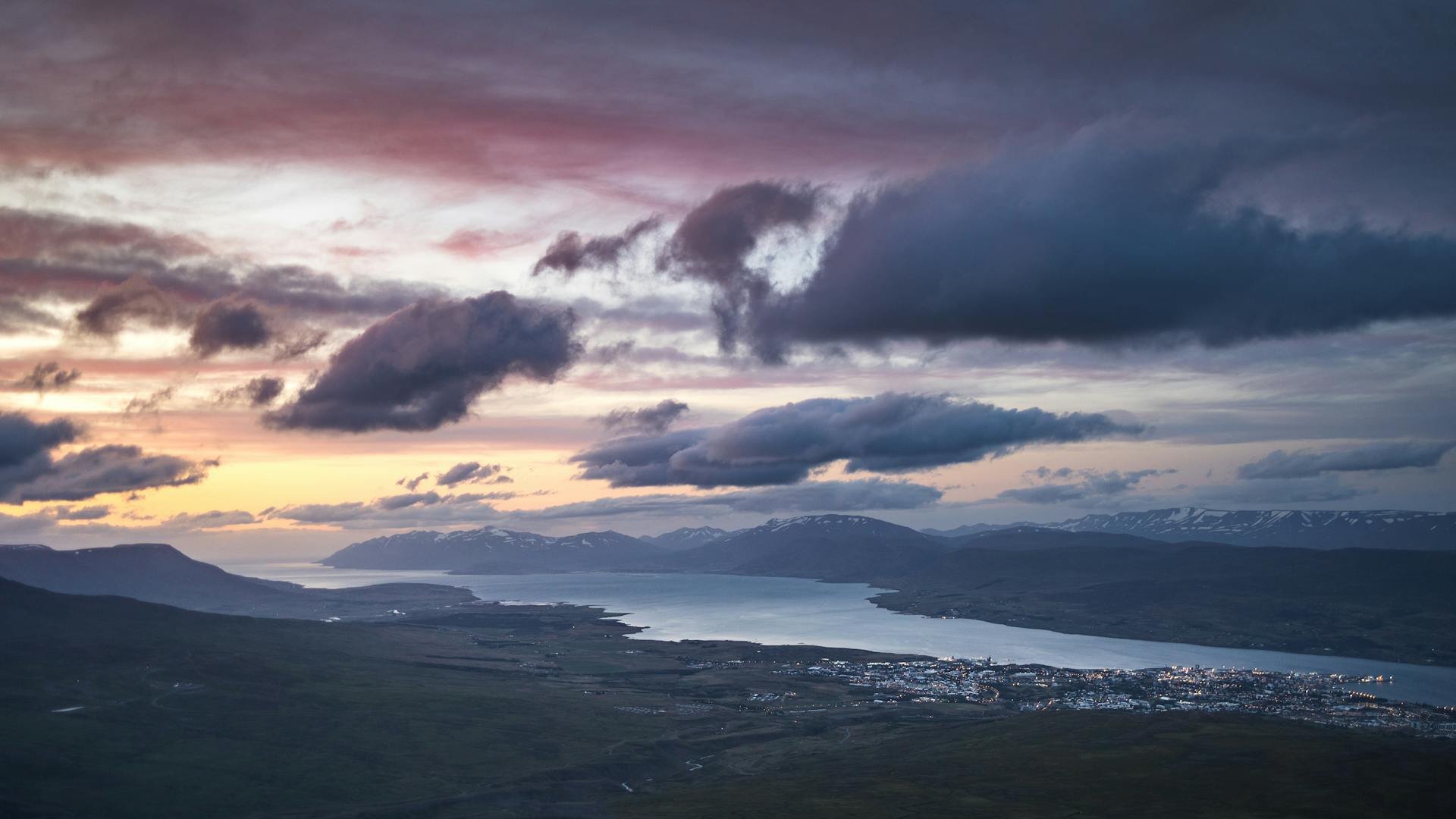
Iceland’s quieter second region — Akureyri on a long fjord, Húsavík’s whale-watching fleet, the geothermal landscape around Lake Mývatn, and Europe’s most powerful waterfall.
- Lake Mývatn — pseudo-craters, the Námaskarð fumaroles, and the Mývatn Nature Baths (a quieter, cheaper Blue Lagoon alternative)
- Dettifoss (44 m high, 100 m wide) — Europe’s highest-volume waterfall, around 193 m³ per second
- Húsavík whale-watching — minke, humpback and blue whales in Skjálfandi Bay (April–October); plus Goðafoss
Signature eats: smoked arctic char in Akureyri, hverabrauð (geothermally-baked rye) at Mývatn, skyr.
Snæfellsnes Peninsula
Often called ‘Iceland in miniature’ — a two-hour drive north of Reykjavík with a sampler of Icelandic landscapes packed into a 90 km peninsula: black beaches, lava, fishing villages, puffin cliffs, and a 1,446 m glacier-volcano.
- Snæfellsjökull National Park and the 1,446 m Snæfellsjökull stratovolcano — the setting of Jules Verne’s 1864 Journey to the Centre of the Earth
- Kirkjufell (463 m) and Kirkjufellsfoss — the most-photographed mountain in Iceland
- Arnarstapi and Hellnar villages; Djúpalónssandur black-pebble beach and shipwreck remains
Signature eats: Stykkishólmur fish buffet, plokkfiskur, skyr, Bjarnarhöfn hákarl for the brave.
Icelandic Culture & Etiquette — What to Know Before You Go
Icelandic culture is quiet, outdoors-oriented, deeply egalitarian, and shaped by long dark winters spent reading. The 10th-century Sagas are still legible today, the patronymic naming system (Jón Einarsson = Jón son of Einar) still works, and the phone book is alphabetised by first name — right up to the Prime Minister. Same-sex marriage has been legal since 2010. Reserve softens fast once you are through the door of a home, a pool or a cabin — hospitality comes with candles, coffee, cake and ‘þetta reddast’ (it will all work out).

The Essentials
- Shoes come off indoors in almost every home and guesthouse. Bring socks without holes.
- At geothermal pools you MUST shower fully naked with soap BEFORE putting on your swimsuit — posted, enforced, non-negotiable. The one rule that reliably upsets Icelanders about foreign tourists.
- Tipping is not expected; service and 24% VAT are included. Rounding up 5–10% is polite maximum.
- Names work differently — patronymics, not surnames. Everyone is addressed by first name in every setting.
- Never step on moss. Icelandic moss grows about 1 cm per century; a single bootprint scars a lava field for generations.
Pool Culture & the Outdoors Code
- The heitir pottar (hot pots) at every neighbourhood pool are where Icelanders actually socialise — let the water do the talking if people prefer to soak quietly.
- Wild-camping rules tightened in 2015: camp only at designated campgrounds unless you have landowner permission. Ring Road sites run ISK 1,500–2,500 per pitch.
- Check vedur.is for weather and road.is for road status every morning — Icelandic weather flips from calm to hurricane-force in hours.
- If you hike off-trail, file a plan on safetravel.is. Mountain rescue is unpaid volunteer labour (ICE-SAR, around 4,000 volunteers); they will come, but do not waste their night.
A Food Lover’s Guide to Iceland
Icelandic food is coast-and-pasture-defined, seasonal, and historically preservation-heavy. The North Atlantic delivers cod, haddock, arctic char and langoustine; the pasture delivers lamb (Icelandic sheep are a pure Viking-age breed, unchanged for 1,100 years , grazed free-range on mountain moss and herbs through summer); and the dairy delivers skyr, a thick cultured dairy that predates the Viking settlement. Because fresh food was scarce for most of Icelandic history, preservation still shapes the national pantry — salt, smoke, lye, fermentation, wind-drying. Modern Reykjavík layers a genuinely excellent restaurant scene on top: the New Nordic tasting menu at Dill became Iceland’s first Michelin-starred restaurant in 2017.

Must-Try Dishes
| Dish | Description |
|---|---|
| Skyr | A thick cultured dairy that Icelanders have made for more than 1,100 years — strained from skim milk, technically a fresh cheese but eaten like yoghurt, around 10–11% protein and near fat-free. Supermarket brands sell dozens of flavours; plain skyr with berries and honey is the classic breakfast. |
| Pylsur (Lamb Hot Dog) | Iceland’s iconic street food — a lamb-heavy hot dog in a steamed bun with sweet brown mustard (pylsusinnep), ketchup, remoulade, fried crispy onions and raw onions. The canonical order at the Bæjarins Beztu stand in Reykjavík (open since 1937) is ‘ein með öllu’ — one with everything. |
| Hákarl (Fermented Shark) | Greenland shark cured by burial in sand and gravel for 6–12 weeks and then hung to dry for several months more — a Viking-era preservation method needed because fresh Greenland shark meat is toxic. Pungent ammonia on the nose and a long funky finish; traditionally eaten at Þorrablót festivals with a shot of Brennivín. Honestly an acquired taste, and one few Icelanders eat regularly. |
| Plokkfiskur | A comforting mash of boiled cod or haddock, potatoes, onion and béchamel white sauce, finished with black pepper and served with dark rye bread (rúgbrauð). The everyday Icelandic home dinner — every Ring Road café and most Reykjavík lunch menus have a version. |
| Kjötsúpa (Lamb Soup) | Slow-cooked Icelandic lamb with root vegetables (carrot, swede, potato), oats, herbs and salt — the original pasture-to-pot dish. Sold by the refillable bowl at Ring Road cafés. Free refills are genuinely common. |
| Harðfiskur | Air-dried fish (usually haddock, cod or wolffish), wind-dried in open-sided coastal sheds for weeks into a papery, shreddable high-protein snack. Eaten with a smear of butter; a 1,000-year Viking trade staple. Sold in every supermarket and every filling-station snack aisle. |
| Rúgbrauð | A dense, dark, faintly sweet rye bread baked for 24 hours in geothermal ground ovens at Mývatn — the genuine Icelandic comfort food. |
Bakery, Café & Petrol-Station Culture
Iceland does not have Japanese-style konbini, but it does have two surprisingly good food ecosystems that cover the country: neighbourhood bakaríi opening at 6am, and the N1 petrol-station network around the Ring Road (the Icelandic equivalent of a motorway service station), which reliably serves hot kjötsúpa, fresh cinnamon snúðar, and decent filter coffee even at the most remote pumps. Icelanders drink among the most coffee per capita in the world , and Reykjavík alone has 30+ independent cafés serving pastries and brunch.
- Chains: Bónus and Krónan (cheapest supermarkets) , N1 petrol stations for Ring Road road-trip fuel.
- Signature items: snúðar (cinnamon swirls with chocolate glaze), kleinur (twisted doughnuts), rúgbrauð, pylsur, skyr shakes.
Wine and beer culture has its own constraint: alcohol over 2.25% ABV is sold only through the state-monopoly Vínbúðin chain, which closes early and on Sundays. Plan accordingly. Craft beer arrived late but landed hard — Einstök, Borg Brugghús and Ölvisholt are the three Icelandic breweries you will see most often on tap.
Off the Beaten Path — Iceland Beyond the Guidebook

Hornstrandir Nature Reserve
An uninhabited peninsula at the northern tip of the Westfjords, abandoned by its last permanent residents in 1952 and reachable only by scheduled boat from Ísafjörður from June to August. Arctic foxes — Iceland’s only native land mammal — walk right up to hikers here, having never learned to fear humans. No roads, no cell signal, and a handful of unstaffed huts; a 3-day loop from Hesteyri is the classic introduction.
Landmannalaugar & the Laugavegur Trail
Rainbow rhyolite mountains in the central highlands, reachable only by F-road and 4×4 (typically late June to early September). The 55 km Laugavegur hike from Landmannalaugar to Þórsmörk across four days is routinely ranked among the world’s great multi-day treks; huts must be booked many months ahead via Ferðafélag Íslands, the Icelandic Touring Association. A natural hot river at Landmannalaugar is the classic end-of-day soak.
Askja Caldera & the Highlands
A 50 km² volcanic caldera in the central highlands at the northern edge of Vatnajökull National Park. The Víti (Hell) crater holds an opaque milky-blue geothermal lake you can swim in — after a 2.5 km walk from the nearest 4×4 road. Open July to early September only, and requires a genuine 4×4 with high clearance on the F88/F894 route; day-tour operators run from Lake Mývatn in summer.
Westman Islands (Vestmannaeyjar)
A small archipelago around 10 km off the south coast, reachable by a 35-minute ferry from Landeyjahöfn. The main island of Heimaey survived the 1973 eruption that buried a third of the town in lava; the Eldheimar museum sits over an excavated buried house. The islands host one of the world’s largest Atlantic puffin colonies — over a million breeding pairs, May through August — and the national Þjóðhátíð festival on the August bank holiday is Iceland’s rowdiest weekend.
Seyðisfjörður
A turquoise-and-rainbow-clad town of around 700 people at the head of a 17 km East Fjord — reached by the switchback Route 93 over the Fjarðarheiði pass, and the ferry port for the weekly Smyril Line ship to the Faroe Islands and Denmark. The pale-blue church at the end of the Rainbow Road is the country’s most photographed village shot.
Practical Information
| Currency | Icelandic Króna (kr / ISK); 1 USD ≈ 139 ISK as of mid-April 2026 . Iceland does NOT use the euro and is NOT in the EU. |
| Cash needs | Effectively zero. Iceland is one of the world’s most cashless economies — cards work at roadside coffee urns, campsite honesty boxes and unstaffed ferry turnstiles. Many travellers spend a full trip without touching cash. |
| ATMs | Hraðbankar are at major banks (Landsbankinn, Íslandsbanki, Arion Banki) and at KEF arrivals. Decline dynamic currency conversion — always choose ISK. |
| Tipping | Not required — service and 24% VAT are included. Rounding up 5–10% for exceptional service is the polite maximum. |
| Language | Icelandic — a North Germanic language close to Old Norse; 10th-century Sagas are still readable today. English fluency is near-universal; Danish is taught in schools. |
| Safety | Among the world’s safest — number 1 on the Global Peace Index for 17 consecutive years. Real risks are weather, road conditions, sneaker waves at Reynisfjara, and mountain misadventure. |
| Connectivity | 4G/5G blanket coverage from Síminn, Vodafone and Nova on populated coasts; patchy in the interior highlands. Free WiFi at KEF, on most buses, and in every café. eSIMs work nationwide. |
| Power | Type F plugs (Schuko, 2-pin with side earth), 230 V / 50 Hz — standard continental European. |
| Tap water | Excellent and free — among the cleanest in the world, glacier-sourced. The hot tap smells faintly of sulphur (geothermal); use the cold tap for drinking and refill a bottle at every stop. |
| Healthcare | High-quality public system. EEA/UK visitors covered via EHIC/GHIC; others carry comprehensive insurance covering outdoor activities. Emergency 112 covers police, ambulance, fire AND mountain rescue (ICE-SAR). |
Budget Breakdown — What Iceland Actually Costs
Budget Traveller
Iceland’s budget floor is another country’s mid-range. Hostel dorms, supermarket meals from Bónus and Krónan (Iceland’s two discount chains that set grocery prices), and either Strætó regional coaches or a shared campervan hold you to around ISK 15,500–24,000 per day (roughly USD 120–180). A Bónus microwave meal runs ISK 800–1,200, a pylsa is around ISK 650, and free national parks, pools and natural hot springs cover most of the entertainment budget. Budget travellers should camp most nights in summer and stay with hostels only in Reykjavík and Akureyri.
Mid-Range
3-star hotel or guesthouse, one sit-down dinner a day, a day-tour or two on top of the driving. Plan ISK 34,000–55,000 per day (roughly USD 250–400). The Blue Lagoon Comfort package costs around ISK 9,990 and needs to be booked at least a week ahead. A standard 4×4 rental (Toyota RAV4 class) is around ISK 16,000–22,000 per day in summer, and a small economy car falls to ISK 8,000–12,000 in winter. Most mid-range travellers drive the Ring Road over 7–10 days.
Luxury
5-star hotels (Reykjavík EDITION, Torfhús Retreat), Super-Jeep glacier-and-highland day tours, helicopter transfers to Askja or the Reykjanes eruption sites, and Michelin-starred tasting menus at Dill (Reykjavík’s first Michelin star, awarded 2017). Plan ISK 96,000+ per day (USD 700+). A Super-Jeep day runs around ISK 55,000–120,000 per person; a helicopter transfer to Askja is from around ISK 300,000 per person.
| Tier | Daily (USD) | Accommodation | Food | Transport |
|---|---|---|---|---|
| Budget | $120–180 | Hostel ISK 6,500–11,000 / campsite ISK 1,500–2,500 | ISK 3,500–5,500/day (Bónus + pylsa) | Strætó Reykjavík–Akureyri ISK 13,500 / campervan share ISK 12,000 |
| Mid-Range | $250–400 | 3-star hotel ISK 28,000–45,000 | ISK 7,000–13,000/day | 4×4 rental ISK 16,000–22,000/day / Blue Lagoon Comfort ISK 9,990 |
| Luxury | $700+ | 5-star hotel ISK 80,000–350,000+ | ISK 18,000–45,000/day | Super-Jeep ISK 55,000–120,000 / helicopter from ISK 300,000 |
Planning Your First Trip to Iceland

- Pick your season first. Aurora and ice caves run September–March; Midnight Sun, F-roads and puffins peak June–August. The two are mutually exclusive in one trip.
- Book car rental and Blue Lagoon months ahead. Summer 4×4s sell out by February; Blue Lagoon Comfort sells out in peak weeks.
- Plan the Ring Road across 7–10 days minimum. Don’t try to loop it in four. Classic: Reykjavík + Golden Circle + south coast + one flight north or west.
- Install vedur.is, road.is and safetravel.is before you land. Icelandic weather flips in hours; file a hiking plan on safetravel if going off-trail.
- Pack for four seasons even in summer. Rain, wind and glacier-bright sun in the same day. Waterproof shell, base layer, swimsuit in the day pack — no city runners on lava.
Classic 10-Day Itinerary: Days 1–2 Reykjavík · Day 3 Golden Circle · Days 4–5 South Coast to Jökulsárlón · Day 6 East Fjords to Egilsstaðir · Day 7 Mývatn & Húsavík · Day 8 Akureyri · Day 9 Snæfellsnes · Day 10 Blue Lagoon en route to KEF. See our full 10-day Ring Road itinerary.
Frequently Asked Questions
Is Iceland expensive to visit?
Yes — consistently among the top five most expensive travel destinations in the world. Alcohol is the notorious line item (around ISK 1,500 / USD 11 for a half-litre of beer in Reykjavík), restaurant mains are ISK 4,500–6,500, and summer 4×4 rental is ISK 16,000–22,000 per day. Offset with Bónus groceries, a campervan over hotels, and free pools, national parks and hot springs. Budget floor is about USD 120–180 per day.
Do I need to speak Icelandic?
No. English fluency is near-universal among Icelanders under 50, and every sign, menu and museum label appears in English. A few pleasantries — ‘takk’ (thanks), ‘skál’ (cheers) — are appreciated, but no Icelandic is needed to travel confidently from Reykjavík to Ísafjörður.
Is the Ring Road worth it, or should I just do day trips from Reykjavík?
For most first-timers, a 7–10 day self-drive is the best way to see Iceland. Day trips from Reykjavík (Golden Circle and the south coast) are legitimate if you are time-limited, but the Ring Road opens up Mývatn, Húsavík, the east fjords and Jökulsárlón — the actually-spectacular second half of the country. Budget USD 150–300 per day for car plus fuel. See the 10-day itinerary for the canonical loop.
Is Iceland safe for solo travellers?
Extremely. Iceland has ranked number one on the Global Peace Index for 17 consecutive years; violent crime against visitors is essentially non-existent. Real risks are weather and terrain — Ring Road blizzards, sneaker waves at Reynisfjara, hypothermia in the highlands. Emergency 112 covers everything. Check vedur.is every morning.
When is Northern Lights season, and when is Midnight Sun?
Northern Lights run roughly 21 September through 23 March, peaking December–February — the sky must be dark. Midnight Sun peaks at summer solstice 21 June, when Reykjavík gets around 21 hours of visible daylight. The two seasons are mutually exclusive — pick one trip, or plan two. See our dedicated Northern Lights 2026 guide for the seasonal-maximum context.
Can I get by as a vegetarian or vegan?
Easily in Reykjavík and Akureyri — both have dedicated vegan restaurants, and Bónus and Krónan stock Oatly and plant-based ready meals. On the Ring Road outside towns, options thin fast — stock up at a supermarket before remote legs.
Is it safe given the recent Reykjanes volcanic eruptions?
Yes, with the detail worth knowing. The Reykjanes Peninsula reawakened in March 2021 after 800 years of dormancy with a sequence of fissure eruptions — Fagradalsfjall 2021–2023 and the Sundhnúkur/Svartsengi system from late 2023 onwards. Keflavík Airport has operated throughout; eruptions occur well east of the runway and rarely produce ash. The 2010 Eyjafjallajökull event that grounded around 100,000 flights was a one-off glacier-covered volcano — not typical of current activity. Check en.vedur.is before travel.
Ready to Explore Iceland?
Iceland rewards travellers who respect its two big rhythms — the light cycle and the weather. Pick your season (aurora or Midnight Sun), book a 4×4 and the Blue Lagoon months ahead, pack a waterproof shell, and let the Ring Road, Icelandair Domestic and the 600+ hot springs do the rest. Start in Reykjavík for culture and the pool habit, then drive.
Explore More
- Reykjavík City Guide
- Akureyri City Guide
- Northern Lights 2026 — Solar Maximum Guide
- Iceland Ring Road — 10-Day Itinerary
- Golden Circle Day Trip Guide
- South Coast & Ring Road Guide
- Westfjords Travel Guide
- Snæfellsnes Peninsula Guide
- Iceland Trip Cost Guide
- All Country Guides
- Northern Lights in Iceland 2026 — the solar-maximum guide
- Iceland Ring Road: the day-by-day 10-day itinerary
- Iceland in winter: northern lights, glacier hikes & hot springs
- Iceland in Winter — Northern Lights, Glacier Hikes & Hot Springs
Cities we cover in Iceland
More country guides you might like
Plan your trip to Iceland
The booking tools we use ourselves. FFU may earn a commission at no extra cost to you.
Plan & book your trip to Iceland
Booking through these searches supports our guides at no extra cost to you.