
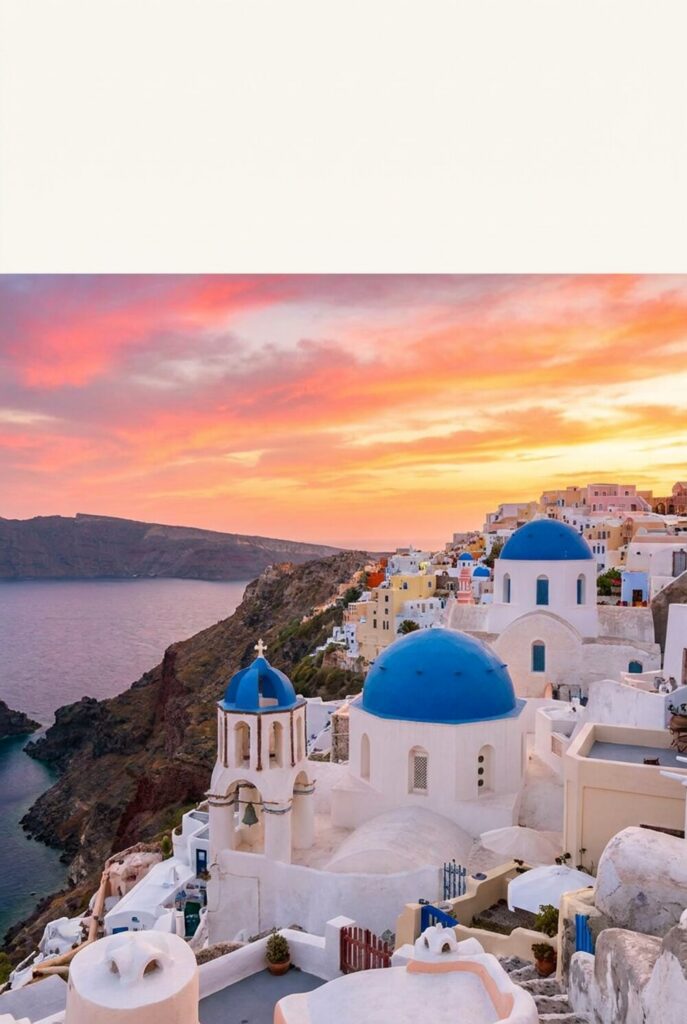
City Guide · South Aegean · Cyclades, Greece
Santorini, Greece: Caldera-Rim Villages, Bronze-Age Akrotiri & the World’s Most Photographed Sunset on the Rim of a Drowned Volcano
I went to Santorini braced for the cliché — the blue domes, the infinity pools, the cruise-ship crush — and what I actually found was a working volcano with a town glued to its edge. The whole island is the rim of a caldera that blew apart around 1600 BCE in one of the largest volcanic eruptions in human history , burying a Bronze-Age Cycladic town at Akrotiri under metres of pumice and leaving the crescent cliff that every photograph since has been taken from. The permanent population of the Thira municipality is just 15,480 across an island of roughly 73 square kilometres, yet it pulls in millions of visitors a year, most of whom never leave the 11-kilometre caldera ridge between Fira and Oia. Treat this guide as the brief I would hand my own family before they boarded an Aegean flight into Thira JTR — the volcano, the ferries, the sunset-crowd timing, the assyrtiko wine and the under-rated south-coast beaches. For the wider Greek frame — the euro, the Schengen 90/180 rule, the island-hopping ferry network — read it alongside our Greece country guide.

What’s Happening in Santorini Right Now · Updated June 22, 2026
High Season Has Arrived — Catch the Caldera Without the Crush
Late June tips Santorini into high season: warm seas, long days, and Oia’s sunset already drawing shoulder-to-shoulder crowds that only thicken through July and August. The local trick is timing — reach the Oia castle ruins well before golden hour, or skip them for the quieter walls of Imerovigli and the lighthouse at Akrotiri. Below: the best caldera-view villages, how to do the famous sunset without the scrum, and the caldera tavernas worth a reservation.
Source: Santorini Dave — Santorini in June
Cinematic aerial of Santorini (8s).
Table of Contents
- Why Santorini?
- Best Time to Visit Santorini
- The Caldera & the Oia Sunset
- Getting Around — Buses, ATVs & the Cliff Cable Car
- Towns & Villages of the Caldera
- Cultural Sights
- Entertainment & Nightlife
- Day Trips from Santorini
- Food & Wine in Santorini
- Practical Information
- Budget & Costs
- Frequently Asked Questions
Why Santorini?
Santorini is the only place in the Mediterranean where you stand on the rim of a still-active volcano, look down 300 metres into a flooded crater the sea rushed into when the cone collapsed, and watch the sun set behind two small islands that are themselves the volcano’s newest lava domes. The whole crescent-shaped island — officially the municipality of Thira — is what survived the Minoan eruption around 1600 BCE, one of the largest volcanic events in recorded human history, which ejected an estimated 60 cubic kilometres of magma, generated tsunamis across the Aegean and may have contributed to the decline of Minoan Crete 110 kilometres south. The eruption buried the Bronze-Age Cycladic town of Akrotiri under metres of pumice and ash, preserving its multi-storey houses, drainage and frescoes so completely that it is now called the “Minoan Pompeii.” The classical name was Thera; the medieval Venetians renamed it Santa Irini (Saint Irene), which Italianised into Santorini.
The island wears three identities at once. It is a geological spectacle — the caldera is a 12-by-7-kilometre flooded crater ringed by cliffs up to 300 metres high, with the active Nea Kameni and Palaia Kameni lava islets at its centre, the most recent eruption recorded in 1950. It is an archaeological site of the first rank — Akrotiri rivals anything in the Aegean, and the Museum of Prehistoric Thera in Fira holds the wall paintings and artefacts recovered from it. And it is a 21st-century luxury-tourism phenomenon — the cliff-edge villages of Fira and Oia, with their cave houses, blue-domed churches and infinity pools, draw cruise ships and honeymooners in numbers wildly out of proportion to the 15,480 permanent residents.
The pull beyond the caldera rim is the rest of the island most day-trippers never see. Akrotiri — the excavated Bronze-Age town near the south-western tip — is the single most important sight and a 25-minute drive from Fira. The volcanic beaches are unlike anywhere in Greece: Red Beach below Akrotiri sits under oxidised iron cliffs, Kamari and Perissa run black volcanic sand along the south-east coast, and Vlychada is a moonscape of wind-carved white pumice. Ancient Thera — the Hellenistic-Roman hilltop city on the Mesa Vouno ridge between Kamari and Perissa — is a separate site from the prehistoric town and a worthy half-day. And the volcano boat tour to Nea Kameni and the Palaia Kameni hot springs runs from the old port below Fira and from Athinios. No other Greek island stacks an active volcano, a Bronze-Age Pompeii, a world-famous sunset and a serious wine industry on a single 73-square-kilometre crescent.
What guidebooks under-rate is the scale and the crowding. The caldera ridge from Fira to Oia is only about 11 kilometres, walkable in roughly three-to-four hours along the famous clifftop path; the island as a whole is small enough to drive end-to-end in 40 minutes. But Santorini receives cruise traffic far beyond its size — on peak summer days multiple ships anchor in the caldera at once, and from 2025 the island began enforcing a cap on daily cruise arrivals to manage the crush, alongside a per-passenger cruise levy introduced by the Greek government. The arithmetic of that crowding is the single most important planning fact on the island: where you stay, when you walk the rim, and when you stand for the Oia sunset all turn on avoiding the 11:00–16:00 cruise window.
And then the sunset — the third reason most visitors come and the most photographed evening in Greece. Oia, at the north-western tip, faces directly into the Aegean sunset, and from roughly an hour before dusk the village fills with crowds who gather at the ruined Byzantine castle (Kasteli) for the moment the sun drops behind Thirassia and the Christiana islets. Greece sits on US State Department Travel Advisory Level 1 (the lowest tier) and the UK FCDO advisory for Greece is routinely current.

Best Time to Visit Santorini
Santorini has a hot-summer Mediterranean climate — long, dry, hot summers and mild, wetter winters, with the island swept by the Aegean meltemi wind through July and August. The single most important calendar fact is that Santorini is a seasonal island: the caldera-rim hotels, the volcano boats, the cable car queues and the Oia sunset crowds all peak from late June to early September, while a large share of businesses simply close from November to March. Plan your trip around which Santorini you want, and use the four-season breakdown below as the realistic timeline.

Spring (March – May) — the ideal early window
The island reopens through April and hits its first sweet spot from late April to early June. Daytime highs run 18–26°C, the sea warms enough to swim by mid-May, wildflowers cover the volcanic slopes, and the caldera-rim path from Fira to Oia is a pleasure rather than a sun-baked endurance test. Crucially, the cruise-ship volume and the hotel rates are well below the July–August peak — caldera-view rooms that hit €400+ in August can be found at €150–250 in May, and the Oia sunset crowd is a fraction of high summer. Orthodox Easter (12 April 2026) is the island’s most atmospheric festival, with candlelit midnight processions and fireworks over Pyrgos; it draws Greek domestic tourists and books out the better tavernas, so reserve ahead. The catch: in March and early April some caldera hotels and restaurants are still shut, the volcano boats run a reduced schedule, and a wet front can roll through. Late April onward is the safe call.
Summer (June – August) — hot, crowded, peak everything
The peak of the heat, the crowds and the prices. July and August highs sit at 28–31°C with strong sun and the meltemi wind whipping the Aegean; the sea is at its warmest (24–26°C) and the south-coast black-sand beaches at Kamari and Perissa are in full swing. But this is also when multiple cruise ships anchor in the caldera at once, the Fira-Oia bus standing-room-only, the cable car queue can run 45 minutes, and the Oia sunset becomes a shoulder-to-shoulder scrum from 90 minutes before dusk. From 2025 Santorini enforces a daily cruise-arrival cap and Greece levies a per-passenger cruise tax to manage the crush. Caldera-view suites peak above €400–700 a night; book three-to-six months ahead. Plan two-shift days: rim walks and Akrotiri at 08:00, pool or beach 12:00–16:00, and stake out a sunset perch away from Oia’s Kasteli (Imerovigli’s Skaros Rock or a Fira rooftop bar) by 18:30.
Autumn (September – October) — the connoisseur’s window
The best-kept secret of the Santorini year. September holds summer’s warmth (highs 25–28°C, sea still 23–25°C) while the cruise volume tapers and the meltemi eases; early October is mild (22–25°C) with the assyrtiko grape harvest wrapping up and the wineries at their most welcoming. Hotel rates fall 30–50% from the August peak through October, the Oia sunset crowd thins markedly after mid-September, and the light turns golden and clear. The caldera-rim path is at its most comfortable. The flip side: by late October the season is winding down, sea temperatures begin to drop, the occasional autumn storm appears, and from the end of the month some businesses start closing for winter. The mid-September-to-mid-October window is, for most travellers, the single best time to visit Santorini — warm, swimmable, photogenic and far less crowded than July.
Winter (November – February) — quiet, mild, mostly closed
The Santorini almost no visitor sees. November-February daytime highs sit at 13–16°C, overnight lows drop to 8–11°C, rainfall peaks (the wettest months are December and January), and the meltemi is replaced by southerly storm systems. The great majority of caldera-rim hotels, the volcano boats, the cable car at reduced hours, and most Oia restaurants close from roughly November to mid-March; Fira keeps a core of year-round tavernas and shops open for the permanent population. This is the window for travellers who want the caldera to themselves — rates on the few open hotels are a fraction of summer, the rim path is empty, and the light after a winter storm is extraordinary — but it requires accepting that the island is in hibernation and that ferry schedules thin out. Greek Orthodox Christmas and the 6 January Epiphany blessing-of-the-waters are quietly local affairs.
The Caldera & the Oia Sunset

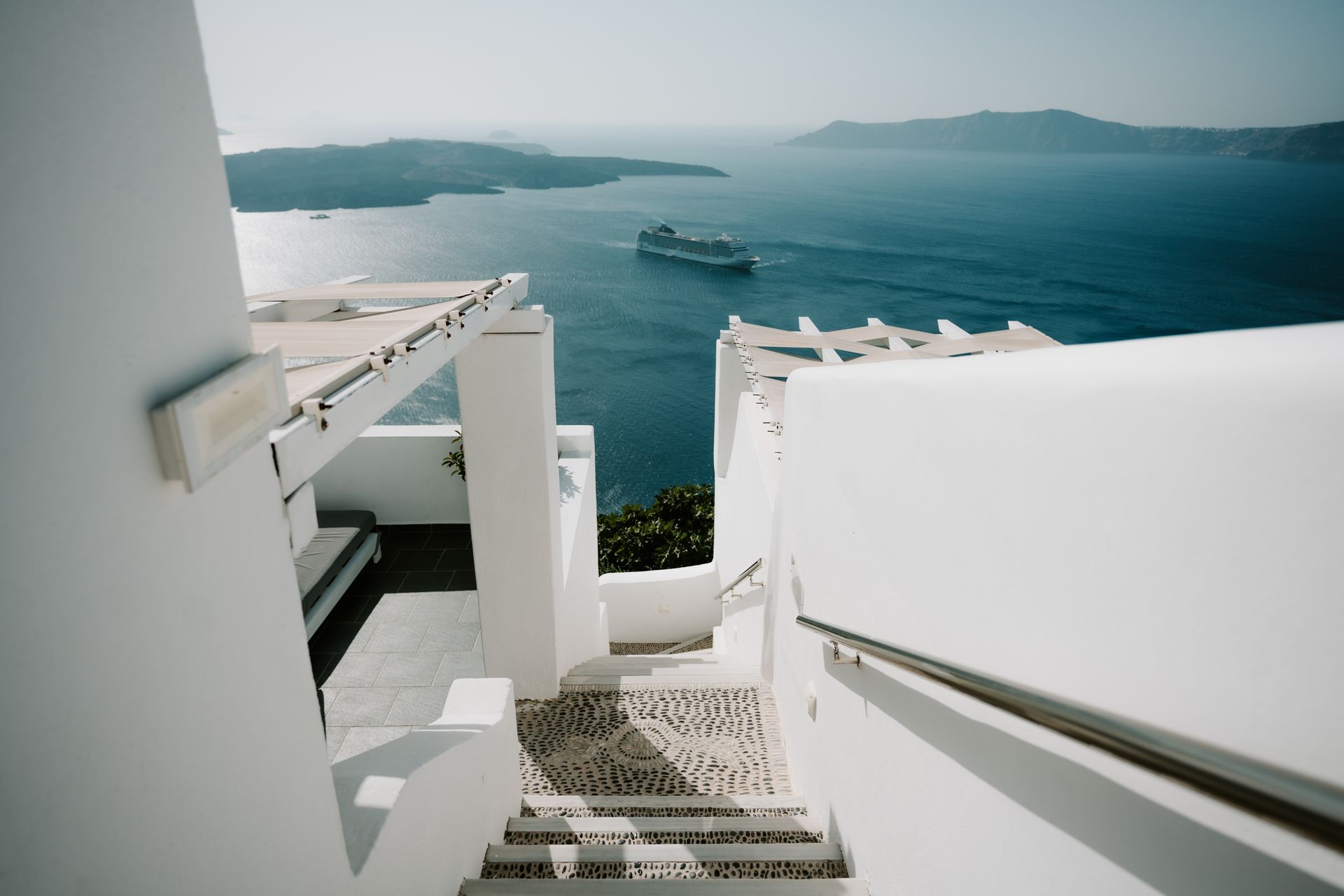
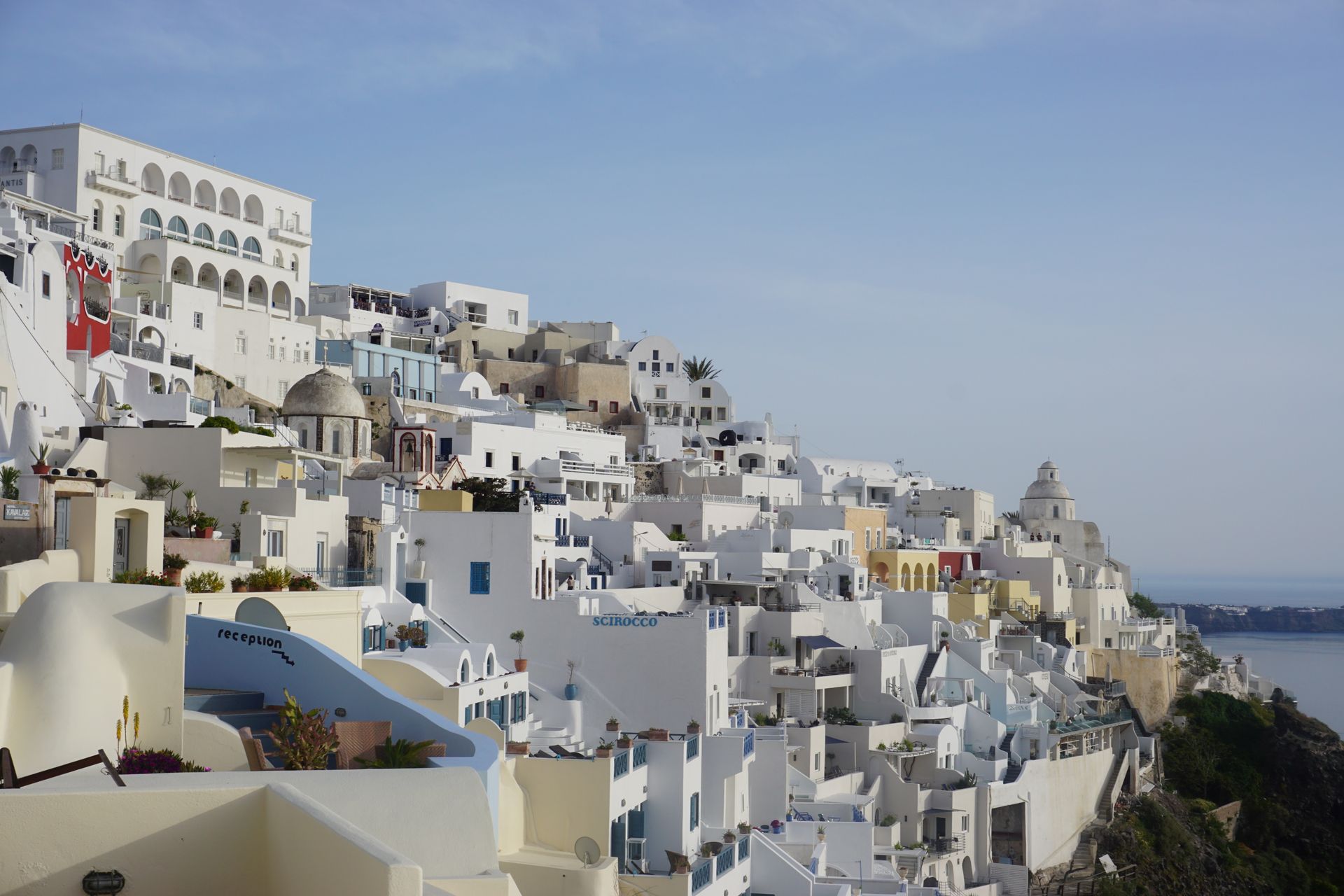
Santorini’s defining set-piece is geological theatre. The caldera — the collapsed magma chamber the sea flooded after the Minoan eruption — is roughly 12 kilometres long and 7 wide, ringed by sheer cliffs that rise up to 300 metres above the waterline, with the active Nea Kameni and Palaia Kameni lava islets at its centre and the smaller island of Thirassia on the western rim. The whitewashed villages of Fira, Firostefani, Imerovigli and Oia are strung along the eastern cliff-top in an almost continuous ribbon, their cave houses carved back into the soft volcanic rock. The water in the caldera is deep enough — over 300 metres in places — that cruise ships and yachts anchor by mooring lines rather than dropping anchor. The most recent volcanic activity was the 1950 eruption on Nea Kameni; the crater is still warm, with fumaroles and the sulphurous hot springs off Palaia Kameni.
The Oia sunset — timing and alternatives
Oia, at the north-western tip of the caldera ridge, faces directly into the Aegean sunset, and the moment the sun drops behind Thirassia draws a famous nightly crowd to the ruined Byzantine castle (Kasteli). In high summer the crowd builds from 90 minutes before dusk and the castle terraces are shoulder-to-shoulder. The seasoned move is to skip Kasteli entirely: claim a table at an Oia caldera-view restaurant or bar an hour ahead, or watch from Imerovigli’s Skaros Rock, a Fira rooftop, or the Byzantine Castle ruins of Pyrgos inland. The sunset is visible from the entire western rim — you do not need to be in the Oia scrum to see it. Sunset times run from about 19:00 in late April to nearly 20:50 at the June solstice, then back to 18:30 by mid-October; check the day’s exact time and arrive 60–75 minutes early in peak season.
Walking the rim — Fira to Oia
The 11-kilometre clifftop footpath from Fira through Firostefani and Imerovigli to Oia is the island’s signature walk, taking roughly three-to-four hours at a steady pace with frequent photo stops. The path is partly paved, partly rough volcanic track; wear proper shoes, carry water, and start early to beat both the midday heat and the cruise crowds that land mid-morning. The most dramatic stretch is the section past Skaros Rock — the ruined medieval fortress promontory below Imerovigli. Many walkers do it one-way and take the bus back from Oia to Fira (about 25 minutes), which is the smart play.
Getting Around — Buses, ATVs & the Cliff Cable Car

Santorini has no rail and no metro — getting around means the KTEL bus network, a rental car, ATV/scooter, taxis (there are very few) or your own feet. The island is compact (about 18 km tip to tip) but the roads are narrow, winding and clogged in peak season, and parking in Fira and Oia is genuinely difficult.
KTEL buses — the budget backbone
The KTEL Santorini bus network radiates from the central bus station in Fira to Oia, Kamari, Perissa, Akrotiri, Perivolos, Pyrgos and the ferry port at Athinios, with fares typically €1.80–3.20 depending on distance and tickets bought from the conductor on board. Buses are frequent in summer (every 20–40 minutes on the Fira-Oia and Fira-Kamari routes) but get packed to standing-room in peak season and stop running by late evening. Almost every route requires a change in Fira — there are few direct cross-island connections — so factor a transfer when planning beach days.
The Fira cable car and the old-port donkeys
The cable car connects Fira town on the cliff-top to the old port 220 metres below, where the volcano boats and some cruise tenders dock; it runs roughly every 20 minutes and carries six gondolas, with a fare around €6 one way. In peak season the cruise-passenger queues can exceed 45 minutes in both directions. The historic alternative is the 588-step zig-zag donkey path; animal-welfare campaigns have pushed strongly against riding the donkeys, and walking down (not up) is the recommended option. Most independent travellers simply use the cable car or arrive by road at Athinios, the main car-ferry port, instead.
Rental car, ATV and scooter
A rental car is the most flexible way to see the whole island — Akrotiri, the wineries on the Pyrgos plateau, the south-coast beaches and Ancient Thera are all far easier with your own wheels. Expect €35–70 a day in season for a small car, plus fuel; book ahead because cars sell out in July-August. ATV quad bikes and scooters are ubiquitous and cheap (€20–40 a day) but the accident rate is high on the narrow roads — a full licence, a helmet and caution are essential. Parking near the caldera rim in Fira and Oia is scarce; use the village edge car parks and walk in.
Airport & ferry-port transfers
- Thira National Airport (JTR) sits about 6 km from Fira; taxis run roughly €20–30 to the caldera villages, and a KTEL bus connects to the Fira station.
- Athinios is the main car-ferry port, about 10 km from Fira down a switchback road; KTEL buses meet the major ferries and taxis charge around €25–35 to the rim.
Neighborhoods: Towns & Villages of the Caldera
Weighing Santorini against Athens, Mykonos or Crete? See our guide to where to stay in Greece.
📍 Santorini Map: Every Place in This Guide
Fira — the capital
Fira (Thira) is the island’s capital and commercial heart, a cliff-top town of about 1,346 permanent residents that swells with day-trippers in season. It holds the main bus station, the cable car to the old port, the Museum of Prehistoric Thera, the bulk of the shops and the densest concentration of caldera-view bars and restaurants. It is the most convenient base for first-timers and the noisiest; the cruise crowds funnel through it from late morning.
- Museum of Prehistoric Thera — Akrotiri frescoes and finds
- The cable car down to the old port
- Cathedral of Candlemas of the Lord (Orthodox) and the Catholic cathedral
Best for: first-timers, nightlife, convenience. Access: island bus hub; 6 km from JTR airport.
Oia — the sunset village
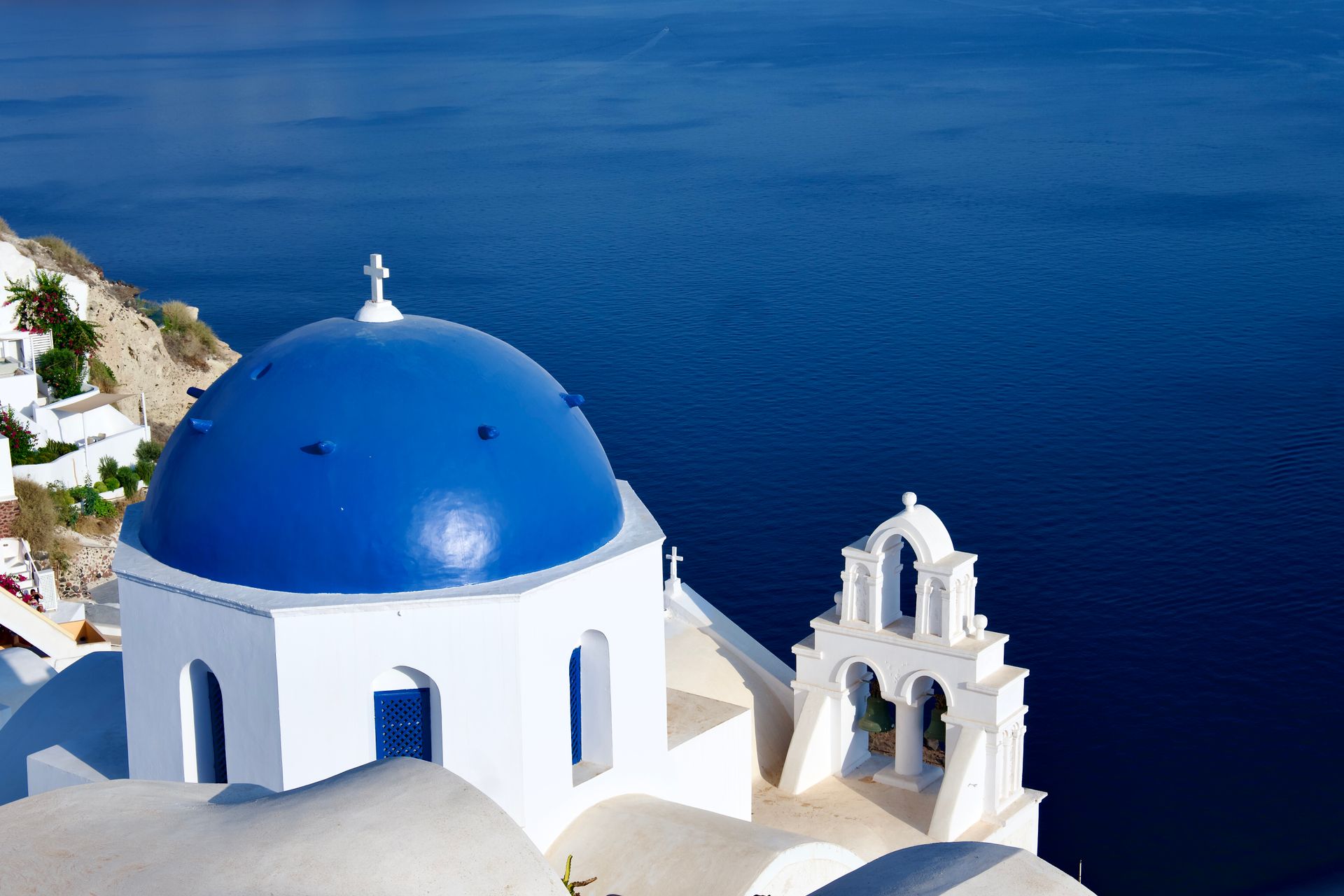
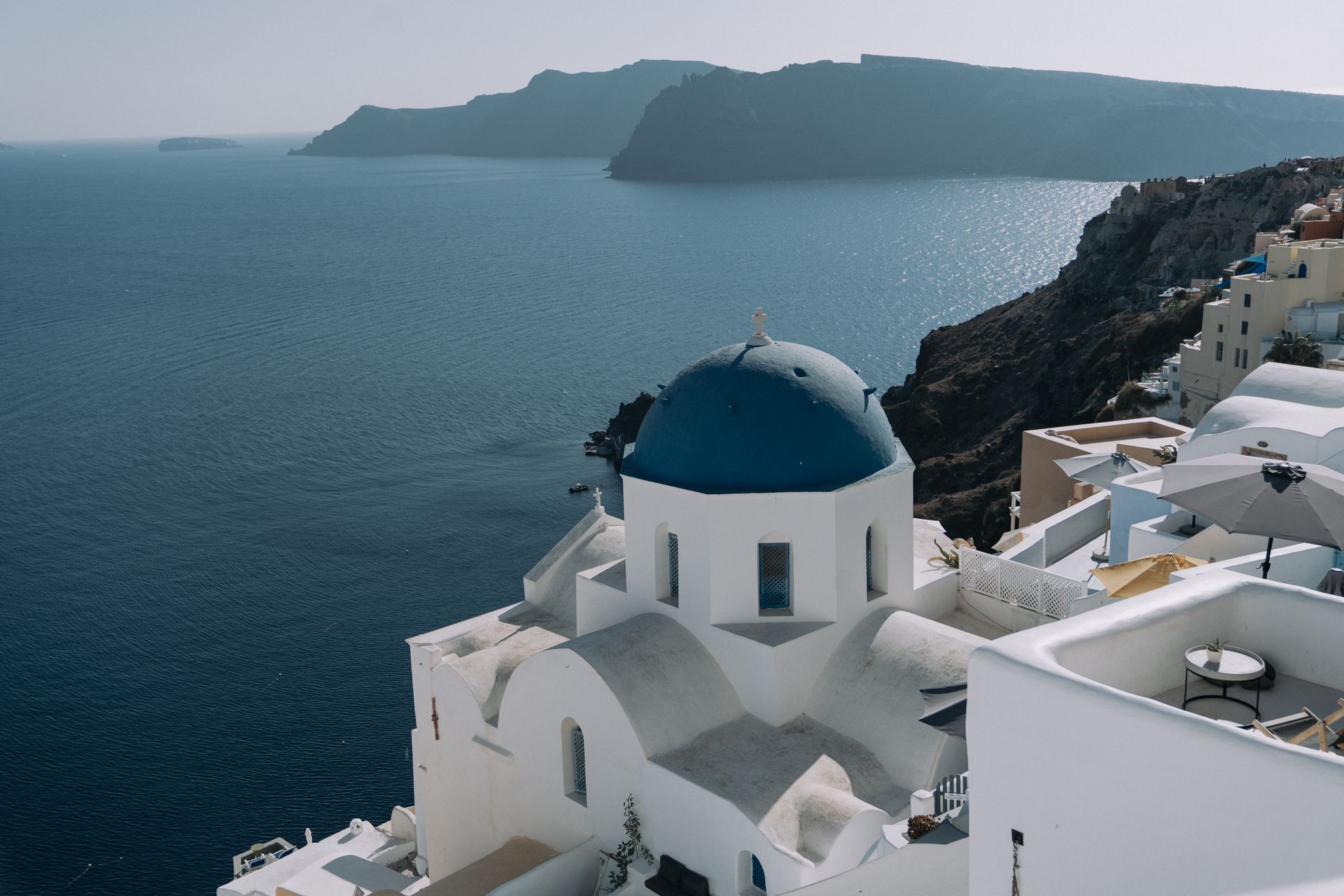
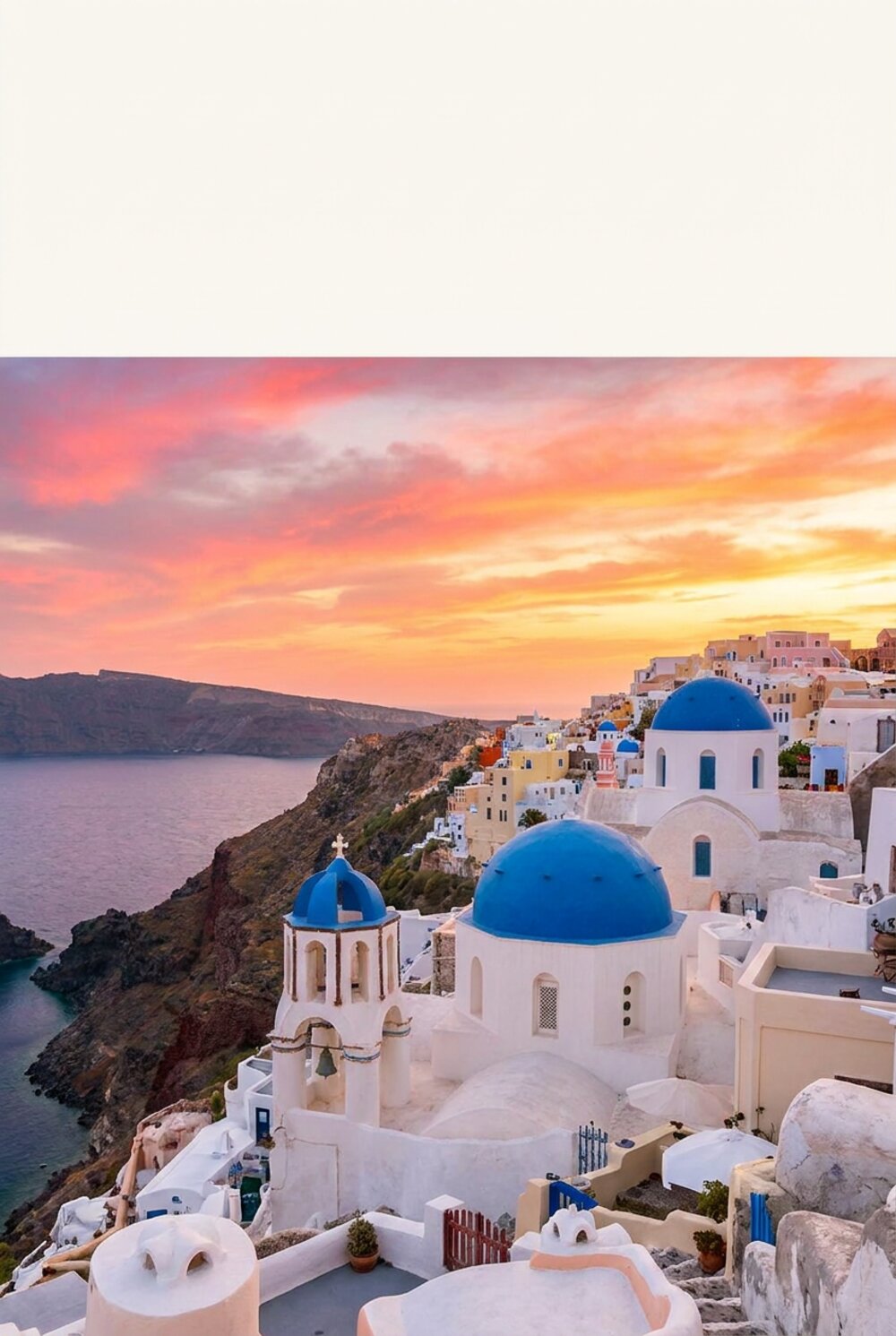
Oia, at the north-western tip, is the postcard Santorini — the blue-domed churches, the cave houses cascading down the cliff, the windmills and the world-famous sunset from the Kasteli castle ruins. With about 1,087 residents it is smaller and more upmarket than Fira, full of boutique cave-suite hotels and fine-dining tavernas. It is also the most crowded spot on the island at sunset and the priciest place to stay.
- The Kasteli castle ruins (sunset viewpoint)
- The blue-domed churches of the lower village
- Amoudi Bay — the fishing-harbour seafood tavernas down 300 steps
Best for: honeymoons, sunset, luxury cave suites. Access: ~25-minute bus or drive from Fira.
Imerovigli & Firostefani — the quiet caldera
These two villages sit on the rim between Fira and Oia, with the same staggering caldera view but a fraction of the crowds and noise. Imerovigli is the highest point on the rim, perched above Skaros Rock — the ruined medieval fortress promontory. Firostefani is a ten-minute walk from Fira’s centre but feels worlds quieter. Both are my pick for a caldera-view base.
- Skaros Rock walk and the Theoskepasti chapel
- Quiet rim-path access in both directions
- Boutique hotels with the Oia view minus the Oia prices
Best for: couples wanting the view and the quiet. Access: rim path or short bus/taxi from Fira.
Pyrgos & Megalochori — the inland old villages
Inland and uphill, Pyrgos is the island’s former capital, a medieval hilltop maze crowned by a Venetian castle (Kasteli) with a panoramic view that takes in the whole island — an under-rated and far quieter sunset alternative to Oia. Megalochori is a sleepy traditional village among the vineyards, the heart of the assyrtiko wine country.
- Pyrgos Kasteli — 360-degree island viewpoint
- Megalochori’s bell towers and wine canavas
- The Santo Wines and Venetsanos wineries nearby
Best for: wine, history, escaping the rim crowds. Access: car or bus via Fira.
Kamari & Perissa — the black-sand beach towns
On the south-east coast, Kamari and Perissa are the island’s main beach resorts, separated by the Mesa Vouno headland that holds Ancient Thera. Both run long stretches of black volcanic sand backed by tavernas, sunbed rows and family-friendly hotels — a completely different, more relaxed Santorini from the caldera rim.
- Kamari and Perissa black-sand beaches
- Ancient Thera on the ridge between them
- Cheaper accommodation than the caldera villages
Best for: beach days, families, value. Access: bus from Fira (~20 minutes).
Cultural Sights

Akrotiri Archaeological Site
The single most important sight on the island. Akrotiri is a Bronze-Age Cycladic town buried by the Minoan eruption around 1600 BCE and preserved beneath the pumice so completely — multi-storey houses, paved streets, drainage, storage jars and brilliant wall frescoes — that it is called the “Minoan Pompeii.” The excavation sits under a modern bioclimatic roof on raised walkways. Admission is around €12 (combined ticket with other sites available); it is near the south-western tip, about 25 minutes by car or bus from Fira. Go early to beat the tour groups.
Museum of Prehistoric Thera (Fira)
The companion to Akrotiri — this Fira museum holds the frescoes, pottery and the famous gold ibex figurine recovered from the dig, displayed in context. Admission around €6; pair it with an Akrotiri visit on the same day for the full Bronze-Age story.
Ancient Thera
A separate, later site from prehistoric Akrotiri: the Hellenistic, Roman and Byzantine city founded in the 9th century BCE on the Mesa Vouno ridge (369 metres) between Kamari and Perissa, with terraced streets, an agora, temples and a theatre carved into the rock with a sheer drop to the sea. Reached by a steep switchback road or a hard walk up from Kamari; the views are exceptional. Admission around €4.
Nea Kameni volcano & the hot springs
The active lava island at the centre of the caldera. Volcano boat tours from the old port below Fira and from Athinios land at Nea Kameni for a guided walk up to the steaming crater (the last eruption was 1950), then anchor off Palaia Kameni for a swim in the sulphurous warm springs. Half-day and sunset-cruise versions run €30–90 depending on inclusions.
Caldera-rim churches & windmills
The blue-domed churches of Oia and the chapels strung along the rim are working Orthodox churches, not film sets — treat them respectfully. The Oia windmills and the Three Bells of Fira (the blue-domed church beside Firostefani) are the most photographed.
Entertainment & Nightlife

Caldera-view sunset bars
The defining Santorini evening is a sundowner on a cliff-edge terrace. Fira, Firostefani, Imerovigli and Oia all have bars perched on the rim; the famous ones in Oia (around the Kasteli) charge a premium for the sunset view, with cocktails commonly €14–20. Booking a table an hour ahead in summer is the way to dodge the standing crowd.
Fira nightlife strip
Fira holds the island’s only real late-night scene — a cluster of bars and a couple of clubs along the cliff edge and the narrow lanes near the cathedral that run until the early hours in July-August. Drinks €8–15; it is lively but compact, not Mykonos.
Open-air cinema (Kamari)
The Kamari open-air cinema is a charming summer institution — films under the stars in a garden setting with a bar, a relaxed alternative to the rim-bar scene. Tickets around €9.
Sunset catamaran & dinner cruises
The most popular splurge: a half-day catamaran cruise around the caldera with stops at the Red and White beaches, the hot springs and a sunset dinner aboard, typically €120–180 per person including food and drinks. A memorable way to see the cliffs from the water.
Wine tastings as evening entertainment
Several wineries on the Pyrgos plateau (Santo Wines, Venetsanos) run sunset tastings with caldera views — a quieter, more local alternative to the rim bars, with flights of assyrtiko and the sweet Vinsanto for €15–30.
Day Trips from Santorini

Nea Kameni volcano & hot springs (half-day by boat)
The classic Santorini boat trip — from the old port to the active lava island at the centre of the caldera for the crater walk, then a swim in the sulphurous warm springs off Palaia Kameni. Half-day €30–50; sunset-cruise versions add Thirassia and dinner.
Thirassia island (half-day by boat)
The small inhabited island on the western rim of the caldera, a slice of pre-tourism Santorini — a quiet fishing village, a handful of tavernas and almost no crowds. Reached on the volcano cruise or a dedicated boat from Ammoudi or Athinios.
Ios (about 45 minutes by fast ferry)
The next island north, famous for its beaches and its summer party scene but with a pretty Chora and quiet coves away from the nightlife. A frequent fast-ferry hop makes it an easy day trip or a contrasting add-on.
Naxos & Paros (1.5–2 hours by fast ferry)
The larger central Cyclades — Naxos with its mountain villages, long sandy beaches and the marble Portara gateway, Paros with Naoussa’s harbour and the Byzantine Ekatontapyliani church. Doable as long day trips but better as island-hopping stops.
Crete — Heraklion & Knossos (about 2 hours by fast ferry)
The big one: a fast ferry south to Heraklion puts the Minoan palace of Knossos and the Heraklion Archaeological Museum — the home of the Minoan world Akrotiri belonged to — within reach of a very long day, though an overnight is far better.
Food & Wine in Santorini

Santorini punches far above its size in food and wine because of the volcanic soil. The island’s ash-and-pumice ground, almost no rainfall and high humidity from the sea mist produce intensely flavoured produce — the tiny Santorini cherry tomato (now a Protected Designation of Origin), the split-pea fava, the white aubergine, capers and katsouni cucumber — and a white grape, assyrtiko, that makes some of the best dry white wine in the Mediterranean.
Santorini specialities to eat
The local plates are built on that volcanic produce. Start with the island’s signature mezedes before moving to the seafood the Aegean does so well.
- Tomatokeftedes — Santorini cherry-tomato fritters with herbs (€6–9)
- Fava Santorinis — the PDO yellow split-pea purée with onion and olive oil (€6–9)
- White aubergine — the sweet, seedless local variety, grilled or in melitzanosalata (€7–10)
Where to eat — caldera rim & Amoudi Bay
The caldera-view tavernas come with a view premium; the better value and the best fish are often down at sea level.
- Amoudi Bay (below Oia) — the fishing-harbour seafood tavernas at the bottom of 300 steps; whole grilled fish by the kilo (€55–75/kg)
- Metaxi Mas (Exo Gonia) — a beloved inland taverna with island classics (mains €12–22); book ahead
- Fira & Imerovigli rim restaurants — the view tables; expect €20–40 a main at the higher end
Beyond fava and fritters
Greek staples are everywhere and reliably good, alongside the local specialities.
- Grilled octopus — sun-dried then charred, an Aegean classic (€12–18)
- Souvlaki & gyros — the cheap, excellent street option (€3–5 a wrap)
- Greek salad (horiatiki) — with Santorini tomatoes and chlorotyri cheese (€8–12)
- Loukoumades — honey-soaked doughnuts for dessert (€5–7)
The wine — assyrtiko & Vinsanto
Santorini is one of the world’s most distinctive wine regions. The vines are trained in a low basket shape (kouloura) to protect the grapes from the wind and capture sea humidity, and some root systems are centuries old, having survived because phylloxera never took hold in the sandy volcanic soil. The flagship is dry assyrtiko — crisp, mineral, high-acid white — and the sweet sun-dried Vinsanto dessert wine. Tasting flights at the Pyrgos-plateau wineries (Santo Wines, Venetsanos, Domaine Sigalas near Oia) run €15–30.
Food experiences you can’t miss
- A whole grilled fish at sunset in Amoudi Bay below Oia
- An assyrtiko tasting at a Pyrgos-plateau winery with a caldera view
- Tomatokeftedes and fava with a cold local white at an inland taverna
Practical Information
Language
Greek is the official language, written in its own alphabet, but English is near-universal in Santorini’s tourism sector — hotels, restaurants, shops and taxis all operate in English, and menus and signs are bilingual island-wide. Learning kalimera (good morning), efcharisto (thank you) and parakalo (please/you’re welcome) is appreciated.
Cash vs. cards
Cards (Visa/Mastercard) are accepted at hotels, most restaurants and shops; smaller tavernas, beach kiosks, the bus and street stalls prefer cash. ATMs are in Fira, Oia, Kamari and Perissa; carry €50–100 in small notes for the bus, the beach and rural tavernas.
Safety
Greece is on US State Department Travel Advisory Level 1, the lowest tier; Santorini has very low crime. The real hazards are physical: unrailed cliff-edge paths, slippery marble steps, ATV and scooter accidents on narrow roads, and strong sun. Watch children near the caldera edge.
What to wear
Light, breathable clothing and a hat for summer; proper closed shoes for the rim path and Akrotiri’s walkways, not flip-flops. A light layer for breezy evenings and for the meltemi wind. Modest cover for visiting Orthodox churches.
Cultural etiquette
The blue-domed churches are working places of worship — do not climb on roofs or block doorways for photos, and dress respectfully inside. Tipping is modest (round up or 5–10% for good service). Greeks dine late; restaurants fill from 21:00.
Connectivity
4G/5G coverage is good across the populated parts of the island; EU roaming applies for EU SIMs, and prepaid Greek SIMs (Cosmote, Vodafone) are cheap. Most hotels and cafes offer free Wi-Fi.
Health & medications
Pharmacies are in Fira, Oia and the beach towns; there is a health centre in Fira for minor issues, with serious cases transferred to Athens. Carry sunscreen, water and any prescription medicines; the EHIC/GHIC covers EU/UK visitors for state care, but travel insurance is strongly advised.
Luggage & the steps
Many caldera-rim hotels in Oia, Fira and Imerovigli are reached only by long flights of steps with no vehicle access — pack light, and confirm with your hotel how bags are handled (some use porters or cable lifts). This catches first-timers out.
Budget Breakdown: Making Your Euros Count
| Tier | Daily | Sleep | Eat | Transport | Activities | Extras |
|---|---|---|---|---|---|---|
| Budget | €70–110 | €40–70 studio (off-rim/Perissa) | €20–30 tavernas & gyros | €5–10 KTEL bus | €10–30 sites & a beach | €5–10 |
| Mid-Range | €180–320 | €120–220 caldera-view hotel | €45–80 sit-down dinners | €40–60 rental car/day | €40–90 volcano boat & winery | €20–40 |
| Luxury | €500+ | €350–700+ cave-pool suite | €120+ fine dining | €80+ private transfers | €150+ private sunset cruise | €50+ |
Where your money goes
Santorini is one of the most expensive islands in Greece, and the single biggest variable is accommodation: a caldera-view cave suite in Oia in August can cost ten times an off-rim studio in Perissa for the same night. The view is the premium; the food, transport and activities are far more reasonable. Shifting your base off the rim or your dates to the shoulder season halves most budgets. Greece uses the euro, and tipping is modest — rounding up or leaving 5–10% at a sit-down taverna is plenty, and there is no expectation to tip on a coffee or a bus.
A realistic week for a couple landing in the shoulder season, basing off-rim and renting a car for two of the days, comes in around €1,400–2,200 all-in excluding flights — perhaps a third of what the same week costs in an August Oia cave suite. The volcano boat trip, a winery afternoon and the archaeological sites together rarely top €120 per person, so the experiences are not where Santorini drains a budget; the bed with the caldera view is.
Money-saving tips
- Stay in Perissa, Kamari or Megalochori and bus/drive to the caldera for sunset rather than paying the rim premium
- Visit in May, September or early October — rates fall 30–50% from the August peak
- Eat inland or at Amoudi Bay, not on the rim; use the KTEL bus (€1.80–3.20 a ride) instead of taxis
- Buy the combined archaeological ticket if visiting Akrotiri, the Prehistoric Thera museum and Ancient Thera — it undercuts paying each gate separately
Frequently Asked Questions
How many days do I need in Santorini?
Three nights covers the caldera rim (Fira to Oia), one beach day and a sunset; four lets you add Akrotiri, a winery afternoon and a volcano boat trip; five fits Ancient Thera and a slower pace. Many visitors arrive on a cruise for a single rushed day — staying at least three nights is what lets you see the island at the quiet hours, away from the day-tripper crush.
Is Santorini good for solo and family travellers?
Yes to both. Greece is on US State Department Travel Advisory Level 1 and crime is very low; the island is easy and welcoming for solo travellers, with English near-universal. Families do well based in Kamari or Perissa near the black-sand beaches; the main caution everywhere is the unrailed cliff edges and the ATV/scooter traffic on narrow roads — keep small children close on the rim paths.
How do I get around Santorini without a car?
The KTEL bus network covers Fira, Oia, the beach towns, Akrotiri and the ferry port for €1.80–3.20 a ride, though almost every route changes in Fira and buses pack out in peak season. Taxis are scarce and should be pre-booked. For Akrotiri, the wineries and Ancient Thera a rental car or ATV is far more convenient, but the caldera-rim villages themselves are walked — you can do the Fira-to-Oia rim path on foot and bus back.
What about the language barrier in Santorini?
Minimal. Greek is the official language and uses its own alphabet, but English is spoken everywhere in tourism — hotels, restaurants, shops, taxis and tour operators all operate in English, and signage and menus are bilingual island-wide. Learning kalimera (good morning) and efcharisto (thank you) earns goodwill but is not necessary to get by.
When is the best time to visit Santorini?
Late April to June and September to mid-October are the sweet spots — warm (22–28°C), dry, swimmable sea, and far fewer crowds and lower prices than the July-August peak, when the heat, cruise crush and hotel rates all spike. November to March is mild but quiet, with most caldera hotels and restaurants closed for winter.
Can I use credit cards everywhere in Santorini?
Hotels, most restaurants and shops take Visa/Mastercard; smaller tavernas, beach kiosks, the KTEL bus and street stalls prefer or require cash. Carry €50–100 in small euro notes for buses, beaches and rural tavernas. ATMs are in Fira, Oia, Kamari and Perissa, but can run dry or queue in peak season — withdraw before a beach or village day.
Where is the best place to watch the Santorini sunset — and is Oia worth it?
Oia’s Kasteli castle is the famous spot and genuinely spectacular, but in summer it is a shoulder-to-shoulder scrum from 90 minutes before dusk. The whole western caldera rim sees the same sunset: claim a table at an Oia or Imerovigli bar an hour ahead, watch from Skaros Rock or a Fira rooftop, or go inland to Pyrgos’s hilltop castle for a panoramic, far quieter alternative. You do not need to be in the Oia crowd to see it.
Is it safe to visit Santorini given the 2025 earthquakes — is the volcano dangerous?
Santorini is a dormant-but-active volcano whose last eruption was in 1950 on Nea Kameni, and a seismic crisis in early 2025 prompted a precautionary state of emergency and intensified monitoring by the Greek authorities. The island is monitored continuously; follow Greek civil-protection guidance if any advisory is active, and be aware that some clifftop footpaths near the edge have no railings. Under normal conditions the volcano poses no day-to-day risk to visitors, and the boat trip to the Nea Kameni crater operates with licensed guides.
How do I get from Athens to Santorini?
Two ways: fly from Athens to Thira (JTR) in about 45 minutes on Aegean, Sky Express or Volotea, or take the ferry from Piraeus — a high-speed catamaran (SeaJets and others) in about 4 hours 50 minutes, or a cheaper conventional Blue Star ferry in about 7 hours 45 minutes. Up to nine daily crossings run in high summer; book fast ferries well ahead in July-August, and build a buffer day before an international flight out of Athens because the meltemi wind can cancel sailings.
Ready to Experience Santorini?
Time the caldera at the quiet hours, stand on the rim of the volcano, and let the assyrtiko and the Aegean do the rest. For the full country context, read the Greece Travel Guide.
Explore More City Guides
Where to Stay
Alex the Travel Guru
Alex has island-hopped the Cyclades end to end, walked the Fira-to-Oia caldera rim at dawn to beat the cruise crowds, and tasted his way across the Pyrgos-plateau wineries. He writes the kind of brief he’d hand his own family — the real timings, the honest crowd warnings and the spots worth the climb.
More city guides you might like
Plan your trip to Santorini
The booking tools we use ourselves. FFU may earn a commission at no extra cost to you.
Plan & book your trip to Santorini
Booking through these searches supports our guides at no extra cost to you.