Languages of Greece
All languages of Southern Europe →fluent beta classical · classes by phone with Maya at ranas.ai/maya
Greece Travel Guide — Ancient Temples, 6,000 Islands & the Aegean Blue
Greece Travel Guide
📋 In This Guide
- Overview — Why Greece Belongs on Every Bucket List
- 🕯️ Greek Easter 2026 & the Santorini Summer Prelude
- Best Time to Visit Greece (Season by Season)
- Getting There — Flights & Arrival
- Getting Around — Ferries, Flights & a Modest Rail Line
- Top Cities & Islands
- Greek Culture & Etiquette
- A Food Lover’s Guide to Greece
- Off the Beaten Path
- Practical Information
- Budget Breakdown
- Planning Your First Trip to Greece
- Frequently Asked Questions
Overview — Why Greece Belongs on Every Bucket List
Want the highlights in one list? Here are the 30 best things to do in Greece, from Athens to Crete.
Greece is a country where the footnotes of Western civilisation are still open-air attractions and the coastline reads like a geography-class puzzle. Occupying the southern tip of the Balkan Peninsula and more than 6,000 islands and islets scattered across the Aegean and Ionian seas, only 227 of them permanently inhabited, Greece packs an outsized cultural punch into roughly 131,957 square kilometres of land. The population sits at about 10.4 million, concentrated heavily around Athens and Thessaloniki, while the islands range from densely populated Crete (630,000 people) to specks with fewer than 50 permanent residents.
The deep past is unusually legible here. The Parthenon has crowned the Athenian Acropolis since 438 BC, Olympia hosted the original Games from 776 BC, and the oracle at Delphi was the spiritual centre of the ancient Greek world for roughly a thousand years. Layered on top of that classical bedrock is a long Byzantine and Orthodox chapter — Thessaloniki’s paleochristian and Byzantine monuments, the monasteries of Meteora perched on sandstone pillars, and the self-governing monastic republic of Mount Athos — which still shapes how Greeks mark the year. UNESCO currently lists 19 sites in Greece, and the country’s tangible heritage is matched by an intangible one: the Mediterranean diet, with Greece as its origin and exemplar, was inscribed by UNESCO in 2010.
The contemporary country is a paid-up member of the European Union (joined 1981), a Schengen state, and — since 2002 — a euro country. After a difficult decade of debt-crisis austerity from 2010, Greek tourism rebuilt itself aggressively, and 2024 delivered a record 35.9 million international visitors, more than three arrivals per resident. Athens, Santorini and Mykonos are now among the most visited destinations in Europe, while Crete, Rhodes and Corfu handle summer charter traffic from across the continent.
Culturally, Greece runs on its own cadence. Meals are long, dinner starts at 9pm, and the late-afternoon mesimeri pause still quiets village streets between 2 and 5pm. Cash remains useful on smaller islands, olive trees remain the national cash crop, and the unwritten rule of philoxenia — literally “friend of the stranger” — means guests are treated with an almost ritual warmth. A plate of moussaka on a taverna terrace, a sunset glass of assyrtiko from the caldera, a whitewashed chapel above a cerulean bay: Greece delivers the postcard, but the substance underneath is older, deeper and considerably more inhabited than the Instagram grid suggests.
🕯️ Greek Easter 2026 & the Santorini Summer Prelude
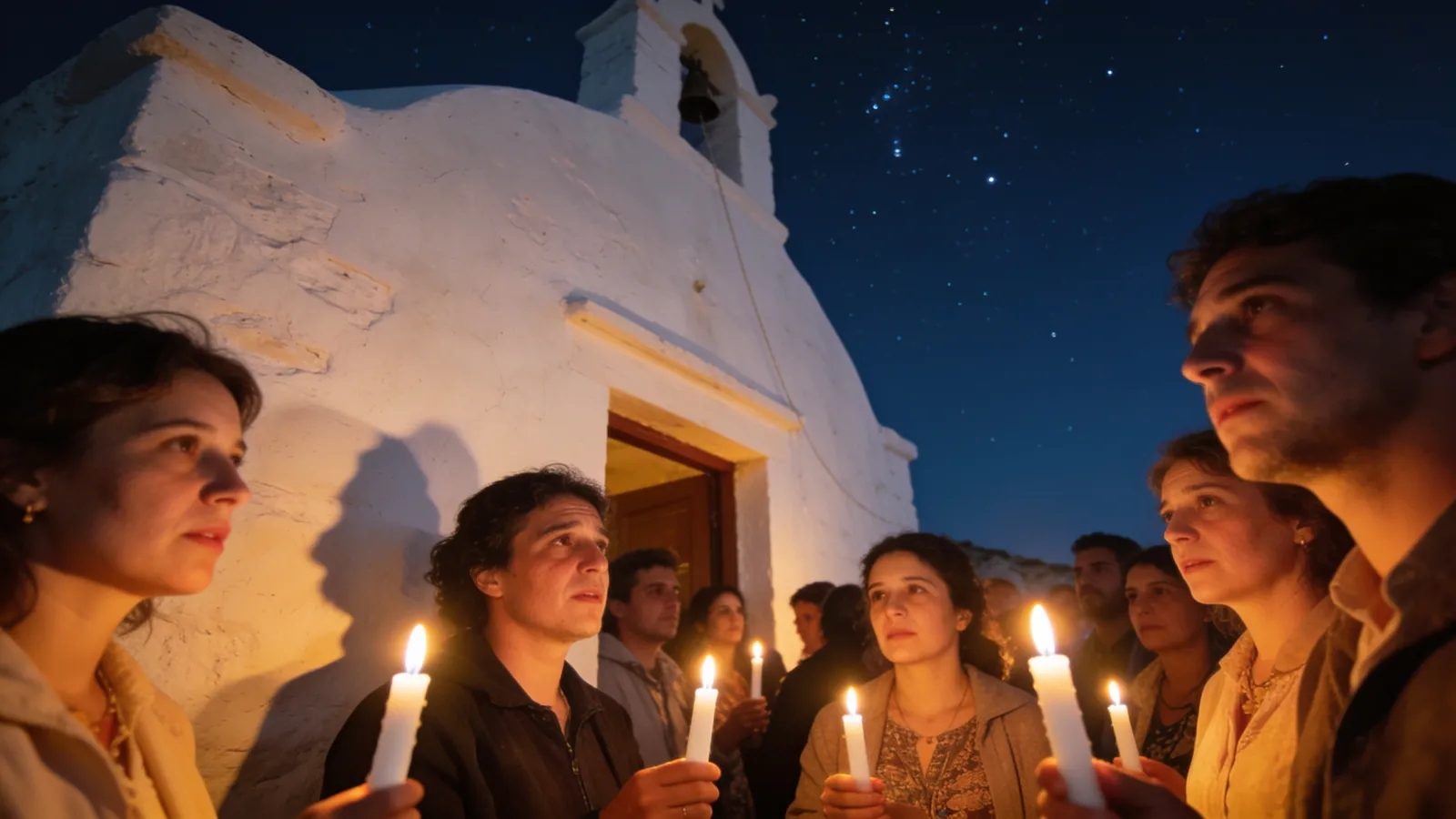
Greek Orthodox Easter — Pascha — is the biggest event on the Greek calendar, outranking Christmas in both religious weight and family-travel volume, and in 2026 it falls on Sunday 12 April. Holy Week runs 6–12 April, with candlelit midnight services on Holy Saturday, fireworks at the stroke of midnight, and the magiritsa soup that breaks the Lenten fast afterward. Sunday lunch is whole lamb on the spit, red eggs cracked in a family tournament, and taverna tables that run from 1pm to sunset. A week later, the Santorini sunset season opens and runs through October.
- Holy Week 2026: 6–12 April, building to Holy Saturday midnight Resurrection service
- Easter Sunday 2026: 12 April — whole-lamb spit-roasts, red eggs and family tavernas nationwide
- Corfu Easter: Greece’s most spectacular Easter — the “pot-throwing” (botides) custom on Holy Saturday morning and the Epitaphios processions
- Santorini sunset season: May through October, with peak caldera colour in June and September
- Athens & Epidaurus Festival 2026: June through August — ancient drama at the 4th-century BC Epidaurus amphitheatre and concerts at the Odeon of Herodes Atticus
- OXI Day: 28 October — national holiday marking Greece’s 1940 refusal of the Italian ultimatum, with parades in Athens and Thessaloniki
Best Time to Visit Greece (Season by Season)
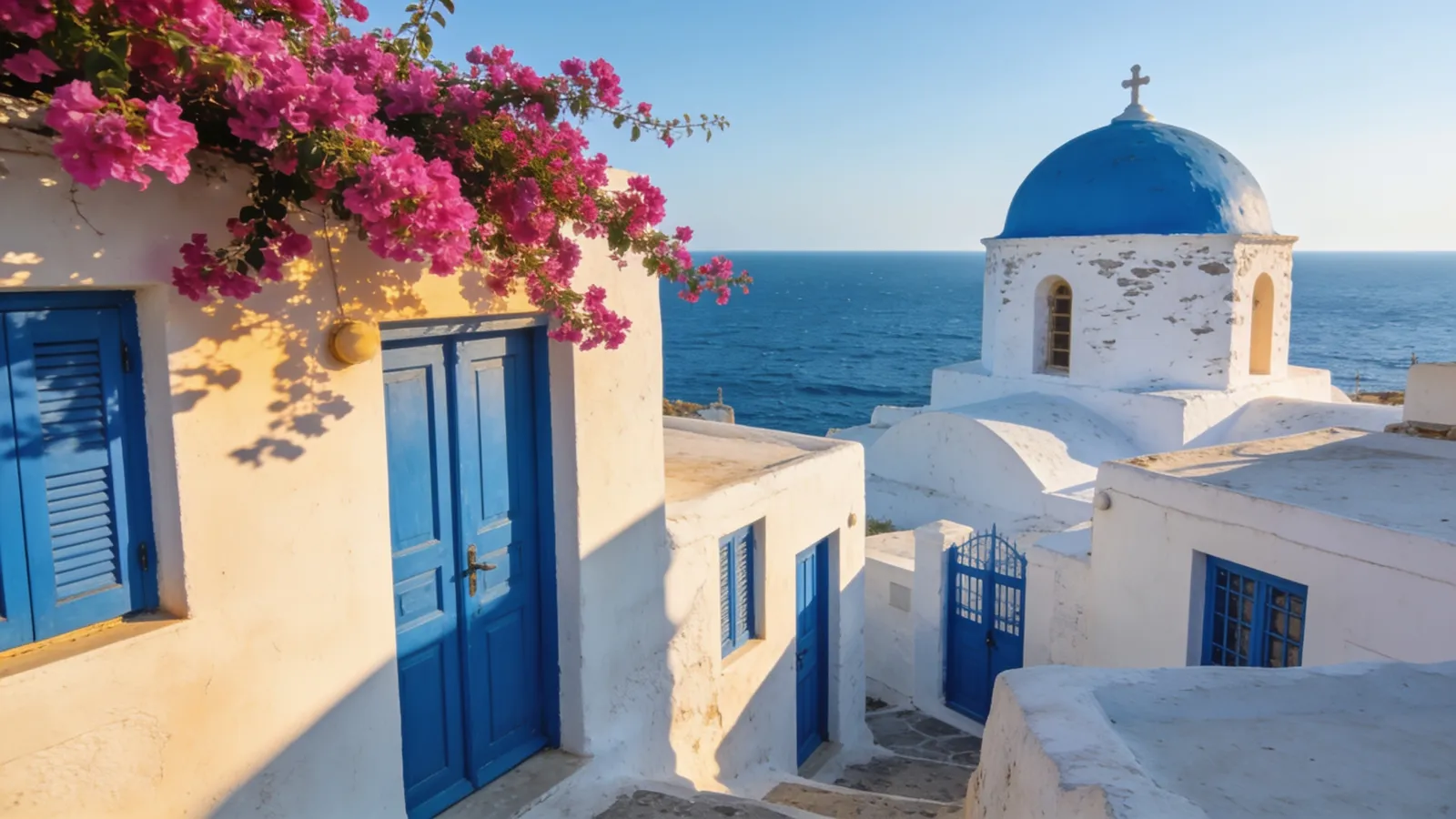
For the month-by-month case — including why May and late September beat August — see our guide to the best time to visit Greece.
Spring (Mar–May)
Greece’s quiet masterpiece. Daytime temperatures climb from around 15°C in March to 24°C by late May, wildflowers blanket the mainland and Crete, and the archaeological sites are deliciously empty for the first time since the previous November. Orthodox Easter (12 April 2026) is the year’s cultural peak — every taverna and village square becomes a stage — and from 1 April Greek island ferry schedules resume their summer frequencies. Swim-ready Aegean water is still two or three weeks away at the start of May, but by the end of the month the Cyclades are open for business. Warnings: mountain-pass snow lingers around Meteora and the Pindus until mid-April, and accommodation on the islands books heavily for Easter week itself.
Summer (Jun–Aug)
The postcard season and the crowded one. Athens regularly runs 35°C in July and August, with occasional heat-dome days above 40°C; the Cyclades stay cooler thanks to the meltemi north wind, which blows reliably from mid-July through the end of August and can also cancel ferries. Santorini, Mykonos and Rhodes hit full capacity, cruise ships dock three or four deep at Mykonos Old Port, and the Athens & Epidaurus Festival runs ancient drama at the Epidaurus and Herodes Atticus amphitheatres. Warnings: Acropolis midday heat closures have been enforced on 40°C+ days since summer 2023; wildfire risk across Attica and the islands peaks in August.
Autumn (Sep–Nov)
Arguably the best overall window. September keeps the Aegean swimmable at 23–25°C, prices drop 25–40% from August, and the meltemi wind eases. October adds olive-harvest country fairs, the Thessaloniki International Film Festival (early November), and the best light of the year for Acropolis photography. By late November the Cyclades ferry fleet has thinned to winter timetables and many smaller-island tavernas close for the off-season. For most first-time travellers, the second half of September is the sweet spot — swim weather, open sights, half-price rooms.
Winter (Dec–Feb)
Greece’s underrated season. Athens and Thessaloniki stay mild (8–15°C) with occasional clear cold snaps, and winter in Greece is surprisingly skiable: Arachova below Mount Parnassos, Kalavryta in the Peloponnese, and Pelion in central Greece run December-through-March ski weekends. Crete and Rhodes keep their main coastal towns open year-round, while most Cycladic islands effectively close their tourism services from November to late March. Downside: smaller island ferries run thin winter schedules, and many family tavernas on Santorini, Mykonos and Paros shutter completely until April.
Shoulder-season tip: late April (post-Easter) to early June, and the first three weeks of September, are Greece’s twin golden windows — open sights, open ferries, open beaches, and prices well below August peak.
Getting There — Flights & Arrival
Greece’s international gateways split neatly between the capital and the islands. Most long-haul visitors land at Athens; summer charter and low-cost flights plug straight into the islands.
- Athens International “Eleftherios Venizelos” (ATH) — the country’s main hub; Metro Line 3 to Syntagma Square in 40 minutes for €9, or an airport taxi to central Athens for a flat €40 daytime / €55 night tariff.
- Thessaloniki “Makedonia” (SKG) — gateway to northern Greece and Halkidiki; the OASTH 01X bus runs to Thessaloniki city centre in about 45 minutes.
- Heraklion “Nikos Kazantzakis” (HER) — Crete’s main airport; bus into Heraklion in 20 minutes.
- Santorini (Thira) International (JTR) — summer-charter hub; 15 minutes by public bus to Fira.
- Rhodes “Diagoras” (RHO), Corfu “Ioannis Kapodistrias” (CFU) and Mykonos (JMK) round out the busiest seasonal island airports.
Flight times: New York–Athens about 9h 30m direct; London–Athens 3h 45m; Dubai–Athens 4h 30m; Rome–Athens 1h 45m.
Flag carriers: Aegean Airlines (Star Alliance) and its domestic subsidiary Olympic Air.
Visa / entry: Greece is in the Schengen Area — citizens of the US, UK, Canada, Australia, Japan, South Korea and 60+ other countries enter visa-free for up to 90 days in any 180-day window. A €7 ETIAS pre-authorisation will be required once ETIAS launches.
Getting Around — Ferries, Flights & a Modest Rail Line
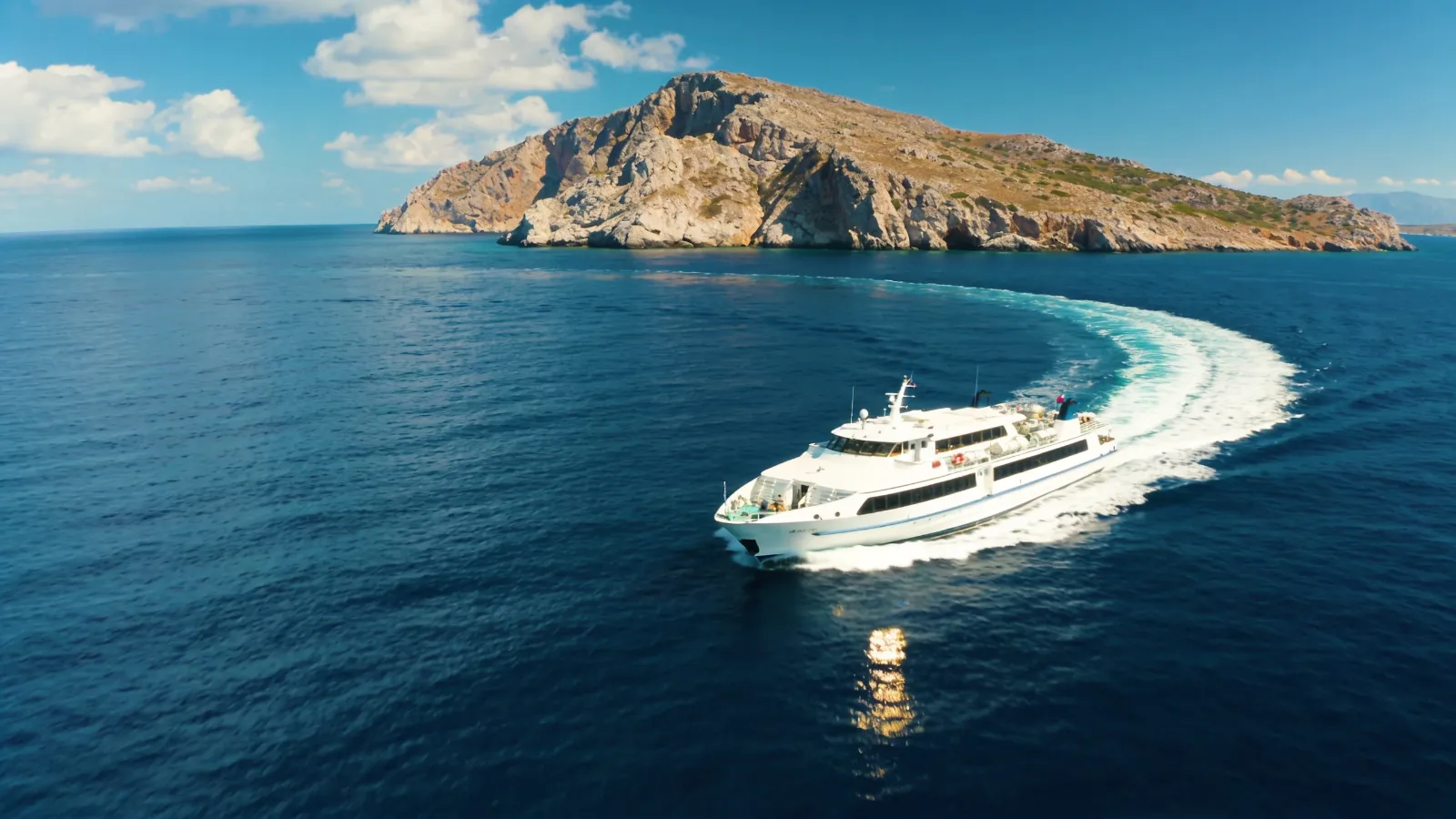
Greece is a ferry country first, a domestic-flight country second, and a rail country only for the Athens–Thessaloniki corridor. Hellenic Train runs the main line up the central spine from Athens to Thessaloniki, while Blue Star, Hellenic Seaways, SeaJets and ANEK Lines connect Piraeus and Rafina ports to every inhabited island from April through October.
- Hellenic Train Athens–Thessaloniki InterCity: roughly 4h 15m on the upgraded express service, with the route operated by Hellenic Train (successor to TRAINOSE).
- Piraeus → Santorini: 5 hours on a SeaJets high-speed catamaran, 8 hours on a conventional Blue Star ferry.
- Piraeus → Mykonos: 2h 45m by high-speed; about 5 hours by conventional ferry.
- Athens → Crete (Heraklion): 9 hours overnight by Blue Star ferry from Piraeus, or 55 minutes by Aegean/Olympic flight.
Ferry tickets: Book on Ferryhopper or Blue Star Ferries; summer car-deck space sells out 4–6 weeks ahead in July and August. Foot-passenger tickets remain available close to the date. Inter-island routes (Paros–Naxos–Santorini, Mykonos–Paros) run daily in season, and the classic Cycladic chain can be strung together without ever returning to Athens.
Domestic flights: Aegean Airlines and Olympic Air operate the dense inter-island network from Athens; summer fares start around €50 one-way and the network reaches every major tourist island, including Santorini, Mykonos, Crete, Rhodes, Corfu and Kefalonia.
Athens public transport: Metro, buses, trolleys and the tram share a unified €1.20 single ticket or a €4.10 day pass; one ticket covers the airport Metro only with a €9 surcharge.
Apps: Ferryhopper, OASA Telematics (Athens public transport), Google Maps.
Top Cities & Islands
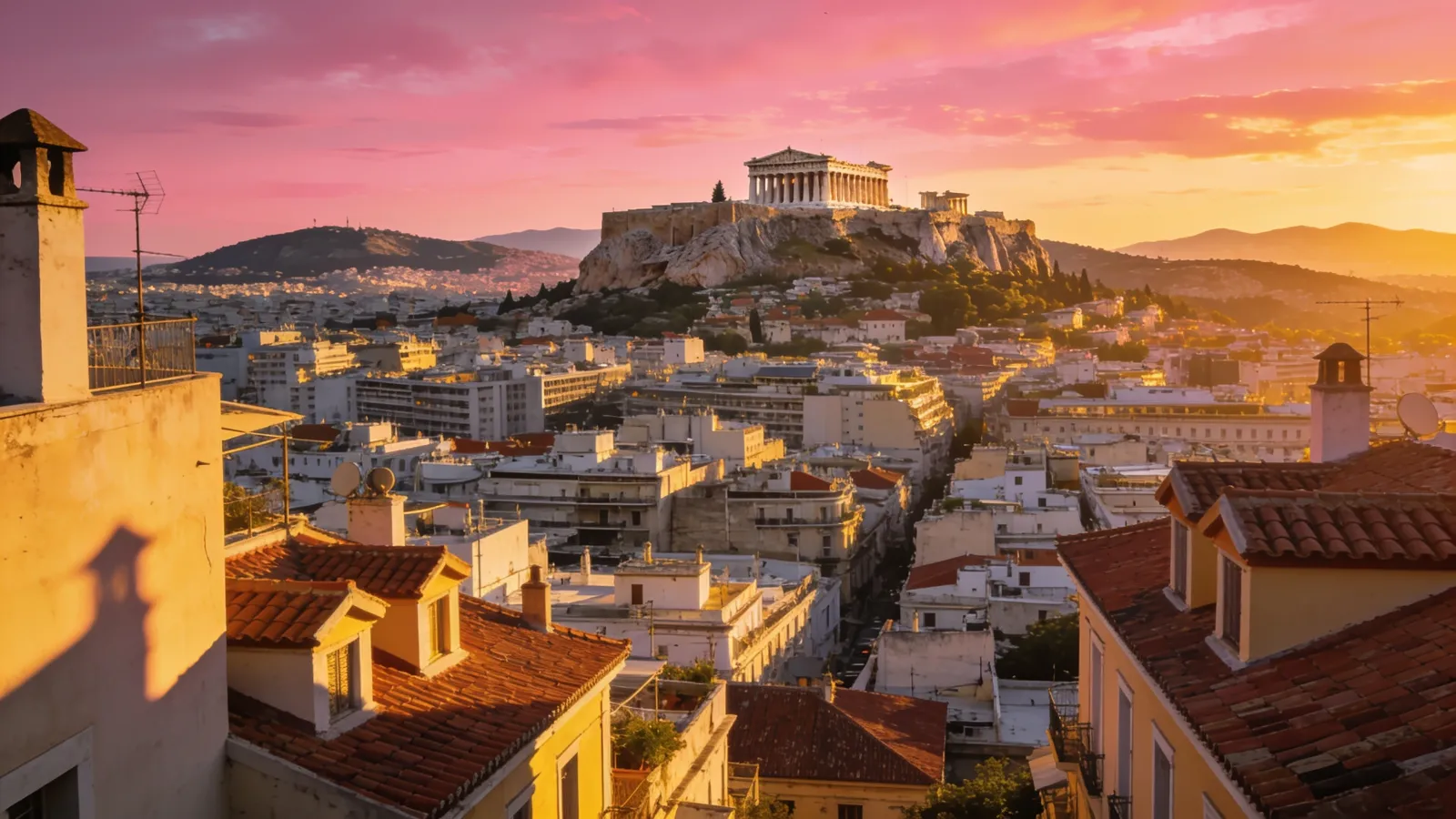
Choosing a base? Our guide to where to stay in Greece covers Athens, Santorini, Mykonos and Crete.
📍 Map of Greece: Every Place in This Guide
🏛️ Athens
The capital, continuously inhabited for more than 3,400 years and the birthplace of democracy, drama and Western philosophy. Athens is a low-rise, neighbourhood-first city built at the feet of a single hill: the Acropolis, crowned by the 5th-century BC Parthenon, visible from almost every rooftop bar in the centre. Eat in Psyrri, coffee in Kolonaki, sunset from Lycabettus.
- Acropolis & Parthenon (built 447–438 BC) plus the Acropolis Museum at its southern foot
- Ancient Agora, Temple of Olympian Zeus and the Panathenaic Stadium (host of the first modern Olympics, 1896)
- Plaka neighbourhood, Monastiraki flea market, and the National Archaeological Museum
Signature eats: moussaka, souvlaki wraps from Kostas or O Thanasis, loukoumades honey-doughnuts, Greek salad with Santorini capers.
🌅 Santorini
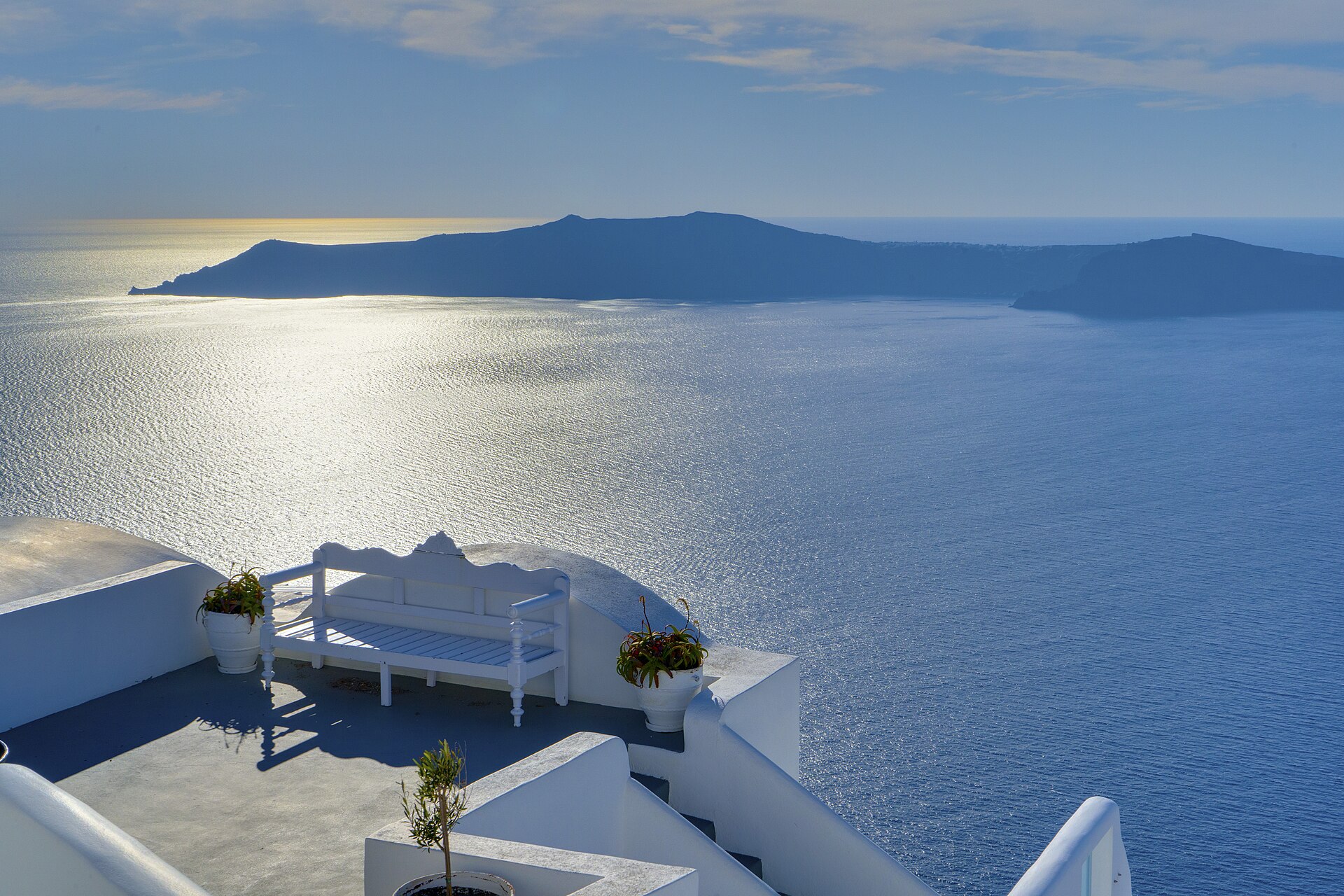
The Cycladic postcard — a flooded volcanic caldera with whitewashed Cycladic villages (Fira, Oia, Imerovigli) stacked on the cliff edge above the sea. Volcanic soils produce the island’s distinctive assyrtiko white wine. Sunsets at Oia are famous enough to justify 6pm crowd-control, and the 10.5-km caldera-edge hike from Fira to Oia is the island’s best free activity.
- Oia sunset and the blue-domed Church of Agios Spyridon viewpoint
- Akrotiri archaeological site — a Minoan Bronze Age town buried by the ~1600 BC eruption and excellently preserved
- Red Beach, Perissa black-sand beach, and assyrtiko tastings at Santo Wines or Venetsanos
Signature eats: tomato fritters (tomatokeftedes), fava purée, fresh grilled octopus, assyrtiko wine.
🌊 Mykonos
The party island of the Cyclades — a compact Chora of narrow whitewashed lanes, five signature hillside windmills, and a beach-club economy that runs full volume from June through September. Little Venice’s cafés hang literally over the sea.
- Mykonos Town (Chora), Little Venice and the iconic Kato Mili windmills
- Paradise, Super Paradise, Psarou and Elia beach clubs
- Delos day trip — the UNESCO-listed sacred island and birthplace of Apollo, 30 minutes by boat
Signature eats: kopanisti spicy cheese, louza cured pork, fresh octopus, gyros from Jimmy’s or Sakis.
🌿 Crete (Heraklion & Chania)
Greece’s largest island (8,336 km², population ~630,000) and a destination in its own right. Heraklion delivers Minoan civilisation — the 4,000-year-old palace of Knossos, excavated and partly reconstructed by Arthur Evans after 1900 — while Chania in the west keeps a Venetian-harbour old town that predates the rest of the modern island by centuries.
- Knossos palace and the Heraklion Archaeological Museum’s Minoan collection
- Chania Venetian Harbour, the 16th-century lighthouse and the covered market
- Samaria Gorge — 16 km hiking trail descending through Europe’s second-longest canyon (open May–October)
Signature eats: dakos rusk salad, lamb with stamnagathi greens, graviera cheese, raki, and sheep’s-milk yoghurt with thyme honey.
🍷 Thessaloniki
The co-capital in the north — a 2,300-year-old Macedonian port city with a layered Roman, Byzantine, Ottoman and Sephardic-Jewish past. Greece’s food capital according to most Greeks, with a café culture that rivals Athens and a waterfront promenade (Nea Paralia) built for slow evening walks.
- White Tower on the waterfront, Rotunda of Galerius (AD 306), Arch of Galerius
- Ano Poli (Upper Town) Byzantine walls and the Church of Agios Dimitrios
- Modiano and Kapani covered markets, and the November Thessaloniki International Film Festival
🏰 Rhodes
The largest Dodecanese island — home to a medieval walled Old Town built by the Knights of St John (1309–1522) and UNESCO-listed since 1988. South of the Old Town, Lindos rises on an ancient acropolis above a double bay; east-coast beaches run the length of the island.
- Rhodes Old Town — the Palace of the Grand Master, the Street of the Knights and the medieval moat walk
- Acropolis of Lindos with its Doric Temple of Athena Lindia
- Valley of the Butterflies and the ancient Greek city of Kamiros on the west coast
Greek Culture & Etiquette — What to Know Before You Go
Greek culture rewards warmth, patience and a willingness to let the day run on its own timetable. The rhythms are older than the modern state: a long midday pause, a late-starting dinner, a strong Orthodox calendar of name-days and fasts, and an unwritten rule of hospitality. Regional pride is real, but the baseline manners are national.
The Essentials
- Greet with a firm handshake, first eye contact, then “Γεια σας” (yia sas, formal hello) or “Καλημέρα” (good morning). Close friends exchange two cheek kisses on meeting.
- Siga-siga — “slowly, slowly” — is a genuine social rule, not a stereotype. Don’t rush waiters, ferry staff, bank tellers or taxi drivers. A coffee is a two-hour event; a taverna dinner is a 2.5-hour minimum.
- Cover shoulders and knees when entering Orthodox churches and monasteries. Meteora’s monasteries supply wrap-skirts at the door; Mount Athos is closed to women entirely and requires a written permit for men.
- Cash is still common on smaller islands, at farmers’ markets, for foot-passenger ferries and in remote tavernas. Cities and serious restaurants are card-everywhere. Keep €50–150 in small notes once you leave Athens.
- Tipping is appreciated but not obligatory — round up the bill or leave 5–10% at restaurants; leave the coin change at cafés; round up taxi fares.
Taverna & Dinner Etiquette
- Dinner starts late — locals eat at 9pm or later in summer, and tavernas don’t fill until 10pm. Booking before 8pm marks you as a tourist.
- Order meze-style to share: a cold round (tzatziki, taramosalata, fava, olives), a hot round (saganaki, grilled octopus, fried courgettes), then the main (whole fish, lamb, moussaka). Plates arrive when they’re ready, not together.
- Bread and service water come automatically; a small couvert charge (€1–2 per person) is standard and printed on the bill.
- Ouzo and raki are often on the house at the end of the meal, along with a dessert plate of fruit, yoghurt-honey or halva — accept them as part of the ritual.
A Food Lover’s Guide to Greece
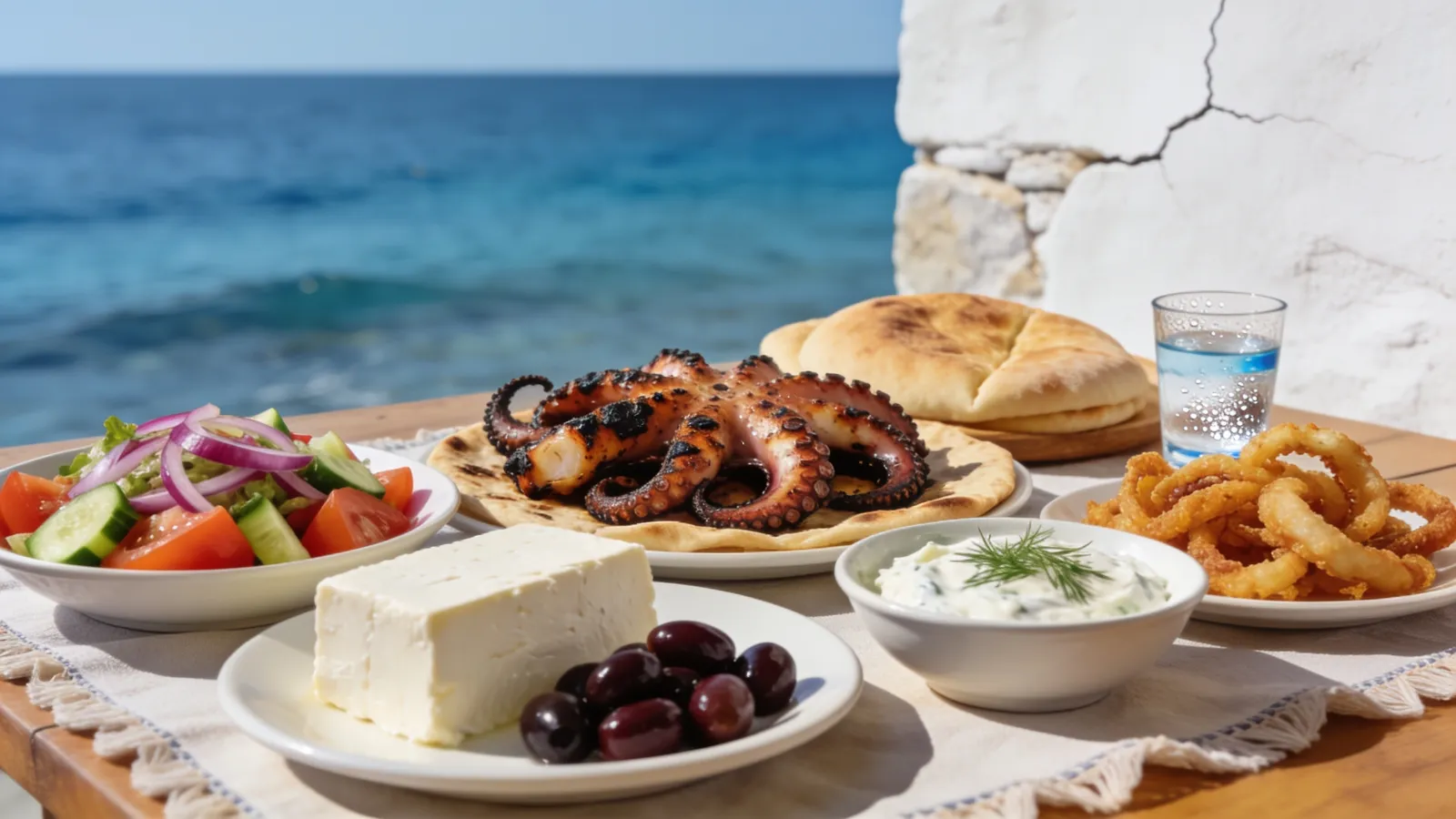
Greek cooking is the Mediterranean diet in its original form — olive oil, wild greens, legumes, seafood from the Aegean and Ionian, sheep’s and goat’s milk cheeses, tomatoes, lemons and more herbs than any single kitchen can reasonably hold. UNESCO inscribed the Mediterranean diet on its Representative List of the Intangible Cultural Heritage of Humanity in 2010, with Greece as one of the emblematic communities. Regional cuisines vary: Crete leans wild-greens and sheep’s milk; the Aegean islands lean seafood, capers and pulses; mainland Epirus and Macedonia lean heartier pies, stews and cheeses. Bread, olive oil and a long lunch are universal.
Must-Try Dishes
| Dish | Description |
|---|---|
| Moussaka | Greece’s most famous casserole — layered aubergine, minced lamb or beef in a spiced tomato sauce, and a thick béchamel topping baked to a golden crust. Best eaten at a proper taverna with a side of Greek salad; it’s always better the day after cooking. |
| Souvlaki & Gyros | Souvlaki is small skewers of grilled pork, chicken or lamb; gyros is meat shaved from a vertical rotisserie. Both are wrapped in warm pita with tzatziki, tomato, onion and chips — street food at €3.50–5 a wrap in Athens. |
| Greek Salad (Horiatiki) | The “village salad” — tomato wedges, cucumber, red onion, green pepper, Kalamata olives and a thick slab of feta on top, dressed only with olive oil, oregano and sea salt. No lettuce. Ever. |
| Tzatziki | Strained yoghurt whipped with grated cucumber, garlic, dill or mint and olive oil. Served cold as a meze with warm pita, or as a sauce for gyros and grilled meat. The quality of the yoghurt makes or breaks it. |
| Spanakopita | Layered filo pie stuffed with spinach, feta, leeks and dill — a sturdy, everyday pie from the mainland regions of Epirus, Thessaly and Macedonia. The Epirote pita tradition extends to dozens of regional variations. |
| Grilled Octopus & Fresh Fish | Sun-dried octopus grilled over charcoal, served with olive oil, lemon and a shot of ouzo — the classic Aegean meze. Whole fish (sea bream, red mullet, sea bass) is priced by the kilo from the chalkboard. |
| Loukoumades | Small deep-fried dough balls soaked in thyme honey and dusted with cinnamon or walnuts — Greece’s most ancient dessert, offered to Olympic victors in the 8th century BC. |
Taverna & Bakery Culture
Greece doesn’t have konbini, but every neighbourhood has a fournos bakery open from 6am and a zacharoplasteio pastry shop open until late evening. Bakeries sell tyropita (cheese pie), spanakopita, bougatsa (custard or cheese pie in Thessaloniki), and koulouri Thessalonikis (the sesame bread ring sold from every city-centre street cart at €0.50–1 each). The zacharoplasteio handles everything sweet — from galaktoboureko custard pie to syrup-soaked baklava.
- Chains: Everest (takeaway pita-based meals), Grigoris (quick-service bakery), Veneti (traditional fournos bakeries with nationwide footprint).
- Signature items: tyropita and spanakopita (€2–3), bougatsa (€2 in Thessaloniki), koulouri sesame ring (€0.50), pita gyros (€3.50–5), galaktoboureko and baklava (€2–4 a slice), Greek yoghurt with honey and walnuts (€3–4).
Greece now has a growing Michelin-starred scene — restaurants like Spondi (Athens, two stars), Funky Gourmet (Athens), Selene (Santorini) and Botrini’s (Athens) pair Greek ingredients with modern technique at prices well below their Paris or Copenhagen counterparts.
Off the Beaten Path — Greece Beyond the Guidebook
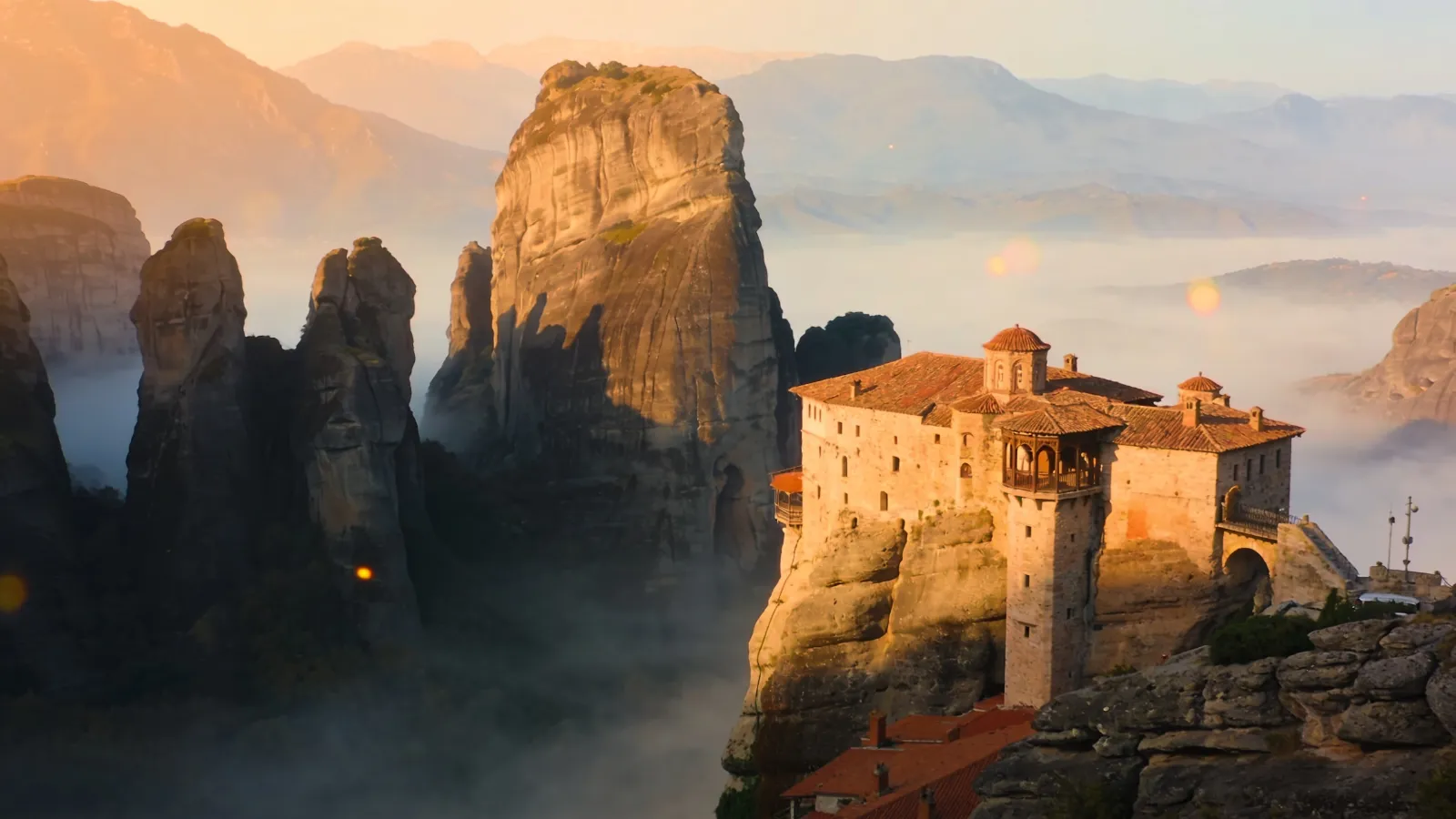
Meteora
A UNESCO-listed landscape of six active Orthodox monasteries perched on top of 400-metre sandstone pillars in central Greece, accessible by a combination of modern road, stone-cut staircases and — historically — rope ladders and baskets winched up by the monks. The monasteries were founded between the 14th and 16th centuries as refuges from the Ottoman advance. Trains from Athens to Kalambaka take about 4 hours; a full day covers three monasteries comfortably.
Nafplio & the Argolid
Greece’s first modern capital (1829–1834), a compact Venetian-Ottoman port town at the head of the Argolic Gulf in the Peloponnese — cobbled lanes, two Venetian fortresses (Palamidi and Bourtzi), and easy day-trip access to the 4th-century BC Epidaurus theatre and the Bronze Age citadel of Mycenae, both UNESCO-listed. Two hours’ drive from Athens and the classic long weekend from the capital.
Naxos & Paros
The Cyclades’ liveable alternatives to Santorini and Mykonos — bigger, greener, cheaper, with open interiors, traditional mountain villages (Apeiranthos, Halki, Lefkes), working marble quarries, and Greece’s best beach-with-village combinations. Naxos is the Cyclades’ largest island (428 km²); the 2,500-year-old marble Portara (Temple of Apollo) still stands at the harbour entrance. Paros is famous for its ancient white marble — the same stone used for the Venus de Milo and the Parthenon friezes.
Zagori & the Vikos Gorge
A network of 46 traditional stone villages in the north-western Pindus mountains of Epirus, built of local grey schist and linked by Ottoman-era humpback bridges over the Voidomatis river. UNESCO-listed in 2023 as a cultural landscape. The Vikos Gorge — deepest in the world relative to its width, 12 km long and 900 m deep — runs beneath the villages and is walkable on a full-day descending trail. Papingo, Aristi, Monodendri and Vitsa are the photogenic base villages.
Patmos
A small Dodecanese island where John of Patmos is said to have received the visions that became the Book of Revelation, around AD 95. The Cave of the Apocalypse and the 11th-century Monastery of Saint John the Theologian are UNESCO-listed as a combined site. Holy Week on Patmos is among the most atmospheric religious experiences in Greece — liturgies in the monastery at midnight, torchlit processions through the whitewashed Chora, and a population that triples for the week.
Practical Information
| Currency | Euro (€ / EUR), adopted 2002; 1 USD ≈ 0.94 EUR (April 19, 2026) |
| Cash needs | Cards work in cities, larger islands and most tavernas, but smaller islands, farmers’ markets, village bakeries, foot-passenger ferries, and kiosks (periptera) still run cash-first. Keep €50–150 in small notes outside Athens. |
| ATMs | ATMs are ubiquitous at Alpha Bank, Eurobank, Piraeus Bank and National Bank branches; decline dynamic currency conversion and choose to be charged in euros for the interbank rate. Independent “Euronet” ATMs add high fees — avoid. |
| Tipping | Not automatic — round up the bill or leave 5–10% at restaurants. Leave the coin change at cafés. Round up taxi fares. |
| Language | Greek (Ελληνικά), written in the Greek alphabet. English is widely spoken under 40 and in every tourist-facing business. Learn “Γεια σας” (yia sas, hello), “Ευχαριστώ” (efcharistó, thank you), “Παρακαλώ” (parakaló, please), “Τον λογαριασμό” (ton logariasmó, the bill). |
| Safety | One of Europe’s safer countries — violent crime against tourists is rare. Main risks: pickpocketing on the Athens Metro (especially Line 1 and around Monastiraki), crowded Santorini & Mykonos bus stations in summer, and summer wildfire smoke in Attica. |
| Connectivity | 4G/5G blanket coverage from Cosmote, Vodafone and Nova reaches almost every inhabited island. eSIMs (Airalo, Holafly) work from the moment you land. |
| Power | Type F (Schuko) plugs; 230V / 50Hz. |
| Tap water | Safe and good in Athens, Thessaloniki and most of the mainland. On many islands (including Santorini and Mykonos), tap water is brackish and locals drink bottled — stick to bottled. |
| Healthcare | EU-standard public hospitals; EHIC cards work for EU visitors, others need travel insurance. Pharmacies (farmakeio, green cross) rotate a 24/7 duty roster; every major island has at least one hospital. |
Budget Breakdown — What Greece Actually Costs
💚 Budget Traveller
Hostels (Athens Backpackers in Plaka, Youth Hostel Anna in Santorini, Cocomat Eco Stay on Mykonos off-season), domatia family-home rooms on the smaller islands, bakery breakfasts, takeaway souvlaki dinners and deck-class ferry tickets. Doable at €60–90 per day (~US$65–100) in shoulder season; closer to €90–110 in August. Athens and Thessaloniki are the cheapest regions; Mykonos and Santorini are the most expensive anywhere in the country.
💙 Mid-Range
3-star boutique hotels or island apartments, one taverna dinner and one café or bakery meal per day, a mix of ferries and short domestic flights, and a couple of paid sights (Acropolis combined ticket €30, Knossos €15, Delphi €12). Plan €150–240 per day (~US$160–260). Santorini caldera-view hotels in July and August push far above that range; everywhere else in Greece settles comfortably at €170.
💜 Luxury
Caldera-edge cave hotels in Oia (Andronis, Mystique, Katikies), Blue Palace Crete, Amanzoe in the Peloponnese, Hotel Grande Bretagne in Athens, private transfers, Michelin-starred tasting menus, and a 3–5-day crewed sailing charter through the Cyclades. Plan €500+ per day (~US$540+). A private caldera-view dinner on Santorini runs €150 per person; a three-day crewed catamaran from Athens drops to €2,400+ per person in peak summer and falls 30–40% by October.
| Tier | Daily (USD) | Accommodation | Food | Transport |
|---|---|---|---|---|
| Budget | $65–100 | Hostel €20–35 / domatia €45–70 | €18–28/day | Deck-class ferry €25–45 + city day pass €4.10 |
| Mid-Range | $160–260 | 3-star hotel / apartment €100–180 | €40–70/day taverna meals | High-speed ferry €55–75 + domestic flight from €50 |
| Luxury | $540+ | 5-star hotel / cave suite €350–900+ | €130–260/day | Private transfer + sailing charter from €500/day |
Planning Your First Trip to Greece
- Pick a mainland anchor and one or two islands. Athens + two Cyclades (Santorini + Naxos or Paros) is the classic 10-day trip; Athens + Crete is the easiest single-island extension; Athens + Meteora + the Peloponnese is the non-island alternative.
- Fly open-jaw. Land at Athens (ATH), finish on an island, and fly out of Santorini (JTR), Heraklion (HER) or Rhodes (RHO) — never backtrack an island ferry for the homebound flight.
- Book Santorini and Mykonos 4–6 months ahead for July and August. Caldera-view rooms in Oia sell out first, and the Athens & Epidaurus Festival window fills island-to-mainland ferries on weekends.
- Buy ferry tickets on Ferryhopper. Car-deck space sells out 4–6 weeks ahead in peak season; foot-passenger tickets remain available closer to the date. Save PDF tickets offline — the barcode is scanned at boarding.
- Respect the ferry-season window. High-frequency schedules run roughly 1 April through 31 October — outside that window, many smaller-island routes drop to twice-weekly.
Classic 10-Day Itinerary: Days 1–3 Athens (Acropolis, Plaka, National Archaeological Museum) · Day 4 Delphi or Nafplio day trip · Day 5 ferry to Naxos · Days 6–7 Naxos & Paros · Days 8–9 Santorini (Oia sunset, Akrotiri, caldera hike) · Day 10 fly home from JTR.
Frequently Asked Questions
Is Greece expensive to visit?
Mainland Greece and the larger islands are among the most affordable Mediterranean destinations — budget travellers get by on €60–90/day, mid-range travellers plan €150–240/day. Santorini caldera-view rooms and Mykonos beach clubs in July–August are the two genuinely expensive exceptions and can be three to four times the national average. Athens, Thessaloniki, Crete and the Peloponnese all stay noticeably cheaper than comparable Italian or French destinations.
Do I need to speak Greek?
No. English is widely spoken among under-40s and in every tourist-facing business. Greek is written in its own alphabet, which takes a day or two to sight-read — knowing Ρ = R, Π = P, Θ = TH helps with signs and menus. A few words go a long way: “Γεια σας” (yia sas, hello), “Ευχαριστώ” (efcharistó, thank you), “Παρακαλώ” (parakaló, please), “Τον λογαριασμό παρακαλώ” (the bill please).
Is island-hopping by ferry worth it?
Yes — it’s the defining Greek travel experience and usually cheaper than flying. High-speed catamarans run Piraeus to Santorini in 5 hours, Piraeus to Mykonos in 2h 45m, and daily inter-island hops from April through October. For two or more islands, a ferry itinerary beats back-to-Athens flying both on cost and on scenery. Book on Ferryhopper; car-deck space sells out 4–6 weeks ahead in August.
Is Greece safe for solo travellers?
Yes. Violent crime against visitors is rare, solo women report feeling comfortable on late-night Athens transit and island ferry decks, and the biggest practical risk is pickpocketing on the Athens Metro and in crowded Monastiraki. Smaller islands are among the safest environments in Europe — you can leave a bag on a taverna chair to swim and find it where you left it.
When is the best time to visit the Greek islands?
Late April through June and the first three weeks of September are the twin golden windows — Aegean swimmable at 22–25°C, ferries running full summer schedules, accommodation 25–40% below peak, and the archaeological sites cool and uncrowded. July and August deliver the postcard summer but with 35°C+ heat and full-capacity islands.
Can I get by as a vegetarian or vegan?
Exceptionally well. Greek Orthodox fasting has produced a full national vegan tradition — nistisima Lenten cooking includes dozens of pulse and vegetable dishes available year-round. Fava purée, gigantes plaki, dolmades, briam vegetable bake, horta wild greens, and Greek salad without feta are reliable fallbacks on any taverna menu.
Do I need to dress up for Orthodox churches?
Yes — covered shoulders and knees for both men and women. Meteora’s monasteries lend wrap-skirts at the door; smaller village churches expect you to come prepared. Mount Athos is closed to women entirely; men need a written permit (diamonitirion) from the Pilgrims’ Bureau.
Ready to Explore Greece?
Greece rewards travellers who pick an Athens anchor, one or two islands, fly open-jaw, book Santorini and Mykonos months ahead, and let siga-siga do the rest. Start in Athens for the Acropolis and the archaeological foundation, then ferry out to the Cyclades or fly to Crete for the long, layered island version of the country.
Explore More
Cities we cover in Greece
More country guides you might like

Plan your trip to Greece
The booking tools we use ourselves. FFU may earn a commission at no extra cost to you.
Plan & book your trip to Greece
Booking through these searches supports our guides at no extra cost to you.