
City Guide · China · Shaanxi · Guanzhong Plain
Xi’an, China: The Terracotta Army, the Ming Walls, and the Eastern End of the Silk Road
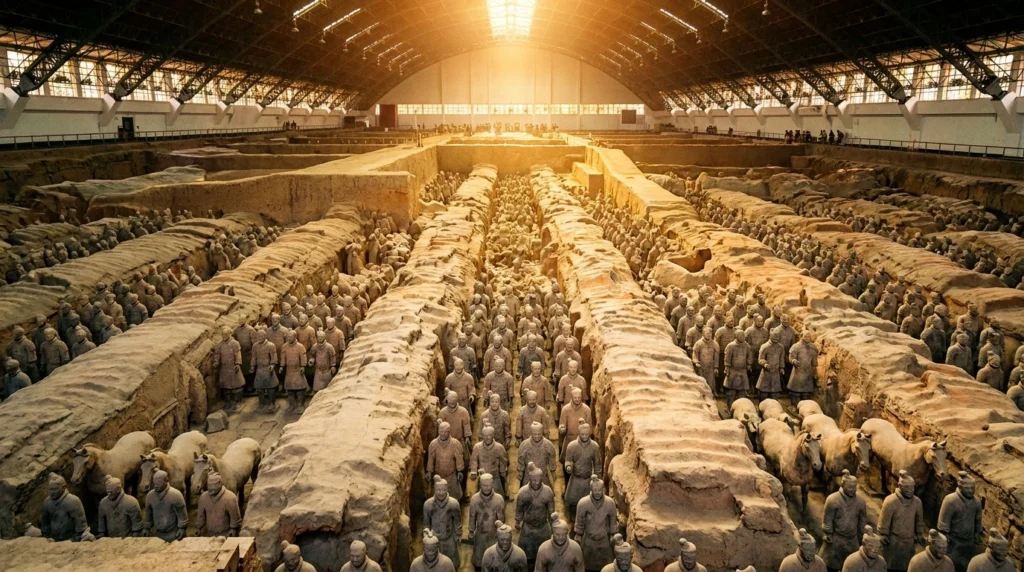
I always tell first-timers to give Xi’an two whole days before they so much as glance at a train timetable, because this is the city where Chinese history is most physically intact, and you cannot hurry it. This was Chang’an, the capital of thirteen dynasties and the eastern terminus of the Silk Road, the largest city on earth a thousand years ago. The headline act is the Terracotta Army — the thousands of life-size clay soldiers buried to guard China’s first emperor and rediscovered by well-diggers in 1974 — but what makes Xi’an singular is that the old city is still wrapped in its complete fourteenth-century Ming wall, a fourteen-kilometre rampart you can cycle in an afternoon. We treat Xi’an as the essential history stop on any China trip: walkable, lantern-lit, and built around a Muslim Quarter whose noodle stalls and roujiamo griddles run late into the night. Treat this guide as the briefing I hand my own friends before they board the bullet train from Beijing or Shanghai.
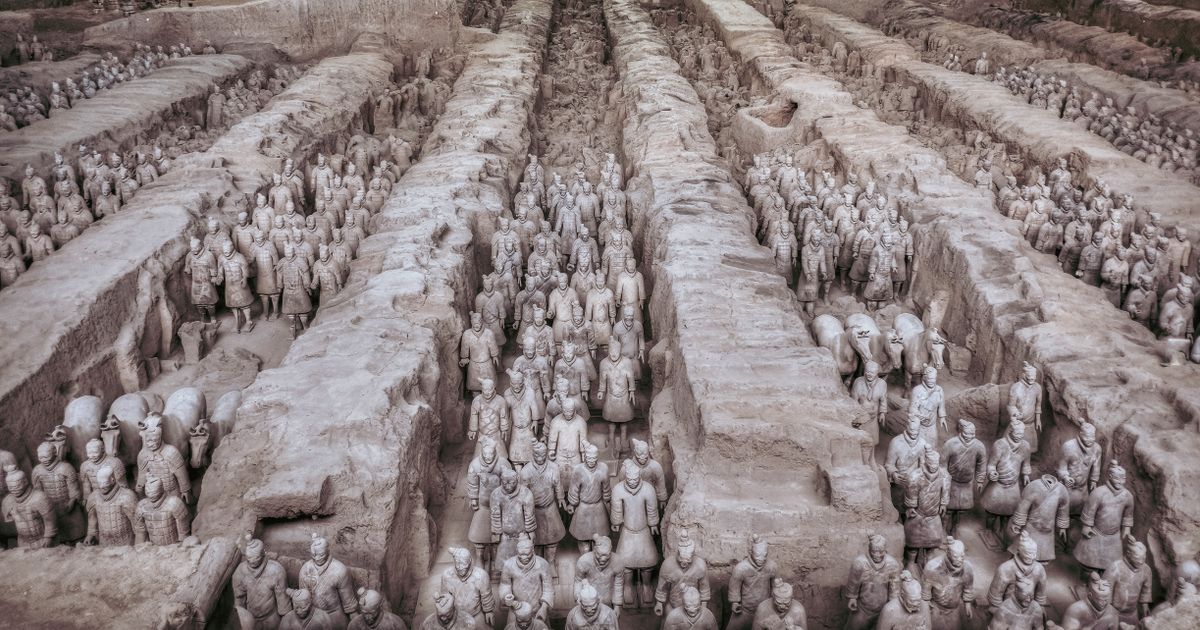
Table of Contents
Why Xi’an?
Xi’an is the capital of Shaanxi province and the great historic city of inland China, a municipality of about 13 million people on the fertile Guanzhong Plain where the Wei River valley opens between the mountains. For more than a thousand years, under the name Chang’an, it was the political and cultural heart of the Chinese world — the capital of thirteen dynasties, the eastern terminus of the Silk Road, and at its Tang-dynasty peak the largest and most cosmopolitan city on earth. No other Chinese city wears its past so visibly.
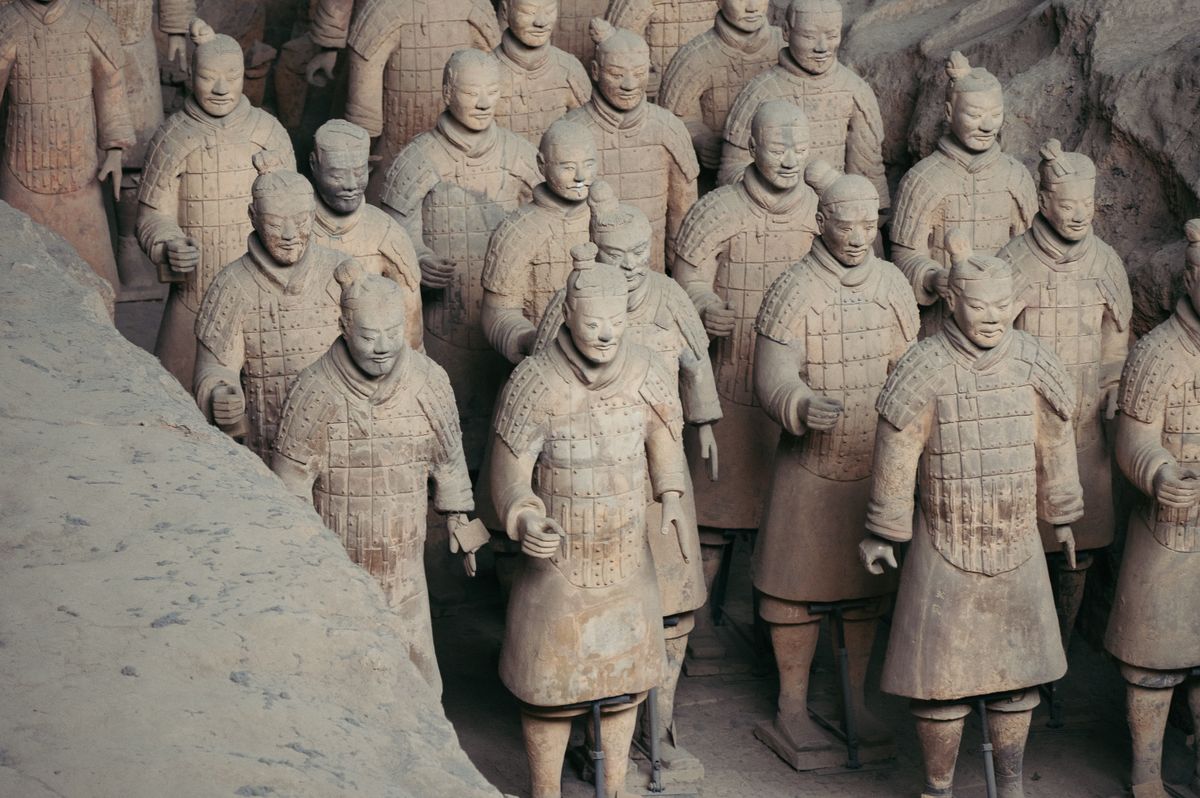
The scale claims here are about time, not towers. This was the capital of thirteen successive dynasties over some 1,100 years, from the Western Zhou through the Qin, Han, Sui, and Tang. The first emperor of unified China, Qin Shi Huang, was buried just east of the city around 210 BC with an estimated army of more than 8,000 life-size terracotta soldiers, horses, and chariots — a UNESCO World Heritage Site and one of the greatest archaeological finds of the twentieth century, uncovered by farmers digging a well in 1974. And the old city is still encircled by a complete Ming-dynasty wall, roughly 13.7 kilometres around, 12 metres high, and wide enough to cycle — among the best-preserved ancient city walls anywhere in the world.
The contradiction that makes Xi’an worth several days rather than a single day-trip from the coast is that this deeply ancient city is also a thriving modern metropolis. Inside the walls, the Bell and Drum Towers anchor a Tang-era street grid, and the Muslim Quarter behind the Drum Tower has been home to the Hui community for over a thousand years, a living legacy of the Silk Road trade. Outside them, Xi’an is a high-tech manufacturing hub of ring roads, a sprawling metro, and university districts. The bullet train has put it within a few hours of both Beijing and Shanghai, so the city that once sat at the western end of the known world is now an easy stop in the middle of any China itinerary.
Xi’an rewards the traveller who reads it as layers of empire. There is the Qin layer of the Terracotta Army and the first emperor’s tomb mound; the Tang layer of the great pagodas, built to house scriptures carried back from India; the Ming layer of the wall, the Bell Tower, and the Drum Tower; and the living Silk Road layer of the Muslim Quarter and the Great Mosque, one of the oldest and largest in China. A trip that touches all four in two unhurried days is the most Xi’an thing you can do.
This guide covers the districts that define the walled city and its suburbs, the famously robust Shaanxi food behind biang-biang noodles and roujiamo, the sights from the Terracotta Army to the pagodas and the mosque, the day trips to Mount Hua and the Han tombs, and the transit, budget, climate, visa, and practical details that first-time visitors need to plan a trip in any season.
Neighborhoods: Finding Your Xi’an
📍 Xi’an Map: Every Place in This Guide
Xi’an reads as a city of rings. At its heart is the walled old city, a near-perfect rectangle of Ming ramparts enclosing the Tang-era grid, the Bell and Drum Towers, and the Muslim Quarter; around it spread the modern districts, the university belt, and the high-tech zones; and beyond them, on the plain to the east, lie the imperial tombs and the Terracotta Army. The metro and a transit card, plus a willingness to walk the lanes and cycle the wall, will get you through all of the districts below.
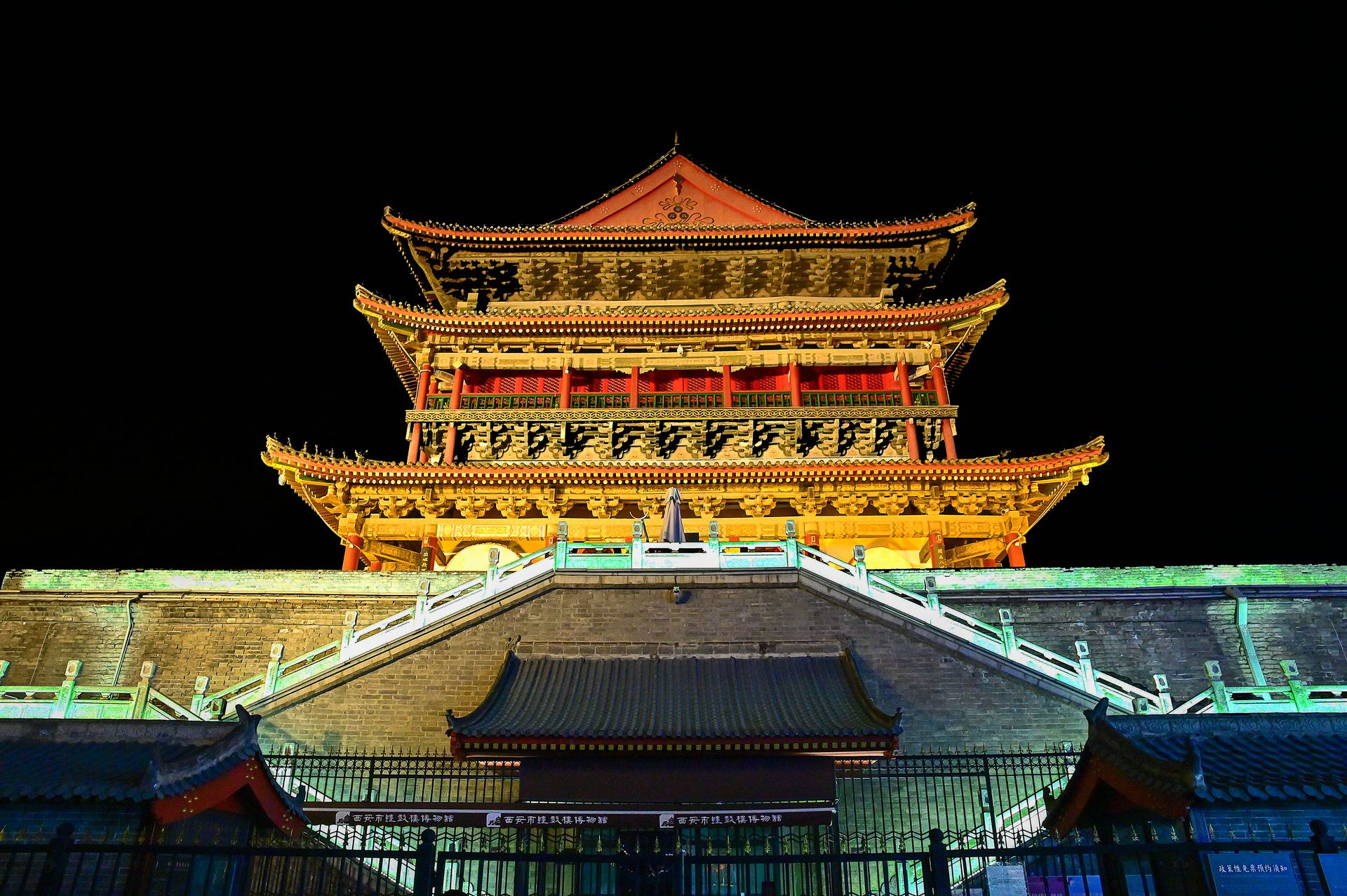
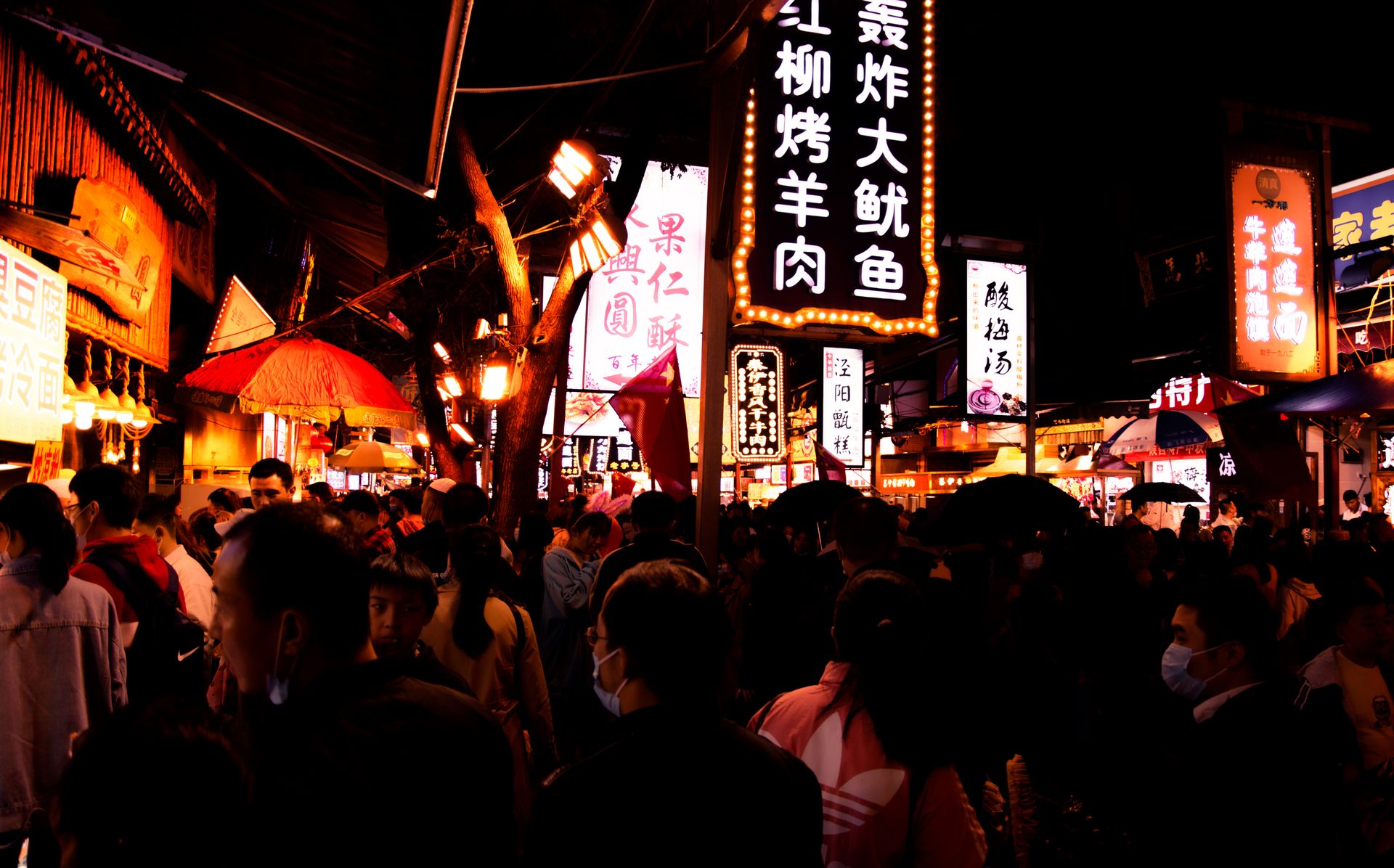
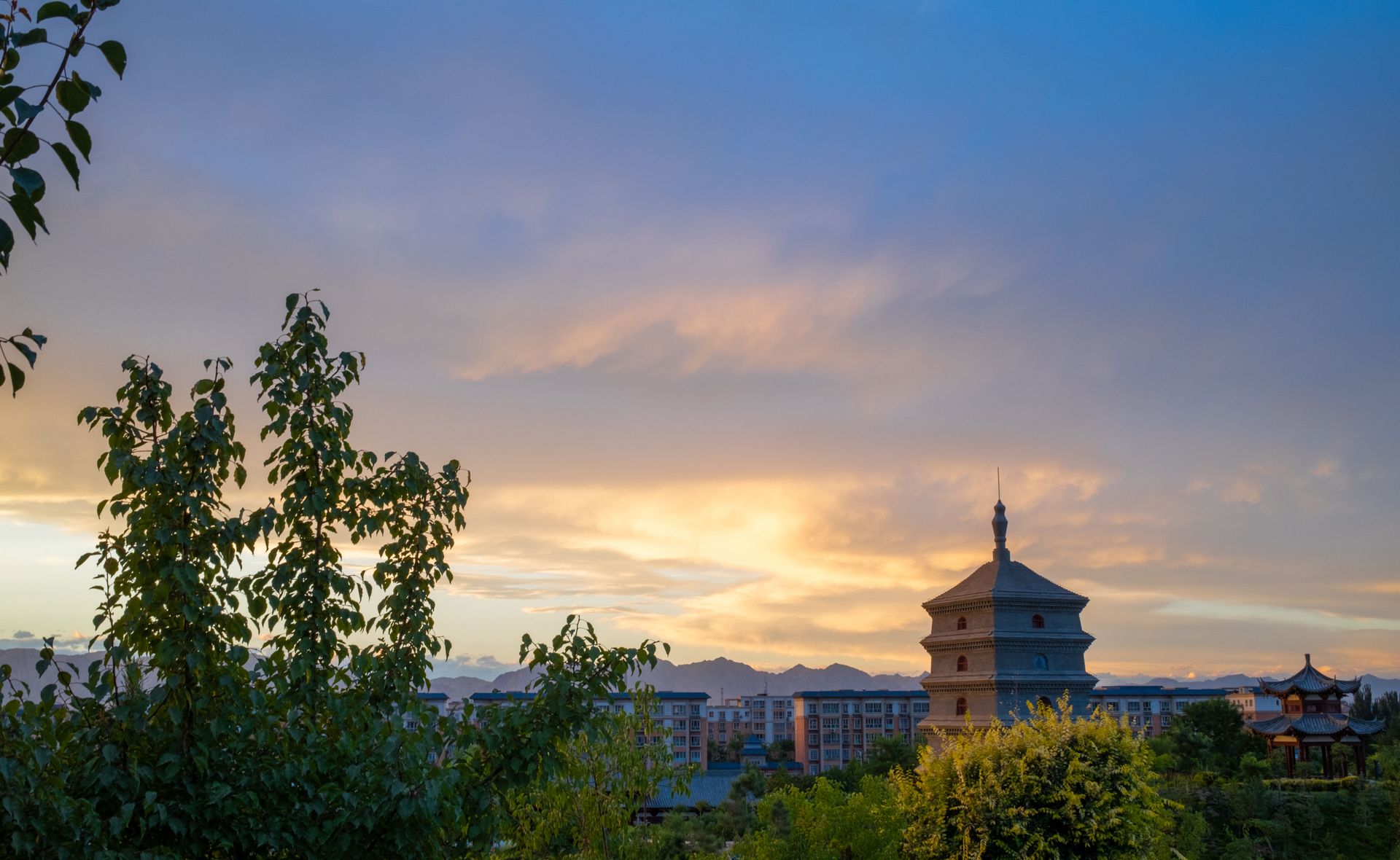
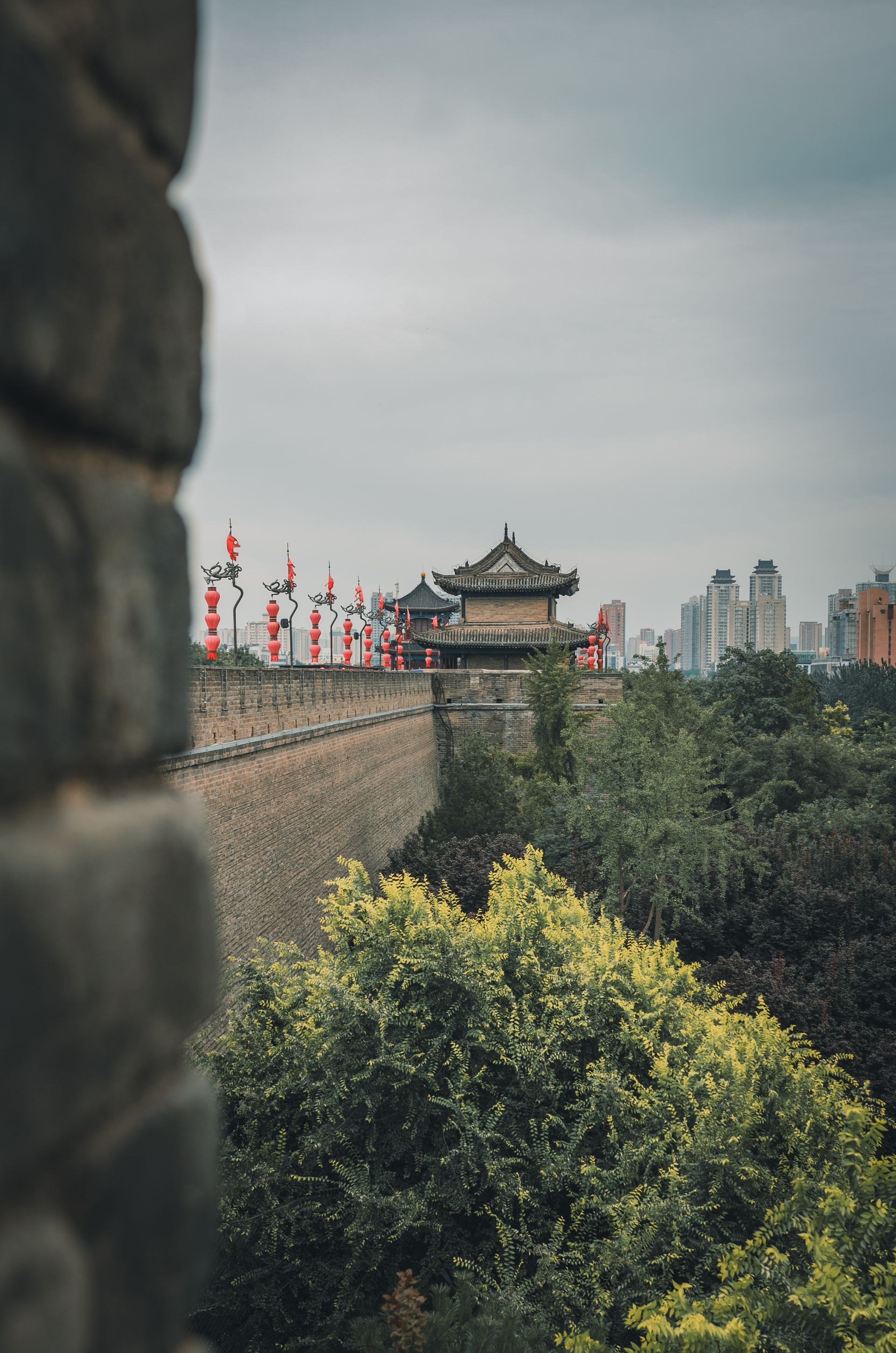
Read the neighbourhoods below as a sweep from the centre outward: the towers at the heart of the grid, the Muslim Quarter behind them, the wall that rings them all, the pagoda districts to the south, and the tomb plain to the east. Most visitors base themselves inside or just beside the wall — near the Bell Tower, the South Gate, or the Muslim Quarter — for walkability and atmosphere, and ride the metro or a tour bus out to the Terracotta Army. Whichever base you choose, plan your days by geography and let the wall and the grid orient you.
The Bell Tower & the City Centre
The exact heart of Xi’an, where the two main axes of the old grid cross beneath the floodlit Bell Tower, a Ming-dynasty drum-and-bell pavilion that is the city’s single most recognisable landmark. The surrounding blocks hold the big department stores, the underground shopping concourses, and the pedestrian crossings that funnel beneath the tower itself. It is busy, central, and superbly connected, the logical orientation point for a first visit, best seen lit up after dark.
- The Bell Tower and its evening illumination
- The nearby Drum Tower and its drum performances
- The underground shopping and metro interchange below
Best for: first-timers, central base, shopping. Access: Metro Line 2/1 to Bell Tower station.
The Muslim Quarter (Huimin Jie)
The dense warren of lanes behind the Drum Tower, home to Xi’an’s Hui Muslim community for more than a thousand years and the city’s great eating and atmosphere quarter. By day it is a market of spice, dried fruit, and hand-pulled noodles; after dark it becomes a roaring food street of lamb skewers, roujiamo griddles, and persimmon-cake fryers under red lanterns. Tucked within it is the serene Great Mosque, one of the oldest and largest in China, built in a wholly Chinese architectural idiom.
- The food lanes of Beiyuanmen and its side streets
- The Great Mosque and its garden courtyards
- The Drum Tower at the quarter’s entrance
Best for: street food, atmosphere, Silk Road history. Access: Metro Line 2 to Bell Tower, then walk behind the Drum Tower.
The City Wall & the Gates
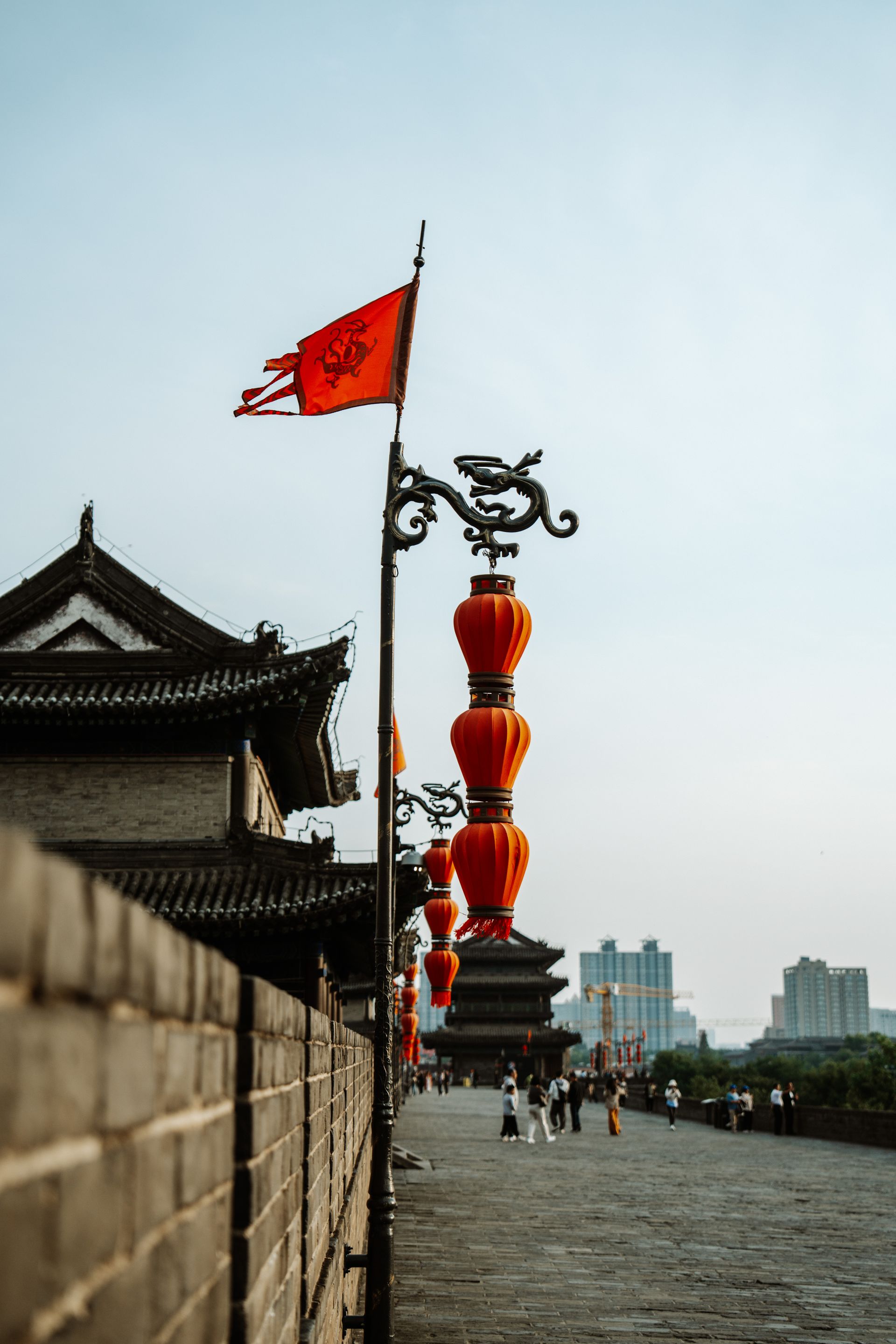
Not a neighbourhood so much as the frame around the whole old city: the complete Ming wall, roughly 13.7 kilometres around and wide enough on top for a four-lane cycle path, punctuated by grand fortified gates — the South Gate (Yongningmen) is the ceremonial main entrance. Renting a bike and riding the full circuit is the definitive Xi’an experience, giving you a slow aerial tour of the grid within and the modern city without.
- The South Gate (Yongningmen) and its barbican
- The rampart cycle circuit, end to end
- The corner watchtowers and lantern-lit ramparts at night
Best for: cycling, photography, orientation. Access: Metro Line 2 to Yongningmen for the South Gate.
The Big Wild Goose Pagoda District (Dayanta)
The cultural and tourist heart of the southern suburbs, built around the Tang-dynasty Big Wild Goose Pagoda and the Da Ci’en Temple at its foot. The surrounding plazas hold the largest fountain-and-music show in Asia, which draws crowds at dusk, alongside the Tang Paradise theme park and the Shaanxi History Museum nearby. It is a modern, family-friendly district that packages the Tang golden age for visitors.
- The Big Wild Goose Pagoda and Da Ci’en Temple
- The North Square musical fountain show
- The Shaanxi History Museum a short walk away
Best for: Tang history, families, evening shows. Access: Metro Line 3/4 to Big Wild Goose Pagoda.
The Lintong District & the Tomb Plain
The district about 35 kilometres east of the city where the imperial dead lie: the Mausoleum of Qin Shi Huang and its Terracotta Army, the hot-spring palace of Huaqing Palace at the foot of Mount Li, and the unexcavated tomb mound of the first emperor himself. This is where most visitors spend their first morning. It is a half- to full-day trip from the centre, best reached early by tour bus, train, or car.
- The three excavation pits of the Terracotta Army
- Huaqing Palace and its hot-spring pools
- The forested tomb mound of Qin Shi Huang
Best for: the headline sight, imperial history. Access: Tourist bus 5 (306) from Xi’an railway station, or the Lintong line.
The South Gate & the University Belt
The leafy, youthful zone just south of the wall around Xiaozhai and the big universities, a district of bookshops, cheap student canteens, bars, and the small but excellent Forest of Stelae and Beilin museums. It is less monumental than the centre and more lived-in, a good base for travellers who want a quieter, cheaper, more local feel within easy reach of the headline sights.
- The Xiaozhai shopping and nightlife area
- The Forest of Stelae (Beilin) Museum
- The student canteens and budget eateries
Best for: budget travellers, nightlife, local life. Access: Metro Line 2/3 to Xiaozhai.
The Daming Palace & the North City
The northern districts beyond the wall, anchored by the vast Daming Palace National Heritage Park, where the foundations of the Tang dynasty’s greatest imperial palace have been turned into an open archaeological park and museum. It is spacious, uncrowded, and a vivid lesson in just how enormous Tang Chang’an was, paired with the city’s main railway and high-speed-rail connections in the north.
- The Daming Palace ruins and its scale model
- The Xincheng and railway-station districts
- The northern metro interchanges
Best for: Tang archaeology, quieter sightseeing, rail access. Access: Metro Line 4 to Daming Palace West.
How the City Fits Together
It helps to picture Xi’an as a walled rectangle with a tower at its centre and a wheel of suburbs around it. Inside the Ming wall sit the Bell and Drum Towers, the Muslim Quarter, and the Tang street grid, all easily walked or cycled in a day or two. South of the wall, the pagoda and university districts hold the Tang temples, the great museums, and the student nightlife; north of it, the railway stations and the Daming Palace park; and east, on the plain toward Mount Li, the Terracotta Army and the imperial tombs. The metro, now a sprawling network of more than a dozen lines, links almost all of it cheaply and fast, so you can base yourself anywhere central and reach the rest in twenty or thirty minutes underground. The travellers who enjoy Xi’an most cluster their days by ring: a tomb-plain day to the east, a walled-city day in the centre, and a pagoda-and-museum afternoon to the south, letting the subway and the occasional tour bus carry them between.
Where to Base Yourself
For a first visit, somewhere inside or just beside the wall is the most logical base. The Bell Tower and the Muslim Quarter put you in the thick of the atmosphere and a short walk from the towers, the mosque, and the food lanes, though the central blocks are touristy and a little pricey. The South Gate area trades some bustle for a more dignified, walkable setting beside the wall and the metro. The university belt around Xiaozhai is the budget and nightlife alternative, cheaper and more local but a metro ride from the headline sights. The pagoda district in the south suits travellers who want modern hotels, the great museums, and the evening fountain show on their doorstep, at the cost of being further from the old city. Wherever you land, choose a base within a few minutes of a metro station and plan your days by ring, clustering nearby sights, so you spend your time on the wall and in the lanes rather than in traffic.
Reading the Lanes: A Living Silk Road
Beyond the headline towers, the texture that makes Xi’an distinctive is the Muslim Quarter and the Hui community that has filled its lanes for more than a millennium. The Hui are Chinese-speaking Muslims whose ancestors came down the Silk Road as traders, soldiers, and scholars, and their quarter is a living survival of that exchange: the Great Mosque is built like a Chinese temple, all timber halls and garden courtyards rather than domes and minarets, and the food blends Central Asian lamb and cumin with thoroughly Chinese noodles and breads. Walking these lanes at night, when the griddles roar and the lantern light pools on the flagstones, is the surest way to feel that Xi’an was once the cosmopolitan terminus of a road that ran all the way to the Mediterranean. The quarter is touristy and crowded after dark, but it is no theme park; it is a genuinely lived-in neighbourhood whose mosques, butchers, and family kitchens still serve the community first. Both the polished food street and the quieter back lanes are worth your time, and the contrast between them tells the story of how an ancient trade diaspora became a permanent thread in the Chinese city.
Getting Your Bearings on Arrival
First-time arrivals are often surprised by how legible Xi’an is once the wall clicks into place as the mental map. Almost everything historic sits inside or just beside that rectangle, the streets run on a near-perfect north-south and east-west grid inherited from the Tang capital, and the Bell Tower marks dead centre, so a glance at the towers or the nearest gate tells you instantly where you are. The big modern attractions — the warriors to the east, the pagodas and museums to the south, the rail stations and palace park to the north — radiate out from that core like spokes, and each is a short, cheap metro ride away. Spend the first hour orienting yourself at the Bell Tower, walk the few hundred metres to the Drum Tower and the mouth of the Muslim Quarter, and the rest of the city arranges itself around that anchor.
Choosing a Base by Travel Style
Different travellers want different things from a Xi’an base, and the city’s rings make the choice clearer than in most Chinese megacities. The culture-first visitor who wants to wake up and walk to the towers, the mosque, and the food lanes should stay inside the wall near the Bell Tower or the Muslim Quarter, accepting the tourist bustle and slightly higher room rates as the price of being in the thick of it. The traveller who values calm and dignity over noise is better served just inside the South Gate, where the ramparts, the metro, and a short cycle to the centre combine with quieter, leafier streets. Budget and younger travellers will find the university belt around Xiaozhai both cheaper and more sociable, with hostels, student canteens, and a real bar scene, at the cost of a ten-minute metro hop to the headline sights. Families and travellers who want modern, spacious hotels with the great museums and the evening fountain show on the doorstep should look south to the Big Wild Goose Pagoda district, which trades old-city atmosphere for comfort and breathing room. Business and rail-focused visitors passing quickly through often prefer the north, near the railway stations and the Daming Palace park, where high-speed trains to Beijing and Shanghai leave and the metro carries you into the old city in twenty minutes. Whatever the style, the single rule that never fails in Xi’an is to book within a few minutes’ walk of a metro station and to cluster each day’s sights by ring, so the underground does the heavy lifting and your hours are spent on the wall and in the lanes rather than stuck in surface traffic.
The Food

Xi’an eats like nowhere else in China, and that is the whole point of coming hungry. This is the home of Shaanxi cuisine — wheat country rather than rice country, built on hand-pulled noodles, griddled flatbreads, and slow-stewed lamb — layered with the Central Asian flavours the Silk Road carried west to east and preserved in the Hui Muslim kitchens of the old city. The food is robust, carb-heavy, generously spiced with cumin and chilli, and gloriously cheap. Prices below are indicative and were current at the time of writing; treat them as ranges, not quotes.
Biang-Biang Noodles & the Noodle Family
Shaanxi is a noodle civilisation, and its emblem is biang-biang mian — belt-wide, hand-slapped wheat noodles whose name is written with one of the most complex characters in Chinese, dressed with chilli, garlic, and a sizzle of hot oil. Around them orbit a whole family of regional noodles eaten at all hours.
- Biang-biang mian — one giant belt-wide noodle with chilli and hot oil (RMB 15–30, ~$2–4)
- Youpo che mian — wide noodles finished with scalding chilli oil poured at the table (RMB 12–25, ~$1.70–3.50)
- Saozi mian — thin noodles in a tart, spiced minced-pork broth, a Qishan speciality (RMB 12–22, ~$1.70–3)
Roujiamo & the Bread-and-Lamb Tradition
If noodles are Shaanxi’s starch, griddled bread is its handheld staple, and roujiamo — often called the “Chinese hamburger” — is the city’s great snack: chopped, long-stewed meat stuffed into a crisp baked flatbread. Seek out the lamb version in the Muslim Quarter and the pork version elsewhere.
- Roujiamo — stewed meat in a griddled mo bun, pork or lamb (RMB 8–18, ~$1–2.50)
- Yangrou paomo — mutton soup poured over hand-torn bread you crumble yourself (RMB 30–55, ~$4–8)
- Yangrou chuan — cumin-and-chilli lamb skewers grilled over charcoal (RMB 3–6 a skewer, ~$0.40–0.85)
Beyond Noodles and Roujiamo
Xi’an’s street and snack culture runs far past its famous noodles and buns, especially in the night-market lanes of the Muslim Quarter.
- Liangpi — cold, springy wheat-or-rice noodles in a vinegar-chilli dressing, the city’s favourite cooling snack (RMB 8–15, ~$1–2)
- Guantang baozi — soup-filled steamed dumplings, the Muslim Quarter’s answer to xiaolongbao (RMB 20–40, ~$3–6)
- Jingbing / persimmon cakes — sweet fried persimmon pastries, a Xi’an autumn speciality (RMB 5–12, ~$0.70–1.70)
- Hulutou — a rich offal-and-bread soup for the adventurous (RMB 30–50, ~$4–7)
Food Experiences You Can’t Miss
- An after-dark graze the length of the Muslim Quarter, skewer in one hand and roujiamo in the other
- A bowl of yangrou paomo where you tear the bread into the soup yourself, the slow ritual that defines a Xi’an lunch
- A dumpling banquet near the Bell Tower, the multi-course showcase of Shaanxi dumpling craft
Where the Silk Road Meets the Plate: Understanding Xi’an’s Food
To eat well in Xi’an is to read its position and its history. From the wheat fields of the Guanzhong Plain come the noodles, the flatbreads, and the dumplings that anchor every meal; from the Hui Muslim kitchens of the old city come the cumin-scented lamb, the charcoal skewers, and the mutton soups that the Silk Road carried in from Central Asia; and from the Tang golden age comes a tradition of elaborate dumpling banquets that still draws crowds near the Bell Tower. The smartest approach is to treat each meal as a chance to taste a different thread rather than chasing one definitive dish. A noodle breakfast, a paomo lunch, and a skewer-and-roujiamo crawl after dark will travel you across the whole tradition in a single day. The city also rewards curiosity over caution: the most memorable meals are rarely in hotel dining rooms but at the high-turnover counters and night-market griddles where a single dish has been perfected over decades. Watch where the queues form, point if you cannot read the menu, and do not let the glossy mall food courts convince you that you have seen the city’s food.
One practical note on prices and value: Xi’an is one of the cheapest great food cities in China, and the everyday food — noodles, roujiamo, skewers, cold liangpi — is genuinely a few yuan a plate and often the best eating in the city, made at volume by specialists, so chase reputation and queues rather than price. Where you do spend more — a dumpling banquet, a sit-down lamb feast — you are paying for the setting and the craft as much as the cooking. If you are nervous about ordering on a first trip, the mobile review apps that locals live by smooth almost everything, and many counters have picture menus or photos on the wall. Go hungry, carry a payment app linked to your card, and treat the first noodle counter as the on-ramp to a much deeper scene.
A Day of Eating, Hour by Hour
Start early at a noodle counter or a roujiamo griddle with a bowl of saozi mian or a meat-stuffed bun and a cup of soy milk, the way office workers and students both begin the day. Mid-morning, cool off with a plate of vinegar-bright liangpi. Lunch is the moment for yangrou paomo — order the bowl, tear the flat bread into small pieces yourself, and hand it back for the kitchen to flood with mutton soup — at a busy Muslim Quarter institution. Break in the afternoon with a persimmon cake or a sweet rice dish, then spend the evening grazing the night-market lanes for charcoal lamb skewers, guantang soup dumplings, and griddled breads under the lanterns, or sit down to a proper dumpling banquet near the Bell Tower. In autumn, build a snack around the fried persimmon cakes that appear when the orchards on the plain come in.
Vegetarian & Dietary Notes
Xi’an is workable but not effortless for vegetarians: the noodle and cold-dish tradition gives you plenty of meat-free options — liangpi, plain biang-biang noodles, vegetable dumplings, stir-fried greens — but lamb, pork, and meat broths run through a great deal of the cooking, especially in the Muslim Quarter, so be specific. The phrase to learn and to show on your phone is “wo chi su” (I eat vegetarian), and watch for hidden meat in noodle dressings, soups, and “vegetable” dumplings. Vegans should add a clear “no egg.” Translation apps and picture menus make all of this far easier than it once was, and the major review apps let you filter for vegetarian-friendly kitchens.
Drinking: Tea, Tipples, and the Night Market
What you drink in Xi’an tilts toward the homely and the local. Because the Muslim Quarter is the city’s great eating ground and much of it is alcohol-free, the default refreshments are tea, fresh pomegranate and persimmon juices pressed at stalls, sweet rice wine (a mild fermented drink), and the ubiquitous soy milk. Beyond the quarter, the city has a perfectly lively bar scene around the university belt and the South Gate, with craft-beer taprooms and student-priced bars, and the big hotels keep smarter lounges. Local spirits centre on baijiu, the fierce sorghum liquor poured at celebratory meals. An evening that starts with a pressed-fruit juice in the night market and ends with a beer near Xiaozhai captures the city’s range, and the teahouses around the towers offer a quieter, older alternative to the bars.
Markets, Malls, and Where Locals Actually Eat
The honest answer to “where do Xi’an people eat” is at the noodle counter, the roujiamo window, and the night-market griddle, and the joy of the city is that the best food is also the cheapest and the most public. The Muslim Quarter is the obvious draw, and its main food street is touristy but genuinely good; the quieter back lanes and the neighbourhood noodle shops away from the centre are where locals eat day to day, often a single perfected dish per shop. Mall food floors gather reputable Shaanxi chains and dumpling specialists under air-conditioning and are easy to navigate with picture menus, a useful fallback on a sweltering or freezing day. The mobile review app that locals live by ranks everything by neighbourhood, and a payment app linked to your card unlocks the counters that no longer take cash. Follow the queues of students at lunch and families at dinner, and you will eat better, and far cheaper, than any guidebook list can manage. One last habit serves visitors well: order one more skewer or small dish than feels sensible, because the pleasure of a Xi’an night market is the grazing, not the single plate.
How Shaanxi Cooking Came to Be
The food of Xi’an makes sense only against its geography and its thousand years as an imperial capital. This is the Guanzhong Plain, watered by the Wei River and ringed by mountains, a wheat-growing heartland rather than the rice paddies of the south, which is why the table here is built on noodles, steamed and griddled breads, and dumplings rather than bowls of rice. Onto that wheat foundation the Silk Road layered the flavours of the west: cumin, chilli, sesame, and a deep love of lamb and mutton arrived with the Central Asian traders, soldiers, and Hui Muslim settlers who made Chang’an the most cosmopolitan city on earth at the height of the Tang. The result is a cuisine that tastes both unmistakably Chinese and faintly of the steppe and the bazaar — charcoal-grilled skewers dusted with cumin, mutton soups thick with hand-torn bread, sour-hot cold noodles — with little of the seafood or delicate steaming you find on the coast. Centuries as a capital also bequeathed a courtly side, the elaborate dumpling banquets that turn a humble jiaozi into a multi-course performance. Understanding this lineage turns a meal into a history lesson and helps you order with intent rather than at random.
Eating Well Without Getting Lost
For a first-time visitor the abundance can feel overwhelming, so a few habits make the scene navigable. Anchor each day around one or two “destination” dishes — a paomo lunch, a skewer crawl after dark — and fill the gaps with whatever the queue in front of you is buying. Specialisation is the rule in Xi’an: the best counters make one thing, all day, for years, so a shop that sells only roujiamo or only liangpi is usually a better bet than a long menu. Carry a payment app linked to your card, because many of the finest counters no longer take cash and few take foreign cards directly; learn to recognise the QR codes at the till. Use the dominant local review app, which ranks every kitchen by neighbourhood and dish and is how locals decide where to eat, and do not be shy about pointing at a neighbour’s bowl or a wall photo when the menu defeats you. Eat early or late to dodge the worst of the night-market crush, keep small notes for the rare cash-only stall, and treat the glossy main food street of the Muslim Quarter as a starting point rather than the destination — the quieter back lanes and the neighbourhood shops beyond the centre are where the city eats day to day. Above all, come hungry and graze widely; the pleasure of Xi’an is the sheer number of small, perfected things you can taste in a single afternoon.

Cultural Sights
The Terracotta Army (Bingmayong)
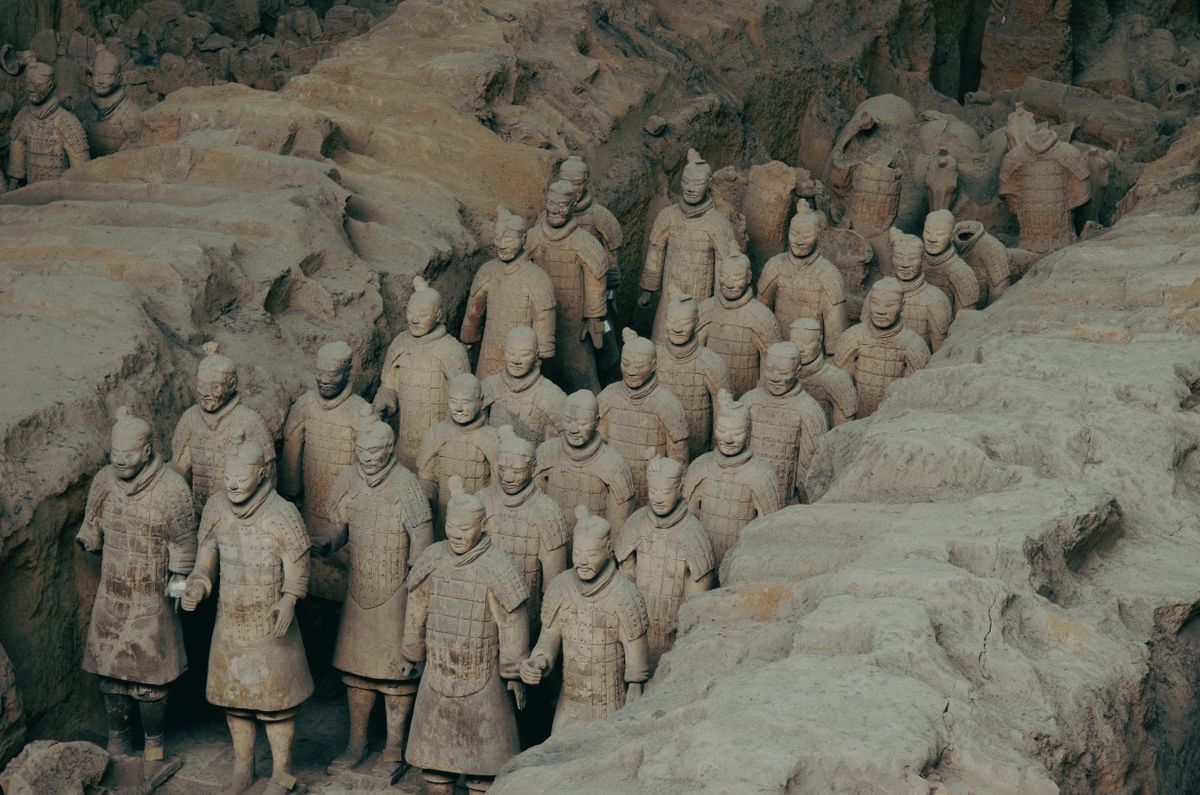
Xi’an’s headline sight and one of the world’s greatest archaeological discoveries: thousands of life-size clay soldiers, horses, and chariots buried around 210 BC to guard the tomb of Qin Shi Huang, China’s first emperor, and uncovered by well-digging farmers in 1974. The three excavation pits, sheltered under huge hangars about 35 km east of the city, are the must-see. Founded as a burial complex c. 210 BC; excavated from 1974. Admission around RMB 120 (~$17). Open daily; go early to beat the tour groups.
The Ming City Wall
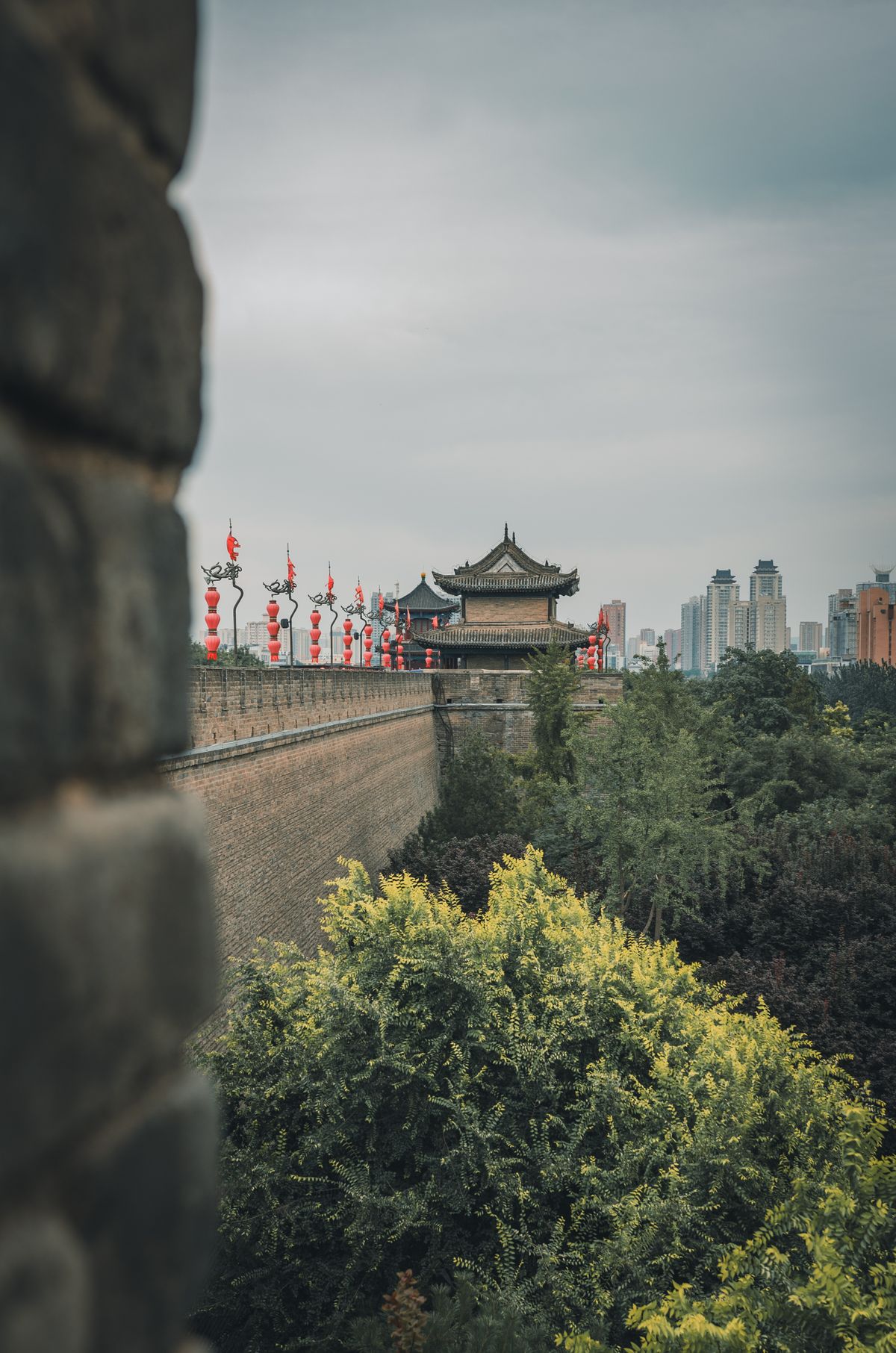
The most complete ancient city wall in China, a rectangle of rammed-earth-and-brick rampart about 13.7 km around, 12 m high, and broad enough on top for a four-lane cycle path, built on Tang foundations in the Ming dynasty in the 1370s. Renting a bike and riding the full circuit is the definitive Xi’an experience. Founded in its current form in the 14th century. Admission around RMB 54 (~$8); bike hire extra. Best in the cool morning or lit up at night.
The Big Wild Goose Pagoda (Dayan Ta)
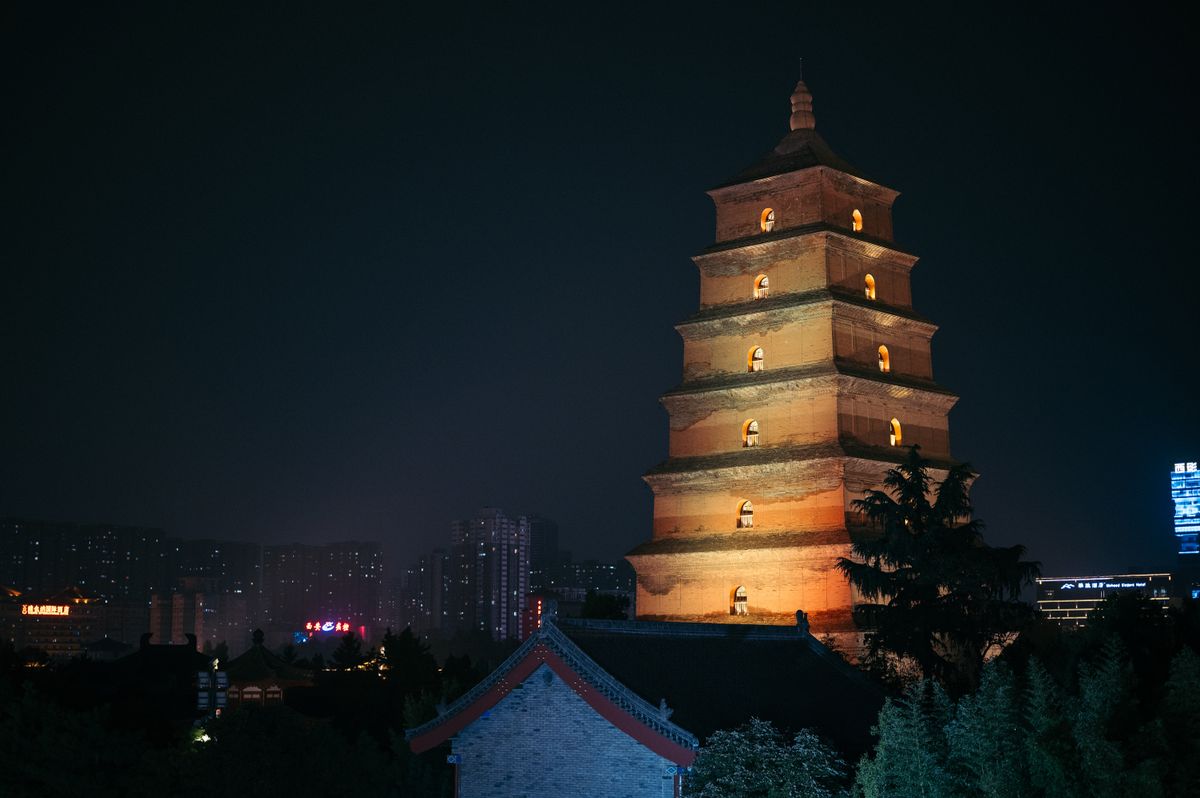
A monumental Tang-dynasty brick pagoda in the southern suburbs, first built in 652 AD to house the Buddhist scriptures the monk Xuanzang carried home from India, standing some 64 metres tall within the Da Ci’en Temple. The plaza below stages a popular evening fountain-and-music show. Founded 652 AD. Admission around RMB 50 (~$7) for the temple, extra to climb the pagoda. Open daily; the fountain show runs in the early evening.
The Great Mosque of Xi’an
One of the oldest and largest mosques in China, founded in the Tang dynasty and rebuilt over centuries in a wholly Chinese architectural idiom — timber prayer halls, garden courtyards, and a pagoda-like minaret rather than domes — tucked deep in the Muslim Quarter behind the Drum Tower. It is a working place of worship and a serene escape from the food-street crowds. Founded in the 8th century. Admission around RMB 25 (~$3.50). Open daily; non-Muslims may visit the courtyards but not the prayer hall.
The Bell Tower & Drum Tower
The twin Ming-dynasty pavilions at the heart of the old city: the Bell Tower of 1384, a triple-eaved tower marking the exact centre of the walled grid, and the nearby Drum Tower of 1380 at the entrance to the Muslim Quarter, which stages drum performances by day. Both are floodlit and unmissable after dark. Founded 1384 and 1380 respectively. Admission around RMB 30 (~$4) each, or a combined ticket. Best seen illuminated in the evening.
The Shaanxi History Museum
One of China’s great museums, a free, sweeping survey of the region that was the cradle of Chinese civilisation, from Zhou bronzes and Qin and Han relics to the gold and murals of the Tang court. Near the Big Wild Goose Pagoda. Admission free (timed booking, passport required). Open daily except Mondays; book ahead online, as daily tickets sell out.
The Forest of Stelae (Beilin) Museum
A quiet, scholarly museum near the South Gate housing China’s greatest collection of engraved stone tablets — thousands of stelae bearing classic texts, imperial edicts, and the calligraphy of the masters — alongside the city’s old Confucius Temple. Founded as a stele collection in the 11th century. Admission around RMB 50 (~$7). Open daily; a calm half-day for lovers of calligraphy and history.
Planning Your Sightseeing
Xi’an’s sights divide neatly by ring, which is how you should plan them. Give the Terracotta Army and the Lintong tomb plain a dedicated half- or full-day to the east, starting early; cluster the city wall, the Bell and Drum Towers, the Great Mosque, and the Muslim Quarter into a single walled-city day on foot and by bike; and pair the Big Wild Goose Pagoda with the Shaanxi History Museum and the Forest of Stelae into a southern museum-and-pagoda outing. Several of the headline experiences — the museum, the mosque courtyards, the wall views from the street — are free or nearly so, while the warriors, the wall-top, and the pagodas charge modest fees. Book the free-but-timed Shaanxi History Museum online well in advance, carry your passport for entry and ticketing, and set up a mobile payment app. Most sites open from morning to early evening; go to the warriors and the museum first thing, and save the towers and the Muslim Quarter for the floodlit evening.
Reading the Layers of an Ancient Capital
What gives Xi’an’s sights their unusual depth is that they span almost the entire arc of Chinese civilisation, each major dynasty leaving its mark in stone, earth, and timber. The Qin emperor’s buried army speaks for the third century BC and the first unification of China; the Han tombs on the plain for the empire that followed; the Tang pagodas, the Daming Palace ruins, and the treasures of the Shaanxi History Museum for the cosmopolitan golden age when Chang’an was the largest city on earth and the eastern anchor of the Silk Road; and the Ming wall and the Bell and Drum Towers for the later medieval city that grew within the older grid. Seen in sequence rather than as a checklist, the sights tell a single continuous story of capital after capital rising on the same plain, which is why even a short visit rewards a little chronological framing. Pair the museum early in your trip to set the timeline, then let the monuments fill it in.
Entertainment
The Tang Dynasty Dinner Show
Xi’an’s signature evening out is a Tang-dynasty music-and-dance spectacular, performed with elaborate period costumes, court music, and a dumpling banquet, recreating the entertainments of the golden age when the city was the world’s capital. Typical cost RMB 300–800 (~$42–112) with dinner. Book ahead and choose a central theatre near the Bell Tower.
The Musical Fountain at the Pagoda
The North Square of the Big Wild Goose Pagoda hosts one of the largest fountain-and-light shows in Asia, free to watch, drawing big crowds at dusk as jets of water dance to music against the floodlit Tang pagoda. Typical cost free. Check the daily show times, arrive early for a spot, and go on a clear evening.
The Muslim Quarter After Dark
The free, unforgettable nightly “entertainment” of Xi’an is simply grazing the lantern-lit lanes of the Muslim Quarter as the griddles roar, the skewers smoke, and the crowds surge between the stalls. Typical cost the price of what you eat. Go after sunset, keep valuables close in the crush, and let the night market put on its own show.
Cycling the City Wall
An active, atmospheric evening or early-morning option is to rent a bike on top of the Ming wall and ride the full 13.7-km circuit, with the lanterns lit and the old city spread below on one side and the modern city on the other. Typical cost RMB 45 (~$6) for a two-hour bike hire plus the wall ticket. Allow about ninety minutes to ride the loop at an easy pace.
Theatre, Acrobatics & the Arts
Beyond the Tang show, Xi’an has a busy performing-arts scene: the Shaanxi Grand Opera House and other venues stage the long-running The Song of Everlasting Sorrow outdoor epic at Huaqing Palace, acrobatics, and touring concerts, while the city’s shadow-puppet and Qin-opera traditions survive in smaller theatres and teahouses. Typical cost RMB 150–600 (~$21–84). Book ahead for the big outdoor productions, which run seasonally.
Bars, Teahouses & the University Belt
For a drink rather than a spectacle, the university belt around Xiaozhai and the South Gate is the centre of gravity, with student-priced bars, craft-beer taprooms, and live-music rooms, while the towers and the old city keep quieter teahouses for an older-style evening. Typical cost RMB 30–80 (~$4–11) a drink. The South Gate and Xiaozhai areas are liveliest at weekends.
How Xi’an Goes Out
Xi’an’s nightlife is more about food, light, and spectacle than late clubbing, and it splits cleanly by district. The headline evenings are the cultural set pieces — the Tang dinner show, the pagoda fountain, the floodlit towers and walls, and above all a long graze through the Muslim Quarter — which together make Xi’an one of the most atmospheric cities in China after dark, even for travellers who never set foot in a bar. For an actual drink and a later night, the university belt around Xiaozhai delivers cheap, lively bars and live music. The practical rules are simple: set up a ride-hailing app and a mobile payment method before you go out, since hailing a street taxi late and paying cash is increasingly awkward; carry your passport, which some venues check; and remember the metro stops running around eleven, so plan a ride home for a late night. For most visitors the perfect Xi’an evening is a walled-city loop on foot — the towers, the mosque, the night market — needing no ticket at all.
Festivals & the City’s Calendar
Xi’an’s calendar is worth checking before you book. The Spring Festival (Chinese New Year, late January or February) brings temple fairs, lantern displays on the city wall, and a city that both empties of migrant workers and fills with festivity; the Ming wall’s spectacular Lantern Festival is one of the country’s best. The Lunar-calendar holidays and the early-October national golden week see domestic tourism surge and the Terracotta Army and museums fill to bursting, so book ahead and brace for crowds. Smaller, neighbourhood-scale events — the seasonal outdoor epic at Huaqing Palace, food and culture weeks in the old city — run through the warmer months. If your trip coincides with a major festival, book tickets and the timed museum slots well ahead, since the city’s historic draw means the best events and the headline sights sell out fast.
Day Trips

The Terracotta Army & Lintong (~45 min by tour bus or train)
The single essential trip from Xi’an, about 35 km east to the three excavation pits of the first emperor’s buried army, usually combined with the nearby Huaqing hot-spring palace at the foot of Mount Li and the forested tomb mound of Qin Shi Huang himself. Reach it on the cheap tourist bus 5 (306) from the railway station or by a tour; go early to beat the crowds, and allow at least half a day for the warriors alone.
Mount Hua (Huashan) (~30 min by high-speed rail)
One of China’s five sacred Taoist mountains, a dramatic granite massif of vertiginous staircases, cable cars, and the famous (and optional) plank walk along a cliff face, about 120 km east and just half an hour away on the bullet train. The five peaks reward a full, strenuous day; cable cars cut the climbing. Book rail tickets in advance with your passport and start early for the descent before dark.
The Han Yang Ling Mausoleum (~40 min by car)
The beautifully presented underground museum at the tomb of the Han emperor Jing, north of the city near the airport, where thousands of miniature painted terracotta figures — far smaller and gentler than the Qin warriors — are viewed through glass floors over the excavated pits. A quieter, more intimate alternative to the famous army. Best paired with an airport arrival or departure.
The Famen Temple (~2 hours by car or tour)
A great Buddhist pilgrimage temple about 120 km west of the city, famous for a finger-bone relic of the Buddha and a spectacular underground palace of Tang treasures, now set within a vast modern ceremonial complex. The historic pagoda and the museum repay the journey for those interested in Tang Buddhism. A full-day trip, easiest by organised tour or hired car.
Hancheng & the Northern Loess Country (~1h 30m by high-speed rail)
A well-preserved old town and Confucian heartland to the north-east, with ancient courtyard houses, the temple of the historian Sima Qian, and the dramatic loess landscapes of the Yellow River region beyond. A quieter, more off-the-trail day for travellers who have already done the headline sights. The bullet train makes it an easy reach; check return times.
How to Choose & Book
The single most important decision for a Xi’an day trip is which kind of day you want. For the Terracotta Army, the cheap, frequent tourist bus from the railway station is all most people need, though a guided tour adds context and combines the warriors with Huaqing and the tomb mound. For Mount Hua, the high-speed train is the obvious choice — fast, frequent, and far more comfortable than the road — but you must book tickets in advance with your passport and arrive early to clear security at the vast modern station. For the scattered temples and tombs like Famen, a hired car with a driver for the day removes the hassle of connections. Whatever you choose, start early: the warriors and the mountain are both at their best before the tour buses and the afternoon crowds arrive, and the bullet trains let you be at Huashan by mid-morning. Carry your passport for rail travel and ticketed sites, and set up a mobile payment app.
Making the Most of the Plain
What makes day trips from Xi’an so rewarding is that the Guanzhong Plain was the cradle of imperial China, so the hinterland is thick with tombs, temples, and sacred mountains within an hour or two of the city. The high-speed rail network has collapsed the distances: Mount Hua is half an hour east, and the wider region — the Han and Tang imperial tombs scattered across the plain, the Famen relic temple to the west, the loess country to the north — opens up by train and car. The practical art is to pick one destination and commit rather than trying to combine several: the warriors plus Huaqing make a natural pairing, but Mount Hua deserves a day of its own. Travel midweek where you can, start at dawn, and treat the imperial tombs as a reminder that almost everywhere you stand on this plain, an emperor lies buried nearby. If you only have time for one trip beyond the warriors, make it Mount Hua for the drama or the Han Yang Ling for the quiet.
Seasonal Guide

Spring (March – May)
One of the two prime windows: mild, increasingly warm days (roughly 10–25°C), blossom on the plain, and generally pleasant, dry weather for cycling the wall and walking the old city, though spring dust and the occasional sandstorm blowing off the loess can cloud the air. A fine time to visit before the summer heat arrives.
Summer (June – August)
Hot and humid, with temperatures regularly in the mid-30s°C and the heaviest rainfall of the year falling in summer storms. It is the least comfortable time to cycle the wall or queue at the warriors in the open; start very early, carry water, and lean on the air-conditioned metro and museums in the afternoon. It is also peak domestic-holiday season, so the headline sights are at their most crowded.
Autumn (September – November)
The peak season and arguably the best of the year: the summer heat eases into crisp, clear, mild days, the skies are at their bluest, and the persimmons and pomegranates of the plain come into season in the markets. October is ideal for cycling the wall and touring the tombs. Book ahead around the early-October national holiday week, when domestic travel surges and the warriors are mobbed.
Winter (December – February)
Cold and dry, with temperatures often near or below freezing and a real risk of winter haze and poor air quality settling over the basin. It is the low season, with thinner crowds and lower prices, and a steaming bowl of yangrou paomo is never better; the wall and the warriors under a dusting of snow are atmospheric. Pack warm layers, check the air-quality index, and consider a mask on bad days. Spring Festival (late January or February) sees the city quieten as residents travel, but the wall’s Lantern Festival is spectacular.
When Should You Actually Go?
The honest answer for most visitors is autumn — September through November — with spring (March to May) a close second. Autumn delivers the trifecta: the summer heat has broken, the air is at its clearest for photographing the wall and the pagodas, and the autumn fruit is in the markets, which is exactly why hotels fill and prices rise around the early-October golden-week holiday, so book ahead and avoid that single week if you can. Spring is the gentler alternative, mild and green, at the cost of occasional dust off the loess plateau. Summer is for travellers who do not mind heat, humidity, and summer storms in exchange for long days; start early and lean on the indoor sights in the afternoon. Winter rewards the cold-tolerant with thin crowds and low prices, though the dry cold and the risk of haze are real, and a snow-dusted wall is a rare treat. Whatever the season, the metro and the great indoor museums make Xi’an a workable all-weather city, and the Shaanxi History Museum is the perfect refuge from a bad-weather day.
Getting Around

The Metro
The Xi’an Metro is the backbone of getting around, a fast-growing network of more than a dozen lines and hundreds of kilometres of track linking the old city, the suburbs, the railway stations, and the airport cheaply and fast. Trains are clean, air-conditioned, and signed in English, run from early morning to around 11pm, and a single ride costs only a few yuan by distance. It is the single best way to move around the city.
The City Wall & Cycling
Inside the walls, the old city is compact and flat, and the most distinctive way to get around is on top of the wall itself: rent a bike at the South Gate and ride the 13.7-km circuit, or use the dockless shared bikes (unlocked through the payment apps) that are everywhere at street level. Walking and cycling cover the towers, the mosque, and the Muslim Quarter easily; save the metro for the longer hops to the pagodas and the stations.
Transit Cards & Mobile Payment
Buy a rechargeable Chang’an Tong transit card for the metro and buses, or — far easier — set up the metro QR code inside the major mobile-payment apps (linking an international card now works for most visitors). The same payment apps cover almost everything else in the city, so getting one running on arrival is the most useful single step you can take.
Airport Access
- Xi’an Xianyang International (XIY), ~40 km north-west: the Airport Metro / intercity line into the centre (~RMB 16, ~50 min)
- Airport shuttle buses to the railway station and city hotels (~RMB 25–30, ~60–70 min); taxis ~RMB 120–150
Taxis & Ride-Hailing
Flag-fall is around RMB 9–10 for the first couple of kilometres, and metered taxis are plentiful and cheap by international standards, but few drivers speak English — have your destination written in Chinese or shown on a map. Ride-hailing through the dominant app (which has an English interface) is usually easier, fixes the price, and removes the language barrier. Use ride-hailing or the metro late at night.
Tourist Buses & Intercity Rail
For the Terracotta Army and Lintong, the cheap government tourist buses (line 5 / 306) leave from the east square of Xi’an railway station and are the simplest option. For day trips to Mount Hua and beyond, the high-speed trains from Xi’an North station are fast, frequent, and cheap; book ahead with your passport. The same North station links Xi’an to Beijing and Shanghai in a few hours.
Walking & Realistic Expectations
Xi’an is a wonderful walking city at the scale of the old town and a metro city across the wider municipality. The area inside the wall — the towers, the mosque, the Muslim Quarter — is best explored entirely on foot or by bike, where the pleasure is in the wandering; the same is not true of the long hauls out to the pagodas, the museums, the stations, and the tomb plain, where the metro and the tour buses are far faster. The winning strategy is to walk and cycle the old city, then ride the subway or a bus for everything beyond it. Pavements are good and the centre is pedestrian-friendly, so cluster your days by ring and let the underground carry you between them. A transit card or the metro QR, a payment app, and comfortable shoes are the three things that make Xi’an effortless.
Navigation Tips
Apps: a mapping app that works in China (the major local maps app, or an offline map), the dominant ride-hailing app, and the metro QR inside a payment app. A VPN set up before you arrive keeps your usual maps, messaging, and search working, since many Western services are blocked on the mainland. Save your hotel’s name and address in Chinese to show drivers, since English is limited outside tourist areas, and keep your passport on you for ticketing and the occasional check.
Budget Breakdown: Making Your Yuan Count
| Tier | Daily | Sleep | Eat | Transport | Activities | Extras |
|---|---|---|---|---|---|---|
| Budget | RMB 200–400 (~$28–56) | RMB 80–220 hostel/budget hotel | RMB 40–90 noodles & street food | RMB 20–40 metro & bus | RMB 50–130 site fees | RMB 30 water/SIM |
| Mid-Range | RMB 600–1,400 (~$84–196) | RMB 350–800 3-4 star hotel | RMB 150–400 restaurants | RMB 60–150 metro & ride-hailing | RMB 150–400 sights & show | RMB 100 extras |
| Luxury | RMB 2,500+ (~$350+) | RMB 1,500+ 5-star hotel | RMB 600+ fine dining | RMB 300+ private car | RMB 600+ private guide | RMB 400+ spa/shopping |
Where Your Money Goes
Xi’an is one of the better-value major cities in China. Everyday food and the metro are genuinely cheap — a bowl of noodles costs a few yuan and a cross-town metro ride well under RMB 10 — while accommodation spans hostel dorms to international five-stars, and the headline sights charge modest fees. The big variables are your hotel and how many ticketed attractions and shows you pack in.
Sample Daily Budgets
To make the table concrete: a shoestring traveller in a hostel, eating at noodle counters and the night market, riding the metro and the tourist bus to the warriors, and paying the modest entry fees can run a comfortable day on around RMB 300–400 (~$42–56). A mid-range traveller in a clean three- or four-star hotel, mixing metro with ride-hailing, eating in proper restaurants, and seeing the warriors, the wall, the pagoda, and a Tang show should plan for RMB 800–1,300 (~$112–182) a day. At the luxury end — a five-star hotel, fine dining, a private guide and car to the tombs — RMB 3,000–5,000 (~$420–700) a day is realistic. The biggest swing factor is always accommodation; food and local transport stay cheap across all tiers if you eat where locals do. A few costs are easy to forget: the Terracotta Army entry and transport, the wall ticket and bike hire, the timed museum bookings, the data SIM, and the high-speed rail fares for a Mount Hua day trip, which sit outside the daily figures.
How Xi’an Compares on Cost
Set against the coastal megacities, Xi’an is markedly cheaper than Beijing, Shanghai, or Hong Kong across the board: hotels, restaurants, taxis, and attraction tickets all cost less, and the everyday street food is some of the best-value eating in China. Even the headline experiences are gentle on the wallet — the warriors, the wall, and the great museum together cost less than a single big-city attraction elsewhere, and the museum is free. The practical lesson for budgeting is that your single biggest lever is accommodation, followed by how many guided tours and dinner shows you book. Travellers often report that Xi’an delivered more history per yuan than anywhere else on a China trip. The one cost that creeps up is guiding and transport to the scattered tombs and mountains, which is worth paying for at the famous sites where context transforms the visit. Plan which version of Xi’an you want before you book the hotel.
Money-Saving Tips
- Eat where the locals eat: a bowl of biang-biang noodles or a roujiamo at a busy counter beats a mall food court on price and quality, and a full meal can cost under RMB 30 (~$4)
- Take the cheap government tourist bus (line 5 / 306) to the Terracotta Army from the railway station rather than a pricey private tour, unless you want a guide
- Book the free Shaanxi History Museum online in advance — one of China’s great museums, at no charge
- Lean on the metro and shared bikes — both reach almost everywhere for a few yuan and are far cheaper than taxis
- Set up a mobile-payment app for the small discounts and ride-hailing deals locals use, and to avoid cash-handling friction
- Cycle the wall in the cool morning when bike hire is least crowded, and graze the Muslim Quarter for dinner instead of a sit-down restaurant
Practical Tips
Language
Mandarin Chinese is the official language and the local Guanzhong dialect is widely spoken; English is common at international hotels and the headline sights but limited elsewhere, including with taxi drivers and at street counters. A translation app, your destination written in Chinese, and a willingness to point will carry you through. A few words of Mandarin (nihao, xiexie) are warmly received.
Cash vs. Cards & Mobile Payment
Xi’an runs overwhelmingly on mobile payment, and linking an international card to one of the dominant apps is now the single most useful thing you can do; foreign credit cards work at international hotels and some larger venues, but many small shops, market stalls, and noodle counters expect a QR-code payment, and cash, while legal, is increasingly awkward. Carry a little cash as backup and set up a payment app before or on arrival.
Safety
Xi’an is a very safe city for visitors, with low levels of violent crime; petty theft and pickpocketing in the crush of the Muslim Quarter and at the Terracotta Army, plus the occasional overcharging or fake-guide scam at the big sights, are the main hazards. Keep valuables close in crowds, use registered taxis or ride-hailing, buy attraction tickets from official counters or apps, and decline unsolicited “guides.”
What to Wear
Dress for the season: light, breathable clothing for the hot summer; warm layers and a windproof coat for the cold, dry winter; and comfortable shoes year-round for the wall, the warriors, and the long museum days. Xi’an is relaxed and dress is casual; modest dress (covered shoulders and knees) is appropriate at the Great Mosque and temples, and you may not enter the mosque’s prayer hall as a non-worshipper.
Cultural Etiquette
Xi’an is used to visitors and relaxed about manners, but a few habits help: at the Great Mosque dress modestly and respect that it is a working place of worship, not a museum; let metro passengers off before boarding; avoid loud political discussion; and present and receive cards or gifts with both hands. Tipping is not expected and not customary in most settings, including restaurants and taxis.
Connectivity & the Firewall
Buy a local data SIM or eSIM, or check your roaming, and — crucially — set up a reputable VPN before you arrive, since many Western sites and apps (major search, social, messaging, and map services) are blocked on the mainland. With a VPN your usual tools keep working; without one, you are limited to local apps. Wi-Fi is widespread in hotels and cafes.
Health & Water
Tap water is not safe to drink — use sealed bottled or boiled water, though tap water is fine for showering and brushing teeth. Air quality can dip badly in winter and during spring dust events; sensitive travellers should check the index and carry a mask on bad days. International clinics and major hospitals offer good care; carry comprehensive travel insurance and any prescription medicines in their original packaging with a copy of the prescription.
Visas & Arrival
Many nationalities can currently enter China visa-free for stays of up to 30 days (a policy in place until at least the end of 2026), and Xi’an is also among the ports offering the separate 240-hour visa-free transit for citizens of 55 countries travelling on to a third destination. Rules change, so check the latest entry requirements with an official Chinese embassy or your government’s travel advice before you fly, and keep your passport and onward-ticket details to hand on arrival.
Tickets, Passports & Timed Entry
Carry your passport everywhere: it is required to buy high-speed rail tickets, to enter the free-but-timed Shaanxi History Museum, and increasingly to book and collect attraction tickets, which are tied to your identity. Book the popular sights — the history museum above all — online in advance, since daily allocations sell out, and arrive early at the Terracotta Army, which is vast and crowded by mid-morning. A payment app and a Chinese phone number (or a travel SIM) smooth the booking platforms.
Frequently Asked Questions
How many days do I need in Xi’an?
Two full days is the realistic minimum to see the city without rushing: one for the empire — an early trip east to the Terracotta Army, back to the city for the Big Wild Goose Pagoda and its evening fountain show — and one for the walled city: cycling the full Ming wall in the morning, then the Bell and Drum Towers, the Great Mosque, the Shaanxi History Museum, and a long graze through the Muslim Quarter after dark. Add a third day for a high-speed-rail trip to sacred Mount Hua or the quieter Han Yang Ling tombs.
Is Xi’an good for solo travellers?
Yes — it is one of the easiest and safest cities in China for solo and first-time travellers. Violent crime is very low, the old city is compact and walkable, the metro is clean and signed in English, and the city is thoroughly used to visitors. The main frictions are the language barrier outside the tourist core and the need for a VPN and a mobile-payment app; sort both out and a solo trip is straightforward. Take normal precautions against pickpockets in the crowded Muslim Quarter and at the warriors.
How do I get to the Terracotta Army from the city?
The simplest and cheapest way is the government tourist bus, line 5 (306), which leaves from the east square of Xi’an railway station and runs the 35 km east to the site for a few yuan in about an hour. A guided tour costs more but adds context and usually combines the warriors with the Huaqing hot-spring palace and the first emperor’s tomb mound. Go early to beat the tour groups, carry your passport for ticketing, and allow at least half a day for the three pits.
What about the language barrier?
It is real outside the tourist core but very manageable. English is common at international hotels and the headline sights but limited with taxi drivers, at street counters, and on local transport. A translation app, your destinations saved in Chinese to show drivers, picture menus, and a willingness to point will carry you through almost everything. A few words of Mandarin (nihao, xiexie) go a long way, and the younger generation often has some English.
When is the best time to visit Xi’an?
Autumn (September to November) is the peak window — the summer heat has broken, the skies are clearest for photographing the wall and the pagodas, and the autumn fruit is in the markets — with spring (March to May) a milder, greener second choice, though spring can bring dust off the loess plateau. Summer is hot, humid, and the wettest season, and the headline sights are at their most crowded in the domestic-holiday peaks; winter is cold, dry, and prone to haze but cheap and quiet, with a snow-dusted wall as a rare bonus. Avoid the early-October golden-week holiday and the Spring Festival period if you can, when domestic travel surges and the warriors are mobbed.
Can I use credit cards everywhere?
Not reliably. Foreign credit cards work at international hotels and some larger venues, but a great deal of Xi’an — small shops, market stalls, the metro, many noodle counters — expects QR-code mobile payment rather than cards. Linking your card to one of the dominant payment apps now works for most visitors and is far more useful than relying on cards or cash. Carry a little cash as a backup for the rare cash-only stall.
Is the tap water safe to drink?
No — do not drink Xi’an tap water; use sealed bottled or boiled water instead. The tap water is fine for showering, washing, and brushing your teeth, but it is not treated to a drinkable standard, so stick to bottled or boiled for drinking and for ice where you are unsure. Bottled water is cheap and sold everywhere, and most hotels provide a kettle or bottled water in the room.
Should I rent a bike to ride the city wall?
Yes, if you are reasonably able — cycling the complete 13.7-km Ming wall is the single most memorable thing you can do in Xi’an, and the wall-top is flat, broad, and traffic-free. Bikes are hired by the hour at the South Gate (around RMB 45 for a couple of hours, plus the wall ticket), and a relaxed loop takes about ninety minutes with photo stops. Go in the cool of the morning or for the lit ramparts at dusk, carry water in summer, and if you would rather not cycle you can walk a stretch or take the wall’s electric shuttle.
Ready to Experience Xi’an?
Xi’an rewards travellers who read it as layers of empire — the Qin warriors, the Tang pagodas, the Ming wall, and the living Silk Road of the Muslim Quarter — and let the metro and a rented bike carry them between. Its terracotta army, its intact ramparts, and its robust, lantern-lit food make it the essential history stop on any China trip, an easy bullet-train ride from Beijing or Shanghai. For the full country context — visa rules, regional routes, and the broader cultural picture — read the China Travel Guide before booking. Give the city at least two full days, visit in autumn or spring for the clearest skies, and set up a VPN and a mobile-payment app before you fly.
Explore More City Guides
Where to stay: characterful courtyard and boutique hotels inside the Ming wall near the Bell Tower, international four- and five-stars in the south near the pagoda, budget hostels and student-priced rooms around the South Gate and Xiaozhai, and business hotels by Xi’an North railway station.
- Beijing City Guide — China’s historic capital, the Forbidden City and the Great Wall, a few hours north by high-speed rail
- Shanghai City Guide — the Yangtze-delta financial capital, the Bund and Pudong, a natural high-speed-rail pairing with Xi’an
- Hong Kong City Guide — the southern harbour metropolis, another classic stop on a wider China itinerary
- China Country Guide — national context for visas, regional routes, rail, and the bigger cultural picture
- All City Guides
More city guides you might like
Plan your trip to Xi’an
The booking tools we use ourselves. FFU may earn a commission at no extra cost to you.
Plan & book your trip to Xi’an
Booking through these searches supports our guides at no extra cost to you.