
Part of our Germany travel guide.
Berlin, Germany: Techno, Turkish Döner, and the Ghost of a Wall
Berlin City Guide
📑 Table of Contents
Why Berlin?
Berlin is Germany’s capital and, at roughly 3.7 million residents, its largest city — but that undersells what the place is actually doing. Berlin is the continent’s most unusual capital: one that was cut in half by a concrete wall for 28 years between 1961 and 1989, stitched back together in 1990, and then, somehow, decided that cheap rent plus former East-bloc industrial architecture equals the best club scene in Europe.
Nowhere else in Germany can you walk from a 1747 rococo palace to a techno dungeon in a former power plant in twenty minutes on foot. The Wall ghost is still visible: a double row of cobbles marks its path across the city; the Brandenburg Gate, unreachable from the West for nearly three decades, is now a pedestrian square; and the 1.3-kilometre East Side Gallery preserves the longest surviving stretch with 105 murals painted in 1990. Museum Island in the Spree River, inscribed by UNESCO in 1999, holds five world-class museums inside a 400-metre walk, and the Pergamon Altar, Nefertiti bust and Ishtar Gate are all within the same ticket.
The city scales by contradiction. Berlin has roughly 180 museums — more than New York or Paris — and an estimated 150+ licensed music clubs, a density unmatched in Europe. It consumes around 70 million Currywurst a year, invented in 1949 by Herta Heuwer at a stand in Charlottenburg, and the Döner Kebab was standardised in its modern pide-wrapped form in 1972 in Kreuzberg — Berlin essentially invented Germany’s two national fast foods within 25 years. The Turkish-German population is the city’s largest immigrant community, and Sonnenallee in Neukölln has earned the nickname “Arab Street” for its 24-hour bakeries and shisha bars.
Berlin is also Europe’s cheapest major capital on almost every line item: hotels sit roughly 25–35% below London, a three-course bistro dinner runs €25–35, a BVG day pass covers the entire city for €9.90, and the Philharmoniker plays free Tuesday Lunch Concerts from September to June. It is not polished — you will see graffiti on every second wall — but it is the capital in Europe that most rewards curiosity and stamina.
This guide covers ten neighborhoods from Mitte’s tourist core to Treptow-Köpenick’s lakes, the food culture built around Imbiss stands and a surprisingly strong Michelin scene, the sights that anchor World War II and Cold War history, the clubs and classical venues that run seven nights a week, and the transit, budget, and etiquette details that make a first trip run smoothly from Berlin Brandenburg Airport (BER), which replaced Tegel and Schönefeld on opening in October 2020.
🏠 Neighborhoods: Finding Your Berlin
📍 Berlin Map: Every Place in This Guide
Berlin is not one city but twelve administrative boroughs (Bezirke), and the meaningful divides are still former East and former West — a split that shaped architecture, street width, tree species and drinking culture on opposite sides of the former Wall. The ten neighborhoods below cover the widest range of traveller priorities. The BVG network puts any of them within 25–35 minutes of any other by U-Bahn, S-Bahn or tram, and a €9.90 day pass covers the whole lot.
Mitte
Mitte is Berlin’s historical core and the sightseeing concentrate — literally the “middle” of the city, split by the Spree River and anchored by Unter den Linden boulevard. Every front-of-brochure monument sits inside a walkable 2-kilometre triangle here: the Brandenburg Gate at the western end, the Reichstag glass dome designed by Norman Foster and reopened in 1999, the Holocaust Memorial with its 2,711 concrete stelae completed in 2005, and the five museums of UNESCO-inscribed Museum Island. Hackescher Markt, five minutes east on the S-Bahn, holds the restored 1906 Hackesche Höfe courtyard complex with boutiques, cabaret and the only surviving Jewish girls’ school in central Berlin.
- Brandenburg Gate and Pariser Platz
- Reichstag dome (free with online booking)
- Museum Island (5 museums, combined ticket €24 / ~$26)
- Holocaust Memorial and information centre
- Hackesche Höfe restored courtyards
Best for: first-timers and history. Access: S+U Friedrichstraße, U5 Brandenburger Tor, S+U Alexanderplatz.
Kreuzberg
Kreuzberg is the former West-Berlin alternative heartland, walled in on three sides by the Berlin Wall until 1989 and colonised by squatters, Turkish migrants and punks who stayed. The 1972 Kreuzberg Döner Kebab, credited to Kadir Nurman at the Zoo station and refined in Kreuzberg, is still sold from hundreds of Imbiss stands — Mustafa’s Gemüse Kebap on Mehringdamm has queues every afternoon at €6.50 per wrap. The Landwehrkanal runs the length of the district and turns into an informal evening picnic spot between Görlitzer Park and Kottbusser Brücke from April onwards. Markthalle Neun, the restored 1891 Eisenbahnmarkt, runs Street Food Thursday every Thursday 17:00–22:00 with forty rotating stalls, and the Jewish Museum by Daniel Libeskind (opened 2001) is architecturally worth the visit on its own. Bergmannstraße, south of Mehringdamm, is Kreuzberg’s café strip — quieter than the canal but with better breakfast.
- Landwehrkanal and Görlitzer Park
- Mustafa’s Gemüse Kebap (Mehringdamm)
- Markthalle Neun + Street Food Thursday
- Jewish Museum (Daniel Libeskind)
- Bergmannstraße café strip
Best for: street food and counter-culture. Access: U1/U3 Kottbusser Tor, U6/U7 Mehringdamm, U1 Görlitzer Bahnhof.
Friedrichshain
Directly across the Oberbaumbrücke from Kreuzberg sits Friedrichshain — former East, still the densest club belt in Europe, and the neighborhood that turned a derelict 1953 power plant into Berghain. The East Side Gallery runs 1,316 metres along Mühlenstraße, preserving 105 murals painted by 118 artists on the original Wall in 1990, including Dmitri Vrubel’s Brezhnev–Honecker kiss. The RAW-Gelände, a former East German railway-repair yard, now holds bars, a skate hall, a climbing tower and Cassiopeia and Urban Spree clubs. Simon-Dach-Straße and Boxhagener Platz hold the bar-and-restaurant spine — Sunday mornings, Boxhagener turns into one of Berlin’s best flea markets from 10:00 to 17:00. Friedrichshain is younger, noisier and cheaper than Prenzlauer Berg and it stays open later than anywhere else in central Berlin.
- Berghain / Panorama Bar (former 1953 power plant)
- East Side Gallery (1.3 km of painted Wall)
- RAW-Gelände complex
- Simon-Dach-Straße bar strip
- Boxhagener Platz Sunday flea market
Best for: clubbing and Wall history. Access: S+U Warschauer Straße, S Ostbahnhof, U5 Frankfurter Tor.
Prenzlauer Berg
Prenzlauer Berg is the most photogenic of Berlin’s former East districts: tree-lined, Altbau-heavy, and almost completely spared by wartime bombing, which left its 19th-century tenement grid intact. The area was a 1980s dissident hub under the GDR, gentrified hard through the 2000s, and is now dominated by young families, specialty coffee roasters and brunch queues on Kastanienallee. Kollwitzplatz hosts a Thursday-afternoon and Saturday-morning farmers’ market that is probably the best in the city. Mauerpark (former Wall Death Strip) runs a Sunday flea market 09:00–18:00 plus an amphitheatre karaoke session from 15:00 April–October that regularly draws 2,000 people. The Kulturbrauerei is a restored 1890s brewery complex running clubs, a cinema and the Museum of Everyday Life in the GDR (free admission). Prater Biergarten, founded in 1837, claims to be Berlin’s oldest beer garden and opens in April.
- Kollwitzplatz farmers’ market (Thu + Sat)
- Mauerpark Sunday flea market + karaoke
- Kulturbrauerei (1890s brewery complex)
- Kastanienallee boutique strip
- Prater Biergarten (1837)
Best for: brunch culture and Altbau strolling. Access: U2 Eberswalder Straße, U2 Senefelderplatz, Tram M10.
Neukölln
Neukölln is the youngest and most international part of Berlin — demographically closer to Istanbul than to Munich. Sonnenallee has been nicknamed “Arab Street” for its 24-hour Lebanese and Syrian bakeries, shisha bars and grocers; Azzam serves hummus and manakish for €6–12, and the Türkischer Markt on Maybachufer runs Tuesday and Friday 11:00–18:30 selling Anatolian olives, flatbread and pickled vegetables. Tempelhofer Feld — the former Nazi-era airport closed in 2008 — is now a 355-hectare public park where the runway tarmac is reserved for cyclists, kite-surfers and barbecues. The Klunkerkranich rooftop bar, on top of the Neukölln Arcaden car park, is the best sunset spot in southern Berlin. Weserstraße and Reuterkiez make up the late-night bar grid — the bars open around 21:00 and stay open past 05:00.
- Sonnenallee (Arab cafés, 24-hr bakeries)
- Tempelhofer Feld (former airport, 355 ha park)
- Türkischer Markt Maybachufer (Tue/Fri)
- Klunkerkranich rooftop bar
- Weserstraße bar strip
Best for: late-night bars and international food. Access: U7/U8 Hermannplatz, U7 Rathaus Neukölln, S Sonnenallee.
Charlottenburg
Charlottenburg is the former West-Berlin bourgeois heart: Kaiser-era boulevards, opera, and the best concentration of classical shopping in the city. Schloss Charlottenburg, built in 1699 for Queen Sophie Charlotte, is Berlin’s largest surviving royal residence, with a baroque garden open free daily and palace interiors at €12. Kurfürstendamm (“Ku’damm”) runs 3.5 kilometres from Breitscheidplatz westward with flagship stores for international brands and the KaDeWe department store (since 1907) at its eastern end — the 6th-floor food hall is a destination in itself. The Kaiser-Wilhelm-Gedächtniskirche, a 1895 church left as a bombed-out memorial ruin after 1943, anchors Breitscheidplatz. The Berlin Zoo, opened 1844 and the oldest in Germany, holds the widest species count of any zoo in the world (roughly 20,000 animals).
- Schloss Charlottenburg (1699)
- Kurfürstendamm shopping boulevard
- Kaiser-Wilhelm-Gedächtniskirche (1895 memorial ruin)
- KaDeWe department store (since 1907)
- Zoologischer Garten (1844, Germany’s oldest zoo)
Best for: shopping and classic West-Berlin elegance. Access: S+U Zoologischer Garten, U1 Kurfürstendamm, U7 Adenauerplatz.
Schöneberg
Schöneberg is Berlin’s historical LGBTQ+ heart — the Motzstraße bar strip around Nollendorfplatz has been gay nightlife territory since the 1920s, when Christopher Isherwood rented a room here and wrote the Berlin stories that later became Cabaret. The rainbow pedestrian crossings at Nollendorfplatz mark it; the memorial plaque on the station wall commemorates LGBTQ+ victims of the Third Reich. Winterfeldtplatz runs the city’s most elegant farmers’ market every Wednesday and Saturday morning, with about 250 stalls. The leafy Viktoria-Luise-Platz, Berlin’s first “garden square” laid out in 1899, is a classic Schöneberg residential scene. David Bowie and Iggy Pop lived together at Hauptstraße 155 from 1976 to 1978 — a plaque marks the flat and the corner café still trades on it.
- Nollendorfplatz (rainbow crossings, LGBTQ+ memorial)
- Winterfeldtplatz farmers’ market (Wed + Sat)
- Viktoria-Luise-Platz
- David Bowie’s former flat, Hauptstraße 155
- KaDeWe food hall (6th floor)
Best for: LGBTQ+ travellers and food halls. Access: U1/U2/U3 Nollendorfplatz, U4 Viktoria-Luise-Platz.
Wedding
Wedding, directly north of Mitte across the Nordbahnhof, is Berlin’s working-class multicultural belt and one of the last districts where rents still allow young artists to move in. The Silent Green Kulturquartier is the most striking single venue — a former crematorium (1911) converted into a gallery, concert and film space that has become an anchor of the contemporary-art calendar. Volkspark Rehberge is a 115-hectare forested park with an open-air cinema in July and August. The uferstudios dance complex, along the Panke canal, runs residencies for contemporary dance and hosts the Tanz im August festival each year. Gerichtstraße is a street-art and graffiti corridor with legal walls that rotate monthly, and the small galleries around Leopoldplatz open new shows roughly every three weeks.
- Silent Green Kulturquartier (former 1911 crematorium)
- Volkspark Rehberge (115 ha)
- uferstudios dance complex
- Leopoldplatz gallery cluster
- Gerichtstraße street-art walls
Best for: emerging galleries on a budget. Access: U6 Leopoldplatz, U6 Wedding, S+U Gesundbrunnen.
Tiergarten
Tiergarten is Berlin’s Central Park plus its government quarter plus its concert hall, all stitched together along the Spree. The Tiergarten park itself covers 210 hectares — the former royal hunting ground, redesigned as a landscape park by Peter Joseph Lenné in 1830 — and runs from the Brandenburg Gate in the east to Bahnhof Zoo in the west. The 67-metre Siegessäule (Victory Column), moved to its current roundabout in 1939, can be climbed for €4 for a view down every main axis. The Philharmonie, designed by Hans Scharoun and opened in 1963, hosts the Berliner Philharmoniker and runs free Tuesday Lunch Concerts 13:00 September–June in its foyer. Potsdamer Platz, the square completely levelled by the Wall and rebuilt from 1993 by Renzo Piano, Helmut Jahn and others, holds the Berlinale Palast (the official venue of the Berlinale Film Festival each February) and the Sony Center.
- Tiergarten park (210 ha, laid out 1830)
- Siegessäule (67 m Victory Column, climb €4 / ~$4.30)
- Philharmonie (Hans Scharoun, 1963)
- Potsdamer Platz and Berlinale Palast
- Neue Nationalgalerie (Mies van der Rohe, reopened 2021)
Best for: green space and classical concerts. Access: S Tiergarten, S+U Potsdamer Platz, S Bellevue.
Treptow-Köpenick
The south-eastern borough of Treptow-Köpenick is Berlin’s lungs: 34% of its surface is forest or water, more than any other Bezirk. The Sowjetisches Ehrenmal in Treptower Park, inaugurated in 1949, is the largest Soviet war memorial outside the former USSR and contains the graves of roughly 7,000 Red Army soldiers killed in the Battle of Berlin. The Müggelsee is Berlin’s largest lake (7.4 km²) and has swimming piers at Friedrichshagen. Schloss Köpenick (1677) sits on an island where the Spree meets the Dahme and houses an applied-arts collection of the Berlin State Museums. Spreepark, the former East German amusement park that stood derelict from 2001, reopens in 2026 as a landscape park after a 15-year restoration. The Badeschiff, a 32-metre swimming pool floating in the Spree, opens June–August at €6.50.
- Treptower Park + Soviet War Memorial (7,000 soldiers)
- Müggelsee (7.4 km² lake)
- Schloss Köpenick (1677)
- Spreepark (reopening 2026)
- Badeschiff floating pool (summer)
Best for: nature within city limits. Access: S Treptower Park, S Köpenick, S Friedrichshagen.
🍽️ The Food
Berlin is not the fine-dining capital of Germany — that is Munich or the Rhine-Main axis — but it is by a large margin the country’s most interesting eating city. Turkish-German immigration reshaped the national fast-food palate here in the 1970s, the former East’s Imbiss culture survived reunification nearly intact, a decade of cheap rent created Europe’s best vegan scene in the 2010s, and a tight cluster of Michelin-starred kitchens have opened in former industrial spaces since 2018. You can eat extremely well at every price point, and the bottom of the market is probably the best part: a €4 Currywurst at a standing bar, eaten at 02:00 after a club, is the exact thing Berlin is for.
Berlin Classics: Currywurst and Döner
Two dishes define street-food Berlin, both invented in the city within 25 years of each other. Currywurst — a sliced pork sausage drenched in curry-ketchup and dusted with curry powder — was invented in 1949 by Herta Heuwer at her Imbiss on Kantstraße in Charlottenburg. Berlin alone consumes an estimated 70 million portions a year. Döner Kebab in its pide-wrapped, salad-and-yoghurt-sauce modern form was standardised in 1972 in West Berlin by Turkish migrant Kadir Nurman at Bahnhof Zoo, and Kreuzberg and Neukölln still set the quality bar for the whole country.
- Curry 36 — Currywurst mit Pommes rot-weiß (€3.80, ~$4)
- Konnopke’s Imbiss — Currywurst, East-Berlin’s oldest, running since 1960 (€2.90, ~$3)
- Mustafa’s Gemüse Kebap — vegetable Döner at Mehringdamm (€6.50, ~$7)
- Rüyam Gemüse Kebab 2 — Döner with grilled halloumi at Hauptstraße (€7, ~$7.50)
The cultural point about Currywurst is that it is eaten standing, on a paper tray, with a small two-pronged plastic fork, and washed down with a bottle of Berliner Kindl or Sternburg Pilsner (~€1.50, ~$1.60 from a Späti). The equivalent Döner ritual is eaten walking — the whole experience is designed around a twelve-minute lunch break.
International Berlin: Turkish, Vietnamese, Middle Eastern
Past the two headline dishes, Berlin’s immigrant communities have turned the city into Germany’s strongest international eating capital. Vietnamese food is particularly dense in Mitte and Prenzlauer Berg, where post-GDR contract-worker communities stayed after 1990; Turkish and Arab food concentrates along Sonnenallee; Middle Eastern bakeries in Neukölln open at 04:00 for €1 flatbread.
- Monsieur Vuong — Vietnamese pho, a Mitte institution since 1999 (€11–15, ~$12–16)
- Azzam — hummus and manakish on Sonnenallee, Neukölln (€6–12, ~$6–13)
- Hallmann & Klee — modern Berlin bistro and weekend brunch in Neukölln (€22–40, ~$24–44)
- Restaurant Tim Raue — 2-Michelin-star Asian tasting menu, Kreuzberg (€288 tasting, ~$310)
The practical sequence most locals follow: Vietnamese lunch for €12, Turkish dinner for €15, Late-night Döner or Currywurst for €5. Do that three days and you will have eaten better than almost anyone in London on the same budget.
Beyond Currywurst and Döner
Berlin has its own Prussian-Brandenburg regional cuisine that predates both street-food classics — solid, porky, potato-heavy, and now mostly eaten in older restaurants and at holiday markets. The city also has Germany’s best vegan scene and a standing brunch culture that is non-negotiable on Sunday mornings.
- Eisbein — boiled pork knuckle with sauerkraut and mashed peas, the classic Berlin winter plate (€16–22, ~$17–24)
- Kartoffelpuffer — fried potato pancakes with apple sauce, a standard Christmas-market item (€4–6, ~$4–6.50)
- Berliner Pfannkuchen — a jam-filled doughnut confusingly called “Berliner” outside Berlin and “Pfannkuchen” inside it (€1.50–2, ~$1.60–2.20)
- Berliner Weiße mit Schuss — sour wheat beer with raspberry or woodruff syrup, served in a bowl-shaped glass (€4–6, ~$4–6.50)
- Königsberger Klopse — veal meatballs in caper-cream sauce, a Prussian classic at Zur Letzten Instanz since 1621 (€18–28, ~$20–30)
- Vegan Döner — seitan on pide with tahini at Voener or Vego Föhrenstraße (€7–9, ~$7.50–10)
Berlin has been Europe’s unofficial vegan capital for over a decade. The scene runs from fast-casual vegan Döner stands to dedicated 1-Michelin-star tasting rooms, and has reshaped menus across the city — almost every bistro now flags vegan options by default.
Michelin Berlin and the High-End Scene
Berlin holds more than 25 Michelin stars across roughly 20 restaurants, the second-largest count of any German city after Munich. The three most-talked-about reservations are Tim Raue (2 stars, Asian-inspired tasting), Nobelhart & Schmutzig (1 star, “brutally local” 10-course menu with ingredients only sourced inside a tight radius), and Facil (2 stars, inside the Mandala Hotel at Potsdamer Platz, 5th-floor atrium dining). Coda Dessert Dining in Neukölln holds 2 stars for a dessert-only tasting that functions as a full evening meal. Reservations at all of these should be made 6–10 weeks ahead through SevenRooms or the restaurant’s own site.
- Tim Raue — 2-star Asian tasting (€288, ~$310)
- Nobelhart & Schmutzig — 1-star brutally local 10-course (€220, ~$238)
- Facil — 2-star at Potsdamer Platz (€245, ~$265)
- House of Small Wonder — Japanese-American brunch, Mitte (€14–22, ~$15–24)
- Burgermeister (Schlesisches Tor) — burger in a converted 1920s public toilet (€6–9, ~$6.50–10)
- Zur Letzten Instanz — Berlin’s oldest restaurant since 1621, Prussian classics (€18–28, ~$20–30)
The second tier of the Berlin fine-dining map — restaurants around the 1-star and bib-gourmand level — actually produces the most rewarding meals for travellers. Lode & Stijn, Ernst, and Bieberbau all run in the €120–180 range and book out less aggressively than the headliners.
Brunch and Sunday Eating Culture
Sunday brunch is a more important weekly ritual in Berlin than in almost any other European city — shops are closed by law under the Berliner Ladenschlussgesetz, so the entire cultural weight of Sunday falls on a long sit-down breakfast. Most cafes open at 09:00 or 10:00 and stay full until 15:00 or 16:00. The format is almost always an all-you-can-eat buffet (€14–24 per person) with bottomless filter coffee, or a set menu built around eggs, cold cuts, rye bread, quark, smoked fish and fresh fruit. Prenzlauer Berg leads the field, with Anna Blume on Kollwitzstraße the most photographed table in the city; Neukölln counters with Roamers and Silo Coffee; Kreuzberg’s tk-gallerie and Hallmann & Klee pull the most international crowd. Reservations for a table of four are essential from 10:00 onwards — most places stop taking walk-ins by 11:00 on sunny Sundays, and the longest queues typically form on the first warm Sunday of spring.
Food Experiences You Can’t Miss
- Markthalle Neun Street Food Thursday (Kreuzberg, every Thursday 17:00–22:00) — 40 rotating stalls, arrive by 18:00 to avoid queues.
- Sunday brunch in Prenzlauer Berg — a Berlin civic ritual; budget two hours and book a table on Kastanienallee or Helmholtzplatz.
- Späti beer on the Landwehrkanal — grab a bottle of Sternburg (€1.50, ~$1.60) from any corner Späti and sit on the canal wall in Kreuzberg between Görlitzer and Kottbusser Brücke.
- Türkischer Markt at Maybachufer (Tue + Fri, 11:00–18:30) — Anatolian olives, flatbread, manakish and pickled vegetables; come hungry and bring cash.
- Christmas markets late Nov–23 Dec — Gendarmenmarkt is the most atmospheric, Charlottenburg the largest, Kulturbrauerei the most local.
Coffee, Cake and the German Kaffee und Kuchen Ritual
Berlin takes the afternoon coffee-and-cake tradition seriously, and the third-wave specialty-coffee scene has been among Europe’s strongest since Bonanza Coffee Roasters opened on Oderberger Straße in Prenzlauer Berg in 2006. The standard local move is a Milchkaffee (a foamy milk coffee, closer to a French café au lait than an Italian cappuccino) and a slice of Käsekuchen (quark cheesecake) or Bienenstich (almond-cream slice) at a neighbourhood Konditorei. Expect to pay €3.50–4.50 for the coffee and €3–5 for the cake. The late-afternoon sit-down at around 16:00 is a civic ritual and rarely rushed — Berlin waiters never bring the bill until you actively ask (“Zahlen bitte”). Barcomi’s in Kreuzberg, a transplanted American bakery operating since 1994, is credited with introducing real New York cheesecake to the city, and their Sophienstraße Mitte branch is the more atmospheric of the two.
- Bonanza Coffee Heroes — specialty filter and espresso, Prenzlauer Berg and Kreuzberg (€3.80–5, ~$4–5.50)
- Five Elephant — single-origin roasters and a notorious New York cheesecake (€5.50, ~$6)
- Barcomi’s — transplanted American bakery, Kreuzberg + Mitte (since 1994)
- Café Einstein Stammhaus — Viennese-style coffee house in a 1870s villa on Kurfürstenstraße, famous for its apple strudel (€6.50, ~$7)
- Konditorei Buchwald — baumkuchen specialist since 1852, Moabit (€3.50 slice, ~$3.80)
Beer, Wine and Berlin Cocktail Bars
Berlin runs a thinner beer culture than Munich or Bamberg, but the city’s Berliner Pilsner, Berliner Kindl and Schultheiss brewers have produced the daily drinking beer for a century, and the craft-beer wave since 2014 has added roughly 30 independent breweries inside the Ring. BRLO BRWHOUSE, built from shipping containers next to Gleisdreieck park, is the most photogenic of them. Wine bars are a Neukölln and Prenzlauer Berg affair — Freundschaft (Mitte), Wild Things (Neukölln) and Wein & Vinos do the best natural-wine-by-the-glass programmes at €6–9 a glass. Cocktail bars range from the clandestine speakeasy template (Buck & Breck, a 14-seat unmarked door in Mitte, where a four-course cocktail set runs €70) to the relaxed Lebensstern on top of Café Einstein. Bars typically open at 19:00 and close at 03:00 on weeknights, 05:00 or later on weekends — there is no formal last-call law in Berlin.
- BRLO BRWHOUSE — craft brewery and vegetable-forward barbecue, Schöneberg (beers €4–5.50, ~$4.30–6)
- Buck & Breck — 14-seat unmarked cocktail bar, Mitte (tasting €70, ~$76)
- Wild Things — natural-wine bar, Neukölln (glasses €6–9, ~$6.50–10)
- Prater Biergarten — Berlin’s oldest beer garden (1837), Prenzlauer Berg (Maß €5.20, ~$5.60)
- Clunker Bar — speakeasy inside a former East Berlin telephone shop, Kreuzberg (€13–16 cocktails)
🏛️ Cultural Sights
Berlin’s cultural calendar is unusually front-loaded with World War II and Cold War history, and unusually dense with museums — roughly 180 at the last count, more than Paris or New York. The eight sights below anchor almost every first visit to the city and sit within a 3-kilometre walk of each other in central Mitte, with the exception of the East Side Gallery, which is a 10-minute U-Bahn ride east.
Museum Island (Museumsinsel)
Five world-class museums sit on a single Spree-river island in the middle of Mitte, and they were collectively inscribed as a UNESCO World Heritage Site in 1999. Founded 1830 with the Altes Museum by Karl Friedrich Schinkel. Admission €24 combined ticket (~$26). Open Tue–Sun 10:00–18:00. The unmissable objects are the Pergamon Altar (currently partly closed for restoration until 2027), the bust of Nefertiti at the Neues Museum, and the reconstructed Ishtar Gate of Babylon at the Pergamon.
Brandenburg Gate (Brandenburger Tor)
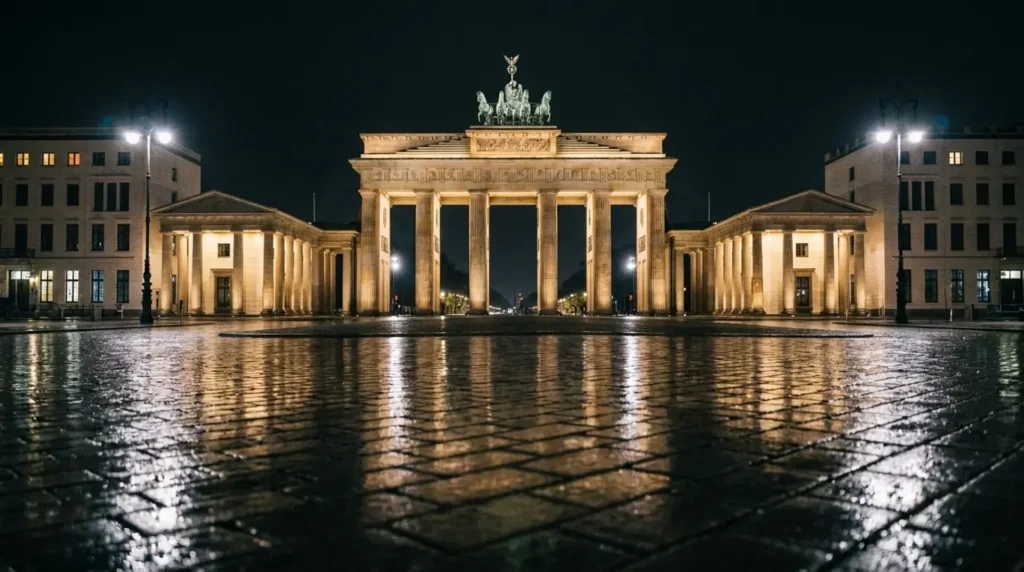
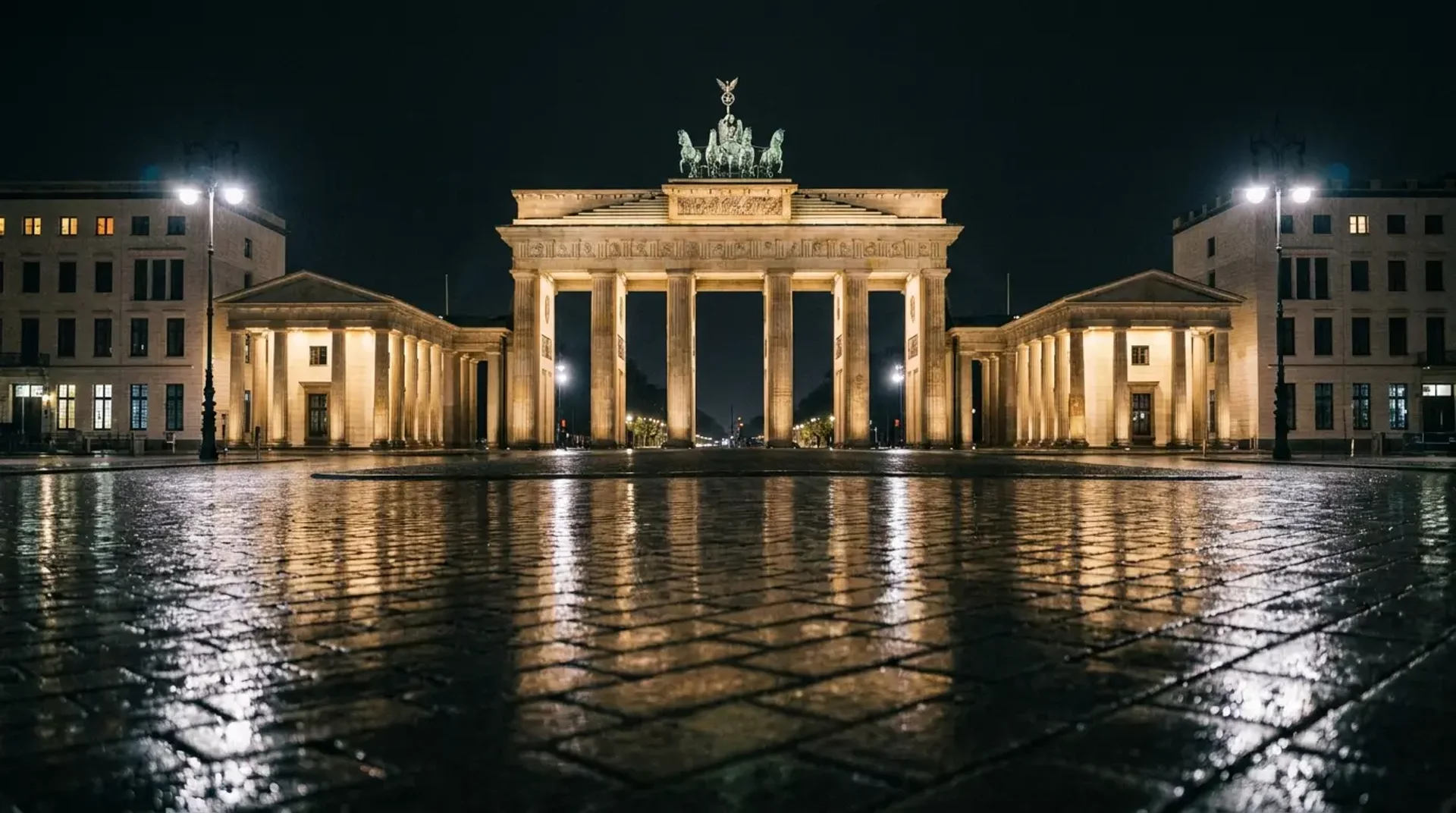
The symbol of Berlin — a 26-metre sandstone triumphal gate built 1788–1791 under Friedrich Wilhelm II, crowned by the bronze Quadriga chariot driven by the goddess of victory. Admission free. Always open. During the Cold War the gate stood in the death strip of the Berlin Wall and was unreachable from either side until 22 December 1989, when East German leader Hans Modrow and West German Chancellor Helmut Kohl ceremonially reopened it.
Reichstag Dome
The German parliament building, built 1884–1894 and famously burned down in 1933. The glass dome on top, designed by Norman Foster and opened in 1999, is free to visit but requires online booking 3–7 days in advance. Open 08:00–24:00, last entry 22:00. A spiral ramp climbs inside the dome to a rooftop terrace with 360-degree views over Mitte. Allow 90 minutes including security.
East Side Gallery
The longest surviving stretch of the Berlin Wall — 1,316 metres along Mühlenstraße in Friedrichshain. Founded 1990. Admission free. Always open. 105 murals painted by 118 artists from 21 countries, including Dmitri Vrubel’s “My God, Help Me to Survive This Deadly Love” (the Brezhnev–Honecker kiss) and Birgit Kinder’s “Test the Rest” (a Trabant crashing through the Wall).
Memorial to the Murdered Jews of Europe
Peter Eisenman’s field of 2,711 concrete stelae, designed 2003–2005 and opened May 2005, directly south of the Brandenburg Gate. Admission free to the field. The underground Information Centre (Tue–Sun 10:00–19:00) holds the names of roughly 3 million identified victims and is a heavy but essential visit — plan 90 minutes.
Checkpoint Charlie and the Mauermuseum
The former Cold War border crossing at the corner of Friedrichstraße and Zimmerstraße. The checkpoint itself (1961–1990) is a free open-air replica now. Mauermuseum — Haus am Checkpoint Charlie — opened 1962 and holds the world’s most detailed collection of original Wall-escape contraptions (a hot-air balloon, a hollowed-out speaker cabinet, custom submarines). Admission €17.50 (~$19). Open daily 09:00–22:00.
Topography of Terror
Free outdoor and indoor documentation centre on the exact site of the former SS and Gestapo headquarters, destroyed by Allied bombing in 1945 and rebuilt as a memorial in 1987. Admission free. Open daily 10:00–20:00. The outdoor trench along the last surviving segment of the Wall on Niederkirchnerstraße is the most affecting part. Plan 75 minutes.
Berliner Dom
Berlin Cathedral, built 1894–1905 under Kaiser Wilhelm II in an Italian Renaissance style, standing on the eastern side of Museum Island. Admission €10 (~$11). Open Mon–Sat 09:00–19:00, Sun 12:00–19:00. Climb the 270 steps of the dome for the best close-range view of Museum Island and the Spree; the Hohenzollern crypt below holds 90 members of the Prussian royal family.
DDR Museum and Palace of Tears
For the clearest short introduction to daily life under East German socialism, the interactive DDR Museum on the Spree opposite the Berliner Dom lets visitors sit in a reconstructed Trabant, open kitchen cupboards stocked with GDR-era brands, and watch propaganda clips in a furnished Plattenbau living room. Admission €13.50 (~$14.50). Open daily 09:00–21:00. A fifteen-minute walk north at Friedrichstraße station, the Tränenpalast (“Palace of Tears”), the former border-crossing pavilion where East Berliners said goodbye to Western visitors from 1962 to 1990, is preserved as a free documentation centre. Together the two sites can be done in a half-day and work best before an East Side Gallery walk.
Gemäldegalerie and the Kulturforum
West Berlin’s answer to Museum Island sits south of Tiergarten at the Kulturforum — a cluster of Cold War-era cultural buildings commissioned when Museum Island fell on the Eastern side of the Wall. The Gemäldegalerie holds roughly 1,500 European paintings from the 13th to the 18th centuries, including major Vermeer, Caravaggio, Rembrandt and Botticelli works. Admission €12 (~$13). The neighbouring Neue Nationalgalerie — Mies van der Rohe’s last finished building, 1968, reopened August 2021 after a David Chipperfield refurbishment — houses 20th-century European modernism. Allow half a day for both.
🎵 Entertainment
Berlin entertains on a different timetable to every other European capital. Clubs open at midnight on Friday and close on Monday afternoon; classical concerts start at 20:00 and let out by 22:30 for a second drink; open-air cinemas run from late June to mid-September; and Union Berlin football matches start at odd hours to fit the league schedule and fill to 22,000 standing fans who sing the line-up onto the pitch. The six categories below cover almost everything a traveller will spend an evening on.
Techno Clubs
Berlin has an estimated 150+ licensed music clubs and hosts the densest techno scene in Europe. Berghain, housed in a 1953 former power plant in Friedrichshain, is the best-known: the Panorama Bar (upstairs, house) and the main floor (techno) run Friday night through Monday morning. Typical cost €18–25 door. Other heavyweights: Tresor (in a former department-store vault, since 1991), Sisyphos (east Friedrichshain, set on a lake), and ://about blank. Strongly recommended: go in a pair or alone, wear black, stay sober in the queue.
Classical Music
The Berliner Philharmoniker at Hans Scharoun’s 1963 Philharmonie is the resident orchestra — Simon Rattle and Kirill Petrenko have been chief conductors in living memory. Typical cost €16–120. Free Tuesday Lunch Concerts in the foyer 13:00 September–June are first-come, first-served from 12:00. The Staatsoper Unter den Linden (rebuilt 2017) and the Deutsche Oper in Charlottenburg both offer standing-room tickets from €10 an hour before curtain.
Cabaret and Variety
The Friedrichstadt-Palast, on Friedrichstraße in Mitte, has Europe’s largest theatre stage (2,800 m²) and runs grand modern revues with 100-plus dancers. Typical cost €30–120. Bar jeder Vernunft in Wilmersdorf is a beautiful pre-war spiegeltent running intimate cabaret and chanson, and the sister venue Tipi am Kanzleramt performs in a fixed marquee beside the Chancellery. The Berliner Ensemble at Bertolt Brecht’s old theatre is worth a night even for non-German speakers (€18–45).
Live Music Venues
Below the big Waldbühne and Columbiahalle arenas, Berlin has one of Europe’s deepest small-venue circuits. Typical cost €20–60. SO36 in Kreuzberg has been a punk institution since 1978 and hosted the Dead Kennedys, Einstürzende Neubauten and the Ramones in their first European runs. Kesselhaus at the Kulturbrauerei holds 1,600 for indie and electronic acts, and Privatclub in Kreuzberg runs intimate shows with a capacity of 300.
Open-Air Cinema (Summer)
From late June to mid-September, roughly a dozen open-air cinemas operate across Berlin — screenings start around 21:30 after sunset. Typical cost €9.50–11. Freiluftkino Friedrichshain (in Volkspark Friedrichshain), Freiluftkino Kreuzberg (in the courtyard of Künstlerhaus Bethanien) and Freiluftkino Hasenheide are the three most reliable. Most screen original-version (OV or OmU) films with German subtitles — good news for English-speaking travellers.
Football
Berlin has two Bundesliga clubs. Hertha BSC play at the 1936 Olympiastadion — cavernous, Nazi-era architecture, 74,000 capacity, and usually not full. Typical cost €18–70. 1. FC Union Berlin, the former GDR Eisen Union, play at the tight 22,012-capacity An der Alten Försterei in Köpenick, where fans literally rebuilt the stadium by hand in 2008 and still sing the players onto the pitch by name before kick-off — buy a standing-terrace ticket (€18–25) for one of the best atmospheres in Germany.
Comedy and English-Language Stand-Up
Berlin runs the largest English-language stand-up circuit in continental Europe — a side-effect of the city’s 40,000+ anglophone expats and a cheap-rent scene that attracts London and New York comics for multi-week residencies. Cosmic Comedy at Prater Garten, Comedy Café Berlin on Rosegärten and Rise Up Comedy in Friedrichshain run three-to-five nights a week with €10–15 door tickets and a free-entry night each week in exchange for a pay-what-you-want bucket. The German-language scene is concentrated at Quatsch Comedy Club at Friedrichstadt-Palast, and the improv scene centres on the Heimathafen Neukölln. Arrive 45 minutes early for free shows — the queues are long and venues are small.
Theatre and Arthouse Cinema
Berlin runs three state-subsidised opera houses, more than 50 theatres and a dense arthouse-cinema circuit. Volksbühne am Rosa-Luxemburg-Platz stages experimental German-language theatre; the Berliner Ensemble, Brecht’s old house on Schiffbauerdamm, runs a mixed repertory. The Babylon Mitte screens silent films with live organ accompaniment and the Kino International on Karl-Marx-Allee, a 1963 GDR-era flagship, remains one of Europe’s most beautiful single-screen cinemas. Typical ticket €9–14. The Berlinale uses both venues as festival screens in February.
🚁 Day Trips
Berlin sits at the centre of a region that repaid day-trip planning more than almost any other European capital — Potsdam is 45 minutes away on an S-Bahn that costs €4.40, and two of Germany’s prettiest historic cities are inside 2 hours by ICE. The five trips below cover royal palaces, Holocaust memory, biosphere reserve, and two complete cities.
Potsdam and Sanssouci Palace (45 minutes by S-Bahn S7 or RE1)
Potsdam sits 25 kilometres south-west of Berlin, connected by S7 trains every 10 minutes (€4.40 single) or faster RE1 regional services (32 minutes). The main draw is Sanssouci Park, Frederick the Great’s 1747 rococo summer residence, a 290-hectare UNESCO-inscribed landscape of 13 palaces, orangeries and follies. Park entry free; Sanssouci Palace timed-entry €14, combined Potsdam-ticket €22 (~$24). Cecilienhof, where the 1945 Potsdam Conference divided postwar Europe, sits 20 minutes’ walk north. The Dutch Quarter in central Potsdam (134 red-brick gabled houses, built 1733–1742) is a 15-minute tram ride from the park.
Sachsenhausen Memorial (1 hour by S-Bahn S1 + walk)
The Sachsenhausen concentration-camp memorial in Oranienburg, 35 kilometres north of Berlin, requires a respectful visit. S-Bahn S1 from Friedrichstraße runs every 20 minutes to Oranienburg (50 minutes, €4.40); from there it is a signposted 20-minute walk. Sachsenhausen operated from 1936 to 1945 as the administrative headquarters of all Nazi concentration camps and imprisoned an estimated 200,000 people. Admission free. The site is preserved as an open memorial with a documentation centre, the reconstructed Station Z, and former barracks — allow three hours, observe the site’s guidance on respectful conduct (no food, no phone calls, no photographs inside the former cells).
Spreewald / Lübbenau (2 hours by RE2 regional train)
The Spreewald (Spree Forest), 80 kilometres south-east of Berlin, is a UNESCO biosphere reserve of 1,575 kilometres of narrow water channels running through lowland forest and Sorbian villages. Trains run hourly from Berlin Hbf on the RE2 line to Lübbenau (2 hours, €10–14 single or €24 Brandenburg-Ticket for up to 5 people). From Lübbenau’s port, punt (Kahn) rides through the channels cost roughly €16–22 per adult for 2–3 hours. The Spreewaldgurken (pickled gherkins) stalls at the port are a regional icon.
Leipzig (1 hour 15 minutes by ICE)
Saxony’s second city, the 1989 peaceful-revolution cradle (the Monday demonstrations at the Nikolaikirche from September 1989 are the reason the Wall fell), and J.S. Bach’s home for the last 27 years of his life. ICE trains run hourly from Berlin Hbf; Sparpreis fares from €17.90 (~$19) if booked 6 weeks ahead at bahn.de. The Nikolaikirche is free to enter; the Thomaskirche (Bach’s working church, where he is buried) has a €2 suggested donation; the Spinnerei art-district — the former cotton mill now known as “the East German Tate Modern” — is a 15-minute tram ride west. Budget a full day: the walk from Leipzig Hbf to the Thomaskirche is 10 minutes, the Stasi Museum in the former Runde Ecke is another 15 minutes, and the Spinnerei galleries are usually open Tuesday to Saturday from 11:00 to 18:00.
Dresden (2 hours by EC/ICE)
The Saxon capital, rebuilt from near-total rubble after the February 1945 Allied bombing, and one of Germany’s most photogenic baroque cities. Direct EC and ICE services from Berlin Hbf run twice hourly (€25–55 flex, from €17.90 Sparpreis). The Zwinger (1728) holds the Old Masters Gallery and the Mathematical-Physical Salon; the Frauenkirche, reconsecrated in 2005 after a 14-year rebuild from its original fallen stones, offers rooftop views for €10. The Semperoper runs standing-room tickets from €8. A Sachsen-Ticket at €34 covers up to 5 people for unlimited regional trains all day — cheaper if you are two travellers and happy with slower trains.
🌍 Seasonal Guide
Berlin has four proper seasons and the temperature swing between them is bigger than you might expect for a big European capital: summers hit 28°C on the hottest days, winters drop to −5°C for stretches in January. Spring and early autumn are the sweet spots for comfort; summer is peak for daylight and terraces; winter is cheapest for everything except Berlinale week. Rainfall is moderate and distributed relatively evenly, roughly 570 mm a year — lighter than Hamburg or Munich — and the continental climate means rainstorms rarely last more than an hour even in June and July. Pack layers for any season except midsummer; Altbau apartments have no air conditioning and can be sticky in July.
Spring (March – May)
Daytime temperatures climb from 5°C in early March to 18°C by late May. The city’s cherry-blossom corridor along the former Wall Death Strip — planted from a 1990 TV Asahi donation of 9,000 trees — peaks in the first two weeks of April. Karneval der Kulturen parades through Kreuzberg on the Whitsun weekend (late May 2026), 4 days, free, and is the city’s largest street party after Silvester. Beer gardens reopen in early April. Moderate crowds, moderate prices, and the best all-round time to visit.
Summer (June – August)
Temperatures 15–28°C, with occasional heat waves pushing 33°C. Fête de la Musique (21 June) is free open-air music on every square; Christopher Street Day (CSD) Pride parade draws around 1 million on the last Saturday of July; open-air cinemas run at 12 venues citywide. The Badeschiff floating pool opens in June (€6.50). This is peak tourist season — hotel rates are up 30% and club queues are longer. Air-conditioning is rare in Altbau apartments.
Autumn (September – November)
Temperatures 4–18°C; arguably the most comfortable time to walk the city. The Berlin Marathon (last Sunday in September) draws roughly 55,000 runners on a course that has seen 10 world records since 1998. The Festival of Lights in early October projection-maps Brandenburg Gate, Berliner Dom and Oberbaumbrücke for 10 evenings. Art Week and Gallery Weekend run mid-September. Second peak of visitor numbers — but things settle again from late October.
Winter (December – February)
Temperatures −2°C to 5°C; grey, occasional snow, dark by 16:00 in December. Christmas markets run late November to 23 December — Gendarmenmarkt and the Charlottenburg market (Germany’s largest) are the headliners; Kulturbrauerei and RAW-Gelände are the locals’ favourites. The Berlinale Film Festival is 14–24 February 2026 at the Berlinale Palast. Silvester fireworks at the Brandenburg Gate are Europe’s largest open-air NYE party. Lowest hotel rates of the year outside Berlinale week.
🚊 Getting Around
Berlin runs one of the densest public-transit networks in Europe, operated by BVG (buses, trams, U-Bahn) and DB (S-Bahn). Tickets are interchangeable across all four modes and purchased from the BVG app, ticket machines or tram conductors. Taxis are cheap by European capital standards; cycling is universal. The only thing to watch is that Berlin is geographically large — side-to-side you will spend 50 minutes on the U-Bahn, so plan neighborhoods by day rather than criss-crossing.
S-Bahn (Suburban Rail)
The S-Bahn runs 15 lines over 332 kilometres, including the S41/S42 Ring line that circles the inner city in 60 minutes. Fares are shared with BVG. The Ring is the reference line for Berlin addresses — “inside the Ring” roughly means inner-city, “outside the Ring” roughly means residential. Hours typically 04:30–01:30, all-night on Friday, Saturday and Sundays.
U-Bahn (Metro)
The U-Bahn has 9 lines and 175 stations covering 156 kilometres. U1 (Warschauer–Uhlandstr), U2 (Pankow–Ruhleben) and U8 (Hermannstr–Wittenau) run through the most useful neighborhoods for visitors. Trains run 04:00–01:00 weekdays and all night Friday, Saturday and Sundays. A single fare in the inner-city AB zone is €3.50 (~$3.80).
BVG Tickets and Passes
The fare ladder (as of April 2026): Kurzstrecke (short-trip, 3 U-Bahn stops) €2.40, AB single €3.50, ABC single €4.40, 24h AB day-ticket €9.90, 24h ABC day-ticket €11.50, 7-day AB ticket €44. The BVG Jelbi app sells in-app tickets that activate instantly — pay €9.90 for a day ticket and you’ve broken even after three single rides. Paper tickets must be validated in the yellow box at the platform or inside the tram before boarding; plain-clothes inspectors fine €60 for unvalidated tickets.
Airport Access (BER)
Berlin Brandenburg Airport (BER) opened in October 2020 after a notorious 14-year construction delay, replacing Tegel and Schönefeld. It sits 24 kilometres south-east of central Berlin. Airport Express trains and the S-Bahn share a single ticket price of €4.40 into the city.
- Airport Express FEX / RE7 / RE8 — 30 minutes to Berlin Hbf, €4.40 (~$4.80)
- S-Bahn S9 or S45 — 45 minutes to central stations, €4.40 (~$4.80)
Taxis and Ride-Hail
Flag-fall €4.50 (~$4.90), then roughly €2.30/km for the first 7 km and €1.65/km after. FREENOW and Bolt apps work identically to Western European norms. A typical inner-city crossing (e.g. Neukölln to Mitte) runs €15–25 (~$16–27). Use taxis at night when trams stop rather than S-Bahn, which can require 20-minute waits between services.
Cycling and Scooters
Berlin has roughly 1,500 kilometres of dedicated cycle lanes — more than any other German city — and its flat, grid-like layout makes cycling the fastest neighbourhood-to-neighbourhood mode between April and October. Nextbike and Lidl-Bike rentals run from €1.50 for 15 minutes, and Donkey Republic, Voi and Tier offer e-bikes and e-scooters from €3 unlock + €0.20/minute. Cyclists are expected to use the designated red-paved cycle path rather than the pavement; violations earn €25–55 fines. Helmets are not legally required but are common on arterials. Bike theft is the single largest petty-crime category in the city — always use a U-lock, and never lock only through the front wheel.
Navigation Tips
Apps: BVG Jelbi (BVG’s all-in-one mobility with live delays and in-app tickets) and Google Maps (also plugged into the BVG live feed). Station signs colour-code lines — pay attention to the direction (endstation) on platform boards because the same station often serves two U-lines going opposite ways. Announcements are in German only on the U-Bahn and tram; the S-Bahn runs English announcements on the Airport Express routes. Escalators are the only way down to most U-Bahn platforms — stand on the right, walk on the left.
💰 Budget Breakdown: Making Your Euro Count
| Tier | Daily | Sleep | Eat | Transport | Activities | Extras |
|---|---|---|---|---|---|---|
| Budget | €70–110 / ~$75–120 | €25–45 hostel dorm | €15–25 (Döner + Späti beer) | €9.90 day ticket | €10–20 free museums + Tempelhof | €10 coffee / Club Mate |
| Mid-Range | €160–240 / ~$175–260 | €90–140 3-star or Airbnb | €35–55 one bistro + one Imbiss | €9.90 day ticket | €25–45 Museum Island + Reichstag | €15 Berliner Weiße |
| Luxury | €400+ / ~$440+ | €250+ 5-star (Adlon, Regent) | €150+ Michelin tasting | €30 FREENOW taxis | €80 opera ticket | €40 cocktails at Buck & Breck |
Where Your Money Goes
Berlin is the cheapest major capital in Western Europe at almost every tier, and the gap is widest at the budget end. A bed in a Friedrichshain hostel is €25–45; the same bed in Paris or London runs 50–100% more. A proper Imbiss meal with a drink costs €8–12; a mid-tier bistro dinner with a glass of wine settles at €30–45; a Michelin tasting tops out at Tim Raue’s €288. Transport is exceptional value — €9.90 covers the entire city for 24 hours, versus €22 in Paris Zones 1–5. The only place Berlin matches other capitals is high-end hotels: the Adlon Kempinski and the Regent on Gendarmenmarkt both sit at €400–600 for a standard room, in line with London and Paris. Berlin’s relative bargain status drops sharply during peak weeks — Berlinale in February and Silvester around 31 December push hotel rates up 40–60% and book out months ahead.
Money-Saving Tips
- Buy a 72-hour Berlin Welcome Card (€53, ~$58) for BVG plus 25–50% off 180+ attractions — breaks even on day 2.
- Reichstag dome, Holocaust Memorial, Topography of Terror and East Side Gallery are all free — book Reichstag 3–7 days ahead.
- Tuesday Lunch Concerts at the Philharmonie are free 13:00 September–June.
- Späti beer on the Landwehrkanal (€1.50, ~$1.60) replaces a €6 bar round.
- ICE day-trip Sparpreis fares from €17.90 if booked 6 weeks ahead at bahn.de.
- First Sunday of the month is free admission at many state museums (Museum für Naturkunde, Bode-Museum and Alte Nationalgalerie participate in rotation).
- Tempelhofer Feld, Mauerpark, the Tiergarten and Volkspark Friedrichshain are all free and easily fill a sightseeing morning.
Typical 3-Day Sample Budget
A realistic mid-range 3-day Berlin budget for one traveller sleeping in a 3-star Mitte hotel, eating one Imbiss lunch plus one mid-range dinner a day, and seeing two paid sights daily lands at roughly €540–660 (~$590–720) all-in. Broken down: €330 for 3 hotel nights (averaging €110/night), €150–210 for food (one €10 Imbiss lunch + one €30–40 bistro dinner + €10 coffee/snacks daily), €30 for a 3-day BVG pass, €40 for Museum Island combined ticket plus Reichstag, and €50 on a club night with drinks. Budget travellers can do the same itinerary for €280–360 by sleeping in a €30 Friedrichshain hostel, eating Döner and Späti beer, and using only free sights. Luxury travellers at 5-star hotels with Michelin tastings and cocktail bars should budget €1,200–1,600 across 3 days. Couples sharing a double room can expect the per-person nightly rate to drop by about 25 percent on hotels, with food and transit scaling linearly. Factor in a final-day airport-transfer day-ticket at €4.40, since FEX is covered by the standard ABC single rather than a premium airport fare.
ⓘ Practical Tips
Language
German is the national language, but Berlin is the most English-friendly city in Germany — under-40s are near-universally fluent, menus in Mitte, Kreuzberg and Neukölln are bilingual, and museums run full English audio guides. The local dialect, Berlinerisch, collapses “ich” into “ick” and “das” into “det” — you will hear it most from taxi drivers and older Späti owners. Five words go a surprising distance: “Entschuldigung” (excuse me), “Danke” (thanks), “Tschüss” (goodbye), “Zahlen bitte” (the bill please), “Noch eins bitte” (another one please).
Cash vs. Cards
Berlin is more cash-heavy than Scandinavia or the Netherlands. Always carry €50 in notes — many Spätis, Imbiss stands, clubs (including Berghain) and flea markets are cash-only. Contactless Visa and Mastercard acceptance has grown fast since 2022 and now covers most mid-range restaurants, all chains and all BVG in-app tickets. American Express is rare outside 4-star hotels. ATMs inside bank branches (Sparkasse, Deutsche Bank, Commerzbank) are free; standalone “Euronet” machines charge €5–9.
Safety
Berlin is very safe — violent crime against visitors is rare and solo women report feeling comfortable on U-Bahn at night. The main risks are petty pickpocketing at Hauptbahnhof, Alexanderplatz, Warschauer Straße, and the Ku’damm tourist strip, plus bike theft if you lock a rental only by the front wheel. Keep phones in zipped front pockets and watch bags on S-Bahn platforms.
What to Wear
Berlin dresses down more aggressively than any other European capital. All-black, layered, trainers. Save flashy outfits for restaurants — clubs actively reward the opposite. An Altbau apartment in January will need a serious coat; summer humidity on the U-Bahn peaks uncomfortable in July and August.
Cultural Etiquette
Jaywalking against a red pedestrian light earns open disapproval even at 3am, particularly around children. Recycle your Pfand bottles (€0.08–0.25 deposit, returned at any supermarket machine). Quiet hours (Ruhezeit) are 22:00–06:00 on weekdays and all day Sunday — no vacuuming, no drilling, no loud music. Don’t photograph strangers — German privacy norms are stricter than in the US or UK.
Smoking Bars and Clubbing Culture
Germany bans indoor smoking in most public spaces, but Berlin applies a 2008 state-level loophole for single-room “Raucherkneipe” bars and clubs, which still allow smoking indoors — expect smoky techno clubs and divey Kreuzberg pubs. Restaurants and most cocktail bars are smoke-free. Clubs open at midnight; arriving at 00:30–01:30 is considered early. A “Feierabend” beer from a Späti on a canal bench is a normal, legal, pre-club warm-up.
Connectivity
The EU Eurotariff applies — EU SIMs roam free across Germany. Visitors from outside the EU can buy Vodafone CallYa or O2 prepaid SIMs for €10–20 at any Späti or DB-ReiseZentrum with 10 GB of data and a German number. eSIMs (Holafly, Airalo, Saily) are the least hassle for short visits — budget €15 for a 5-day unlimited plan. Wi-Fi is universal in hotels and most cafés.
Health and Medications
EHIC and UK GHIC cards are accepted for EU and UK visitors for emergency treatment. Pharmacies (Apotheke, signed by a red stylised “A”) close on Sundays, but one duty pharmacy per district stays open 24 hours — the rotating schedule is posted in every pharmacy window and at www.apotheken.de. Over-the-counter painkillers are only sold at pharmacies, never in supermarkets, and require a 30-second consultation.
Luggage and Storage
DB runs staffed luggage lockers at Hauptbahnhof, Zoo, Ostbahnhof and Südkreuz from €4 for a small locker up to €6 for a large locker per 24 hours. Radical Storage and Bounce cover independent hostels and cafés citywide at roughly €5–7 per bag per day, bookable in-app — handy if your Airbnb check-in is after 15:00. The Hauptbahnhof service desk also accepts oversized bags and sports equipment, though expect a 15-minute wait on Friday evenings and Sunday returns when day-trippers flood back.
Tipping
Tipping in Berlin is customary but lighter than in North America. Round up 5 to 10 percent on a restaurant bill, hand the total to the server rather than leaving coins on the table, and say the rounded-up amount out loud (e.g. “fünfunddreißig” for a €32 bill). Taxi drivers are usually rounded to the nearest euro. Hotel housekeeping expects €1 to €2 per day; bellhops €2 per bag.
❓ Frequently Asked Questions
How many days do I need in Berlin?
Three full days is the practical minimum: day one for Mitte (Brandenburg Gate, Reichstag dome, Museum Island, Holocaust Memorial), day two for Kreuzberg and Friedrichshain (East Side Gallery, Markthalle Neun, an evening on the Landwehrkanal), day three for either a Potsdam day trip or deeper Neukölln. Five days lets you add Sachsenhausen, a proper clubbing night, a Prenzlauer Berg brunch morning, and either Leipzig or Dresden as an ICE day trip. Seven days is the upper limit before the city starts to repeat on you — at that point, leave and come back in a different season.
Is Berlin good for solo travellers?
Exceptionally. The city is built around counter-dining (every Imbiss, every Späti, most Turkish bakeries), Spätis double as informal pubs where striking up a conversation is normal, and nearly every club admits single travellers. Solo women consistently report feeling comfortable on U-Bahn at night, and the English-speaking hostel and co-working scene in Neukölln and Friedrichshain means making plans for evening dinner is easier here than in Munich or Frankfurt.
Do I need a BVG day pass?
Almost always yes. The 24-hour AB day-ticket costs €9.90 (~$10.80) and breaks even against three single rides at €3.50. Any realistic Berlin sightseeing day — even one focused on Mitte alone — will exceed three rides when you factor in the airport transfer or an evening trip out. If you are staying five or more days, the 7-day AB pass at €44 (~$48) is the better deal. Buy both in-app through BVG Jelbi to skip validation.
What about the language barrier?
Minimal in central Berlin. Under-40s, all service staff in Mitte, Kreuzberg, Neukölln and Prenzlauer Berg, nearly all museum staff, and the overwhelming majority of bar staff speak fluent English. Menus in tourist-facing neighborhoods are bilingual. The gap is wider in east-Berlin senior communities, some taxi drivers, and at small Spätis — where Google Translate camera mode and the five-words-of-German approach above work fine.
When is the Berlinale Film Festival in 2026?
The 76th Berlinale runs 14–24 February 2026 at the Berlinale Palast on Potsdamer Platz and at 20 additional venues across the city. Public tickets for the roughly 400 screenings go on sale three days before each screening at €14–18 per film — queue at Potsdamer Platz Arkaden from 10:00 the morning tickets open, or refresh the online portal at 10:00 sharp. Hotel rates in Mitte and Tiergarten jump 50–80% during Berlinale week; book by November.
Can I use credit cards everywhere?
No — and this is the single most important thing to understand before arrival. Visa and Mastercard contactless is accepted at chains, mid-range restaurants, DB ticket machines, BVG in-app, and almost all hotels. But clubs (including Berghain), Spätis, Imbiss stands, the Türkischer Markt, Kollwitzplatz farmers’ market, Mauerpark flea market, and some mid-range restaurants remain cash-only. Carry at least €50 in notes at all times. Withdraw from Sparkasse/Deutsche Bank/Commerzbank ATMs only — Euronet machines charge up to €9 in fees.
How hard is it to get into Berghain?
Genuinely unpredictable. The door team is led by Sven Marquardt and a small rotating crew who turn away an estimated 30–50% of the queue on busy Saturdays. You can increase your odds by going Sunday afternoon or Monday morning rather than Saturday 02:00, wearing all-black and simple clothes, arriving alone or as a pair (never a group of more than three), staying sober in the queue, not speaking loudly in English, and never asking the bouncer why others were refused. No photos inside — a sticker will be applied over your phone camera at entry.
Is Berlin cheaper than other European capitals?
Noticeably. Hotel rates run roughly 25–35% below London and 15–25% below Paris for equivalent quality; a mid-range restaurant dinner is 25% cheaper than Paris; a BVG day pass is less than half the Paris Zones 1–5 equivalent; beer at a Späti (€1.50, ~$1.60) is the cheapest street beer of any Western European capital. Only Michelin tasting menus and 5-star hotels match Paris and London — and even there Berlin often runs 10–15% cheaper. Leipzig and the rest of eastern Germany are cheaper still, but you came to Berlin, not Leipzig.
Which neighbourhood should I stay in?
Mitte for first-timers who want every major sight within walking distance, Prenzlauer Berg for brunch-and-Altbau comfort, Kreuzberg or Friedrichshain for nightlife and counter-culture, Neukölln for the cheapest mid-range rates and the most international food scene, and Charlottenburg for quiet Kaiser-era elegance and shopping. Avoid basing yourself out past the S-Bahn Ring unless you are specifically going to lake districts — nightly transit times add up quickly.
🚩 Ready to Experience Berlin?
Berlin rewards travellers who pick a handful of neighborhoods and stay long enough to actually drink a Späti beer on the same canal twice — three days minimum, five if you can. Start with Museum Island and the Reichstag, lose a night in Friedrichshain, eat a Döner at 02:00 in Kreuzberg, and see why Berlin is the European capital that rewards return visits most. For the full country context, read the Germany Travel Guide.
Explore More City Guides
Where to Stay
Berlin hotels guide — from the Adlon at the Brandenburg Gate down to hostels in Friedrichshain.
Alex the Travel Guru
Alex the Travel Guru has lived out of a carry-on since 2014, with long stints in Berlin’s Neukölln and Friedrichshain tracking the club scene, the Turkish market circuit on Sonnenallee, and the slow reshaping of the old Death Strip into a cherry-blossom corridor. At Facts From Upstairs, Alex writes the research-first city guides that help travellers skip the obvious — the queue at Checkpoint Charlie, the €6 tourist currywurst — and find the places locals actually return to on a Tuesday night.
Sibling Cities
Other city guides we recommend for europe-focused trip planning around Berlin:
- Paris city guide — France
- Amsterdam city guide — Netherlands
- Vienna city guide — Austria
- Prague city guide — Czech Republic
More city guides you might like
Plan your trip to Berlin
The booking tools we use ourselves. FFU may earn a commission at no extra cost to you.
Plan & book your trip to Berlin
Booking through these searches supports our guides at no extra cost to you.