
City Guide · The world’s most crowded island capital
Malé, Maldives: The Dense, Coral-Stone Island Capital of Fish Markets, Golden Mosque Domes, and a Whole Country Packed onto Two Square Kilometres
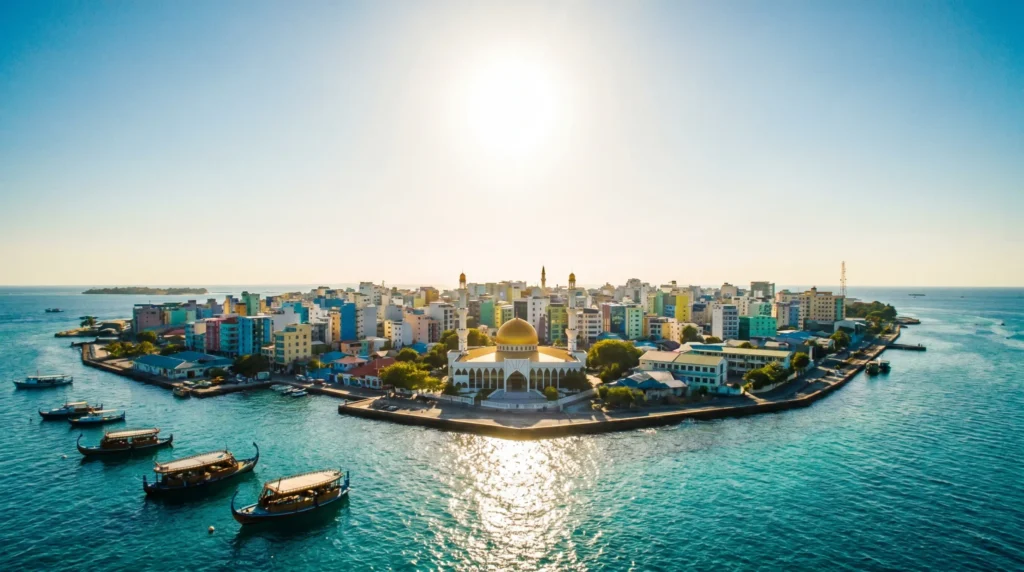
I have watched the sun come up over Malé from the deck of an airport ferry more times than I can count, and the first sight never loses its strangeness: a solid wall of pastel apartment blocks rising straight out of the Indian Ocean, an entire capital city poured onto an island you could walk across in twenty minutes. We tell first-time travellers that almost everyone who flies into the Maldives sees Malé only as a blur between the airport and a seaplane — and that giving it even half a day rewards you with the one genuinely urban, genuinely Maldivian place in the whole archipelago. My favourite ritual here is the early-morning fish market, where the night’s tuna catch is hauled ashore and gutted on the harbour stones while the call to prayer drifts across from the gold-domed Islamic Centre. Treat this guide as the brief I would hand my own family on the ferry over: the coral-stone Old Friday Mosque, the heaving market lanes, the rufiyaa-cash habits, the bridge to Hulhumalé, and how to read a city where roughly a third of a nation lives shoulder to shoulder .

Table of Contents
Why Malé?
Malé is the improbable, fascinating exception to the Maldives most people picture — not a thatched overwater villa but a wall-to-wall concrete city poured onto a coral island barely two kilometres across, where roughly a third of the entire country lives stacked into one of the densest urban footprints on earth. Almost every visitor to the Maldives passes within sight of it, since Velana International Airport sits on the neighbouring island, yet most never set foot here, whisked instead onto a speedboat or seaplane to a private resort. That is a small shame, because Malé is the one place in the archipelago where you can see how Maldivians actually live .
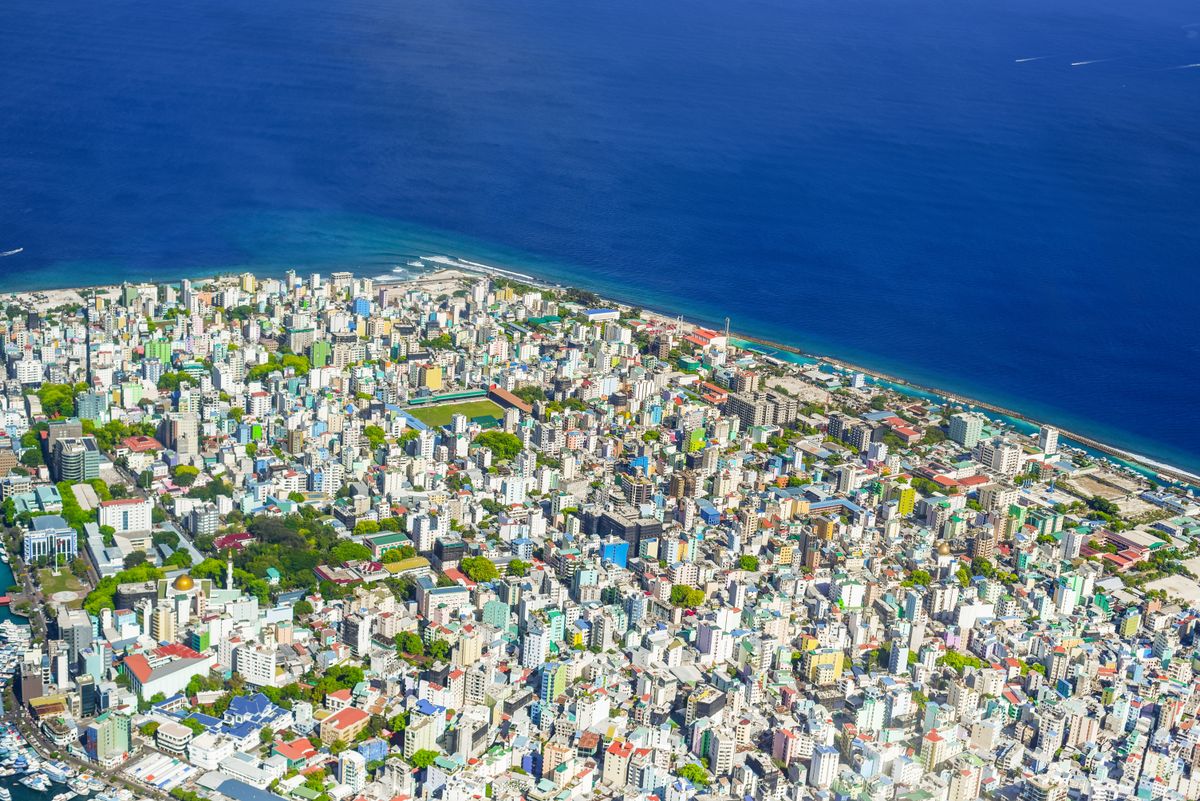
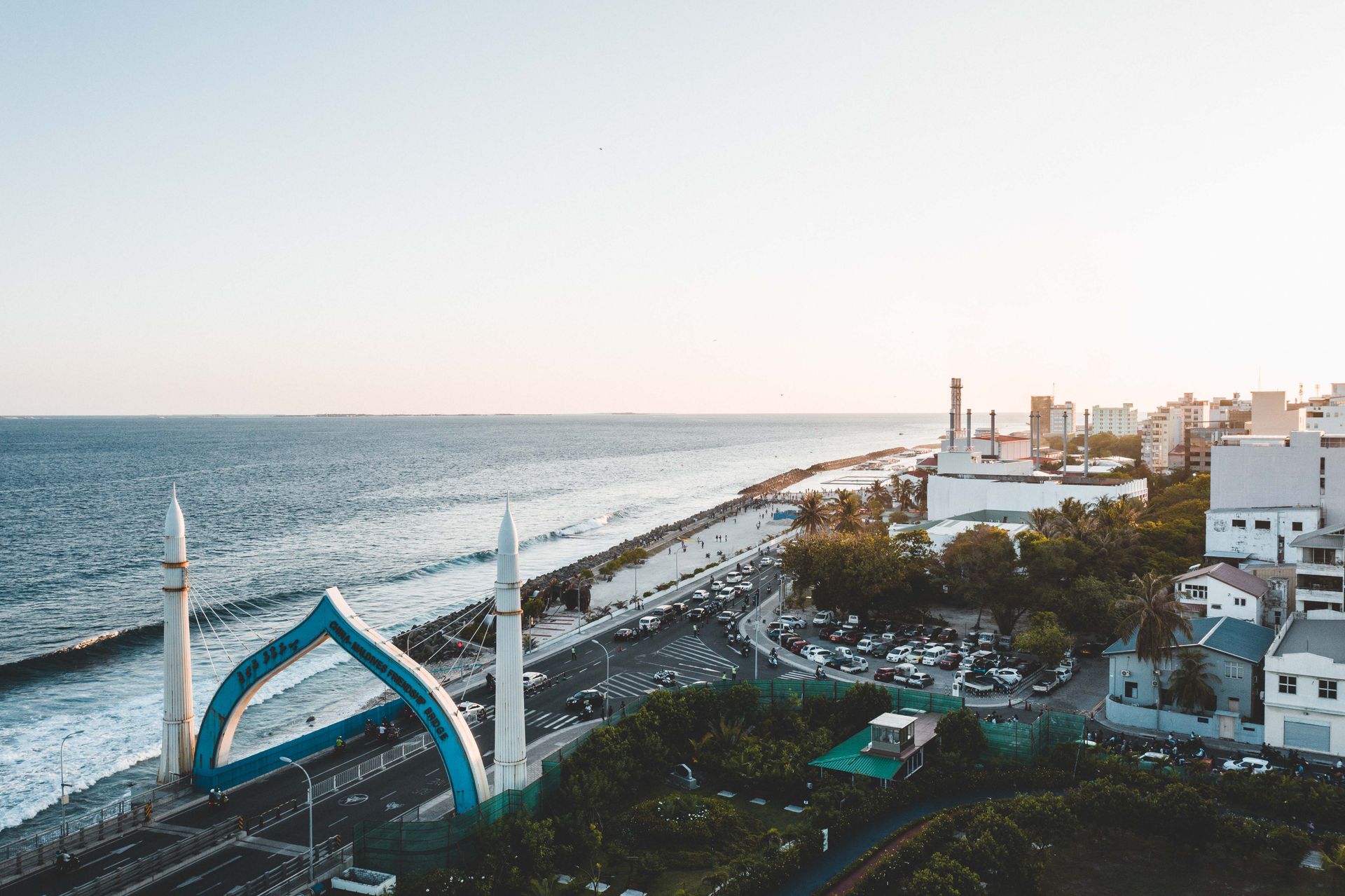
The city reads as a study in sheer compression. With a population of around 212,000 inside an administrative area of only a few square kilometres — the main island itself is under two — Malé is among the most densely populated places in the world, a vertical, traffic-clogged grid of pastel apartment blocks with almost no green space and a shoreline you are never more than a few minutes’ walk from . The whole island has been so completely built over that, seen from the air, it looks like a city has been cut from somewhere larger and dropped into the open ocean. To relieve the crush, the government has spent decades building outward — reclaiming the artificial “youth city” of Hulhumalé and linking it and the airport to Malé by the 2.1-kilometre Sinamalé Bridge, which opened in 2018 .
What makes the city worth the ferry hop is its concentrated, deeply Islamic character. The Maldives has been Muslim since 1153, and Malé wears that history openly: the gold-domed Islamic Centre dominates the skyline, the call to prayer halts the markets five times a day, and the seventeenth-century Hukuru Miskiy — the coral-stone Old Friday Mosque, now on the UNESCO tentative list — is among the most remarkable buildings in South Asia. Within a few hundred metres you can stand at the tomb of the saint who converted the islands, watch tuna being butchered at the harbour, and browse a market heaped with chillies, betel and dried fish .
But the capital is more than its mosques and markets. It is a young, fast-moving, surprisingly cosmopolitan city — the engine of the whole nation, where the government, the hospitals, the university and the big businesses all sit, and where a growing café-and-coffee culture has taken root among a population skewed strikingly young. This guide covers the dense wards worth your time, the mas huni breakfasts and hedhikaa short-eats that define local eating, the coral-stone mosques and the National Museum, the day trips out to the sandbanks and nearby resort islands, and the practical realities of rufiyaa cash, the dry-resort alcohol rules, the airport ferry and bridge, and the equatorial heat. Most people give Malé a half-day between flights; give it a full day and it repays the curiosity.
Neighborhoods: Finding Your Malé
📍 Malé Map: Every Place in This Guide
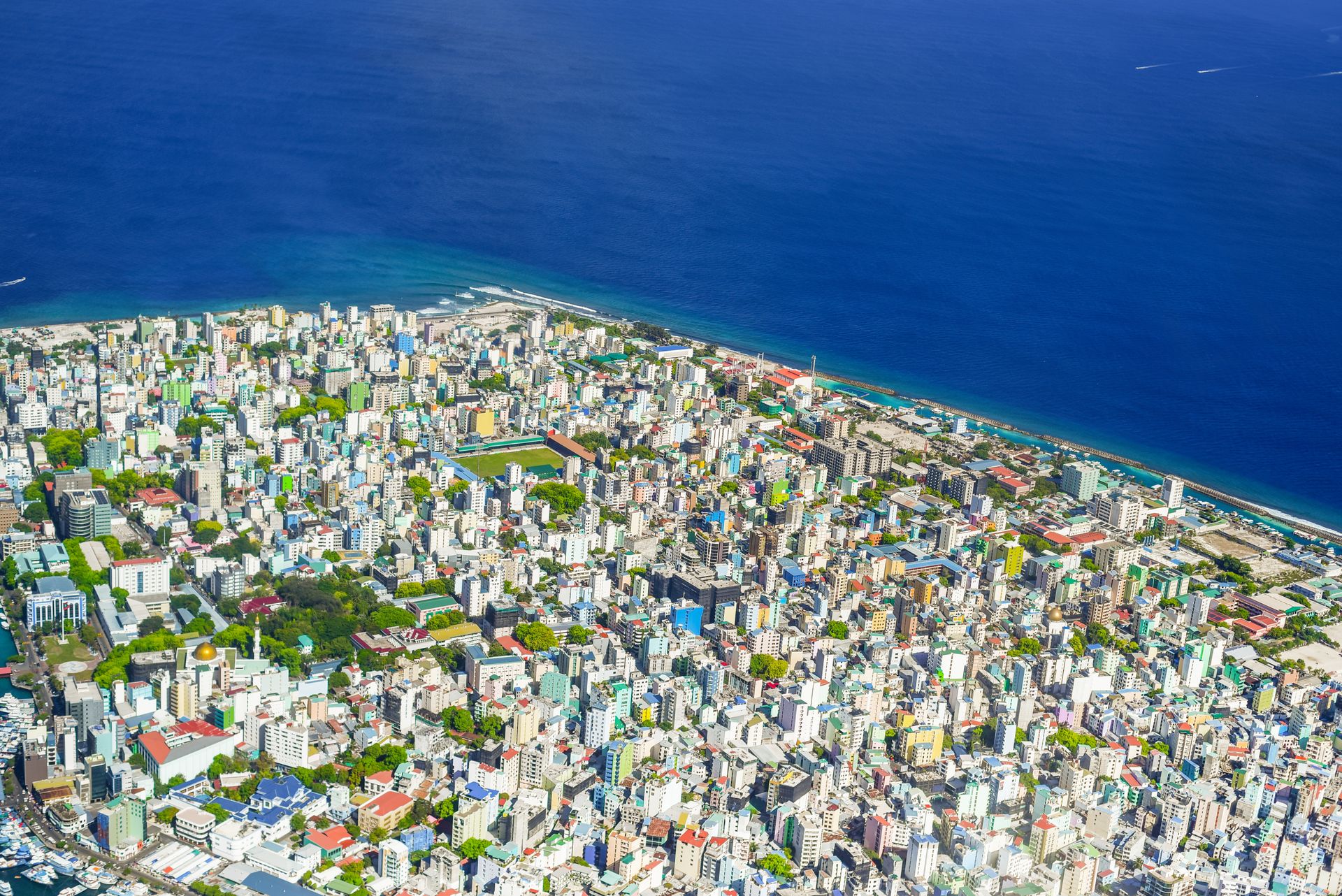
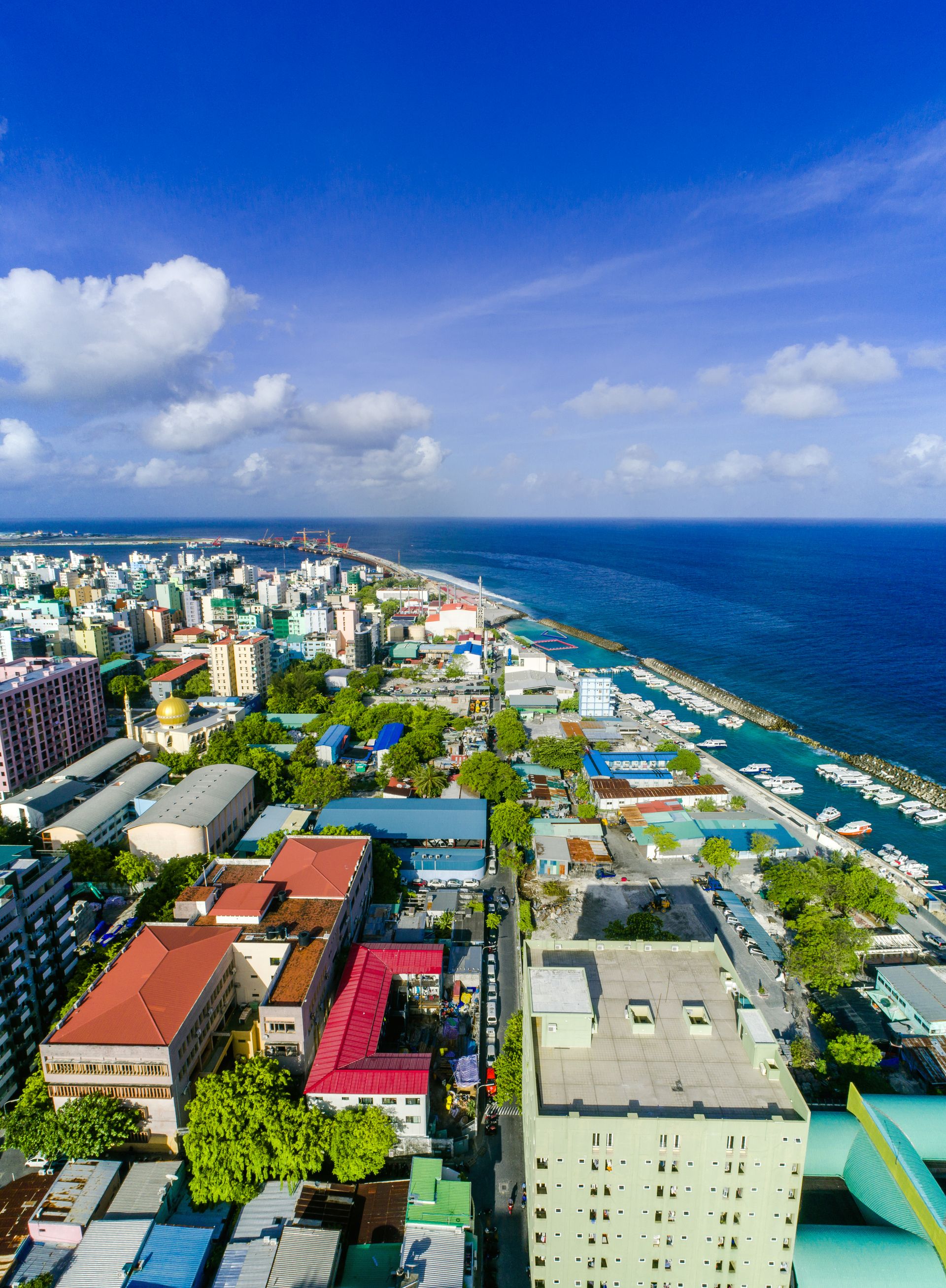
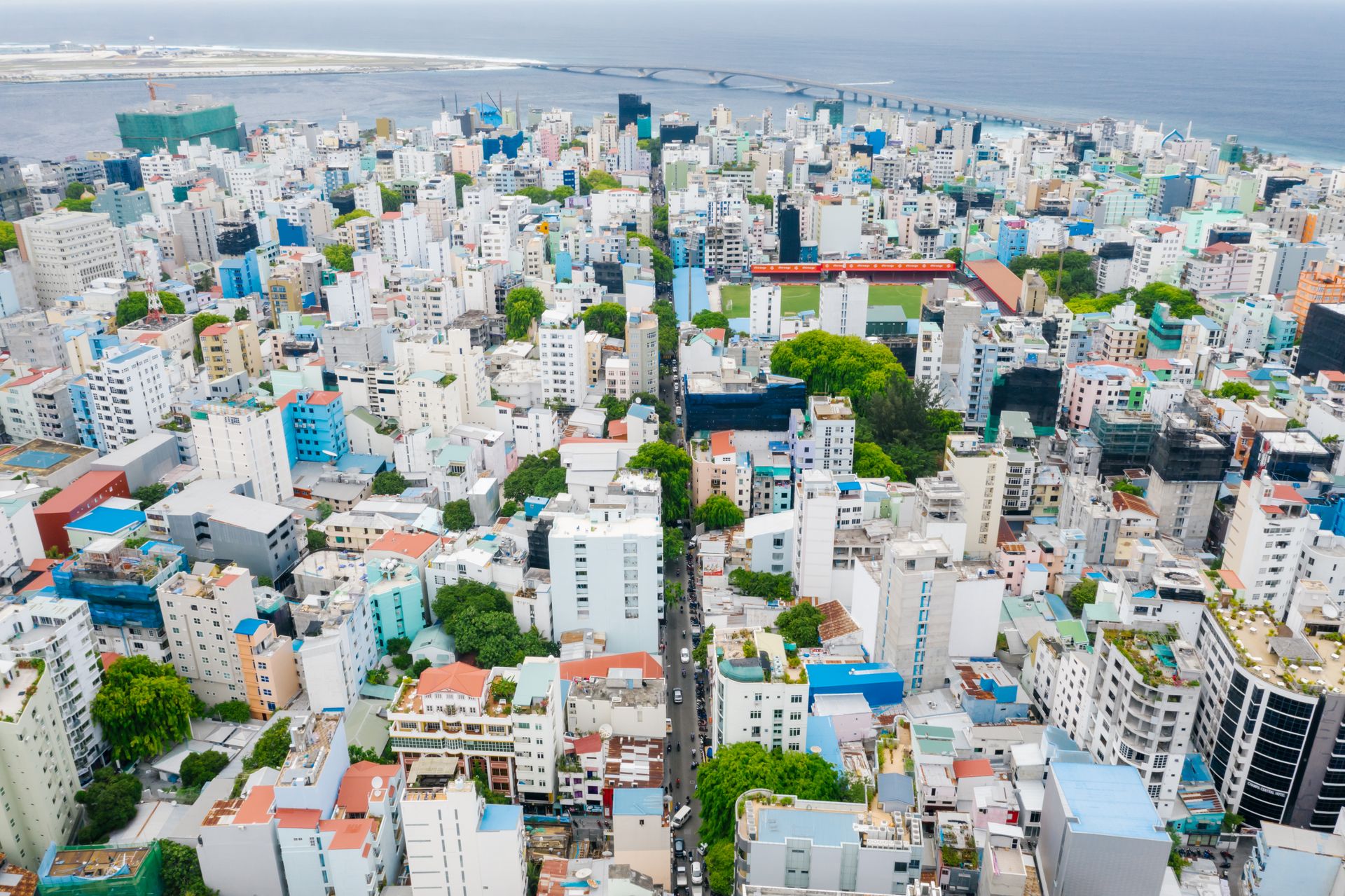
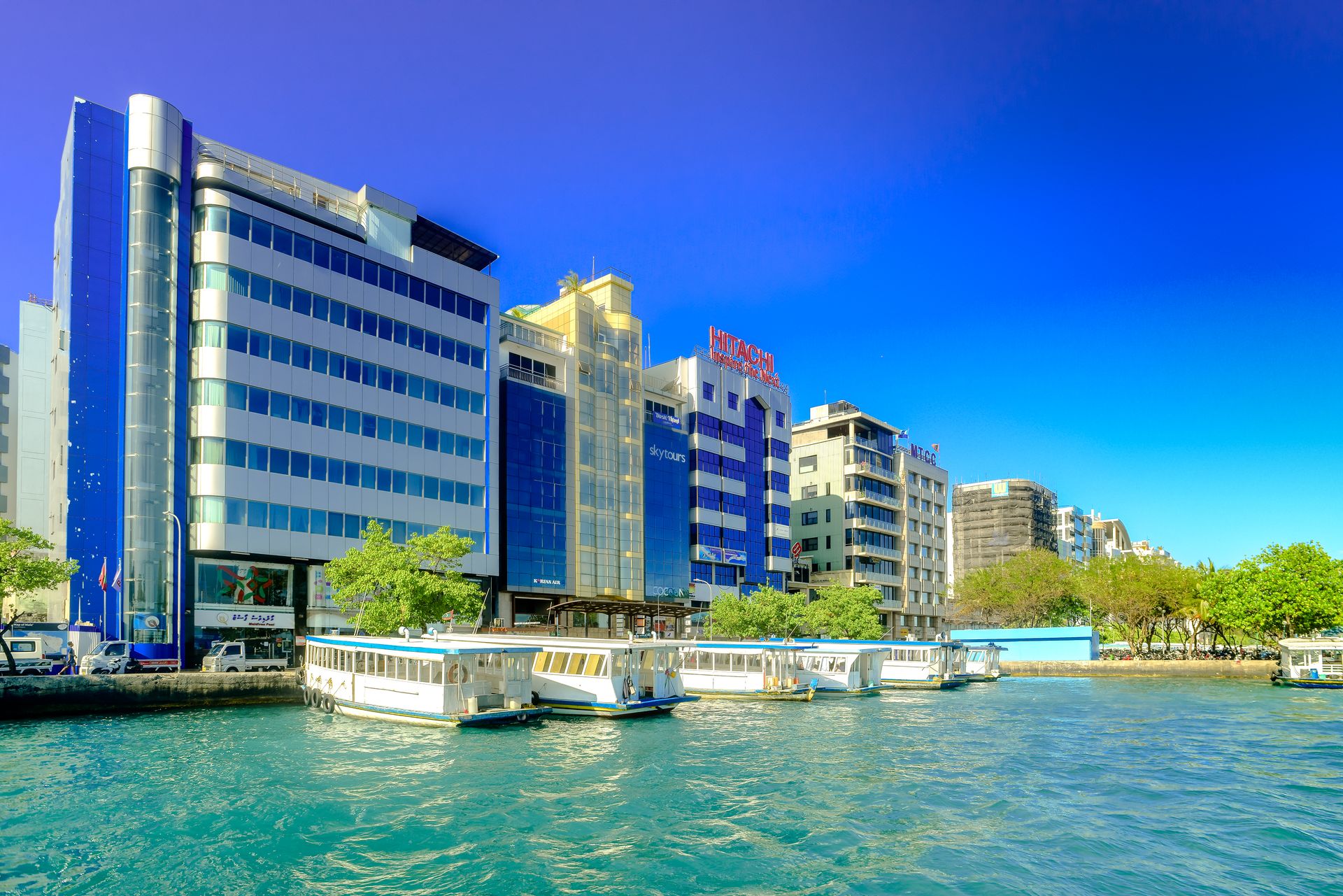
Malé has no metro and no need for one — the main island is small enough to cross on foot in twenty minutes — but it is formally divided into wards, and travellers navigate by the four central divisions of the main island plus the two outlying settled islands. The four wards on Malé Island are Henveiru (the populous northeast, holding much of the government and the seafront), Galolhu (the dense residential centre), Maafannu (the western quarter and main port), and Machchangolhi (the southern commercial heart). To these the city adds Villimalé (a quieter island just to the west) and the sprawling reclaimed “youth city” of Hulhumalé to the north, now linked by bridge . For a visitor, the practical point is simple: the sights you actually want cluster in a tight band along the north shore of the main island, and you can walk between almost all of them.
A quick mental map helps. Picture the main island as a small rectangle with its long axis running east–west and the airport island sitting just across the water to the east. The northern waterfront — running through Henveiru and into Maafannu — holds nearly everything a half-day visitor wants: the ferry jetties, Republic Square, the Islamic Centre, the Old Friday Mosque, the National Museum in Sultan Park, and the fish and local markets. The interior wards of Galolhu and Machchangolhi are dense residential and commercial blocks where Maldivians actually live and shop, threaded by the long retail spine of Majeedhee Magu. Villimalé and Hulhumalé, the two outlying islands, are where most independent travellers now sleep, since they hold the affordable guesthouses and a slower pace.
This section walks the areas you will actually use, grouped by character: the historic-and-civic north shore (Henveiru and the Republic Square belt), the dense commercial interior (Machchangolhi and Galolhu, with Majeedhee Magu), the working harbour west (Maafannu), and the two outlying islands (Villimalé and Hulhumalé) where the guesthouse scene lives. For a first visit, base yourself in Hulhumalé if you want beach, space and budget guesthouses near the airport, or stay central in Henveiru if you want to be steps from the mosques, markets and museum — both put the sights within easy reach.
Henveiru & the Republic Square Belt
The civic and historic heart of the city, occupying the populous northeast of the main island — this is where the government buildings, the President’s residence, the green of Republic Square, the ferry terminals and most of Malé’s signature sights all sit within a few walkable blocks of the north shore. The Islamic Centre with its golden dome, the coral-stone Old Friday Mosque, the National Museum in Sultan Park and the Tsunami Monument are all here or close by, making Henveiru the obvious base for a sightseeing visitor. It is also the most pleasant stretch of the city to walk, with the open waterfront promenade giving relief from the dense interior.
- Republic Square (Jumhooree Maidan) and the government quarter
- The gold-domed Islamic Centre and the Hukuru Miskiy coral-stone mosque
- The National Museum in Sultan Park and the seafront Tsunami Monument
For visitors, Henveiru is best treated as a morning walking circuit: start at the northern ferry jetties, loop past Republic Square and the Islamic Centre, duck into the Old Friday Mosque (visitors need permission and modest dress), and finish at the National Museum before the heat peaks. The seafront here is the city’s main breathing space, busiest at dusk when families come out to walk. Because everything is so close, you can tick off Malé’s essential sights in a single unhurried morning from a Henveiru base.
Best for: first-time visitors, sightseers, walkers. Access: northern waterfront of the main island; walkable from the ferry jetties .
Machchangolhi & Majeedhee Magu
The dense commercial spine of the city, running through the southern-central wards — Majeedhee Magu is Malé’s main thoroughfare and shopping street, a long, traffic-loud artery of shops, electronics stores, pharmacies, cafés and, at dusk, a string of hedhikaa (short-eats) stalls and teashops that turn it into the city’s busiest evening food strip. This is the most intensely urban part of Malé, where the local crush is at its thickest and where Maldivians do their everyday shopping. Few visitors sleep here, but everyone passes through, and the evening street-food scene is a highlight.
- Majeedhee Magu — the main shopping and street-food artery
- Hedhikaa stalls and traditional teashops at dusk
- Electronics, pharmacies and everyday local shopping
A few practical notes make Machchangolhi easier. Come in the cooler evening, when the street-food stalls fire up and the shopping crowds make it feel alive rather than merely hot and congested; the daytime middle hours are best avoided here. Walk rather than ride — the streets are too narrow and clogged for a taxi to be anything but slow — and keep your bag secure in the densest stretches. This is the quarter to graze hedhikaa, watch the city go about its business, and feel how tightly Malé is packed.
Best for: street-food grazers, evening wanderers, people-watchers. Access: central spine of the main island; walkable from anywhere on the island.
Maafannu & the Working Harbour
The western ward of the main island and the city’s industrial-and-maritime edge — Maafannu holds the main commercial port, the cargo docks and much of the boat traffic that supplies the whole archipelago, alongside dense residential blocks. It is grittier and less curated than the northeast, but it is where you feel Malé’s role as the supply hub for two hundred inhabited islands, with dhonis and cargo boats loading and unloading along the quays. The local market and fish market sit at the boundary between Maafannu and the civic north shore.
- The commercial port and cargo dhoni quays
- Dense, lived-in residential streets away from the tourist trail
- Close to the local market and fish market on the north shore
For visitors, Maafannu is less a destination than a texture: walk its harbour edge to see the working maritime city that the resorts never show, then loop back to the markets. It is the least touristy quarter and the most honest, a reminder that Malé is first a functioning capital and only incidentally a sight.
Best for: harbour-watchers, photographers, off-trail wanderers. Access: western main island; a short walk from the central markets.
Galolhu & the Residential Interior
The dense residential core at the centre of the main island, Galolhu is where a large share of Malé’s population actually lives — block after block of mid-rise apartments threaded by narrow lanes, mosques, small shops and the National Stadium. There is little here aimed at tourists, and that is precisely its interest: it is the clearest window onto everyday Maldivian city life, where laundry hangs from balconies, motorbikes thread the lanes, and neighbourhood mosques fill at prayer times.
- The National Stadium and neighbourhood mosques
- Everyday residential lanes and small local shops
- A genuine, untouristed slice of Maldivian city life
Best for: curious walkers, photographers, a glimpse of local life. Access: centre of the main island; walkable but easy to get lost in the lanes.
Villimalé (Villingili)
The quieter island just west of the capital, a ten-minute public-ferry hop from the main island — Villimalé is Malé’s calmer residential overflow, with no cars allowed, a slower pace, a small swimming beach and a far more relaxed feel than the frantic main island. It has a growing cluster of affordable guesthouses and is a popular escape for locals at weekends. For travellers who want to sleep near the capital without the crush, it is an appealing, low-key base.
- A car-free island with a small public swimming beach
- Affordable guesthouses and a relaxed local pace
- A ten-minute ferry from the main island
Best for: budget travellers, a quieter base, swimming. Access: 10-minute public ferry west from the main island.
Hulhumalé (the “Youth City”)
The vast artificial island reclaimed from the lagoon north of the airport, settled since 2004 and connected to Malé and Velana airport by the Sinamalé Bridge — Hulhumalé is the Maldives’ answer to its capital’s overcrowding, a planned grid of apartment blocks, wide roads, a long man-made beach and a fast-growing concentration of budget guesthouses and mid-range hotels. Because it sits right by the airport and has a genuine swimming beach, it has become the default base for independent travellers doing the Maldives on a budget, and a convenient first or last night near the terminal .
- The long man-made Hulhumalé beach and beachfront cafés
- The widest range of guesthouses and mid-range hotels
- Minutes from Velana airport across the Sinamalé Bridge
For visitors, Hulhumalé is the practical choice: a real beach you can swim from (observing the modest-dress rules on this inhabited island), a planned, walkable grid far calmer than central Malé, plenty of budget rooms, and a ten-minute taxi or bus ride to the airport. The trade-off is that it feels new and a little soulless compared with the dense old capital, and you will want to cross the bridge to the main island to see the historic sights.
Best for: budget travellers, airport nights, beach access. Access: across the Sinamalé Bridge north of the airport; taxi or bus from Malé in 10–15 minutes.
Choosing Your Base
If this is your first visit and your priority is the sights, base yourself central on the main island around Henveiru: you will walk to the mosques, the markets and the museum, and never be far from the seafront or a ferry. If you want a swimming beach, more space, budget rooms and proximity to the airport, choose Hulhumalé and cross the bridge for a sightseeing half-day. Travellers who want quiet and value without the airport bustle pick Villimalé, a short ferry away. Whichever you choose, the city’s compactness and the bridge-and-ferry network mean no single base locks you out of anything; the historic core is always a short, cheap hop away.
The Food

Maldivian food is built almost entirely around three things — tuna, coconut and rice — and on the inhabited islands it tastes nothing like the international buffets of the resorts. Centuries of living on a chain of tiny atolls left a cuisine of the sea: skipjack and yellowfin tuna fresh, dried, smoked and flaked into almost every dish; coconut grated, pressed and toasted; rice and a flatbread called roshi to soak it all up; and a fierce love of chilli, lime and the curry-leaf-and-pandan aromatics shared with neighbouring Sri Lanka and South India. Malé, as the only real city, gets the fullest version of it: the mas huni breakfast, the great afternoon ritual of hedhikaa short-eats with strong tea, the clear tuna broth garudhiya, and a growing café-and-coffee scene. Prices are low at the local level — a plate of short eats runs a few rufiyaa each, a sit-down local meal MVR 60–150 (about $4–10) — and cash in rufiyaa is the rule at street level .
The city’s eating geography is simple. The main shopping street, Majeedhee Magu, and the lanes around it hold the teashops (hotaa) and the dusk hedhikaa stalls; the cafés and modern restaurants cluster on the north shore and increasingly in Hulhumalé; and the markets — the local market and the fish market on the north waterfront — are where the raw materials of the whole cuisine arrive each day. A confident traveller eats best by walking into a busy local teashop and pointing at the tray of short eats; a first-timer can ease in through the tourist-friendly cafés before braving a hotaa. Either way, the food is one of the genuine surprises of a Malé visit, since so few resort-bound travellers ever taste it.
A few practical habits make eating here easier. Carry small rufiyaa notes for teashops and stalls, since many do not take cards. Remember that this is a Muslim country with no pork and — crucially — no alcohol on the inhabited islands, including Malé, so meals are dry; the teashops run on sweet tea, and fresh juices and soft drinks fill the rest. During Ramadan, daytime eating is restricted in public, and many local kitchens close until sunset. And do not let the plastic stools and bright strip-lighting of a hotaa put you off — these are where the best, cheapest and most authentic food in the city is served.
It is worth understanding what makes Maldivian food distinct. The defining ingredient is rihaakuru-adjacent tuna in all its forms — fresh in curries, boiled into the clear broth garudhiya, and above all dried and smoked into the hard, intensely savoury valho mas (Maldive fish) that is flaked into countless dishes for an umami punch. Coconut is the constant partner: its milk thickens curries, its grated flesh goes into the chilli-and-onion relish that crowns the mas huni breakfast, and its oil fries the short eats. Chilli, lime, curry leaves and pandan supply the heat and aromatics. The result is a cuisine of small, intense, fish-forward dishes eaten with rice or roshi — simpler and more maritime than its Sri Lankan cousin, but sharing the same love of coconut and chilli. Once you grasp that tuna and coconut underpin almost everything, the whole repertoire makes sense.
Maldivian Classics — Where to Start
The dishes that define Maldivian home cooking are all easy to find in the capital, and a handful of well-run restaurants and teashops make a reliable introduction. Start with mas huni — shredded smoked tuna tossed with grated coconut, onion, chilli and lime, eaten at breakfast with warm roshi flatbread — and garudhiya, the clear, fragrant tuna broth ladled over rice with lime, chilli and onion on the side. From there branch into the coconut-milk fish curries and the short eats. The places below run from old-guard institutions to honest local kitchens, all serving genuine Maldivian food.
- Symphony Restaurant — one of the oldest restaurant chains in the capital, good for local and mixed dishes and freshly made evening short eats (mains ~MVR 120–250, ~$8–16)
- Seagull Cafe House — a Malé institution near the museum and Grand Mosque, famous as the country’s pioneering gelato parlour and a relaxed garden café (snacks/mains ~MVR 80–200, ~$5–13)
- Local hotaa (teashops) on Majeedhee Magu — the real thing: trays of hedhikaa with sweet tea in a bustling local canteen (~MVR 5–15 per short eat, well under $1)
Hedhikaa & the Teashop Ritual
The most quintessentially Maldivian eating experience is the afternoon ritual of hedhikaa — “short eats” — savoury and sweet snacks eaten with strong black tea (kalhu sai) or milky tea (kiru sai) in a teashop. The tradition runs deep, and Malé’s teashops and the dusk stalls along Majeedhee Magu are where it is at its liveliest. You take a plate, load it from the trays of fried and steamed snacks on the counter, and pay by what you have eaten. It is cheap, fast and the single best window onto how the city actually snacks.
- Gulha — small fried dough balls stuffed with smoked tuna, coconut and chilli (~MVR 5, ~$0.30)
- Bajiya — the local samosa, a pastry triangle filled with spiced fish and coconut (~MVR 5–8)
- Masroshi — flatbread stuffed and griddled with a smoked-tuna-and-coconut mix (~MVR 8–12)
Beyond Mas Huni and Garudhiya
Once you are past the headline plates, the everyday Maldivian repertoire opens up — much of it tuna-and-coconut variations on a theme. Kulhi boakibaa is a dense, savoury baked fish cake of smoked tuna, rice flour and coconut, cut into squares; fihunu mas is grilled reef fish or tuna rubbed with chilli paste; and the coconut-milk mas riha (fish curry) eaten with rice and roshi is the everyday lunch. Sweeter short eats and the syrupy foni boakibaa round out the teashop tray. These are the flavours that define how the city actually eats day to day.
- Kulhi boakibaa — savoury baked smoked-tuna and coconut cake, cut into squares (~MVR 10)
- Mas riha — coconut-milk tuna curry eaten with rice and roshi (~MVR 80–150, ~$5–10)
- Fihunu mas — grilled reef fish or tuna with chilli paste (~MVR 100–200, ~$6–13)
- Roshi & rihaakuru — flatbread with the thick, intensely savoury tuna paste (~MVR 30–60)
- Saagu bondibai — a sweet sago-and-coconut-milk pudding (~MVR 20–40)
Tea, Coffee & the Café Scene
The traditional drink of the city is tea — strong, sweet and either black (kalhu sai) or with condensed milk (kiru sai) — drunk all day in the teashops that anchor every neighbourhood. But Malé also has a fast-growing modern coffee culture, driven by its strikingly young population and a wave of design-led cafés on the north shore and in Hulhumalé that serve flat whites, cold brews and Western brunch alongside the local classics. Try the same city two ways — a sweet milky tea and a plate of hedhikaa in an old hotaa, then a cortado in a modern café — to taste how fast the capital is changing. Expect about MVR 10–20 for a teashop tea and MVR 50–90 for a café coffee.
For visitors this matters practically as well as culturally. The teashops are the cheapest, most authentic and most sociable places to eat in the city, open from dawn and busiest in the late afternoon hedhikaa rush; they are also reliably air-conditioned refuges from the equatorial heat and an easy, low-risk introduction to Maldivian flavours, since you can see exactly what you are choosing from the counter trays. The modern cafés, meanwhile, are where Malé’s young professionals and the small community of remote workers settle in for the day, and they are your most reliable bet for strong Wi-Fi, a quiet table and a proper coffee when the street heat and the crowds get too much. Between the two, you can read the whole arc of a traditional tea culture modernising in real time, without it losing its teashop soul.
Sweets, Snacks & the Adventurous End
Maldivian sweets lean on the same tropical pantry — coconut, jaggery, sago and rice flour. Look for bondibai (sweet coconut-milk rice or sago pudding), foni boakibaa (a sweet baked pudding), and the betel-leaf chew (foah) that older Maldivians take after meals. The markets sell tropical fruit — watermelon, papaya, banana and the local screwpine — and the adventurous end of the teashop tray runs to fiery chilli-laced fish snacks and the pungent dried-fish pastes that flavour so much of the cooking. None of it is a tourist gimmick; locals eat these daily.
To drink, beyond the tea, the everyday options are fresh fruit juices, soft drinks and — a local favourite — chilled young coconut water drunk straight from the husk. The one thing you will not find anywhere on the island is alcohol: it is illegal to consume on all inhabited islands, including the capital, and is available only on licensed resort islands and liveaboard boats. Tap water is desalinated and treated, but most visitors stick to the cheap bottled water sold everywhere.
Food Experiences You Can’t Miss
- A dawn walk through the fish market as the night’s tuna catch is landed and butchered on the harbour stones
- The afternoon hedhikaa ritual in a Majeedhee Magu teashop — a loaded plate of short eats and a sweet milky tea
- A breakfast of mas huni and warm roshi, the dish every Maldivian grew up on
- Gelato at Seagull Cafe House, the parlour that introduced the country to ice cream
Cultural Sights

Malé’s sights divide cleanly into two registers: the devout, coral-stone Malé of mosques, shrines and the call to prayer, and the civic-and-historic Malé of the National Museum, Republic Square and the seafront monuments. A complete visit needs both, and the good news is that nearly all of them cluster within a short walk of one another along the north shore of the main island. Below, the sights are ordered roughly as you might tackle them on a single morning loop, with opening hours and admission where they apply. A standing rule throughout: these are active places of worship in a conservative Muslim country, so dress modestly and check whether non-Muslim visitors are admitted.
One thing to grasp before you start is that Malé is not a city of grand stand-alone monuments; its appeal is cumulative, lying in the density and texture of its sights rather than any single show-stopper. Within a few hundred metres you can move from a seventeenth-century coral-stone mosque to a vast modern golden dome, from a saint’s tomb to a fish market to a museum of royal relics, all packed into the same dense northeast corner. Plan a cool-morning walking loop through Republic Square, the Islamic Centre, the Old Friday Mosque and the markets, keep the National Museum for a calmer hour in Sultan Park, and dress modestly throughout, carrying small rufiyaa cash for the inexpensive museum entry.
Hukuru Miskiy (Old Friday Mosque)
The oldest and most remarkable mosque in the country, built in 1658 of intricately carved coral stone, with a lacquered timber interior, fine carved panels and an adjacent minaret and royal cemetery of carved tombstones. It is one of the finest examples of coral-stone architecture anywhere and sits on the UNESCO World Heritage tentative list. Non-Muslim visitors generally need prior permission (arranged through the Islamic Ministry or a guide) and modest dress to enter. Admission is free with permission; visit outside prayer times.
Islamic Centre (Grand Friday Mosque)
The largest mosque in the Maldives, opened in 1984, its great golden dome and white minaret dominating the Malé skyline and visible from far out at sea. Inside, the main prayer hall holds several thousand worshippers beneath fine wood carving and calligraphy. Non-Muslim visitors are usually welcome outside prayer times with modest dress (and a headscarf for women), subject to staff discretion. Free to enter; closed to visitors during the five daily prayers and on Fridays around the main service.
National Museum & Sultan Park
The country’s national museum, set in Sultan Park on the grounds of the former royal palace, holds the regalia of the sultans, pre-Islamic Buddhist coral and limestone carvings, royal thrones, lacquerwork and a run of Maldivian history from antiquity to the republic. It is the single best place to make sense of the islands’ deep past, including the Buddhist era that preceded the 1153 conversion to Islam. Allow about an hour. Admission about MVR 100 ($6.50) for foreign adults; open daily except Fridays and public holidays, roughly 09:00–16:00.
Medhu Ziyaaraiy (Tomb of the Saint)
The modest shrine near the Old Friday Mosque marking the tomb of Abu al-Barakat Yusuf al-Barbari, the traveller traditionally credited with converting the Maldives to Islam in 1153 — a pivotal event that reoriented the entire culture of the islands. It is a quiet, much-revered spot rather than a grand monument, best appreciated alongside the adjacent coral-stone mosque as part of the same historic complex. Free; view respectfully from outside, as it is a place of veneration.
Malé Fish Market & Local Market
The beating heart of the working city, on the north waterfront — the fish market is where the day’s tuna catch is landed, weighed and butchered on the wet stone slabs each afternoon and evening, a raw, fast, fascinating spectacle; the adjacent local market sells heaped chillies, betel, dried fish, coconuts and tropical produce brought in from across the atolls. Together they are the most vivid, most authentic sight in Malé and entirely free. Busiest in the late afternoon when the boats come in; go early for the produce, late for the fish.
Republic Square & the Tsunami Monument
Republic Square (Jumhooree Maidan) is the city’s central civic space near the main ferry jetty, a rare patch of open ground with a large national flag, flanked by government buildings and a popular gathering spot. A short walk east along the seafront stands the Tsunami Monument, a striking memorial of steel rods and steel balls commemorating the Maldivians lost in the 2004 Indian Ocean tsunami, which inundated much of the low-lying capital. Both are free and open public spaces, best in the cool of early morning or at dusk when families come out to the waterfront.
Entertainment

Set your expectations correctly before you arrive: the Maldives is a 100% Muslim country, alcohol is illegal on inhabited islands, and there are no bars, no nightclubs and no cinemas showing late films in Malé. Entertainment here is not nightlife — it is the gentle, social, alcohol-free rhythm of a tropical Islamic capital, lived out of doors once the fierce daytime heat fades. The evening belongs to the seawall and the artificial beach, to the short-eats cafés and “hotels,” to the harbour and the floodlit mosques, and to the simple pleasure of watching a dense island city wind down under the stars. It is among the most low-key capital evenings anywhere — and for travellers in the right frame of mind, all the more restful for it.
The pattern most visitors settle into is unhurried and cheap. As the sun drops, the seafront fills with families, joggers and courting couples; the cafés along the main streets fire up their espresso machines and trays of hedhikaa; and the artificial beach on the east shore becomes the city’s living room, with swimmers, picnickers and footballers out until late. There is no entry fee to any of it. A Malé night is a cup of sweet tea, a plate of fried short eats, a slow walk along the breakwater and an early bed — and because the resort islands monopolise the country’s beach-bar image, the capital’s sober, neighbourly evenings come as a genuine and pleasant surprise.
The Artificial Beach & Rasfannu
Malé has no natural beach, so the city built two: the eastern Artificial Beach (Varunulaa Raalhugandu) and the western Rasfannu beach, both reclaimed swimming and gathering spots protected by breakwaters. They are the social heart of the city’s evenings and weekends — families picnic, teenagers swim, surfers ride the reef break off the eastern point, and food carts cluster at the edges. Free and open to all; women should swim in modest dress (shorts and a T-shirt) rather than a bikini, which is reserved for resort islands.
Café & Short-Eats Culture
The closest thing Malé has to a nightlife scene is its café culture: the city is dense with “hotels” (local tea shops) and modern coffee houses where Maldivians gather for hedhikaa, sweet milk tea and long conversation late into the evening. It is sociable, cheap and genuinely the way locals spend their nights out. Expect to pay MVR 50–150 ($3–10) for a generous spread of short eats and tea. No alcohol is served anywhere on the island.
The Seawall & Evening Promenade
Once the heat breaks, the breakwater and seafront roads become the city’s promenade — joggers, families and friends walking the harbour edge, the dhoni boats bobbing, the Islamic Centre’s golden dome floodlit across the water. It is the quintessential free Malé evening: a slow loop of the waterfront with an ice cream or a tea in hand. Best from about an hour before sunset onward, when the temperature is bearable and the whole city comes outdoors.
Football & Local Sport
Football is the national obsession, and the Maldives’ compact capital is football-mad: you will find pickup games on every patch of reclaimed ground, and the national stadium near the centre hosts league and international matches that draw passionate crowds. Catching a match, or simply joining the crowd watching a big game screened in a café, is one of the most authentic local nights out. Stadium tickets are inexpensive when matches are on.
Hulhumalé After Dark
The reclaimed island of Hulhumalé, a short drive across the Sinamalé Bridge, has the city’s most spacious modern leisure: a long groomed beach, wide boulevards, newer cafés and restaurants, and room to breathe that crowded old Malé lacks. Many residents head there for an evening stroll and a meal by the water. It is the closest the capital gets to a relaxed seaside-resort feel, and the bridge ride out at dusk is itself a small pleasure.
Shopping: Majeedhee Magu & the STO Trade Centre
Evening shopping along Majeedhee Magu, the main commercial spine, is a sociable pastime in its own right — souvenir shops, electronics, clothing and the STO Trade Centre stay busy after the heat of the day. It is more errand-and-stroll than entertainment, but the bustle, the lit shopfronts and the street-food carts make an enjoyable hour. Bargaining is mild; prices are mostly fixed in the larger stores.
Day Trips
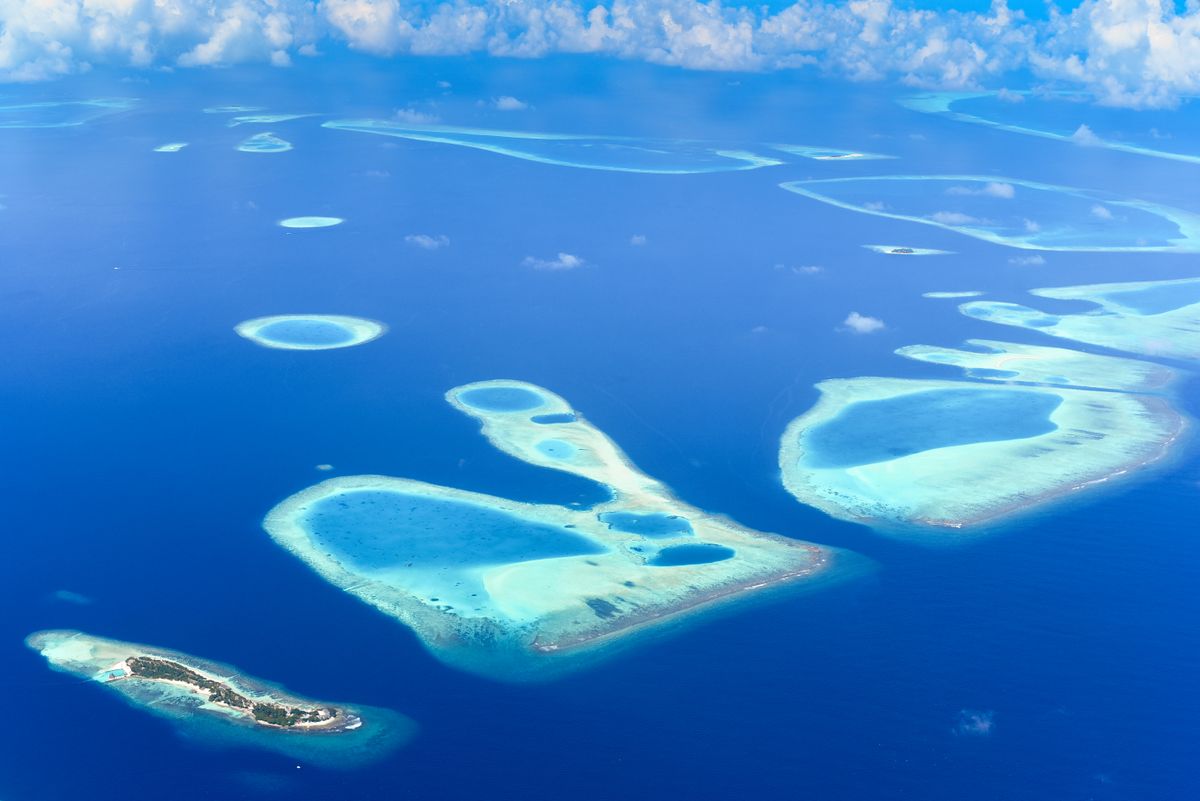
Malé sits in the middle of North Malé Atoll, ringed by reefs, sandbanks and dozens of inhabited and resort islands, so its day trips are by boat rather than by road. The capital is the country’s transport hub — public ferries, speedboats and seaplanes all radiate from here — which makes it an ideal base for a day on the water before or after a resort stay, or for budget travellers exploring the nearby local islands. The most efficient approach is to pick one direction per day: a guesthouse island for beach and snorkelling, a sandbank or snorkel trip on the reef, or the easy reclaimed islands reachable by the bridge. Below are the trips travellers based in Malé actually take, with rough times and how to do each.
Maafushi (90 minutes by public ferry, 30 by speedboat)
The most popular local “guesthouse island” in South Malé Atoll, and the easiest budget escape from the capital: a genuine inhabited island with a “bikini beach” set aside for tourists, dive shops, cheap guesthouses and a string of sandbank and snorkelling excursions. It is the classic introduction to local-island tourism — Maldivian island life plus the turquoise water the country is famous for, at a fraction of resort prices. Day-trippable by the fast speedboat, but it rewards an overnight; the cheap public ferry does not run on Fridays.
Sandbank & Snorkel Trips (half day by boat)
The signature Maldives day out: a boat to a bare white sandbank in the middle of the lagoon for swimming and photos, usually combined with snorkelling on a nearby reef and often a chance to see reef sharks, turtles and rays. Operators and guesthouses in Malé and Maafushi run these daily. It is the single most memorable, most photogenic thing you can do from the capital. Half-day trips run roughly $30–60 per person; bring reef-safe sunscreen and a hat, as there is no shade on a sandbank.
Villingili & Hulhumalé (10–20 minutes by ferry or bridge)
The two easiest escapes need no resort booking. Villimalé (Villingili), a greener, quieter residential island, is a short public ferry from the centre and has a small beach, a relaxed pace and a swimming area — a genuine breather from the capital’s density. Hulhumalé, reached by the Sinamalé Bridge, offers a long groomed beach and modern seafront cafés. Both are cheap, easy half-days and a window into how Maldivians actually live, away from the resorts.
A Resort Day Pass (30–60 minutes by speedboat)
Several nearby North Malé Atoll resorts sell day passes to non-guests — a way to taste the famous overwater-villa, white-sand-and-cocktail Maldives without the multi-night price tag. A pass typically bundles the speedboat transfer, lunch, pool and beach access, and sometimes a drinks allowance (resorts are the only places alcohol is legally served). Prices vary widely; book ahead through an agent in Malé. It is the simplest way to combine a city stay with one classic resort day.
Diving & the North Malé Atoll Dive Sites (half/full day by boat)
The reefs and channels around Malé include some of the country’s renowned dive sites — Banana Reef, HP Reef and the wreck and manta sites of North Malé Atoll — accessible on day trips with the capital’s dive operators. The Maldives is a world-class diving destination, and you do not need to be staying at a resort to dive it; Malé-based shops run guided boat dives for certified divers and courses for beginners. Expect roughly $70–120 for a two-tank day.
Seasonal Guide

Malé has a tropical monsoon climate with no real temperature seasons — it is hot and humid year-round, with daytime highs around 30–31°C every month and warm seas — but two monsoons shape the rain and the sea. For visitors the practical takeaway is simple: aim for the December-to-April northeast-monsoon dry season for the clearest skies and calmest water, expect the wettest, windiest weather in the May-to-November southwest monsoon, and plan around short, heavy tropical downpours rather than long grey spells. The framing below maps the familiar four seasons onto that pattern, with what to expect from the weather, the festivals and the crowds in each.
Spring (March – May)
March and April are the tail of the dry northeast monsoon and among the best, sunniest months, with calm seas, light winds and excellent visibility for diving and snorkelling — and the peak-season crowds and prices to match. By May the southwest monsoon arrives, bringing the year’s first heavy rains, more wind and choppier water. Daytime highs hold around 30–31°C throughout. Ramadan often falls in this window (its date shifts each year); during the fasting month many cafés close in daylight and the rhythm of the city changes, so check the calendar before you book.
Summer (June – August)
The heart of the southwest monsoon: the wettest, windiest stretch, with frequent heavy tropical downpours, rougher seas and more overcast days, though the rain usually comes in short, intense bursts rather than all day. Daytime highs stay around 30°C. It is low season, so resort and guesthouse rates fall sharply and the islands are quieter — a good-value time for budget travellers who do not mind some rain. Surfers favour these months for the bigger swells on the eastern atolls. Pack a light rain layer and expect changeable conditions.
Autumn (September – November)
September and October remain in the southwest monsoon — still wet and changeable — before the weather begins to settle in late November as the dry season returns. Seas calm and visibility improves through November, making it a sweet spot of improving weather and still-moderate prices before the December peak. Daytime highs around 30°C. The Maldivian Islamic holidays and the national independence-era observances fall variously through the autumn; the city is calm and uncrowded. Carry an umbrella early in the season and watch the forecast for trip-planning.
Winter (December – February)
The dry northeast monsoon and the best time to visit, hands down — clear skies, calm seas, low humidity and superb underwater visibility, ideal for diving, snorkelling and sandbank trips. Daytime highs around 30°C with cooling sea breezes. This is high season: the resorts and guesthouses are fullest and priciest, peaking around Christmas, New Year and Chinese New Year, when the best rooms and seaplane slots sell out months ahead. The big Maldivian national day is Independence Day; Islamic festivals shift by the lunar calendar. Book accommodation and transfers well in advance for December and January.
Getting Around
Getting around Malé is, in the city itself, almost trivially simple: the island is barely two square kilometres, the entire capital is walkable end to end in well under an hour, and you will rarely need any transport at all within old Malé. The complexity is all in getting on and off the island — to the airport, to Hulhumalé, to the local islands and resorts — which is done by bridge, ferry, speedboat or seaplane rather than by road. Below is everything you need, from your own two feet to the seaplane, with rough costs and how to do each.
Walking
Walking is how you see Malé. The historic core — mosques, museum, markets, Republic Square, the seafront — is densely packed into a few hundred metres, and almost everything a visitor wants is within a 15-minute stroll. The streets are narrow, busy with scooters, and short on shade, so walk in the cooler morning and evening hours and keep to the seafront for breeze. It is free, and genuinely the best and most rewarding way to experience the world’s most crowded capital.
Taxis
Malé has plentiful metered taxis — useful in the heat, with heavy bags, or for the trip across the bridge to the airport or Hulhumalé. Fares within the island are a flat few dollars; a taxi across the Sinamalé Bridge to the airport or Hulhumalé costs more. There are ride-hailing apps (such as Ula) operating in the capital alongside phone-dispatch taxi fleets. Carry small rufiyaa notes; not every driver takes cards.
The Sinamalé Bridge & Buses
The Sinamalé (China–Maldives Friendship) Bridge, opened in 2018, connects Malé to the airport island of Hulhulé and the reclaimed island of Hulhumalé by road — the country’s first inter-island road link. Cheap, frequent public buses run across it linking Malé, the airport and Hulhumalé, the easiest and most economical way to reach the airport without a boat. The bus is a flat low fare; the bridge ride itself, out over the open sea, is a small attraction.
Public Ferries & Speedboats
The government MTCC ferries are the backbone of inter-island travel and the budget traveller’s friend: slow, cheap public boats linking Malé to Villimalé, Hulhumalé and the local islands of the surrounding atolls for a few dollars. Private speedboats cover the same routes faster for more money, and are the standard transfer to nearer resorts and guesthouse islands. Note that many public ferries do not run on Fridays, and schedules are limited — check times in advance.
Airport Access (Velana International Airport)
The Maldives’ main gateway, Velana International Airport (code MLE), sits on its own island (Hulhulé) immediately east of Malé, now linked to the capital by the Sinamalé Bridge . Allow 10–20 minutes for the transfer.
- Public bus across the bridge — 10–20 min, flat low fare
- Taxi across the bridge — 10–15 min, a few dollars
- Airport ferry (dhoni) to central Malé — about 10 min, a couple of dollars
Seaplanes & Domestic Flights
For resorts and islands beyond easy speedboat range, the onward transfer is by Trans Maldivian seaplane or a domestic flight from Velana — a spectacular, if pricey, way to travel, with the seaplanes taking off straight from the lagoon beside the airport. These are almost always arranged by your resort as part of the transfer package rather than booked independently, and they fly only in daylight. Build the seaplane schedule into your arrival plan, as a late international landing can mean an overnight near the airport before the morning flight out.
Budget Breakdown: Making Your Rufiyaa Count
| Tier | Daily | Sleep | Eat | Transport | Activities | Extras |
|---|---|---|---|---|---|---|
| Budget | $45–70 | $25–45 city guesthouse | $5–12 hotaa & short eats | $2–6 ferry/bus | $0–10 mosque/museum | $5–10 water/snacks |
| Mid-Range | $120–220 | $60–120 hotel/guesthouse island | $20–40 restaurants | $10–30 speedboat/taxi | $30–60 snorkel/dive trip | $10–20 souvenirs |
| Luxury | $500+ | $300+ resort (transfers extra) | $80–150 resort dining | $200–500 seaplane transfer | $100+ excursions/spa | $50+ resort bar |
Where Your Money Goes
The Maldives has a fearsome reputation as one of the most expensive destinations on earth, and at the resort tier it earns it — but Malé itself, as a working city of guesthouses and local cafés, is far more affordable than the overwater-villa image suggests. In the capital a clean guesthouse room runs $25–45, a generous plate of short eats and tea costs a couple of dollars, public ferries are pennies, and the mosques and markets are free. Budget travellers using the capital and the nearby local islands can manage on $45–70 a day; the eye-watering numbers — the $500-plus days — belong almost entirely to the resorts and, above all, to the seaplane transfers that reach them.
The single biggest lever on a Maldives budget is the resort-versus-local-island choice. A resort bundles a private island, full board and a costly seaplane or speedboat transfer that can run several hundred dollars per person each way, pushing daily spend past $500 with ease. A local-island guesthouse on Maafushi or a city stay in Malé, by contrast, gives you the same turquoise water and white sand on the designated tourist beaches for a fraction of the cost, with cheap public-ferry transfers. Food follows the same logic: resort dining is captive and pricey, while a Malé hotaa feeds you superbly for a few dollars. The capital is the budget anchor of any Maldives trip.
Two practical quirks shape spending here. First, a green tax and a goods-and-services tax (TGST) apply to tourist accommodation, and resorts add hefty service charges — read the fine print, as the headline room rate is rarely the final bill. Second, the Maldives is largely a card-and-dollar economy at the tourist tier (resorts bill in US dollars), but in Malé itself you will want rufiyaa cash for cafés, ferries, taxis and the markets, where cards are not always taken. Carry a working float of small rufiyaa notes for the city.
Money-Saving Tips
- Base yourself in a Malé or Maafushi guesthouse rather than a resort — same water, a tenth of the price, and cheap public-ferry transfers
- Take the public bus across the Sinamalé Bridge to the airport instead of a taxi or boat transfer
- Eat at local “hotaa” tea shops — a plate of hedhikaa short eats and tea costs a couple of dollars and is the authentic choice
- Use the cheap government MTCC ferries for island-hopping, but check the timetable and the Friday gaps before you rely on them
- The mosques, markets, Republic Square and the seafront are all free — the best of the city costs nothing
- Carry rufiyaa cash in the city for cafés, ferries and markets, where cards are often not accepted
Practical Tips
Language
Dhivehi is the official language, written in the distinctive right-to-left Thaana script. English is very widely spoken in tourism, business and government — a legacy of the islands’ trading history and the resort economy — and you will have little trouble being understood in Malé. A few words of Dhivehi go a long way: assalaamu alaikum (the standard greeting), shukuriyyaa (thank you). Most signage in the capital appears in both Thaana and English.
Cash vs. Cards
The Maldivian rufiyaa (MVR) is the currency, though the tourist economy runs heavily on US dollars, which resorts bill in and most tourist businesses accept . Cards are taken at resorts, hotels and larger Malé shops and restaurants, but you will want rufiyaa cash for cafés, taxis, public ferries and the markets in the capital. ATMs in Malé dispense rufiyaa (and some dollars). Carry small notes for the city; you rarely need much cash on a resort.
Safety
The Maldives is generally very safe for visitors, with low violent crime, but petty theft (pickpocketing and bag-snatching in crowded Malé and on ferries) does occur, and you should keep an eye on belongings in the capital’s busy markets and waterfront. The more important risks are environmental and legal: strong currents and boat traffic around the islands, fierce equatorial sun, and a strict legal code. Political demonstrations occasionally occur in Malé and should be avoided. Your government’s travel advisory is the authoritative source for current conditions.
What to Wear
Malé is a conservative Muslim city, not a resort: cover shoulders and knees, and dress modestly in public. Bikinis and swimwear are not acceptable on the capital’s streets or its public beaches — modest swimwear (shorts and a T-shirt) is the rule even at the artificial beach, and women should carry a scarf for mosque visits. The barely-clothed beach image belongs to the private resort islands, where normal swimwear is fine. Light, breathable, covering clothing for the heat is the practical answer.
Cultural Etiquette
This is a 100% Muslim country and Islam is the state religion; respect it. Alcohol is illegal on inhabited islands (including Malé) and may not be brought in — it is confiscated at the airport; the importation of pork, idols of worship, and “anti-Islamic” materials is also prohibited. Public displays of affection are frowned upon, Friday is the holy day when much closes around midday prayers, and during Ramadan eating, drinking or smoking in public during daylight is an offence for everyone. Dress and behave modestly, and treat the call to prayer and the mosques with respect.
Connectivity
Mobile data is good and reasonably cheap: a local Dhiraagu or Ooredoo tourist SIM with generous data is sold at Velana airport and in Malé for a few dollars, and you will want it for maps, ferry times and ride apps in the capital. Coverage is strong across Malé and the inhabited islands; resorts provide Wi-Fi, though speeds vary by island. Bring an unlocked phone or buy a supported eSIM before you arrive.
Health & Medications
Tap water in Malé is desalinated and generally considered safe to drink, but many visitors stick to bottled or filtered water to be safe; on resorts and local islands, follow local advice. The CDC recommends routine vaccinations for most travellers; there is no malaria, but dengue is present, so use mosquito repellent . Malé’s IGMH and the private ADK hospital handle most issues; serious cases and diving emergencies may require evacuation to Sri Lanka, India or Singapore. There is a recompression chamber for diving injuries.
Luggage & Storage
Velana airport and most Malé guesthouses will store bags, which covers the common case of a daytime layover in the capital before an evening seaplane or international flight. Many travellers have a few hours in Malé between flights and transfers; a guesthouse or the airport left-luggage desk lets you explore the city hands-free. Resorts handle luggage as part of the transfer, moving it from the airport to your island for you.
Frequently Asked Questions
How many days do I need in Malé?
Half a day to a full day covers the capital comfortably. Malé is barely two square kilometres, and its core sights — the coral-stone Old Friday Mosque, the golden Islamic Centre, the National Museum, the fish market, Republic Square and the seafront — are all within a short walk of one another. Most travellers see Malé as a half-day stop on the way to or from a resort or a local island, which is exactly right; a single unhurried day, ideally split between a cool morning of sights and an evening at the artificial beach, is plenty.
Can I drink alcohol in Malé?
No. Alcohol is illegal on all inhabited islands of the Maldives, including the capital, and there are no bars or liquor stores in Malé. You may not bring alcohol into the country — it is confiscated at the airport on arrival and returned on departure. The only places alcohol is legally served are the private resort islands and a single hotel bar near the airport. The capital’s evenings revolve around cafés, sweet tea, the seafront and the artificial beach instead, all of them alcohol-free.
Do I need a visa for the Maldives?
Most visitors do not need a visa in advance: a free 30-day visa is granted on arrival to nationals of virtually every country, provided you hold a valid passport, an onward or return ticket and proof of confirmed accommodation (a resort or registered guesthouse booking). The one mandatory step is the online IMUGA Traveller Declaration, which every arriving and departing traveller must complete within 96 hours before travel. Complete it before you fly and carry the confirmation; airlines and immigration will check it.
What should I wear in Malé?
Modest, covering clothing — Malé is a conservative Muslim city, not a resort. Cover your shoulders and knees in public, and remember that bikinis and beachwear are not acceptable on the capital’s streets or even its public beaches: modest swimwear (shorts and a T-shirt) is the rule at the artificial beach, and women should carry a scarf for visiting mosques. Normal swimwear is fine only on the private resort islands. Light, breathable fabrics handle the heat and humidity; the dress code is about respect, not formality.
When is the best time to visit weather-wise?
December to April — the dry northeast monsoon — is the best time: clear skies, calm seas, low humidity and superb underwater visibility for diving and snorkelling, with daytime highs around 30°C. It is also high season, so resorts and guesthouses are fullest and priciest, peaking around Christmas and New Year. The May-to-November southwest monsoon is wetter and windier, with short heavy downpours and rougher seas, but it is low season with much better-value rates for travellers who do not mind some rain.
Is Malé worth visiting, or should I go straight to a resort?
It is worth at least a half-day. Many travellers transfer straight from the airport to a resort and never set foot in the capital, missing the only real city in the country — and the only place to see how Maldivians actually live. Malé packs the coral-stone Old Friday Mosque (one of the finest in the Indian Ocean), the National Museum’s pre-Islamic Buddhist relics, a raw and fascinating fish market, and a dense, sociable street life into a tiny island. Give it a morning before or after your resort stay for the human context the islands otherwise lack.
How do I get from Velana airport to Malé?
It is quick and easy: the airport sits on its own island (Hulhulé) immediately east of the capital, now joined to Malé by the Sinamalé Bridge. The cheapest option is the public bus across the bridge, a flat low fare taking 10–20 minutes; a taxi across the bridge takes 10–15 minutes for a few dollars; and the traditional airport ferry (dhoni) crosses the harbour to central Malé in about ten minutes for a couple of dollars. If you are heading to a resort, your transfer by speedboat or seaplane is arranged separately by the resort.
How do I handle money in Malé, and is it expensive?
Carry rufiyaa cash for the city. The Maldives runs heavily on US dollars at the tourist tier — resorts bill in dollars and most tourist businesses accept them — but in Malé itself you will want Maldivian rufiyaa (MVR) notes for cafés, taxis, public ferries and the markets, where cards are not always taken. Cards work at resorts, hotels and larger shops. As for cost: the resorts are genuinely among the world’s most expensive, driven by seaplane transfers and full board, but Malé and the local guesthouse islands are far more affordable, with cheap food, ferries and rooms.
Ready to Experience Malé?
Malé is the dense little island capital that rewards travellers who give it a morning before the resorts — wander the coral-stone Old Friday Mosque, watch the tuna landed at the fish market, climb the National Museum’s pre-Islamic past, and join the families on the seawall at sunset. For the full country context, the resorts and the atolls, read the Maldives Travel Guide.
Explore More City Guides
Alex the Travel Guru
Alex has spent two decades on the ground across South Asia and the Indian Ocean, from the Sri Lankan coast to the Maldivian atolls, writing the kind of practical, honest guides he wishes he’d had on his own first trips. He believes the real Maldives is found not only in the overwater villas but in the dense, sociable streets of Malé — at the fish market at dusk, over a plate of hedhikaa and sweet tea, and on the seawall as the city comes out to cool down.
More city guides you might like
Plan your trip to Malé
The booking tools we use ourselves. FFU may earn a commission at no extra cost to you.
Plan & book your trip to Malé
Booking through these searches supports our guides at no extra cost to you.