
Languages of Romania
All languages of Eastern Europe →fluent beta classical · classes by phone with Maya at ranas.ai/maya
Romania Travel Guide — Carpathian Wilderness, Saxon Citadels & Europe’s Best-Preserved River Delta
I keep telling friends that Romania is the European trip you wish you had taken five years ago, before the rest of the continent caught on. My first morning at Bran Castle I stood under the gate at 8.55 a.m. waiting for the doors to open while a woman in front of me explained — with extraordinary patience — that no, Bram Stoker had never set foot in Romania, and yes, the marketing was a lie, and also yes, the castle was still magnificent. That argument is the country in miniature. Romania is older, weirder, kinder and more layered than the Dracula merch suggests, and the goal of this guide is to hand you a brief I would give my own sister before she boards the morning Wizz Air to Otopeni.

In This Guide
- Overview — Why Romania Belongs at the Top of Your 2026 Shortlist
- Dacians, Saxons & Ceaușescu — A Pocket History of Romania
- Painted Monasteries & Christmas Markets — Romania’s 2026 Calendar
- Best Time to Visit Romania (Season by Season)
- Getting There — Flights, Otopeni & Schengen 2025
- Getting Around — Trains, Wizz Air, & Driving the Transfăgărășan
- Top Cities & Regions
- Castles & Fortified Churches
- Suggested Itineraries
- Romanian Culture & Etiquette
- A Food Lover’s Guide to Romania
- Off the Beaten Path — Caves, Saxon Villages & Dwarf-Dinosaur Country
- Practical Information
- Budget Breakdown
- Planning Your First Trip to Romania
- Frequently Asked Questions
Overview — Why Romania Belongs at the Top of Your 2026 Shortlist
Romania is the 12th-largest country in Europe by area, covering 238,397 km² between the Carpathian arc, the lower Danube, and a 245-km Black Sea coast. The country sits on the seam where Latin Europe meets the Slavic-Orthodox world, and that hinge position is the entire reason it is so unlike anywhere else on the continent. Romania is the only Eastern Romance country with state status, the only Latin-language nation in a 2,000-mile circle of Slavic and Magyar speakers, and a country whose Orthodox Christian majority worships in a Romance language that 77% lexically resembles Italian. Roughly 19,043,151 people live here in 2025, making Romania the sixth-most populous EU member state.
The first story is the mountains. The Carpathian arc — Europe’s third-longest range at about 1,500 km — runs in a great backwards-C through the country, and Romania alone holds roughly half of it. The country’s highest peak, Moldoveanu in the Făgăraș massif, reaches 2,544 metres. Romania holds the second-largest area of virgin forest in Europe outside Russia — about 250,000 hectares, most of it inside the Carpathians — and the densest population of brown bears on the continent at roughly 5,000–6,000 individuals. The bears occasionally still walk down into the suburbs of Brașov; the country’s national wildlife emergency line takes more calls about them than about any other species.
The second story is the Saxons. Between 1141 and the late 13th century, Hungarian kings invited German-speaking colonists from the Rhineland and Moselle to fortify the southern fringe of Transylvania against Tartar and Ottoman raids. The Saxons built a chain of seven walled cities — Siebenbürgen, “the seven citadels” — including Hermannstadt (Sibiu), Kronstadt (Brașov), Schäßburg (Sighișoara), Bistritz (Bistrița) and Mediasch (Mediaș), and roughly 250 fortified parish villages, each with a fortress-church at its centre. Most of those cities survive almost unchanged behind their original walls; UNESCO has inscribed the historic centres of both Sighișoara (1999) and the seven Saxon fortified-church villages (1993, extended 1999).
The third story is the painted churches and the monasteries. Between roughly 1487 and 1581, the Moldavian princes — Stephen the Great, his son Bogdan III, and his bastard grandson Petru Rareș — founded a sequence of small monasteries in northern Bucovina whose entire exterior walls were painted, frame to frame, with biblical scenes and a famously brilliant pigment Romanians still call albastru de Voroneț (“Voroneț blue”). Eight of those monasteries — Voroneț (1488), Sucevița (1581), Moldovița (1532), Humor (1530), Probota (1530), Pătrăuți (1487), Arbore (1502) and the Monastery of St John the New in Suceava (1522) — were inscribed on the UNESCO list in 1993, with a 2010 extension. Travel writers call them the “Sistine Chapel of the East”; you should call them magnificent and visit at 4 p.m. when the autumn light hits the western façades.
The fourth story is the Danube. The river enters Romania near Bazias on the Serbian border, runs along the entire southern boundary for 1,075 km, and finally fans out into the 4,152 km² Danube Delta — Europe’s second-largest river delta after the Volga and, more importantly, the best-preserved on the continent. UNESCO inscribed the Delta in 1991 and re-classified it as a Man and the Biosphere Programme reserve in 1998; about 320 bird species have been recorded there, 166 nesting, including both Great White and Dalmatian pelicans. The gateway is Tulcea, where you can hire a small boat with a local guide for €40–€60 a half-day and disappear into the reed beds.
The economic and political picture in 2026 is the cleanest version of itself the country has had in 35 years. Romania joined NATO on 29 March 2004, the European Union on 1 January 2007, and full Schengen on 1 January 2025 — the moment land borders with Hungary and Bulgaria opened to passport-free travel. The country’s GDP is projected at roughly USD $480 billion nominal and $950 billion at purchasing-power parity in 2026, putting it firmly in the upper-middle-income tier. Tourism logged 14 million arrivals at authorised lodging in 2024 with 30.2 million overnights, both record post-pandemic figures up 4.5% and 7.7% on 2019. The leu is still the currency — Romania has not yet adopted the euro and the 2020 EU convergence report flagged that it does not yet meet any of the four criteria — so prices are denominated in RON and you should travel with a small foreign-currency reserve for the rural Carpathians where card terminals are still patchy.

Dacians, Saxons & Ceaușescu — A Pocket History of Romania
The pre-Roman headline is the Dacians. The kingdom of Dacia, a federation of Thracian tribes occupying roughly the area of modern Romania, peaked under King Burebista (c. 82–44 BC) and again under Decebalus (87–106 AD), who built six interconnected fortresses in the Orăștie Mountains using a distinctive limestone-and-timber technique called murus dacicus. The capital, Sarmizegetusa Regia, sat at 1,030 m altitude and contained quadrilateral temples and a circular sanctuary that resembles a small wooden Stonehenge. UNESCO inscribed the Dacian Fortresses on the World Heritage list in 1999.
The Romans arrived in 101 AD under Trajan, defeated Decebalus by 106 AD, and held the new province Dacia Felix for 165 years before withdrawing in 271 AD under Aurelian. The single most consequential cultural fact in Romanian history is that the local population kept speaking Latin even after the legions left — Romanian is the linguistic descendant of that vulgar Latin, the only Romance language spoken north of the Danube. Trajan’s column in Rome carries 155 spirals of bas-relief depicting the conquest, the most detailed visual record of any Roman war.
The medieval centuries are a sequence of three principalities: Wallachia founded c. 1330 under Basarab I, Moldavia founded 1359 under Bogdan I, and Transylvania ruled from Buda by the Hungarian Crown after the Magyars colonised the basin in the 11th century. Wallachia produced Vlad III the Impaler (1428/31–1476/77), born in Sighișoara, ruler of Wallachia three times, defender against the Ottomans and the namesake of Bram Stoker’s vampire — though most historians agree Vlad never lived in Bran Castle and Stoker himself never set foot in Romania. Moldavia produced Stephen the Great (Ștefan cel Mare), who reigned 47 years (1457–1504), fought 36 battles and won 34, founded the painted-monastery sequence and is today canonised by the Romanian Orthodox Church.
The modern country was assembled in two acts. Act One: Wallachia and Moldavia merged in 1859 under the dual election of Alexandru Ioan Cuza, formally became the Romanian United Principalities in 1862, and won full independence from the Ottoman Empire after the 1877–78 Russo-Turkish War. The country adopted a Hohenzollern-Sigmaringen prince — the future Carol I — as monarch in 1866, and crowned him King in 1881. Act Two: the Treaty of Trianon on 4 June 1920 transferred Transylvania, southern Bucovina and Bessarabia from the dismantled Austro-Hungarian Empire to Romania, more than doubling the country’s size. Romania has called the post-1920 country România Mare (“Greater Romania”) ever since.
The 20th century is the country’s heaviest stretch. Romania fought on the Allied side in WWI but switched in WWII under the dictator Ion Antonescu, joining the Axis in 1940 before flipping again in August 1944. The Soviet occupation that followed installed a 42-year Communist regime, the last 24 years of which ran under Nicolae Ceaușescu (1965–1989). The Ceaușescu period is when Romania built the Transfăgărășan and the Palace of the Parliament — the latter still the world’s heaviest building at 4,098,500 tonnes — but it also imposed forced industrialisation, food rationing, and the demolition of nearly a quarter of historic Bucharest.
The 1989 Romanian Revolution started in Timișoara on 16 December over the attempted eviction of the Reformed pastor László Tőkés, escalated to nationwide protest by 21 December, and ended on Christmas Day with the summary trial and execution of Nicolae and Elena Ceaușescu. It was the only violent overthrow of a Warsaw Pact government during 1989; estimates of the death toll range from 689 to 1,290, mostly in the chaotic days after Ceaușescu fled. The country joined NATO in 2004, the EU on 1 January 2007 — its accession ceremony was televised from Piața Universității in Bucharest at midnight — and full Schengen on 1 January 2025. A short and unbearably eventful 2,000 years.
Painted Monasteries & Christmas Markets — Romania’s 2026 Calendar
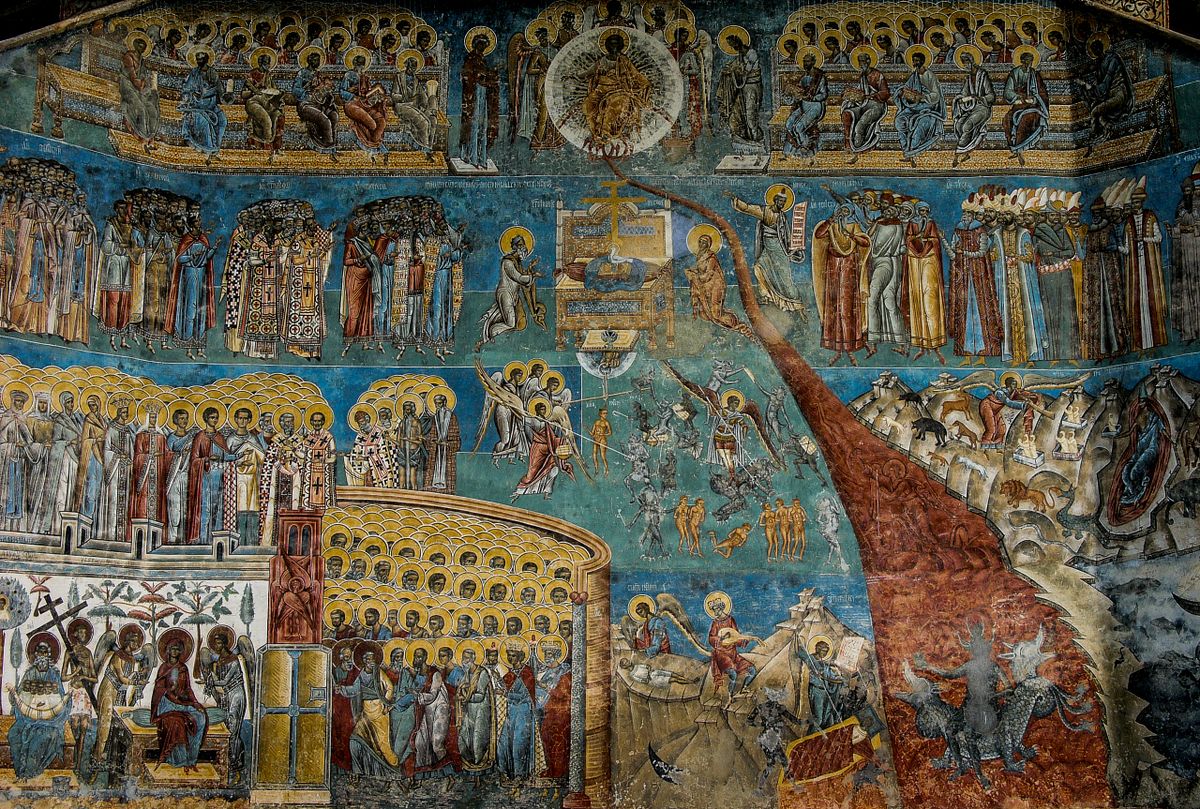
If you can only visit Romania once, time it to the painted-monastery autumn or to the late-December Christmas markets. Both windows give you the country at its most photogenic, with the smallest crowds and the cleanest light. The eight UNESCO Churches of Moldavia in southern Bucovina were painted, frame-to-frame, between roughly 1487 and 1581 in pigments that have survived almost five centuries of north-Carpathian winters. The crown jewel is Voroneț Monastery (1488), founded by Stephen the Great, whose deep western wall fresco of the Last Judgement is rendered in a cobalt-lapis pigment Romanian art historians call albastru de Voroneț; UNESCO and the Romanian Academy still cannot fully reverse-engineer the recipe.
The eight UNESCO sites — Voroneț, Sucevița (1581), Moldovița (1532), Humor (1530), Probota (1530), Pătrăuți (1487), Arbore (1502), and the Monastery of St John the New in Suceava (1522) — are clustered in a 60-km radius around the city of Suceava and can be done as a long weekend by car or as a four-day chauffeured tour from Iași. The single best week is the third week of September: the chestnut and walnut leaves around Sucevița have just turned, the painted monasteries’ western walls catch the 4 p.m. golden hour for almost an hour, and the small village restaurants in Vatra Moldoviței start serving the autumn lamb-and-cabbage stew. The Bucovina Tourism Authority and Suceava County Council both publish annual painted-monastery itineraries.
- Voroneț Monastery — Founded 1488 by Stephen the Great in 3 months and 3 weeks; UNESCO 1993; the only painted-monastery wall fresco depicting the Last Judgement on its western façade.
- Sucevița Monastery — Founded 1581 by the Movilă family; the largest painted-monastery complex; the entire western wall is famously left blank because the artist died in a fall.
- Moldovița Monastery — Founded 1532 by Petru Rareș; carries the celebrated “Siege of Constantinople” fresco on its southern façade.
- Humor Monastery — Founded 1530; the smallest of the eight, surrounded by an open meadow rather than walls.
- Pătrăuți Church — Stephen the Great’s first foundation, 1487; the oldest of the eight.
What makes the Bucovina monasteries unique is not simply that they are painted but that they are painted on the outside — a north-Carpathian innovation found almost nowhere else in Orthodox Christendom. The frescoes functioned as a “Bible of the poor,” teaching scripture to a largely illiterate rural congregation through enormous, walk-around comic strips: the Last Judgement on the west wall, the Tree of Jesse on the south, the Akathist Hymn and the famous Siege of Constantinople on the exterior of Moldovița. The pigments — particularly the cobalt albastru de Voroneț, the deep red of Humor and the emerald green of Sucevița — have survived more than 450 years of freeze-thaw weathering on north-facing walls, a durability the Romanian Academy and UNESCO conservators still cannot fully explain. Visit between 3 and 5 p.m. in autumn, when the low sun rakes across the western walls and the Voroneț blue almost glows.
The other annual hook is Christmas markets in Sibiu and Brașov. Sibiu’s Piața Mare market, set between the Brukenthal Palace and the Council Tower, runs from late November through 1 January 2026; Brașov’s Piața Sfatului market, framed by the Gothic Black Church and the medieval Council House, runs roughly the same window. Both are smaller than Vienna or Budapest’s, but the Saxon-Romanian setting is unique in Europe and the prices are roughly a third of Western counterparts. Romanian Christmas tradition includes the colinde carolling rituals, with roots in pre-Christian Saturnalia, and the pomana porcului traditional pig-feast on St Ignatius Day (20 December).
The summer headliner is the Sighișoara Medieval Festival, held on the last weekend of July inside the UNESCO citadel — armoured-knight reenactments in the Piața Cetății, troubadour songs in Mercenary Square, and a midnight torch parade through the Citadel’s nine surviving defensive towers. Cluj-Napoca runs the country’s largest electronic music festival, Untold, in the first weekend of August; Cluj’s airport handles a hundred thousand extra arrivals across that long weekend. Bucharest’s George Enescu Festival, named after the country’s most famous composer, is the largest classical music festival in Eastern Europe and runs every odd-numbered September; the next edition is September 2027.

Best Time to Visit Romania (Season by Season)
Spring (March–May)
The shoulder I always argue for. Bucharest climbs from 10 °C in March to 23 °C in May, the Transylvanian plateau stays cool, and the Carpathian wildflowers — particularly the alpine narcissi at Dumbrava Vadului — peak in early-to-mid May. Easter is the biggest religious holiday in the calendar; Romanian Orthodox Easter sometimes falls weeks after Western Easter — in 2026 it lands on 12 April. Painted-egg traditions in Bucovina and the Sibiu countryside are extraordinary; villages like Ciocănești paint their entire houses with geometric Easter motifs. April–May is also when the Transfăgărășan and Transalpina mountain roads start emerging from snow, though the Transfăgărășan does not officially open until late June. Hotel rates remain off-peak through April. Pack a fleece — Carpathian evenings are still cold.
Summer (June–August)
High season for the mountains and the Black Sea coast. Bucharest can climb past 36 °C, but Brașov, Sibiu and Cluj sit at 600–700 m and stay 4–6 °C cooler. The Carpathian hiking season runs roughly mid-June to late September; the Bucegi, Făgăraș and Retezat ranges all have hut systems and marked routes. The Transfăgărășan is reliably open from late June and stays open until the first significant snow in late October. The Black Sea coast — Mamaia, Vama Veche, Constanța — is the country’s domestic beach destination; sea temperatures hit 24 °C in August. Sighișoara’s Medieval Festival anchors the last weekend of July; Cluj’s Untold festival runs the first weekend of August. Crowds are heaviest in August.
Autumn (September–November)
The strongest single window for a first trip. Bucovina’s beech and chestnut foliage starts turning in mid-September and peaks the third week of October; the painted monasteries’ western frescoes catch a low golden 4 p.m. light that the summer sun cannot reach. The Apuseni and Maramureș villages run their wood-fired plum-distilling festivals through October — the local țuică (plum brandy) is genuinely world-class and accounts for about 75% of Romania’s plum harvest. Bucharest’s George Enescu Festival fills the Atheneum and Sala Palatului in odd-numbered Septembers (next 2027). November sometimes sees the year’s first heavy rain; Bucharest can drop to 8 °C overnight by month’s end. Off-season hotel rates kick in from 1 November. The Transfăgărășan typically closes by 1 November.
Winter (December–February)
Cold and dry rather than cold and wet. Bucharest averages -2 °C in January with regular snow; the Carpathians can hit -25 °C overnight. The country’s lowest recorded temperature was -38.5 °C at Bod, Brașov County, in January 1942. Sibiu and Brașov’s Christmas markets fill the first three weeks of December; Poiana Brașov, the country’s premier ski resort, runs ski lifts from mid-December into March. The painted monasteries are open year-round but require a serious coat — Bucovina’s nights drop to -15 °C. Indoor sights — the National Art Museum in Bucharest, the Astra Open-Air Museum near Sibiu, the Cluj history museums — are blissfully empty.
Shoulder-season tip: The single best week is the third week of September. The painted monasteries are at their most photographable, the Transfăgărășan is still open, the Bucovina villages serve the season’s autumn lamb stew (tochitură), Black Sea hotel rates have collapsed, and the Carpathian beech forests have just turned. Combine three days in Bucovina with two in Brașov and a final overnight at Bran Castle for the country’s best two-week loop.
Getting There — Flights, Otopeni & Schengen 2025
Romania has 16 commercial airports but four account for almost all international arrivals. Henri Coandă International Airport in Otopeni (IATA OTP, ICAO LROP), 16.5 km north of central Bucharest, is comfortably the busiest — it handled 17,001,578 passengers in 2025, a 6.6% year-on-year jump and the busiest year in its history. The airport is the headquarters of Romania’s flag carrier TAROM and the operating base for the budget heavyweights Wizz Air and Ryanair, plus Romanian-owned FlyOne and HiSky. The airport was renamed in May 2004 to honour Romanian aviation pioneer Henri Coandă, discoverer of the Coandă effect.
- Bucharest Henri Coandă (OTP) — main international gateway; 17M passengers (2025); roughly 50 km of express buses and the new Metro Line M6 (planned 2026 opening) link arrivals to central Bucharest in 35–45 minutes.
- Cluj-Napoca International (CLJ) — Transylvania’s main airport; 3.4 million passengers in 2024; major Wizz Air and Ryanair base, with direct flights to 60+ European cities.
- Iași International (IAS) — gateway to Moldavian Romania and the painted monasteries; 1.8 million passengers in 2024.
- Timișoara Traian Vuia (TSR) — gateway to the Banat region and the Hungarian border; 1.7 million passengers in 2024.
- Sibiu (SBZ) — small Transylvanian airport, 800,000 passengers in 2024; useful for direct German connections to Saxon Romania.
Flight times (direct): London ~3 h 30 min · Paris ~3 h 10 min · Frankfurt ~2 h 40 min · Rome ~2 h 30 min · Istanbul ~1 h 30 min · Vienna ~1 h 50 min · Tel Aviv ~3 h · Dubai ~5 h · New York (no direct as of 2026; via Frankfurt or London) ~12–14 h. TAROM flies the country’s only long-haul route, Bucharest–Tel Aviv, with seasonal Dubai service; Wizz Air’s Bucharest base is the largest in Eastern Europe.
Visa & entry: Romania joined the European Union on 1 January 2007, NATO on 29 March 2004, and the Schengen Area for air and sea borders on 31 March 2024 — full Schengen including land borders followed on 1 January 2025. Citizens of around 60 visa-exempt nationalities — including the United States, United Kingdom, Canada, Australia, New Zealand, Japan, South Korea and most of Latin America — can stay 90 days within any 180-day period. The European Commission’s ETIAS pre-travel authorisation will become mandatory for all visa-exempt travellers from late 2026; budget €7 and complete it online before flying. The Romanian Ministry of Foreign Affairs publishes the official entry list. The UK FCDO travel advice for Romania is updated weekly.
Getting Around — Trains, Wizz Air, & Driving the Transfăgărășan
Romania is the second-largest country in Eastern Europe by area after Ukraine, and the smart transport stack is layered: rail for inter-city, low-cost flights for long-leg jumps, a rental car for Transylvania and Maramureș, and ride-hail apps in the cities. The state operator CFR Călători runs three passenger train tiers — Regio (R), InterRegio (IR), and InterCity (IC, reintroduced 10 December 2023) — across roughly 10,690 km of track, of which about 4,030 km is electrified. Top scheduled speed on the modernised Bucharest–Constanța line is 160 km/h.
- Rail single fare (Bucharest–Brașov): 78 RON (~€16) one way in IR class; 2 h 25 min scheduled.
- Rail single fare (Bucharest–Cluj): 130 RON (~€26); 8 h 30 min on the night IR — much slower than the road, partly because the Carpathian rail crossings have not been fully electrified.
- InterCity 1 Bucharest–Constanța: 75 minutes; the country’s only high-speed-corridor service.
- Bucharest Metro: Five operating lines (M1–M5), 7 RON (€1.40) per journey on a Multiplu card; reaches Otopeni airport with the planned 2026 Line M6 extension.
- Domestic flights: TAROM, Wizz Air and HiSky operate Bucharest–Cluj, Bucharest–Iași and Bucharest–Timișoara routes for €30–€60 advance-purchase.
- Long-distance buses: FlixBus, Eurolines and Atlassib serve every major city and many border crossings; Bucharest–Brașov on FlixBus is roughly 35 RON (€7) and 2 h 30 min.
A word on rail strategy: Romania’s network is dense and cheap but uneven. The southern and eastern corridors — Bucharest to Brașov, Constanța, Iași and Timișoara — are reasonably quick, but the Carpathian crossings to Cluj and Maramureș are slow because the high mountain sections were never fully electrified. For the flagship Transylvania circuit (Bucharest–Sinaia–Brașov–Sighișoara–Sibiu) the train is genuinely excellent and scenic; for the Cluj leg and anything west of Sibiu, a one-hour Wizz Air or HiSky hop often beats a full day on the rails. Buy tickets on the CFR Călători app or at any station counter; InterCity and InterRegio seats can be reserved, while Regio trains are turn-up-and-go. The night IR from Bucharest to Cluj or Timișoara has couchettes for an extra 60–90 RON and saves a hotel night.
Driving: Romania drives on the right; standard EU/UK/US licences are accepted for short-stay tourists. Speed limits are 50 km/h built-up areas, 90 km/h on rural roads, 100–110 km/h on national arterials, and 130 km/h on motorways. The country has roughly 1,200 km of motorway as of 2026 — patchy but expanding rapidly under EU funding — and you must buy an electronic rovinietă road tax (€3 for a week, €7 for a month) before driving on national roads. Rental from OTP starts around €25 a day for a small Dacia. The single great Romanian drive is the Transfăgărășan — 151 km between Pitești and Sibiu, peaking at 2,042 m at the Bâlea Lake pass — which Jeremy Clarkson called “the best road in the world” on Top Gear in 2009. The road is open from late June to late October only. The slightly higher Transalpina (2,145 m, the highest paved crossing in the country) runs parallel through the Parâng Mountains.
Apps: Bolt (private cab; the dominant ride-hail app, cheaper and quicker than the orange-and-yellow city taxi fleet); Uber (operates in Bucharest, Cluj, Brașov and Timișoara); CFR Călători’s official mobile-ticket app; FlixBus mobile booking; Roviniete.ro for road tax; Waze for live traffic — Bucharest is one of the most congested EU capitals and Waze is genuinely better than Google Maps in the city.

Top Cities & Regions
📍 Map of Romania: Every Place in This Guide
Bucharest
The capital and the country’s economic engine. Bucharest’s 2021 census population was 1,877,155 within the city proper and roughly 2.31 million across the metropolitan area; the city covers 240 km² and produces about 24% of national GDP from just 9% of the population. Bucharest first appears in documents in 1459 under Vlad III the Impaler, who fortified the Old Princely Court (Curtea Veche) on what is now Lipscani street. The 19th century is the city’s defining era; Bucharest was nicknamed “Little Paris of the East” for its Belle Époque boulevards, French-trained architects and the 1936 Triumphal Arch on Kiseleff Boulevard, modelled on the Arc de Triomphe in Paris.
- Palace of the Parliament — Built 1984–1997 by Anca Petrescu and a team of 700 architects under Ceaușescu; 365,000 m² floor area, 1,100 rooms, 4,098,500 tonnes — the world’s heaviest building and the second-largest administrative building after the Pentagon. Tickets must be pre-booked online with passport details.
- Curtea Veche & Lipscani — The medieval Old Princely Court, founded by Vlad III the Impaler around 1459, is now an open-air archaeological museum; the surrounding Lipscani district is the city’s restaurant and bar quarter.
- Romanian Athenaeum — Inaugurated 1888; the country’s premier classical concert hall, home of the George Enescu Philharmonic; the dome ceiling carries a 75-metre fresco of Romanian history painted 1933–1939.
- Village Museum (Muzeul Satului) — Founded 1936 in Herăstrău Park; one of Europe’s largest open-air ethnographic museums with 272 traditional buildings transplanted from across the country.
- National Museum of Art — Housed in the former Royal Palace; collections of medieval Wallachian art, Romanian modernism (Brâncuși, Grigorescu, Tonitza) and European masters.

Read our full Bucharest city guide →
Brașov & Bran
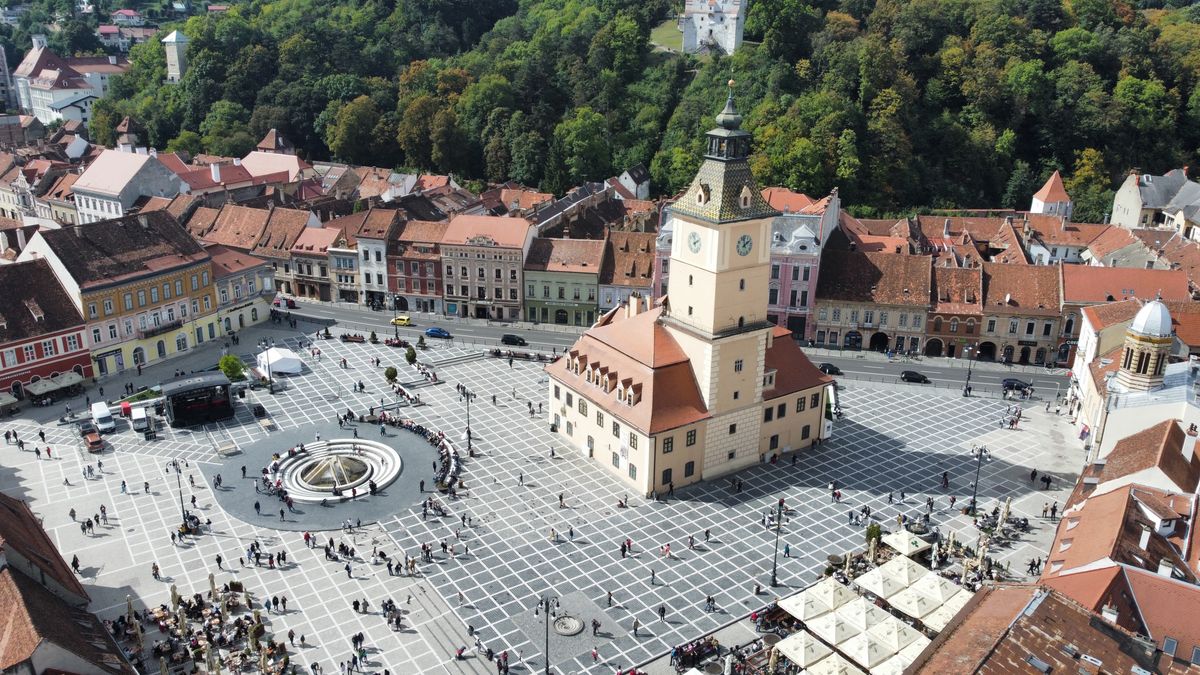
Romania’s mountain capital and the unofficial gateway to Saxon Transylvania. Brașov was first documented in 1235 and was the southern bastion of the seven Saxon citadels (Siebenbürgen); its Saxon name Kronstadt (“crown city”) referred to a 1211 Teutonic Order foundation. The 2021 census recorded 237,589 residents — Romania’s sixth-largest city — across a metropolitan area of 371,802. The Old Town nestles at the foot of Mount Tâmpa (900 m), reached by cable car, and centres on the Piața Sfatului square framed by the medieval Council House (Casa Sfatului).
- Black Church (Biserica Neagră) — Begun 1383, completed 1477; the largest Gothic church between Vienna and Istanbul. The name comes from the soot scarring of the 1689 Great Fire that destroyed half the walled town. Houses the largest collection of Anatolian carpets outside Turkey.
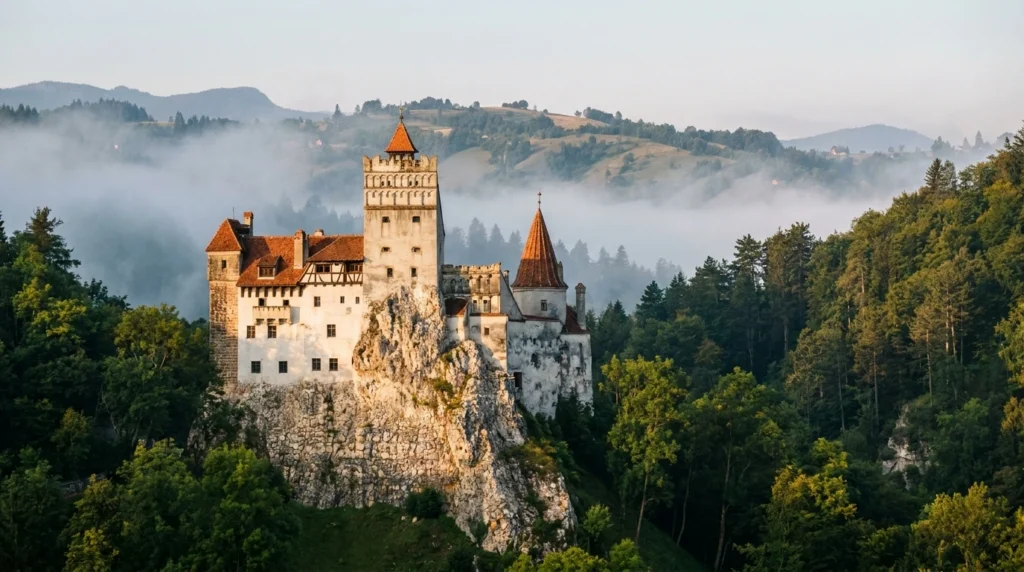
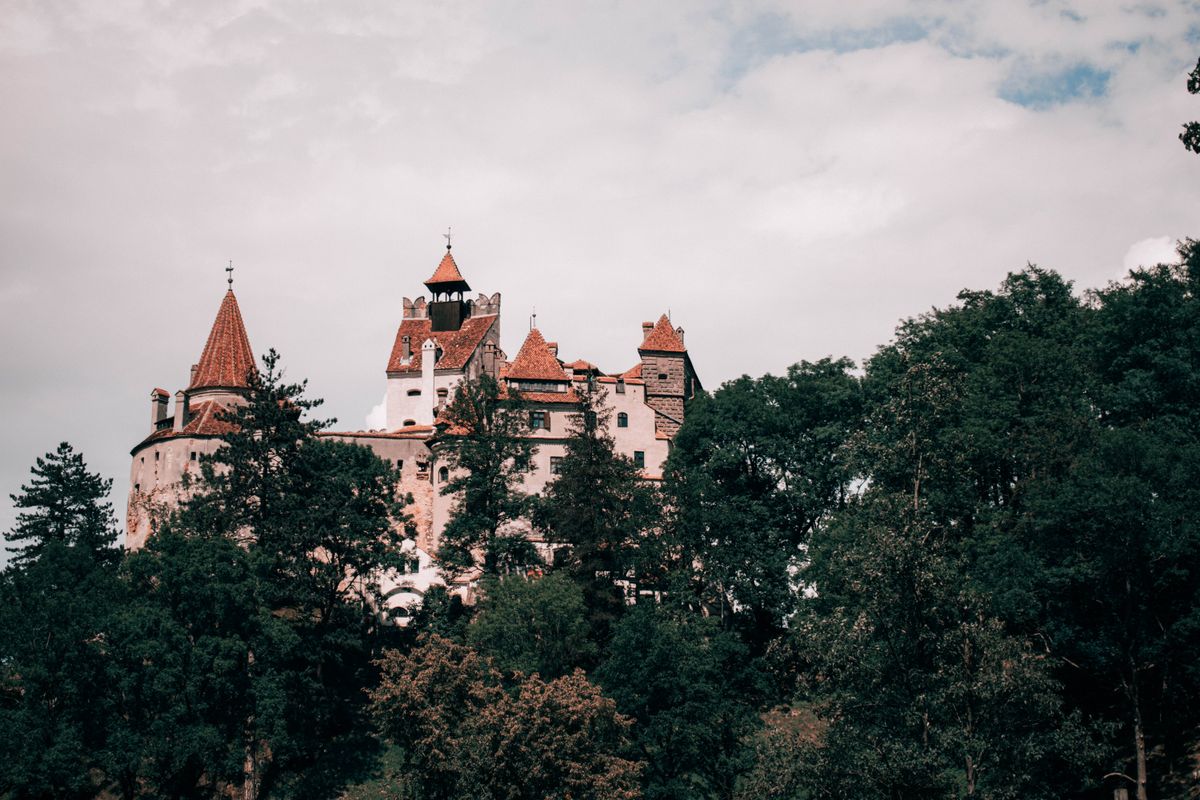
- Bran Castle — 25 km southwest of Brașov; first documented 1377. Owned since 2009 by Archduke Dominic of Habsburg-Lorraine and his sisters, restored from the Romanian state’s 2006 restitution. The Vlad III “Dracula” connection is largely tourism marketing — most historians agree he never lived here, though the castle’s 14th-century fortifications and royal apartments are genuinely worth two hours. Tickets are 70 RON adult; queue early in summer.
- Mount Tâmpa — 900 m, with a HOLLYWOOD-style “BRAȘOV” sign on the cliff; the cable car runs daily 9:30 a.m.–5 p.m.
- Poiana Brașov ski resort — 12 km from the city, the country’s largest ski area with 24 km of marked pistes between 1,030 and 1,775 m.
- Strada Sforii — Reportedly the narrowest street in Europe at 1.32 m wide; medieval firefighting access between the Saxon merchant houses.
Read our full Brașov city guide →
Sibiu
The unofficial cultural capital of Saxon Transylvania. Sibiu (Saxon: Hermannstadt) was settled by Saxon colonists around 1147, became the seat of the Transylvanian Saxons’ political assembly, and served as the most important administrative centre of the entire Siebenbürgen for 600 years. The 2021 census recorded 134,309 residents. Sibiu was European Capital of Culture in 2007, alongside Luxembourg City — the first ECoC year held by a non-EU-15 city — and the legacy of that designation is visible in the restored historic centre, the Astra Open-Air Museum, and the year-round international classical festival programme. The country’s first university opened here in 1722; the German-speaking Saxon community, though much reduced, still publishes a daily Sibiu newspaper.
- Brukenthal National Museum — Founded 1817 by Baron Samuel von Brukenthal, governor of Habsburg Transylvania; the second-oldest public museum in Central Europe and the country’s principal painting collection.
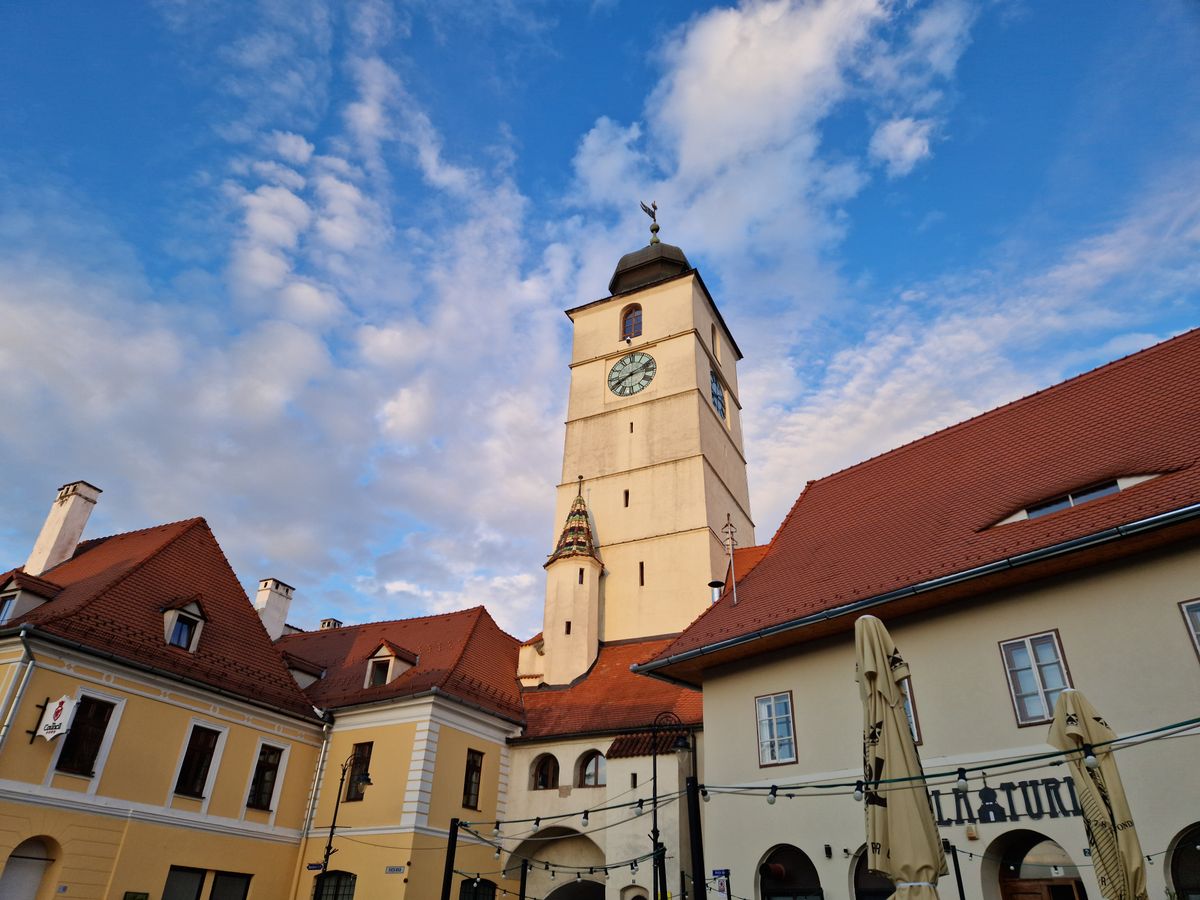
- Council Tower — Built 1224; the original gate between Sibiu’s upper and lower towns; the rooftop platform is the city’s best free panorama.
- Bridge of Lies (Podul Minciunilor) — Romania’s first cast-iron bridge (1859); local legend says it groans when a lie is told above it.
- Astra Open-Air Museum — 96 hectares, 400+ traditional rural buildings collected from across Transylvania; one of the largest ethnographic open-air museums in Europe.
- The eyebrow windows — Sibiu’s most-photographed quirk: dormer windows under the eaves of historic Saxon roofs, producing the “town with eyes” nickname that gives the city its identity.
Read our full Sibiu city guide →
Cluj-Napoca
Romania’s second city by population and the unofficial capital of Transylvania. Cluj’s 2021 census population was 286,598; the metropolitan area reaches roughly 411,000. Cluj is home to Babeș-Bolyai University, the country’s largest university with 41,000 students taught in five languages (Romanian, Hungarian, German, English and French). The city was European Youth Capital in 2015, European City of Sport in 2018, and joined the UNESCO Creative Cities Network as a City of Film in 2021. Tech employment has surged 40% since 2018; the city is the country’s main software-development hub after Bucharest.
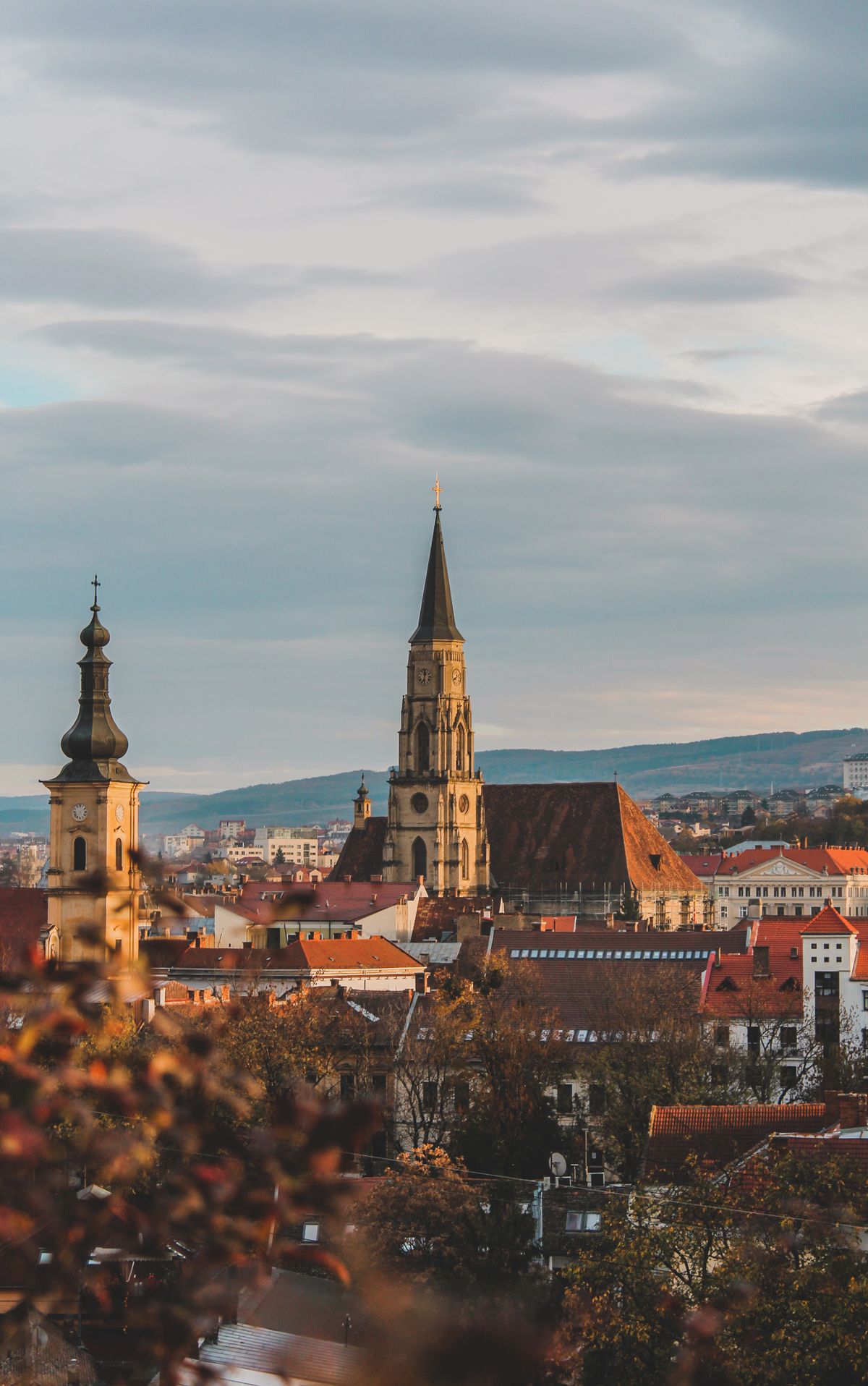
- St Michael’s Church (Biserica Sfântul Mihail) — 14th-century Gothic in Unirii Square; one of the largest Gothic churches in Romania.
- Untold Festival — First weekend of August; the country’s largest electronic music festival, regularly drawing 350,000 attendees over four days.
- Bánffy Palace & National Museum of Art Cluj-Napoca — 1773–85 baroque palace; collections of Transylvanian medieval and modern art.
- Hoia-Baciu Forest — 295 hectares of forest 8 km west of the city; locally famous as the “world’s most haunted forest” — UFO-tourism aside, the curving birch trees genuinely look unusual.
- Salina Turda — 30 km south; a former medieval salt mine retrofitted as a 120-metre-deep underground theme park (see Off-the-Beaten-Path below).
Read our full Cluj-Napoca city guide →
Timișoara
Romania’s “Little Vienna” and the city where the 1989 Revolution began. Timișoara’s 2021 population was 250,849, making it the fifth-largest city. The Habsburg-era core preserves three Baroque-Imperial squares (Piața Victoriei, Piața Libertății and Piața Unirii) framing what was once the second city of the Banat under Austria-Hungary. Timișoara was the first European city to install electric street lighting, in 1884, and runs Romania’s most extensive tram network — a legacy of its industrial Habsburg heritage. The city was European Capital of Culture in 2023 alongside Veszprém (Hungary) and Elefsina (Greece).
- Piața Victoriei & the Metropolitan Cathedral — 1936–1946 Romanian Orthodox cathedral with a 90-metre tower; the square was the focal point of the December 1989 protests.
- Piața Unirii — Surrounded by Baroque palaces including the Brück House and the Serbian Orthodox Cathedral.
- Memorial of the Revolution — Documents the December 1989 uprising; the museum holds the original protest banners and photographs of the 73 confirmed local victims.
- Bega Canal — 9 km of restored Baroque-era canal through the city; the new vaporetto-style water taxis run April–October.

Read our full Timișoara city guide →
Sighișoara
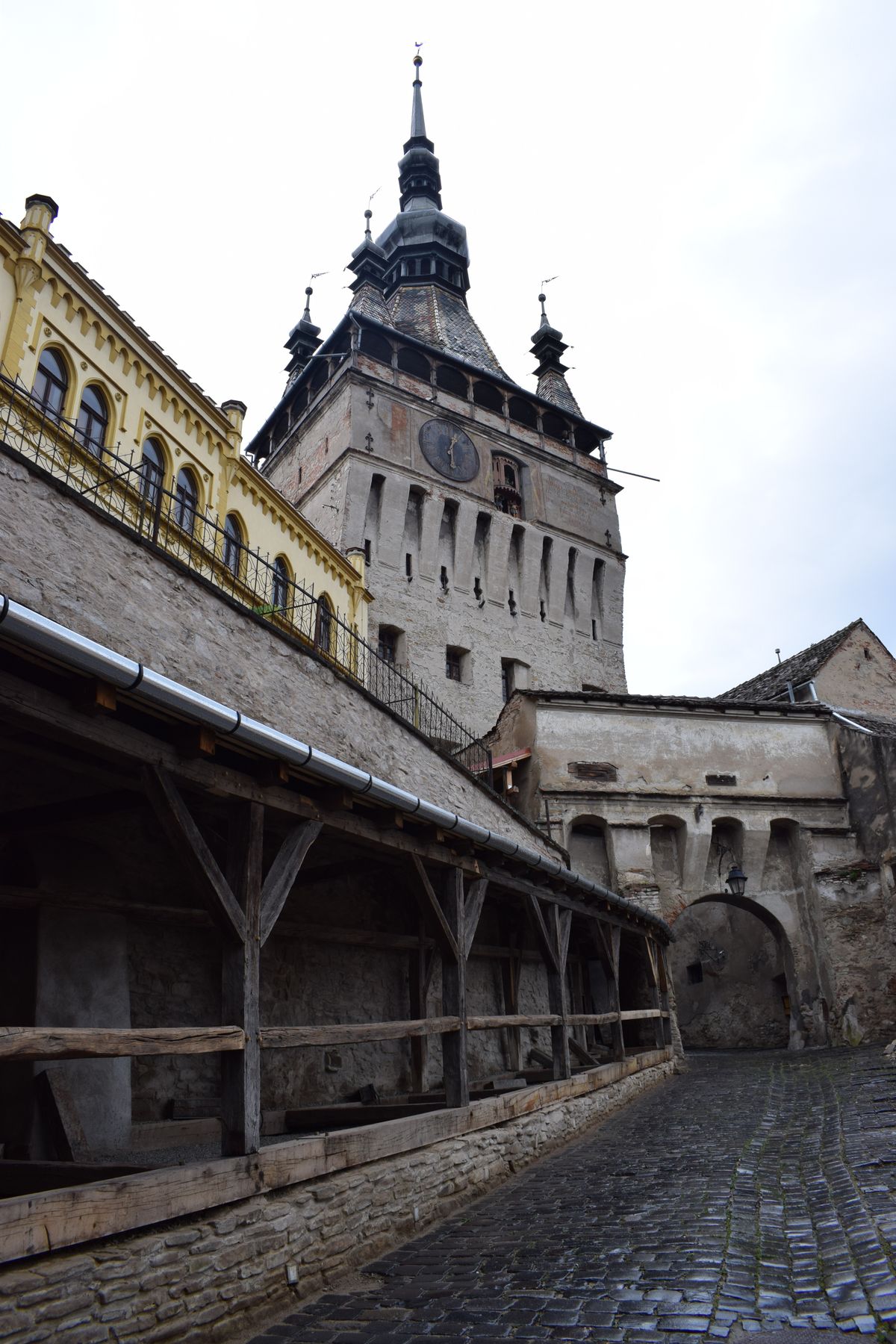
The country’s best-preserved medieval citadel and a UNESCO World Heritage Site since 1999. Sighișoara is one of the few inhabited fortified citadels in Eastern Europe — about 800 people still live inside the walls. Saxon settlers founded the town in the mid-12th century; the Latin name Castrum Sex (“Sixth Castle”) referred to its Roman-era hexagonal fort. By the 16th–17th centuries the citadel held 15 craft guilds, each with its own defensive tower; nine of those towers (Tinsmiths’, Butchers’, Tailors’, Furriers’, Ropemakers’, Cobblers’, Goldsmiths’, Tinners’, and the central Clock Tower) survive intact. The 64-metre Clock Tower is the symbol of the town and houses the History Museum.
- Vlad Dracul’s birth house — Vlad II Dracul (father of Vlad III the Impaler) lived in exile here 1431–1435; the house is the only surviving documented birthplace of any Wallachian voivode.
- Church on the Hill — Late 14th-century Gothic church reached by a covered wooden Schoolboys’ Stairway (1642); panoramic views across the citadel.
- Sighișoara Medieval Festival — Last weekend of July; armoured-knight reenactments, troubadour songs, falconry, late-night torch parade.
Read our full Sighișoara city guide →
Sinaia
The “Pearl of the Carpathians” and Romania’s original mountain resort, strung along the Prahova Valley at 800–1,000 m between Bucharest and Brașov. Sinaia grew up around the 1695 Sinaia Monastery — named by its founder, the boyar Mihail Cantacuzino, after the Sinai Peninsula monastery he had visited on pilgrimage — and was transformed into a royal resort after King Carol I chose the valley for his summer palace in the 1870s. The town is the single best base for the eastern Bucegi Mountains and sits one stop up the main Bucharest–Brașov railway line, making it an easy day trip or overnight from either city.
- Peleș Castle — Built 1873–1914 as the summer residence of King Carol I; a Neo-Renaissance masterpiece of 170 rooms and the first European castle fully powered by its own electricity.
- Pelișor Castle — The smaller Art-Nouveau annex (1899–1903) built for Carol’s heir Ferdinand and Queen Marie; the famous Golden Room is lined in gilded thistle-leaf stucco.
- Sinaia Monastery — Founded 1695; the small “old church” and the larger 1846 “great church” enclose a working Orthodox community and the tomb of Romania’s first prime minister, Take Ionescu.
- Bucegi cable cars — The Sinaia gondola climbs to 2,000 m at Cota 2000, the gateway to the Bucegi plateau, the Sphinx rock formation and the Babele wind-carved stones.
Read our full Sinaia city guide →
Constanța & the Black Sea Coast
Romania’s seventh-largest city (population 263,688 in 2021), its principal seaport, and the gateway to the country’s 245-km Black Sea coast. Constanța is also one of the oldest continuously inhabited cities in Europe: it was founded around 600 BC by Greek colonists from Miletus as Tomis, and the Roman poet Ovid was exiled here by Augustus in 8 AD and died here without ever returning to Rome — the central square still carries his statue and his name (Piața Ovidiu). The resort strip of Mamaia, a narrow 8-km sandbar between the sea and Lake Siutghiol immediately north of the city, is the country’s flagship summer beach destination.
- Roman Mosaic of Tomis — Discovered 1959; at roughly 850 m² it is the largest known Roman mosaic in Eastern Europe, displayed in situ above the ancient commercial port.
- Genoese Lighthouse & the Casino — The 1860 lighthouse and the derelict-but-iconic 1910 Art-Nouveau Constanța Casino on the seafront promenade are the city’s signature silhouettes.
- Mamaia — 8 km of fine sand, the country’s densest cluster of hotels and beach clubs; sea temperatures reach 24 °C in August.
- Histria — 657 BC Greek colony 60 km north; the oldest urban settlement on Romanian soil, continuously occupied for 1,300 years.
Read our full Constanța city guide →
Maramureș & Bucovina
The two northernmost regions, both UNESCO-rich. Maramureș covers roughly 10,000 km² along the Tisza basin in the north-western Carpathians; the eight UNESCO Wooden Churches of Maramureș (1999) — Bârsana, Budești Josani, Desești, Ieud Hill, Plopiș, Poienile Izei, Rogoz, and Șurdești — were built in the 17th–19th centuries from oak logs as a response to the Habsburg ban on stone Orthodox churches. The bell tower of Șurdești once held the title of the tallest wooden structure in Europe at 54 m. The region also contains the Merry Cemetery (Cimitirul Vesel) at Săpânța, where every wooden grave-cross carries a satirical hand-painted poem about the deceased.
Bucovina — the southern half of the historic Bukovina region, transferred to Romania at Trianon in 1920 — contains the eight UNESCO painted monasteries clustered around Suceava (1993, extension 2010). The two regions together are the country’s most photogenic rural landscape and contain its strongest surviving folk-craft tradition: hand-carved gates, painted Easter eggs, sheepskin coats, alpine cheese-making, plum-distilling.

Castles & Fortified Churches
No country in Eastern Europe packs as many genuinely distinct fortifications into a single Carpathian arc as Romania. The country’s castles fall into three families that map neatly onto its three historic provinces: the royal-romantic mountain palaces of Wallachia and the Prahova Valley (Peleș, Pelișor), the medieval Gothic strongholds of Hungarian Transylvania (Corvin, Bran, Râșnov), and the Saxon fortress-churches of the seven-citadel country (Biertan, Prejmer, Viscri). Together they tell the entire defensive story of the land between the Ottoman and Habsburg empires.

Peleș & Pelișor — the royal palaces of Sinaia
Peleș is the country’s most beautiful building and, paradoxically, one of its newest castles. King Carol I commissioned it in 1873 in the Prahova Valley near Sinaia; construction ran in three phases to 1914, the year Carol died. The Neo-Renaissance palace has 170 rooms, a 60 m central tower, and was the first castle in the world to be fully powered by its own electricity — generated by a hydro plant on the Peleș stream — and the first in Europe with central heating, an electric lift and a retractable glass ceiling over the Hall of Honour. Next door, the smaller Art-Nouveau Pelișor (1899–1903) was built for Carol’s heir Ferdinand and Queen Marie, whose gilded thistle-leaf Golden Room is the most photographed interior in the country.
Bran — the “Dracula” castle
First documented in 1377 and built by the Saxons of Brașov to guard the Bran-Rucăr mountain pass between Transylvania and Wallachia, Bran is the country’s most-visited castle on the strength of a marketing connection most historians reject. Vlad III the Impaler almost certainly never lived here, and Bram Stoker never visited Romania, but the castle’s narrow medieval staircases, royal apartments restored by Queen Marie in the 1920s, and rocky-outcrop silhouette are genuinely worth two hours. The castle was returned to the Habsburg heirs in 2006 and reopened as a private museum in 2009. Pre-book the 70 RON adult ticket online and arrive at opening to beat the summer queues.
Corvin (Hunedoara) — Transylvania’s Gothic giant
If Bran is the famous one, Corvin Castle in Hunedoara is the great one. Built from 1446 on the site of an older fort by John Hunyadi (Iancu de Hunedoara), regent-governor of Hungary and one of the most successful anti-Ottoman commanders of the 15th century, Corvin is the largest Gothic castle in Romania and one of the largest in Europe. Its Knights’ Hall, drawbridge over a 30 m ravine, and the “Bear Pit” — local legend holds Vlad the Impaler was imprisoned here for seven years — make it the most cinematic fortress in the country; it has stood in for various film and game settings. It sits in the industrial city of Hunedoara, about 80 km southwest of Sibiu, and is well worth the detour off the Transylvania circuit.
The Saxon fortified churches
The most distinctive — and most peaceful — fortifications in Romania are not castles at all but the 250-odd Saxon fortress-churches scattered across southern Transylvania, seven of which UNESCO inscribed in 1993 (extended 1999). When Tartar and Ottoman raids intensified, each Saxon village wrapped its parish church in curtain walls and defensive towers and built storerooms into the ramparts so the community could withstand a siege. Biertan (Sibiu County) served as the seat of the Lutheran Bishop of Transylvania from 1572 to 1867 and is famous for its 19-bolt sacristy lock. Prejmer, near Brașov, is the largest of the family, with 272 individual storerooms set into the ring wall — one per household. Viscri, where King Charles III restored a Saxon house, has become the symbol of the slow-tourism reappraisal of the whole region. Most are an easy self-drive day loop from Sibiu or Brașov.
Suggested Itineraries
Romania is deceptively large — the second-biggest country in Eastern Europe by area after Ukraine — and the Carpathian crossings are slow, so the single most common first-trip mistake is over-packing the route. The three itineraries below are sequenced to minimise backtracking and to keep each day’s driving or rail leg under three hours. Each links directly to our full city guides so you can plan each stop in detail.
The Grand Tour of Romania — 7 to 10 days
The classic loop, taking in the capital, the royal mountain palaces, the Saxon citadels and Transylvania’s two great cities before returning. Do it by rental car for the village detours, or as a rail-and-bus circuit if you prefer not to drive.
- Days 1–2 · Bucharest. The Palace of the Parliament, Curtea Veche and Lipscani, the Village Museum, and dinner in the old town. Sleep two nights to shake off the flight.
- Day 3 · Sinaia. Take the morning train up the Prahova Valley; tour Peleș and Pelișor Castles and the Sinaia Monastery, then continue to Brașov by mid-afternoon.
- Days 4–5 · Brașov & Bran. The Black Church, Council Square and the Tâmpa cable car; a half-day to Bran Castle and Râșnov fortress. Brașov is the best base in the country.
- Day 6 · Sighișoara. The UNESCO citadel, the Clock Tower, Vlad Dracul’s house and the Church on the Hill. Detour to a Saxon fortified church (Biertan or Saschiz) en route.
- Day 7 · Sibiu. The Brukenthal Museum, the Council Tower, the Bridge of Lies, and the Astra open-air museum on the edge of town.
- Days 8–9 · Cluj-Napoca. Transylvania’s vibrant student capital; St Michael’s Church, the art museum, the Hoia-Baciu forest and a day trip to Salina Turda.
- Day 10 · Timișoara (optional extension). The Baroque squares of “Little Vienna,” the Memorial of the 1989 Revolution and the Bega canal — fly home from Traian Vuia, or loop back to Bucharest by overnight train.
Transylvania-only short loop — 4 to 5 days
If your time is tight, skip Bucharest entirely and fly straight into Sibiu (SBZ) or Cluj (CLJ), both of which have direct European budget connections. This loop is the densest concentration of Saxon heritage anywhere on the continent.
- Day 1 · Sibiu. Arrive, settle into the upper-town squares, walk the Council Tower and the Bridge of Lies.
- Day 2 · Saxon villages. Self-drive day loop to Biertan, Viscri and the Saschiz fortified church, then on to Sighișoara.
- Day 3 · Sighișoara → Brașov. Morning in the citadel, afternoon transfer to Brașov.
- Day 4 · Brașov, Bran & Sinaia. Bran Castle in the morning, Peleș in the afternoon — or split across an extra fifth day to do both at a human pace.
Black Sea & Danube Delta add-on — 3 to 4 days
The natural extension to any Bucharest-based trip, and the one most foreign visitors skip. The Delta is Europe’s best-preserved wetland and the coast is steeped in Greco-Roman antiquity.
- Day 1 · Bucharest → Constanța. The InterCity train covers the route in about 2 hours; spend the afternoon on the Roman Mosaic, the Casino promenade and the old port.
- Day 2 · Mamaia & Histria. A beach morning at Mamaia, an afternoon at the 657 BC Greek ruins of Histria.
- Days 3–4 · Tulcea & the Danube Delta. Drive or bus north to Tulcea, then take a small-boat tour into the reed beds — pelicans, herons and the fishing village of Sfântu Gheorghe. Half-day boat tours run €40–60 with a local guide, April–October.
Romanian Culture & Etiquette — What to Know Before You Go
The Essentials
- Greet, then negotiate. The standard greeting is “bună ziua” (good day) until late afternoon, “bună seara” (good evening) after; younger Romanians use the casual “salut“. A handshake is universal between men; a kiss on each cheek is common between friends and family. English is widely spoken in Bucharest, Cluj, Brașov, Sibiu, Timișoara and at any tourist site; older rural residents may prefer Hungarian (in Transylvania) or German (in former Saxon villages).
- Dress for churches. Romanian Orthodox churches expect knees and shoulders covered for both men and women; women may cover their heads inside particularly traditional rural monasteries. Photographs of frescoes are usually allowed without flash. Touching frescoes is forbidden — the painted-monastery walls are 500-year-old pigment.
- Tipping is European-light. Round up the bill in cafés; 10% is appreciated for table service in restaurants but never expected. Tip 5–10 RON for taxi drivers and hotel porters.
- Sundays are quiet. Bucharest’s main shopping streets stay open but smaller villages essentially close on Sunday — the family lunch lasts three hours. Monastery liturgies on Sunday morning are open to visitors.
- Smoking is largely outdoor. Romania’s 2016 indoor-smoking ban applies in restaurants, cafés and bars; outdoor terraces remain unrestricted. Romanian smoking rates have fallen sharply but visible outdoor smoking is still common.
Language & Code-Switching
- Romanian is the only Romance language with state status east of Italy. About 22 million native speakers globally; lexical similarity with Italian is roughly 77%. The Cyrillic alphabet was used until 1860 in Wallachia and 1862 in Moldavia; Latin script has been standard ever since.
- Hungarian is the second-largest language in Transylvania — about 6.1% of Romania’s total population speak Hungarian as a first language; in Harghita and Covasna counties Hungarians form the demographic majority.
- The five distinguishing Romanian letters — Ă, Â, Î, Ș, Ț — appear constantly in place names. Ș is “sh”, Ț is “ts”. Sighișoara is “sigi-shwa-ra”; Brașov is “bra-shov”; Iași is “yash”. Don’t be afraid to ask.
- Romanian retains three Latin grammatical cases (nominative, genitive-dative, vocative) — the only Romance language to do so. The vocative ending “-ule” is famously hard to translate; a Romanian friend calling you “ce faci, prietene?” is using a vocative dropped by every other Romance language a millennium ago.
National Identity, Symbols & Civic Days
Romania’s National Day is 1 December, commemorating the 1918 Great Union of Transylvania, Bessarabia and Bukovina with the Old Kingdom — the founding act of modern România Mare. The day is marked by a military parade in Bucharest and concerts in Alba Iulia, the Transylvanian city where the 1918 Great National Assembly proclaimed unification. Other major civic dates: Easter Monday (in 2026 falls 13 April Romanian Orthodox); Heroes’ Day (Ascension Day, 40 days after Orthodox Easter); Saint Andrew’s Day (30 November), the eve of the National Day; and Constitution Day (8 December). The national anthem Deșteaptă-te, române! (“Awaken thee, Romanian!”) was written by Andrei Mureșanu in 1848 and adopted on 24 January 1990 after the Revolution.
Romanian Orthodox Christianity is the dominant cultural force — 73.6% of the 2021 census population identify as Orthodox, with a further 6.4% Protestant (mostly Hungarian Reformed) and 4.4% Roman Catholic (mostly the Romanian Greek-Catholic Church and Hungarian Catholic minorities). The Romanian Orthodox Church is the world’s third-largest Orthodox autocephalous church after Russia and Ethiopia and operates more than 16,000 parishes. The country has 637 monasteries — among the highest densities of monasticism in any Christian country — and the painted-monastery frescoes of Bucovina are the architectural pinnacle of the tradition.
The country’s tricolour flag — equal vertical bands of blue, yellow, red — was adopted in 1848 and re-adopted in modified form on 27 December 1989 (after the Revolution removed the Communist-era seal from the centre). The colours are read from the hoist outwards as “blue of the sky, yellow of the wheat, red of the Wallachian princely banner”. The coat of arms features a golden eagle clutching a sceptre and a crown — a Roman-derived emblem revived from the medieval Wallachian princely seal.
A Food Lover’s Guide to Romania

Romanian cuisine is the layered Balkan-Carpathian small print of Eastern European cooking: a Romanian-Latin foundation, a heavy Ottoman-Turkish layer (stews, peppers, pilaffs, baklava cousins), Hungarian-Magyar contributions in Transylvania (gulaș, papricaș), Saxon contributions in the seven-citadel region (kraut, smoked sausage, lebkuchen-style cake), and pre-Christian Slavic ritual food along the Carpathian villages. The single dish most Romanians will name as their national plate is sarmale — sour-cabbage rolls stuffed with minced pork, rice, dill and onion, slow-cooked in a tomato-and-bacon stock and served with mămăligă (cornmeal polenta) and sour cream. Christmas Eve and weddings essentially require sarmale, and the dish is regional: Moldavia uses fresh cabbage, Wallachia uses pickled cabbage, Transylvania often substitutes vine leaves in summer.
Must-Try Dishes
| Dish | Description |
|---|---|
| Sarmale | Sour-cabbage rolls stuffed with pork, rice, dill and onion. The country’s de facto national dish, served at Christmas, weddings, and family Sunday lunches; goes with mămăligă and sour cream. |
| Mămăligă | Cornmeal polenta — Romania’s pre-1700 staple carbohydrate (maize replaced millet after Columbian Exchange imports reached the Carpathians); served as a side, topped with cheese and sour cream as mămăligă cu brânză, or grilled in slabs. |
| Mici (mititei) | Grilled spiced minced-meat sausages without casing — beef-mutton-pork blend with garlic, black pepper and a touch of bicarbonate of soda for fluffiness. The country’s street-food classic, sold from terase beer gardens for 5–8 RON apiece with mustard and bread. |
| Ciorbă de burtă | Tripe sour soup, finished with sour cream, garlic, vinegar and a hot chilli pepper. The country’s signature ciorbă; widely held to be the best hangover cure in the Carpathians. |
| Ciorbă rădăuțeană | Bukovinian chicken-and-sour-cream soup invented in the 1970s in Rădăuți; less intimidating than burtă, equally Romanian. |
| Tochitură | Pork-and-sausage stew with mămăligă and a fried egg on top; usually a Sunday family lunch dish in Moldavia and Bucovina. |
| Papanași | Fried-cheese doughnuts filled with sweet cottage cheese, topped with sour cream and sour-cherry jam. The standard Romanian dessert; served at every Romanian-cuisine restaurant. |
| Cozonac | Sweet braided yeast bread filled with walnut, poppy seed, Turkish delight or cocoa; baked at Christmas, Easter and weddings. Each Romanian household has a cozonac recipe and an opinion. |
| Covrigi | Hot oversized pretzels sold from kiosks for 2–4 RON; Bucharest’s classic on-the-go breakfast. The Luca Familiei chain has 50 outlets in Bucharest alone. |
| Zacuscă | Roasted-aubergine-and-red-pepper spread, jarred in autumn; the Romanian-Bulgarian autumn ritual. Eaten on bread with cheese. |
Drinks & Sweet Things
The two flagship Romanian drinks are țuică and pălincă — both clear plum brandies but pălincă is double-distilled and stronger (50–60% ABV) and made primarily in Transylvania, while țuică is single or double-distilled (20–40% ABV) and made country-wide, especially in Wallachia. Romania distils roughly 75% of its plum harvest into țuică each autumn — the world’s biggest plum-brandy nation by volume. The standard rural welcome is a small shot glass of cold țuică offered before any meal; the village distilling festivals run through October in Maramureș. The cherry liqueur vișinată is the country’s standard digestif; macerated sour cherries with sugar and brandy. Beer is dominated by Ursus, Bergenbier, Ciucaș and Timișoreana — the Banat is the country’s brewing heartland and Timișoreana traces continuous brewing back to 1718.
Romanian wine is consistently underrated abroad. The country was the world’s 12th-largest wine producer in 2024 by volume, ahead of New Zealand and Hungary. The headline regions are Cotnari in Moldavia (sweet whites from Grasă de Cotnari and Tămâioasă Românească), Murfatlar on the Black Sea coast (Chardonnay and a notable Pinot Noir), Recaș in the Banat (good-value Chardonnay and Cabernet), and Dealu Mare in southern Transylvania (Romania’s premier red region). The indigenous grape varieties — Fetească Albă, Fetească Neagră, Fetească Regală, Tămâioasă Românească, Grasă, Băbească Neagră — produce the country’s most distinctive wines and are worth seeking out over the international varietals.
Romanian coffee is competitive across Bucharest, Cluj, Brașov and Timișoara — the third-wave specialty coffee scene exploded after 2018. Origo (Bucharest), Meron (Brașov), Boutique du Café (Timișoara) and Bujole (Cluj) are the country’s most-cited names. The Romanian breakfast staple is mic dejun continental — bread, butter, jam, soft cheese, salty cheese (telemea), tomato slices, sliced cucumber, salami, scrambled or fried egg, sometimes a small pastry — a complete spread that more than fills you for a long museum day. Hotels in Bucharest serve buffet versions; family-run pensions in Maramureș and Bucovina serve home-cooked variants that are arguably the country’s best meal of the day.
Off the Beaten Path — Caves, Saxon Villages & Dwarf-Dinosaur Country
Romania has more genuine off-the-beaten-path travel than almost any other EU member state — a legacy of its size (it is the second-largest country in eastern Europe by area), its low population density outside the capital, and the fact that international tourism is still concentrated on a half-dozen Transylvanian honeypots. The five trips below repay every minute of extra effort.
The Danube Delta
Europe’s second-largest river delta after the Volga and, importantly, the best-preserved on the continent. The 4,152 km² site was inscribed by UNESCO in 1991 and re-classified as a Man and the Biosphere Programme reserve in 1998; about 320 bird species have been recorded, 166 nesting, including both Great White and Dalmatian pelican colonies that breed in the eastern reed beds. The Danube splits into three channels — Chilia (the Ukrainian border), Sulina (the navigable shipping channel) and Sfântul Gheorghe (the southern wetland) — and feeds an estimated one million migrating birds annually. Tulcea (population 65,624) is the gateway; small-boat tours run from the harbour from April to October, typically €40–60 a half-day with a Romanian-speaking guide. The fishing village of Sfântu Gheorghe at the southern channel mouth is the most photogenic single base.

The Apuseni Mountains & Salina Turda
The Western Carpathians’ Apuseni range is Romania’s quietest mountain region — about 400 caves, 1,849 m peaks at Bihor, and a network of small wooden-shingle villages where Hungarian-Romanian-German trilingualism is still common. The headline destinations are the Scărișoara Ice Cave (the country’s largest underground ice deposit at 105,000 m³, frozen for 4,000 years), Pestera Ursilor (Bears’ Cave — discovered 1975, 17 cave-bear skeletons preserved in the chambers), and Cheile Turzii (the dramatic Turda Gorge, 4 km long, 300 m deep). The whole range is a designated Natural Park; Casa Moților in Albac is the strongest cultural-tourism hub. Salina Turda, 30 km south of Cluj, is a former medieval salt mine — first documented 1271, mining ceased 1932 — that reopened in January 2010 as one of Europe’s most surreal underground attractions: a 120 m vertical drop down to a halotherapy spa, an underground theme park with a Ferris wheel and rowing-boat lake at 112 m depth, and the 1881 Crivac winch room. About 618,000 people visited in 2017; the mine consistently appears on “world’s strangest tourist attractions” lists.
Saxon Fortified Villages — Biertan, Viscri, Prejmer
The 1993 (extended 1999) UNESCO inscription “Villages with Fortified Churches in Transylvania” covers seven Saxon villages whose 14th–16th-century parish churches were retrofitted with curtain walls and defensive towers as Tartar and Ottoman raids increased. The seven are Biertan (Sibiu County, 1486 fortifications, the seat of the Lutheran Bishop of Transylvania 1572–1867; the church holds a 19-bolt single key still cited in Saxon legend), Câlnic, Dârjiu, Prejmer (the largest fortified church in the country, with 272 individual storerooms inside the curtain wall), Saschiz, Valea Viilor, and Viscri (the village King Charles III bought a house in, prompting a now-famous Western reappraisal of the entire region). Most can be visited as a self-drive day from Sibiu or Brașov; the lanes are slow but spectacular.
Hațeg Country & the Dwarf Dinosaurs
Hațeg Country (Țara Hațegului) in Hunedoara County is one of the most surprising places on this list. UNESCO recognised it as a Global Geopark in 2015 (originally a European Geopark from 2005), covering 102,392 hectares of southern Transylvania including the ruins of the Roman capital Ulpia Traiana Sarmizegetusa, several Hungarian-era stone churches, and the Late Cretaceous fossil beds for which the geopark was originally created. The fossil story is genuinely unique: 70 million years ago Hațeg was an isolated island in the Tethys Sea, and the dinosaurs that evolved there (“the Hațeg dwarfs”) shrank to less than half their mainland size by insular dwarfism — an early, well-documented example of the Foster effect. The Magyarosaurus dacus sauropod was just 6 m long, smaller than its 18 m mainland cousins. The geopark’s small museum at Pui village shows the original fossils.
The Black Sea Coast — Constanța & Vama Veche
The 245-km Romanian Black Sea coast is the country’s domestic summer destination, anchored by the port city of Constanța (population 263,688 in 2021; the country’s seventh-largest city and the second-largest port on the Black Sea after Odesa). The city was founded around 600 BC by Greek colonists from Miletus as Tomis; the Roman poet Ovid was exiled here in 8 AD by Augustus and died here, never having returned to Rome. The Roman mosaic of Tomis, discovered 1959 in the city centre, is the largest known Roman mosaic in Eastern Europe at roughly 850 m². Mamaia is the standard family-resort beach strip, while Vama Veche at the Bulgarian border is the country’s hippie summer base — small fishing village, no hotels above three storeys, late-night live music on the sand. The single best off-coast detour is the medieval Pontic Greek city of Histria, founded 657 BC and continuously occupied for 1,300 years; the archaeological site is open daily.
Practical Information
| Topic | Detail |
|---|---|
| Currency | Romanian leu (RON); 1 leu = 100 bani. ~5.0 RON to 1 USD, ~4.97 RON to 1 EUR (May 2026). Romania has not adopted the euro and the 2020 EU convergence report flagged it does not yet meet any of the four euro criteria. |
| Cards & ATMs | Visa and Mastercard accepted in cities and at chain hotels; American Express limited. Carry small RON for rural Maramureș and the Delta. Contactless and Apple Pay/Google Pay work nationwide. |
| Tipping | 10% in restaurants for table service; round up taxis; 5–10 RON for hotel porters. Cash preferred over card-added tips. |
| Tap water | Safe in Bucharest, Cluj, Brașov, Sibiu, Timișoara and Iași per the Health Ministry. Heavily mineralised in some Carpathian valleys; locals often drink bottled in the rural Delta and Maramureș. |
| Electricity | Type C and Type F plugs (Europlug / Schuko); 230V / 50Hz — same as continental Europe. UK/US travellers need an adapter. |
| Mobile / SIM | Orange, Vodafone, Digi and Telekom all offer 4G/5G prepaid for €10–15 with 50 GB+ data. EU roaming applies — UK travellers no longer enjoy free roaming post-Brexit. eSIMs from Airalo and Holafly available. |
| Time zone | Eastern European Time (EET, UTC+2); summer DST EEST (UTC+3) from last Sunday March to last Sunday October. One hour ahead of Western Europe. |
| Emergency number | 112 nationwide (EU emergency line); operators speak English. Police, ambulance and fire dispatched from this single number. |
| Health & vaccines | No special vaccines required. EHIC / GHIC card valid for EU/UK travellers. Tick-borne encephalitis is locally relevant if you hike Carpathian forests April–October — pack tweezers and check yourself nightly. |
| Crime & safety | Romania is one of the safer EU countries; petty pickpocketing in Bucharest’s Gara de Nord is the most common tourist incident. Bears occasionally appear on the Brașov ring road; keep food sealed if camping. |
| Public holidays | 1–2 Jan, 24 Jan (Unification Day), Orthodox Easter Friday/Sun/Mon, 1 May, 1 Jun (Children’s Day), Pentecost Sunday and Monday, 15 Aug, 30 Nov (St Andrew), 1 Dec (National Day), 25–26 Dec. |
Budget Breakdown — How Much Romania Costs in 2026
Romania is one of the cheaper EU member states for visitors. The country’s average wage in 2024 was about RON 4,800 net per month (~USD $960), and consumer prices in restaurants, hotels and transport are roughly 40–50% of Western European levels per Eurostat purchasing-power data. The figures below are 2026 numbers in USD per person per day, exclusive of long-haul flights.
Budget — USD $40–70 per person per day
Hostel dorm bed in Bucharest, Cluj or Brașov: $14–22 (Podstel Bucharest, the country’s cleanest hostel chain, lists at $18 in 2026 high season). Bus or rail between cities: $7–18. Bakery covrig + coffee breakfast: $3. Lunch at a casual restaurant: $7–9. Dinner at a no-frills neighbourhood place: $9–12 with a beer. Free or near-free admission to most parks and many monasteries; Bran Castle entry is 70 RON (~$14) but this is the country’s most expensive single ticket.
Mid-range — USD $90–160 per person per day
Three-star hotel double in Bucharest, Cluj or Sibiu: $55–95 a night per couple. Pensions in Maramureș and Bucovina: $25–40 a night including breakfast. Mid-range restaurant dinner with starter, main, dessert and a glass of Romanian wine: $20–28. Bran Castle + Peleș Castle combined day trip from Brașov by bus and shuttle: $35 plus admission. Half-day Danube Delta boat tour with a Romanian-speaking guide from Tulcea: $50–60. The mid-range traveller who eats at neighbourhood restaurants, sleeps in pensions, and uses Bolt for in-city transport will land squarely in this band.
Luxury — USD $300+ per person per day
Five-star hotel double in central Bucharest: $250–500 a night per couple (Athenee Palace Hilton, JW Marriott Grand Hotel, Radisson Blu). The boutique Casa Privo in Brașov is $160 a night and one of the country’s best-rated B&Bs. Tasting menu at L’Atelier (Cluj), Kaiamo (Bucharest) or KANE Restaurant (Bucharest, the country’s only 1-Michelin-star restaurant in 2024) runs $120–180 per person with wine pairing. Private guided tours to the painted monasteries, Maramureș and Transylvania run $300–600 per day for two travellers including driver, fuel and lunch. Chartering a small Cessna over the Danube Delta is around $400 for a 90-minute flight from Tulcea airfield.
| Item | Budget ($) | Mid ($) | Luxury ($) |
|---|---|---|---|
| Bed for the night (per person) | 14–22 | 40–70 | 120–250+ |
| Breakfast | 3–5 | 8–12 | 20–30 |
| Lunch | 5–8 | 12–18 | 40–60 |
| Dinner with wine | 9–12 | 20–28 | 120–180 |
| City transport (full day) | 3–5 | 10–15 | 40+ (Bolt private) |
| One major attraction | 5–10 | 15–25 | 50+ (private guide) |
| Guided day tour | n/a (DIY) | 40–80 | 200–400 |
| Domestic flight one-way | 30–55 (Wizz advance) | 60–110 | 200+ (TAROM business) |
Planning Your First Trip to Romania
-
1. Pick a single overall narrative.
Romania is too big to “do” on one trip. Pick one thread and build the rest of the itinerary around it. The four cleanest first-trip narratives are: (a) Saxon Transylvania — Brașov, Bran, Sighișoara, Sibiu, Viscri; (b) Painted Monasteries & Bucovina — Suceava, Voroneț, Sucevița, Maramureș; (c) Bucharest, Wallachia & the Black Sea — capital + Mamaia + Constanța + Histria; or (d) Carpathian Wilderness — Retezat National Park, Apuseni caves, Transfăgărășan, the Făgăraș massif. Most first-time visitors should pick (a).
-
2. Book Bran & Peleș tickets in advance.
Bran Castle in summer 2026 will hit its 5,000/day visitor cap by 11 a.m. on most weekends; pre-purchase tickets online for a guaranteed entry slot. Peleș Castle limits ground-floor tour groups to 30 per slot — buy ahead at the official site, especially mid-July to mid-August. Salina Turda also pre-sells; the underground theme park hits capacity by 2 p.m. on summer weekends.
-
3. Decide whether to drive.
If your itinerary includes Maramureș, the Saxon villages or the Transfăgărășan, rent a car. Bucharest–Brașov is fine by train; the Saxon villages and the painted monasteries are not. Otopeni airport rental from Sixt or Hertz starts at €25 a day for a small Dacia; reserve ahead and check that the rover-tax (rovinietă) is included or buy it separately at any petrol station for €3 a week. If your trip is city-only, skip the car — Bucharest, Cluj, Sibiu and Timișoara are easier without it.
-
4. Pack for the Carpathian temperature swing.
The 600-metre altitude difference between Bucharest (94 m) and Brașov (625 m) regularly produces a 6 °C temperature drop on the same calendar day; the Făgăraș peaks at 2,544 m can be 20 °C colder than Bucharest in the same hour. Pack layers, a waterproof shell, and proper hiking shoes if you plan to walk in the Carpathians. Sturdy walking shoes also help on Sighișoara’s cobbles, Brașov’s stepped streets, and the painted-monastery courtyards. Bring a small torch for dim cave tours (Bears’ Cave, Scărișoara Ice Cave, Salina Turda).
-
5. Build in flex time for weather.
Two of Romania’s signature drives — the Transfăgărășan and the Transalpina — close at the first heavy snow, sometimes as early as 1 October. The Danube Delta boat tours run only April–October and are weather-dependent. The painted monasteries are open year-round but their best frescoes face west and require afternoon light. Build at least one buffer day into a 7-day itinerary, two into a 14-day, and don’t try to combine the Delta and Maramureș in fewer than 10 days unless you’re willing to fly the Tulcea–Iași leg.
Frequently Asked Questions
Is Romania safe for tourists?
Yes. Romania is consistently ranked among the safer EU member states; the Global Peace Index 2024 placed it 26th out of 163 countries. Petty pickpocketing in Bucharest’s Gara de Nord and on crowded Lipscani-area trams is the most common tourist incident; violent crime rates are lower than France, Belgium or the UK. The UK FCDO and US State Department both rate Romania a Level 1 (lowest) travel advisory. Standard precautions apply: lock car valuables out of sight, watch your phone in night-bus stations, do not engage with the small handful of taxi-meter scammers at Otopeni (use the fixed-price desk or Bolt instead).
Do I need a visa?
Citizens of the United States, United Kingdom, Canada, Australia, New Zealand, Japan, South Korea and most other visa-exempt nationalities can stay 90 days within any 180-day period without a visa. Romania joined the Schengen Area for air and sea borders on 31 March 2024 and for land borders on 1 January 2025, so the same Schengen-wide entry rules apply. From late 2026, ETIAS pre-travel authorisation will be mandatory; budget €7 per traveller and complete it online before flying. EU/EEA citizens travel on a national ID card; UK citizens since Brexit need a passport with at least 90 days validity.
How many days do I need for Romania?
Three days for Bucharest plus a single day-trip to Brașov/Bran/Peleș gives you the country in cardboard cut-out. Seven days lets you do Saxon Transylvania properly: Bucharest (1 day), Brașov + Bran (2), Sighișoara (1), Sibiu (1), Cluj (1), back to Bucharest (1). Ten days adds Bucovina’s painted monasteries (3 days) but trims Cluj. Fourteen days adds Maramureș and the Danube Delta. Most American visitors over-pack their itinerary; the country’s distances are deceptive because the Carpathian crossings are slow.
Is the Dracula thing real?
No, and yes. No — Vlad III the Impaler (1428/31–1476/77) was the Wallachian voivode whose patronymic “Dracula” inspired Bram Stoker’s vampire novel, but the historical Vlad never lived in Bran Castle and Bram Stoker himself never visited Romania (he wrote the novel from research at the British Museum). Yes — the medieval Vlad was a genuinely brutal ruler famous in Saxon merchants’ contemporary chronicles for impaling Ottoman invaders and political enemies; Romanian historiography largely rehabilitates him as a national hero of resistance against the Ottoman Empire. Bran Castle is worth visiting on its own architectural merits; the souvenir-shop “Dracula” branding is the country’s most successful piece of tourism marketing.
What’s the best month to visit Romania?
For a single first trip — late September. The painted monasteries are at their photographic peak, the Transfăgărășan is still open, the Carpathian beech forests are turning, the August crowds have gone, the Black Sea is still swimmable, and hotel rates have just dropped from peak. May is the second-best window if you want wildflowers and the Sighișoara medieval festival but accept the Transfăgărășan is still closed.
Is Romania expensive?
No. By Eurostat purchasing-power data, consumer prices in restaurants, hotels and transport are roughly 40–50% of Western European levels. A budget traveller can do Romania on $40–70 a day; a mid-range traveller on $90–160. Bucharest and Cluj are the priciest cities; the Maramureș and Bucovina pensions are the cheapest base. Bran Castle entry (70 RON / ~$14) is the country’s most expensive single ticket.
Can I drink the tap water?
Yes in cities. Bucharest, Cluj-Napoca, Brașov, Sibiu, Timișoara, Iași and Constanța all meet EU drinking-water standards as of the latest Health Ministry monitoring. Some Carpathian valleys have water that is heavily mineralised and not great-tasting; locals often switch to bottled in the rural Delta and remote Maramureș villages. Hotels and restaurants serve filtered or bottled water without question.
Is Romania part of the EU and Schengen?
Yes to both. Romania joined the European Union on 1 January 2007 and NATO on 29 March 2004. Romania joined the Schengen Area for air and sea borders on 31 March 2024 and for land borders on 1 January 2025 — the country is now a full Schengen member with passport-free travel to all neighbouring EU countries except Moldova and Ukraine (which are not in Schengen). The country has not yet adopted the euro and uses the Romanian leu (RON).
What language do they speak in Romania?
Romanian — the only Romance language with state status east of Italy and the only Latin-language nation in the surrounding Slavic-Magyar belt. Lexical similarity with Italian is roughly 77%; if you speak Italian or French you will read Romanian street signs better than expected. English is widely spoken in cities, German in former Saxon villages of Transylvania, and Hungarian in Harghita and Covasna counties of central Transylvania. Older rural residents in Maramureș sometimes speak Ukrainian.
Can I see brown bears in Romania?
Yes — Romania holds the largest brown-bear population in the EU at roughly 5,000–6,000 individuals, mostly distributed across the Carpathians. Permitted bear-watching tours run from Brașov, Zărnești and the Piatra Craiului National Park area; the Libearty Bear Sanctuary at Zărnești houses 110+ rescued bears. Spotting wild bears in the Brașov and Sinaia outskirts is increasingly common — never approach, and never leave food unsealed if you’re camping.
Is Romania good for a first solo trip?
Yes — particularly for the Saxon-Transylvania route. English is widely spoken, distances between flagship sights are short, costs are low, hostels in Bucharest and Brașov are well-rated, and hostel-organised day trips to Bran, Peleș and the Carpathian villages remove the only major friction (rural transport). Solo female travellers report Romania as comfortable; the standard precautions (skip the late-night Bucharest taxi at Gara de Nord, use Bolt) apply.
Ready to Explore Romania?
Romania rewards curiosity at every scale: a long weekend in Bucharest, a 7-day Saxon-Transylvania loop, a 14-day Carpathian-and-Delta combo, or a slow month split between Maramureș, Bucovina and the painted monasteries. Whichever shape you pick, this guide is the brief — your job is to book the flight, find a Bucharest pensiune that serves homemade ciorbă, and remember to look up at the painted-monastery walls when the September light hits them at four in the afternoon.
Explore More
- Bucharest City Guide — the Paris of the East
- Brașov City Guide — Romania’s mountain capital and gateway to Bran
- Sibiu City Guide — the cultural heart of Saxon Transylvania
- Cluj-Napoca City Guide — Transylvania’s student and tech capital
- Timișoara City Guide — “Little Vienna” and birthplace of the 1989 Revolution
- Sighișoara City Guide — Europe’s best-preserved inhabited citadel
- Sinaia City Guide — the Pearl of the Carpathians and Peleș Castle
- Constanța City Guide — ancient Tomis and the Black Sea coast
- Vienna City Guide — the Habsburg capital a short hop west
- Budapest City Guide — Romania’s grand Danube neighbour
- Prague City Guide — Central Europe’s storybook capital
- Athens City Guide — the cradle of the classical world
- Istanbul City Guide — the gateway between Europe and Asia
- More Europe Guides
More country guides you might like
Plan your trip to Romania
The booking tools we use ourselves. FFU may earn a commission at no extra cost to you.
Plan & book your trip to Romania
Booking through these searches supports our guides at no extra cost to you.