
The world at the time
Around 1000 BC the hill country between the Jordan and the Mediterranean was a land of small villages: terraced slopes, olive presses, four-roomed stone houses, and a few walled towns on the old Bronze Age mounds. The great powers that had fought over it, Egypt and the Hittites, had withdrawn or collapsed, and in the gap small kingdoms appeared: Aram at Damascus, Ammon, Moab and Edom east of the Jordan, the Philistine cities on the coast, and in the hills the people who called themselves Israel. The Bible remembers this as the age of Saul, David and Solomon. Archaeology remembers it more faintly, but in 1993 a basalt fragment found at Tel Dan, carved by an Aramean king around 840 BC, boasted of defeating a king of “the House of David”, the earliest mention of the dynasty outside the Bible.
By the ninth century there were two kingdoms. Israel in the north, with its capital at Samaria from the reign of Omri around 880 BC, was the larger and richer, and it appears in Assyrian records: Ahab fielded two thousand chariots against Shalmaneser III at Qarqar in 853 BC, and twelve years later Jehu, or his envoy, is shown kneeling before the same king on the Black Obelisk now in London. Judah in the south, with Jerusalem, was a poorer hill state. Both worshipped Yahweh, the God whose name the Bible writes with four consonants, but not only him; an inscription at a desert way station of about 800 BC blesses travellers “by Yahweh of Samaria and his Asherah”.
The eighth century brought the prophets and the Assyrians, and the two are connected. Amos, a herdsman from Judah, went north to tell the wealthy of Samaria that God despised their festivals while they sold the poor for a pair of sandals. In 722 BC Sargon II of Assyria took Samaria and deported its elite, and the northern kingdom was gone. In 701 BC his son Sennacherib marched on Judah, destroyed Lachish, its second city, and shut Hezekiah up in Jerusalem, as his own annals put it, “like a bird in a cage”. Jerusalem survived; the Bible says an angel struck the Assyrian camp, Sennacherib’s prism says Hezekiah paid tribute. The city, swollen with refugees from the north, grew enormously, and it is in this generation that many scholars think serious writing of the texts that became the Bible began.
Literacy was spreading. Soldiers at the fortress of Arad wrote requisitions for wine and bread on potsherds; an officer at Lachish, in 588 BC, wrote to his commander that he was watching for the fire signals of Azekah and could not see them. Two tiny silver scrolls from a tomb at Ketef Hinnom in Jerusalem, rolled up as amulets around 600 BC, carry the priestly blessing from the Book of Numbers in a script so small it took years to read: the oldest surviving words of the Bible.
Josiah of Judah, who came to the throne as a child around 640 BC, centralised worship in the Jerusalem temple and destroyed the rural shrines, a reform the Book of Kings links to the discovery of a law book in the temple in 622. Then the Babylonians replaced the Assyrians. Nebuchadnezzar took Jerusalem in 597 BC and deported its king; when the next king rebelled, he returned, and in 586 BC burned the temple and the city and carried the leaders into exile by the rivers of Babylon. Jeremiah, who had warned against the revolt, was left behind among the ruins; Ezekiel preached to the exiles. When the Persian king Cyrus took Babylon in 539 BC he allowed them home, and a modest Second Temple was finished in 515.
What made the period distinct was not its power, which was small, but what it produced. A people who lost their land, their king and their temple did not lose their God, because they had written him down. The stories, laws, poems and prophecies composed and edited across these five centuries became the most read book in the world. The exile also changed the language: the returning community adopted the Aramaic square script that Hebrew uses to this day, and Aramaic itself began to replace Hebrew as everyday speech. The Biblical Hebrew of the great texts is, in that sense, the language of a kingdom that had already fallen when it was fixed in writing.
The stories they told
Nathan’s parable
The court history of David in the second book of Samuel is the finest prose narrative to survive from the ancient Near East, and chapters 11 and 12 are its hinge. In the spring, “the time when kings go out to war”, David stays in Jerusalem, sees a woman bathing from his roof, and sends for her. She is Bathsheba, wife of Uriah the Hittite, one of his officers at the siege of Rabbah. When she sends word that she is pregnant, David recalls Uriah and tries twice to send him home to his wife; Uriah, a better man than his king, sleeps at the palace gate. So David writes to his general Joab, in a letter that Uriah himself carries, to put him in the front line and withdraw. Uriah dies. David marries the widow. Then the prophet Nathan comes to the king with a case to judge: a rich man with many flocks took a poor man’s one ewe lamb, which had eaten from his plate and slept in his arms, to feed a guest. David flares up: the man deserves death. “You are the man,” Nathan says. The Hebrew is two words, attah ha-ish. The child dies, and David, who fasted and wept while it lived, rises, washes and eats.
Elijah on Carmel
In the reign of Ahab and his Phoenician queen Jezebel, after three years of drought, the prophet Elijah challenges four hundred and fifty prophets of Baal to a contest on Mount Carmel (1 Kings 18). Each side will prepare a bull on an altar and call on its god; the god who answers by fire is God. The prophets of Baal dance and shout from morning to noon while Elijah mocks them: cry louder, perhaps your god is travelling, or asleep. Nothing. In the evening Elijah rebuilds a ruined altar with twelve stones, digs a trench, and has the offering and the wood drenched with water three times until the trench is full. He prays one short prayer. Fire falls, consumes the bull, the wood, the stones and the dust, and licks up the water. The people fall on their faces, the prophets of Baal are killed at the brook Kishon, and the rain comes. But the next chapter undoes the triumph: Jezebel threatens his life, Elijah flees to Horeb in despair, and God passes by not in the wind, the earthquake or the fire but in what the Hebrew calls qol demamah daqqah, a sound of thin silence, which the King James Bible made into “a still small voice”.
Sennacherib at the gates
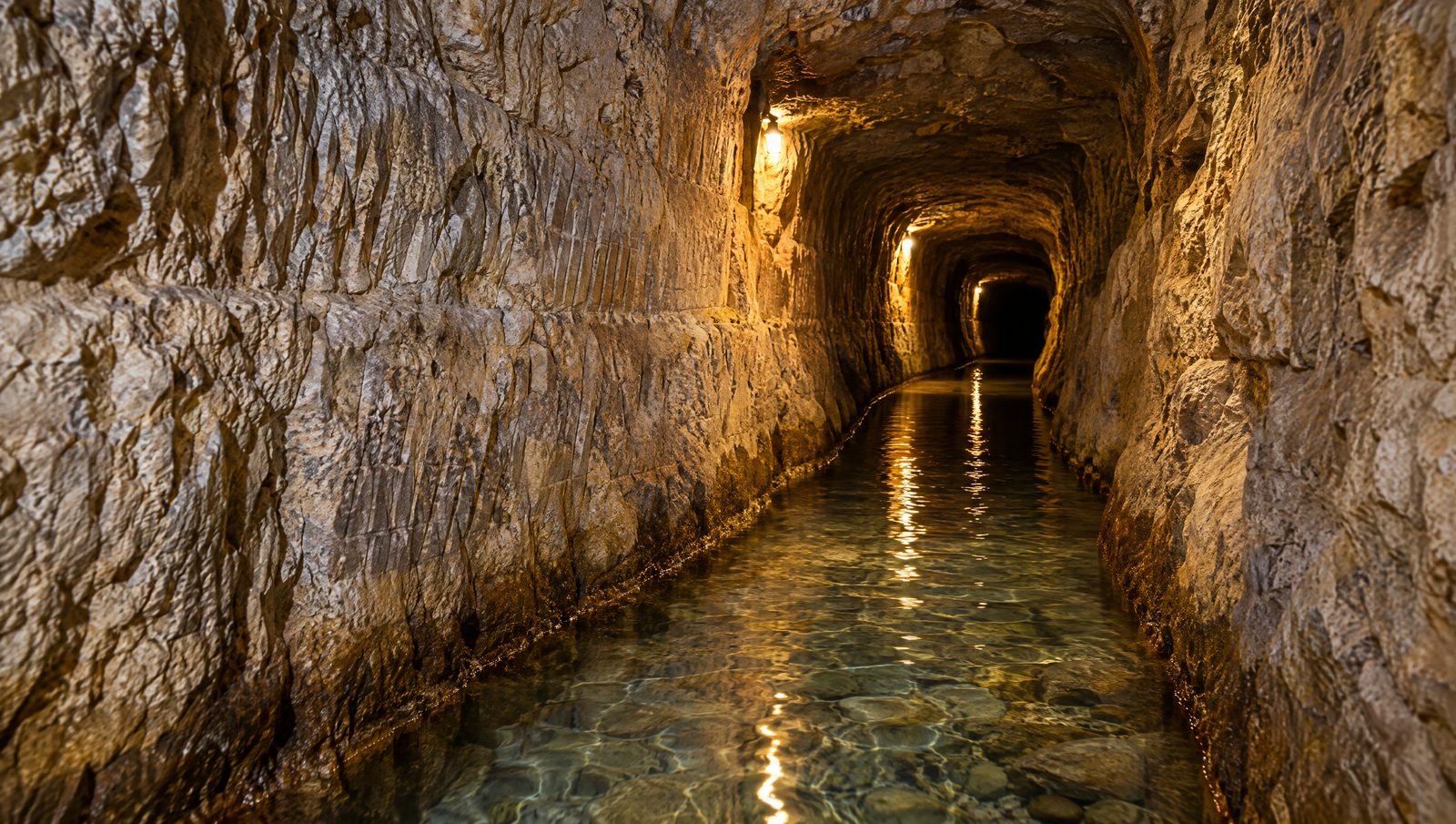
The siege of 701 BC is the one event of this period that we can read from both sides. In the Book of Kings and in Isaiah, the Assyrian field commander, the Rabshakeh, stands outside Jerusalem’s wall and shouts in Hebrew, not Aramaic, so that the men on the wall can understand him, that Hezekiah is deceiving them, that no god of any nation has yet saved it from the king of Assyria, and that they will soon be eating their own dung. Hezekiah spreads the Assyrian letter before God in the temple; Isaiah tells him the city will not fall. That night, the text says, the angel of the Lord strikes 185,000 men in the Assyrian camp, and Sennacherib goes home to Nineveh to be murdered by his sons. The Assyrian version, on the clay prism in Chicago and its twin in the British Museum, lists forty-six walled cities taken, 200,150 people deported, and Hezekiah shut up in Jerusalem “like a bird in a cage”, then records the heavy tribute he sent after the army had left, including his own daughters. Both agree that Jerusalem did not fall. Hezekiah’s preparations are still there: the tunnel his engineers cut to bring the Gihon spring inside the walls, with the inscription the two teams of diggers left where they met.
The king burns the scroll
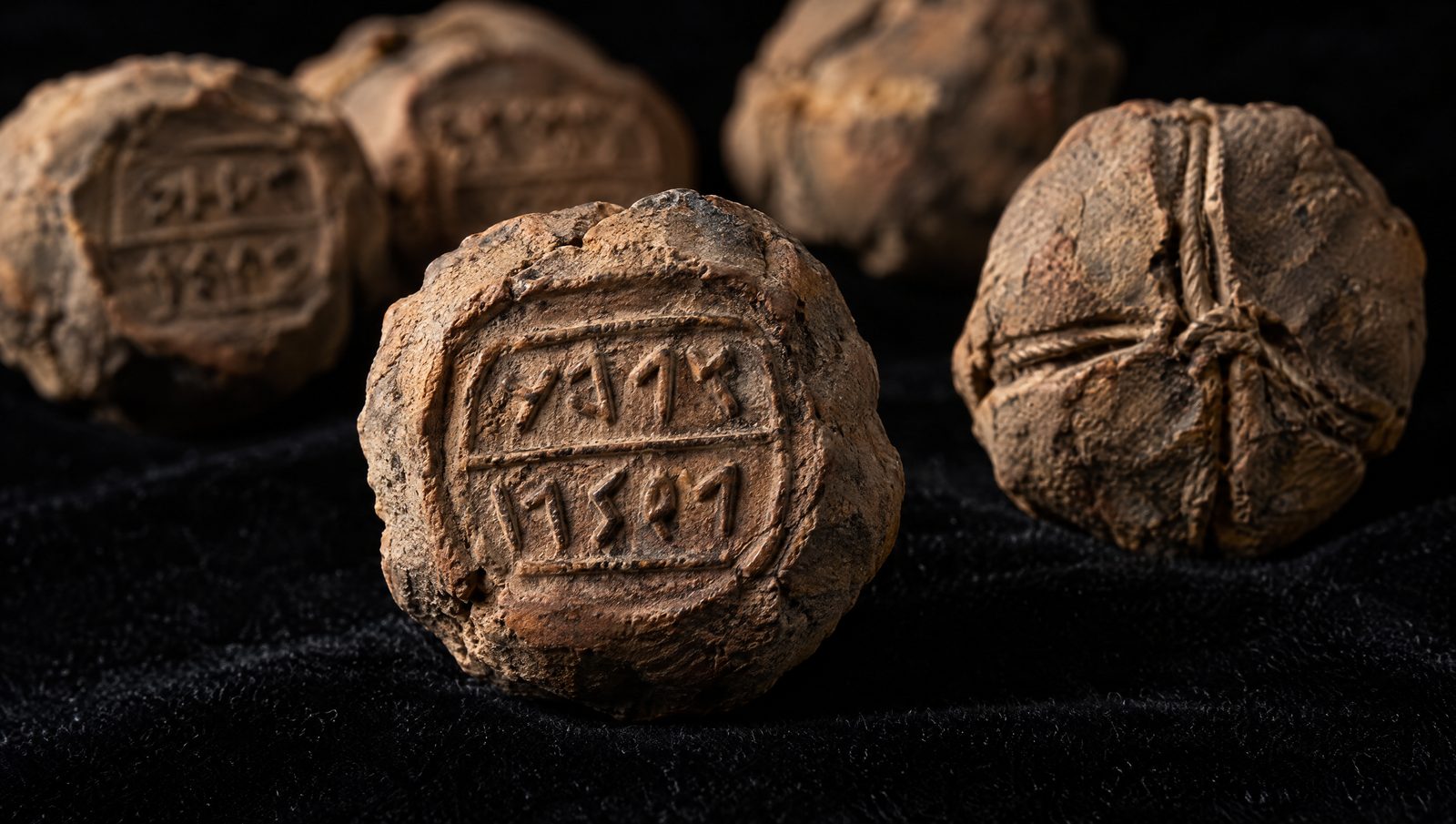
Jeremiah 36 is the earliest account anywhere of a book being written, read and censored. In 605 BC, the year Nebuchadnezzar defeated Egypt at Carchemish, God tells Jeremiah to write down all the warnings he has spoken over twenty-three years. Barred from the temple, he dictates them to the scribe Baruch son of Neriah, who reads the scroll aloud in a chamber off the temple court on a fast day. The officials who hear it take it to King Jehoiakim, who is sitting by a brazier in his winter apartment. As each three or four columns are read, the king cuts them off with a scribe’s knife and throws them in the fire, until the whole scroll is burned, while three of his officials beg him not to. He orders Jeremiah and Baruch arrested; they have hidden. Jeremiah dictates the scroll again, and, the text notes, “many similar words were added to them”. Nothing in the Bible says more plainly how it came to exist. Clay seal impressions naming “Berekhyahu son of Neriyahu the scribe” surfaced on the antiquities market in the 1970s; they are unprovenanced and their authenticity is disputed.
How the language sounded
Hebrew in this period was written in the Paleo-Hebrew alphabet, a branch of the Phoenician script of twenty-two letters, all consonants, which you can see on the Siloam inscription and the Lachish letters. After the exile the square Aramaic script replaced it and became the Hebrew alphabet we know; the Samaritans kept the old one. The vowels you see as dots and dashes under the letters in a printed Bible were added by the Masoretes, scholars of Tiberias on the Sea of Galilee, between about AD 700 and 1000, to fix a reading tradition that had been passed down orally. The consonants are ancient; the vowels are a tradition, checked against older evidence.
With that caveat, the mainstream reconstruction of Biblical Hebrew pronunciation runs like this.
- Two sounds come from the throat. Ḥet (ח) was a rasping h made deep in the throat, as in Arabic; ʿayin (ע) was a voiced constriction of the throat with no English equivalent at all. Modern Israeli Hebrew has mostly lost both.
- Three consonants were “emphatic”. Ṭet, ṣade and qof were t, s and k pronounced with the back of the tongue tensed, as in Arabic today, not the ts and k of modern Hebrew.
- Waw was a w. The letter now pronounced v in Israel was w, so the divine name began with Yahw- and David was Dawid.
- Shin and sin were distinct, and the difference could get you killed: in Judges 12 the Gileadites identify fleeing Ephraimites by making them say shibboleth, which they can only pronounce sibboleth.
- Doubled consonants were held, as in Italian, and stress fell most often on the last syllable: shaLOM, yerushaLAyim.
- The six letters b, g, d, k, p, t softened after a vowel to v, gh, dh, kh, f, th in the reading tradition, which is why the same letter gives both Bet-lehem and Ya’aqov. Whether this had already happened in the time of the kings, or came in later under Aramaic influence, is debated.
How do we know? The Masoretic vowel signs are the main witness, and they record a careful tradition. Behind them stand Greek transcriptions of Hebrew names and words in the Septuagint, the Greek Bible made in Alexandria from the third century BC, and a Greek transliteration of the whole Hebrew text that the scholar Origen included in his Hexapla around AD 240. Assyrian scribes wrote Hebrew kings’ names in cuneiform, giving us Ḫazaqiau for Hezekiah and Ia-u-a for Jehu. The Dead Sea Scrolls, from the last centuries BC, use extra consonants as vowel markers and show which sounds were already merging. Finally, Hebrew’s relatives, Arabic, Aramaic, Ugaritic and Akkadian, let scholars reconstruct the sounds the alphabet shared.
The uncertainties are honest ones. Vowel quality in the eighth century BC differed from the Tiberian system in ways we can only partly recover; the Greek evidence suggests, for instance, that some vowels the Masoretes wrote as long were shorter and simpler. The exact pronunciation of the divine name is unknown because it was never written with vowels and Jewish tradition stopped saying it aloud after the exile; Yahweh is a scholarly reconstruction, and the readings below follow the traditional substitution Adonai, “my Lord”. The forms in the table are given in a reconstructed academic pronunciation rather than the one you will hear in Tel Aviv.
| Original | Say it | Meaning |
|---|---|---|
| שָׁלוֹם לְךָ · shalom lekha | shah-LOHM le-KHAH | Peace be to you (Judges 6:23); the greeting from which modern shalom descends |
| הֲשָׁלוֹם · hashalom? | hah-shah-LOHM | Is all well? / How are things? (2 Kings 9:11) |
| הִנֵּנִי · hinneni | hin-NEH-nee | Here I am (Abraham’s answer, Genesis 22:1) |
| מַה־שְּׁמֶךָ · mah-shemekha | mah-sh’MEH-khah | What is your name? (Genesis 32:28) |
| כֵּן / לֹא · ken / lo | kehn / loh | Yes, so it is / No |
| לֹא יָדַעְתִּי · lo yadaʿti | loh yah-DAH-tee | I did not know (Genesis 28:16) |
| בָּרוּךְ הַבָּא · barukh habba | bah-ROOKH hab-BAH | Blessed is the one who comes (Psalm 118:26); still the Hebrew for “welcome” |
| לֵךְ לְשָׁלוֹם · lekh leshalom | lehkh le-shah-LOHM | Go in peace (Exodus 4:18) |
יְבָרֶכְךָ יְהוָה וְיִשְׁמְרֶךָ׃
יָאֵר יְהוָה פָּנָיו אֵלֶיךָ וִיחֻנֶּךָּ׃
יִשָּׂא יְהוָה פָּנָיו אֵלֶיךָ וְיָשֵׂם לְךָ שָׁלוֹם׃Yevarekhekha Adonai veyishmerekha; ya’er Adonai panav elekha vichunnekka; yissa Adonai panav elekha veyasem lekha shalom.
The Lord bless you and keep you; the Lord make his face shine upon you and be gracious to you; the Lord lift up his face to you and give you peace.
Numbers 6:24–26, the Priestly Blessing
These are the oldest words of the Bible to survive in physical form. The two silver amulets from Ketef Hinnom, scratched with a version of this blessing around 600 BC, were found in 1979 in a burial cave above the Hinnom valley and took the Israel Museum’s conservators years to unroll and read. The blessing is built with the austere economy of Hebrew poetry: three lines that grow from three words to five to seven, each beginning with a verb and the divine name, each ending on a gift. In the temple it was spoken by the priests with raised hands; in synagogues it still is, and Jewish parents say it over their children on Friday nights. The last word, shalom, is the one word of Biblical Hebrew most people already know, and its root meaning, wholeness, is wider than peace.
Maya reads these aloud in a reconstructed Biblical pronunciation, with the divine name read as Adonai and the reconstruction honestly labelled as such, in a free Biblical Hebrew session of fifteen minutes by phone.
Where to stand today
The City of David and Hezekiah’s Tunnel, Jerusalem
The Jerusalem of the kings was not the walled Old City but the narrow ridge south of it, above the Gihon spring, in Jerusalem‘s Silwan neighbourhood. The City of David archaeological park holds the stepped stone structure and the large building above it that some excavators identify with David’s palace, the house where clay seals of officials named in Jeremiah were found, and Hezekiah’s tunnel itself, 533 metres of rock cut in 701 BC, which you can wade through in knee-deep water with a torch to the Pool of Siloam. The Siloam inscription itself is in Istanbul. The site is politically contested and sits in a Palestinian neighbourhood; go with that in mind, and bring water shoes for the tunnel.
The Israel Museum, Jerusalem
The archaeology wing of the Israel Museum holds most of the objects in this guide: the Tel Dan stele with its “House of David”, the Ketef Hinnom silver scrolls, the ostraca from Arad and Lachish, the ivories of Samaria, and the small horned altars and figurines of the high places that Josiah tried to abolish. The Shrine of the Book next door displays the Dead Sea Scrolls, including the Great Isaiah Scroll, a thousand years older than any other complete Hebrew Bible manuscript, in a building shaped like the lid of the jar it was found in. The museum closes early on Fridays and is quietest on weekday mornings; the archaeology wing alone needs three hours.
Tel Dan, Upper Galilee
At the northern edge of ancient Israel, where the Bible says “from Dan to Beersheba”, the mound of Dan sits in a nature reserve of springs and laurel forest, the headwaters of the Jordan. The excavations uncovered a Canaanite mud-brick arched gate of the Middle Bronze Age, an Israelite gate complex where the Aramaic stele was found reused as building stone in 1993, and a high place with a monumental platform that is probably the sanctuary where Jeroboam set up his golden calf, denounced by the Book of Kings. The reserve is cool even in summer, and the trails take an hour.
Megiddo
Twenty-five cities lie on top of each other at Megiddo, the mound that guards the pass from the coast into the Jezreel valley and gave its name, as Armageddon, to the end of the world. For this period the visible remains are the six-chambered gate, the stables or storehouses that were once credited to Solomon and are now mostly assigned to Ahab’s Israel, the grain silo, and the water system, a shaft and tunnel cut to a spring outside the walls in the ninth century BC that you descend by stairs and leave through the far end. The small museum at the entrance has a model. Arrive at opening in spring, when the valley is green.
Tel Lachish and the Lachish letters
Judah’s second city, in the low hills south-west of Jerusalem, is where Sennacherib’s siege is most tangible. The Assyrian siege ramp, a mass of stone and earth thrown against the south-west corner of the mound, is still there, the only surviving siege ramp from the ancient Near East, with the Judahite counter-ramp inside the wall. The city gate where the eighteen ostraca of 588 BC were found in a burned guardroom has been restored. The site is a national park with little shade; combine it with Beit Guvrin’s caves nearby. The reliefs in which Sennacherib’s artists recorded the siege, with sling-stones, impaled defenders and families walking into exile with their bundles, are in the British Museum.
Tel Arad, the Negev
On a hill above the desert east of Beersheba, the fortress of Arad guarded Judah’s southern road, and its excavators found inside it the only Judahite temple ever excavated: a courtyard with a sacrificial altar of unhewn stones, a broad room and a small holy of holies with two standing stones and two incense altars. It seems to have been decommissioned, perhaps in Hezekiah’s or Josiah’s reform, with its altars laid down and buried. More than a hundred inscribed potsherds, orders for rations to the garrison and to “the Kittim”, probably Greek mercenaries, came from the same fortress and are in the Israel Museum. The reconstructed shrine is on the site. Spring and autumn only.
The British Museum, London, and the Louvre, Paris
The enemies of Israel and Judah kept the best records, and they are in Europe. Room 10 at the British Museum in London holds the Lachish reliefs, and the Assyrian galleries nearby have the Black Obelisk with Jehu bowing and the Taylor Prism with Sennacherib’s account of Hezekiah; the Cyrus Cylinder is upstairs. The Louvre in Paris has the Mesha stele, the Moabite king’s victory inscription of about 840 BC, in its Near Eastern antiquities department. Both are quietest on weekday mornings; at the Louvre, the Richelieu wing where the stele lives is far from the crowds.
Go deeper
- Robert Alter, The Hebrew Bible: A Translation with Commentary (W. W. Norton, 2018) — a single translator’s version of the whole Hebrew Bible, attentive to the rhythm and word-play of the original, with notes on every page; the Samuel and Kings volumes are the place to start.
- Israel Finkelstein and Neil Asher Silberman, The Bible Unearthed (Free Press) — the archaeologists’ case for what can and cannot be confirmed about the kingdoms; argumentative, readable and much debated.
- William M. Schniedewind, How the Bible Became a Book (Cambridge University Press) — on literacy, scribes and the moment, under Hezekiah and Josiah, when the texts began to be written.
- Gary D. Pratico and Miles V. Van Pelt, Basics of Biblical Hebrew Grammar (Zondervan) — the most widely used first-year textbook, with a workbook and recordings.
- Sefaria (sefaria.org) — the complete Hebrew Bible online, free, with vowels, parallel English, and the traditional commentaries a click away; the Jewish Publication Society’s Tanakh is the standard one-volume modern translation in print.
Frequently asked questions
Is Biblical Hebrew hard to learn?
The alphabet takes a week and the vowel signs another, and after that the obstacles are a verb system built on three-consonant roots and seven patterns, which is unlike anything in European languages, and a vocabulary with few cognates in English. In its favour, the Bible’s vocabulary is small, perhaps eight thousand words with a few hundred doing most of the work, the narrative prose is simple and repetitive, and you know the stories. Most students read Genesis and Ruth with a dictionary after a year; the poetry of Job and the prophets takes much longer.
How accurate is the reconstructed pronunciation?
The consonants are secure, including the throat sounds that modern Israeli Hebrew has dropped. The vowels are a medieval reading tradition, checked against Greek and cuneiform transcriptions, and are accurate for the way the text was chanted in late antiquity rather than for the speech of Isaiah’s Jerusalem, which was probably simpler. Any reading is a reconstruction of a reconstruction, and the divine name is unknowable. Even so, Hebrew read with the right stresses, throat consonants and held doubled letters is nearer to the kings’ Judah than any synagogue or Israeli street.
What modern languages descend from it?
Modern Hebrew, spoken by about nine million people, is the only case of an ancient language revived as a mother tongue; it was rebuilt in the late nineteenth and twentieth centuries on the Biblical and rabbinic base, with a pronunciation shaped by its European revivers and a grammar simplified for daily use. Hebrew’s sisters, Arabic, Aramaic and the Ethiopian Semitic languages, are not its descendants but its cousins; Arabic, with its throat consonants and three-letter roots, is the best living guide to how Biblical Hebrew worked.
Can I read the original texts after a few months?
Genesis, Ruth, Jonah and the stories of Samuel and Kings, yes, slowly, with a reader’s edition that glosses rare words at the foot of the page. The narrative prose was written to be heard and repeats its vocabulary generously. Psalms are harder and the prophets harder still, with rare words, broken syntax and textual problems that have defeated specialists for two millennia. The inscriptions, the Siloam tunnel text and the Lachish letters, are short and a satisfying first contact with Hebrew that was never edited.
What is the best first trip for this era?
Jerusalem for three days, for the City of David, the tunnel and the Israel Museum, then a hired car for a loop north through Megiddo and Tel Dan and back south by Lachish and Arad, which fits a week in March, April or late October. Check the security situation and site openings before you book, since both change. If you cannot travel there, a morning in Room 10 of the British Museum with the Lachish reliefs and a Bible open at 2 Kings 18 is the next best thing.